United States rat and mouse resource
Rats & Mice in the Home: Identification, Signs, Control & Prevention
A practical starting point for identifying rats and mice, understanding the evidence they leave behind, and choosing safe next steps for prevention and control.
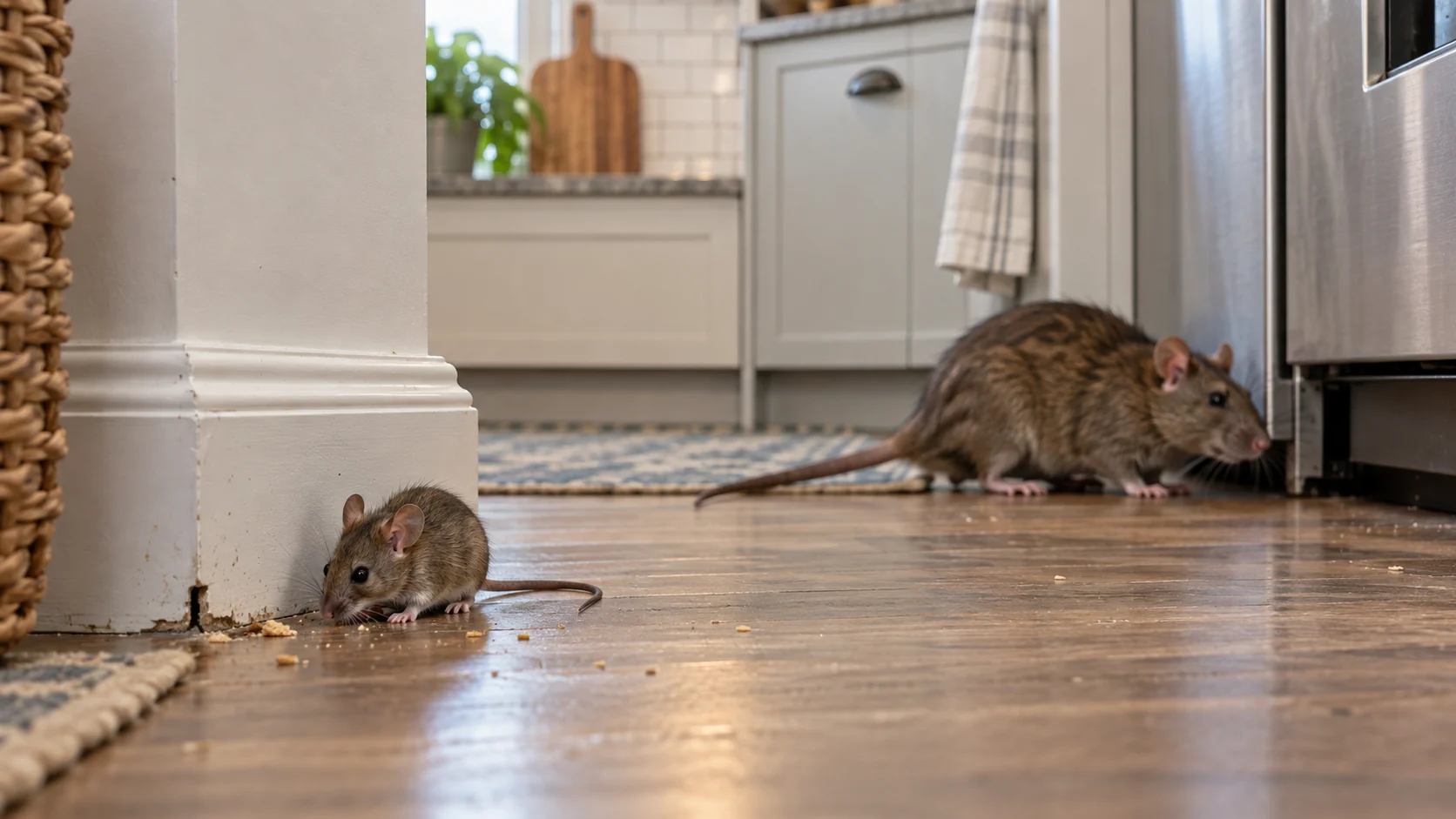
Rats and mice are among the most common rodents that enter homes in the United States. They may look similar at first glance, but they differ in size, behavior, nesting habits, and the types of problems they create indoors.
A rodent problem often starts quietly. A few droppings appear inside a cabinet. Scratching sounds come from a wall at night. Food packaging shows small chew marks. By the time a mouse or rat is seen in the open, the animal may already have established a regular route between food, water, shelter, and an entry point into the house.
The most effective way to deal with rats and mice is to approach the problem in several parts: identify the rodent, confirm where activity is occurring, remove rodents already inside, close the openings they use to enter, and reduce the conditions that make the property attractive to them.
This guide explains the basics and connects you to more detailed guides on identification, signs, home problem areas, prevention, treatment, professional control, cleanup, and rodent biology.
Rats vs Mice: What Is the Difference?

Mice and rats are both rodents, but an adult rat is generally much larger and heavier than a house mouse.
A typical mouse has a small body, relatively large ears, a pointed face, and a thin tail. Mice can use extremely small openings and are excellent climbers, which allows them to reach cabinets, wall voids, attics, storage areas, and other protected spaces.
Rats have heavier bodies, larger feet, and more powerful jaws. Their appearance varies by species. Norway rats tend to be stockier and are strongly associated with ground-level burrows and lower parts of structures. Roof rats are more agile climbers and are commonly associated with elevated areas such as roofs, attics, trees, and upper portions of buildings.
Size is useful, but it should not be the only identification clue. Dropping size and shape, tracks, nesting location, gnaw marks, sounds, and where the rodent is active can all help distinguish a mouse problem from a rat problem.
Our identification guides cover the major rodent species and comparisons in more detail.
Common Rats and Mice Found Around U.S. Homes
Several rodent species can occur around residential properties, but a few are especially important.
House mice
The house mouse is one of the rodents most closely associated with indoor living. It can nest inside walls, cabinets, storage areas, insulation, garages, basements, and other sheltered spaces close to food.
Because mice need only a small opening to enter a structure, a house can develop a mouse problem even when there is no obvious large gap in the exterior.
Norway rats
Norway rats are large, sturdy rats that commonly live at or below ground level. They may burrow near foundations, under decks, around sheds, beneath debris, or near other protected areas.
When they enter buildings, they may use crawl spaces, basements, wall voids, utility penetrations, and lower-level rooms.
Roof rats
Roof rats are strong climbers. They can move along fences, branches, utility lines, roofs, and other elevated routes before entering through openings higher on a structure.
Attics, rooflines, upper walls, and dense vegetation touching the house can be especially important when roof rats are present.
Deer mice and other outdoor mice
Not every mouse found inside a structure is a house mouse. Deer mice and other outdoor species may enter garages, cabins, sheds, storage buildings, and homes, particularly when they are looking for protected shelter.
Correct identification matters because rodent behavior can affect where you inspect, where traps are placed, and which entry points receive the most attention.
Signs of Rats and Mice in a House
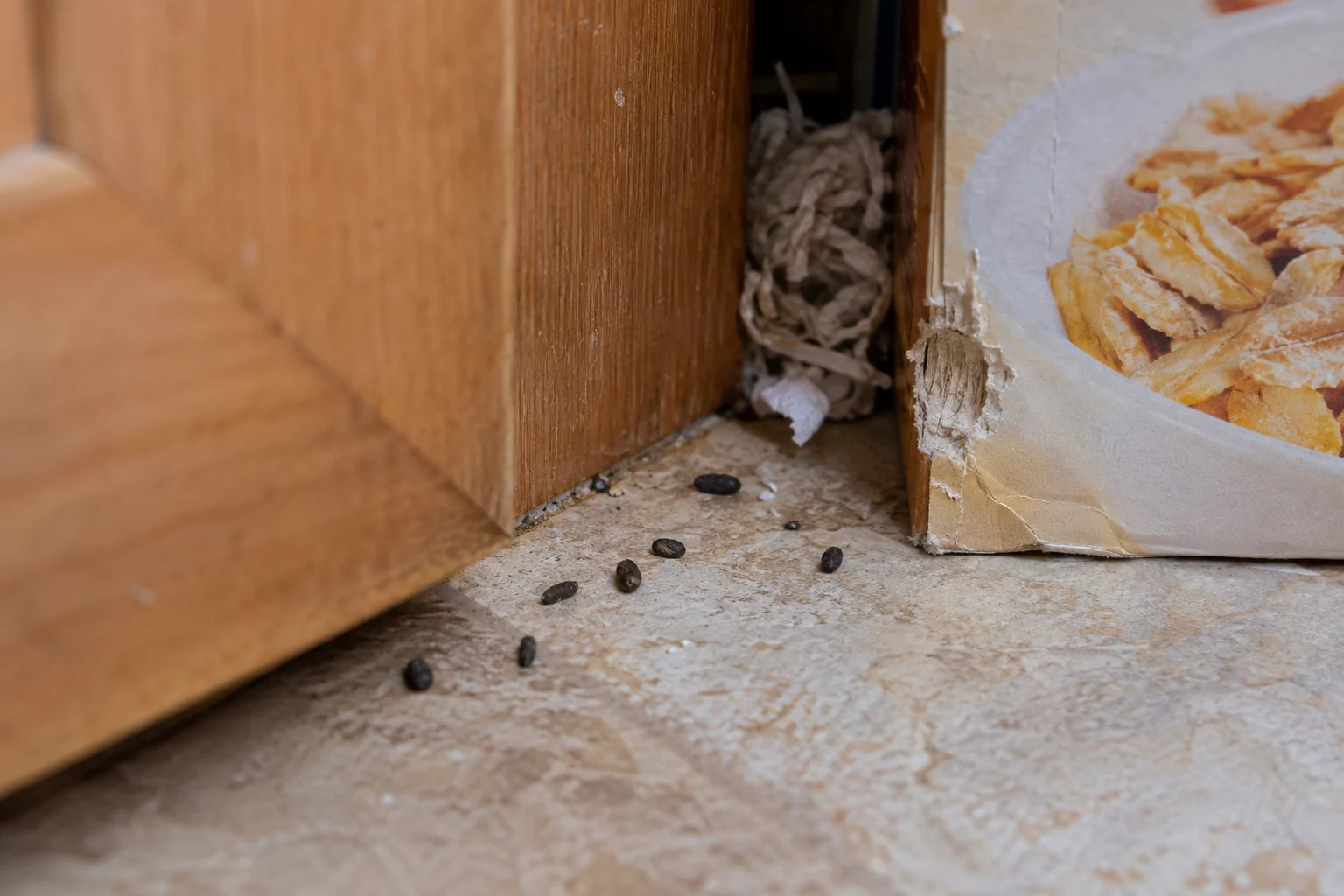
Rodents are often detected through evidence rather than a direct sighting.
Common signs include:
- droppings in cabinets, drawers, pantries, garages, attics, or along walls
- gnaw marks on food packaging, wood, plastic, or other materials
- shredded paper, fabric, insulation, or other nesting material
- scratching or movement sounds inside walls or ceilings
- greasy rub marks along frequently traveled surfaces
- tracks in dusty areas
- damaged stored food
- urine odors or unusual persistent smells
- burrows or openings around the exterior
- repeated rodent sightings
Fresh evidence is particularly useful when determining whether rodents are still active.
New droppings, recently damaged food packaging, fresh gnawing, or repeated nighttime noises suggest an active problem rather than old evidence from an infestation that has already ended.
Visit our rodent signs section for detailed guides on droppings, nests, tracks, gnaw marks, urine odors, and other evidence.
Where Rats and Mice Hide
Rodents usually prefer protected spaces where they can move without being exposed.
Inside a home, mice and rats may use areas such as:
- wall voids
- attics
- crawl spaces
- basements
- garages
- kitchen cabinets
- spaces behind appliances
- storage rooms
- insulation
- ceilings and utility chases
The exact location often depends on the species, the structure, and where food and water are available.
Mice can live surprisingly close to their food source. A mouse nesting behind a kitchen cabinet may not need to travel far each night.
Rats often travel greater distances and may move between outdoor nesting areas and indoor food sources. A rat seen in a kitchen, for example, does not necessarily mean the nest is located in the kitchen.
Our rodent problem guides cover specific locations such as walls, attics, kitchens, garages, crawl spaces, ceilings, and other areas of the home.
How Rats and Mice Get Into Homes
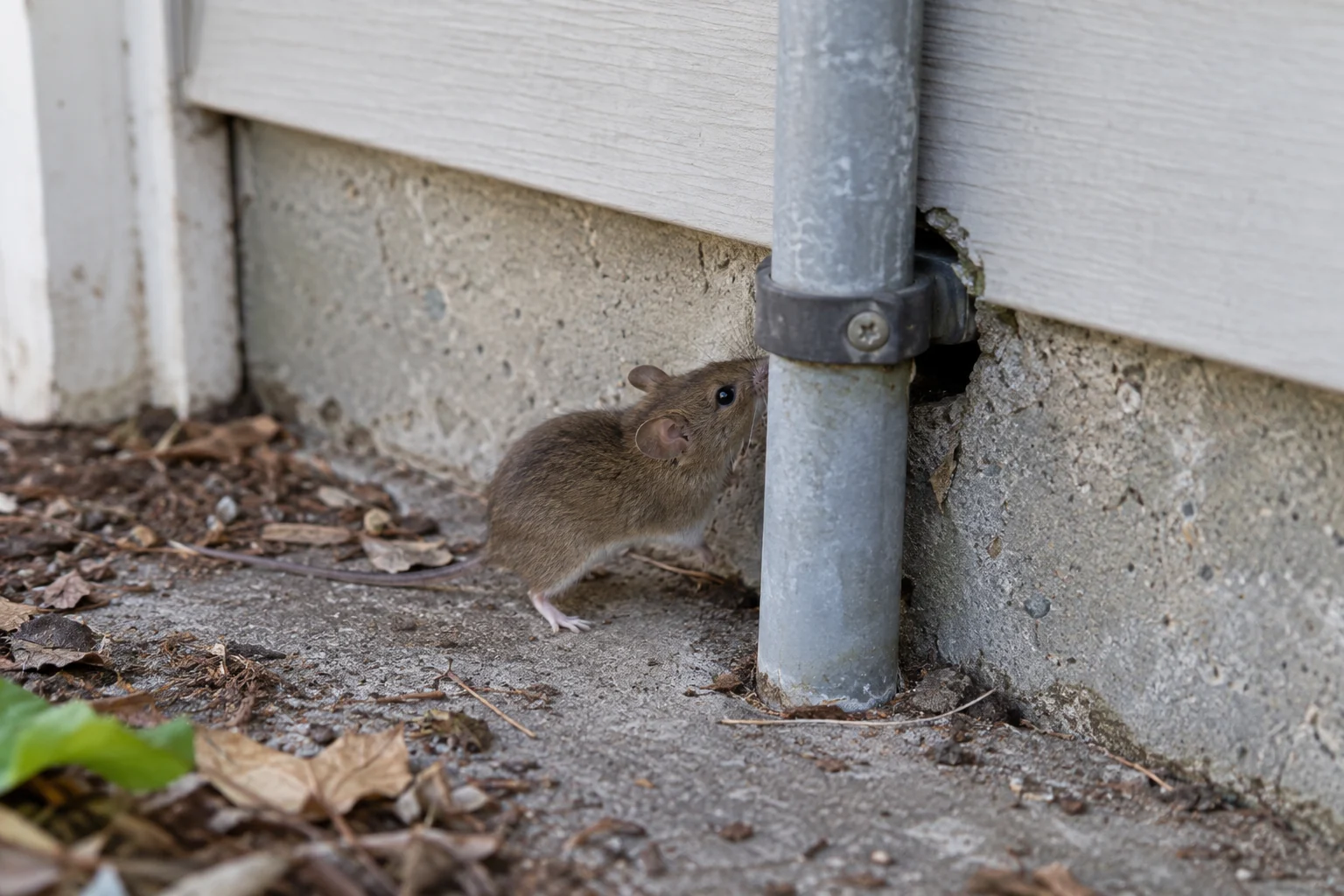
Rodent control is difficult to maintain if new animals can continue entering the structure.
Mice can squeeze through very small openings. Rats require more space, but they can exploit gaps around construction joints, pipes, doors, vents, foundations, roofs, and damaged building materials.
Common entry areas include gaps around:
- plumbing lines
- utility cables
- exterior doors
- garage doors
- foundation openings
- crawl-space vents
- roof edges
- soffits
- damaged screens
- siding
- air-conditioning lines
- other exterior penetrations
Vegetation can also create access routes. Branches touching a roof or dense growth next to exterior walls may make it easier for climbing rodents to reach vulnerable parts of a structure.
The goal is not simply to find one hole. A useful inspection looks at the entire building envelope and asks how a rodent could move from the ground, vegetation, utility lines, roof, or attached structures into protected interior spaces.
See our rodent prevention guides for entry-point inspections, exclusion, sealing, and long-term rodent-proofing.
Food and Water Can Keep Rodents Around
A house does not need to be dirty to develop a rodent problem. Rodents can survive on surprisingly small amounts of accessible food.
Potential food sources include crumbs, cereal, grains, pet food, bird seed, garbage, produce, pantry products, and food stored in thin packaging.
Water can come from sinks, leaking pipes, condensation, pet bowls, appliances, irrigation, or other moisture sources.
Good sanitation helps make control more effective, but sanitation alone rarely solves an established infestation if rodents are still entering through the structure.
Store food in durable containers where appropriate, clean spills and crumbs, manage garbage, avoid leaving pet food accessible overnight when practical, and correct unnecessary moisture.
These steps reduce resources for rodents while trapping and exclusion address the animals and their access points.
How to Control Rats and Mice
Successful rodent control usually combines multiple methods rather than relying on a single product.
Find active areas
Start by looking for droppings, gnawing, nests, tracks, food damage, and travel routes.
Pay attention to edges. Rats and mice commonly move along walls, cabinets, stored objects, and other surfaces rather than crossing large open spaces without cover.
Use traps strategically
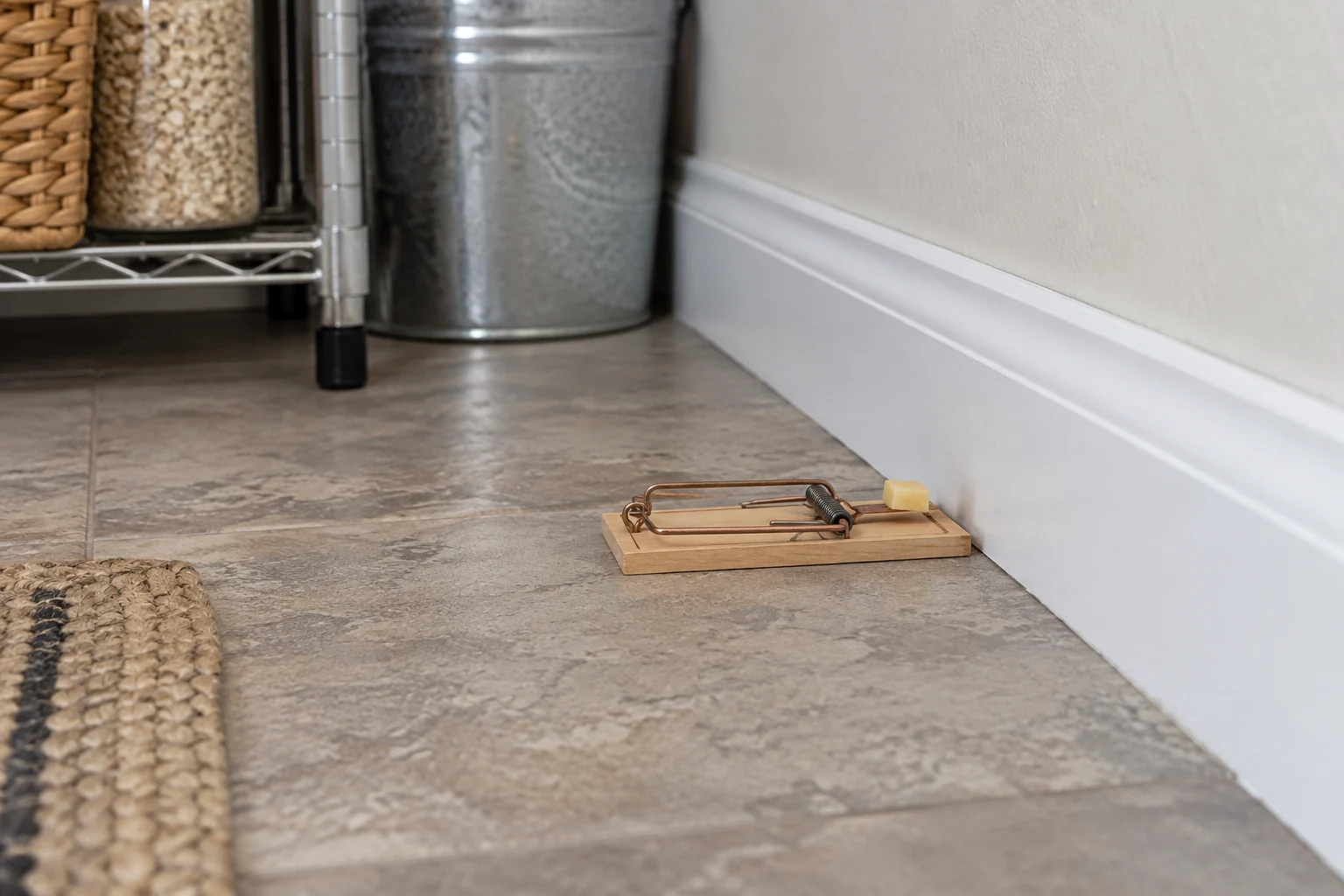
Mechanical traps can be an important tool for removing rodents already inside.
Trap placement matters. A trap in the middle of a room may be far less effective than one positioned along an active rodent travel route.
The number, type, spacing, bait, and placement of traps depend on whether the target is mice or rats and where activity is occurring.
Our treatment section covers mouse traps, rat traps, bait stations, placement, and comparisons between different control methods.
Seal entry points
Removing the rodents currently inside is only part of the job.
If exterior openings remain available, new rodents can enter and recreate the problem.
Rodent exclusion involves locating vulnerable openings and closing them with materials appropriate for the location and structure.
Simply filling the most obvious hole without inspecting the rest of the property can leave other routes available.
Reduce food and shelter
Food, water, clutter, overgrown vegetation, debris, and sheltered exterior areas can support rodent activity.
Correcting these conditions makes the property less attractive and helps other control measures work more effectively.
Traps, Baits, and Rodent Control Products
There is no single product that is best for every rodent problem.
Snap traps are commonly used for both mice and rats, although the equipment must be sized for the target animal.
Other trap designs are also available, and each has advantages and limitations depending on the situation.
Rodenticide bait is different from mechanical trapping. Pesticide products must be used exactly according to their labels, and they must be kept inaccessible to children and pets. Consumer rodenticide products should never be placed casually around living spaces or used in a way that conflicts with their labeled instructions.
Homeowners should also consider what happens if a poisoned rodent dies inside an inaccessible wall, attic, or other void.
For many indoor situations, especially where the source and size of the infestation are still unclear, inspection, trapping, exclusion, and sanitation provide a more understandable starting point than randomly placing control products.
Explore our rodent control guides and treatment guides for more detailed comparisons.
Cleaning Up Rodent Droppings and Nesting Material
Rodent-contaminated areas should be treated carefully.
Do not create airborne dust by dry sweeping or vacuuming fresh rodent urine, droppings, or nesting material before it has been properly disinfected.
Wear appropriate protective gloves and wet contaminated material thoroughly with a suitable disinfectant according to its label before removal.
Heavily contaminated areas, HVAC systems, extensive attic contamination, or situations involving large infestations may require additional precautions or professional help.
After rodents are removed, contaminated insulation, nesting materials, food products, or other damaged materials may also need to be discarded or cleaned depending on the situation.
Our cleanup section covers dead rodents, odors, contamination, and related cleanup problems in greater detail.
Are Rats and Mice Dangerous?
Rodents can create both sanitation and property concerns.
They may contaminate food and surfaces with urine, droppings, nesting material, or contact with contaminated areas. Rodents can also carry organisms associated with disease, although the specific risk depends on the rodent species, region, environment, and type of exposure.
Gnawing is another concern.
Rodents continually use their teeth and may damage packaging, wood, insulation, plastics, and other materials. Gnawing on wiring can also create an electrical hazard.
The presence of one rodent does not automatically tell you the size of an infestation, but fresh signs should not be ignored.
See our rodent safety guides for more information about health, contamination, and property risks.
When Professional Rodent Control Makes Sense
Some mouse problems can be addressed with careful inspection, trapping, sanitation, and exclusion.
Other infestations are more difficult to solve without professional equipment or experience.
Consider professional help when:
- rodent activity continues despite repeated control attempts
- you cannot locate the main entry points
- rats are established in walls, attics, crawl spaces, or other difficult areas
- there is extensive contamination
- rodents are entering through multiple structural defects
- activity involves HVAC or other sensitive building systems
- the property has recurring infestations
- you are uncomfortable handling traps, rodents, or contaminated materials
A professional rodent inspection should do more than place traps. The underlying question is why rodents are present and how they are getting into the structure.
Our professional rodent-control section explains inspections, extermination, removal, exclusion, cleanup, and what homeowners can expect from professional service.
How Much Does Rodent Control Cost?
The cost of rodent control varies widely because a small mouse problem in an accessible room is very different from a rat infestation involving an attic, crawl space, damaged insulation, multiple entry points, or structural repairs.
Important cost factors can include:
- whether the problem involves mice or rats
- infestation size
- areas of the home involved
- number of service visits
- trapping or treatment requirements
- exclusion work
- repairs
- cleanup and sanitation
- contaminated insulation
- accessibility of nesting areas
For this reason, a single national price cannot accurately describe every rodent problem.
Our rodent-control cost guides separate extermination, removal, inspection, exclusion, attic work, crawl-space work, and other common cost categories.
Preventing Rats and Mice From Coming Back
Long-term rodent prevention focuses on access and resources.
Inspect the exterior periodically, particularly around doors, garages, utility penetrations, vents, foundations, rooflines, and areas where previous rodent activity occurred.
Keep food stored appropriately, control garbage, address moisture problems, manage exterior clutter, and trim vegetation where it creates easy access to the building.
Most importantly, treat new evidence as an early warning.
Finding a few fresh droppings is easier to investigate than waiting until rodents are regularly heard in multiple walls or seen moving through living spaces.
Prevention is not a one-time task. Homes change, materials deteriorate, utility work creates new penetrations, doors shift, screens become damaged, and vegetation grows.
Regular inspection makes it easier to find these changes before rats or mice take advantage of them.
Understanding the Rodent Problem Before Choosing a Solution
The best response to rats or mice begins with identification.
Determine what animal is present, where it is active, what it is using for food and shelter, and how it is entering the building.
From there, rodent control becomes a process:
identify the rodent, inspect the property, remove animals already inside, clean contaminated areas safely, close entry points, and reduce the conditions that encourage future activity.
Use the sections of this site to continue with the part of the problem you are dealing with now:
Identify rats and mice, check signs of rodent activity, investigate rodent problems around the home, learn about prevention and exclusion, compare treatment options, understand rodent control, learn when to seek professional help, review rodent-control costs, explore rodent biology, follow safe cleanup guidance, or learn about rodent safety concerns.