Mouse Traps: Types, Placement & How to Use Them
Learn the main types of mouse traps, where to place them, how many to use, how to bait and monitor them, and which mistakes reduce trapping success.
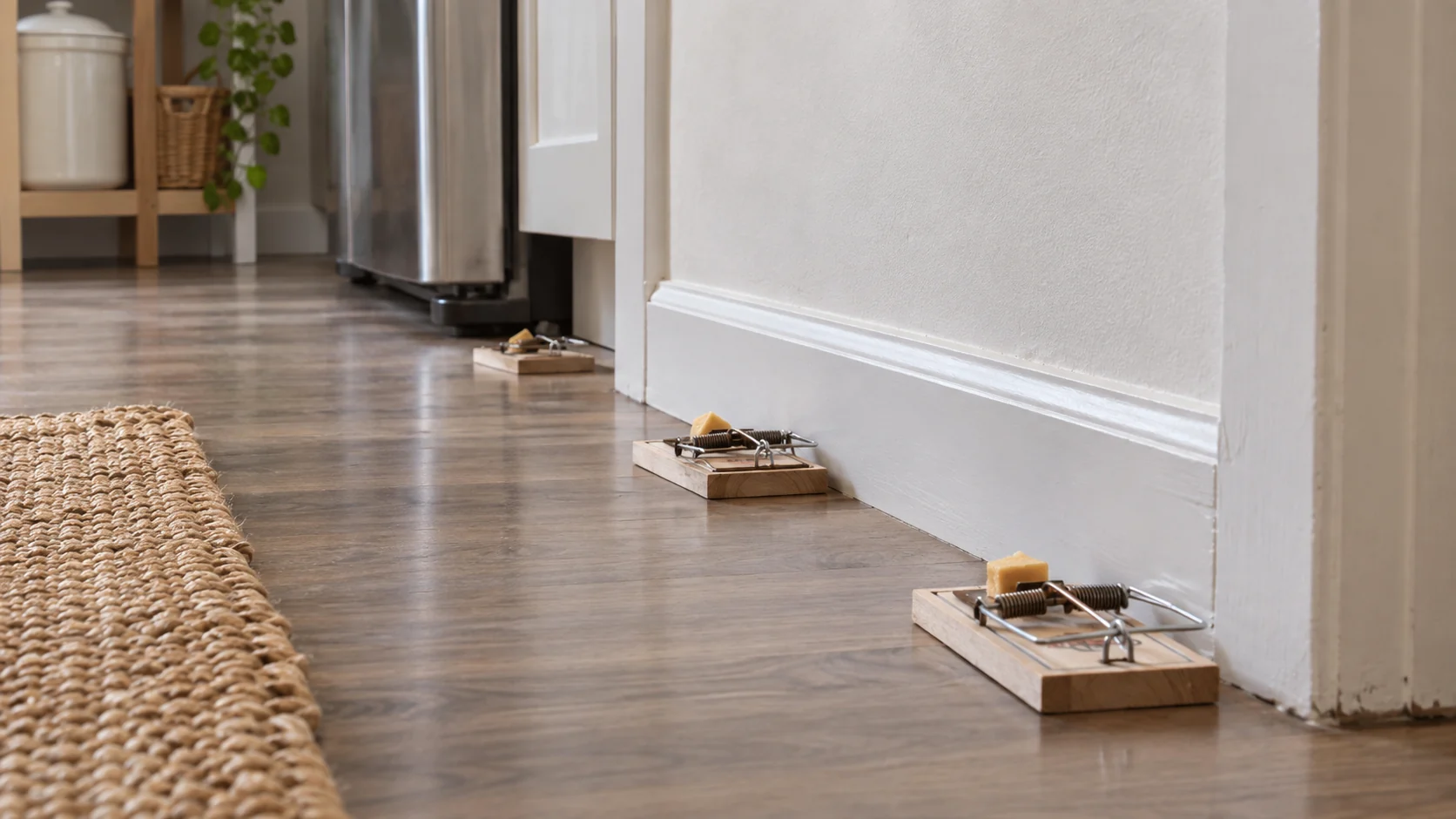
Mouse traps are one of the most practical tools for removing mice that are already inside a house.
But successful trapping depends on more than choosing a product and placing one trap in the middle of a room. Mice usually travel along walls, cabinets, appliances, stored objects, and other protected edges. Traps work best when they are placed directly on those active routes and checked regularly.
The right setup also depends on the size of the infestation, where mice are moving, whether children or pets are present, and whether new mice can still enter the building.
This guide explains the main types of mouse traps, where to place them, how many to use, how to bait and monitor them, common trapping mistakes, and when trapping should be combined with exclusion or professional control.
Do Mouse Traps Work?
Yes, mouse traps can be effective when they are used correctly and placed where mice are already active.
The biggest reason traps fail is often not the trap itself.
Common problems include:
- too few traps
- poor placement
- placing traps away from walls
- trapping in rooms with no mouse activity
- leaving competing food available
- stopping after catching one mouse
- failing to seal entry points
- using traps where children or pets can reach them
A trap can only catch a mouse that encounters it.
That is why inspection comes first.
Before setting traps, look for mouse droppings, gnaw marks, food damage, nesting material, tracks, or repeated sightings.
Our mouse droppings guide can help identify active areas.
Main Types of Mouse Traps
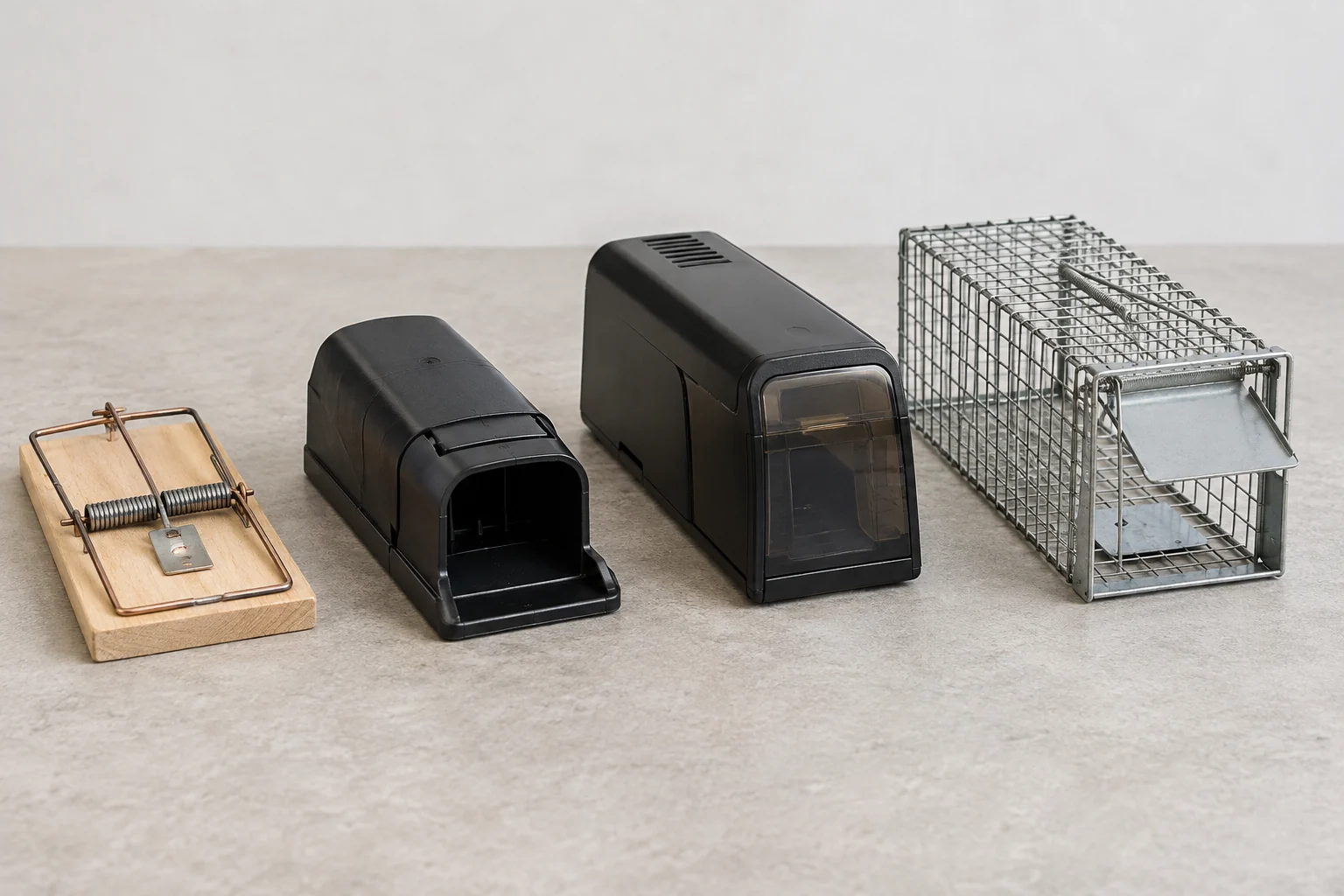
Several trap styles are commonly used for mice.
Each type has advantages and limitations.
The most important question is not which trap looks most advanced. It is whether the trap is appropriate for mice, placed correctly, and used safely in the location where activity occurs.
Snap Traps
Snap traps are one of the most common mouse-control tools.
They use a spring-loaded mechanism that activates when a mouse contacts the trigger.
Traditional wooden traps and modern plastic designs work on the same basic principle.
Advantages can include:
- low cost
- fast action
- easy monitoring
- no poison
- reusable options
- clear confirmation when a mouse is captured
Snap traps should be sized for mice.
A large rat trap is not the same tool.
Use the trap according to the manufacturer's instructions and place it where children and pets cannot reach it.
For many indoor mouse problems, snap traps provide a simple and visible way to measure whether mouse activity is decreasing.
Enclosed Mouse Traps
Some mouse traps place the trapping mechanism inside a covered or enclosed housing.
These designs may reduce direct visibility of the captured mouse and can help shield the mechanism from accidental contact.
They may be useful in some areas where a more contained design is preferred.
However, an enclosed trap still needs correct placement.
Putting it in a low-activity area does not make it more effective.
Check the trap regularly and follow its instructions for resetting, disposal, or cleaning.
Electronic Mouse Traps
Electronic traps use an enclosed chamber and electrical mechanism to kill a mouse after it enters.
These traps can provide:
- enclosed capture
- easy visual or indicator-based checking on some models
- reusable operation on some designs
- less direct contact with a captured mouse
They are generally more expensive than basic snap traps.
They also need to remain dry and should be used only in locations appropriate for the specific product.
As with any trap, placement along an active mouse route is more important than novelty.
Live-Capture Mouse Traps
Live-capture traps are designed to hold a mouse without immediately killing it.
Some homeowners prefer this approach, but it introduces additional responsibilities.
A live trap must be:
- checked frequently
- handled carefully
- kept away from temperature extremes
- used in accordance with local rules and practical animal-handling considerations
Relocating a mouse does not solve the opening that allowed mice into the home.
If exclusion is not completed, another mouse can enter later.
Live trapping should therefore be treated as a removal method, not a complete prevention strategy.
Glue Traps
Glue traps capture mice on a sticky surface.
They are available in many pest-control retail settings, but they have several limitations.
They can capture non-target animals, collect dust, become less effective in poor conditions, and create animal-welfare concerns.
They also require frequent inspection.
For homeowners who want a straightforward indoor control method, properly placed mouse-sized snap traps are often easier to monitor and manage.
Whatever trap is used, follow the product instructions and keep it inaccessible to children and pets.
Which Mouse Trap Is Best?
There is no single trap that is best for every house.
For many indoor mouse problems, a mouse-sized snap trap is a practical starting point because it is:
- simple
- inexpensive
- easy to monitor
- widely available
- effective when correctly placed
- free of rodenticide
Enclosed or electronic traps may make sense when a homeowner prefers a more contained design.
The best choice depends on:
- location
- number of mice
- children or pets
- accessibility
- how often traps can be checked
- personal preference
- whether the area is dry and protected
The most important part is still placement.
A basic trap on an active travel route can outperform an expensive trap placed in the wrong room.
Where Should You Place Mouse Traps?
Place mouse traps where evidence shows mice are already moving.
Common locations include:
- along baseboards
- behind refrigerators
- behind stoves
- under sinks
- inside protected cabinet areas
- along garage walls
- near pantry activity
- beside utility penetrations
- in basements
- in attics
- near wall openings
- along routes with fresh droppings
Mice usually prefer to move along edges rather than across exposed open areas.
That behavior gives you a placement advantage.
A trap should intersect the route the mouse already uses.
Our mice in walls guide and mice in the attic guide explain how mouse routes can connect different parts of a house.
How to Position a Snap Trap Along a Wall
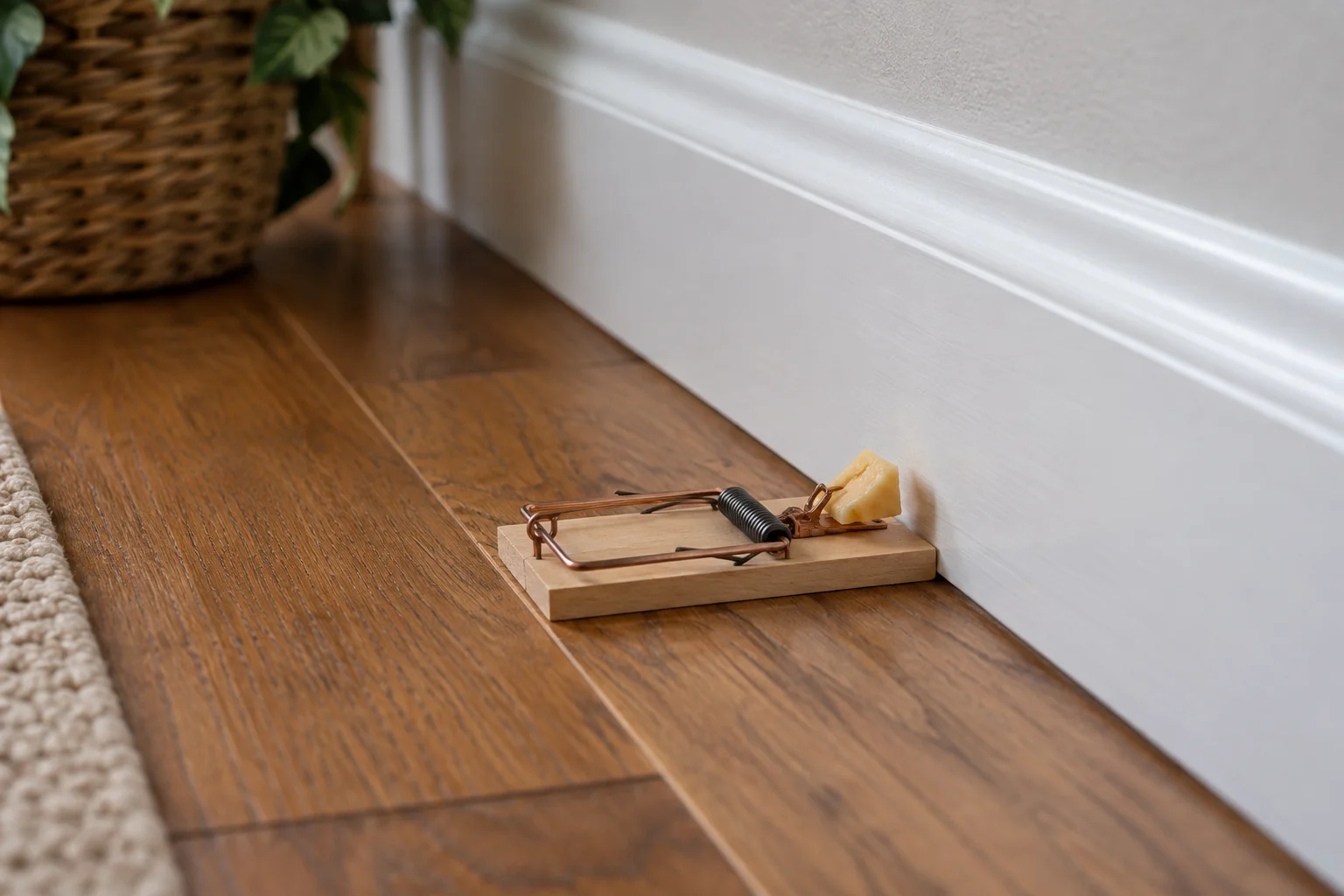
For a traditional mouse snap trap, placement near the wall is often more effective than placing it far into the room.
A common setup is to position the trap perpendicular to the wall with the trigger end facing the wall.
This places the trigger where a mouse traveling beside the wall is more likely to encounter it.
Depending on the trap design and the structure of the area, traps may also be positioned parallel to a wall if that orientation places the trigger directly on the travel path.
The important principle is contact with the active route.
Do not block the trap with clutter or place it where the mouse can simply travel around it without approaching the trigger.
Always follow the specific trap manufacturer's instructions.
How Many Mouse Traps Should You Use?
Using only one trap is a common mistake.
The number needed depends on the size and distribution of the infestation.
If fresh droppings or sightings occur in several areas, trapping should cover those areas.
More traps can:
- increase the chance of interception
- help identify the most active routes
- shorten the time needed to reduce activity
- show whether mice are moving in multiple rooms
Do not think in terms of one trap per house.
Think in terms of active mouse routes.
A kitchen with several evidence points may need more trapping effort than a quiet bedroom with no signs at all.
How Far Apart Should Mouse Traps Be?
There is no universal spacing rule that fits every room.
Trap spacing should follow the evidence.
In a highly active area, several traps may be placed relatively close together along the same wall or route.
In a larger low-activity space, traps may be spread farther apart near separate evidence points.
The main goal is to avoid large gaps in the areas where mice are clearly moving.
Use droppings, tracks, food damage, and sightings to decide where trap coverage matters most.
What Should You Use as Mouse Trap Bait?
A small amount of food can be used on traps that require bait.
Common choices include:
- peanut butter
- nut spreads
- small pieces of soft food
- food already being consumed by the mice in that location
Do not overload the trigger.
A large amount of bait may allow a mouse to feed without activating the trap or may reduce trigger sensitivity on some designs.
Use only a small amount and follow the trap manufacturer's instructions.
If mice are feeding heavily on a specific pantry item, a small amount of that familiar food may sometimes work better than introducing something entirely different.
Do You Always Need Bait?
Not always.
When a trap is positioned directly on a narrow travel route, a mouse may interact with it because of placement rather than bait alone.
Bait can still help attract attention to the trigger, but it should not substitute for good location.
A heavily baited trap placed away from mouse activity may still be ignored.
Think of bait as a secondary factor.
Route placement comes first.
Should You Wear Gloves When Setting Mouse Traps?
Gloves can be useful for hygiene, especially when traps are being placed near droppings or contaminated areas.
Human scent on a mouse trap is usually less important than many homeowners assume.
Poor placement, too few traps, and competing food are generally more significant problems.
Wear gloves when appropriate to avoid direct contact with contaminated surfaces, used traps, or captured rodents.
After handling traps in rodent-active areas, wash your hands.
Why Is the Mouse Eating the Bait but Not Triggering the Trap?
This can happen when:
- too much bait is used
- the bait is not placed correctly on the trigger
- the trigger is not sensitive enough
- the mouse approaches from the wrong direction
- the trap is poorly positioned
- the trap design allows access without full trigger contact
Use less bait and make sure it is placed on the trigger area according to the manufacturer's instructions.
Reposition the trap so the mouse has to approach the trigger from its normal route.
If the problem continues, try another mouse-sized trap design rather than adding more bait.
What If Mice Avoid the Traps?
Mice may sometimes avoid a trap, especially if other food is easier to access or if the trap is not directly on a travel route.
Check:
- whether the area has fresh droppings
- whether food remains available nearby
- whether the trap is against the route
- whether clutter blocks access
- whether the trap is functioning correctly
- whether mouse activity has moved
Do not move every trap after one quiet night.
Monitor the surrounding evidence.
If no fresh signs appear, the location may no longer be active.
If droppings continue but the trap is untouched, adjust the placement more precisely.
Should Mouse Traps Be Placed in the Middle of a Room?
Usually not.
Mice often prefer edges and protected routes.
A trap in the middle of an open floor may be far from the path mice normally use.
Better locations often include:
- wall edges
- cabinet edges
- appliance gaps
- storage edges
- utility penetrations
- narrow passages
The exception would be a situation where clear tracks or sightings show that mice regularly cross an open area.
Follow evidence rather than a rigid placement rule.
Mouse Traps in the Kitchen
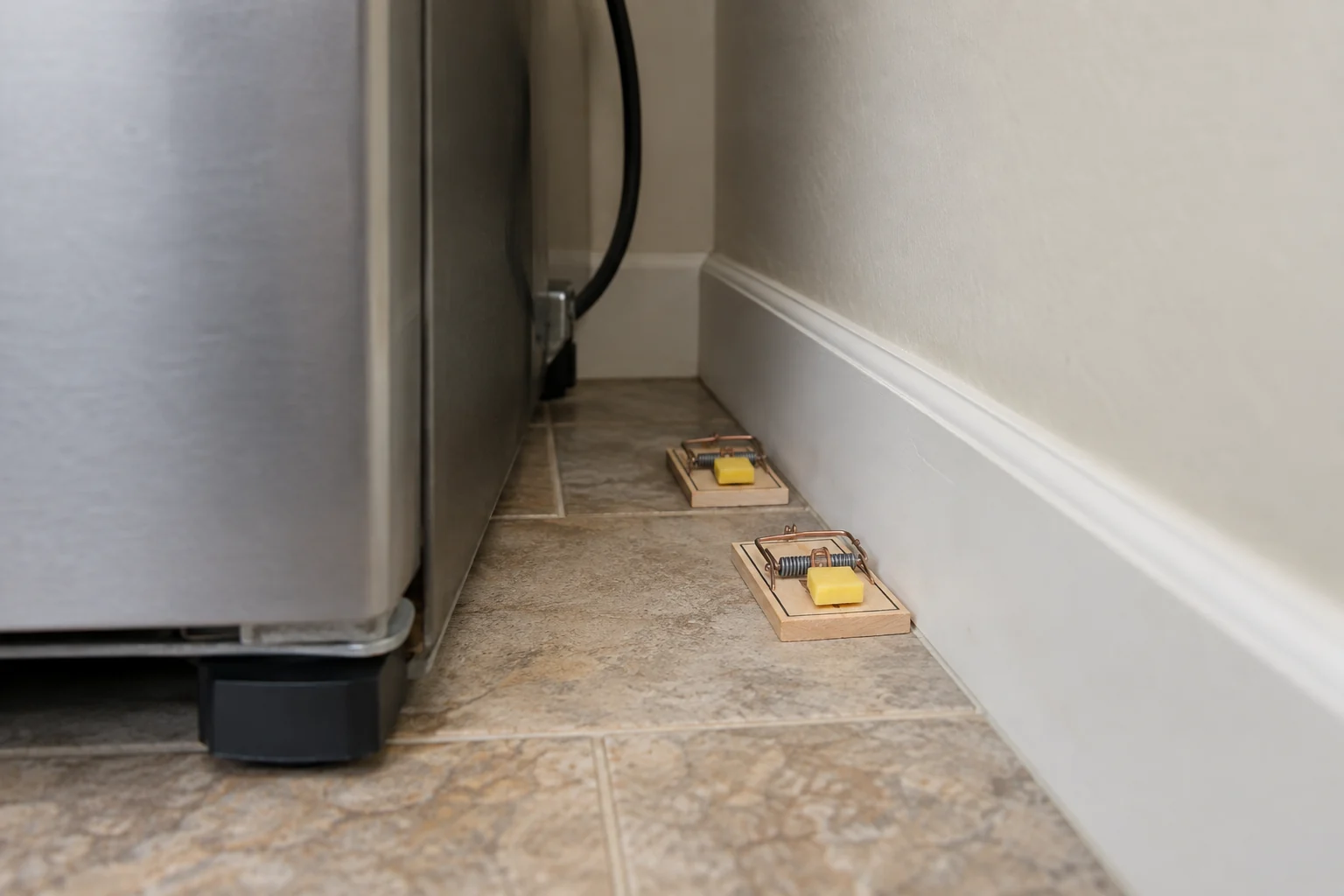
Kitchens are one of the most common places to trap mice because food and water are concentrated there.
Potential trap areas include:
- behind the refrigerator
- behind the stove
- under the sink
- beside lower cabinets
- near pantry activity
- along baseboards
- near pipe openings
Do not place traps where food preparation could be contaminated or where children or pets can reach them.
Clean crumbs and secure vulnerable food so mice have fewer competing resources.
If droppings are present, clean them safely rather than dry sweeping or vacuuming fresh waste.
Mouse Traps in the Garage
Garages often have several mouse entry routes.
Useful trapping areas may include:
- along garage walls
- near door edges
- near stored pet food or bird seed
- beside utility penetrations
- along shared walls with the house
- near droppings or gnaw marks
Garages are also important because they can connect directly to interior wall cavities or attic spaces.
Trapping there may help stop mice before they move deeper into the house.
Mouse Traps in the Attic
Attic trapping should focus on confirmed routes.
Potential locations include:
- beside framing
- near droppings
- near wall top plates
- beside stored materials
- near attic access
- near suspected openings
Do not bury traps under insulation.
Keep them visible and accessible for regular checks.
Our mice in the attic guide covers attic-specific inspection and exclusion in more detail.
Mouse Traps Near Wall Openings
If mice are moving through wall voids, traps can often be placed outside the wall where the animals emerge.
Potential locations include:
- beside a baseboard gap
- near plumbing openings
- under cabinets
- behind appliances
- near garage-wall penetrations
You usually do not need to cut open the wall just to place a trap.
Intercept the mouse on the accessible travel route.
How Often Should You Check Mouse Traps?
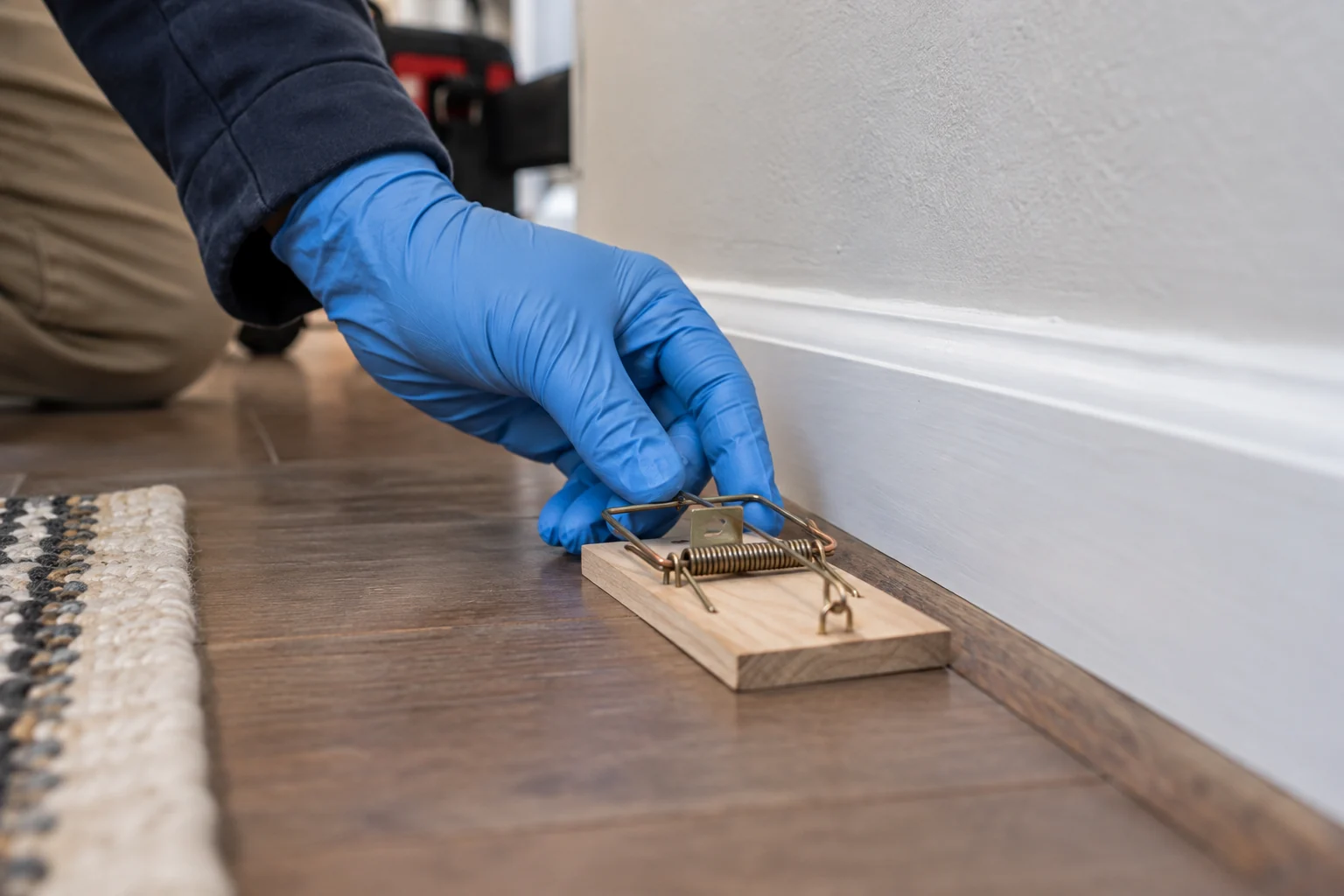
Check active traps regularly.
Frequent checking helps you:
- remove captured mice promptly
- reset reusable traps
- see which routes are active
- notice bait theft
- identify traps that need repositioning
- monitor whether activity is decreasing
A trap that is left unchecked for long periods gives you less useful information.
Regular checks are especially important for live-capture traps.
What to Do After Catching a Mouse
Follow the trap manufacturer's instructions for disposal or resetting.
Avoid direct contact with the rodent.
Wear suitable gloves when handling a used trap or mouse.
If the surrounding area contains droppings or urine, use safe wet-cleanup methods rather than dry sweeping or vacuuming fresh contamination.
After disposal:
- reset or replace the trap
- continue monitoring the route
- look for new droppings
- inspect nearby entry points
- do not assume one capture ended the infestation
A caught mouse confirms that the route is active.
That can help guide the rest of the control effort.
How Long Should You Keep Traps Set?
Keep trapping while fresh signs continue.
Do not stop immediately after the first capture or after one quiet night.
Continue monitoring for:
- fresh droppings
- new gnaw marks
- trap activity
- food damage
- sightings
- scratching sounds
Once traps remain quiet and no fresh evidence appears for a sustained period, the active infestation may be ending.
But trapping alone does not prevent reinfestation.
Entry points still need attention.
Trapping Does Not Replace Exclusion
Mouse traps remove mice that are already inside.
They do not seal the building.
If exterior openings remain available, new mice can enter after the trapped mice are removed.
Inspect for gaps around:
- utility pipes
- doors
- garage doors
- foundations
- vents
- siding
- roofline details
- crawl-space openings
Our prevention section covers exclusion and mouse-proofing in more detail.
The strongest long-term approach combines trapping with sealing and sanitation.
Common Mouse-Trapping Mistakes
Common mistakes include:
- using too few traps
- placing traps in low-activity areas
- setting traps far from walls
- using too much bait
- failing to check traps regularly
- leaving competing food accessible
- stopping after one capture
- ignoring garages, attics, or wall routes
- using traps that children or pets can reach
- trapping without fixing entry points
The trap is only one part of the control system.
Good results come from matching trap placement to real mouse behavior.
Are Mouse Traps Safe Around Children and Pets?
Any mechanical trap can cause injury if it is triggered accidentally.
Place traps where children and pets cannot reach them.
Possible protected locations may include:
- inaccessible cabinet voids
- behind secured appliances
- enclosed trap stations designed for the purpose
- protected utility areas
- other locations specifically appropriate for the trap design
Do not rely on verbal warnings alone.
Physical inaccessibility is more reliable.
If safe placement is difficult, consider a more enclosed trap design or professional help.
When Mouse Traps Are Not Enough
Trapping may not solve the problem by itself when:
- mice are active across several floors
- multiple entry points remain open
- mice are nesting in inaccessible areas
- contamination is extensive
- traps repeatedly catch mice but new activity continues
- safe trap placement is difficult
- the infestation repeatedly returns
At that point, the issue may be structural rather than simply a lack of trapping effort.
A professional inspection can help locate access points, nesting areas, and recurring routes.
Visit our professional rodent-control section for more information.
The Best Mouse Trap Setup Starts With Inspection
The best trap is not necessarily the most expensive or complicated one.
A simple mouse-sized trap placed correctly on an active travel route can be highly useful.
Start by identifying where mice are moving.
Then use enough traps to cover those routes, place them safely along edges, use a small amount of bait when appropriate, check them regularly, and keep monitoring after captures occur.
Most importantly, combine trapping with sanitation and exclusion.
If new mice can still enter the house, trapping can become an endless cycle instead of a long-term solution.
Continue with our how to get rid of mice guide, mouse droppings guide, mice in walls guide, mice in the attic guide, prevention section, or professional rodent-control section.
For the broader overview of home rodents, return to [Rats & Mice in the Home](/).