Rats in the Attic: Signs, Damage & Removal
Learn the signs of rats in an attic, how rats get in, what damage they can cause, how removal works, and how to reduce the chance that rats return.
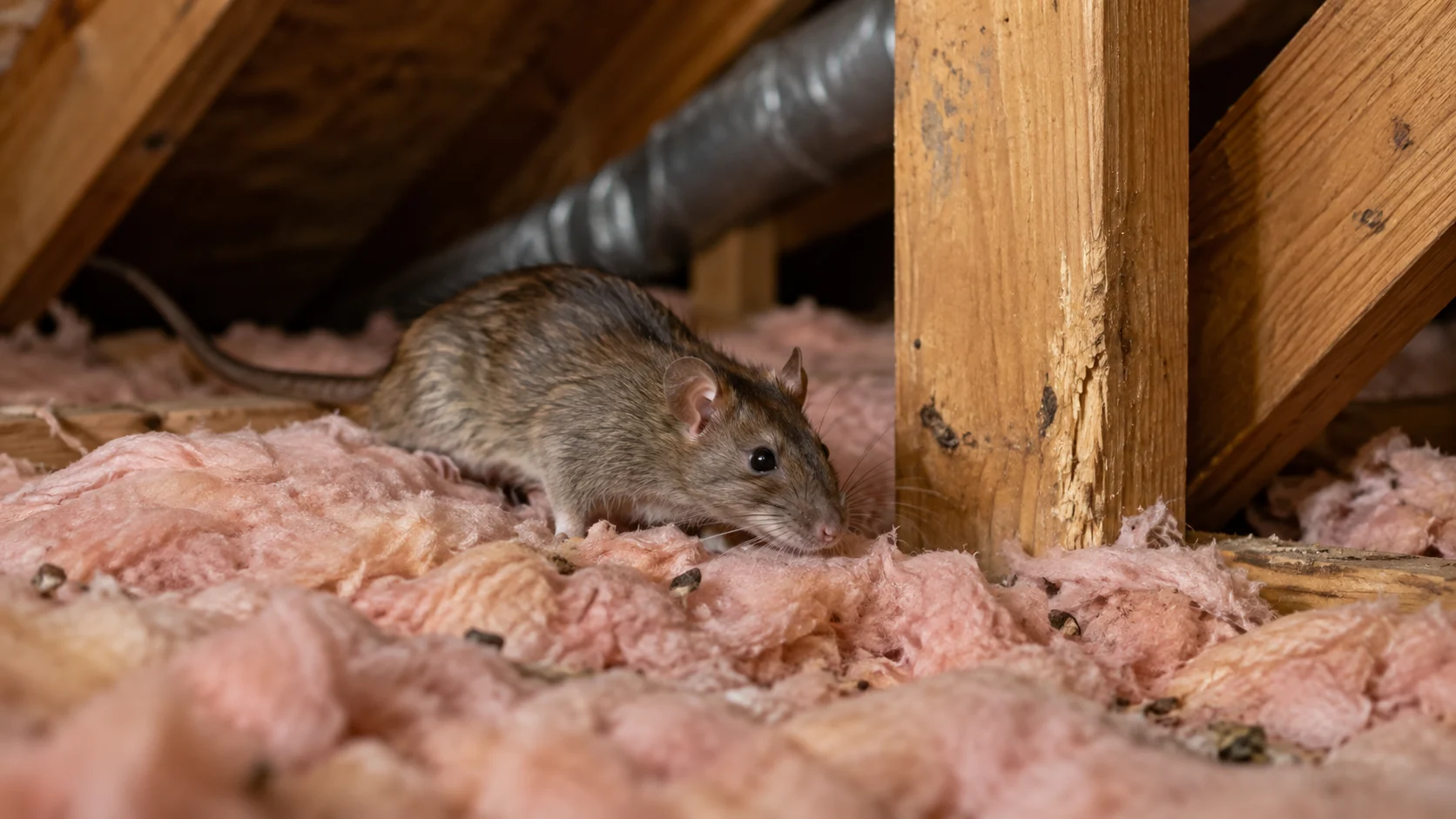
Rats in the attic can cause a serious rodent problem because attics provide shelter, nesting space, insulation, and access to wall and ceiling cavities.
Homeowners may first notice scratching or heavier movement overhead, rat droppings in insulation, gnaw marks, disturbed storage, or a persistent odor. In some homes, attic rats are discovered only after they begin moving into walls, garages, kitchens, or other parts of the structure.
The attic may be where rats spend much of their time, but it is not necessarily where they first entered the house.
Roof rats are especially strong climbers and may reach attics from trees, fences, roof edges, utility routes, soffits, vents, or attached structures. Norway rats are more strongly associated with ground-level activity, but they can also move through wall systems or other structural routes when conditions allow.
A lasting solution usually combines identification, inspection, trapping, sanitation, safe cleanup, and exclusion.
This guide explains the signs of rats in an attic, how they get there, what damage they can cause, how removal works, and how to reduce the chance that rats return.
Signs of Rats in the Attic
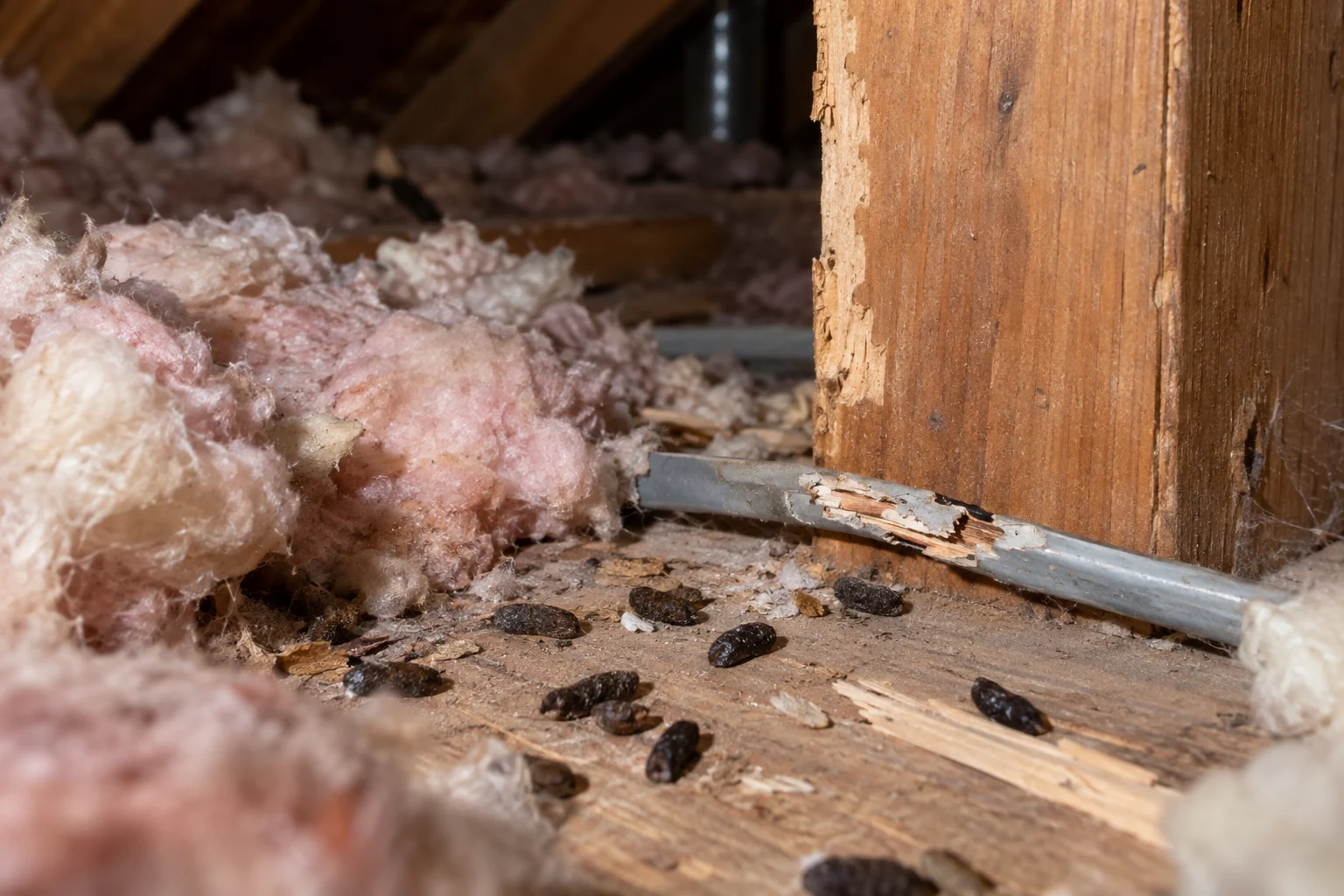
Rat activity in an attic is often detected through evidence rather than a direct sighting.
Common signs include:
- heavier scratching or movement overhead
- rat droppings in insulation or along framing
- gnaw marks on wood, plastic, wiring, or stored items
- grease or rub marks on repeated travel routes
- disturbed or compressed insulation
- shredded nesting material
- damaged cardboard boxes or stored belongings
- tracks in dusty areas
- strong urine or nesting odors
- activity near soffits, vents, roof edges, or attic openings
- repeated nighttime noise
- a rat moving from the attic into connected wall voids
One sign alone does not always prove that rats are established in the attic.
Sounds can travel through framing and ceiling cavities, and old droppings may remain long after previous activity ended.
The strongest evidence comes from several signs appearing together.
Our rat droppings guide explains one of the most useful clues in more detail.
What Do Rats in the Attic Sound Like?
Rats can create scratching, scraping, gnawing, thumping, or heavier scurrying sounds in an attic.
Compared with mice, the movement may sound:
- heavier
- slower
- more forceful
- more like dragging or bumping
- louder when the animal moves across framing or stored materials
Attic construction can amplify sound, so noise alone should not be used to identify the animal.
Pay attention to:
- what time the sounds occur
- whether the noise follows the same route
- whether it moves toward a wall or ceiling cavity
- whether rat-sized droppings are nearby
- whether larger tracks or gnaw marks are present
If the evidence could be from mice instead, compare it with Rat vs Mouse: How to Tell the Difference.
Why Rats Use Attics
Attics can provide several things rats need:
- shelter
- warmth
- darkness
- low disturbance
- nesting material
- insulation
- protected travel routes
- access to wall cavities
- connections to garages and upper floors
Roof rats are particularly well suited to elevated spaces.
They can travel along branches, fences, rooflines, utility routes, and structural edges before entering an attic.
The attic can then become both a nesting area and a central route to other parts of the building.
Food may not be located in the attic itself.
Rats may leave the attic and travel through walls, garages, or utility chases to reach kitchens, pet food, garbage, pantry goods, or outdoor feeding areas.
That is why attic rat control should not be limited to the attic floor alone.
How Rats Get Into Attics
Rats can enter through larger structural openings around the upper parts of a home.
Common access points include:
- gaps around roof edges
- damaged soffits
- attic vents
- roof vents
- gaps around fascia or trim
- openings around utility lines
- damaged screens
- roof-wall intersections
- openings around attached garages
- wall cavities connecting lower parts of the structure to the attic
Roof rats may climb directly to upper openings.
They can use:
- tree branches
- fences
- vines
- utility lines
- attached structures
- roof edges
Some rats may also enter lower on the building and move upward through wall systems.
The visible opening in the attic may therefore be only part of the route.
Inspect both the attic and the exterior areas that connect to it.
Our prevention section covers rodent entry points and exclusion in more detail.
Check the Roofline, Soffits, and Vents
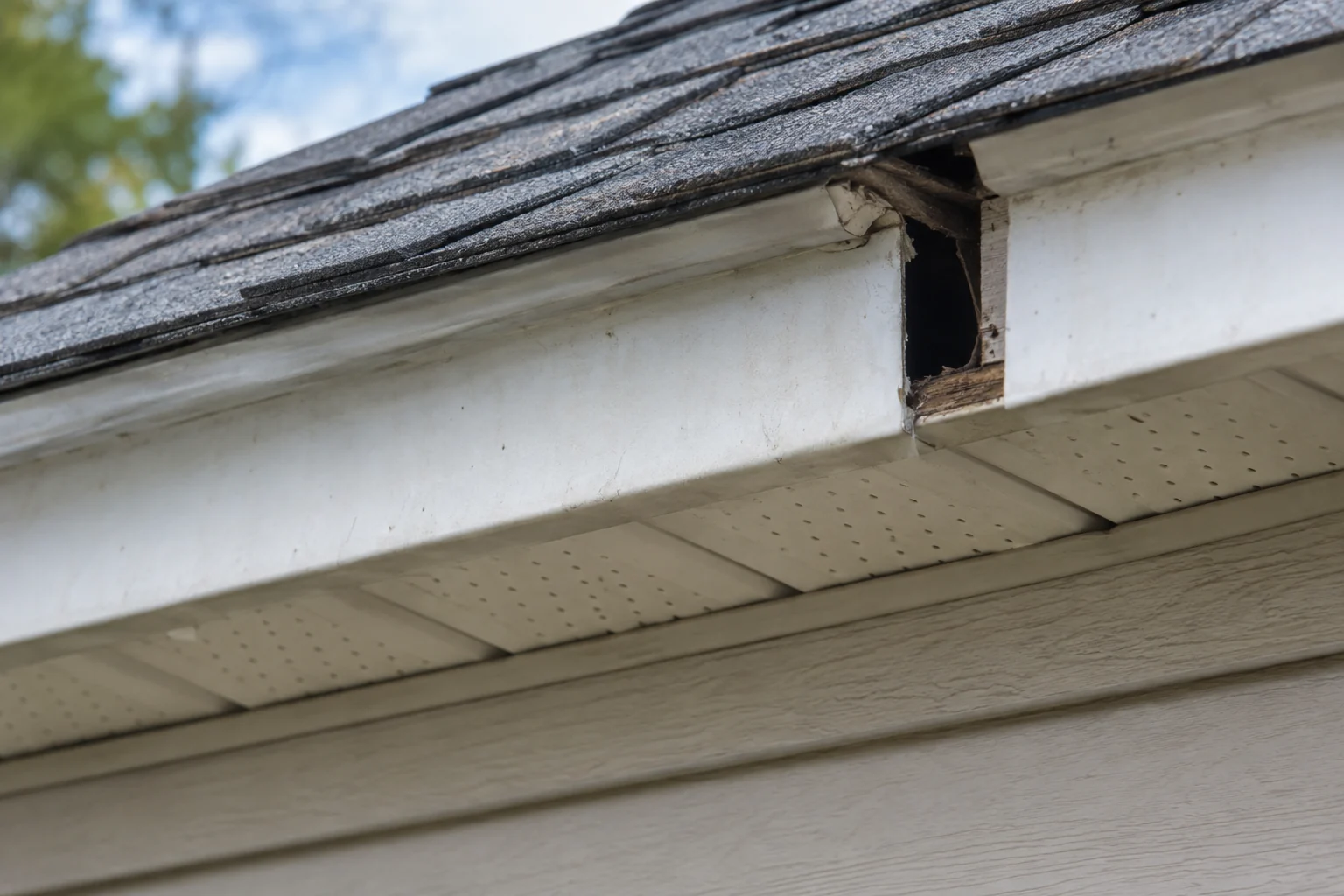
When rats are active in an attic, the roof edge deserves careful inspection.
Look for:
- broken or loose soffits
- damaged vent screens
- gaps around roof vents
- openings where roof sections meet walls
- loose fascia or trim
- construction gaps
- openings around utility lines
- damage near attic vents
Do not assume every visible gap is actively being used.
Look for supporting evidence nearby:
- rub marks
- droppings
- gnawing
- tracks
- disturbed insulation
- nesting material
- repeated noise in the same area
The best entry-point evidence combines a plausible opening with activity inside the attic nearby.
Look at Trees, Fences, and Elevated Access
Roof rats can reach an attic without climbing straight up the side of a house.
Branches, fences, vines, utility routes, and attached structures can provide elevated access.
Inspect whether:
- tree limbs touch or overhang the roof
- fences connect closely to roof edges or walls
- vines reach soffits or eaves
- utility routes approach the roofline
- sheds, pergolas, or additions connect to the house
These routes do not automatically mean rats are using them.
But when attic evidence is concentrated near the same area, the exterior route becomes more important.
Reducing unnecessary access can support exclusion work after the active infestation is being removed.
Check the Garage-Attic Connection
Attached garages can provide another route into attic spaces.
Rats may enter the garage through:
- door gaps
- damaged weather seals
- wall openings
- foundation gaps
- utility penetrations
- exterior doors
From there, they may move upward through framing or attic access above the garage.
Garages can also contain:
- pet food
- bird seed
- garbage
- stored food
- cardboard
- clutter
If attic activity is strongest above an attached garage, inspect the garage carefully.
The garage may be the main entry or feeding zone even when the rats spend much of their time overhead.
Rat Droppings in Attic Insulation
Rat droppings in attic insulation can reveal travel and nesting areas.
They may be concentrated:
- along framing
- near wall top plates
- beside stored items
- around attic access points
- near vents
- around utility penetrations
- along established travel routes
Rat droppings are much larger than typical mouse droppings.
If identification is uncertain, compare the evidence with our rat droppings guide.
Avoid disturbing contaminated insulation unnecessarily.
Do not dry sweep or vacuum fresh rodent droppings before they have been properly disinfected.
Rat Nests in Attics
Rats may build nests from available soft material.
Possible nesting material includes:
- shredded insulation
- paper
- cardboard
- fabric
- packing material
- other lightweight debris
Roof rats may establish nests in elevated protected areas.
A nest may be tucked beside framing, beneath insulation, inside stored materials, or near a wall cavity.
Do not assume every disturbed patch of insulation is a rat nest.
Look for additional evidence:
- droppings
- rub marks
- gnawing
- tracks
- food debris
- repeated activity
Finding a nest does not solve the larger problem.
You still need to determine how rats reached the attic and whether other rats remain active.
Damage Rats Can Cause in an Attic
Rats are larger and stronger than mice, so attic damage can be substantial.
Possible problems include:
- damaged cardboard and stored belongings
- contaminated insulation
- compressed or tunneled insulation
- gnawed wood
- damaged plastic
- chewed wiring insulation
- damaged flexible ducts
- nesting in stored materials
- urine contamination
- odor
Gnawing on electrical wiring is a particular concern because damaged insulation can create an electrical hazard.
If wiring appears chewed or exposed, have the affected electrical system evaluated appropriately.
Do not assume rodent removal alone addresses electrical damage that has already occurred.
Can Rats Damage Attic Insulation?
Yes.
Rats may tunnel through, compress, contaminate, or use insulation as nesting material.
The amount of damage varies.
A few droppings in one localized area are different from widespread contamination involving:
- multiple nests
- urine
- heavy droppings
- dead rodents
- strong odor
- visibly compressed insulation
- large travel paths
Widespread contamination may require more extensive cleanup or replacement.
Avoid disturbing large contaminated areas without considering appropriate protective measures.
Our cleanup section covers rodent contamination more broadly.
Can Rats Damage Wiring or Ducts?
Rats can gnaw materials in an attic, including wiring insulation and some duct materials.
Signs may include:
- exposed or damaged wire insulation
- tooth marks
- torn flexible duct material
- displaced insulation
- debris near damaged areas
Do not handle damaged electrical components casually.
If electrical wiring appears affected, professional evaluation is appropriate.
If ducts are damaged or contaminated, the situation may require more than ordinary rodent cleanup.
The extent of repair depends on the material, location, and severity of damage.
How to Get Rats Out of the Attic
Removal begins with finding the routes rats already use.
Inspect for:
- fresh droppings
- tracks
- rub marks
- gnaw marks
- nesting material
- travel paths
- openings around framing or vents
Use rat-sized traps according to the manufacturer's instructions.
Place them along confirmed travel routes where they can be checked safely.
Potential locations include:
- beside attic framing
- near droppings
- along wall top plates
- near stored materials
- near attic access points
- beside suspected entry routes
Do not spread traps randomly across the entire attic.
Concentrate them where evidence is strongest.
The broader process is explained in How to Get Rid of Rats in Your House.
Rat Trap Placement in an Attic
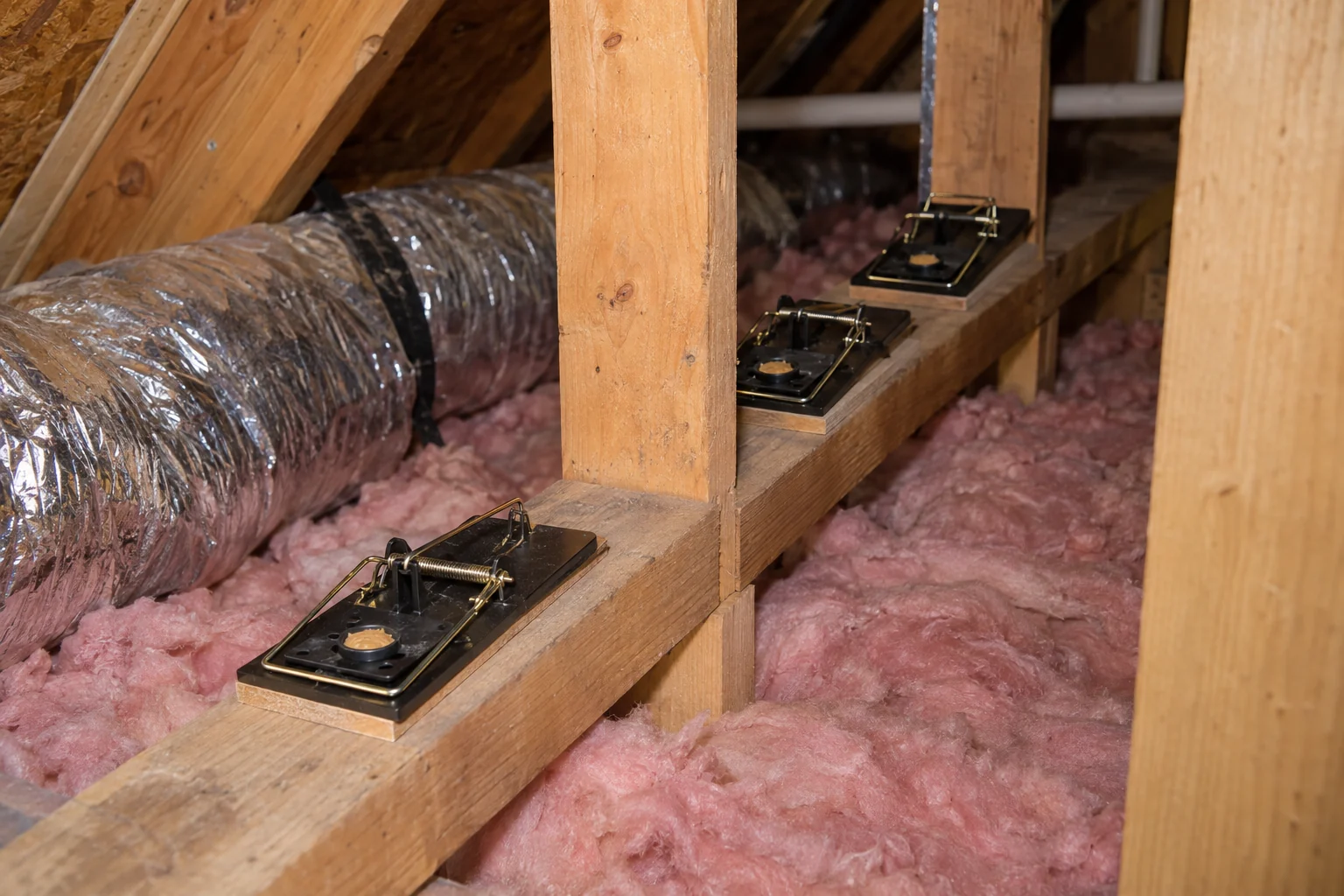
Rats often travel along edges and structural lines.
Good placement depends on confirmed activity.
Useful trap locations may include:
- beside framing
- along narrow travel routes
- near wall top plates
- behind stored items
- near vents or utility penetrations
- near droppings or rub marks
Keep traps where children and pets cannot access them.
Make sure each trap can be checked without unsafe movement through the attic.
Rats can be cautious around new objects.
A trap may not produce immediate results even when it is placed on an active route.
Continue monitoring the surrounding evidence before repeatedly moving devices.
What About Rat Poison in the Attic?
Rodenticide bait can create a practical problem in an attic.
A poisoned rat may die inside:
- insulation
- a wall cavity
- a ceiling void
- another inaccessible area
That can lead to odor and insect activity while the carcass decomposes.
Any pesticide must also be used exactly according to its label and kept inaccessible to children and pets.
Do not scatter loose rodenticide through attic insulation or other areas unless the specific product label allows that use.
For many attic rat problems, inspection, trapping, sanitation, exclusion, and monitoring provide a more visible and controllable starting point.
Coordinate Exclusion With Rat Removal
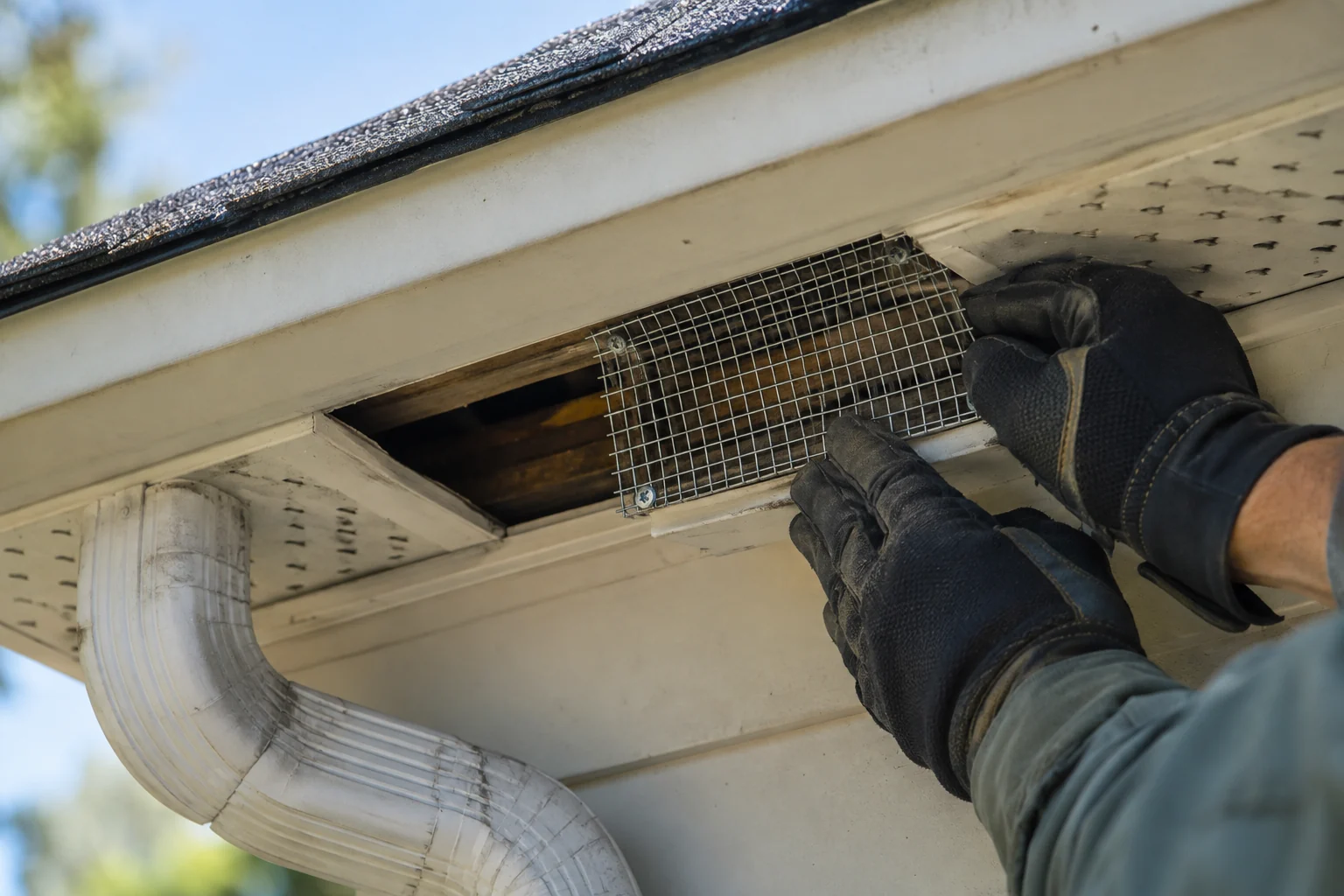
Exclusion is essential for long-term control.
But timing matters.
If rats are actively living in the attic, sealing every opening immediately without understanding the routes can leave animals trapped inside.
That may lead to:
- stronger gnawing
- movement into wall cavities
- odor
- new exit attempts
- damage in other parts of the structure
Identify active routes and begin removal before final exclusion is completed.
The exact sequence depends on the building and the infestation.
Complex attic infestations may benefit from professional inspection before major openings are sealed.
Safe Cleanup of Rat Droppings in the Attic
Attics are more difficult to clean than normal living areas because of limited access, insulation, heat, dust, and structural hazards.
Do not begin by dry sweeping or vacuuming fresh rat droppings.
Use suitable gloves and wet contaminated material with an appropriate disinfectant according to its label before removal.
Contaminated insulation cannot always be cleaned like a hard surface.
Large areas of droppings, urine, nesting material, or dead rodents can require a more involved cleanup plan.
If you cannot move safely through the attic or the contamination is widespread, professional cleanup may be appropriate.
See our cleanup section and rodent safety section for related topics.
What If a Rat Dies in the Attic?
A dead rat can produce a strong odor because of its larger body size.
Warm attic conditions may make the smell more noticeable.
Odor can move through:
- ceiling openings
- wall cavities
- vents
- utility chases
- attic access openings
If the carcass can be accessed safely, removal may solve the immediate odor source.
If the rat is buried in insulation or inside an inaccessible void, locating it can be difficult.
Do not tear apart the attic or ceiling based only on odor unless the likely location is reasonably clear.
Monitor After the Rats Appear to Be Gone
A quiet attic is not proof that the infestation has ended.
Continue checking for:
- fresh droppings
- new gnawing
- rub marks
- trap activity
- disturbed insulation
- fresh nesting material
- new sounds
- reopened gaps
After old evidence has been cleaned safely, new activity becomes easier to identify.
Monitoring is especially important after exclusion work because fresh evidence may reveal an entry point that was missed.
How Long Does It Take to Get Rid of Rats in an Attic?
There is no single timeline.
A small problem with one obvious route may be resolved more quickly than an attic involving:
- several entry points
- wall voids
- multiple nesting areas
- garage access
- widespread contamination
- repeated exterior rat pressure
Progress depends on:
- number of rats
- how long they have been active
- trap placement
- food availability elsewhere
- number of entry points
- structural complexity
- whether rats are nesting inside or traveling in from outside
Do not judge success from one or two quiet nights.
Use fresh evidence, trap activity, and continued inspection to decide whether the infestation is ending.
Common Mistakes With Rats in the Attic
Common mistakes include:
- treating only the attic and ignoring the exterior
- using mouse-sized traps
- placing traps away from active routes
- sealing one visible opening and overlooking others
- ignoring trees or elevated access routes
- failing to inspect an attached garage
- disturbing contaminated insulation unnecessarily
- using poison without considering inaccessible carcasses
- stopping as soon as the noise decreases
- assuming all attic sounds are rats
The attic should be treated as part of the entire building.
Rat activity may connect the attic to walls, garages, kitchens, ceilings, and exterior routes.
When to Call a Professional
Professional rodent control may be useful when:
- rats remain active despite sustained trapping
- the attic has several suspected entry points
- activity extends into walls or ceilings
- contamination is widespread
- wiring or ducts may be damaged
- the attic is difficult or unsafe to access
- roofline exclusion work is required
- the infestation repeatedly returns
- safe trap placement is difficult
- you cannot determine how the rats are entering
A useful professional inspection should identify active travel routes, likely exterior entry points, structural damage, contamination, and the parts of the building that connect the attic to the rest of the home.
Visit our professional rodent-control section for more information.
The Best Attic Rat Solution Combines Removal and Exclusion
Rats in an attic are not solved permanently by trapping alone.
The long-term goal is to remove the rats already using the space and stop new rats from entering.
Start by confirming activity, inspect the attic and exterior routes, place rat-sized traps along accessible travel paths, reduce food sources elsewhere on the property, clean contaminated material safely, and identify structural openings.
Then coordinate exclusion with removal so the attic is no longer accessible.
Continue with our rat droppings guide, Rat vs Mouse guide, rats in walls guide, how to get rid of rats guide, prevention section, cleanup section, or professional rodent-control section.
For the broader overview of home rodents, return to [Rats & Mice in the Home](/).