Rats in Walls: Signs, Entry Points & What to Do
Learn how to recognize rat activity inside walls, how rats get into wall voids, where to inspect, what to avoid, and when professional rodent control may be useful.
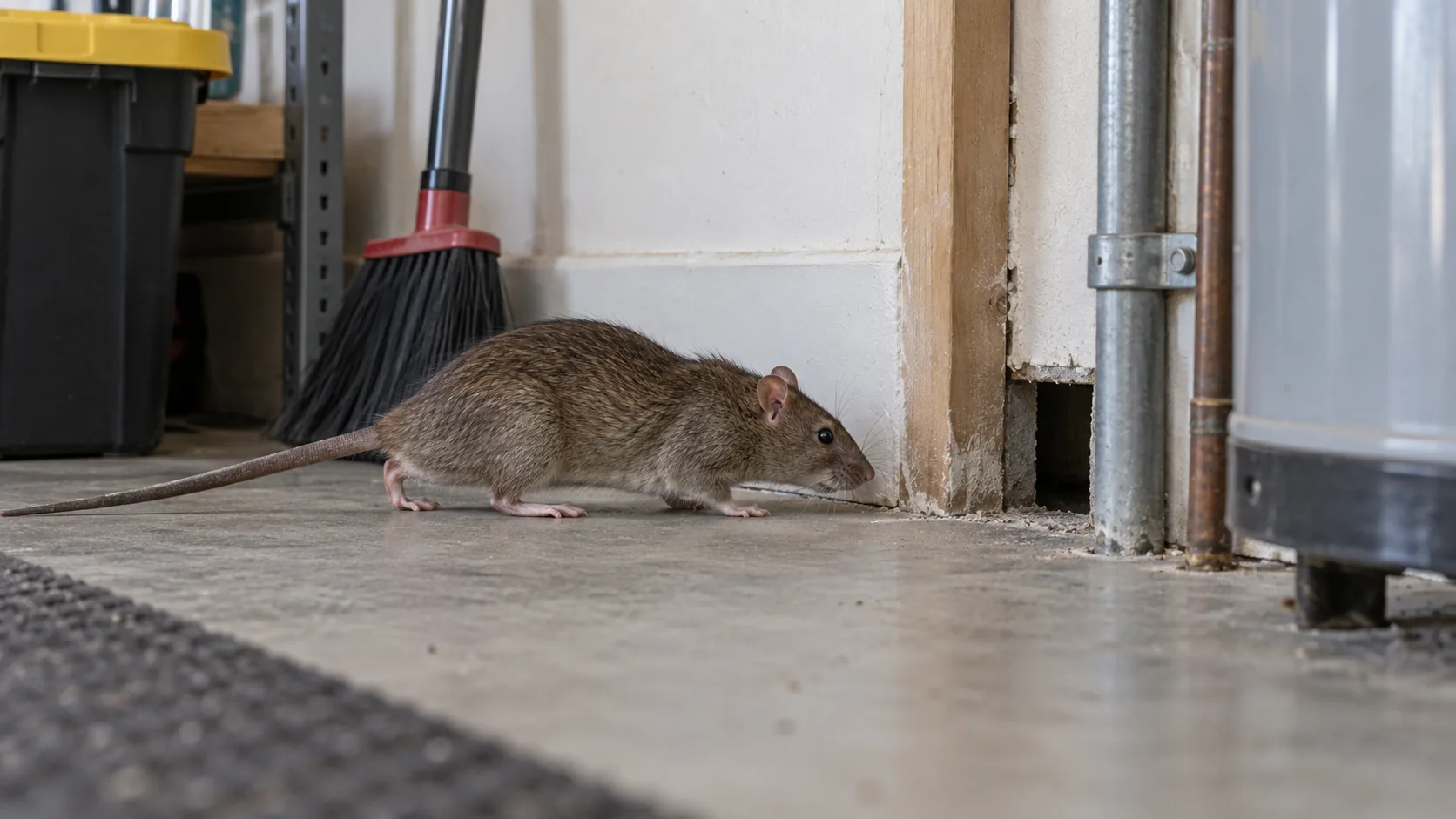
Rats in walls can be difficult to deal with because the animals may stay hidden inside wall voids while leaving only indirect signs in the rooms around them.
You may hear heavier scratching or movement at night, find larger rodent droppings along baseboards, notice gnaw damage, smell a persistent odor, or see a rat disappear into a gap near a garage, utility line, crawl space, basement, attic, or cabinet.
The wall itself is usually only part of the problem.
Rats reached that wall cavity from somewhere else, and they often leave the void to reach food, water, shelter, or another section of the building. A lasting solution depends on tracing that route instead of treating the wall as an isolated hiding place.
This guide explains how to recognize rat activity inside walls, how rats get into wall voids, where to inspect, what to avoid, how trapping and exclusion fit together, and when professional help may be appropriate.
Signs You May Have Rats in the Walls
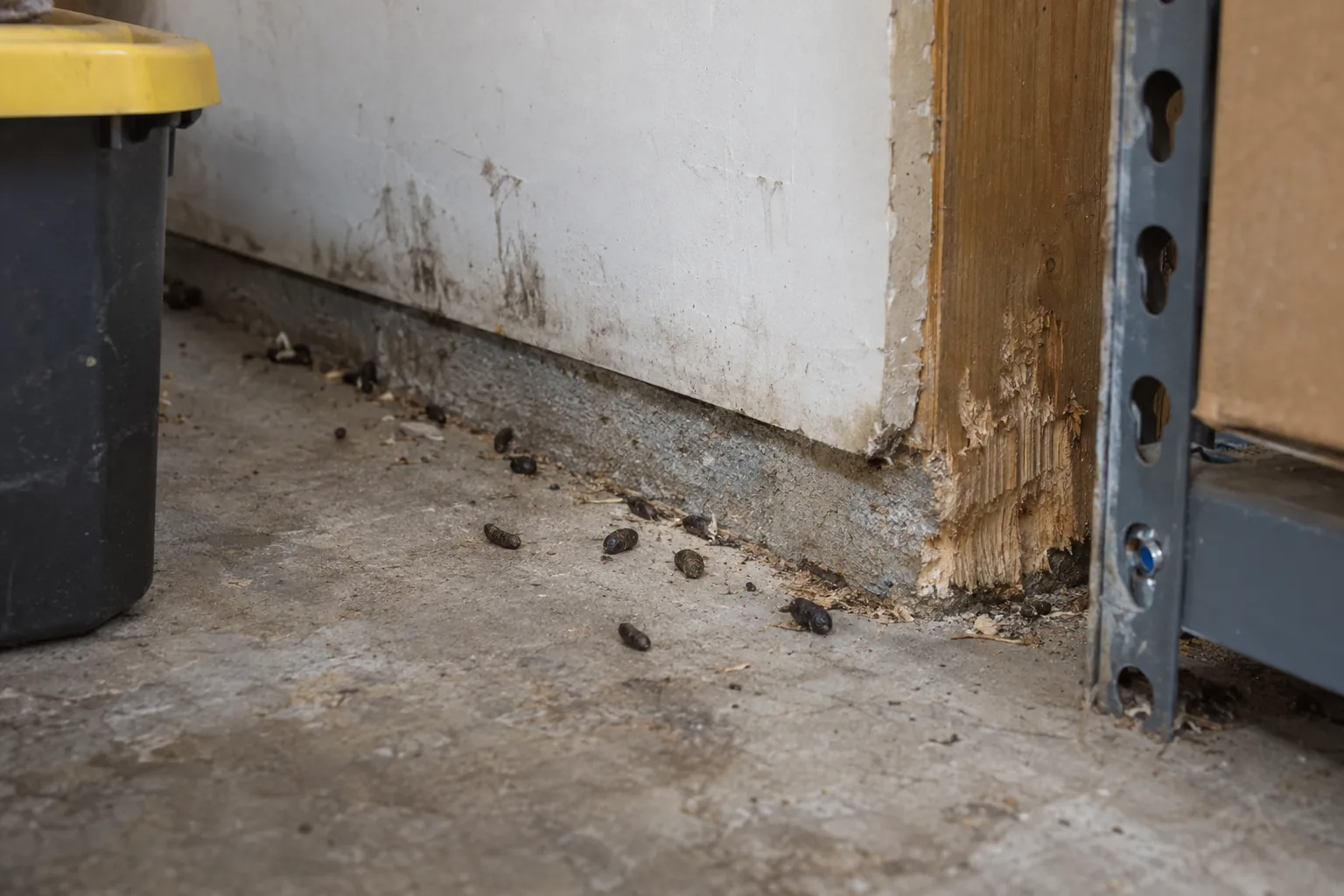
Rats are larger than mice, so their activity can leave more substantial evidence.
Common signs include:
- scratching, scraping, or movement inside walls
- heavier nighttime sounds
- larger rodent droppings near baseboards or utility areas
- strong gnaw marks on wood, plastic, or stored materials
- grease or rub marks along travel routes
- damaged food packaging
- odors from urine, nesting material, or a dead rat
- activity around garage walls, crawl spaces, basements, or attics
- repeated sightings near structural gaps
- signs around foundation or roof-level entry points
One sign alone does not prove that a rat is living inside a specific wall.
Sound can travel through framing, plumbing chases, ceiling voids, and connected cavities. A rat may also be using the wall only as a protected route.
Look for multiple types of evidence before deciding where the main activity is concentrated.
Our rat droppings guide covers one of the most useful signs in more detail.
What Do Rats in Walls Sound Like?
Rats can create scratching, gnawing, rustling, and heavier movement sounds inside wall cavities.
Compared with mice, rat activity may sound:
- heavier
- slower
- more forceful
- more like thumping or dragging
- louder when the animal climbs or turns in a tight space
But wall construction can amplify small noises, so sound volume is not a perfect way to identify the animal.
Pay attention to:
- what time the noise occurs
- whether it happens repeatedly in the same area
- whether the sound moves vertically
- whether the wall connects to a garage, attic, crawl space, or basement
- whether rat-sized droppings or gnaw marks are nearby
If you are unsure whether the animal is a rat or mouse, compare the evidence with Rat vs Mouse: How to Tell the Difference.
Why Rats Use Wall Voids
Wall cavities offer protected travel routes.
Rats may use them to move between:
- garages and living areas
- crawl spaces and upper floors
- basements and kitchens
- attics and interior rooms
- plumbing chases
- utility penetrations
- exterior openings and indoor food sources
Some wall voids may also provide nesting space.
However, rats do not appear inside walls without a route into the structure.
The more useful question is not simply, “How do I get the rat out of this wall?”
It is:
How did the rat reach this cavity, where does it come out, and what other parts of the building are connected to the same route?
That approach is much more useful for long-term control.
How Rats Get Into Walls From Outside
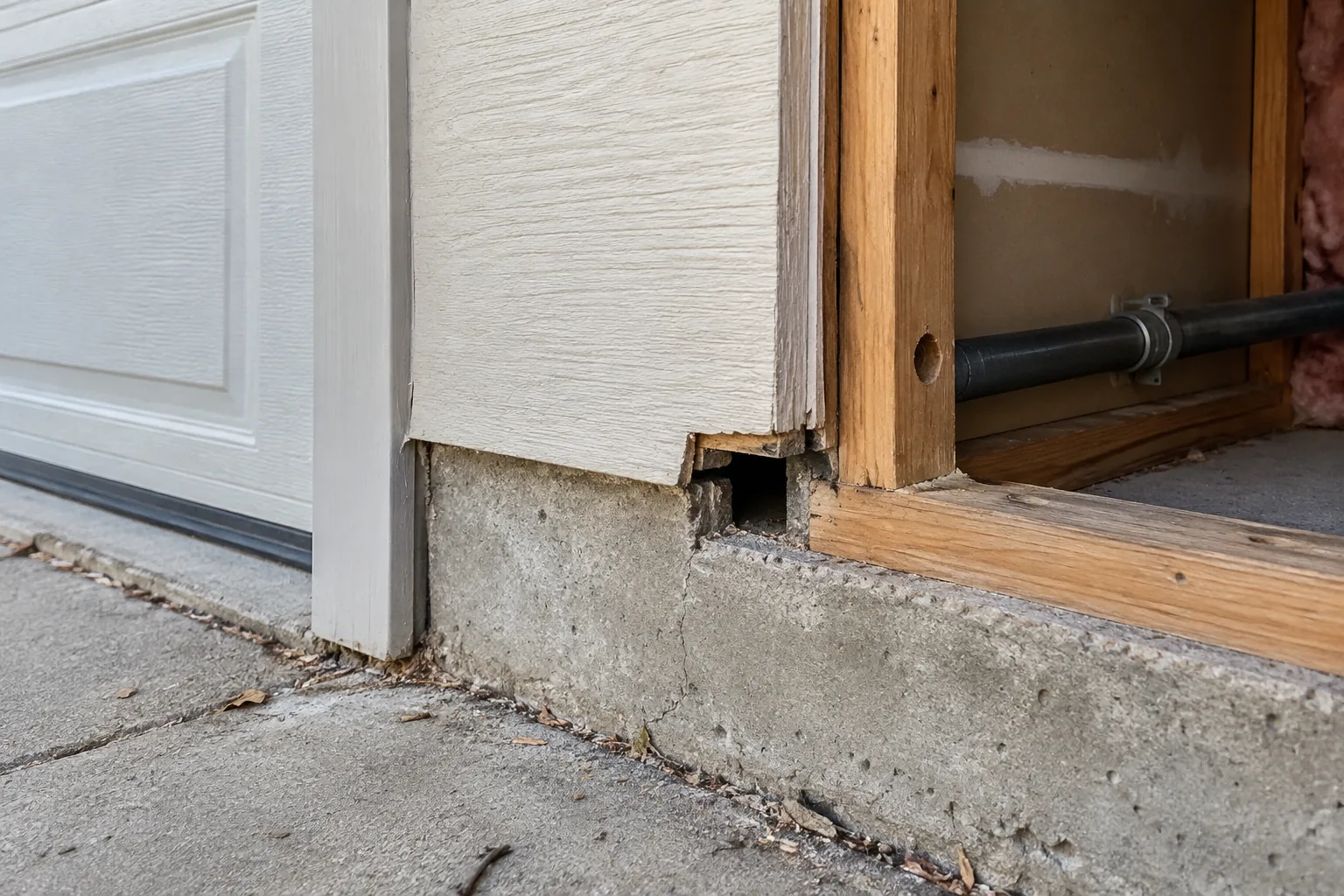
Rats need larger openings than mice, but they can still exploit many common building gaps.
Possible entry areas include:
- foundation openings
- damaged crawl-space vents
- gaps around utility pipes
- openings around electrical or cable penetrations
- garage-door gaps
- damaged exterior doors
- broken vents
- gaps around siding
- roofline openings
- soffit damage
- openings around attic vents
- structural joints
- damaged screens
Norway rats are often associated with lower entry routes, foundations, crawl spaces, basements, and ground-level openings.
Roof rats are strong climbers and may reach upper wall voids from trees, fences, roofs, utility routes, or attached structures.
The type of evidence around the wall can help narrow down the likely route.
See our prevention section for broader entry-point and exclusion guidance.
Inspect Both Sides of the Wall
If rat activity seems concentrated in one wall, inspect both sides.
Look for:
- droppings
- grease marks
- gnawing
- damaged food
- openings around pipes
- gaps behind cabinets
- tracks in dust
- disturbed insulation
- access to storage areas
- direct sightings
Also consider what is above and below the wall.
A wall may connect vertically to:
- an attic
- a basement
- a crawl space
- a garage
- another floor
- a utility chase
The sound you hear in one room may be only one section of a much longer route.
This is especially important in multistory homes or houses with shared mechanical and plumbing chases.
Rats in Kitchen Walls
Kitchens offer food, water, appliances, cabinets, and utility penetrations in a compact area.
Rats may emerge from wall voids through openings:
- behind lower cabinets
- under sinks
- behind refrigerators
- behind stoves
- around plumbing lines
- around dishwasher connections
- near utility penetrations
- behind toe-kick spaces
Large droppings, grease marks, food damage, or stronger gnawing can help confirm rat activity.
Do not assume the nest is inside the kitchen wall.
The rat may be traveling from a crawl space, basement, garage, attic, or exterior burrow to reach the kitchen.
The kitchen may be the feeding area rather than the nesting area.
Rats in Garage Walls
Garages are a common transition zone between outdoors and the rest of the structure.
Rats may enter through:
- gaps around garage doors
- utility penetrations
- damaged weather seals
- wall-floor joints
- foundation openings
- attic access above the garage
- gaps around exterior doors
Garages may also contain pet food, bird seed, garbage, stored materials, and clutter that provide food or shelter.
If rat droppings or grease marks follow a shared wall between the garage and the house, inspect that wall carefully.
The garage may be the main entry area even if activity is later heard in interior rooms.
Rats in Walls Near Crawl Spaces and Basements
Ground-level rats may enter wall systems from below.
Inspect crawl spaces and basements for:
- rat droppings
- tracks
- rub marks
- gnaw damage
- foundation gaps
- plumbing penetrations
- damaged vents
- burrow activity outside
- openings near sill plates
A rat may enter at the foundation, move through a crawl space, and then travel upward inside wall framing.
In these cases, trapping only in the room where the noise is heard may not address the source.
Follow the structure from the suspected exterior entry point toward the wall activity.
Rats in Walls Near the Attic
Upper wall activity may point toward attic or roof-level access.
Roof rats are strong climbers and may reach the structure from:
- tree branches
- fences
- utility routes
- attached structures
- roof edges
- vents
- soffits
- damaged roofing details
Inspect the attic for:
- larger rodent droppings
- tracks in dust
- gnaw marks
- disturbed insulation
- rub marks
- nesting material
- openings near roof edges or vents
Do not identify the animal from location alone.
Use the size of droppings, tracks, gnawing, and any sightings to support the identification.
Can Rats Live Inside Walls?
Yes.
A wall cavity can provide shelter, warmth, darkness, and a protected travel route.
Rats may also use insulation, paper, fabric, or other material to create nesting areas.
But a rat heard inside a wall is not necessarily nesting there.
It may be traveling between two other locations.
This distinction matters because opening drywall at the first sound may fail to find the animal or nest.
Look for stronger evidence before making invasive repairs.
Repeated activity in one location, strong odor, concentrated droppings nearby, nesting material, or camera evidence can make a specific wall area more meaningful.
Should You Cut Open the Wall?
Usually not as the first step.
Cutting drywall without knowing the exact location can create repair work without solving the infestation.
Start with accessible areas:
- inspect adjacent rooms
- inspect the garage
- inspect the attic
- inspect the basement or crawl space
- check behind appliances
- inspect utility penetrations
- inspect the exterior
- monitor with traps or cameras where appropriate
Opening a wall may become reasonable when there is strong evidence of:
- a dead rat
- extensive contamination
- a confirmed nest
- damaged wiring
- an inaccessible active area
- another building problem requiring access
But invasive work should follow evidence.
How to Get Rats Out of Walls
The main goal is usually to intercept rats where they enter or leave the wall cavity.
Look for active routes near:
- baseboards
- garages
- cabinets
- appliance gaps
- plumbing penetrations
- crawl-space transitions
- basement walls
- attic access points
Use rat-sized traps according to the manufacturer's instructions and place them where activity has been confirmed.
Keep traps inaccessible to children and pets.
Do not assume that a trap must be placed inside the wall.
Accessible travel routes are often more practical and easier to monitor.
The broader process is covered in How to Get Rid of Rats in Your House.
Trap Placement Near Wall Activity
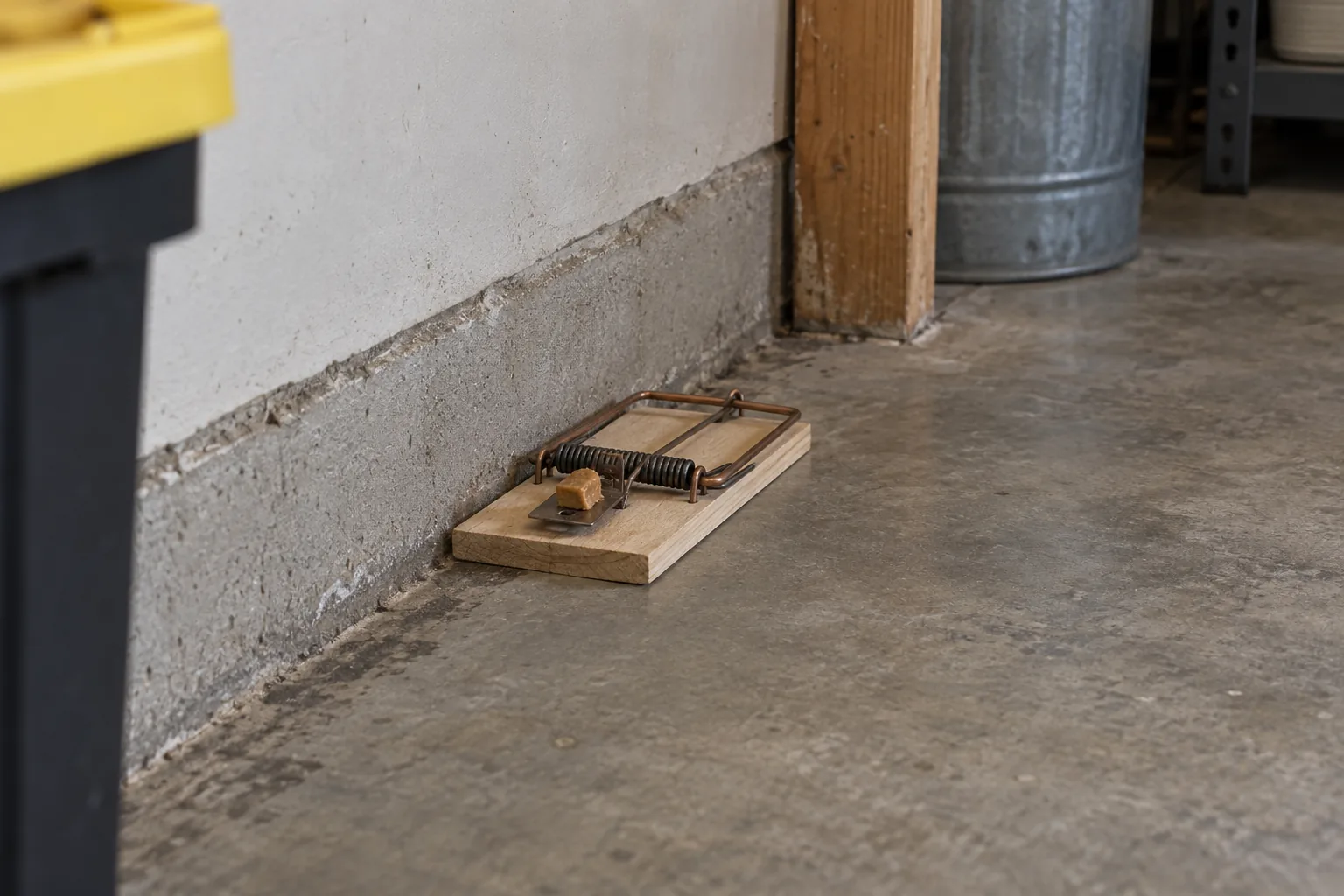
Rat traps work best when placed where rats already travel.
Useful locations may include:
- along the base of the active wall
- beside garage walls
- behind large appliances
- near crawl-space transitions
- near basement utility lines
- in attics along confirmed routes
- near openings around pipes or wiring
Do not spread traps randomly through open areas.
Use droppings, rub marks, gnawing, tracks, and sightings to identify the best routes.
Rats can be cautious around unfamiliar objects, so a trap may not produce an immediate result even when placed correctly.
Continue monitoring the area rather than moving every trap after one quiet night.
What About Poison for Rats in Walls?
Rodenticide bait can create a practical problem when rats are using inaccessible wall voids.
A poisoned rat may die inside a wall, ceiling, attic void, crawl space, or another place that is difficult to reach.
That can lead to odor and insect activity while the carcass decomposes.
Any pesticide must also be used exactly according to its label and kept inaccessible to children and pets.
Do not scatter loose rodenticide into walls, crawl spaces, attics, garages, or other areas unless the product label specifically allows that use.
For many indoor rat problems, inspection, trapping, sanitation, exclusion, and monitoring provide a more visible and controllable starting point.
Do Repellents Drive Rats Out of Walls?
Do not rely on repellents as the main solution.
Strong smells, ultrasonic devices, and similar products may seem easier than tracing entry routes and trapping.
But making one wall area less attractive does not solve the infestation if the rat can simply move to another cavity.
The underlying issues remain:
- access
- food
- water
- shelter
- travel routes
Focus on methods that directly address those conditions.
Coordinate Exclusion With Rat Removal
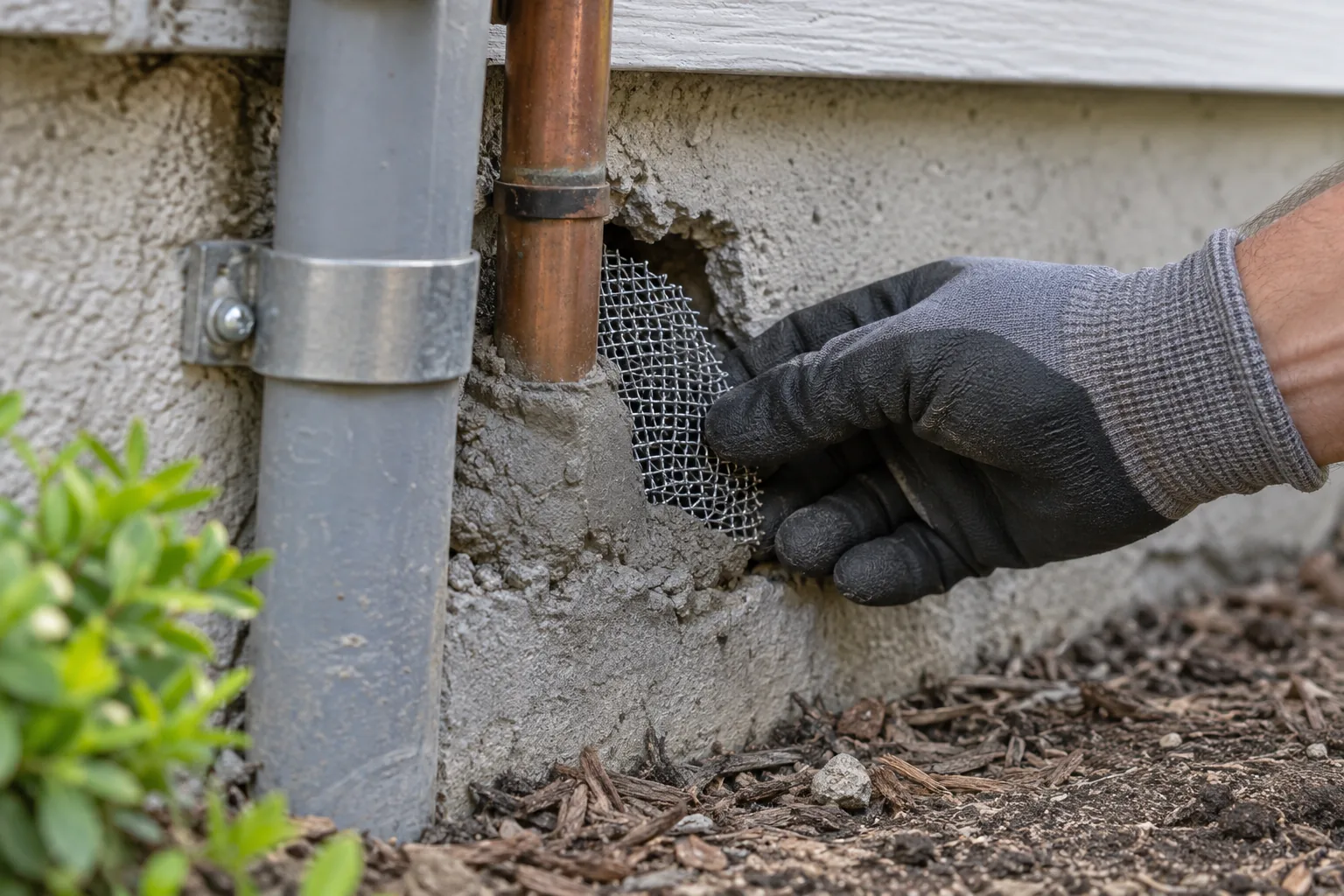
Exclusion is essential for long-term rat control.
But the timing matters.
If rats are actively using interior wall voids, sealing an opening without understanding the route can sometimes leave animals trapped inside the structure.
That may lead to:
- stronger gnawing
- new exit attempts
- odor
- movement into another part of the building
Identify active routes, begin removal, and address structural openings as part of the same plan.
Complex infestations involving several voids, floors, or entry points may benefit from professional inspection before major openings are sealed.
What If a Rat Dies in the Wall?
A dead rat can produce a stronger odor than a dead mouse because of its larger body size.
The smell may be noticeable near:
- outlets
- wall openings
- cabinets
- vents
- baseboards
- plumbing penetrations
- ceilings
Air movement can carry odor away from the actual carcass, so smell alone does not always reveal the exact location.
If the rat can be safely accessed through an existing opening, removal may be possible.
If not, opening the wall should be considered only when the likely location is reasonably well established and the odor or insect activity justifies the repair work.
Our cleanup section covers dead rodents and odor problems more broadly.
Clean Rat Droppings Near Wall Openings Safely
If rat droppings are present near the wall, do not begin by dry sweeping or vacuuming them.
Treat rodent waste as potentially contaminated material.
Use suitable gloves and wet the droppings and surrounding contaminated material with an appropriate disinfectant according to its label before removal.
Keep children and pets away from contaminated areas.
Once the area has been cleaned safely, it becomes easier to monitor.
New droppings near the same opening are strong evidence that rats are still using the route.
See our rat droppings guide, cleanup section, and rodent safety section for related guidance.
How Long Does It Take to Stop Rats in Walls?
There is no single timeline.
A small problem with one obvious route may be resolved more quickly than an infestation involving:
- multiple walls
- a crawl space
- an attic
- a garage
- exterior burrows
- several structural openings
Progress depends on:
- number of rats
- number of active routes
- trap placement
- food availability
- structural complexity
- entry-point count
- whether rats are nesting indoors or outside
- whether neighboring structures also have activity
Do not judge success only by one quiet night.
Continue monitoring for fresh droppings, trap activity, gnawing, sightings, and new sounds.
Common Mistakes When Rats Are in the Walls
Common mistakes include:
- cutting open drywall before confirming the location
- using mouse-sized traps
- placing traps away from active routes
- ignoring exterior burrows
- failing to inspect garages or crawl spaces
- overlooking roof-level access
- sealing one obvious opening while leaving others
- relying only on repellents
- stopping as soon as noise decreases
- ignoring new droppings after cleanup
The wall is usually only one part of the route.
The more useful approach is to trace how rats move through the entire property.
When to Call a Professional
Professional rodent control may be useful when:
- rats remain active despite sustained trapping
- activity occurs in several wall systems
- you cannot locate the main entry points
- crawl spaces, basements, or attics are involved
- exterior burrows are widespread
- contamination is extensive
- a dead rat may be inside an inaccessible wall
- wiring or other building systems may be damaged
- activity repeatedly returns
- safe trap placement is difficult
A useful professional inspection should connect the indoor evidence to the likely exterior route.
It should not focus only on the room where the noise is heard.
Visit our professional rodent-control section for more information.
The Wall Is Only Part of the Rat Problem
Rats in walls are difficult because the animals stay hidden.
But the wall cavity is rarely the whole infestation.
Rats entered the structure somewhere, they leave the wall to find food and water, and they use routes that can often be identified through droppings, rub marks, gnawing, tracks, and repeated sightings.
Start by confirming rat activity, inspect the rooms and structural areas connected to the wall, trap along accessible travel routes, reduce food sources, and locate the openings that allow rats into the building.
Then coordinate exclusion with removal so that new rats cannot replace the ones already inside.
Continue with our rat droppings guide, Rat vs Mouse identification guide, how to get rid of rats guide, prevention section, cleanup section, or professional rodent-control section.
For the broader national overview, return to [Rats & Mice in the Home](/).