Rat Droppings: What They Look Like & What They Mean
Learn what rat droppings look like, where they are commonly found, how they differ from mouse droppings, what fresh activity looks like, and how to clean contaminated areas safely.
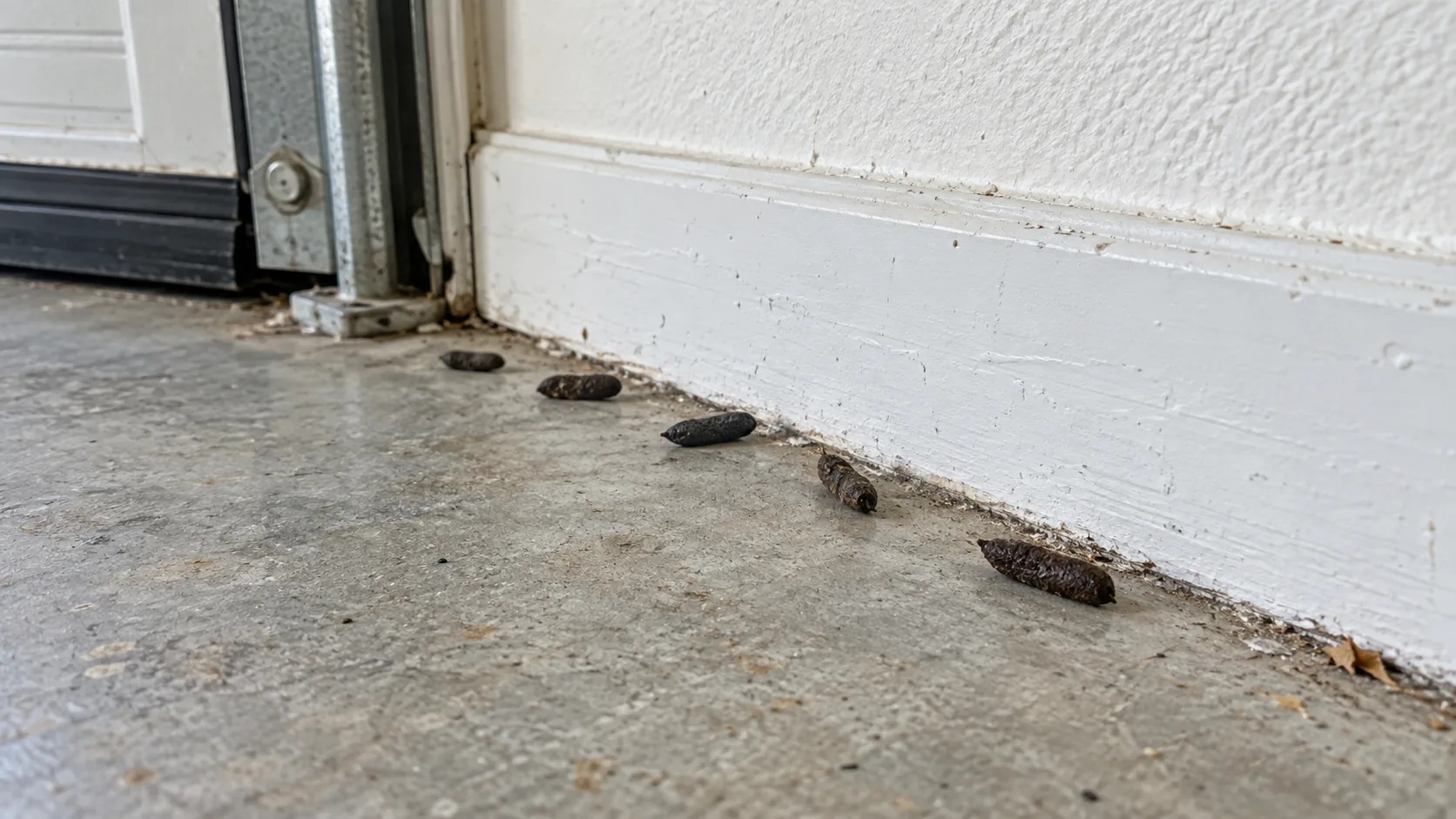
Rat droppings are one of the clearest signs that rats have been active in or around a home.
They may appear in garages, basements, crawl spaces, attics, kitchens, storage areas, along walls, near food sources, or close to exterior entry points. Because rats often move at night and stay hidden during the day, droppings may be noticed before the animal itself is seen.
Finding rat droppings does not tell you everything about the infestation. A few droppings do not reveal exactly how many rats are present, where they are nesting, or whether the activity is still current.
But the size, shape, distribution, location, and freshness of droppings can help you determine where rats are traveling and what to inspect next.
This guide explains what rat droppings look like, where they are commonly found, how they differ from mouse droppings, what fresh activity looks like, and how contaminated areas should be cleaned safely.
What Do Rat Droppings Look Like?
Rat droppings are dark, pellet-like feces that are usually much larger than mouse droppings.
Fresh droppings may appear dark brown to black and relatively smooth. Older droppings may become duller, lighter, dusty, dry, or brittle.
Common characteristics include:
- larger size than mouse droppings
- dark brown to black color when fresh
- elongated or capsule-like shape
- repeated deposits along travel routes
- clusters near feeding or nesting areas
- larger scale than most common mouse evidence
The exact appearance varies with the rat species, diet, age, hydration, and environmental conditions.
For practical identification, do not rely on shape alone. Look at the droppings together with tracks, gnaw marks, entry openings, burrows, rub marks, and the location of activity.
For a direct rodent comparison, see Rat vs Mouse: How to Tell the Difference.
How Big Are Rat Droppings?
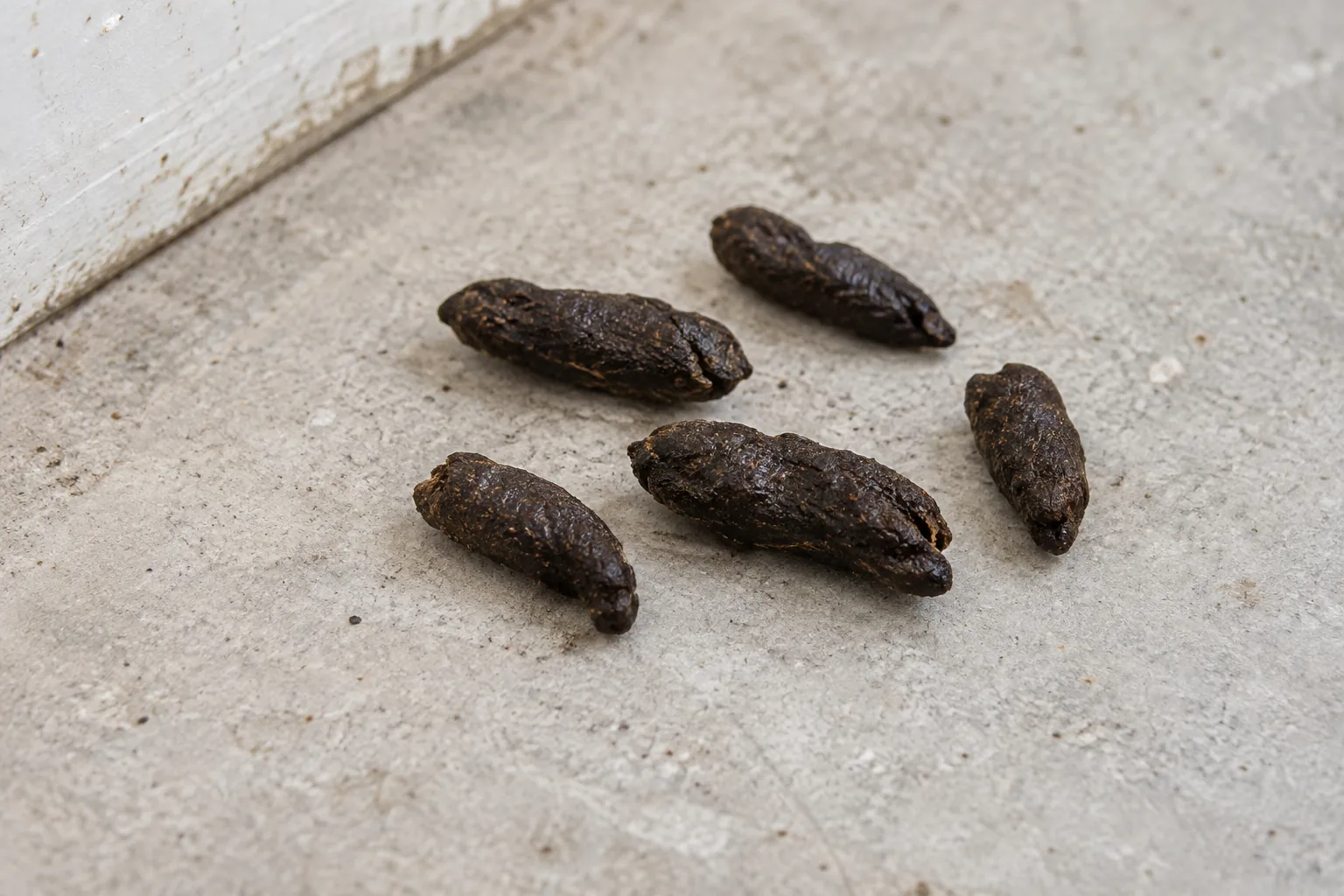
Rat droppings are noticeably larger than typical house-mouse droppings.
Homeowners often recognize a rat problem because the feces look too large to have come from a small mouse.
Exact dimensions vary, so it is more useful to think in relative terms.
Typical rat droppings are:
- larger and thicker than mouse droppings
- easier to see on floors or along walls
- associated with larger footprints
- often found near heavier gnaw damage
- more likely to occur around larger entry openings
A young rat can produce smaller droppings than a fully grown adult, which can make identification less obvious.
If the size seems borderline, inspect the surrounding evidence.
Large tracks, thick grease marks, strong gnaw damage, burrows, or larger structural openings all support a rat identification.
Norway Rat Droppings vs Roof Rat Droppings
Different rat species can produce droppings with somewhat different appearances.
Norway rat droppings are often described as larger and more blunt-ended.
Roof rat droppings may appear somewhat narrower or more tapered.
However, there is enough variation that homeowners should not try to identify the rat species from droppings alone.
Location is often more useful.
Norway rats are strongly associated with:
- ground-level activity
- basements
- crawl spaces
- garages
- foundation areas
- burrows
- lower wall voids
Roof rats are more strongly associated with:
- attics
- rooflines
- upper wall voids
- trees
- fences
- elevated storage areas
- upper structural entry points
Combine dropping appearance with where they are found and how the rodents are moving through the property.
Our rodent identification section covers the major rat and mouse species in more detail.
Where Are Rat Droppings Commonly Found?
Rats often leave droppings along established travel routes and near food, water, shelter, or entry points.
Common locations include:
- garages
- basements
- crawl spaces
- attics
- kitchens
- utility rooms
- storage areas
- along baseboards
- behind appliances
- near garbage storage
- around pet food
- near exterior doors
- beside foundation openings
- close to burrows
- near utility penetrations
The location can tell you more than the droppings alone.
Droppings along a garage wall may mark a travel route.
Droppings in a crawl space may point toward foundation or vent access.
Droppings in an attic may shift attention toward roof-level entry routes, vegetation, or climbing rats.
Use our rodent problem guides to investigate activity by location.
Why Rat Droppings Often Appear Along Walls
Rats commonly move along edges.
Walls, fences, stored objects, pipes, cabinets, and structural lines give them a more protected route than the middle of an open room.
This behavior can create repeated evidence in narrow travel lanes.
Look for droppings together with:
- grease or rub marks
- footprints
- gnawing
- disturbed dust
- damaged food
- small debris pushed aside
- trap activity
A line or cluster of droppings beside a wall can help identify where trapping or monitoring should be concentrated.
For an active infestation, our guide on how to get rid of rats explains the full process.
Fresh vs Old Rat Droppings
Fresh rat droppings are generally darker and may look smoother or slightly moist compared with older droppings.
As droppings age, they may become:
- dull
- lighter in color
- dry
- brittle
- dusty
- less distinct from surrounding debris
But appearance is not a perfect way to determine age.
Humidity, airflow, temperature, sunlight, surface type, and cleaning products can all affect how quickly droppings change.
A better way to determine whether rats are still active is to monitor for new evidence.
After an area is cleaned safely, watch for:
- new droppings
- fresh gnaw marks
- new food damage
- trap activity
- fresh burrow disturbance
- new tracks
- repeated sounds
- sightings
Droppings that reappear after proper cleanup are much stronger evidence of current rat activity than color alone.
How Many Droppings Can One Rat Leave?
A single rat can leave many droppings over time.
That means the number of droppings does not directly equal the number of rats.
A large accumulation could come from repeated activity by one rat, multiple rats, or a long-standing infestation.
To estimate how widespread the problem may be, consider:
- how many rooms or areas contain droppings
- whether activity is on multiple levels
- whether droppings return after cleanup
- whether burrows are present outside
- whether several traps show activity
- whether sightings occur in different places
- how much food or structural damage is present
The distribution of evidence is often more useful than the raw number of droppings.
Rat Droppings in the Garage
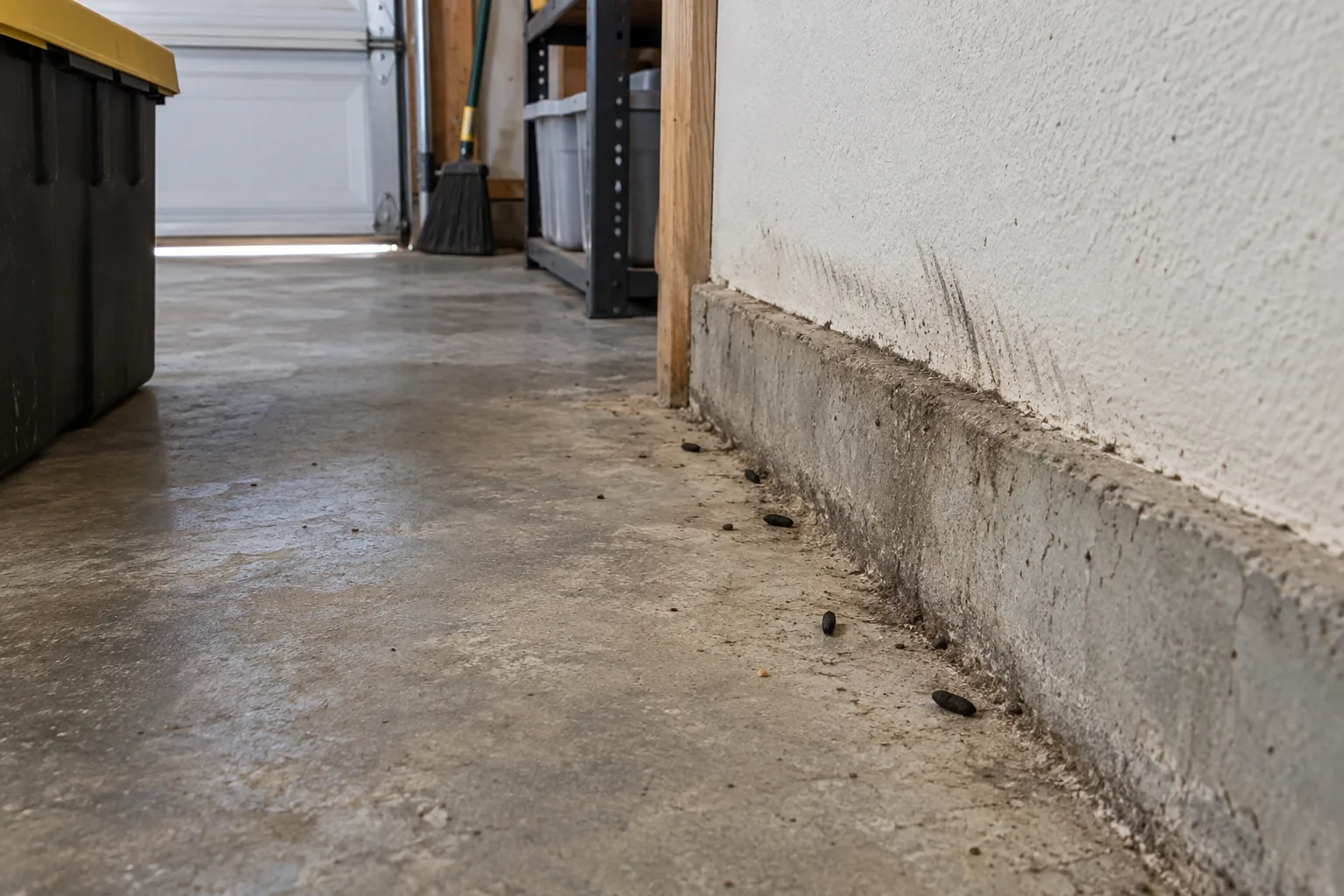
Garages are common rat activity areas because they often combine exterior access with food, shelter, and storage.
Potential attractants include:
- pet food
- bird seed
- garbage
- cardboard boxes
- stored fabric
- garden products
- clutter
- gaps around the garage door
- utility penetrations
- access to attic or wall spaces
Droppings along a garage wall should trigger a broader inspection.
Look behind stored items, around door edges, near utility lines, along the foundation, and around any connection between the garage and the rest of the house.
A garage rat problem can become an indoor problem if the rodents find access into walls, attics, or living areas.
Rat Droppings in Basements and Crawl Spaces
Basements and crawl spaces can be especially important when Norway rats are involved.
These areas may provide:
- low disturbance
- foundation access
- plumbing routes
- moisture
- shelter
- connections to wall voids
- access from exterior burrows
Droppings in these areas should be evaluated together with tracks, rub marks, gnawing, and openings around pipes or vents.
Because crawl spaces may be confined and contamination can be more extensive than it first appears, avoid disturbing large accumulations unnecessarily.
Professional help may be appropriate when access is difficult or the area is heavily contaminated.
Rat Droppings in Attics
Rat droppings in an attic may suggest a different activity pattern than droppings in a basement or crawl space.
Roof rats are strong climbers and may reach attics from:
- tree branches
- fences
- roof edges
- utility routes
- soffits
- vents
- gaps around roofing materials
Attics also provide insulation and protected nesting sites.
If droppings are found there, inspect for:
- gnawed insulation
- nesting material
- tracks in dust
- rub marks
- roofline openings
- damaged vents
- branches touching the structure
The location of droppings can help identify the route into the building even if the rat itself is never seen.
Rat Droppings in Kitchens
Rat droppings in a kitchen indicate that rats are reaching an area with food and water.
Check:
- behind appliances
- under sinks
- inside lower cabinets
- near plumbing penetrations
- around pantry storage
- beside garbage areas
- along baseboards
- around gaps behind cabinetry
Food in damaged or contaminated packaging should not be treated as safe.
After cleanup, transfer vulnerable foods to durable containers with secure lids when practical.
Do not assume that rats are nesting in the kitchen simply because droppings are present there.
The kitchen may be a feeding area connected to a nest in a wall, crawl space, garage, basement, attic, or outdoor burrow.
Rat Droppings vs Mouse Droppings
The biggest difference is size.
Typical rat droppings are much larger than mouse droppings.
Mouse droppings are small, narrow pellets commonly found in cabinets, drawers, pantries, and other tight spaces.
Rat droppings are larger and are often associated with:
- larger tracks
- heavier gnaw damage
- stronger rub marks
- larger openings
- burrows
- more substantial movement
If you are unsure, compare all the evidence rather than relying on one dropping.
Our guide to mouse droppings covers the smaller evidence left by mice, while Rat vs Mouse compares the rodents directly.
Rat Droppings vs Other Animal Droppings
Rat droppings can sometimes be confused with droppings from other small animals.
Context matters.
Inside a house, rat evidence becomes more likely when the droppings appear with:
- gnaw marks
- wall-edge travel routes
- greasy rub marks
- tracks
- burrows
- damaged food
- rat-sized openings
- nighttime rodent sounds
Wildlife droppings can have different shapes, sizes, and locations depending on the species.
If the evidence does not match typical rat activity, avoid guessing.
A professional inspection may be useful if identification affects the type of removal or safety precautions required.
Do Rat Droppings Mean You Have an Active Infestation?
Not necessarily.
Droppings can remain long after rats are gone.
Old evidence is common in garages, attics, crawl spaces, wall-access areas, sheds, and storage locations that are rarely cleaned.
The strongest sign of current activity is new evidence.
After droppings are cleaned safely, monitor the area.
Fresh droppings, new gnaw marks, repeated trap activity, recent burrow disturbance, or ongoing sightings all suggest that rats are still active.
This is why cleanup can be part of monitoring.
Once old evidence is removed, new evidence becomes easier to recognize.
Are Rat Droppings Dangerous?
Rat droppings should be treated as potentially contaminated material.
Risk depends on the rodent species, environment, amount of contamination, and type of exposure.
The safest practical approach is to avoid direct contact and avoid creating airborne dust.
Basic precautions include:
- do not touch droppings with bare hands
- do not dry sweep fresh droppings
- do not vacuum fresh droppings before proper disinfection
- keep children and pets away from contaminated areas
- wear suitable gloves
- wet contaminated material with an appropriate disinfectant according to its label before removal
- wash hands after cleanup
A few droppings on a hard surface are very different from extensive contamination inside insulation, crawl spaces, attics, or HVAC-related areas.
Larger contamination problems may require additional precautions or professional cleanup.
See our rodent safety section for broader contamination and health topics.
How to Clean Rat Droppings Safely
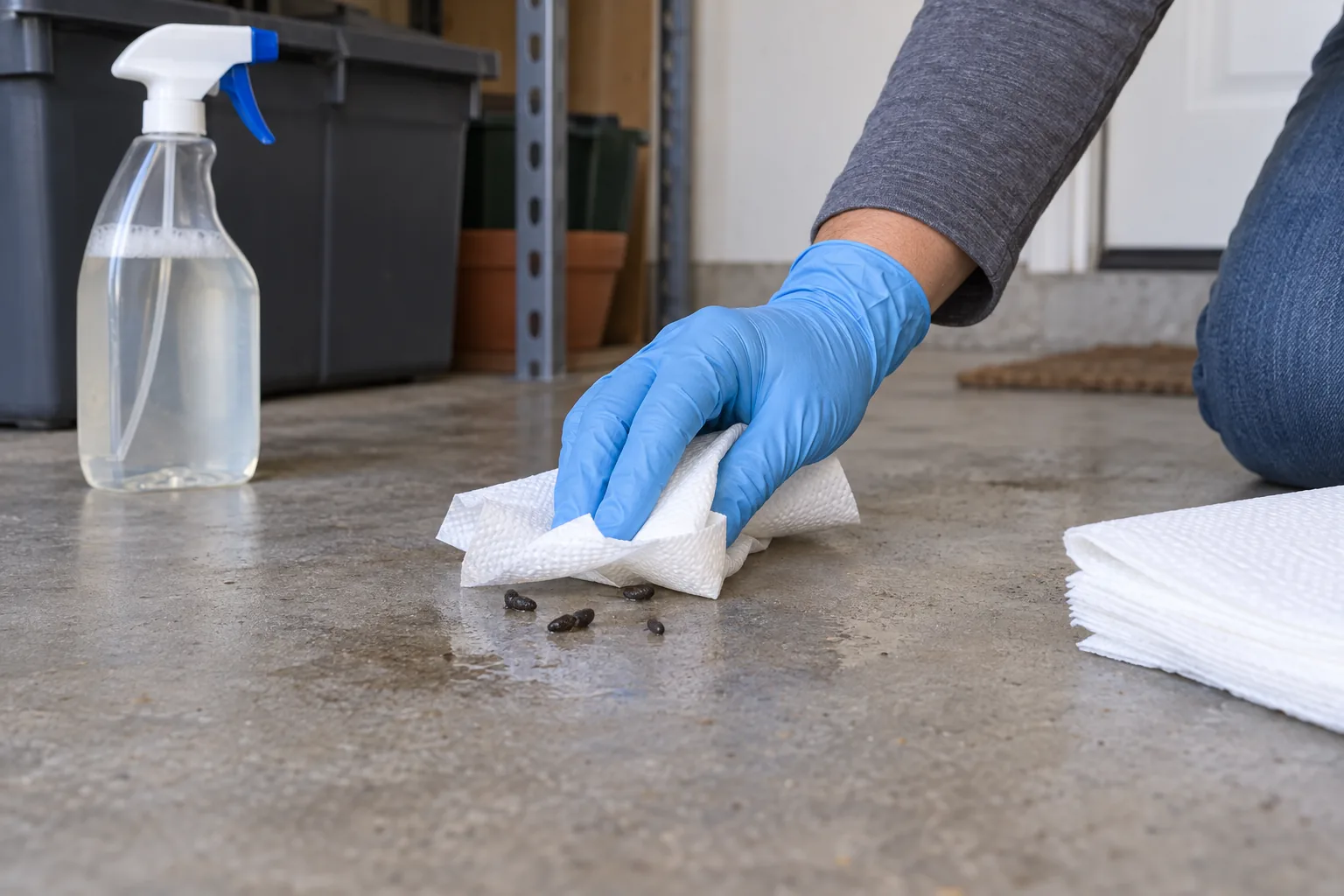
Do not begin by sweeping or vacuuming dry droppings.
A safer general cleanup process is:
- keep people and pets away from the contaminated area
- ventilate the space when practical and appropriate
- wear suitable protective gloves
- wet the droppings and surrounding contaminated material thoroughly with an appropriate disinfectant according to its label
- allow the product's required contact time
- wipe up the wet material
- place waste in a suitable bag or container
- clean the surrounding hard surface as appropriate
- remove gloves carefully
- wash your hands
Heavily contaminated attics, crawl spaces, sheds, garages, insulation, or HVAC areas can be more complex.
If a large amount of rodent waste is present, do not assume a normal household cleanup is enough.
Our rodent cleanup section covers difficult contamination and odor situations in more detail.
Should You Vacuum Rat Droppings?
Not as the first cleanup step.
Vacuuming dry rat droppings can disturb contaminated material and create airborne dust.
The same applies to dry sweeping.
Initial cleanup should use a wet-disinfection method.
After the contaminated material has been properly removed and the surface cleaned, normal cleaning methods may resume as appropriate for that surface.
If droppings are inside ducts, inaccessible voids, contaminated insulation, or another difficult area, professional evaluation may be safer than improvising with a household vacuum.
What to Do After You Find Rat Droppings
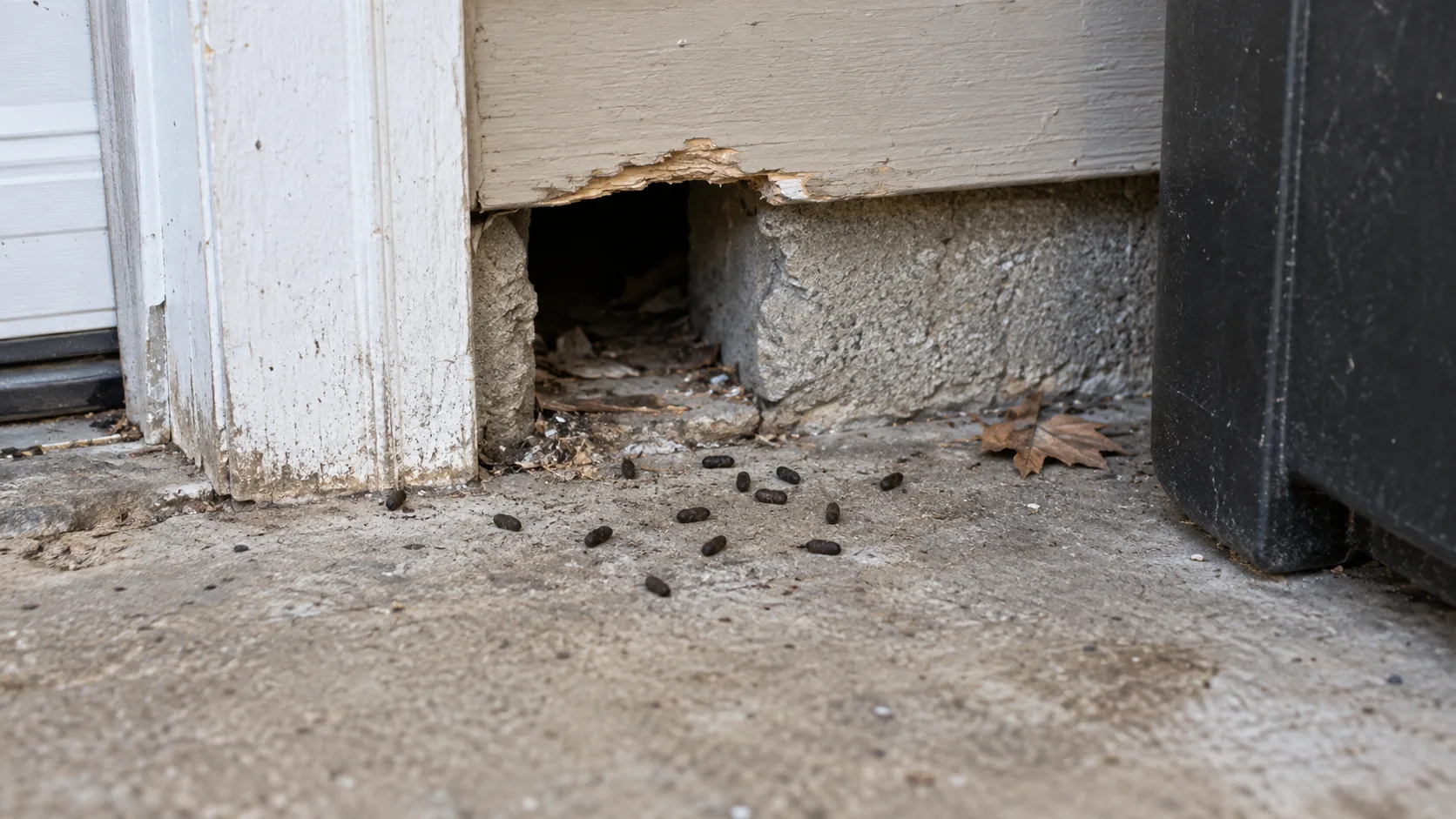
Finding droppings should trigger an inspection.
After the contaminated area is cleaned safely:
- inspect nearby walls and edges
- look for rub marks
- check for burrows
- inspect utility penetrations
- inspect foundation openings
- look behind stored objects
- check food storage
- look for tracks
- inspect nearby rooms
- monitor for new droppings
- place rat-sized traps along confirmed travel routes when appropriate
Do not treat repeated cleanup as the solution.
If droppings continue to return, the underlying rat activity has not been resolved.
Follow the broader process in How to Get Rid of Rats in Your House.
When Rat Droppings Suggest a Larger Infestation
Droppings in one location may indicate a limited travel route.
Droppings across several parts of the property can suggest a more established problem.
Warning signs include:
- droppings in multiple rooms
- droppings on different levels
- repeated fresh droppings after cleanup
- active burrows outside
- heavy gnaw damage
- frequent sightings
- activity in walls or ceilings
- contamination in attics or crawl spaces
- multiple entry points
A widespread pattern means the entire building and surrounding property should be considered.
Treating one room may not be enough if rats are moving between exterior burrows, garages, crawl spaces, walls, and food sources.
When to Call a Professional
Professional rodent help may be useful when:
- fresh rat droppings keep returning
- droppings occur in several areas
- rats are active in walls, ceilings, attics, or crawl spaces
- exterior burrows are widespread
- the main entry points cannot be found
- contamination is extensive
- rodents are associated with HVAC or sensitive systems
- trapping has not reduced activity
- the infestation repeatedly returns
- you are unsure whether the evidence is from rats or another animal
A good inspection should identify more than the droppings.
The important questions are where rats are traveling, where they are nesting, how they enter the structure, and what resources allow them to remain.
Visit our professional rodent-control section for more information.
Rat Droppings Are Evidence of a Route, Not Just a Mess
Rat droppings are useful because they show where rats have been active.
But the real goal is to understand the route behind the evidence.
Large droppings along a garage wall may point toward an exterior entry. Droppings in a crawl space may suggest foundation access. Droppings in an attic may shift attention toward rooflines and climbing routes.
Clean contaminated areas safely, then watch for new evidence.
If droppings return, do not focus only on cleaning them again. Find the travel route, food source, nesting area, or opening that allows rats to keep using the property.
Continue with our signs section, rodent identification guides, problem guides, prevention section, cleanup section, or the full guide on how to get rid of rats.