House Mouse: Identification, Signs & Behavior
Learn how to identify a house mouse, what it looks like, where it lives, which signs it leaves behind, how it behaves, and what to do if mice are in your home.
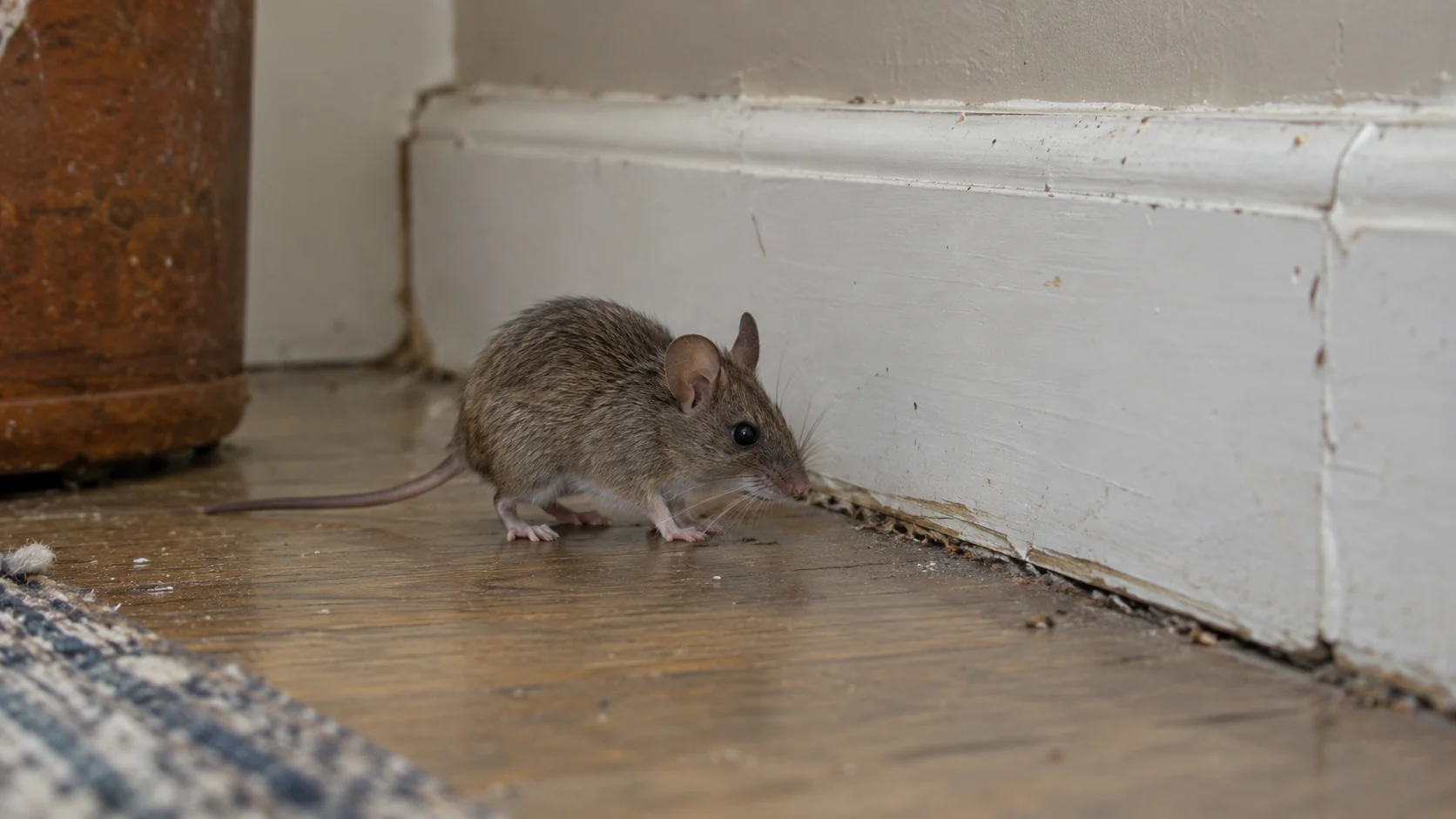
The house mouse is one of the most common rodents found inside homes in the United States.
It is small, adaptable, and able to live close to people year-round. House mice can nest inside walls, cabinets, attics, garages, storage areas, and other protected spaces where food and shelter are available.
Because they are small and mostly active when a home is quiet, many infestations are first noticed through droppings, gnaw marks, scratching sounds, food damage, or a quick nighttime sighting.
Correct identification matters.
A house mouse requires different trap sizes, entry-point inspection, and control methods than a rat. It can also fit through much smaller structural openings.
This guide explains what a house mouse looks like, how to distinguish it from rats and other mice, where it commonly lives, which signs it leaves behind, and what its behavior can tell you about an infestation.
What Is a House Mouse?
The house mouse is a small rodent that lives extremely well around people.
It can survive inside houses, apartments, garages, barns, warehouses, and other buildings where food, water, and shelter are available.
House mice commonly use:
- wall voids
- cabinets
- pantries
- attics
- garages
- basements
- storage rooms
- utility spaces
- insulation
- spaces behind appliances
They do not need a large open area.
A mouse can spend much of its time within a relatively small part of a building if food and nesting shelter are nearby.
This is one reason a mouse problem may stay hidden inside one kitchen, cabinet system, or wall area before spreading farther through the home.
What Does a House Mouse Look Like?
A house mouse has a small, lightweight body.
Typical features include:
- a pointed nose
- relatively large ears
- small dark eyes
- a thin tail
- delicate feet
- gray-brown to brownish fur
- a lighter underside in many individuals
The exact color can vary.
Some house mice look gray, while others appear more brown or dusty.
Color alone is not a reliable identification feature.
Body proportions, size, ears, face shape, feet, tail, droppings, and where the animal is found are more useful when considered together.
For a direct comparison with rats, see Rat vs Mouse: How to Tell the Difference.
How Big Is a House Mouse?
House mice are much smaller than adult rats.
Their bodies are compact, and the tail adds significant length to the animal's overall appearance.
What matters most for homeowners is the scale.
A house mouse has:
- a much smaller body than a rat
- smaller feet
- a thinner tail
- a lighter build
- smaller droppings
- smaller gnaw marks
A juvenile rat can sometimes create confusion because it has not reached full adult size.
In those cases, look at body proportions.
A young rat usually has a heavier head, larger feet, and a more robust body than a house mouse of similar length.
House Mouse Face and Ears
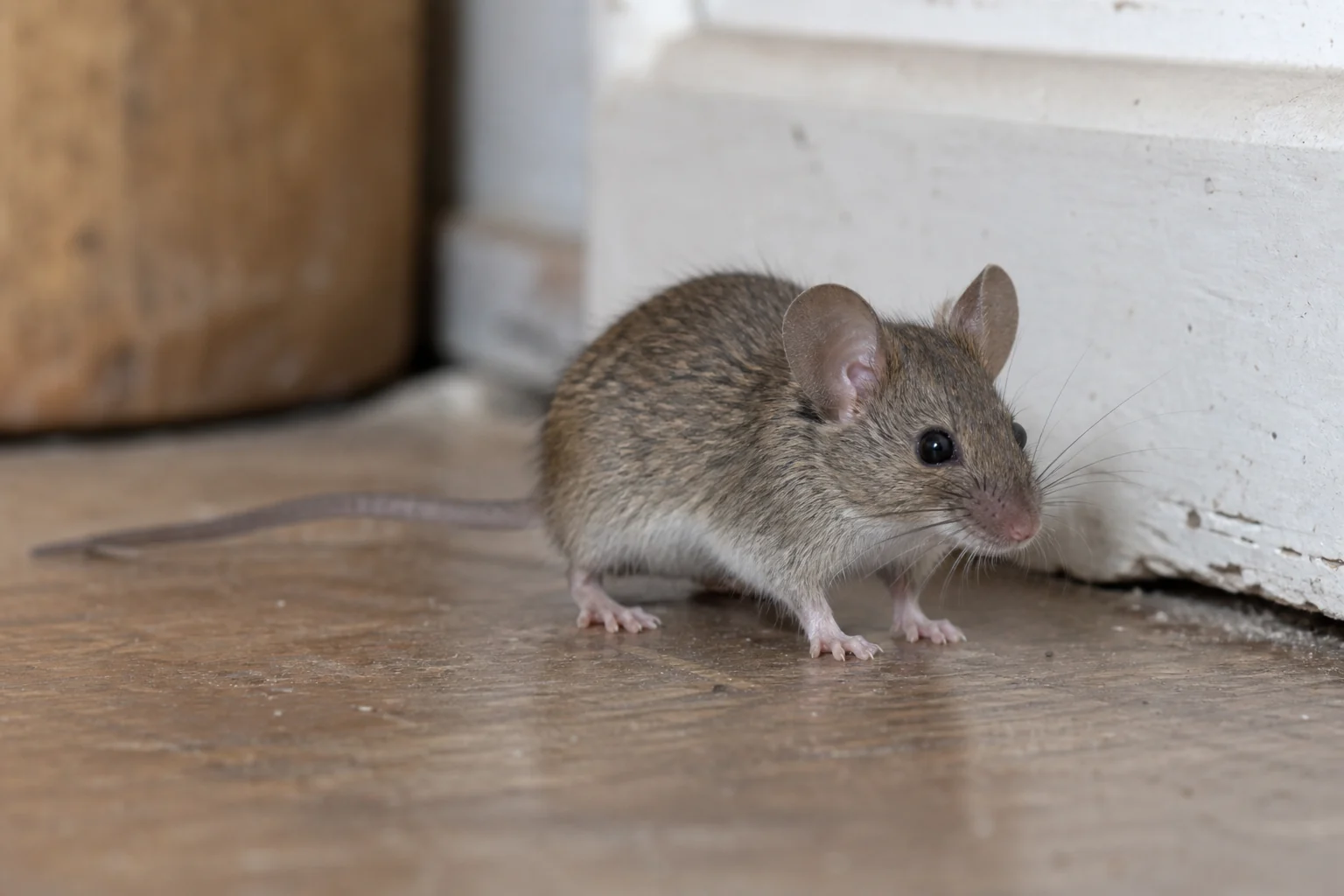
The house mouse has a narrow, pointed face.
Its ears look relatively large compared with its small head.
That combination can give a house mouse a delicate or alert appearance.
The ears are not necessarily larger in absolute size than a rat's ears.
The useful clue is proportion.
On a house mouse, the ears appear prominent because the animal's body and head are so small.
This differs from the heavier, more robust appearance of adult rats.
House Mouse Tail
A house mouse has a long, thin tail.
The tail is much more delicate than a rat's tail and is roughly similar in overall visual scale to the mouse's small body.
Tail length alone should not be used to identify a mouse.
The tail may be partly hidden during a sighting, and different rodent species have different body-to-tail proportions.
Use the tail together with:
- body size
- ear proportion
- face shape
- foot size
- droppings
- activity location
House Mouse Droppings
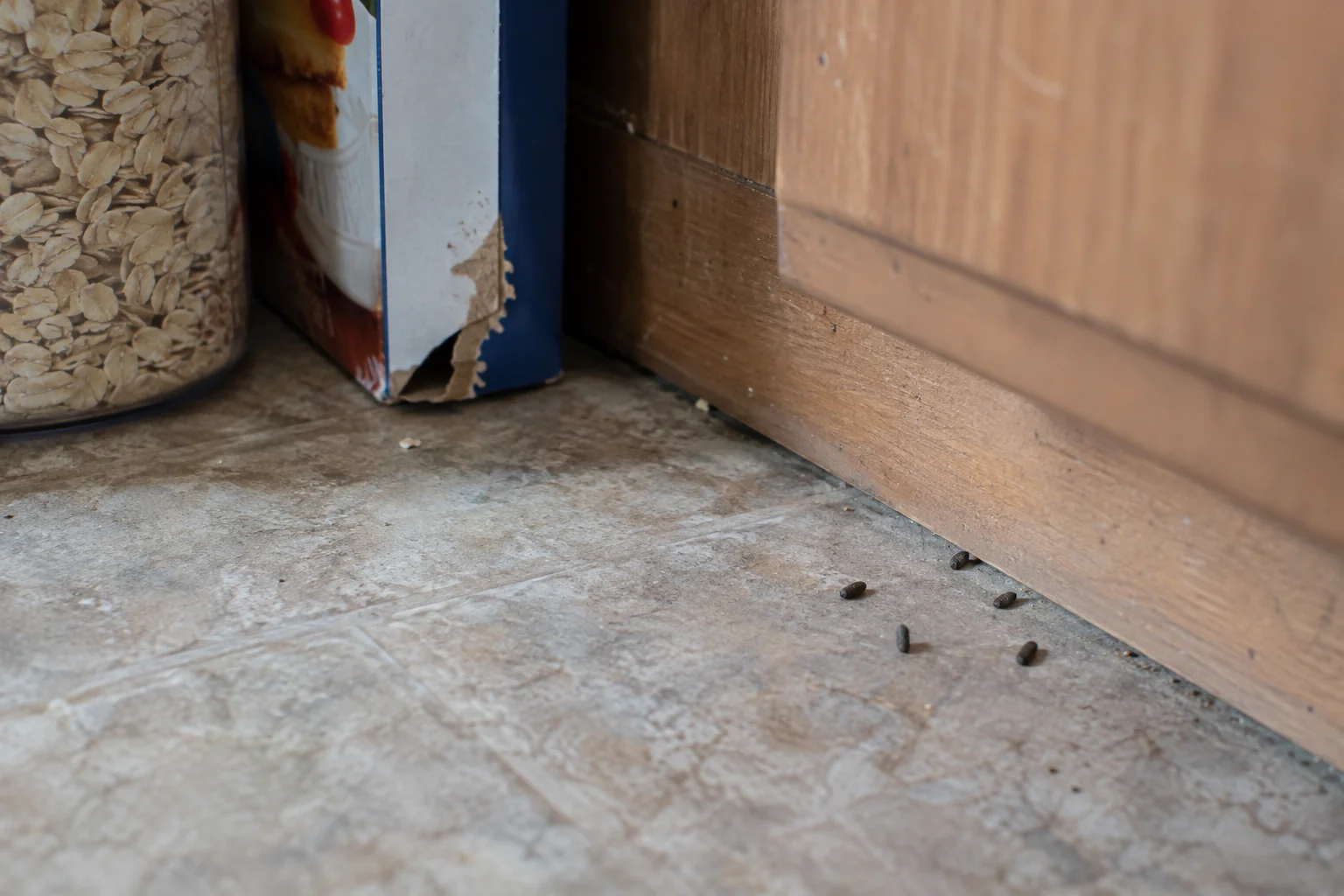
House mouse droppings are small, dark pellets.
They are much smaller than typical adult-rat droppings.
You may find them:
- inside kitchen cabinets
- in pantries
- under sinks
- behind refrigerators
- behind stoves
- along baseboards
- inside garages
- in attics
- in storage areas
- near pet food
- near entry points
Droppings are useful because they show where mice have been active.
But they do not tell you exactly how many mice are present.
A single mouse can leave many droppings over time.
Our mouse droppings guide explains how to identify, monitor, and clean this evidence safely.
Where Do House Mice Live?
House mice can live in many parts of a building.
Common indoor nesting and travel areas include:
- wall voids
- cabinet voids
- appliance spaces
- attics
- garages
- closets
- basements
- crawl-space transitions
- storage rooms
- insulation
- utility chases
They prefer protected spaces close to food and shelter.
A mouse nesting inside a kitchen wall may not need to travel very far.
Another mouse may nest in an attic and move through wall cavities to reach food below.
The building layout matters.
That is why mouse control should consider how rooms, walls, attics, garages, and utility routes connect.
House Mice in Walls
Wall voids provide protected travel routes.
Mice may enter a wall through:
- plumbing penetrations
- utility gaps
- baseboard openings
- cabinet gaps
- garage-wall openings
- attic connections
- crawl-space transitions
Once inside, they can move between rooms or floors while remaining mostly hidden.
Scratching sounds inside a wall can be a clue, but sound alone is not enough to confirm a house mouse.
Look for small droppings, gnaw marks, and mouse-sized openings nearby.
See our guide to mice in walls for a more detailed inspection process.
House Mice in Attics
Attics can provide insulation, warmth, darkness, and low disturbance.
House mice may use:
- insulation
- stored cardboard
- wall top plates
- framing
- utility penetrations
- attic access areas
They may also move between the attic and wall cavities.
Signs can include small droppings, light gnaw damage, disturbed insulation, nesting material, and scratching sounds.
See Mice in the Attic: Signs, Damage & Removal for attic-specific guidance.
House Mice in Kitchens
Kitchens are among the most common places to find mouse evidence.
They provide:
- food
- water
- warmth
- cabinets
- appliance spaces
- plumbing penetrations
House mice may travel behind cabinets and appliances and emerge near food storage.
Look for:
- droppings
- gnawed packaging
- crumbs or food damage
- small openings around pipes
- activity behind refrigerators or stoves
A kitchen sighting does not necessarily mean the mouse is nesting in the kitchen.
It may be traveling from a wall, garage, attic, basement, or crawl-space route.
House Mice in Garages
Garages often provide easy entry from outdoors.
Possible entry areas include:
- garage-door gaps
- side-door gaps
- utility penetrations
- wall-floor joints
- gaps around framing
Garages may also contain:
- pet food
- bird seed
- cardboard
- stored fabric
- clutter
- garbage
A garage can become a staging area where mice enter the building before moving into walls or living spaces.
Inspect shared walls between the garage and the house carefully when mouse activity is present.
What Do House Mice Eat?
House mice are opportunistic feeders.
They may eat:
- grains
- seeds
- cereal
- pet food
- bird seed
- crumbs
- packaged dry foods
- other accessible household food
They do not need a large amount of food to remain active.
A small spill behind an appliance, open pantry package, or unsealed pet-food bag can support mouse activity.
Reducing accessible food does not eliminate mice by itself.
But it makes trapping and monitoring more effective.
Do House Mice Need Water?
House mice can obtain moisture from food, but they may also use available water sources.
Possible sources include:
- leaking pipes
- condensation
- pet bowls
- appliance leaks
- standing water
Repairing leaks and removing unnecessary water can reduce one of the resources that help rodents remain indoors.
When Are House Mice Active?
House mice are generally more active when a building is quiet.
Many homeowners notice them at night or early in the morning.
However, mice can be active during the day.
A daytime sighting does not automatically prove a severe infestation.
It may reflect:
- competition for food
- disturbance
- a nearby nest
- a mouse exploring a route
- unusual household activity
Look at the overall evidence before judging infestation size.
How House Mice Move Through a Home
Mice often travel along edges and protected routes.
Common movement lines include:
- baseboards
- cabinets
- appliance edges
- pipes
- wall openings
- stored objects
- attic framing
They usually prefer not to cross a large exposed area unless necessary.
This behavior is useful for trapping.
Traps work best when placed directly on active travel routes.
Our mouse traps guide explains placement in detail.
Can House Mice Climb?
Yes.
House mice are capable climbers and can use rough surfaces, framing, pipes, stored objects, and other structures to move vertically.
That is one reason mouse activity is not limited to the floor.
They can reach:
- shelves
- upper cabinets
- wall voids
- attics
- storage areas
Do not assume a mouse found upstairs must have entered the building at that level.
It may have entered lower and moved through the structure.
Can House Mice Jump?
House mice can jump short distances and navigate uneven household environments.
They can move around storage areas, shelves, framing, and clutter more easily than their small size might suggest.
The practical lesson is that control should not focus only on floor-level evidence.
Inspect the full route around walls, shelves, pipes, cabinets, and nearby vertical access.
Can House Mice Fit Through Small Holes?
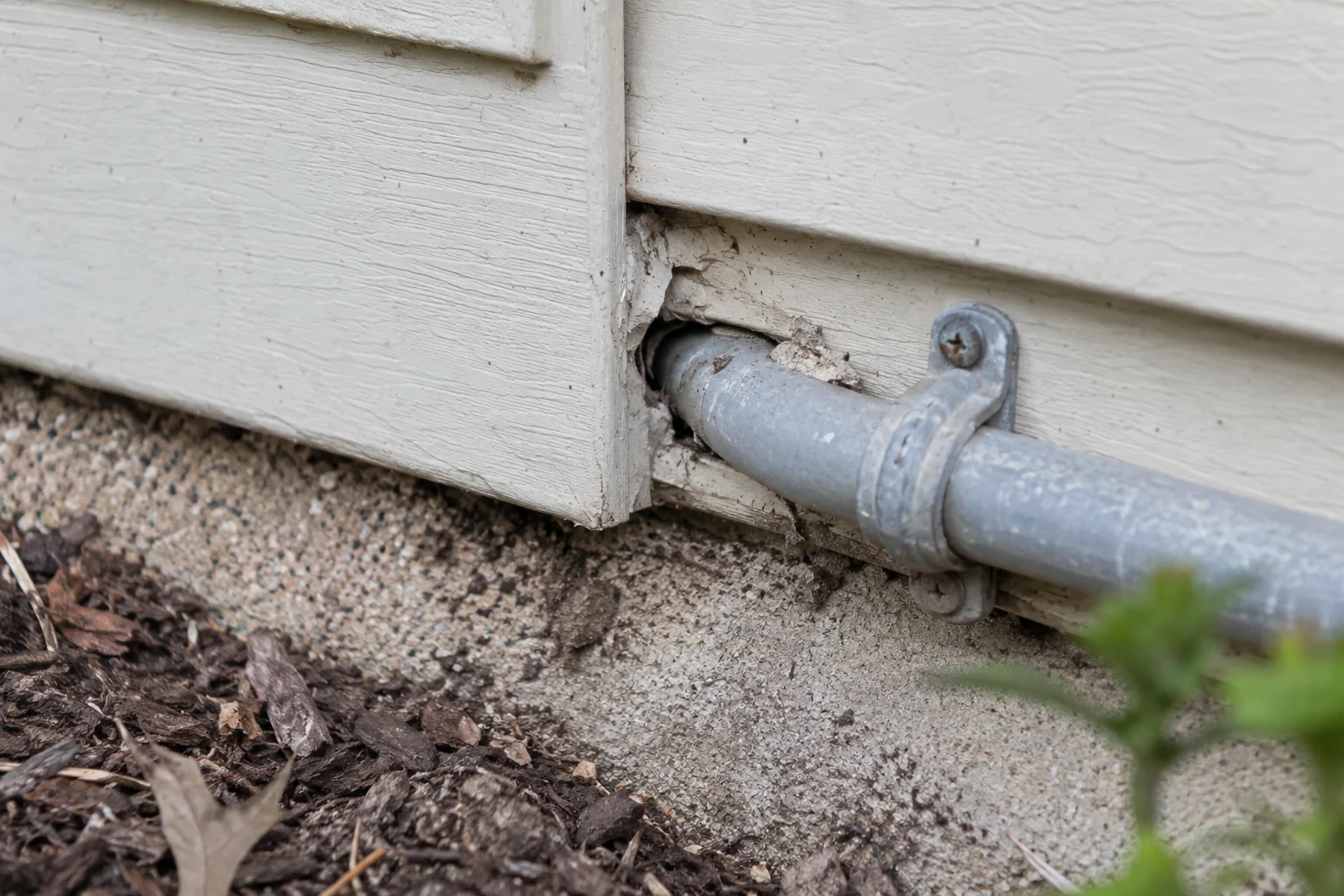
Yes.
Their small body allows them to exploit narrow structural openings.
Common access points include gaps around:
- pipes
- cables
- doors
- garage doors
- siding
- vents
- foundations
- roofline details
The exact usable opening depends on its shape and the mouse.
For prevention, the important point is that gaps that look minor to a homeowner may still be large enough to matter.
Our prevention section covers rodent entry-point inspection and exclusion.
House Mouse Nesting Behavior
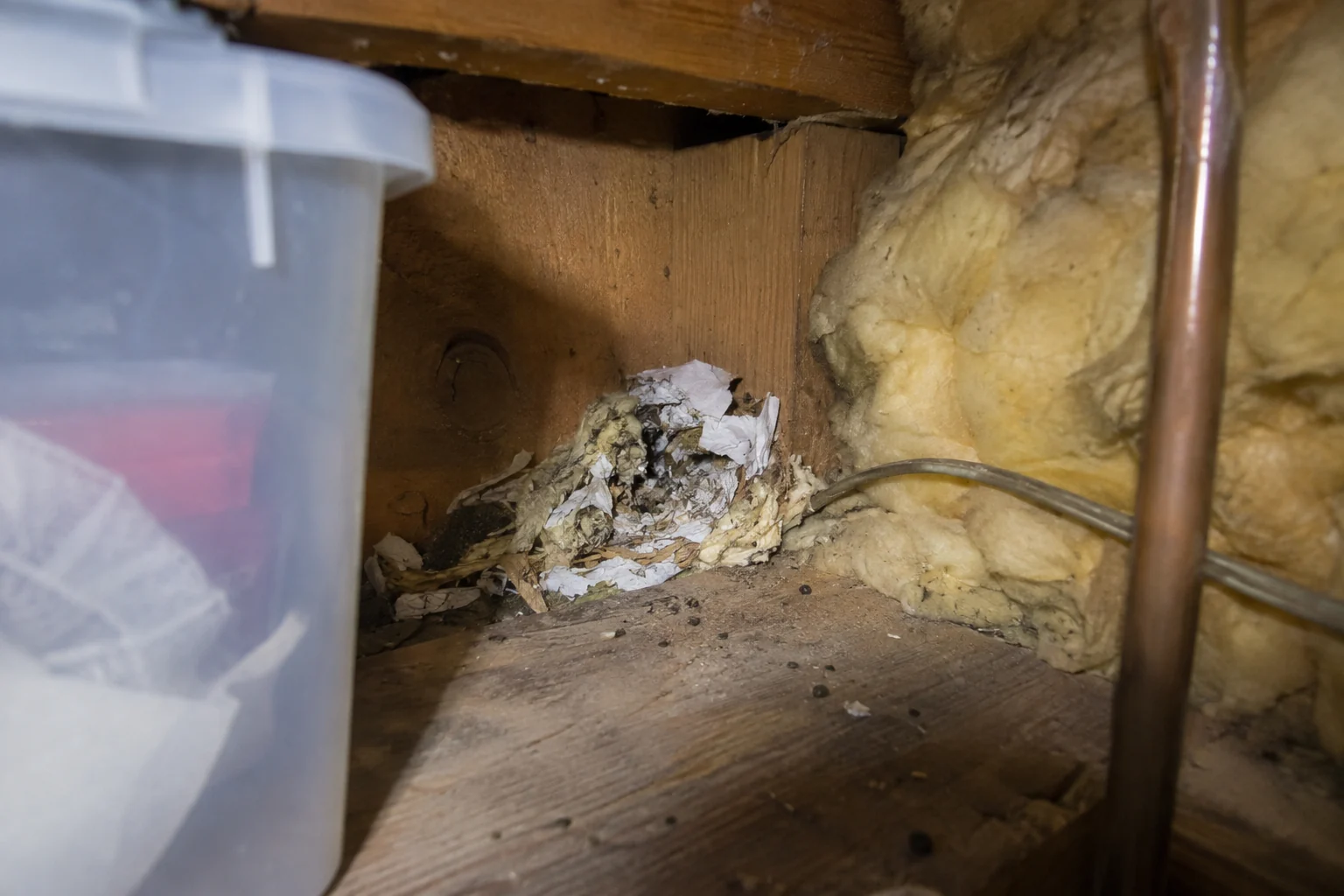
House mice build nests in protected areas.
Nest material can include:
- paper
- fabric
- insulation
- cardboard
- soft packing material
- other lightweight fibers
Nests may be hidden:
- inside walls
- behind cabinets
- in storage boxes
- inside insulation
- behind appliances
- in attics
- in garages
Finding a nest confirms that mice have used that area.
But removing the nest alone does not solve the infestation.
The mice may still be present, and the entry route may still be open.
How Fast Do House Mice Reproduce?
House mice can reproduce quickly when food, shelter, and temperature conditions are favorable.
This is one reason a small problem can become more difficult if left untreated.
Homeowners should not wait for a precise population estimate before acting.
If fresh droppings, sightings, or trapping activity continue, treat the infestation as active.
The practical goal is to interrupt the cycle with removal, sanitation, exclusion, and monitoring.
How Far Do House Mice Travel?
House mice often remain relatively close to food and shelter.
That means evidence can be concentrated in one part of a home.
However, they can also move through wall systems, attics, garages, and utility routes.
The more widespread the evidence, the more likely the infestation involves several connected areas.
Mapping where droppings and sightings occur can help identify the core activity zone.
House Mouse Gnaw Marks
Like other rodents, house mice gnaw because their front teeth grow continuously.
Mouse gnawing may appear on:
- food packaging
- cardboard
- thin plastic
- wood edges
- stored materials
Mouse gnaw marks are generally smaller than rat damage.
The scale of the damage can help with identification when combined with droppings and tracks.
Heavy structural gnawing, large tracks, and large droppings may point toward a rat rather than a house mouse.
House Mouse Tracks
Mouse tracks are small and can be difficult to see.
They may appear in:
- dusty garages
- attics
- storage rooms
- crawl-space transitions
You may also see a thin tail mark in fine dust.
Track size and spacing can help confirm that a small rodent is using a route.
The tracks are most useful when they appear together with droppings, gnawing, or a nearby entry opening.
House Mouse Odor
An established mouse infestation can create a noticeable odor.
Possible sources include:
- urine
- nesting material
- droppings
- dead mice
- contaminated insulation
Odor alone does not tell you where the nest is.
Air can move through wall cavities, cabinets, vents, and utility spaces.
Use odor together with physical evidence.
Are House Mice Dangerous?
House mice should not be treated as harmless indoor pets.
They can contaminate food and surfaces with droppings and urine.
They may also damage stored items and gnaw materials around a home.
Rodent waste should be treated as potentially contaminated material.
Do not dry sweep or vacuum fresh droppings before they have been properly disinfected.
Use appropriate gloves and safe wet-cleanup methods.
See our rodent safety section and cleanup section for related guidance.
House Mouse vs Rat
The easiest difference is size.
House mice are:
- smaller
- lighter-bodied
- relatively large-eared
- more pointed in the face
- smaller-footed
- thinner-tailed
Rats are larger and leave larger droppings, tracks, and gnaw marks.
If you are uncertain, compare the animal and evidence with Rat vs Mouse: How to Tell the Difference.
House Mouse vs Other Mice
Not every small mouse found around a property is necessarily a house mouse.
Other mouse species can occur around homes, garages, sheds, rural properties, and wooded environments.
Identification becomes more reliable when you consider:
- body color
- belly color
- tail appearance
- ear size
- habitat
- indoor vs outdoor activity
- where the mouse was found
For a mouse living primarily inside kitchen cabinets, walls, garages, or other building interiors, the house mouse is often an important possibility.
Later identification guides in this site will cover additional mouse species separately.
How to Tell if House Mice Are Still Active
Old droppings can remain after mice are gone.
To confirm active mice, look for:
- new droppings after safe cleanup
- fresh gnaw marks
- new food damage
- trap activity
- recent sightings
- fresh nesting material
- repeated scratching sounds
Fresh evidence matters more than old evidence.
After safely cleaning an area, monitor it.
If new droppings appear, the route is still active.
What to Do If You Find a House Mouse
Do not focus only on the individual mouse you saw.
Inspect the surrounding area.
Look for:
- droppings
- food damage
- entry gaps
- nesting material
- tracks
- activity behind appliances
- wall openings
Then begin control.
A practical process may include:
- reducing food access
- placing mouse-sized traps on active routes
- monitoring captures and fresh signs
- finding exterior entry points
- coordinating exclusion with removal
- cleaning contaminated areas safely
For the complete process, see How to Get Rid of Mice in Your House.
When to Call a Professional
Professional rodent control may be useful when:
- mouse activity occurs in several parts of the home
- entry points cannot be found
- mice are active inside inaccessible walls
- attic contamination is extensive
- trapping does not reduce activity
- the infestation repeatedly returns
- safe trap placement is difficult
- structural exclusion requires specialized work
A useful inspection should connect the indoor evidence with the routes mice use to enter the building.
Visit our professional rodent-control section for more information.
House Mouse Identification Is the First Step Toward Control
The house mouse is small, adaptable, and highly capable of living inside buildings.
The most useful identification clues are:
- small body size
- pointed face
- relatively large ears
- thin tail
- small droppings
- small gnaw marks
- activity in cabinets, walls, garages, and attics
Do not rely on one feature alone.
Combine the animal's appearance with the evidence it leaves behind and the part of the home where activity occurs.
Once you are confident the problem involves mice, control becomes more focused.
Use mouse-sized traps, inspect very small entry points, reduce accessible food, clean contamination safely, and coordinate exclusion with removal.
Continue with our Rat vs Mouse guide, mouse droppings guide, mice in walls guide, mice in the attic guide, mouse traps guide, or rodent control guide.
For the broader overview, return to [Rats & Mice in the Home](/).