Rodent Control: Methods, Process & What to Expect
Learn how rodent control works, which methods are used for rats and mice, what the process involves, and how to prevent rodents from returning.
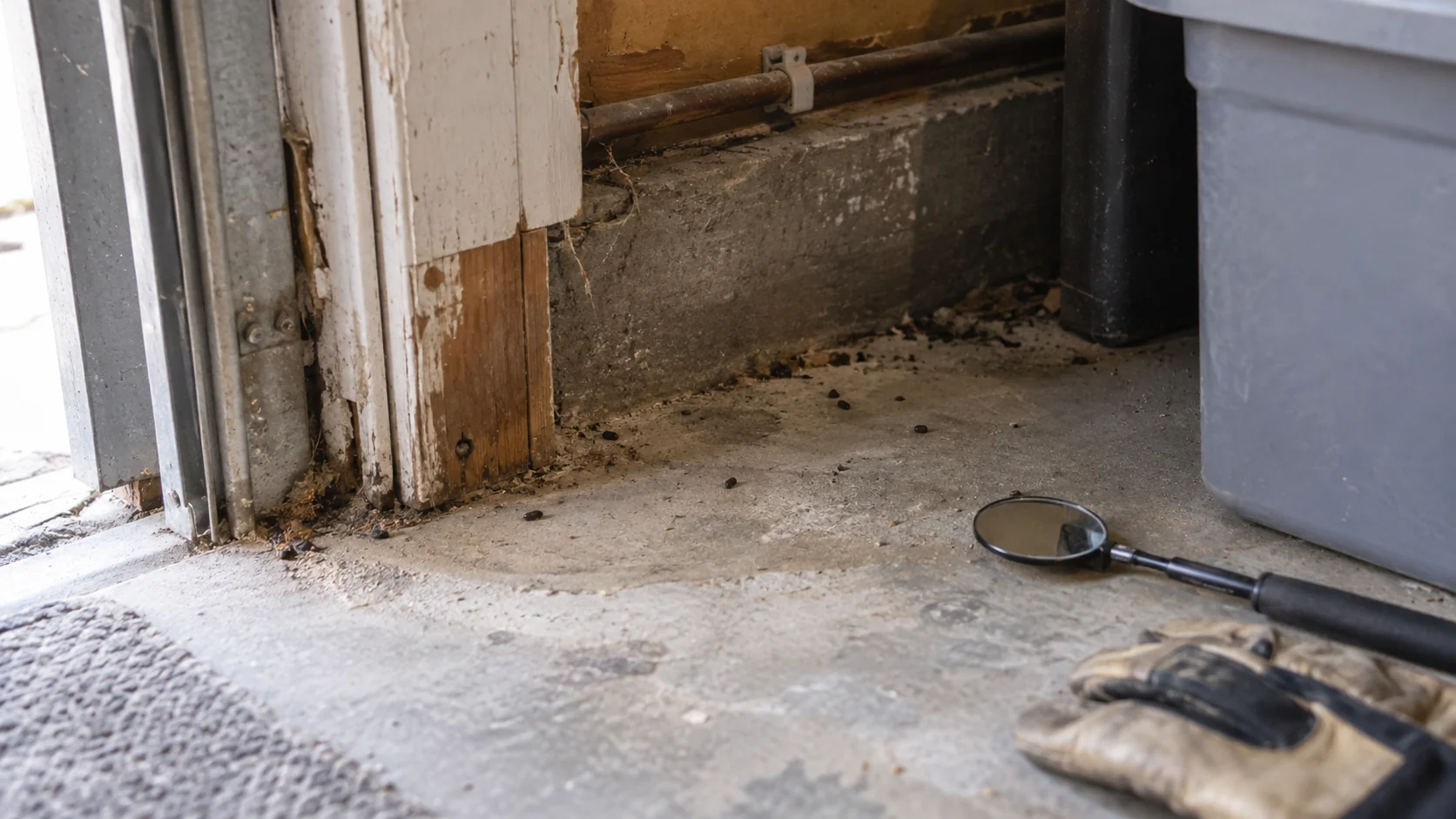
Rodent control is not one single product or trap.
Effective control usually combines several steps: identifying the rodent, finding where it is active, reducing food and shelter, removing the animals already inside, cleaning contaminated areas safely, and sealing the openings that allow new rodents to enter.
This matters because trapping alone may remove a few mice or rats without solving the structural problem. Exclusion alone may also fail if animals are already living inside the building.
The best approach treats the infestation as a system.
This guide explains how rodent control works, which methods are commonly used, how the process differs for mice and rats, what homeowners should expect, and when professional help may make sense.
What Is Rodent Control?
Rodent control is the process of reducing or eliminating unwanted rats and mice and preventing them from returning.
In a home, that process may include:
- species identification
- inspection
- activity mapping
- sanitation
- trapping
- exclusion
- monitoring
- cleanup
- repair of damage
- professional treatment when needed
The exact combination depends on the building and the species involved.
A mouse problem inside kitchen cabinets may require a different inspection pattern than a roof-rat problem in an attic or a Norway-rat problem around a foundation.
For a direct species comparison, see Rat vs Mouse: How to Tell the Difference.
Why Identification Comes First
Rodent control starts with knowing whether the problem involves mice, rats, or another animal.
That affects:
- trap size
- trap placement
- likely entry points
- travel routes
- nesting areas
- how much structural access is needed
- the scale of droppings and contamination
- how cautious the animal may be around new traps
Mice can use very small openings and may remain close to food sources inside walls, cabinets, kitchens, garages, and attics.
Rats are larger and may create heavier gnaw damage, larger droppings, stronger rub marks, and more obvious travel routes.
If you are unsure which rodent is present, use the evidence rather than guessing from one quick sighting.
Step 1: Inspect the Property
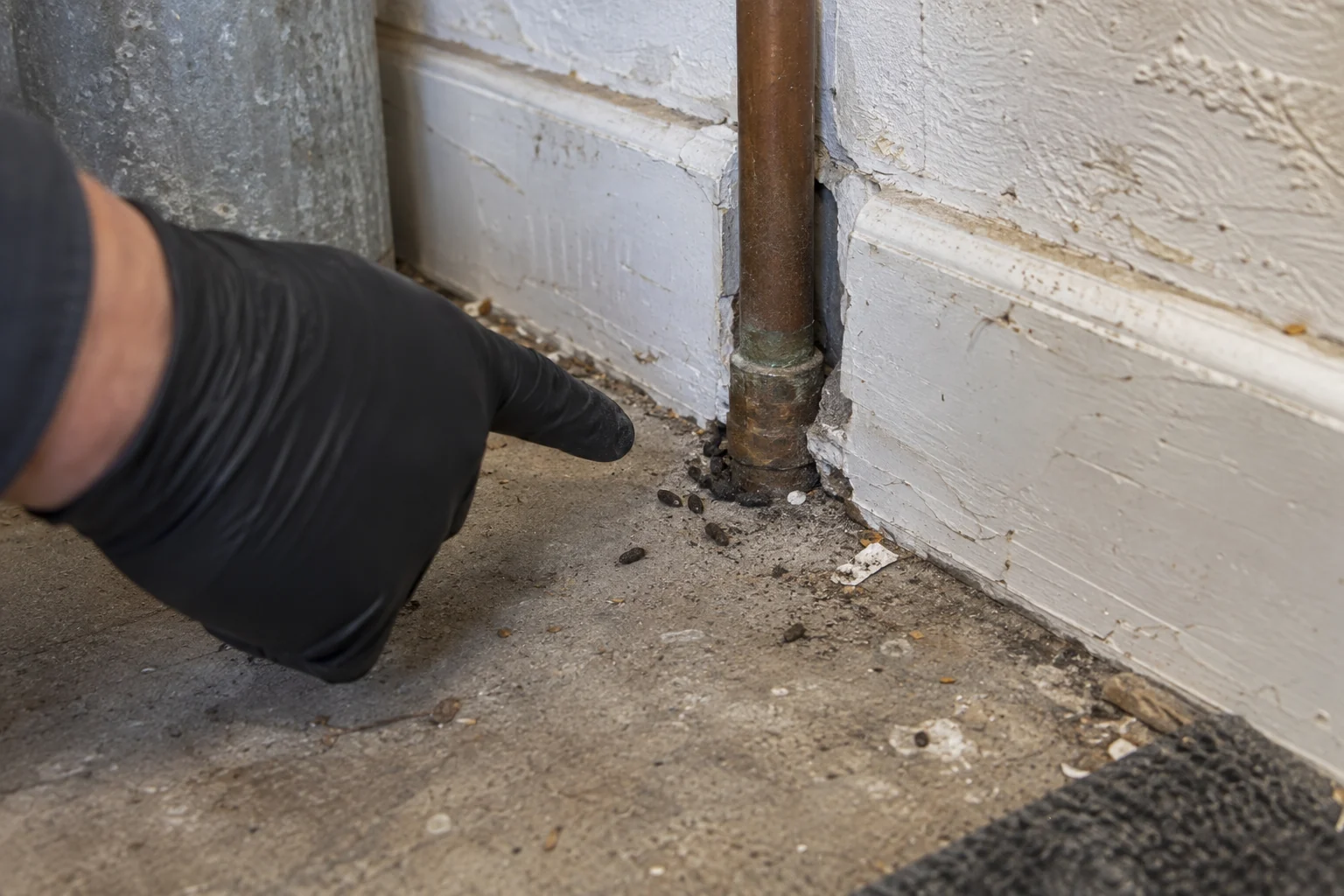
A useful rodent inspection looks for more than the animal itself.
Inspectors or homeowners should look for:
- droppings
- tracks
- gnaw marks
- grease or rub marks
- nesting material
- damaged food packaging
- burrows
- wall or roof openings
- utility penetrations
- activity behind appliances
- attic or crawl-space evidence
- repeated sightings
- nighttime sounds
The purpose of the inspection is to build a map of where rodents are moving.
That map helps determine where traps should go and which openings matter most.
Our mouse droppings guide and rat droppings guide explain two of the most useful signs.
Step 2: Find the Main Activity Areas
Rodents do not use every part of a house equally.
Activity often concentrates around:
- kitchens
- pantries
- garages
- attics
- basements
- crawl spaces
- utility rooms
- wall voids
- storage areas
- exterior foundations
A few droppings in one corner are less informative than repeated evidence along the same wall or route.
Look for clusters.
Fresh droppings, repeated trap activity, gnaw marks, and sightings in the same area usually deserve more attention than an isolated old sign.
For location-specific problems, see mice in walls, rats in walls, mice in the attic, and rats in the attic.
Step 3: Reduce Food and Water
Rodent control becomes more difficult when food is easy to access.
Common food sources include:
- crumbs
- open pantry goods
- pet food
- bird seed
- garbage
- livestock or poultry feed
- food stored in thin bags
- spilled grain
- outdoor feeding areas
Store vulnerable food in durable containers with secure lids when practical.
Clean food spills and crumbs.
Do not leave pet food out unnecessarily.
Also check water sources.
Rodents may use:
- leaking pipes
- pet water bowls
- condensation
- standing water
- irrigation leaks
- appliance leaks
Sanitation does not remove an infestation by itself.
But reducing food and water makes trapping and monitoring more effective.
Step 4: Remove Rodents Already Inside
Rodents already living inside the structure need to be removed.
For many indoor infestations, mechanical traps are a practical starting point.
The trap must match the animal.
Use:
- mouse-sized traps for mice
- rat-sized traps for rats
Trap placement should follow active travel routes.
Our mouse traps guide and rat traps guide explain trap types and placement in detail.
The main principle is simple: put traps where rodents already move.
Mouse Control vs Rat Control
Mice and rats overlap in some control methods, but they are not identical problems.
Mouse control
Mouse control often focuses on:
- very small entry points
- cabinets
- kitchens
- wall voids
- garages
- attics
- utility penetrations
- multiple closely spaced traps
Mice may investigate new objects relatively quickly.
Their small size allows them to use openings that would not admit an adult rat.
Rat control
Rat control often focuses on:
- larger structural openings
- foundations
- crawl spaces
- garages
- attics
- rooflines
- burrows
- stronger travel routes
- larger traps
Rats may be more cautious around unfamiliar traps or objects.
That can make patience and placement especially important.
For active infestations, see How to Get Rid of Mice in Your House and How to Get Rid of Rats in Your House.
Trapping as Part of Rodent Control
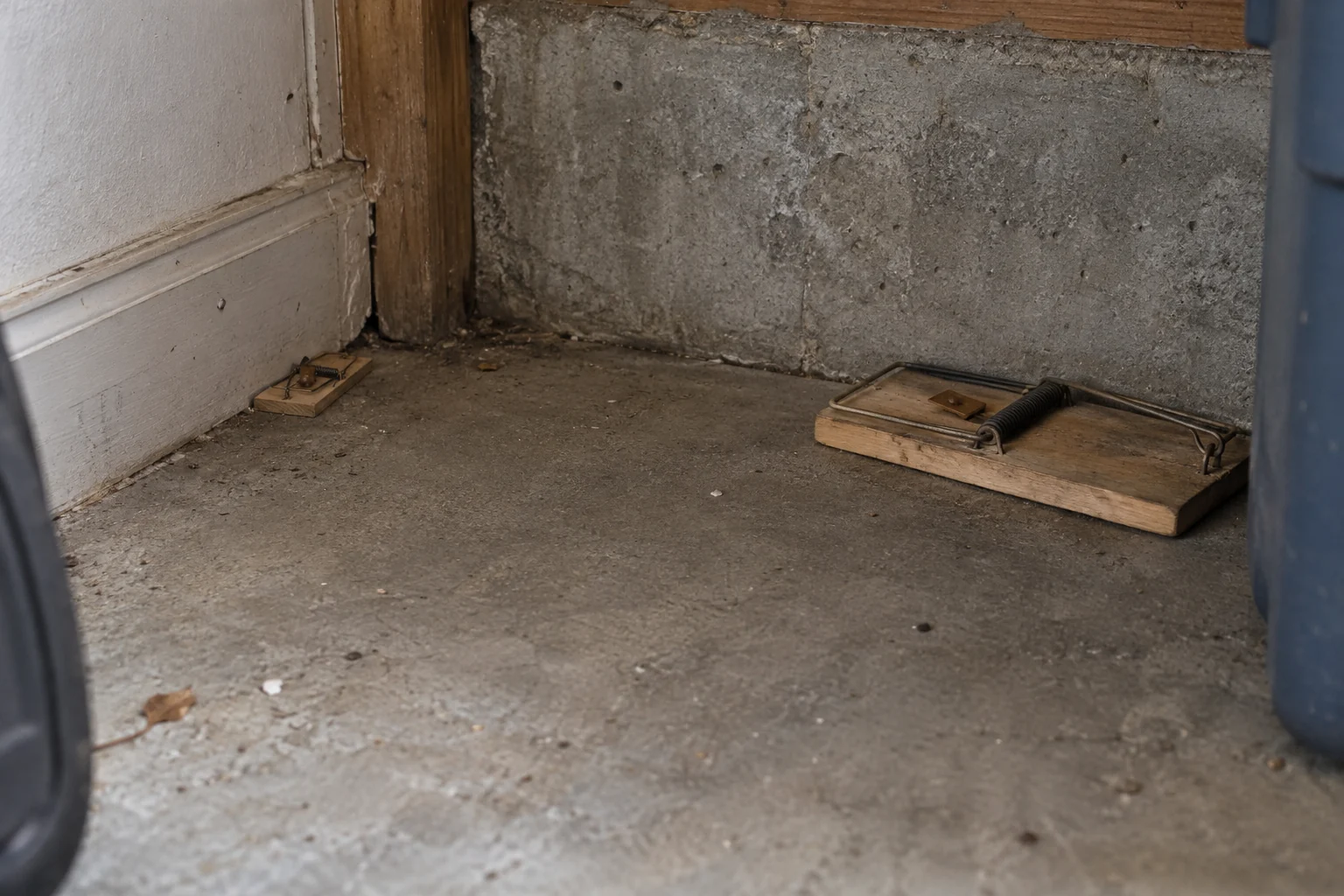
Trapping gives you two benefits.
First, it removes rodents.
Second, it tells you where activity is concentrated.
A trap that repeatedly catches mice behind a refrigerator confirms that the route is active.
A rat trap that remains untouched while fresh droppings appear elsewhere may need to be moved closer to the real travel route.
Good trapping usually involves:
- enough traps
- correct trap size
- route-based placement
- regular checking
- safe handling
- continued monitoring after captures
Do not assume one captured rodent means the infestation is over.
What About Rodenticide Bait?
Rodenticide products may be used in some rodent-control programs.
But they require careful handling and must be used exactly according to the product label.
Important concerns include:
- access by children
- access by pets
- non-target animals
- placement
- bait-station requirements
- inaccessible carcasses
- odor from rodents dying in walls or attics
Do not scatter loose bait around a home unless the specific product label allows that use.
For indoor infestations, traps often provide clearer confirmation of what has been removed.
If rodenticides are part of a professional program, ask how they will be secured and where they will be placed.
Step 5: Seal Rodent Entry Points
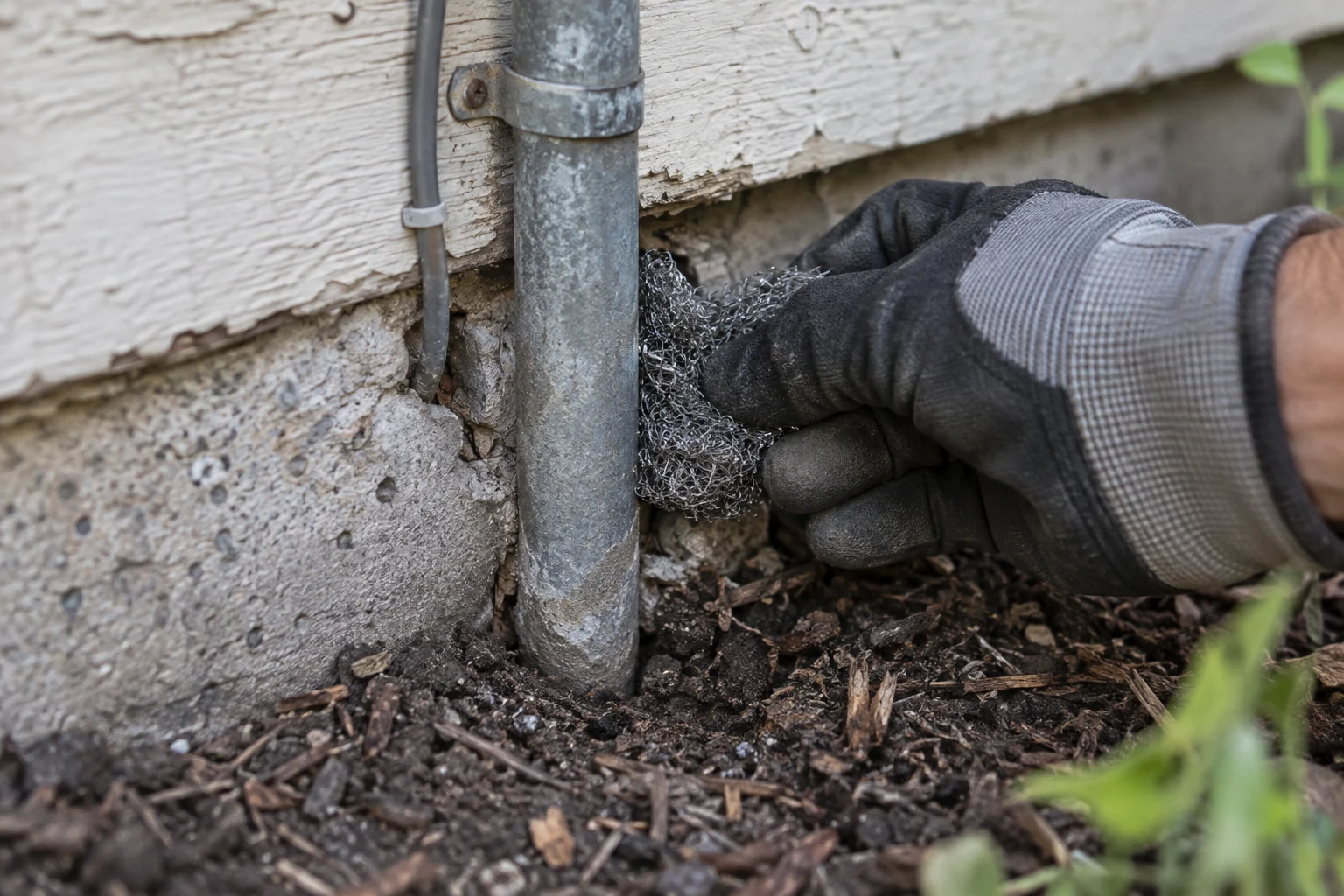
Long-term rodent control requires exclusion.
Exclusion means closing the openings rodents use to enter the building.
Common entry points include:
- utility penetrations
- gaps around pipes
- garage-door gaps
- damaged door seals
- foundation openings
- crawl-space vents
- siding gaps
- roofline gaps
- soffit openings
- attic vents
- damaged screens
The repair material should match the size and type of opening.
A durable repair is more useful than a soft material rodents can easily push through or gnaw.
Our prevention section covers broader rodent-proofing topics.
Why Exclusion Timing Matters
Sealing is essential, but timing matters when rodents are already inside.
If every exit is closed before the active animals are removed, rodents may become trapped inside walls, attics, or other voids.
That can lead to:
- new gnawing
- attempts to create another exit
- odor
- movement into different rooms
- hidden carcasses
A good control plan coordinates removal and exclusion rather than treating them as unrelated tasks.
Complex infestations may require staged exclusion.
Step 6: Clean Contaminated Areas Safely
Rodent control often involves droppings, urine, nesting material, or dead rodents.
Do not dry sweep or vacuum fresh rodent droppings before they have been properly disinfected.
A general safe-cleanup approach includes:
- keeping children and pets away
- wearing suitable gloves
- wetting contaminated material with an appropriate disinfectant according to its label
- allowing the required contact time
- wiping up the material
- bagging waste appropriately
- washing hands afterward
Large contaminated attics, crawl spaces, or insulation areas can require more extensive precautions.
Our cleanup section and rodent safety section cover these topics more broadly.
Step 7: Monitor After Treatment
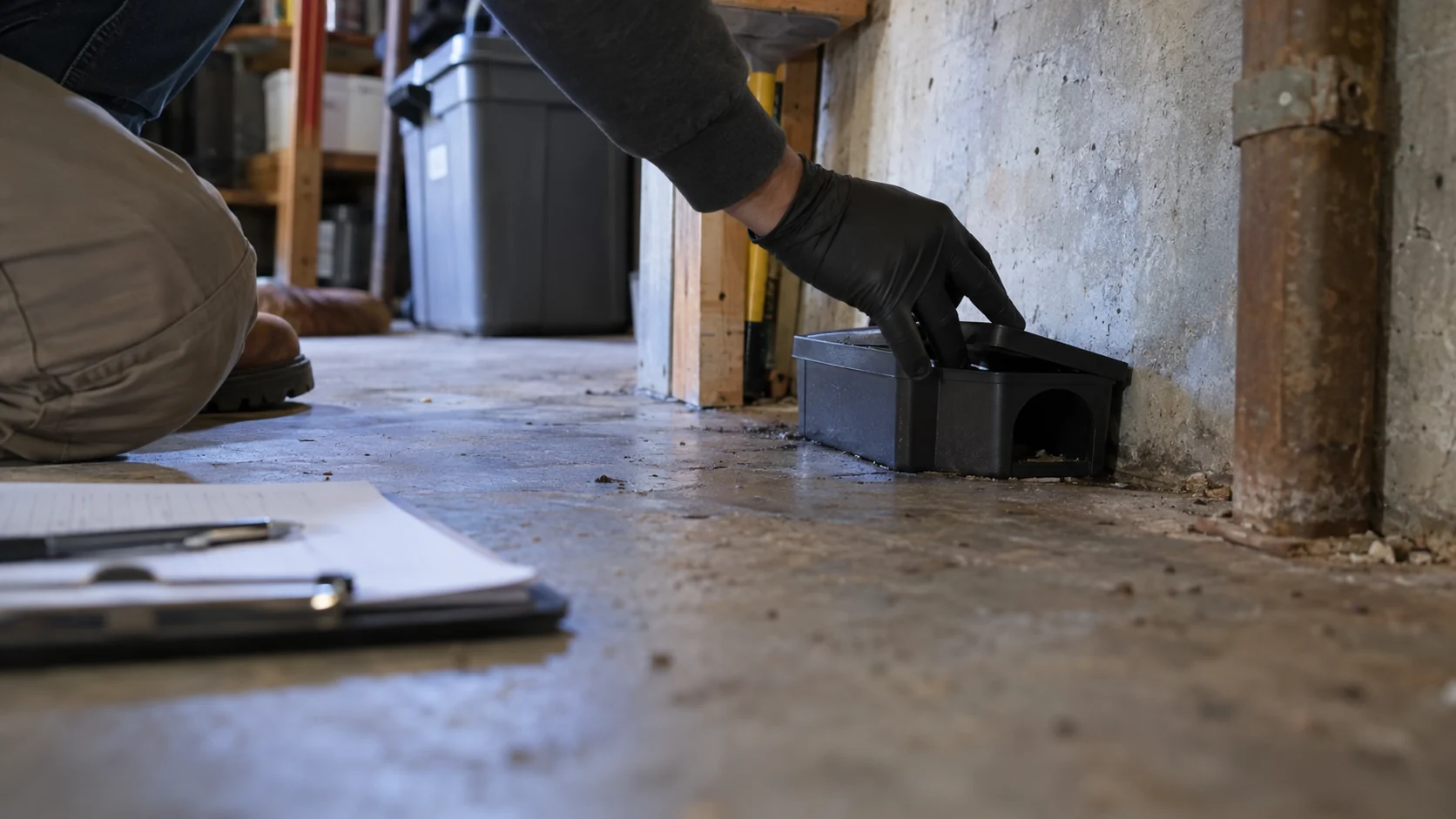
Rodent control should not stop the moment noise decreases.
Monitoring helps confirm whether the infestation is actually ending.
Look for:
- fresh droppings
- trap activity
- new gnaw marks
- new tracks
- repeated sounds
- sightings
- reopened entry points
- new food damage
Old evidence can remain after rodents are gone.
New evidence matters more.
After contaminated areas have been cleaned safely, fresh signs become easier to recognize.
How Long Does Rodent Control Take?
There is no single timeline.
A small mouse problem with one obvious route may be resolved relatively quickly.
A larger rat infestation involving an attic, crawl space, garage, burrows, and several structural openings may take longer.
The timeline depends on:
- species
- number of rodents
- number of active routes
- trap placement
- food availability
- number of entry points
- building complexity
- contamination
- whether the surrounding property supports rodents
Do not judge success from one quiet night.
Use evidence over time.
What Happens During Professional Rodent Control?
A professional rodent-control service may include:
- inspection
- species identification
- mapping active areas
- trap or device placement
- recommendations for sanitation
- exclusion work or repair recommendations
- follow-up visits
- monitoring
- cleanup recommendations
- documentation of findings
Not every company provides every service in-house.
Some companies focus on removal and monitoring.
Others also provide exclusion, attic cleanup, insulation work, or structural repairs.
Before hiring, ask what is included.
What Should a Rodent Inspection Include?
A useful inspection should look at both the inside and outside of the property.
Interior areas may include:
- kitchens
- garages
- attics
- crawl spaces
- basements
- utility rooms
- wall-access points
Exterior inspection may include:
- foundation
- doors
- garage doors
- vents
- roofline
- soffits
- utility penetrations
- vegetation
- burrows
The goal is to connect indoor evidence to the likely exterior route.
A treatment that only places a few traps without looking for entry points may reduce activity temporarily without addressing the cause.
What Does Rodent Exclusion Mean?
Rodent exclusion is structural prevention.
It means sealing, screening, repairing, or modifying openings so rats and mice cannot keep entering.
Examples include:
- repairing vent screens
- sealing utility gaps
- fixing door gaps
- repairing damaged soffits
- closing foundation openings
- correcting garage-door gaps
- sealing roofline defects
Exclusion is one of the most important long-term parts of rodent control.
Without it, trapping can become an endless maintenance cycle.
Is Rodent Control Safe Around Children and Pets?
Rodent-control methods should be selected and placed with children and pets in mind.
Mechanical traps can cause injury if triggered accidentally.
Rodenticide products can be dangerous if misused.
Safer planning may include:
- protected trap placement
- enclosed trap designs
- secured bait stations when bait is used
- avoiding accessible loose bait
- following all product labels
- keeping contaminated areas restricted
- storing products out of reach
If safe placement is difficult, professional help may be appropriate.
DIY Rodent Control vs Professional Control
Some small infestations can be handled by homeowners.
DIY control may make sense when:
- activity is limited
- the rodent is identified
- the entry route is obvious
- traps can be placed safely
- contamination is minor
- the building is easy to inspect
Professional help may make more sense when:
- activity occurs in several areas
- rodents are inside walls or inaccessible voids
- attics or crawl spaces are heavily involved
- contamination is extensive
- structural entry points are difficult to locate
- roofline exclusion is needed
- rats repeatedly return
- safe trap placement is difficult
The question is not whether DIY control is possible in general.
It is whether the specific infestation can be safely and completely addressed.
Common Rodent-Control Mistakes
Common mistakes include:
- trapping without inspecting
- using the wrong trap size
- using too few traps
- placing traps away from active routes
- sealing only one visible opening
- ignoring garages or attics
- leaving food accessible
- relying only on repellents
- stopping after one capture
- failing to monitor after treatment
- ignoring contamination
- assuming the problem is solved because the house is quiet
Rodent control works best when removal, sanitation, exclusion, and monitoring support one another.
Do Ultrasonic Repellents Work as Rodent Control?
Do not rely on ultrasonic devices as the main rodent-control method.
Even if rodents avoid one small area temporarily, the underlying problem remains if they still have access to:
- food
- shelter
- wall voids
- attics
- crawl spaces
- structural openings
A repellency device does not remove the infestation or repair the building.
Use direct control methods instead.
Does Rodent Control Prevent Future Infestations?
It can reduce the risk substantially when exclusion and sanitation are part of the process.
But no property is permanently guaranteed against rodents.
Future pressure can come from:
- neighboring buildings
- seasonal changes
- construction
- landscaping
- garbage
- nearby food sources
- new structural damage
Periodic inspection helps catch new activity early.
What Should You Expect After Rodent Control?
After a successful program, you should expect:
- fewer fresh droppings
- fewer or no sightings
- declining trap activity
- less scratching or movement
- no new gnaw damage
- repaired entry points
- cleaner storage and food areas
- ongoing monitoring
Some old evidence may remain until it is cleaned.
The important question is whether new evidence continues to appear.
When to Call a Professional
Professional rodent control may be useful when:
- rats or mice keep returning
- several parts of the house are involved
- the infestation extends into walls or ceilings
- attic or crawl-space contamination is significant
- structural openings are difficult to reach
- exterior burrows are widespread
- you suspect wiring or duct damage
- traps are not reducing activity
- safe handling is difficult
Visit our professional rodent-control section for more information about professional inspection and service options.
Rodent Control Works Best as a Complete System
The most effective rodent-control plan is rarely one product.
It combines:
- identification
- inspection
- sanitation
- trapping or removal
- exclusion
- cleanup
- monitoring
Remove the rodents already inside, but also correct the conditions that allowed them in.
If those structural and food-related conditions remain, the same problem can return even after successful trapping.
For mouse-specific control, see How to Get Rid of Mice in Your House.
For rat-specific control, see How to Get Rid of Rats in Your House.
You can also continue with our mouse traps guide, rat traps guide, prevention section, cleanup section, or professional rodent-control section.
For the full national overview, return to [Rats & Mice in the Home](/).