Norway Rat: Identification, Signs & Behavior
Learn how to identify a Norway rat, what it looks like, where it lives, which signs it leaves behind, how it behaves, and what to do if Norway rats are around your home.
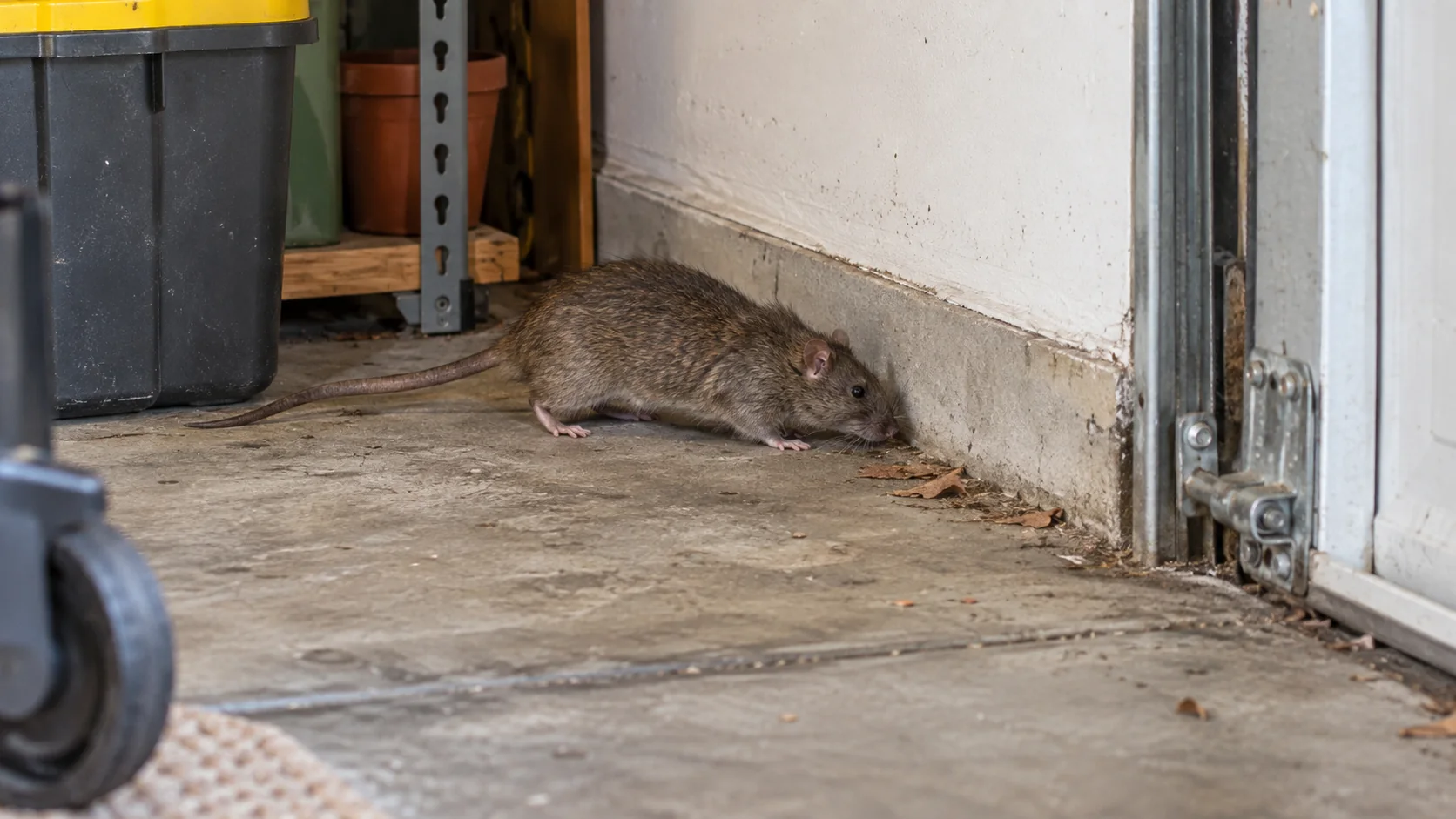
The Norway rat is one of the most common large rodents found around homes, garages, basements, crawl spaces, alleys, sewers, and other ground-level environments in the United States.
It is a heavy-bodied rat with relatively small ears, a blunt-looking muzzle, large feet, and a thick tail that is usually shorter than the combined length of the head and body.
Norway rats are strong diggers and are especially associated with burrows, foundations, lower wall voids, crawl spaces, basements, garages, and protected outdoor areas close to buildings.
Because they often remain hidden during the day, homeowners may first notice large droppings, gnaw damage, grease marks, tracks, burrows, nighttime sounds, or a quick sighting near the ground.
Correct identification matters because Norway-rat control usually focuses heavily on ground-level routes, burrows, foundation openings, crawl spaces, garages, food sources, and rat-sized traps.
This guide explains what a Norway rat looks like, how to distinguish it from mice and other rats, where it commonly lives, which signs it leaves behind, and what its behavior can tell you about an infestation.
What Is a Norway Rat?
The Norway rat is a large, robust rodent that lives successfully around people.
It is commonly associated with:
- - residential neighborhoods
- - garages
- - basements
- - crawl spaces
- - foundations
- - alleys
- - dumpsters
- - sheds
- - sewers
- - food-storage areas
- - outdoor burrows
Norway rats are often most active close to ground level.
They may nest outdoors in burrows and enter buildings to find food, water, warmth, or additional shelter.
They can also establish themselves inside structures when protected spaces are available.
Unlike a small house mouse, a Norway rat requires larger entry openings and leaves much larger evidence.
For a broader rat-and-mouse comparison, see Rat vs Mouse: How to Tell the Difference.
What Does a Norway Rat Look Like?
A Norway rat has a large, heavy body.
Common identification features include:
- - stocky build
- - brown to gray-brown fur
- - lighter underside
- - blunt or rounded-looking muzzle
- - relatively small ears compared with the head
- - large feet
- - thick tail
- - powerful-looking body proportions
The fur may appear coarse or slightly shaggy rather than sleek.
Color can vary, so body shape and proportions are usually more useful than color alone.
A typical Norway rat looks noticeably heavier than a roof rat and dramatically larger than a house mouse.
How Big Is a Norway Rat?
Adult Norway rats are much larger than house mice.
Their exact size varies with age, sex, food availability, and condition.
For practical identification, focus on the scale of the animal and the evidence it leaves behind.
A Norway rat typically has:
- - a much heavier body than a mouse
- - larger feet
- - a broader head
- - a thicker tail
- - larger droppings
- - stronger gnaw marks
- - more substantial tracks
A juvenile Norway rat can sometimes be mistaken for a mouse.
In that situation, look at proportions.
A young rat usually has oversized-looking feet, a heavier head, and a thicker tail than a mouse of similar length.
Norway Rat Face and Ears
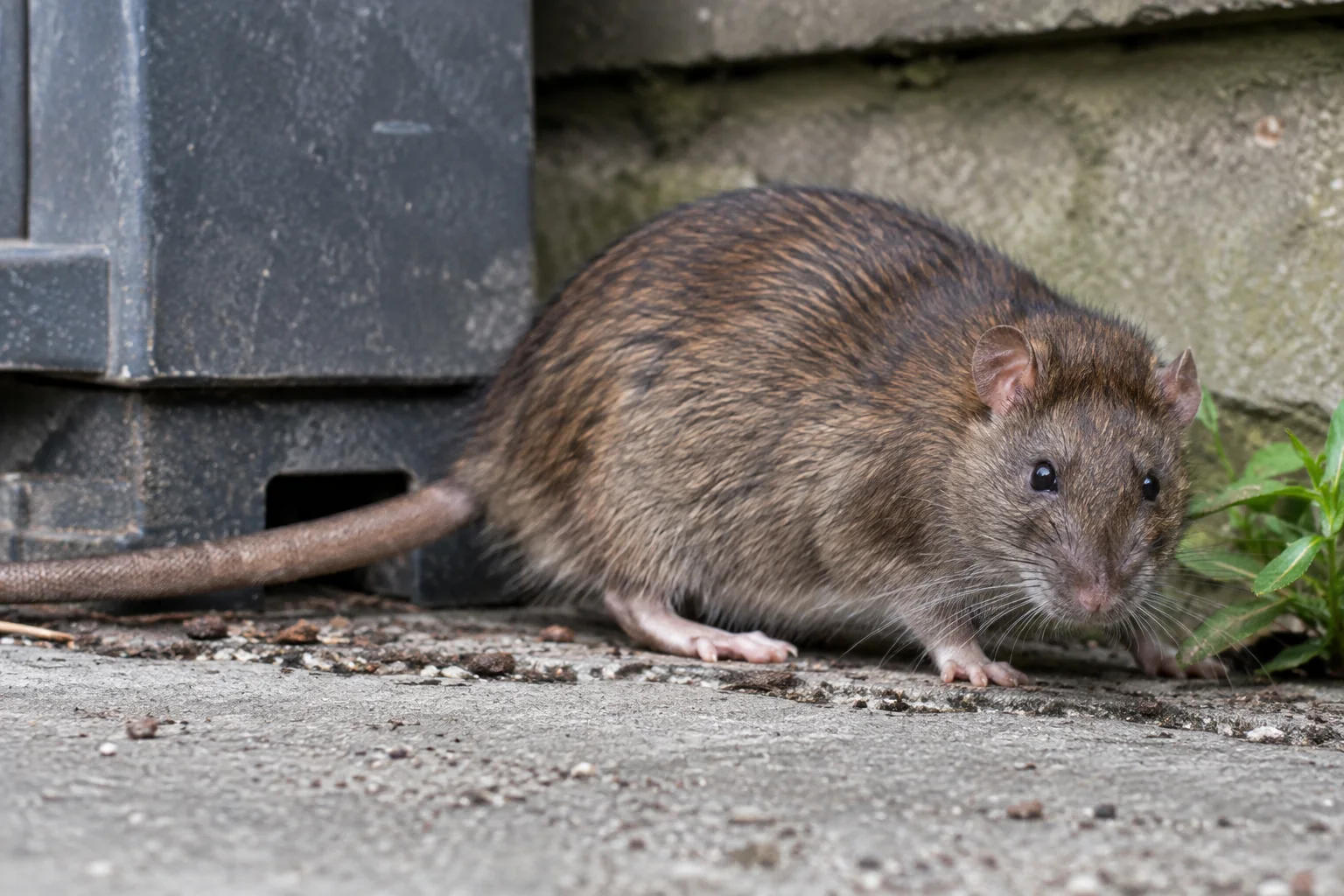
The Norway rat usually has a broader, blunter-looking face than a house mouse.
Its ears appear relatively small compared with its large head and body.
This is useful because mice often have ears that look oversized for their head.
A roof rat can also have a more pointed face and proportionally larger ears than a Norway rat.
Do not identify a rat from ear size alone.
Use several clues together:
- - head shape
- - body build
- - tail proportion
- - feet
- - droppings
- - habitat
- - activity location
Norway Rat Tail
The Norway rat has a thick, mostly hairless tail.
One of the most useful species-level clues is proportion.
A Norway rat's tail is generally shorter than the combined length of its head and body.
By contrast, roof rats usually have proportionally longer tails.
This is easiest to judge when the full animal is clearly visible in a photograph or extended sighting.
Do not rely on tail length if the tail is partly hidden.
Norway Rat Feet
Norway rats have large, strong feet.
The rear feet are especially noticeable compared with a mouse.
Large tracks in dust, mud, garages, basements, or crawl spaces can support a Norway-rat identification when they appear together with other evidence.
You may also see a tail drag mark through fine dust.
Track size is most useful when combined with droppings, burrows, rub marks, and gnaw damage.
Norway Rat Droppings
Norway-rat droppings are much larger than mouse droppings.
They are commonly found:
- - along garage walls
- - in basements
- - in crawl spaces
- - near food sources
- - beside foundation openings
- - near burrow entrances
- - behind stored materials
- - near utility routes
- - around garbage or pet food
Dropping shape can vary, but Norway-rat droppings are often described as relatively large and blunt-ended compared with the smaller evidence left by mice.
Do not identify the species from one dropping alone.
Look at size, location, tracks, burrows, gnawing, and the surrounding route.
Our rat droppings guide explains this evidence in more detail.
Norway Rat vs House Mouse
The size difference is substantial.
Norway rats are:
- - much larger
- - heavier-bodied
- - broader-headed
- - larger-footed
- - thicker-tailed
- - associated with larger droppings
- - capable of heavier gnaw damage
House mice are:
- - much smaller
- - lighter-bodied
- - pointed-faced
- - relatively large-eared
- - thin-tailed
- - associated with small droppings
If the animal is small enough that identification is uncertain, look carefully at the feet, tail thickness, and head proportions.
Our house mouse guide and Rat vs Mouse guide provide more direct comparisons.
Norway Rat vs Roof Rat
Norway rats and roof rats are both common structural rats, but they differ in body proportions and typical behavior.
Norway rats tend to be:
- - heavier and more robust
- - blunter-faced
- - smaller-eared in proportion
- - thicker-tailed
- - more strongly associated with ground-level activity
- - strong burrowers
Roof rats tend to be:
- - slimmer
- - more agile-looking
- - more pointed-faced
- - relatively larger-eared
- - longer-tailed in proportion
- - strongly associated with climbing and elevated routes
Location can be a useful clue.
A heavy rat using burrows beside a foundation suggests a different pattern from a slender rat moving along a fence or roofline.
Species identification should still use several features together.
Where Do Norway Rats Live?
Norway rats prefer protected areas close to food and water.
Common locations include:
- - outdoor burrows
- - foundations
- - crawl spaces
- - basements
- - garages
- - lower wall voids
- - sheds
- - under decks
- - beneath dense vegetation
- - around garbage areas
- - near animal feed
- - sewer-connected environments
They may live outdoors and enter a house only to feed.
They may also establish nests inside the structure if conditions are favorable.
The exact pattern depends on the building and surrounding property.
Norway Rat Burrows
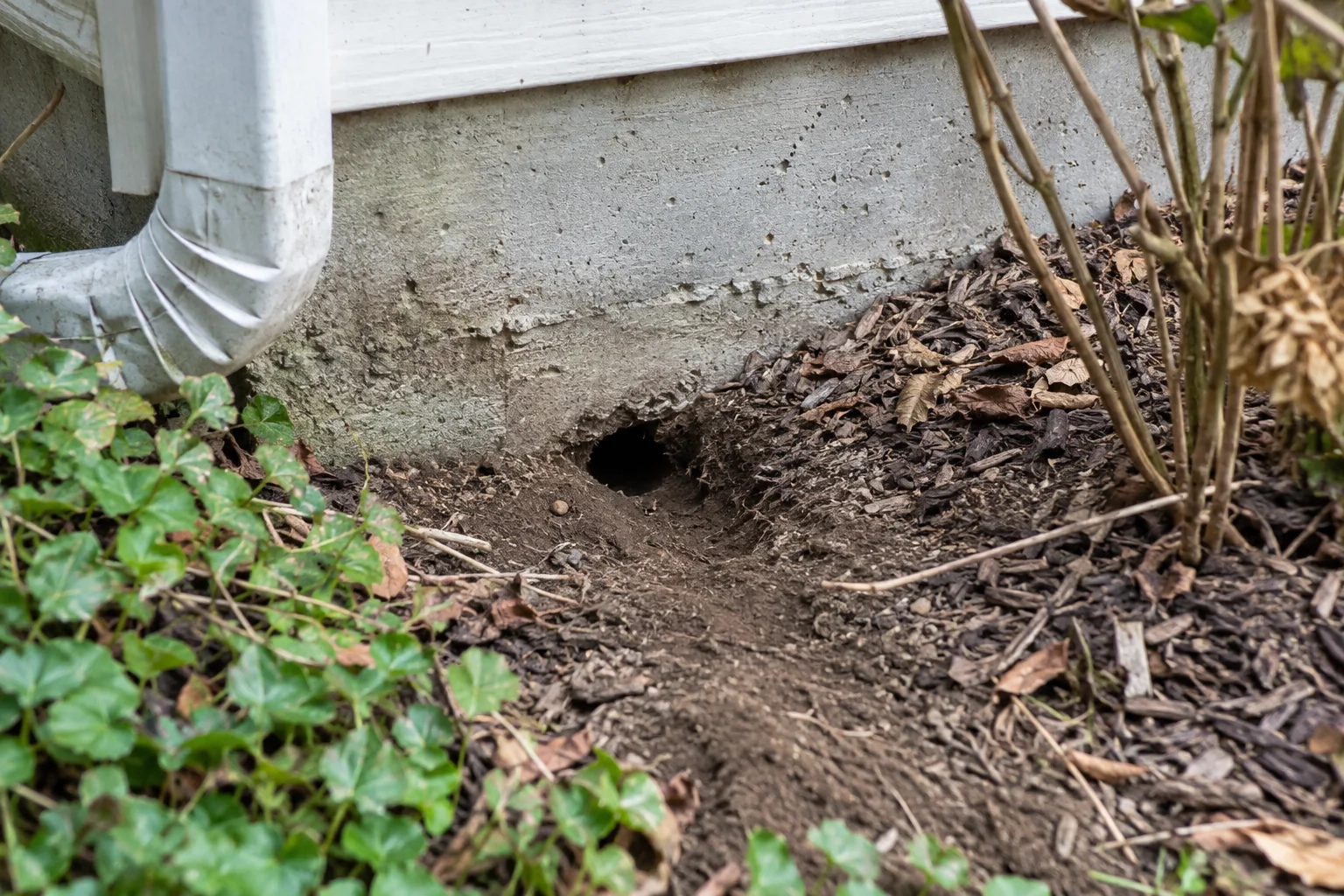
Burrowing is one of the most characteristic Norway-rat behaviors.
Burrows may be found:
- - along foundations
- - under decks
- - beneath sheds
- - near retaining walls
- - under dense vegetation
- - along fence lines
- - near garbage areas
- - around outdoor feeding sites
A rat burrow entrance is generally much larger than a mouse opening.
Fresh burrow activity may include:
- - recently disturbed soil
- - smooth entrance edges
- - tracks
- - droppings
- - repeated travel paths
- - grease marks near nearby surfaces
Do not collapse or seal an active burrow without understanding whether rats are still using it and where alternative exits may be.
For an active rat problem, see How to Get Rid of Rats in Your House.
Norway Rats Around Foundations
Foundations are important inspection areas.
Norway rats may use gaps around:
- - utility penetrations
- - damaged vents
- - crawl-space openings
- - door frames
- - garage interfaces
- - structural joints
- - foundation defects
They may also burrow directly beside the building.
A ground-level route can lead into:
- - crawl spaces
- - basements
- - garages
- - wall voids
- - utility spaces
This is why an interior rat problem often requires an exterior ground-level inspection.
Norway Rats in Crawl Spaces
Crawl spaces can provide shelter, moisture, and access to wall systems.
Signs may include:
- - large droppings
- - tracks
- - rub marks
- - gnaw damage
- - nesting material
- - disturbed insulation
- - openings around utilities
Because crawl spaces can be confined and contaminated, avoid unnecessary disturbance.
If access is difficult or contamination is extensive, professional inspection may be appropriate.
Norway Rats in Basements
Basements are another common location for Norway-rat activity.
Rats may enter around:
- - foundation gaps
- - utility lines
- - floor drains
- - damaged doors
- - wall penetrations
- - crawl-space connections
Look for droppings and rub marks along edges rather than only in the middle of the room.
Norway rats often follow walls and structural lines as they move.
Norway Rats in Garages
Garages combine shelter with exterior access.
Potential attractants include:
- - pet food
- - bird seed
- - garbage
- - stored grain
- - cardboard
- - clutter
- - water sources
Common entry points include:
- - garage-door gaps
- - side-door gaps
- - foundation openings
- - utility penetrations
- - wall-floor joints
A garage can also serve as a transition zone into the rest of the house.
Inspect shared walls and utility routes if rat activity appears to continue indoors.
Can Norway Rats Climb?
Yes.
Norway rats are often described as ground-oriented rats, but that does not mean they cannot climb.
They can climb rough surfaces, pipes, framing, stacked materials, and other structures when needed.
However, climbing is usually less central to their behavior than it is for roof rats.
A rat found in an attic should therefore be identified from the full evidence rather than location alone.
For attic-specific rat activity, see Rats in the Attic: Signs, Damage & Removal.
Can Norway Rats Swim?
Norway rats are capable swimmers.
This ability helps them survive in environments associated with drainage systems, sewers, waterways, and wet urban areas.
However, a rat found in a home should still be traced through actual structural evidence.
Do not assume a sewer route without inspecting foundations, doors, vents, crawl spaces, garages, and utility penetrations.
What Do Norway Rats Eat?
Norway rats are opportunistic feeders.
They may consume:
- - grains
- - pet food
- - bird seed
- - garbage
- - food scraps
- - stored dry foods
- - animal feed
- - outdoor food waste
They can also take advantage of food associated with gardens, livestock, compost, or neighboring properties.
Reducing food availability is an important part of control.
Store vulnerable food in durable containers when practical and clean spills or loose feed promptly.
Sanitation alone will not remove established rats, but it reduces the resources that support them.
Do Norway Rats Need Water?
Norway rats use available water sources when possible.
Potential sources include:
- - leaking pipes
- - pet bowls
- - standing water
- - irrigation leaks
- - condensation
- - drains
- - outdoor containers
Removing unnecessary water can make the property less supportive.
It is especially important to repair leaks in garages, basements, crawl spaces, and utility areas where rat activity is already present.
When Are Norway Rats Active?
Norway rats are often most active at night or during quiet periods.
However, they can also be seen during daylight.
A daytime sighting does not automatically tell you the exact size of the infestation.
It may reflect:
- - disturbance
- - food competition
- - a nearby nest or burrow
- - unusual feeding opportunities
- - a change in the normal environment
Use the complete evidence rather than one sighting.
How Norway Rats Move Around a Property
Norway rats often follow established travel routes.
Common routes include:
- - walls
- - foundations
- - fence lines
- - garage edges
- - pipes
- - crawl-space paths
- - storage edges
- - vegetation lines
Repeated movement can create visible rub marks where oily fur contacts surfaces.
Tracks, droppings, and gnawing may also accumulate along the same route.
These patterns are useful for trap placement.
Our rat traps guide explains route-based placement in more detail.
Norway Rat Rub Marks
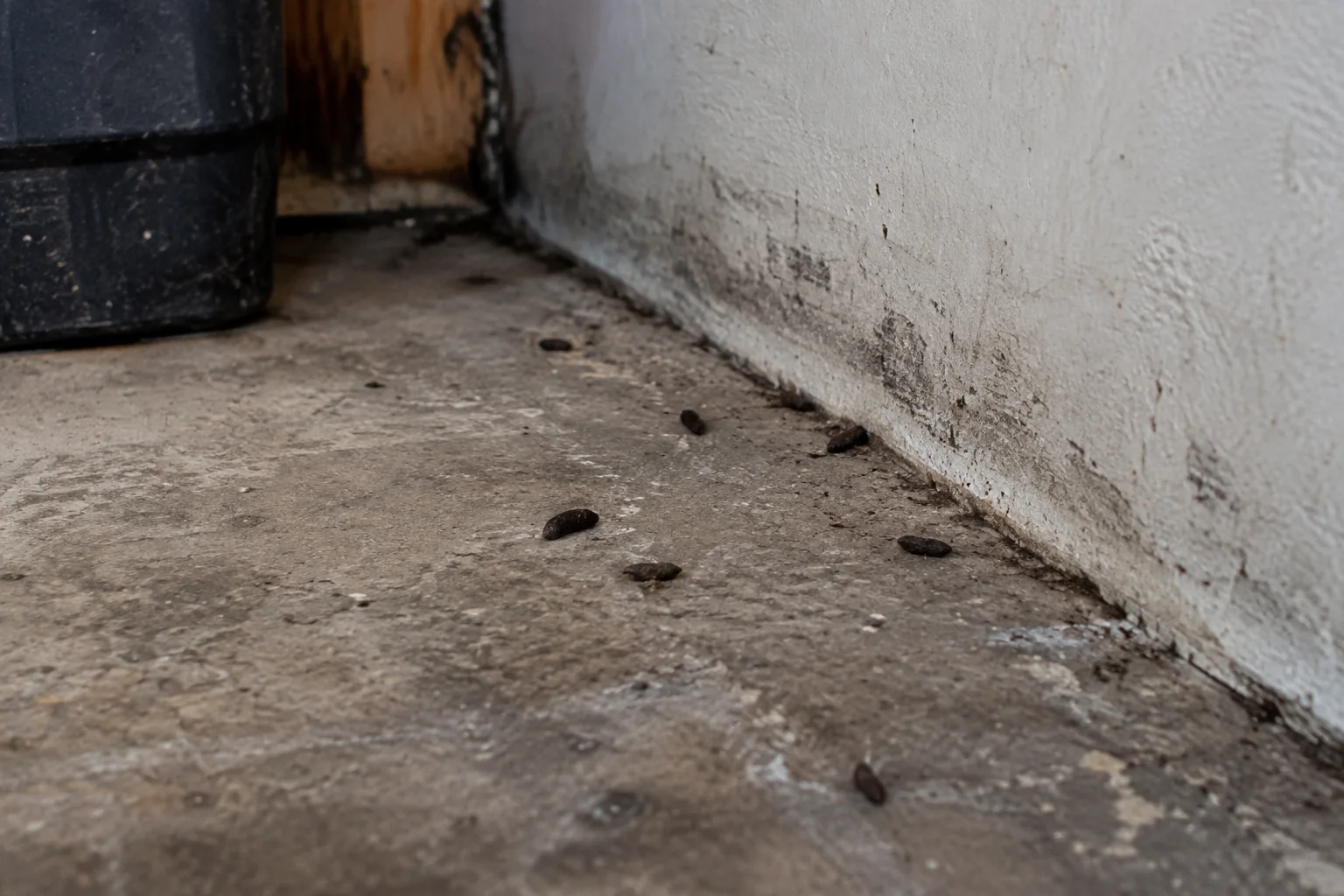
Rats repeatedly traveling along the same route may leave dark grease or rub marks.
These can appear on:
- - walls
- - pipes
- - framing
- - openings
- - corners
- - foundation edges
A rub mark alone is not enough to confirm current activity.
Old marks may remain after rats are gone.
Look for fresh droppings, tracks, gnawing, or trap activity in the same area.
Norway Rat Gnaw Marks
Norway rats have powerful front teeth and can produce substantial gnaw damage.
They may damage:
- - wood
- - plastic
- - food containers
- - cardboard
- - stored items
- - wiring insulation
- - some building materials
Heavy gnawing is more consistent with a large rat than a house mouse.
If wiring appears damaged, have the affected electrical system evaluated appropriately.
Rodent removal does not repair electrical damage that has already occurred.
Norway Rat Tracks
Norway-rat tracks are much larger than mouse tracks.
They may appear in:
- - dusty garages
- - crawl spaces
- - basements
- - mud
- - soil near burrows
- - storage areas
Look for repeated prints along walls or structural edges.
A tail drag may also appear in fine dust or soft material.
Track evidence is most useful when paired with droppings, burrows, rub marks, or a sighting.
Norway Rat Nesting Behavior
Norway rats often nest in protected ground-level locations.
Common nesting areas include:
- - burrows
- - crawl spaces
- - basements
- - wall voids
- - garages
- - protected storage areas
- - under structures
Nesting material may include:
- - shredded paper
- - insulation
- - fabric
- - cardboard
- - plant material
- - other soft debris
Finding a nest confirms that rats have used the area, but removing the nest alone does not solve the infestation.
Active rats and entry routes may still remain.
How Fast Do Norway Rats Reproduce?
Norway rats can reproduce quickly when food, shelter, and environmental conditions are favorable.
That is one reason an untreated infestation can grow over time.
Homeowners do not need an exact population count before acting.
If fresh droppings, burrow activity, trap captures, or sightings continue, treat the infestation as active.
The practical goal is to interrupt the cycle through removal, sanitation, exclusion, and monitoring.
How Far Do Norway Rats Travel?
Norway rats may travel between nests, food, and water sources.
Some individuals remain relatively close to a reliable food source, while others may move farther depending on the environment.
For homeowners, the more useful approach is to map where evidence appears.
Check:
- - burrows
- - garbage areas
- - garages
- - foundation walls
- - crawl spaces
- - basements
- - food storage
- - utility routes
The pattern of evidence can reveal how the property is being used.
Are Norway Rats Dangerous?
Norway rats can contaminate food and surfaces with droppings and urine.
They can also damage property through gnawing and nesting.
Rodent waste should be treated as potentially contaminated material.
Do not dry sweep or vacuum fresh rat droppings before they have been properly disinfected.
Use suitable gloves and wet-cleanup methods.
See our rodent safety section, cleanup section, and rat droppings guide for related guidance.
How to Tell if Norway Rats Are Still Active
Old evidence can remain after rats are gone.
Look for current signs such as:
- - fresh droppings
- - newly disturbed burrows
- - fresh tracks
- - new gnaw damage
- - trap activity
- - sightings
- - repeated nighttime movement
- - new rub marks on an active route
After old evidence is cleaned or documented safely, fresh activity becomes easier to identify.
Monitoring over time is more reliable than judging one old sign.
What to Do If You Find a Norway Rat
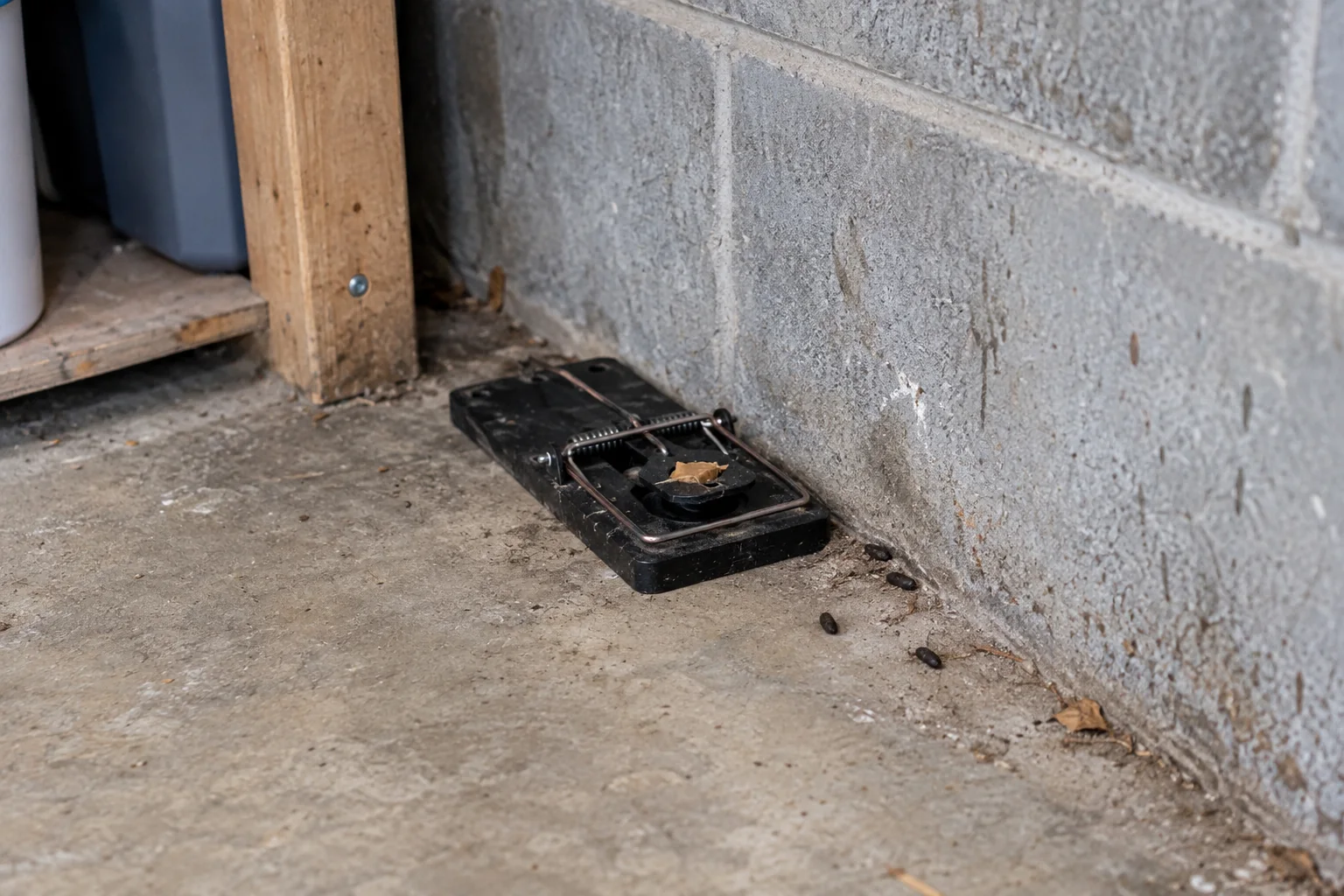
Do not focus only on the individual rat you saw.
Inspect the surrounding property.
Look for:
- - droppings
- - burrows
- - tracks
- - rub marks
- - gnaw damage
- - food sources
- - water sources
- - foundation gaps
- - crawl-space openings
- - garage access
- - utility penetrations
Then begin control.
A practical process may include:
- 1. reducing food and water access
- 2. placing rat-sized traps along confirmed routes
- 3. monitoring captures and fresh signs
- 4. finding structural entry points
- 5. coordinating exclusion with removal
- 6. cleaning contaminated areas safely
For the complete process, see How to Get Rid of Rats in Your House and our broader rodent control guide.
When to Call a Professional
Professional rodent control may be useful when:
- - burrows are widespread
- - rats are active in several areas
- - crawl spaces or basements are heavily involved
- - entry points cannot be found
- - rats are inside inaccessible walls
- - contamination is extensive
- - trapping does not reduce activity
- - structural exclusion is difficult
- - the infestation repeatedly returns
A useful inspection should connect indoor evidence with outdoor routes and nesting areas.
Visit our professional rodent-control section for more information.
Norway Rat Identification Helps Focus the Control Plan
The Norway rat is a large, ground-oriented rat strongly associated with burrows, foundations, crawl spaces, basements, garages, and lower structural areas.
Useful identification clues include:
- - heavy body
- - blunt-looking muzzle
- - relatively small ears
- - large feet
- - thick tail
- - tail shorter than head-and-body length
- - large droppings
- - strong gnaw damage
- - burrowing behavior
- - ground-level travel routes
Do not rely on one feature alone.
Combine the animal's appearance with the evidence it leaves and the part of the property where activity occurs.
Once Norway-rat activity is confirmed, control becomes more focused.
Use rat-sized traps, inspect foundations and burrows, reduce food and water sources, clean contamination safely, and coordinate exclusion with removal.
Continue with our Rat vs Mouse guide, house mouse guide, rat droppings guide, rats in walls guide, rats in the attic guide, rat traps guide, or rodent control guide.
For the broader overview, return to Rats & Mice in the Home.