How Mice Get Into Your House
Learn how mice get into a house, the small gaps and entry points they use, where to inspect, and how to reduce the chance of mice getting inside.
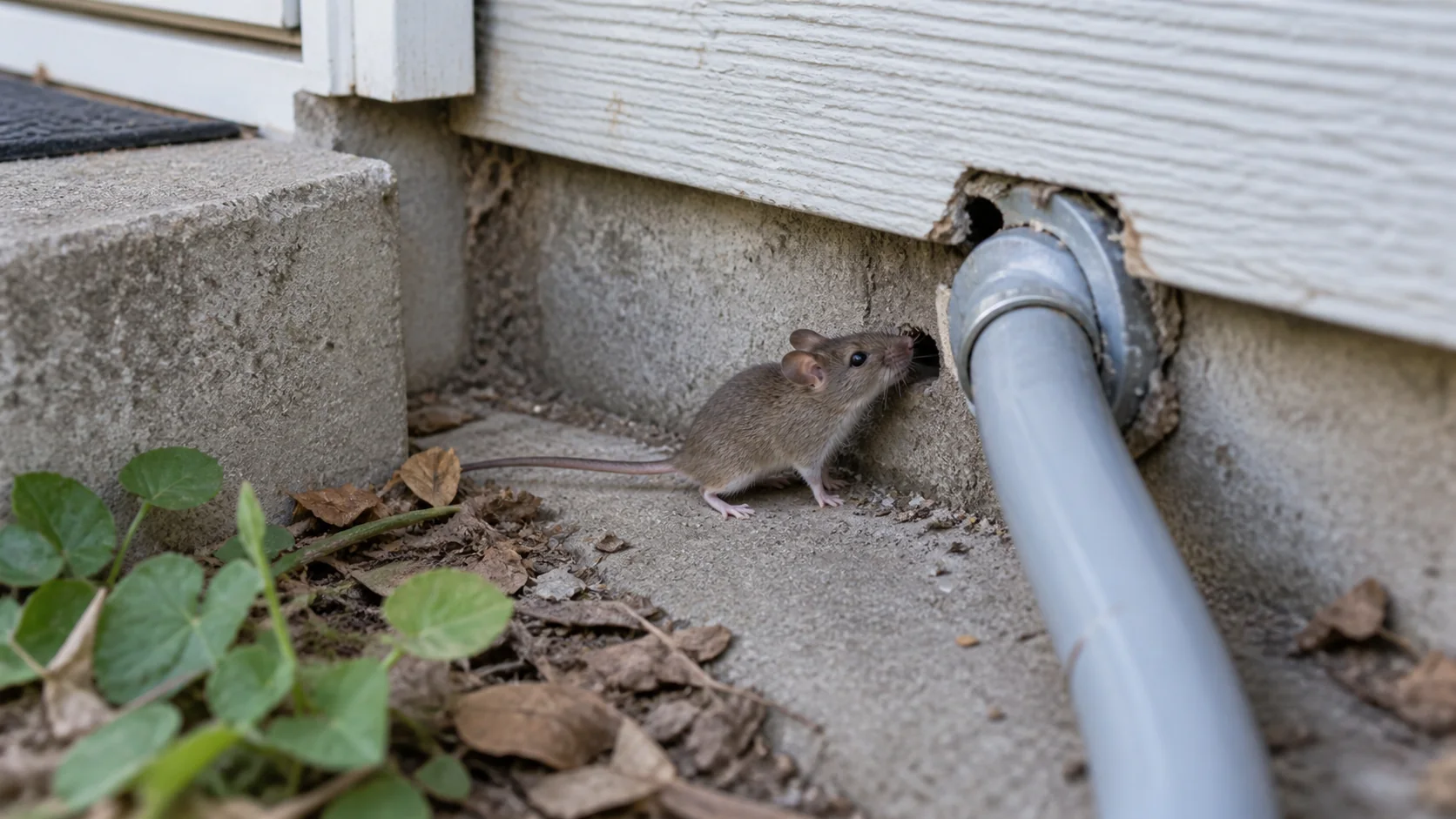
Mice get into houses by exploiting small openings around the exterior of the building.
They may enter through gaps around doors, garage doors, utility pipes, siding, vents, foundations, roofline details, or damaged screens. Once inside, wall voids, cabinets, attics, crawl spaces, garages, and utility chases can help them move through the structure while remaining mostly hidden.
The opening does not need to look dramatic.
A gap that seems minor to a homeowner may still be large enough for a mouse to use, especially if it connects directly to warmth, food, shelter, or a protected interior route.
This guide explains the most common ways mice get into a house, where to inspect, how to tell whether a gap is active, and how exclusion fits into long-term mouse prevention.
Why Mice Enter Houses
Mice enter homes because buildings provide resources.
Common attractants include:
- - food
- - warmth
- - shelter
- - nesting material
- - water
- - protection from weather
- - low-disturbance spaces
A house can be attractive even if it is clean.
Mice may be drawn to structural shelter first and then find food after they enter.
Seasonal changes can also increase pressure as outdoor conditions become less favorable.
The important point is that mice do not need a large open doorway.
They take advantage of small defects that connect the outside environment to protected indoor spaces.
How Small a Hole Can a Mouse Use?
Mice can use surprisingly small openings.
The exact opening they can pass through depends on its shape, condition, and the individual mouse.
For homeowners, the practical rule is simple:
Do not ignore small exterior gaps just because they look too narrow to matter.
Pay special attention to openings around:
- - pipes
- - wires
- - doors
- - siding
- - vents
- - foundations
- - roofline details
If a gap also has droppings, gnaw marks, rub marks, or repeated sightings nearby, it deserves priority.
1. Gaps Around Exterior Doors
Exterior doors are common mouse entry points.
Potential problem areas include:
- - gaps under doors
- - damaged weather stripping
- - worn thresholds
- - gaps at lower corners
- - warped doors
- - damaged trim
- - openings where the frame meets the wall
A door may look closed while still leaving enough space near the bottom edge for a mouse to investigate.
Check the full perimeter of the door, not just the center.
Light visible beneath a closed door can be a useful clue that the seal is incomplete.
2. Garage-Door Gaps
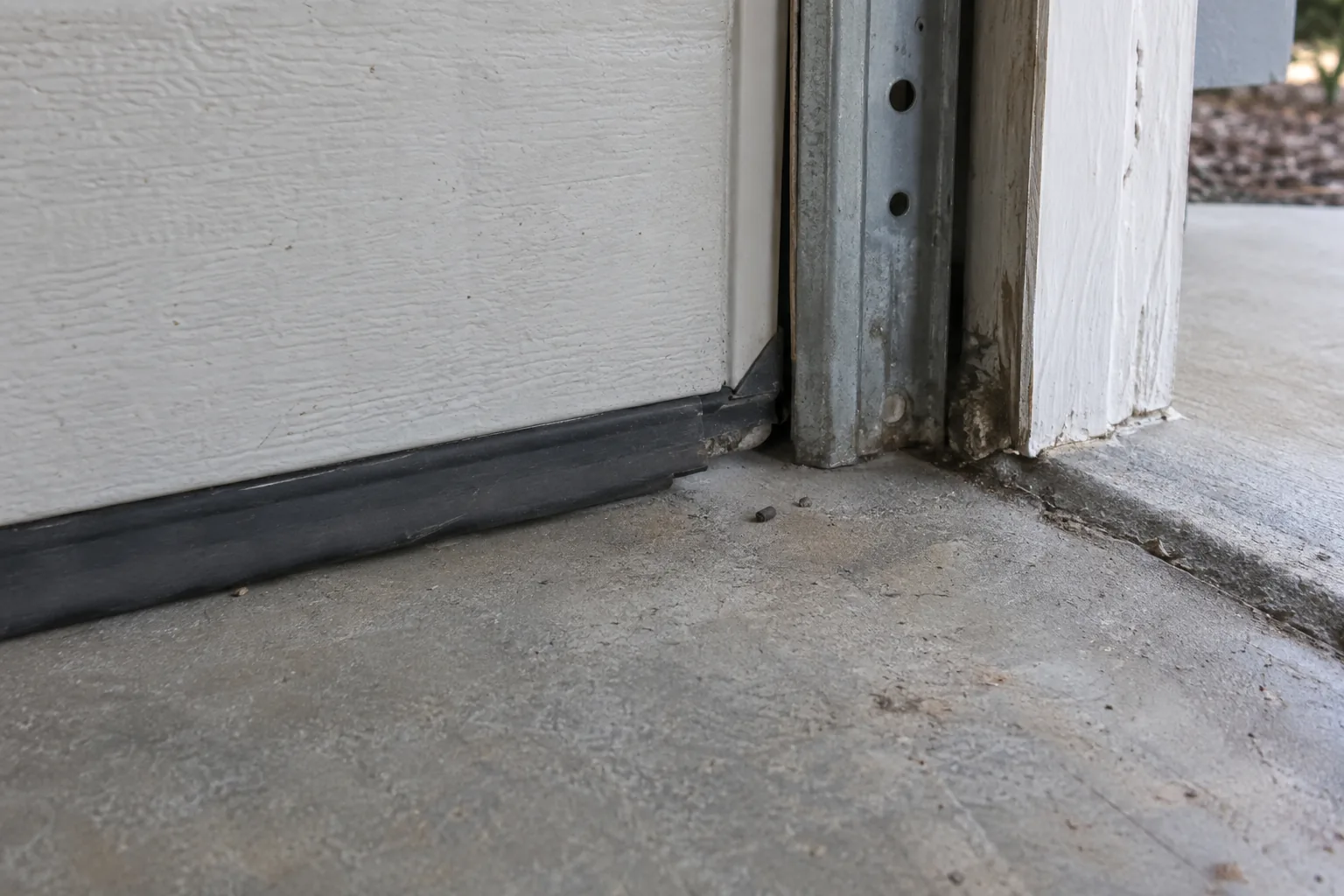
Garages are one of the most common entry zones for mice.
Garage doors can develop gaps:
- - at the bottom seal
- - at lower corners
- - along side seals
- - where concrete is uneven
- - where weather stripping is damaged
Once inside the garage, mice may find:
- - pet food
- - bird seed
- - cardboard
- - stored fabric
- - wall cavities
- - attic access
A mouse that enters the garage may later move into the rest of the house.
Inspect both the garage door and the shared wall between the garage and living areas.
3. Utility Pipe Openings
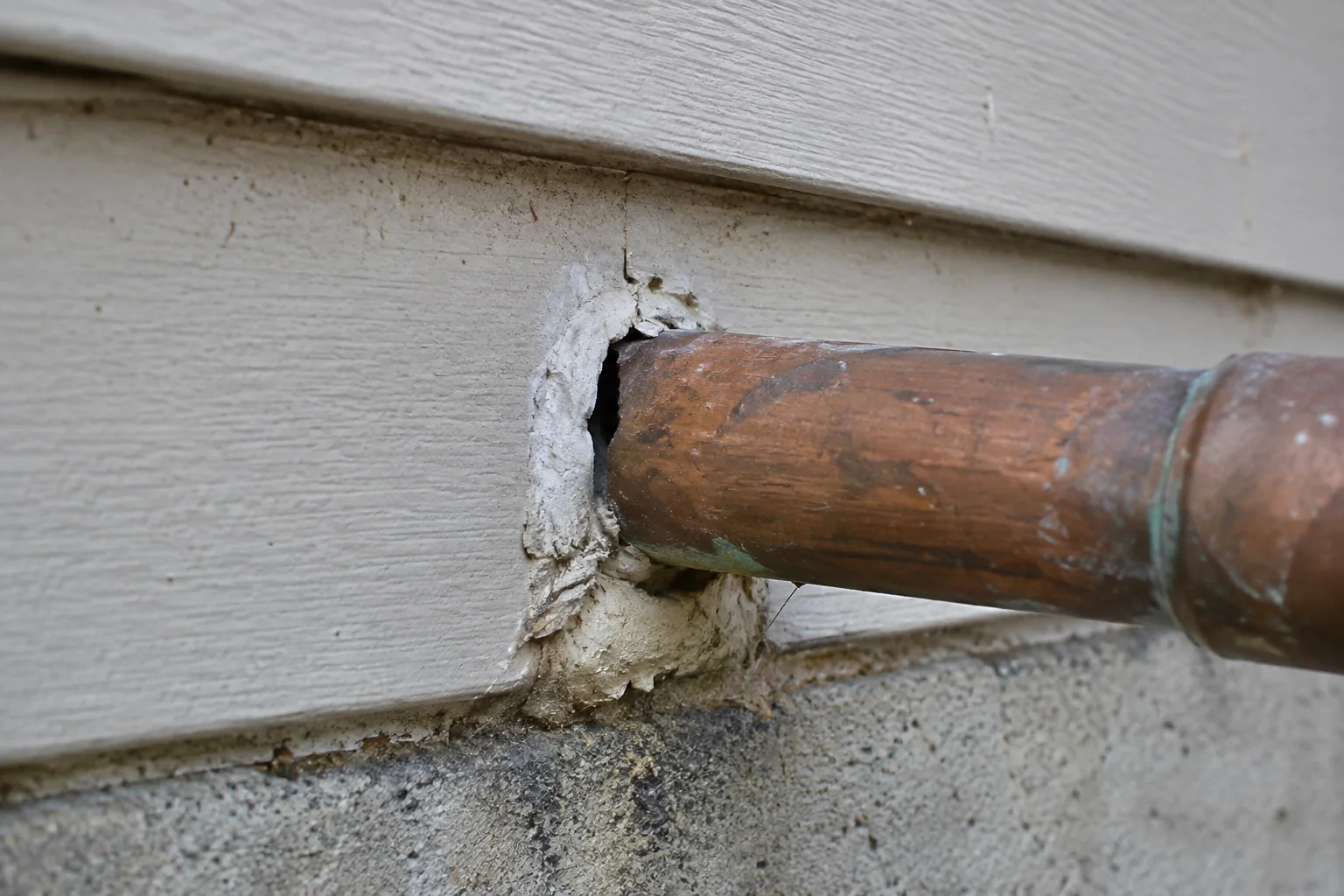
Pipes frequently pass through exterior walls, foundations, cabinets, and floors.
The opening around the pipe may be larger than the pipe itself.
Common examples include:
- - plumbing lines
- - hose connections
- - HVAC lines
- - gas lines
- - condensate lines
A gap around a pipe can create a direct route into:
- - wall voids
- - cabinets
- - crawl spaces
- - utility rooms
- - kitchens
These openings are especially important when droppings appear beneath sinks or behind appliances.
4. Cable and Electrical Penetrations
Cables and wiring also create small exterior penetrations.
Look around:
- - electrical service lines
- - cable lines
- - internet lines
- - satellite lines
- - low-voltage wiring
- - outdoor equipment connections
A small hole drilled for a wire can become a rodent route if the surrounding opening is not sealed properly.
Inspect both the exterior point and the corresponding interior area.
5. Foundation Gaps
Foundation openings can give mice access to lower parts of the building.
Possible problem areas include:
- - cracks
- - utility penetrations
- - gaps where materials meet
- - damaged vents
- - openings near sill areas
- - poorly sealed joints
Once inside a foundation or crawl-space area, mice can move upward through wall systems.
An interior mouse problem may therefore begin with an entry point near ground level.
6. Crawl-Space Vents and Openings
Crawl spaces can connect directly to wall cavities and floors.
Inspect:
- - vent screens
- - access doors
- - foundation openings
- - pipe penetrations
- - damaged mesh
- - gaps around framing
A mouse entering the crawl space may never appear in the open immediately.
It may move into walls first and emerge later near a kitchen, bathroom, or utility area.
7. Siding Gaps
Exterior siding can develop small openings.
Check:
- - lower siding edges
- - corners
- - joints
- - damaged panels
- - transitions between siding and foundation
- - areas around utilities
A gap behind siding can lead into sheathing, framing, or wall cavities.
Mice can use protected exterior routes that are difficult to see from normal eye level.
8. Gaps Around Brick, Stone, or Masonry Transitions
Homes with brick, stone veneer, or mixed exterior materials can have small construction gaps where different materials meet.
Inspect:
- - wall transitions
- - corners
- - utility penetrations
- - lower edges
- - damaged mortar areas
- - trim interfaces
Do not seal designed drainage or ventilation openings blindly.
The goal is to identify defects that provide rodent access without interfering with required building functions.
If you are unsure whether an opening is intentional, professional evaluation may be appropriate.
9. Vents
Vents can become entry points when screening or covers are damaged.
Potential areas include:
- - crawl-space vents
- - attic vents
- - dryer vents
- - exhaust vents
- - foundation vents
Look for:
- - torn mesh
- - missing covers
- - bent screening
- - loose edges
- - gnaw damage
Any repair should preserve the vent's intended airflow and function.
Do not block a required vent just to stop rodents.
10. Roofline and Soffit Gaps
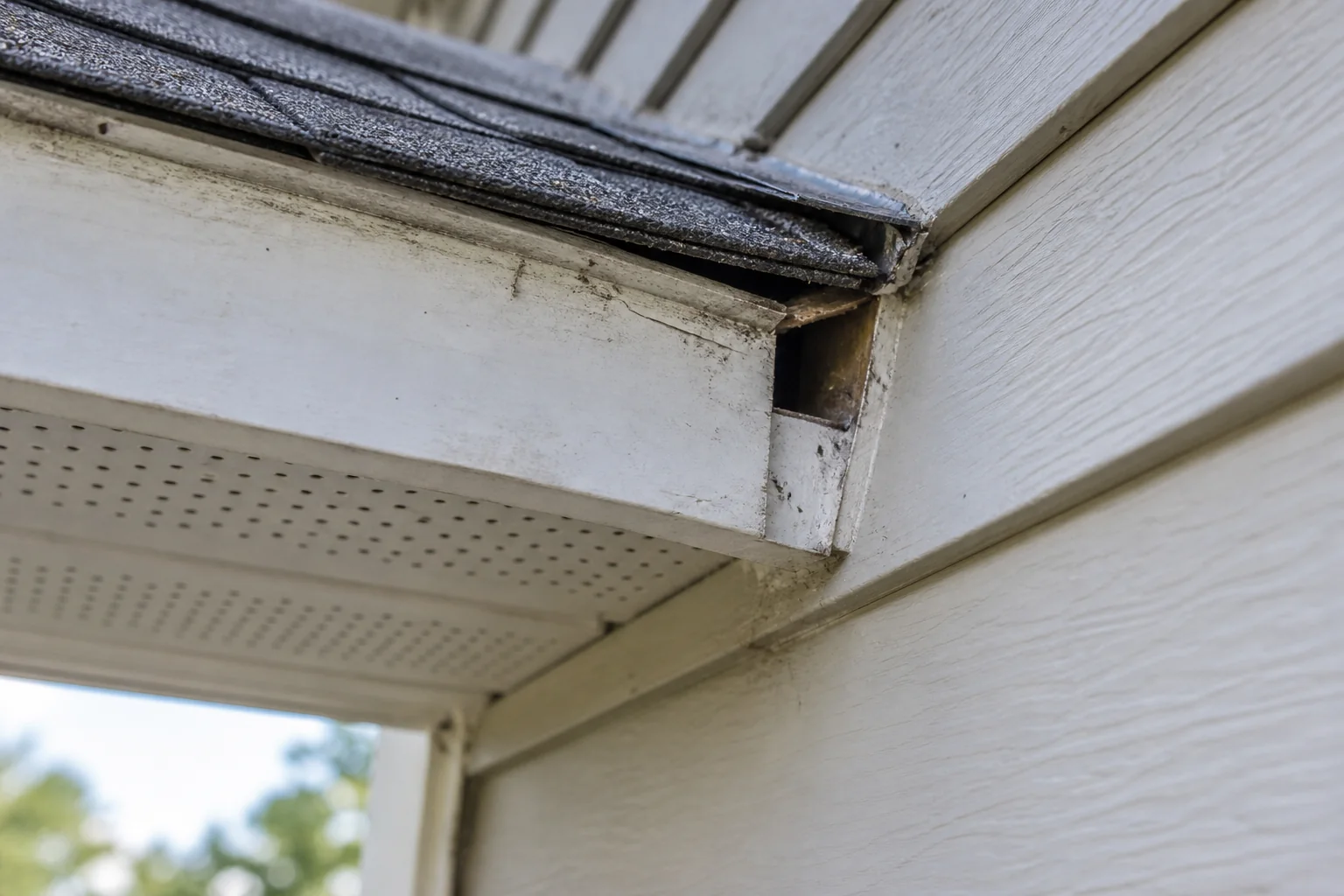
Mice are capable climbers.
They can reach upper parts of a home through:
- - walls with rough surfaces
- - pipes
- - vines
- - trees
- - fences
- - attached structures
Potential roof-level entry areas include:
- - soffit gaps
- - fascia defects
- - roof-wall intersections
- - attic vents
- - trim gaps
- - damaged screens
An attic mouse problem may begin at the roofline or from a lower opening that connects upward through walls.
See Mice in the Attic: Signs, Damage & Removal for attic-specific activity.
11. Openings Around Attached Garages
The connection between a garage and the house deserves special attention.
Mice may enter the garage first, then use:
- - wall penetrations
- - framing gaps
- - attic connections
- - utility routes
- - door gaps
to move farther inside.
This is why garage exclusion can be just as important as sealing obvious gaps around the main living area.
12. Gaps Around Air-Conditioning Lines
Air-conditioning lines often pass through exterior walls.
Inspect the seal around:
- - refrigerant lines
- - condensate lines
- - electrical connections
- - line-set covers
A deteriorated seal can create a small but useful opening.
Check both the exterior wall and the interior area where the line enters.
13. Gaps Around Plumbing Under Sinks
Sometimes the mouse has already entered the structure and uses an interior gap as the final step into a room.
Under sinks, look around:
- - drain pipes
- - water-supply lines
- - dishwasher lines
- - cabinet back panels
These gaps may connect directly to wall voids.
If droppings are concentrated beneath a sink, the plumbing opening may be part of the travel route even if it is not the original exterior entry point.
14. Gaps Behind Kitchen Cabinets
Cabinets can hide openings that are difficult to see.
Mice may travel:
- - behind cabinet backs
- - beneath toe kicks
- - around utility penetrations
- - through wall voids
- - behind built-in appliances
Droppings inside one cabinet may be only the visible part of a route hidden behind the entire cabinet system.
Inspect nearby plumbing and appliance connections.
15. Gaps Behind Refrigerators and Stoves
Appliances often hide wall penetrations and floor gaps.
Behind refrigerators and stoves, check for:
- - utility openings
- - wall gaps
- - baseboard gaps
- - cable penetrations
- - droppings
- - gnaw marks
These areas also provide warmth and food crumbs, making them attractive travel zones.
Our mouse droppings guide explains how to use evidence to identify active areas.
16. Gaps Around Basement Windows and Doors
Basement windows and exterior basement doors can develop:
- - damaged seals
- - gaps at corners
- - loose frames
- - screen damage
- - foundation transitions
Because basements connect to utility routes and wall systems, a small mouse entry here can lead to activity elsewhere in the house.
Inspect both the opening and the nearby interior wall edges.
17. Openings Near Decks and Porches
Decks and porches can hide lower wall and foundation areas.
Possible entry routes may be concealed behind:
- - framing
- - lattice
- - stairs
- - skirting
- - stored items
These shaded, protected spaces can make exterior inspection more difficult.
If mouse activity is strongest in a room beside a deck or porch, inspect the hidden exterior wall nearby.
18. Gaps Around Chimneys and Structural Joints
Where different building sections meet, small defects can develop.
Inspect around:
- - chimney interfaces
- - additions
- - attached garages
- - roof-wall joints
- - exterior trim transitions
The opening may not be directly visible from the ground.
Look for repeated evidence inside the corresponding wall or attic area.
19. Damaged Screens
Screens can fail around:
- - windows
- - vents
- - crawl spaces
- - attic openings
Torn or loose mesh may provide access.
A repair should use material appropriate for the opening and should not interfere with ventilation or drainage.
20. Open Doors
Not every mouse enters through a structural defect.
An exterior door or garage door left open can provide direct access.
Mice may enter unnoticed, especially at night.
Once inside, they can move quickly to protected edges and wall routes.
This is one reason a single indoor mouse does not always prove that the building has a permanent structural gap.
But if activity continues, inspect for entry points anyway.
Can Mice Enter Through the Garage and Then Reach the Attic?
Yes.
An attached garage can connect to attic framing or wall cavities.
A mouse may:
- 1. enter under the garage door
- 2. travel along a wall
- 3. move into framing
- 4. reach the attic
- 5. enter wall voids connected to living areas
This kind of route explains why a homeowner may hear mice overhead even when the original entry point is near ground level.
Can Mice Enter Through the Roof?
Yes.
Mice can climb and reach roof-level openings, especially when trees, vines, fences, pipes, or attached structures provide access.
However, do not assume every attic mouse entered through the roof.
It may have entered lower on the structure and traveled upward internally.
Inspect both high and low routes.
Can Mice Come Up Through Walls?
Mice can move vertically inside wall cavities.
They may use:
- - framing
- - pipes
- - wiring
- - rough surfaces
- - insulation
- - structural gaps
This means the room where you see a mouse may be far from the exterior opening it originally used.
For wall-specific problems, see Mice in Walls: Signs, Entry Points & What to Do.
Can Mice Get In Through the Foundation?
Yes.
Foundation-level defects are common entry routes.
A mouse may enter through a small gap and then move into:
- - crawl spaces
- - basements
- - wall voids
- - utility chases
Inspect the entire lower perimeter of the house, not just visible door openings.
Can Mice Get In Through Vents?
They can if the vent is damaged, unscreened, or has a gap around its perimeter.
The correct repair depends on the vent's purpose.
Do not block required airflow.
Repair damaged screening or surrounding gaps in a way that preserves the vent's function.
Can Mice Get In Through Pipes?
Mice generally use openings around pipes rather than passing through solid plumbing lines themselves.
The gap between a pipe and the surrounding wall or floor can become a travel route.
This is common:
- - under sinks
- - behind appliances
- - in garages
- - at exterior utility penetrations
Inspect the seal around the pipe.
Can Mice Get In Through the Sewer?
A sewer route is more commonly discussed with rats than with house mice.
If mice are active in a home, more common entry points such as doors, utility gaps, foundations, siding, vents, and garage openings should usually be inspected first.
Avoid assuming a complicated route without physical evidence.
How to Find the Mouse Entry Point
Start where the evidence is strongest.
If you find fresh droppings:
- 1. identify the wall or edge they follow
- 2. inspect nearby cabinets and appliances
- 3. look for utility penetrations
- 4. follow the route toward exterior walls
- 5. inspect the outside of the building in the same area
Other clues include:
- - gnaw marks
- - tracks
- - rub marks
- - nesting material
- - repeated sightings
A camera can sometimes help confirm which opening is active.
How to Tell Whether a Hole Is Being Used by Mice
A potential opening becomes more suspicious when you find:
- - fresh droppings nearby
- - gnaw marks
- - tracks
- - rub marks
- - food debris
- - repeated sightings
- - fresh nesting material
A hole by itself is only a possible entry point.
Prioritize openings that connect directly to active evidence.
This prevents wasted effort sealing random gaps while missing the real route.
Should You Seal Every Hole Immediately?
Exclusion is essential, but timing matters if mice are already inside.
If an active opening is sealed before the mice are removed, animals may become trapped inside the structure.
That can lead to:
- - movement into other rooms
- - more gnawing
- - odor
- - attempts to create another exit
Coordinate removal and exclusion.
The exact sequence depends on the route and infestation.
What Materials Should Be Used to Seal Mouse Entry Points?
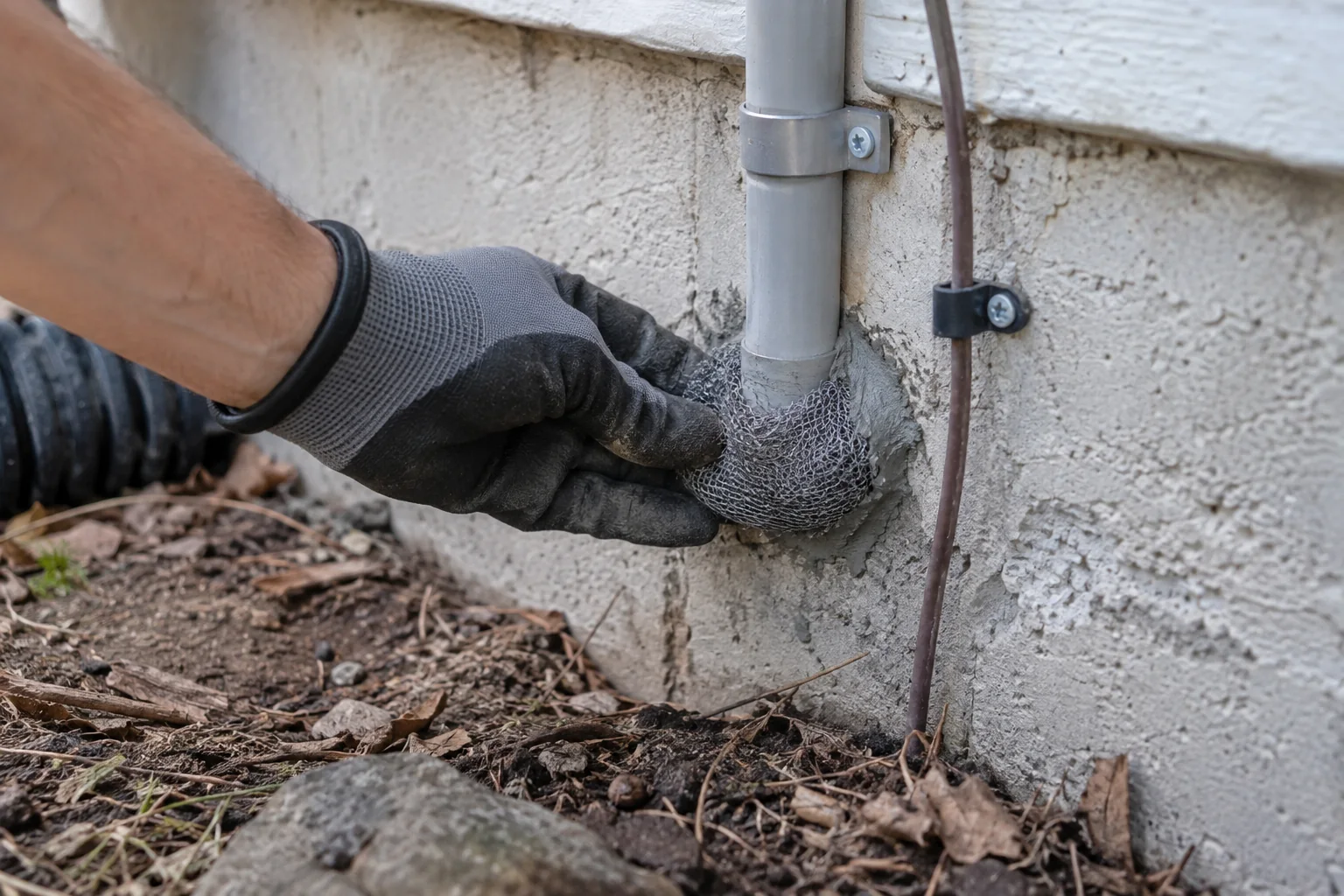
The repair material should match the opening.
Durable options may include appropriate combinations of:
- - metal mesh
- - hardware cloth
- - metal flashing
- - durable sealant
- - mortar
- - proper door sweeps
- - replacement vent screening
- - structural repair materials
Soft foam by itself is not ideal for many rodent openings because mice may damage it.
The goal is a durable repair that fits the construction detail.
Do Not Block Drainage or Ventilation
Some exterior openings are intentional.
Examples can include:
- - vents
- - drainage gaps
- - weep systems
- - appliance exhausts
Do not seal a functional building opening without understanding its purpose.
Use rodent-resistant screening or repair methods that preserve required airflow or drainage.
If you are uncertain, get professional guidance.
Mouse-Proofing Doors
For exterior doors:
- - repair damaged weather stripping
- - correct large threshold gaps
- - inspect lower corners
- - replace worn sweeps
- - make sure the door closes properly
The repair should reduce gaps without preventing the door from operating safely.
Mouse-Proofing Garage Doors
Garage doors often need special attention.
Inspect:
- - the bottom seal
- - side seals
- - lower corners
- - the threshold
- - uneven concrete
A good seal should close the practical gap without interfering with normal door movement.
Also inspect the side door and utility penetrations inside the garage.
Mouse-Proofing Utility Openings
Around pipes and cables:
- - remove loose debris
- - determine whether the opening is active
- - select a durable repair material
- - preserve required movement or service access where necessary
Avoid creating a repair that damages plumbing, wiring, or HVAC lines.
Mouse-Proofing Vents
Repair damaged screens with appropriate durable material.
Do not reduce airflow below what the vent requires.
Inspect the full perimeter because a mouse may enter around the vent housing rather than through the screen itself.
Mouse-Proofing the Roofline
Roofline exclusion may involve:
- - soffit repair
- - fascia repair
- - vent screening
- - sealing gaps around utility lines
- - repairing damaged trim
Roof work can involve fall hazards.
If the opening is difficult to reach safely, professional service is appropriate.
Reduce Conditions That Help Mice Enter
Exclusion works better when combined with property maintenance.
Helpful steps include:
- - reducing clutter near exterior walls
- - storing pet food securely
- - cleaning spilled bird seed
- - moving vulnerable food into durable containers
- - repairing leaks
- - maintaining door seals
- - checking vents and screens
- - inspecting garages regularly
These steps do not replace exclusion.
They reduce food, shelter, and opportunities that support mouse activity.
Monitor After Sealing
After exclusion work, continue monitoring.
Look for:
- - fresh droppings
- - trap activity
- - new gnaw marks
- - scratching sounds
- - reopened gaps
- - new sightings
If mouse signs continue, an active route may have been missed.
That does not necessarily mean the exclusion failed completely.
It means the inspection should continue.
Common Mouse-Entry Mistakes
Common mistakes include:
- - sealing only the most obvious hole
- - ignoring the garage
- - overlooking utility penetrations
- - failing to inspect roofline areas
- - using weak materials
- - blocking required ventilation
- - sealing while mice are still trapped inside
- - ignoring fresh indoor evidence after repairs
- - assuming a clean house cannot have mice
Mouse entry is usually a building-envelope problem as much as a sanitation problem.
When to Call a Professional
Professional rodent control or exclusion may be useful when:
- - mice keep returning after sealing work
- - the entry point cannot be found
- - roofline repairs are required
- - several structural areas are involved
- - mice are active in inaccessible walls
- - attic or crawl-space access is difficult
- - safe repair work is not practical
- - the building has complex construction details
A useful inspection should connect indoor mouse evidence to exterior openings.
Visit our professional rodent-control section for more information.
The Goal Is to Break the Route Into the House
Mice get into homes by finding small weaknesses in the building envelope.
The most common routes involve:
- - doors
- - garage doors
- - utility penetrations
- - foundations
- - siding
- - vents
- - crawl spaces
- - roofline details
The best prevention strategy is not random sealing.
Start with the evidence inside the home, trace the active route toward the exterior, remove mice already inside, and repair the openings that allow new mice to enter.
Continue with our house mouse guide, signs of mice guide, mice in walls guide, mice in the attic guide, mouse traps guide, or rodent control guide.
For the broader overview, return to Rats & Mice in the Home.