Signs of Mice in Your House
Learn the most common signs of mice in a house, including droppings, gnaw marks, noises, nesting material, odors, tracks, food damage, and sightings.
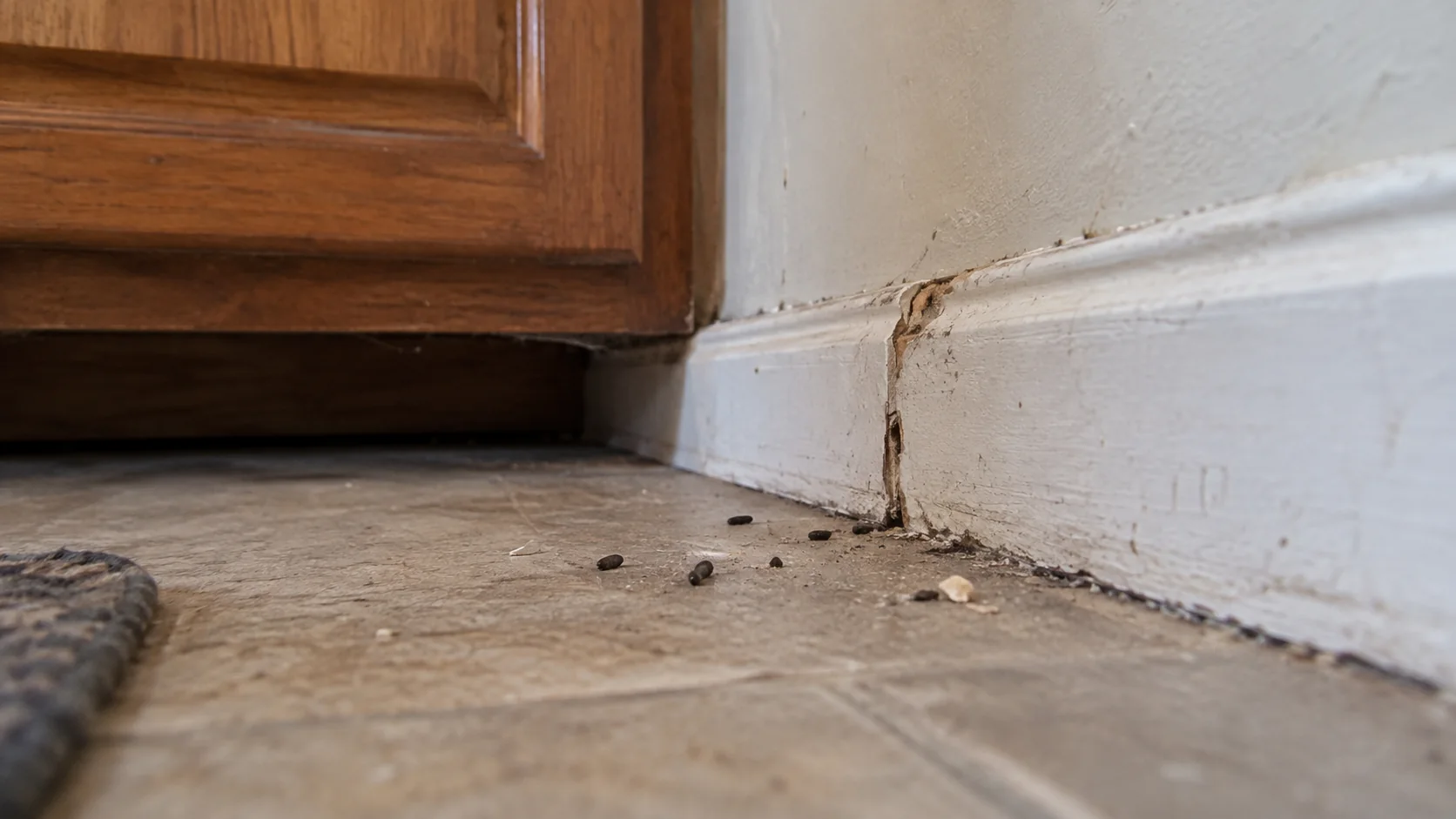
Mice are easy to miss because they are small, quiet, and most active when a home is dark or undisturbed.
Many homeowners do not see a mouse first. They notice the evidence it leaves behind.
That evidence may include small droppings, gnawed food packaging, scratching sounds inside walls, nesting material, tracks in dusty areas, damaged insulation, unusual odors, or a quick nighttime sighting near a baseboard.
One sign alone may not tell you how serious the problem is.
The most useful approach is to look for several clues together and pay attention to where they are concentrated.
This guide explains the most common signs of mice in a house, what each sign can mean, where to inspect, how to tell whether activity is fresh, and when the evidence suggests a larger infestation.
1. Mouse Droppings
Droppings are one of the most common signs of mice.
Mouse droppings are small, dark pellets that may appear along travel routes or near food and shelter.
Common places to find them include:
- - kitchen cabinets
- - pantry shelves
- - drawers
- - under sinks
- - behind refrigerators
- - behind stoves
- - along baseboards
- - garages
- - attics
- - basements
- - storage areas
- - near pet food
- - around utility penetrations
Droppings are useful because they show where mice have been active.
But they do not tell you exactly how many mice are present.
A single mouse can leave many droppings over time.
For a full guide, see Mouse Droppings: What They Look Like & What They Mean.
Fresh vs Old Mouse Droppings
Fresh droppings often look darker and more distinct.
Older droppings may become:
- - dull
- - lighter
- - dry
- - brittle
- - dusty
Appearance is not a perfect age test.
Humidity, temperature, cleaning products, and the surrounding surface can change how droppings look.
A better method is to clean the area safely and monitor for new droppings.
If new evidence appears afterward, mice are still active.
2. Gnaw Marks
Mice gnaw because their front teeth grow continuously.
You may find gnaw marks on:
- - cardboard
- - food packaging
- - thin plastic
- - wood edges
- - stored materials
- - insulation
- - soft building materials
Mouse gnawing is generally lighter and smaller than rat damage.
Fresh gnaw marks may look lighter or cleaner than older damaged material.
If the damage is large, heavy, or associated with large droppings, compare the evidence with Rat vs Mouse: How to Tell the Difference.
3. Damaged Food Packaging
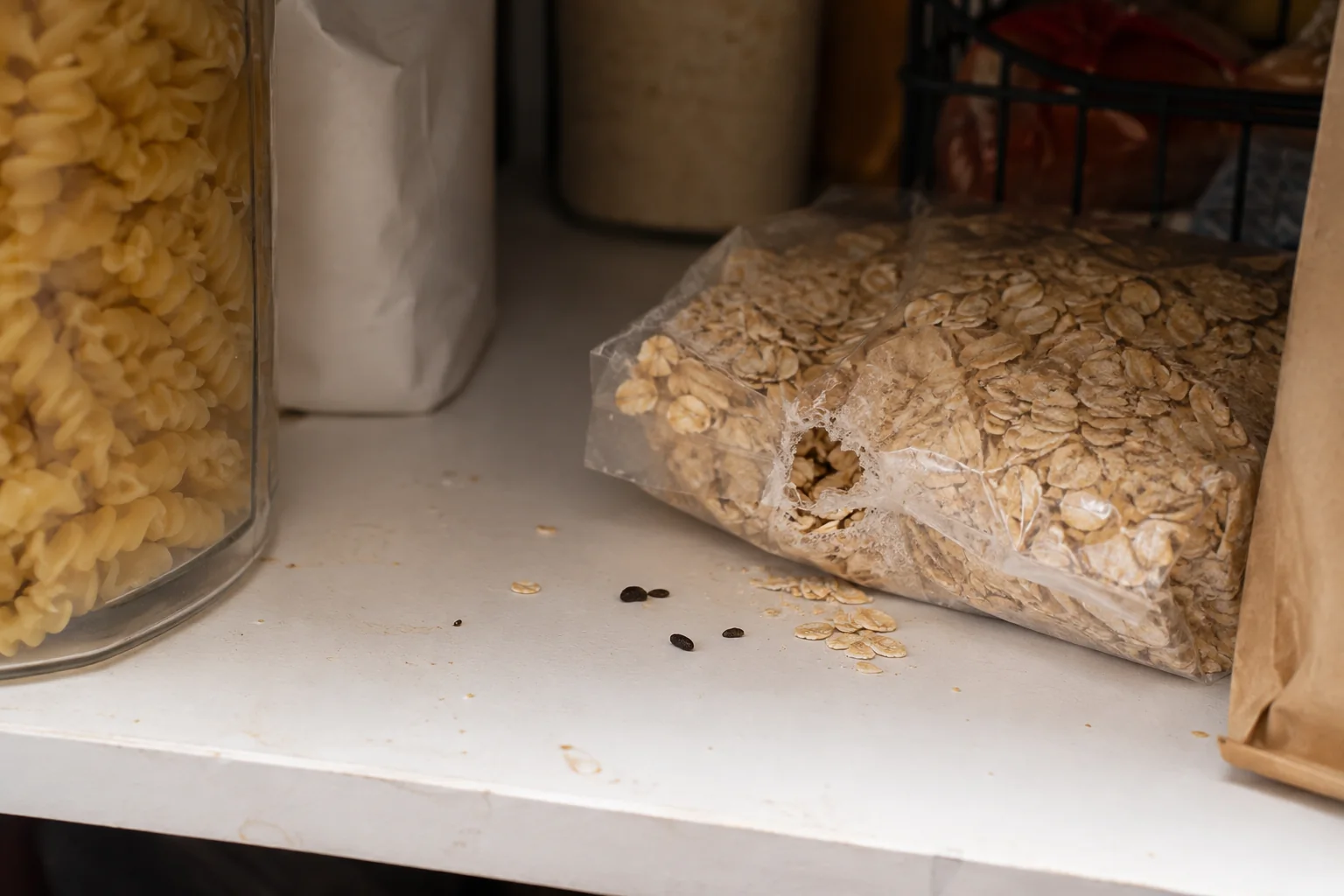
Food damage is another common sign.
Mice may gnaw through:
- - cereal boxes
- - rice or grain bags
- - snack packaging
- - pet-food bags
- - bird-seed bags
- - flour packages
- - dry-goods containers
Look for small irregular openings along edges or corners.
Food damage is especially meaningful when you also find droppings nearby.
If packaging has been contaminated or clearly gnawed by rodents, do not treat the contents as safe.
Store vulnerable food in durable sealed containers where practical.
4. Scratching or Scurrying Sounds
Mice can create scratching, rustling, tapping, or quick movement sounds.
These noises may come from:
- - walls
- - ceilings
- - attics
- - cabinets
- - garages
- - storage areas
Sounds are often easiest to hear:
- - late at night
- - early in the morning
- - when the house is quiet
A mouse inside a wall can sound louder than expected because framing and drywall amplify movement.
Sound alone does not prove that mice are present.
Use it to guide your inspection toward nearby droppings, gaps, gnawing, or tracks.
See our mice in walls guide for wall-specific activity.
5. Nesting Material
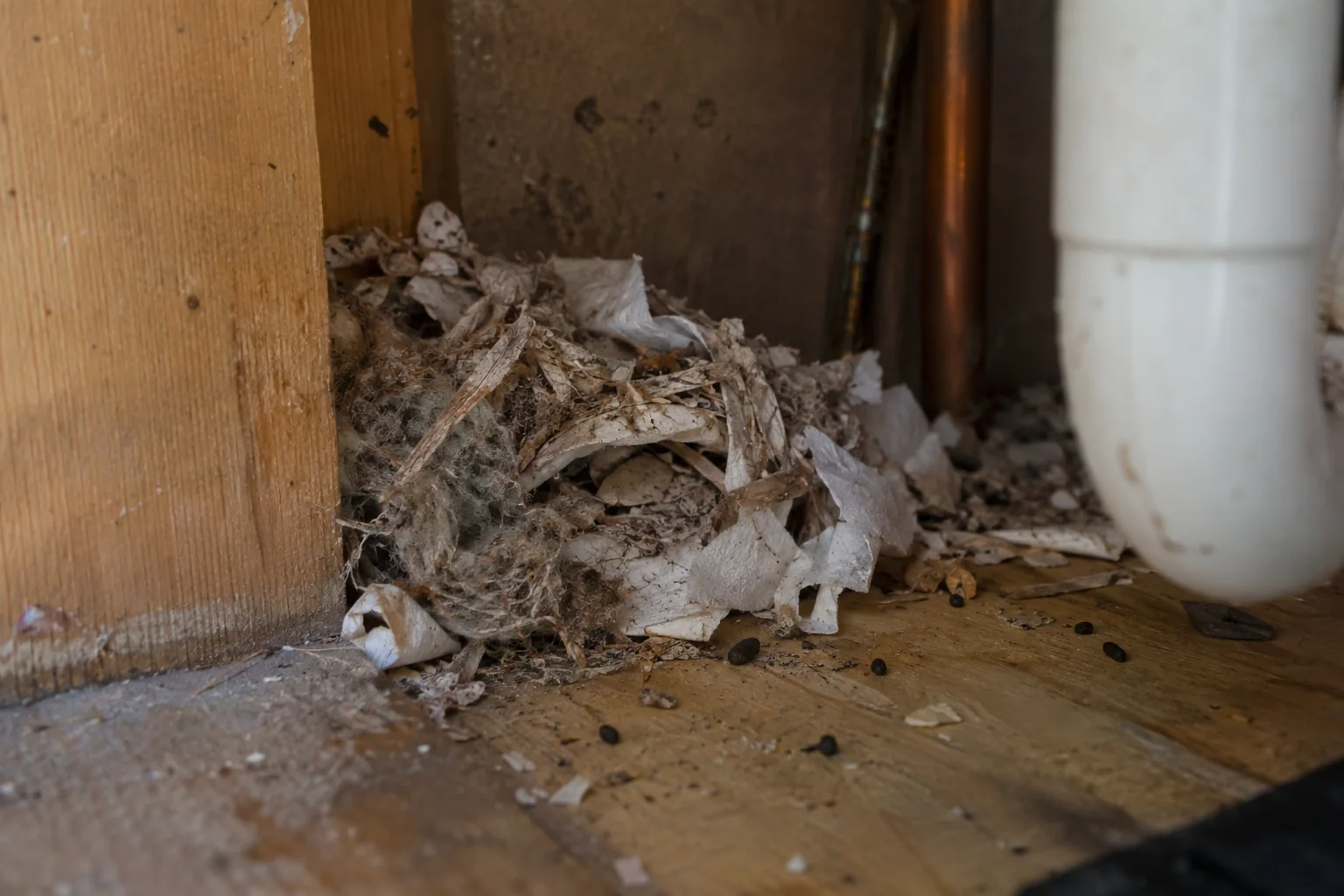
Mice build nests from soft material.
Possible nest material includes:
- - shredded paper
- - fabric
- - insulation
- - cardboard
- - packing material
- - soft fibers
Nests may be hidden:
- - inside wall voids
- - behind cabinets
- - in drawers
- - inside storage boxes
- - behind appliances
- - in attics
- - in garages
- - inside insulation
A nest confirms that mice have used that area.
But removing the nest alone does not solve the infestation.
You still need to identify active mice and the openings they use to enter the building.
6. Mouse Tracks
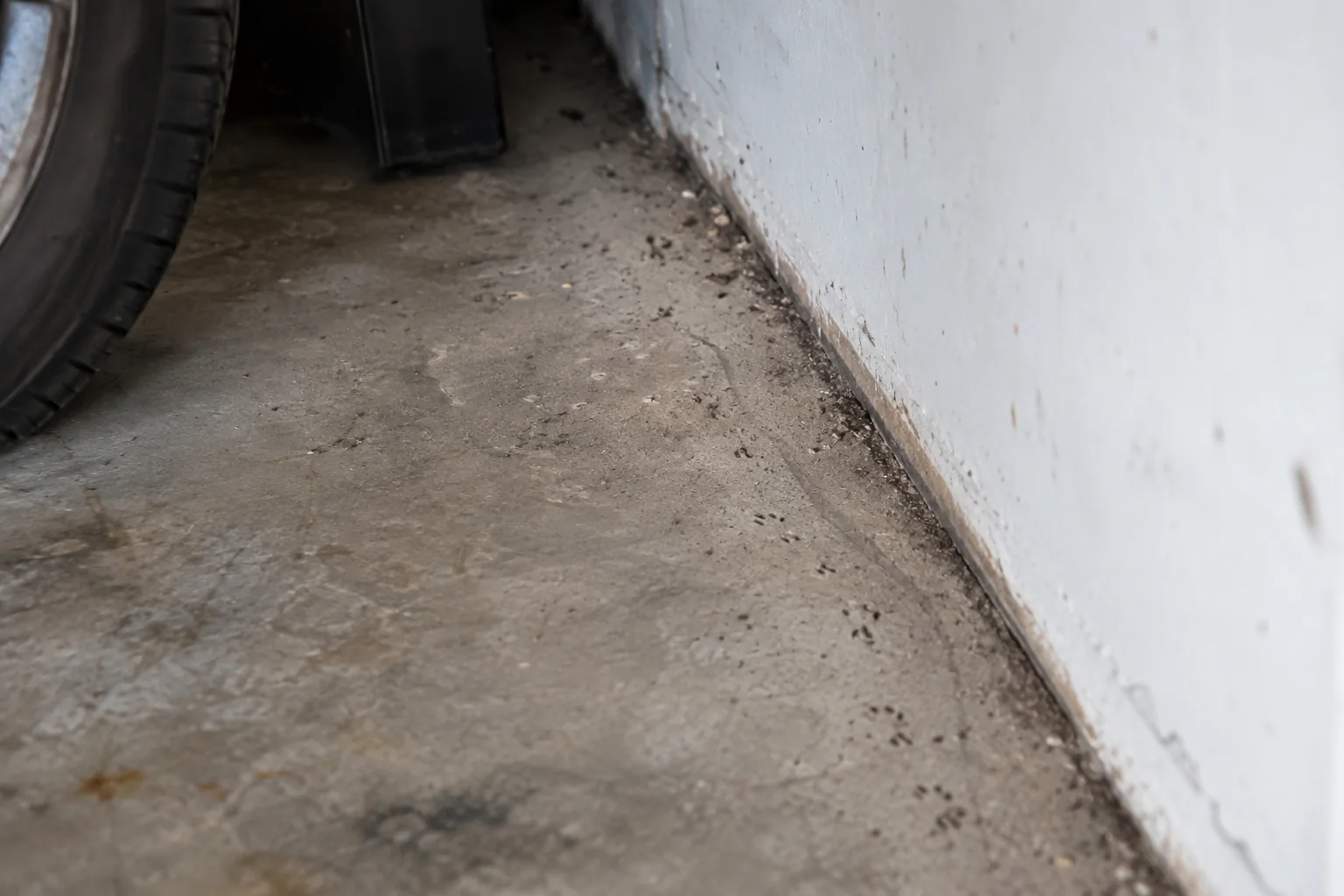
Mouse footprints are small and can be difficult to see.
They may appear in:
- - dusty garages
- - attics
- - basements
- - storage rooms
- - utility spaces
Tracks can help reveal a travel route.
You may also see a thin tail mark in fine dust.
Track size is more useful for distinguishing mice from rats than for identifying a specific mouse species.
Large tracks and heavier evidence may suggest a rat instead.
7. Grease or Rub Marks
Mice can leave subtle smudge or rub marks where they repeatedly move along the same narrow route.
These marks may appear near:
- - baseboards
- - wall openings
- - cabinet edges
- - pipes
- - utility penetrations
Mouse rub marks are generally less obvious than the heavier grease marks associated with large rats.
A smudge is most useful when it appears with droppings, tracks, or repeated sightings.
8. Mouse Odor
An established mouse infestation can produce a noticeable odor.
Possible sources include:
- - urine
- - droppings
- - nesting material
- - contaminated insulation
- - dead mice
The smell may be strongest in:
- - cabinets
- - wall voids
- - attics
- - garages
- - enclosed storage areas
Odor alone does not reveal the exact nest location.
Air movement can carry smells through wall cavities and utility spaces.
Use odor together with physical evidence.
9. Mouse Sightings
Seeing a mouse is an obvious sign, but one sighting does not tell you the full size of the infestation.
A mouse may be:
- - exploring
- - traveling between a nest and food
- - entering from outdoors
- - part of a larger indoor population
Note where the mouse was seen and where it went.
Pay attention to:
- - nearby baseboards
- - cabinet gaps
- - appliance spaces
- - utility penetrations
- - wall openings
The route can be more useful than the sighting itself.
For identification, see House Mouse: Identification, Signs & Behavior.
10. Daytime Mouse Activity
Mice are often more active when a home is quiet, but they can appear during the day.
A daytime sighting may result from:
- - disturbance
- - food competition
- - a nearby nest
- - unusual household activity
- - active exploration
Do not assume that one daytime mouse automatically proves a severe infestation.
Look at the overall evidence.
Multiple sightings, fresh droppings in several rooms, and repeated trap activity suggest a broader problem than one isolated sighting.
11. Mouse Activity Behind Appliances
Refrigerators, stoves, and dishwashers can create ideal mouse travel areas.
They may provide:
- - warmth
- - crumbs
- - water
- - darkness
- - wall access
- - utility gaps
Signs behind appliances may include:
- - droppings
- - gnaw marks
- - tracks
- - food debris
- - nesting material
Activity behind a refrigerator is especially useful because it often identifies a real route.
Inspect the adjacent wall, cabinets, and utility penetrations.
12. Mouse Signs Inside Cabinets
Cabinets provide shelter and access to food.
Look for:
- - droppings
- - gnawed packaging
- - nesting material
- - crumbs
- - small gaps around pipes
- - damage at back corners
Lower cabinets near sinks are especially important because plumbing penetrations can connect directly to wall voids.
Do not assume the mouse is nesting inside the cabinet.
The cabinet may simply be the point where it emerges from a wall.
13. Mouse Signs in the Pantry
Pantries can attract mice because food is concentrated in one place.
Warning signs include:
- - damaged packages
- - spilled dry food
- - droppings
- - crumbs pulled into corners
- - gnaw marks
- - small openings behind shelving
Inspect both floor-level and lower-shelf areas.
Move vulnerable foods into durable containers where practical.
14. Mouse Signs in the Garage
Garages are common mouse-entry zones.
Signs may include:
- - droppings along walls
- - damaged pet food
- - gnawed bird-seed bags
- - nesting material
- - tracks
- - small openings near doors
- - activity along shared walls
Garage evidence matters because mice may enter there first and then move into walls, attics, or living spaces.
Inspect garage-door seals, utility penetrations, and the wall shared with the house.
15. Mouse Signs in the Attic
Attic signs may include:
- - droppings
- - disturbed insulation
- - nesting material
- - light scratching
- - gnaw marks
- - tracks in dust
Mice can use attics as nesting areas and travel routes.
If evidence is concentrated near the roofline or utility penetrations, inspect those areas closely.
See Mice in the Attic: Signs, Damage & Removal for a full attic guide.
16. Mouse Signs in Walls
Wall activity can be difficult to confirm because the mice are hidden.
Look for signs near the wall such as:
- - droppings at the base
- - small openings
- - scratching sounds
- - gnaw marks
- - appliance-side activity
- - cabinet gaps
- - utility penetrations
If a mouse disappears into a wall-side gap, that route becomes especially important.
Our mice in walls guide explains how to inspect connected rooms and structural routes.
17. Small Entry Holes
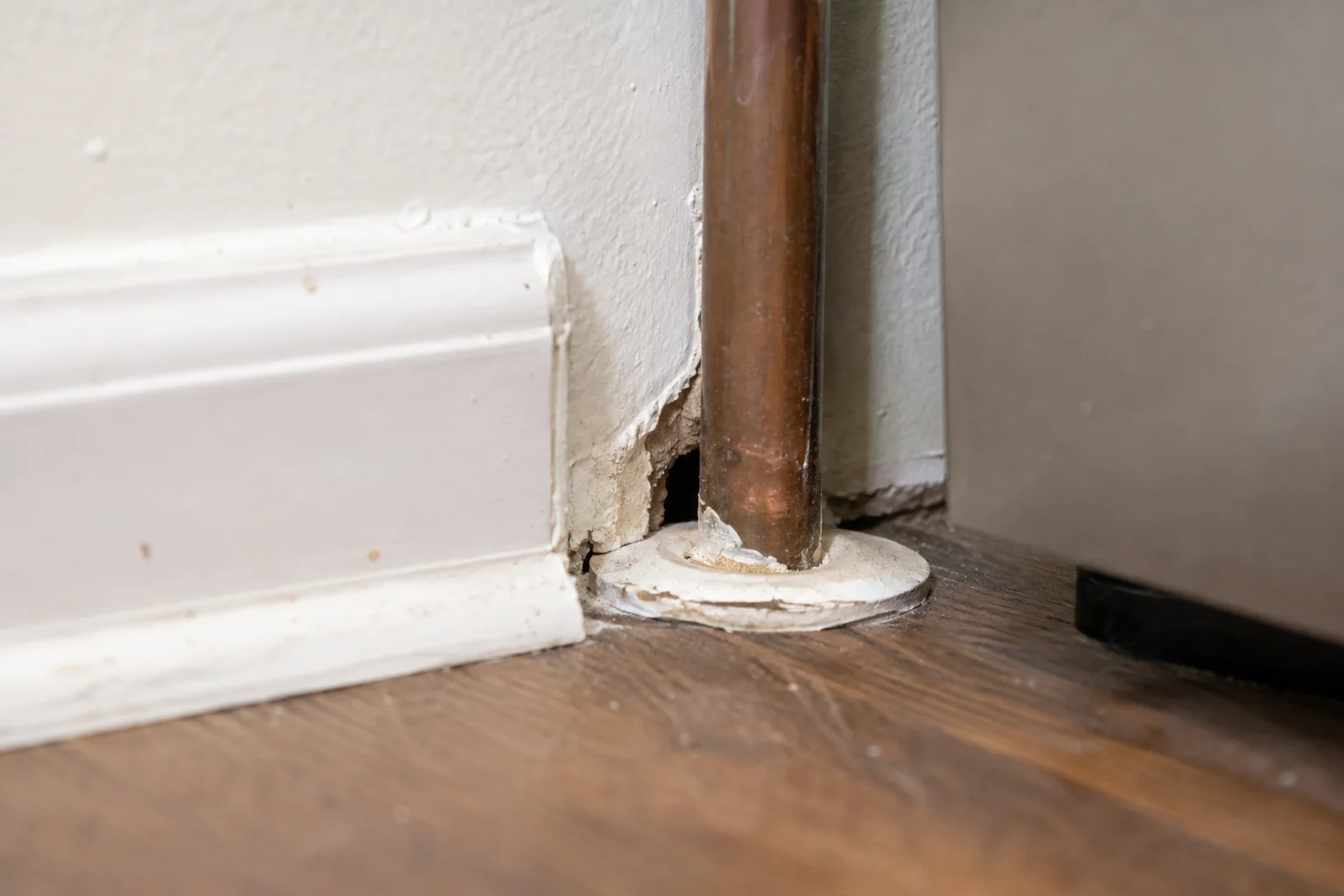
Mice can use very small structural gaps.
Possible entry points include openings around:
- - pipes
- - cables
- - doors
- - garage doors
- - foundations
- - vents
- - siding
- - roofline details
The opening may not look large enough to matter.
But small gaps can connect directly to wall or cabinet voids.
Entry-point evidence becomes stronger when droppings, tracks, or gnaw marks are nearby.
Our prevention section covers rodent exclusion more broadly.
18. Food Caches
Mice may carry and store food in protected places.
You may find:
- - seeds
- - dry pet food
- - grains
- - small food fragments
in:
- - drawers
- - boxes
- - wall voids
- - garages
- - attics
- - storage areas
A food cache can indicate repeated mouse activity.
Combine it with droppings, nesting material, or tracks before drawing conclusions.
19. Damaged Insulation
Mice may disturb or use insulation for nesting.
Signs include:
- - small tunnels
- - compressed areas
- - shredded fibers
- - droppings
- - nesting material
Attic insulation is a common place to notice this type of evidence.
Minor disturbance does not mean all insulation must be replaced.
The extent of contamination matters.
20. Signs of a Dead Mouse
A dead mouse may create a localized odor.
The smell may be strongest near:
- - walls
- - cabinets
- - vents
- - baseboards
- - attic access points
- - utility penetrations
Because air moves through voids, the odor may not be strongest exactly where the carcass is located.
Our cleanup section covers dead rodents and odor problems more broadly.
How to Tell Whether Mouse Signs Are Fresh
Fresh activity matters more than old evidence.
Look for:
- - new droppings after cleanup
- - fresh gnaw marks
- - new food damage
- - recent trap activity
- - fresh nesting material
- - repeated sightings
- - new tracks
Old droppings and gnaw marks may remain long after mice are gone.
Clean or document the area safely, then monitor.
If evidence returns, the infestation is active.
How Many Signs Mean You Have an Infestation?
There is no fixed number.
A few droppings near one entry point may indicate limited activity.
Evidence across multiple rooms suggests a larger problem.
Warning signs of a more widespread infestation include:
- - droppings in several rooms
- - repeated sightings
- - activity on multiple floors
- - fresh evidence after cleanup
- - nesting material in several areas
- - food damage in multiple locations
- - repeated trap captures
The distribution of signs matters more than one isolated clue.
Can One Mouse Leave a Lot of Evidence?
Yes.
One mouse can leave many droppings and create repeated gnaw marks over time.
That means evidence quantity does not translate directly into a rodent count.
Do not try to estimate the population from droppings alone.
Use:
- - trap captures
- - distribution of evidence
- - sightings
- - nesting areas
- - fresh signs after cleanup
to judge how extensive the problem may be.
Are Mouse Signs a Health Concern?
Rodent waste should be treated as potentially contaminated material.
Avoid direct contact.
Do not dry sweep or vacuum fresh mouse droppings before they have been properly disinfected.
Use suitable gloves and wet-cleanup methods.
Keep children and pets away from contaminated areas.
See our rodent safety section and cleanup section for related guidance.
What to Do After You Find Signs of Mice
Finding mouse evidence should trigger a structured response.
A practical process is:
- 1. identify the active areas
- 2. reduce accessible food and water
- 3. place mouse-sized traps along confirmed routes
- 4. monitor for new evidence
- 5. inspect the exterior for entry points
- 6. coordinate exclusion with removal
- 7. clean contaminated areas safely
For the full process, see How to Get Rid of Mice in Your House.
Our mouse traps guide explains trap placement in more detail.
When to Call a Professional
Professional rodent control may be useful when:
- - fresh signs keep returning
- - several rooms are involved
- - mice are active inside walls
- - attic contamination is extensive
- - entry points cannot be found
- - trapping does not reduce activity
- - the infestation repeatedly returns
- - safe cleanup or trap placement is difficult
A useful inspection should connect the evidence inside the house to the routes mice use to enter.
Visit our professional rodent-control section for more information.
The Most Reliable Mouse Sign Is a Pattern of Evidence
One clue can be misleading.
The strongest mouse identification comes from several signs appearing together.
For example:
- - small droppings behind a refrigerator
- - gnawed packaging nearby
- - scratching in the adjacent wall
- - a small plumbing gap
- - repeated nighttime sightings
together create a much stronger case than one isolated pellet.
Map the evidence.
Look for where signs overlap.
That will help you find the active routes, choose trap locations, and identify the openings that need to be repaired.
Continue with our house mouse guide, mouse droppings guide, mice in walls guide, mice in the attic guide, mouse traps guide, or rodent control guide.
For the broader overview, return to Rats & Mice in the Home.