Dead Mouse Smell: How Long It Lasts & What to Do
A dead mouse can create a surprisingly strong odor for such a small animal.
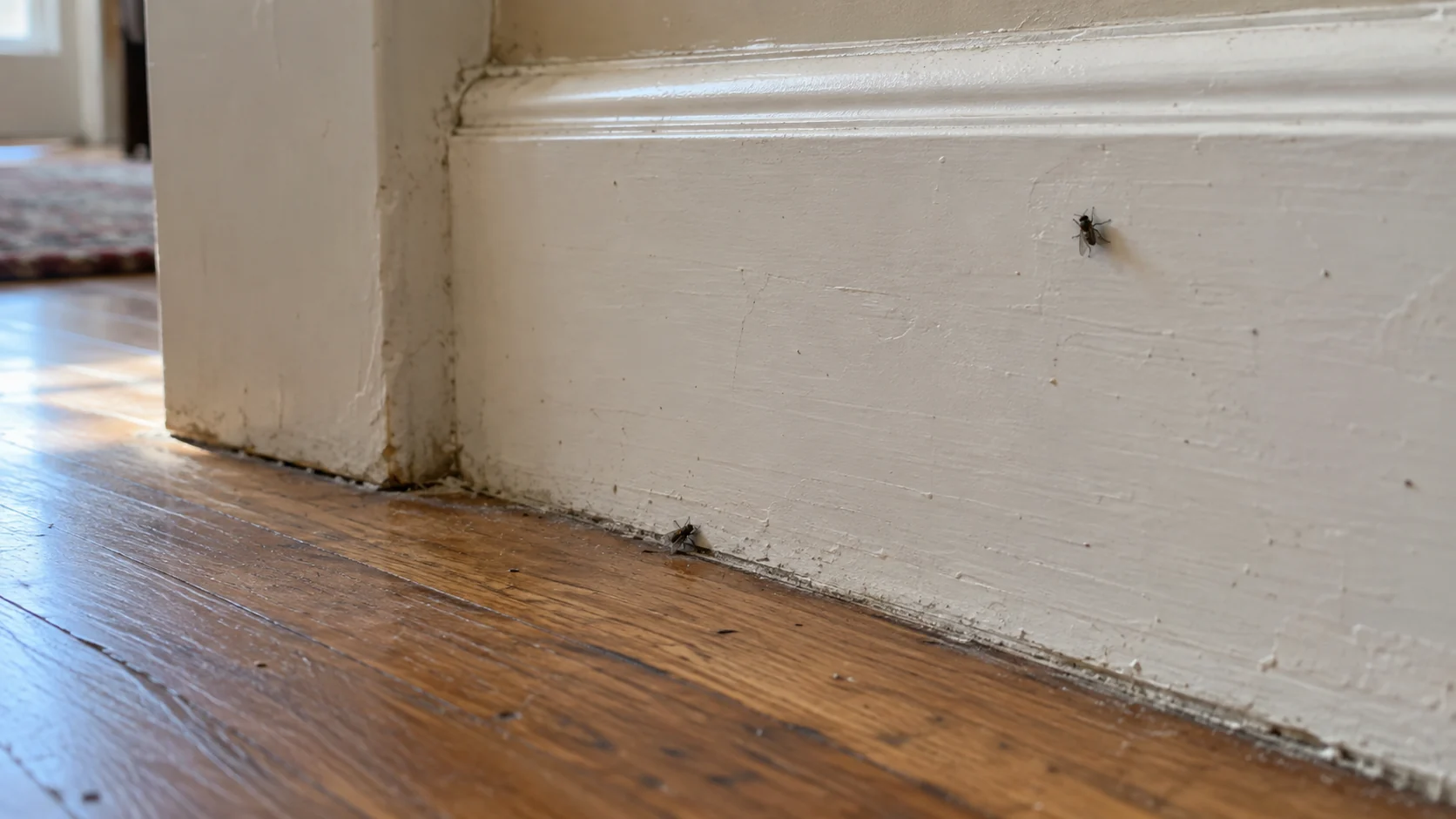
A dead mouse can create a surprisingly strong odor for such a small animal.
The smell may be noticeable for several days to a few weeks.
Sometimes it lasts longer.
There is no exact countdown because odor duration depends on:
- temperature
- humidity
- airflow
- where the mouse died
- whether the remains are accessible
- whether nearby insulation or other material became contaminated
- insect activity
- the size and condition of the carcass
If the mouse can be found and removed safely, the odor usually improves much faster.
If the source is hidden inside a wall, ceiling, cabinet void, or other inaccessible space, the smell may gradually weaken as the remains dry.
The key is to confirm the likely source before cutting into the building.
What Does a Dead Mouse Smell Like?
People often describe the odor as:
- rotten
- musty
- sour
- unusually sweet and unpleasant
- stronger in one localized area
The exact smell varies.
Odor alone cannot prove that a mouse is dead inside the building.
Other sources can smell similar.
These include:
- spoiled food
- mouse urine
- drains or sewer gas
- moisture problems
- mold
- a dead insect or other animal
- garbage
- contaminated insulation
Before opening a wall or moving equipment, narrow down the source.
How Long Does Dead Mouse Smell Last?
A dead mouse odor often fades over days to a few weeks.
That is a practical range—not a guarantee.
A small carcass in a warm, dry, ventilated location may dry relatively quickly.
A hidden source in a damp, enclosed area may remain noticeable longer.
The strongest odor may also rise and fall as:
- temperature changes
- HVAC operation changes airflow
- humidity changes
- doors or windows are opened
- the remains dry
Do not judge progress from a single hour.
Look at the trend over several days.
Why Is There No Exact Dead Mouse Smell Timeline?
Decomposition does not happen at one fixed rate.
Several conditions matter.
Temperature
Warmer conditions can speed decomposition and make odor stronger sooner.
Cooler conditions may slow the process.
Humidity
Damp environments can keep tissues from drying quickly.
Dry conditions may allow faster drying.
Airflow
Air movement can spread odor through:
- rooms
- wall cavities
- ceiling spaces
- utility chases
This can make the source seem farther away than it is.
Location
A carcass in an open garage corner behaves differently from one trapped inside:
- insulation
- a wall void
- a ceiling
- a cabinet base
Surrounding material
Porous materials can absorb fluids and odor.
That may extend the problem even after the remains are removed.
Does a Dead Mouse Smell Worse Before It Gets Better?
It can.
Odor may become stronger during the active decomposition period.
Then it usually weakens as the remains dry.
The pattern is not perfectly smooth.
A room may smell worse on a warm afternoon and better the next morning.
A change in airflow may also move odor into another room temporarily.
Can One Dead Mouse Really Smell That Strong?
Yes.
A mouse is small, but decomposition odor can be concentrated.
The smell may be especially noticeable when the carcass is in:
- a warm wall
- a cabinet void
- an attic
- a closed utility area
- insulation
- a small room
A strong odor does not tell you how many mice are present.
One carcass can create a noticeable smell.
Does a Stronger Smell Mean a Larger Infestation?
No.
Odor strength depends on:
- distance from the source
- airflow
- temperature
- humidity
- enclosure
- surrounding material
It does not provide an accurate mouse count.
Do not estimate infestation size from odor intensity.
How Can You Tell Dead Mouse Smell From Mouse Urine?
Mouse urine odor is often described as more ammonia-like or musky.
Decomposition odor is usually more rotten or decaying.
But descriptions overlap.
Use other evidence.
Possible mouse-activity clues include:
- droppings
- nesting material
- gnaw marks
- trap activity
See Mouse Urine Smell: What It Smells Like & How to Find the Source.
Could the Smell Be Sewer Gas?
Yes.
Plumbing and drain problems can create strong odors.
A sewer-type smell may be associated with:
- a dry drain trap
- a plumbing leak
- a vent problem
- a damaged seal
Do not assume every bad smell in a wall is a rodent.
If the odor is clearly associated with plumbing, a qualified plumber may be the right professional.
Could the Smell Be Mold or Moisture?
Possibly.
Moisture problems can create musty odors.
Look for:
- damp material
- water staining
- condensation
- leaks
Do not open walls around active plumbing or electrical systems unless it is safe and appropriate.
How Do You Find a Dead Mouse Smell?
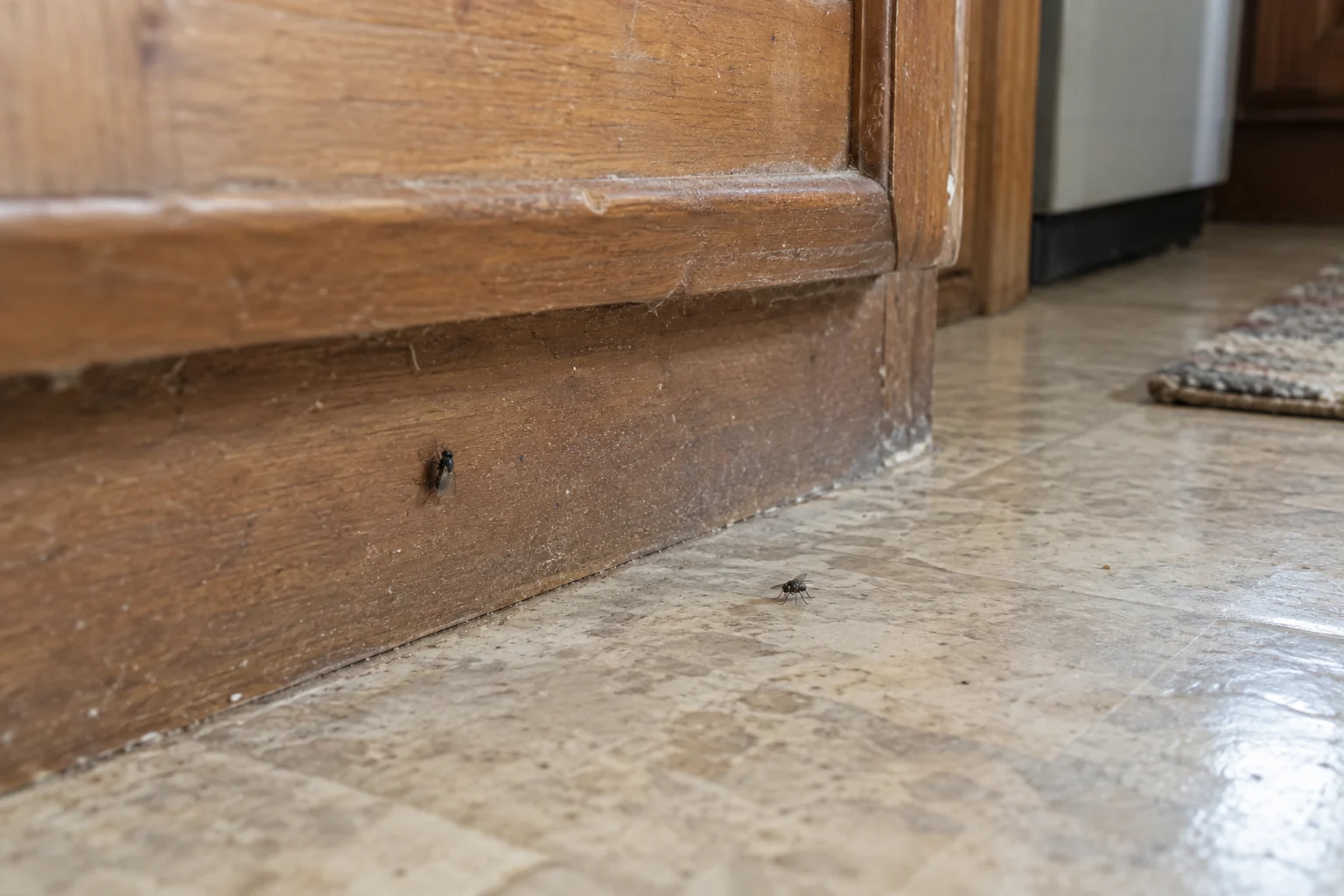
Start by narrowing the odor to the smallest practical area.
Walk through the room and note where the smell is:
- strongest
- weakest
- affected by doors
- affected by airflow
Then inspect accessible areas.
Look around:
- cabinet bases
- garage walls
- pantry edges
- attic service areas
- crawl-space access points
- wall penetrations
- appliance-adjacent spaces
Do not immediately cut drywall.
What Are Clues That a Dead Mouse Is Nearby?
Possible clues include:
- odor concentrated in one area
- a few flies repeatedly gathering near the same edge
- recent mouse activity
- a trap that disappeared from view in an accessible area
- staining near an accessible surface
- odor becoming stronger as you approach one cabinet or wall section
None of these clues proves the exact location by itself.
Use several clues together.
Do Flies Mean There Is a Dead Mouse?
They can be a clue.
Flies may be attracted to animal remains.
But flies can also come from:
- garbage
- food waste
- drains
- outdoor sources
A small cluster repeatedly appearing near one wall or cabinet edge can justify closer inspection.
It still does not prove a mouse is behind that exact surface.
Where Do Mice Commonly Die Indoors?
A mouse may die in:
- a wall void
- an attic
- a crawl space
- a garage
- a cabinet void
- behind stored material
- near an appliance
- inside insulation
- a ceiling void
The source may not be where the odor is strongest because air can carry smell.
Can a Dead Mouse Be Behind the Refrigerator?
Yes.
The area behind a refrigerator may provide:
- warmth
- shelter
- food debris
- wall penetrations
But do not move a heavy refrigerator alone.
Protect:
- the power cord
- water line
- flooring
Do not dismantle electrical or sealed appliance components.
See Mice Behind the Refrigerator.
What If the Smell Is Coming From the Wall?
Do not cut the wall just because the smell seems strongest there.
Odor can travel inside a wall cavity.
First check:
- nearby cabinets
- floor transitions
- utility penetrations
- accessible attic or crawl-space areas
- recent mouse routes
Opening a wall may be reasonable when the source is strongly localized and access can be created safely.
But exploratory demolition should not be the first step.
Should You Open the Wall to Remove a Dead Mouse?
Sometimes.
Removal may make sense when:
- the odor is severe
- the source is strongly localized
- staining or insects suggest a specific spot
- the area can be opened without risking electrical, plumbing, gas, HVAC, or structural systems
- a contractor or pest professional can make a controlled access opening
It may not make sense when:
- the location is uncertain
- the wall contains unknown utilities
- the odor is already rapidly declining
- the access damage would be extensive
Do not cut blindly.
What If You Cannot Reach the Dead Mouse?
If the source is inaccessible and no building system is at risk, the odor may gradually fade as the remains dry.
You can:
- ventilate the room when practical
- keep the area clean
- monitor whether odor is decreasing
- look for insects or staining that might reveal the location
- continue mouse control and exclusion work
Do not pour or spray chemicals into a wall void.
Should You Use Odor Absorbers?
Odor absorbers may make a room more tolerable.
They do not remove the source.
Examples include passive products designed to reduce odors in occupied spaces.
Treat them as temporary comfort measures.
If the carcass is accessible, removal is more effective.
Do Air Fresheners Fix Dead Mouse Smell?
No.
Fragrance may cover the odor temporarily.
It does not remove:
- the carcass
- contamination
- the reason mice reached the area
Strong fragrance can also make it harder to judge whether the original odor is improving.
Should You Use Ozone or Fogging?
Do not use ozone generators or improvised fogging as a substitute for source removal and cleaning.
Do not spray chemicals into:
- wall cavities
- ducts
- air handlers
- electrical spaces
If an HVAC system may be contaminated, use an appropriate qualified professional.
How Do You Remove a Dead Mouse Safely?
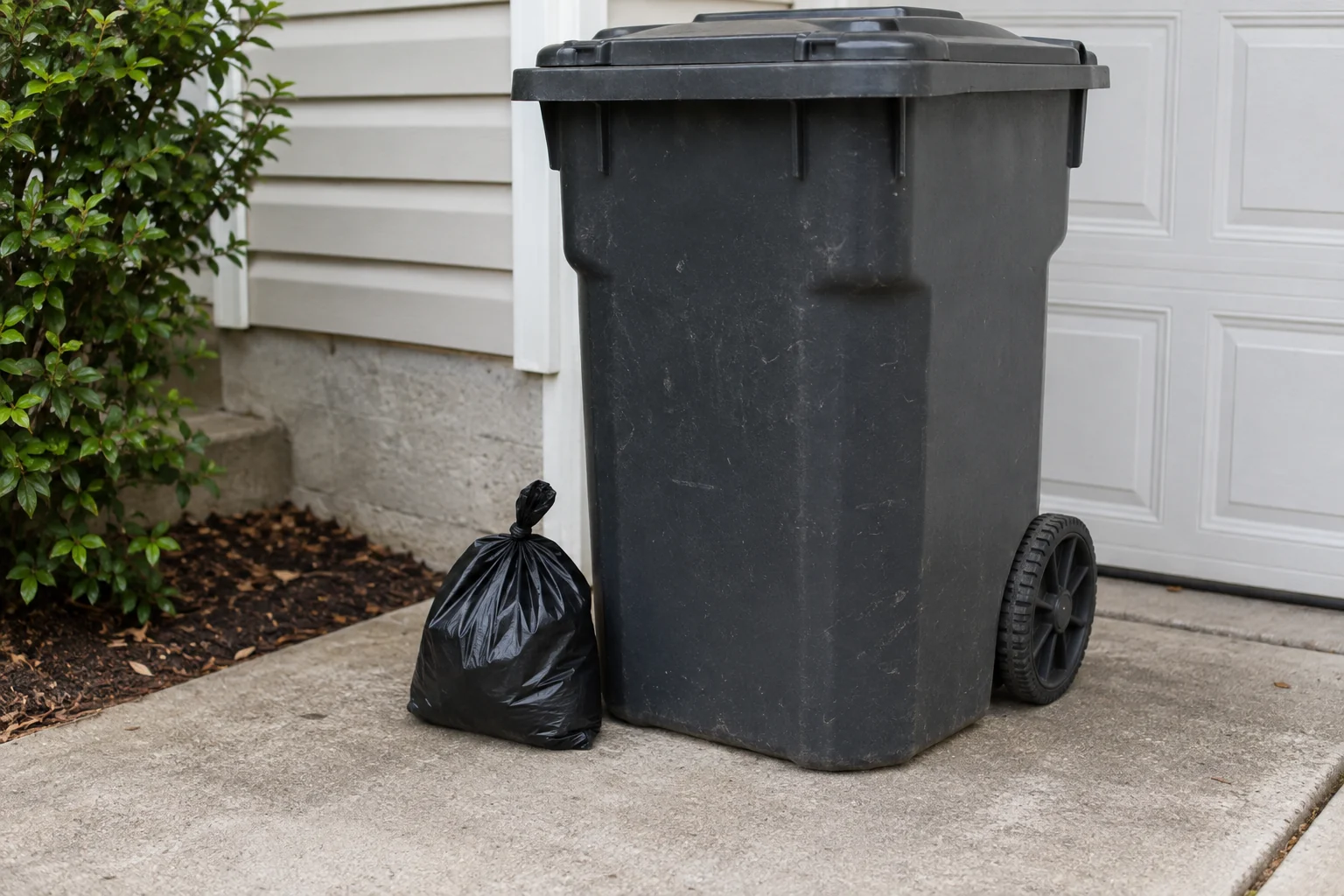
If the mouse is accessible and the location is safe:
- keep children and pets away
- wear suitable disposable or washable gloves
- wet the carcass and immediately surrounding contaminated area with an appropriate disinfectant used according to its label
- allow the product's required contact time
- pick up the carcass using disposable material
- seal it in a bag, then place that bag inside a second bag
- dispose of it according to local requirements
- wet-clean the surrounding hard surface
- wash gloved hands before removing gloves
- wash bare hands afterward
Do not handle the carcass with bare hands.
Should You Vacuum Around a Dead Mouse?
Do not dry vacuum or sweep fresh rodent droppings, nesting material, or contaminated debris as the first cleanup step.
Wet contaminated material before handling it.
Follow the disinfectant label.
For extensive contamination, professional cleanup may be appropriate.
What If the Mouse Died on Carpet?
Porous materials are harder to clean than hard surfaces.
A small, localized contamination may be manageable.
More extensive contamination may require removal of the affected:
- carpet section
- pad
- insulation
- other porous material
Do not automatically remove an entire room of material.
Base the decision on actual contamination.
What If the Mouse Died in Insulation?
Insulation can absorb contamination and odor.
If the affected insulation is accessible and clearly localized, contaminated material may need to be removed.
Avoid disturbing a large insulated area unnecessarily.
See Mice in Insulation for related activity patterns.
For a heavily contaminated attic or crawl space, professional cleanup may be safer.
What If the Smell Comes From an Air Vent?
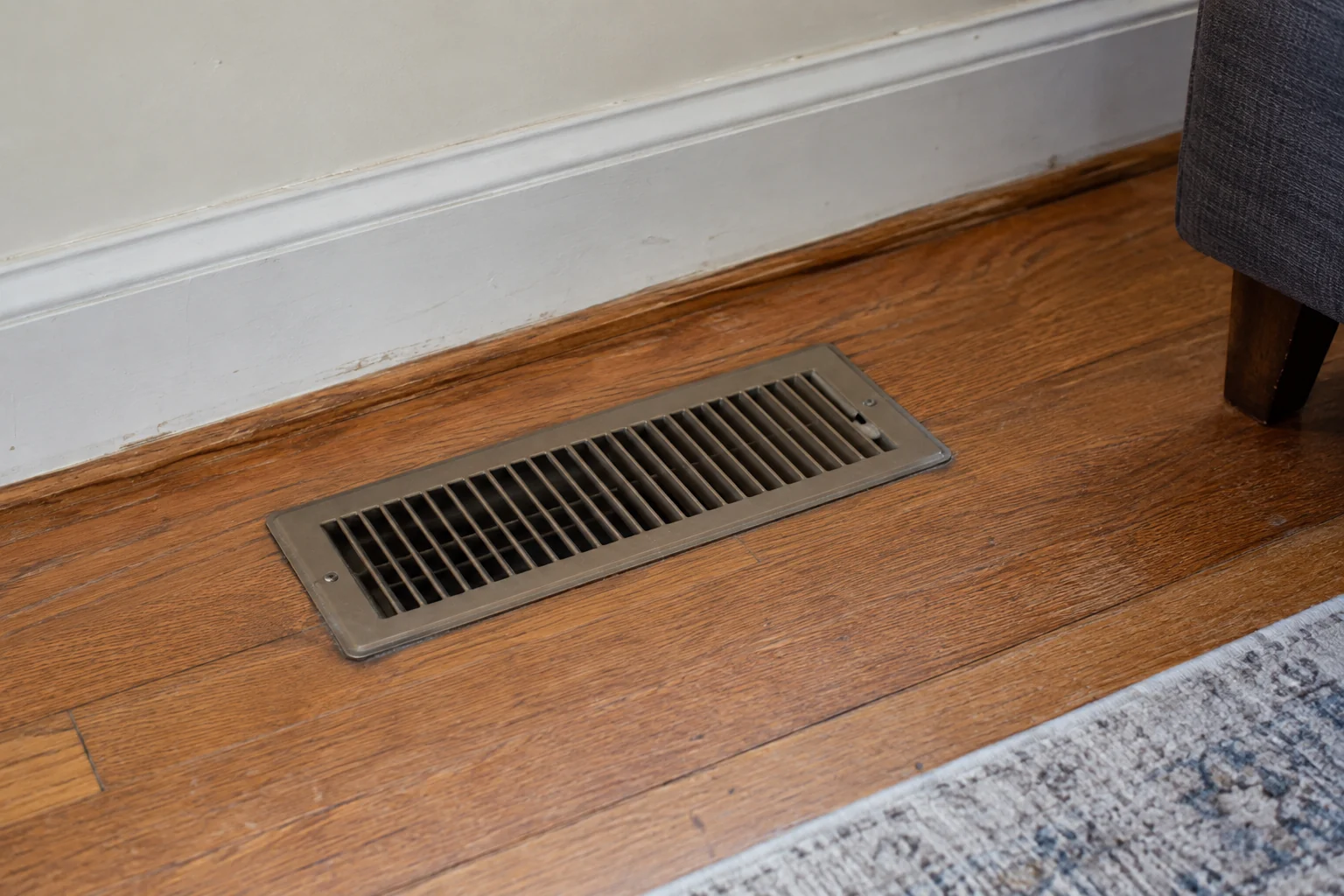
Be cautious.
A smell near a register does not prove that the carcass is inside the duct.
Airflow may carry odor from:
- a wall cavity
- crawl space
- attic
- nearby utility route
Do not spray disinfectant, deodorizer, pesticide, or fragrance into the duct.
Do not place traps or poison in active airflow.
If the source appears to involve ductwork or an air handler, a qualified HVAC professional may need to inspect it.
Can You Keep Running the HVAC?
It depends on the situation.
If normal HVAC operation seems to spread odor but there is no evidence the system itself is contaminated, the source may be near an air pathway.
If you suspect:
- a carcass inside ductwork
- contamination in an air handler
- fluid entering HVAC components
professional HVAC assessment is appropriate.
Do not open sealed equipment yourself unless qualified.
How Long Will the Smell Last After You Remove the Mouse?
Odor often improves quickly after the source is removed.
But some smell may remain for:
- hours
- days
- occasionally longer
if surrounding material absorbed contamination.
Clean the local area.
Ventilate when practical.
If odor persists, inspect for:
- contaminated porous material
- another source
- a second carcass
- moisture
- other non-rodent odor sources
Why Does the Smell Sometimes Return?
A smell may seem to return because:
- temperature rises
- humidity changes
- HVAC airflow changes
- the room was closed
- contaminated material remains
- there is another source
Do not assume the first cleanup failed.
Reassess where the odor is strongest.
Can a Dead Mouse Cause Flies After the Smell Fades?
Insect activity may continue for a period even as odor changes.
A few flies may emerge from a hidden source.
But persistent or increasing insect activity can justify a closer inspection.
Do not treat insects alone as proof of the exact carcass location.
How Do You Know the Source Is Gone?
Useful signs include:
- odor steadily decreases
- no new insect activity appears
- no staining develops
- no new mouse evidence appears
- the accessible carcass was removed and the area cleaned
There is no instant test that proves every hidden source is gone.
Monitor the trend.
Should You Keep Looking If the Smell Is Fading?
Not always.
If:
- the source is inaccessible
- the odor is clearly declining
- there is no staining
- there is no HVAC involvement
- there is no continuing insect problem
it may be reasonable to monitor rather than damage the building searching for a small carcass.
If odor stays severe or becomes worse, reassess.
When Is Wall or Ceiling Access Worth It?
Controlled access may be justified when:
- the odor is severe and persistent
- the location is strongly localized
- insects repeatedly emerge from one area
- staining is visible
- contaminated material may need removal
- a larger animal may be involved
Access should avoid:
- electrical wiring
- plumbing
- gas lines
- structural members
- HVAC components
A contractor or pest professional may be appropriate.
How Can You Prevent Another Dead Mouse Smell?
Fix the mouse problem, not just the odor.
That usually means:
- control mice already inside
- remove accessible food
- reduce shelter
- inspect entry points
- close confirmed openings at the right time
- monitor afterward
See How to Get Rid of Mice and Mouse Entry Points.
Why Exclusion Matters After Cleanup
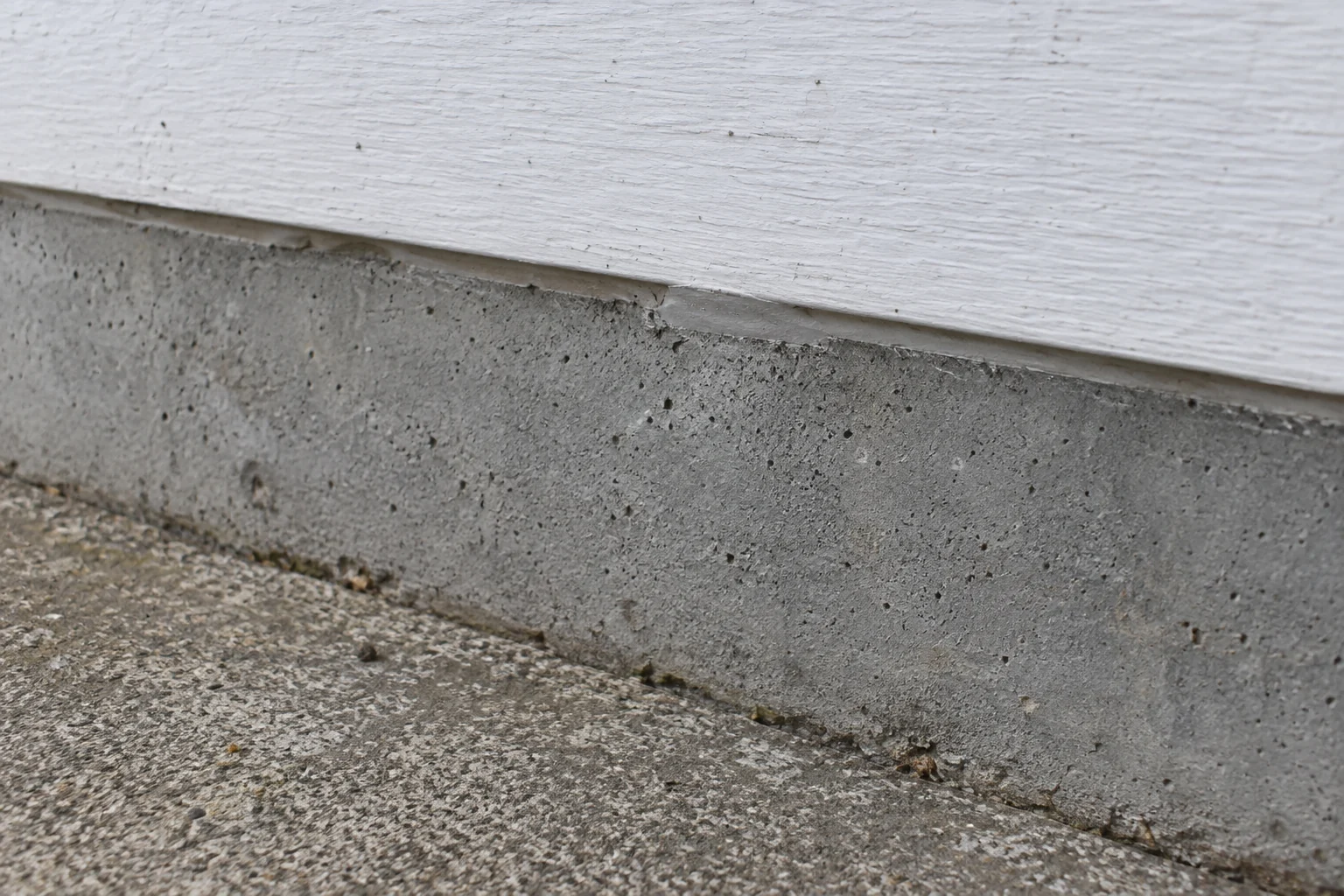
A dead mouse may be the end of one animal's activity.
It does not explain how mice entered.
Check for routes around:
- doors
- garage corners
- foundations
- utilities
- vents
- siding transitions
Do not blindly seal active mice inside.
When Should You Call a Professional?
Professional help may make sense when:
- the source cannot be found
- odor remains severe
- the likely source is inside a wall or ceiling
- electrical, plumbing, gas, structural, appliance, or HVAC systems complicate access
- contamination is extensive
- insects are repeatedly emerging
- the smell may involve a larger animal
- mouse activity is still continuing
A pest professional may address rodent activity.
A cleanup professional may handle contaminated material.
A contractor or HVAC professional may be needed for building-system access.
Service scope varies by company.
Dead Mouse Smell: The Bottom Line
Dead mouse smell often lasts several days to a few weeks, but there is no fixed timeline.
The duration depends on:
- temperature
- humidity
- airflow
- carcass location
- surrounding material
- insect activity
- whether the source can be removed
If the mouse is safely accessible, removal and wet/disinfectant cleanup usually provide the fastest improvement.
If the mouse is hidden in a wall or another inaccessible space, the odor may gradually fade as the remains dry.
Do not blindly cut into the building or spray chemicals into walls or ducts.
Instead:
- narrow down the strongest odor area
- inspect safe accessible spaces
- remove the source if it can be reached safely
- wet-clean contaminated surfaces
- monitor whether the smell is steadily decreasing
- address the mouse entry and control problem afterward
Continue with our mouse urine smell guide, mouse droppings guide, mice in walls guide, how to get rid of mice guide, mouse entry points guide, or professional rodent cleanup guide.