Rodent Cleanup: Droppings, Urine & Contaminated Areas
Rodent cleanup addresses droppings, urine, nesting material, damaged insulation, accessible carcasses, contaminated surfaces, and odor left behind after rat or mouse activity.
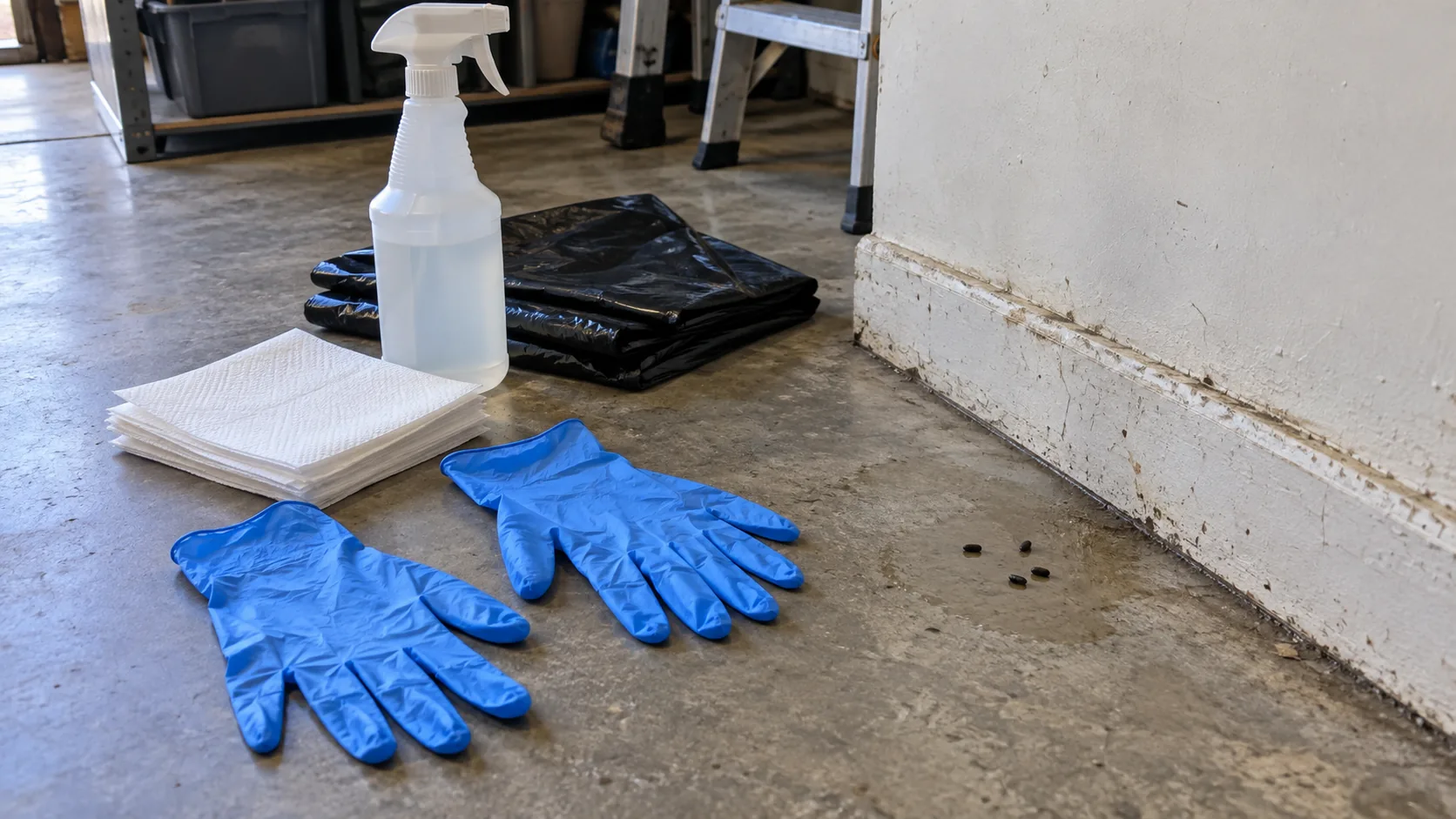
Rodent cleanup begins after rats or mice have left behind contamination.
That may include:
- droppings
- urine
- nesting material
- food debris
- damaged insulation
- accessible carcasses
- contaminated hard surfaces
- odor
A cleanup service is different from rodent control.
Traps, bait decisions, exclusion, and monitoring deal with active rodents.
Cleanup deals with what the rodents left behind.
For the best long-term result, those two parts should work together.
Cleaning a contaminated attic does not help for long if mice are still entering through an open roofline gap.
Removing droppings from a garage does not solve the problem if rats continue using the same foundation route.
What Is Professional Rodent Cleanup?
Professional rodent cleanup is the removal and cleaning of contamination left by rats or mice.
Depending on the property, the service may include:
- inspection of affected areas
- removal of droppings
- removal of nesting material
- wet cleaning and disinfection of hard surfaces
- accessible carcass removal
- contaminated insulation removal
- bagging and waste handling
- odor-source cleanup
- recommendations for exclusion or repair
Not every company provides every service.
Some pest-control companies offer limited cleanup.
Some specialize in:
- attic cleanup
- crawl-space cleanup
- contaminated insulation
- restoration work
Ask exactly what is included.
Rodent Cleanup vs Rodent Removal
These are related but different services.
Rodent removal/control addresses:
- active mice or rats
- trap placement
- bait decisions
- route monitoring
- exclusion planning
Rodent cleanup addresses:
- droppings
- urine contamination
- nesting material
- carcasses
- affected insulation
- contaminated surfaces
A complete job may need both.
See Rodent Removal Services: What’s Included?.
Should Cleanup Start Before the Rodents Are Gone?
Usually, the active rodent problem should be addressed first or at least at the same time.
Otherwise, freshly cleaned areas may be contaminated again.
Before major cleanup, confirm:
- whether rats or mice are still active
- where current routes are located
- whether traps are still being used
- whether entry points remain open
- whether contaminated materials are still serving as nesting areas
A professional rodent inspection can help define the active area before cleanup begins.
What Does a Cleanup Technician Look For?
A cleanup assessment may check:
- amount of droppings
- distribution of contamination
- nesting material
- urine staining
- odor
- accessible carcasses
- affected insulation
- food contamination
- surface type
- moisture
- electrical or structural hazards
The goal is to determine what can be cleaned and what may need removal.
How Are Rodent Droppings Cleaned Safely?
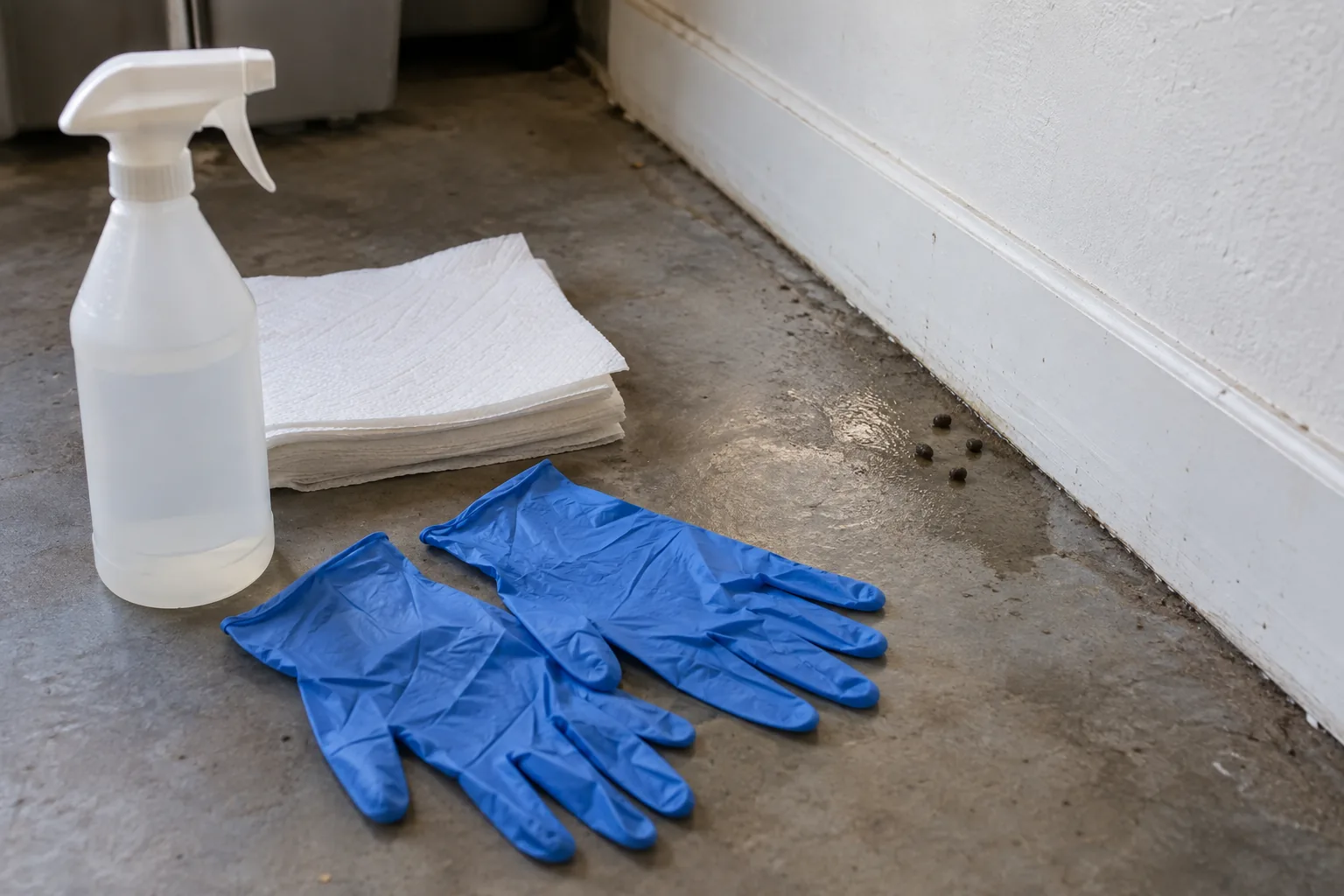
Fresh rodent droppings should not be dry swept or vacuumed before wet cleanup.
A safer small-area approach includes:
- keep children and pets away
- wear suitable gloves
- wet droppings and the surrounding hard surface with an appropriate disinfecting product
- allow the product’s required contact time
- collect the material carefully
- bag waste appropriately
- clean the nearby surface
- wash hands after removing gloves
Professional cleanup should follow the same core principle:
control dust before removing contaminated material.
See our general rodent cleanup guide and rodent safety guide.
Why Dry Sweeping Fresh Droppings Is a Bad Idea
Dry sweeping can disturb contaminated dust.
Vacuuming fresh dry droppings can also spread small particles if the area has not been properly wetted and prepared.
Do not use:
- dry brooming
- dry brushing
- compressed air
- leaf blowers
on fresh rodent waste.
Wet-cleaning methods help keep contamination from becoming airborne during removal.
Should You Spray Rodent Droppings Before Removing Them?
For accessible hard surfaces, wetting is an important part of safe cleanup.
Use an appropriate disinfecting product according to its label.
That includes following:
- dilution instructions if applicable
- contact time
- surface compatibility
- ventilation instructions
- handling precautions
Do not mix cleaning chemicals.
Can You Vacuum After Rodent Cleanup?
The important distinction is between fresh dry contamination and an area that has already been safely wetted, cleaned, and cleared of contaminated material.
Do not vacuum fresh dry droppings or nesting material as the first cleanup step.
Professional post-cleaning equipment choices depend on:
- material
- contamination level
- work scope
- equipment
- site conditions
This page does not treat ordinary household vacuuming as a substitute for wet cleanup.
How Is Rodent Urine Cleaned?
Rodent urine may contaminate:
- hard floors
- shelving
- cabinet surfaces
- framing
- insulation
- stored items
Hard nonporous surfaces may often be cleaned with an appropriate disinfecting process.
Porous materials can be more difficult.
Urine may soak into:
- insulation
- unfinished wood
- cardboard
- fabric
- damaged drywall
In some situations, removal of affected porous material may be more practical than surface cleaning alone.
What About Mouse Urine Smell?
Mouse urine odor can indicate repeated activity, but smell alone does not identify:
- the number of mice
- the exact nest
- the exact entry point
Cleanup should focus on the contaminated source, not simply covering the smell.
See Mouse Urine Smell: What It Smells Like & What It Means.
What About Rat Urine Smell?
Rat activity can also create strong odor in heavily used areas.
Possible sources include:
- repeated travel routes
- nesting sites
- contaminated insulation
- enclosed storage
- inaccessible voids
Deodorizing does not replace source cleanup.
See Rat Urine Smell: What It Smells Like & What It Means.
Does Professional Cleanup Remove Odor?
It may reduce odor when the source is accessible and can be removed or cleaned.
Odor can persist when contamination remains in:
- wall cavities
- insulation
- inaccessible ceiling spaces
- under-house areas
- porous materials
A provider should not promise that one deodorizing treatment will solve every odor problem.
Source removal matters most.
Does Cleanup Include Nest Removal?
Sometimes.
Rodent nesting material may include:
- shredded paper
- fabric
- insulation
- cardboard
- soft plant material
Fresh nesting material should not be handled dry.
It should be wetted or otherwise managed using appropriate contamination-control procedures before removal.
See Mouse Nests and Rat Nests.
Does Rodent Cleanup Include Dead Rodent Removal?
Sometimes.
Accessible carcasses may be removed from:
- traps
- garages
- basements
- accessible attics
- accessible crawl-space areas
But a carcass may be inaccessible inside:
- a wall
- ceiling
- cabinet void
- sealed structural space
Opening the structure may require another contractor.
What If the Dead Rodent Is Inside a Wall?
A cleanup provider may help narrow the likely area.
But retrieving a carcass inside a wall may require:
- drywall removal
- repair
- electrical caution
- plumbing caution
- fire-rated assembly considerations
Do not assume hidden-wall carcass retrieval is included in a standard cleanup.
Does Rodent Cleanup Include Insulation Removal?
Sometimes.
Insulation may need attention when it is:
- heavily contaminated
- saturated
- repeatedly used for nesting
- holding persistent odor
- physically damaged
But not every rodent problem requires whole-attic or whole-crawl-space insulation removal.
A useful quote should explain:
- which insulation is affected
- what will be removed
- what will remain
- whether replacement is included
Avoid unnecessary full-area removal when contamination is localized.
Mouse Contamination in Insulation
Mice may:
- nest in insulation
- compress material
- contaminate it with droppings or urine
- create repeated travel paths
See Mice in Insulation: Signs, Damage & Cleanup.
Rat Contamination in Insulation
Rats can create:
- larger disturbed areas
- heavier travel paths
- larger droppings
- nesting contamination
See Rats in Insulation: Signs, Damage & Cleanup.
Rodent Cleanup in the Attic
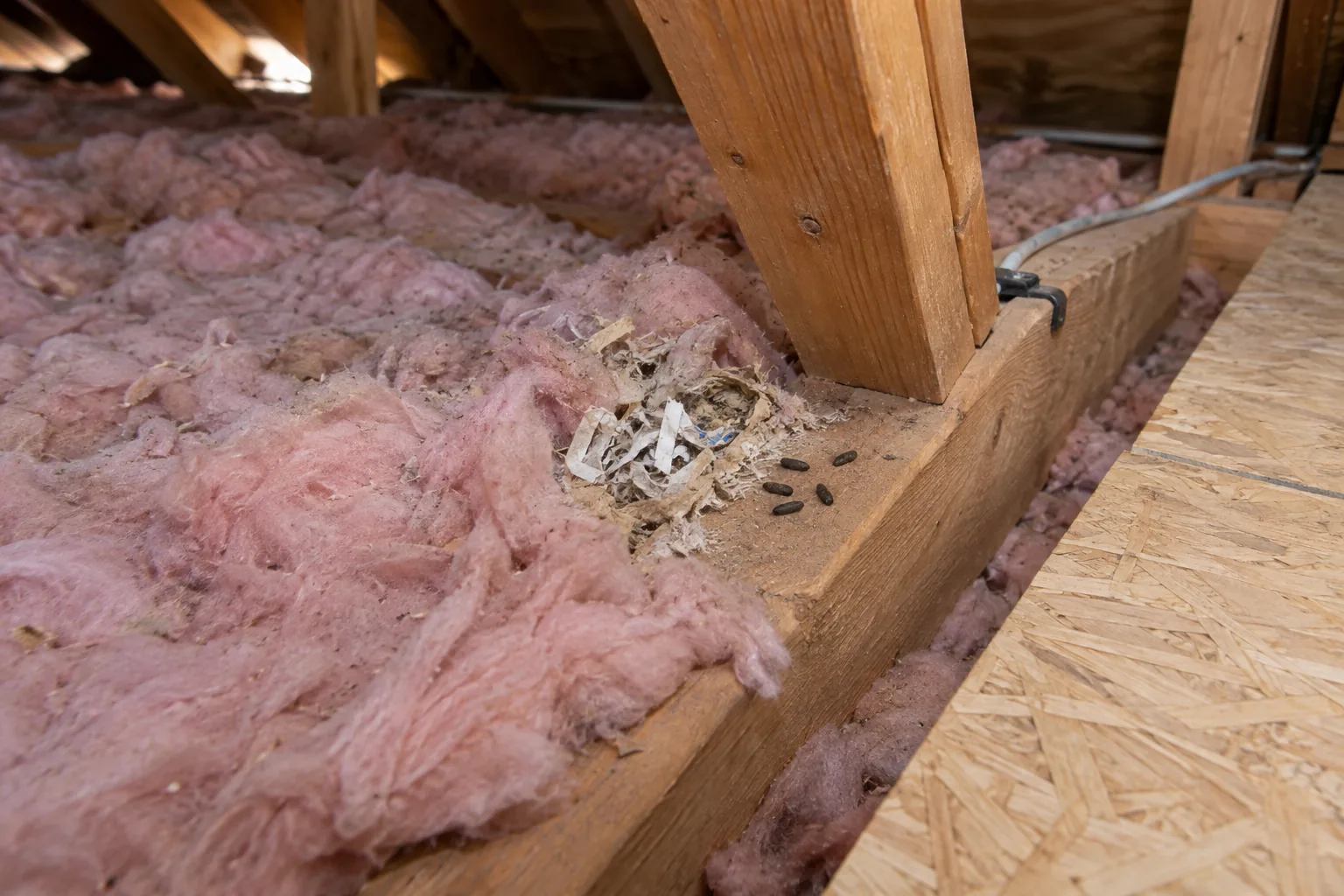
Attics can become heavily contaminated when rodents have been active for a long time.
Cleanup may involve:
- droppings
- nesting material
- accessible carcasses
- contaminated insulation
- urine-stained surfaces
But attic work also introduces hazards.
Possible issues include:
- unstable footing
- exposed wiring
- low-clearance areas
- heavy contamination
- roof access
Do not walk on unsupported ceiling drywall.
See Mice in the Attic and Rats in the Attic.
Does Attic Cleanup Include New Insulation?
Not automatically.
A cleanup quote may separate:
- contaminated insulation removal
- cleaning
- air sealing
- exclusion
- replacement insulation
Ask what is included.
Do not assume “attic cleanup” includes a complete insulation replacement.
Rodent Cleanup in a Crawl Space
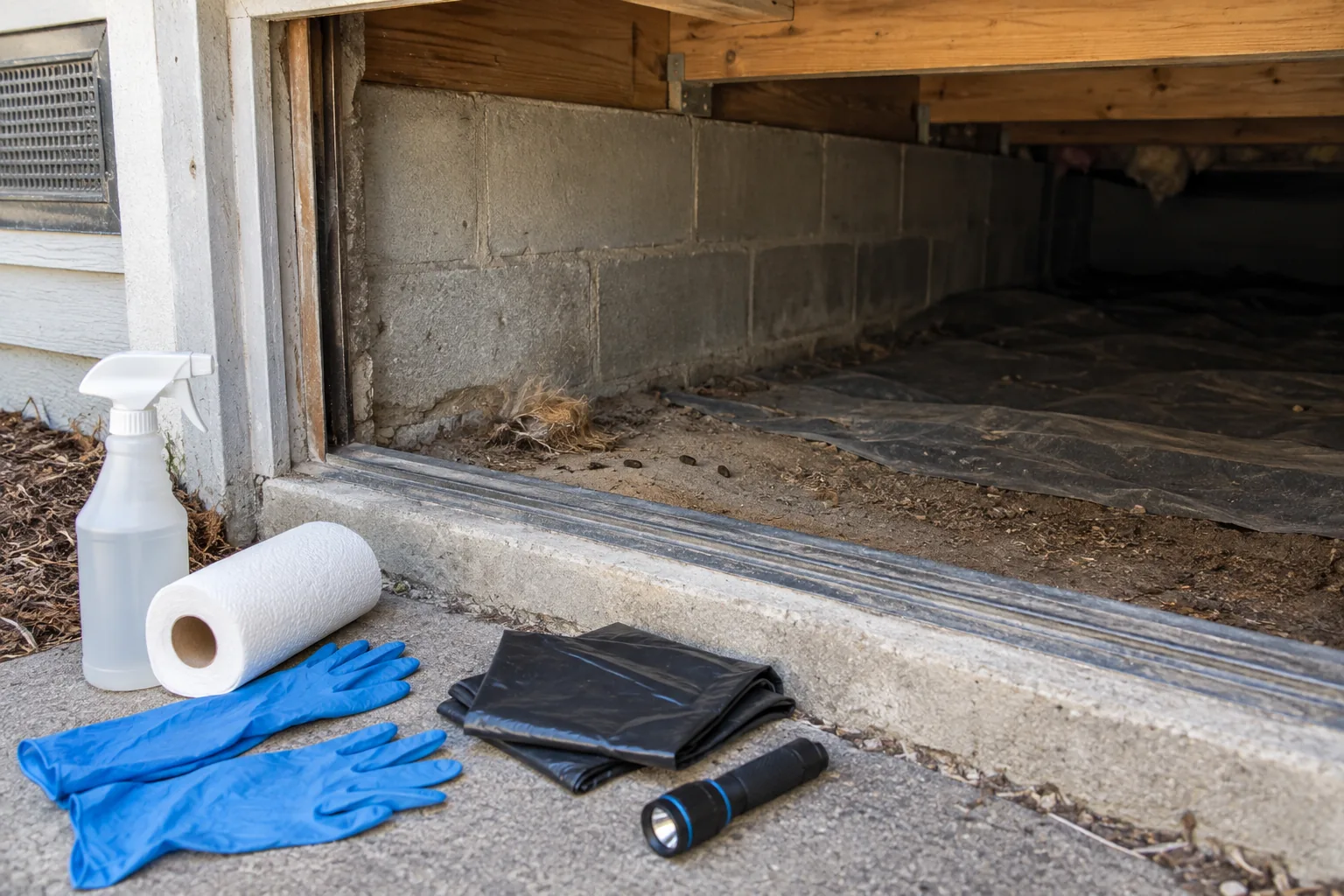
Crawl spaces can be more difficult because of:
- limited headroom
- moisture
- electrical hazards
- plumbing
- contaminated insulation
- poor access
Do not enter a crawl space that is:
- wet
- unstable
- electrically hazardous
- heavily contaminated
- too tight for safe movement
Professional cleanup may be appropriate when access itself is part of the risk.
See Mice in the Crawl Space and Rats in the Crawl Space.
Rodent Cleanup in the Garage
Garage cleanup may involve:
- droppings along wall edges
- contaminated storage areas
- damaged pet food
- bird seed
- nesting material
- utility routes
Separate contaminated food or feed from items that can be safely cleaned.
Do not dry sweep droppings from the slab.
Rodent Cleanup in the Basement
Basement contamination may appear near:
- foundation walls
- storage
- utility penetrations
- plumbing
- sill areas
Cleanup should avoid:
- energized electrical equipment
- gas components
- standing water
- unsafe utility spaces
If a building-system repair is needed, another qualified trade may be appropriate.
Rodent Cleanup in Kitchens and Pantries
Food areas require careful separation between:
- contaminated material
- food
- food-contact surfaces
Discard food that has been directly contaminated or damaged by rodents.
Clean affected hard surfaces appropriately.
Do not place cleaning chemicals into food containers.
Do not use contaminated storage boxes for food afterward.
What About Contaminated Cardboard?
Cardboard is porous.
If it is heavily contaminated with:
- urine
- droppings
- nesting material
it may be difficult to clean effectively.
A cleanup provider may recommend disposal rather than surface cleaning.
The same concern can apply to some:
- paper
- fabric
- insulation
- heavily soiled porous materials
What About Stored Items?
A cleanup service may separate items into categories such as:
- cleanable
- washable
- contaminated porous
- damaged
- discard
The decision depends on:
- material
- amount of contamination
- value of the item
- ability to clean it safely
Not every stored item needs to be thrown away.
Does Cleanup Include Food Disposal?
Sometimes.
Rodent-damaged or contaminated food should not be kept.
A provider may remove:
- open food
- damaged packages
- contaminated pet food
- spilled feed
Large food-disposal jobs may be outside the standard scope.
Ask beforehand.
Do Cleanup Companies Use Disinfectants?
Many do.
The product should be appropriate for the surface and used according to its label.
The process should respect:
- contact time
- ventilation
- material compatibility
- handling instructions
Do not assume stronger chemical smell means better cleaning.
Is Deodorizing the Same as Cleaning?
No.
Deodorizing may reduce residual smell.
It does not replace removal of:
- droppings
- urine-contaminated material
- nesting material
- carcasses
- contaminated insulation
A strong odor source should be identified and cleaned or removed when accessible.
What Protective Equipment May Professionals Use?
Protective equipment depends on the cleanup scope.
It may include:
- suitable gloves
- protective clothing
- eye protection
- respiratory protection when appropriate for the work
The exact equipment depends on:
- contamination level
- access
- dust potential
- work method
- site conditions
This page does not prescribe one PPE setup for every job.
Should Children or Pets Be Present During Cleanup?
Keep children and pets out of the contaminated work area.
They should not have access to:
- droppings
- nesting material
- carcasses
- cleanup chemicals
- waste bags
Follow the cleanup provider’s re-entry instructions for the treated area.
What Happens to Cleanup Waste?
Waste may include:
- droppings
- nesting material
- contaminated disposable supplies
- affected porous materials
- carcasses
A professional should contain waste appropriately for removal.
Local disposal rules can vary.
Ask the provider how waste will be handled for your job.
Does Cleanup Repair Rodent Entry Points?
Not necessarily.
Cleanup and exclusion are separate scopes.
A cleanup company may:
- identify openings
- recommend repairs
- perform some exclusion
- refer repair work elsewhere
See Rodent Exclusion: How to Keep Rats & Mice Out.
Why Cleanup Without Exclusion Can Fail
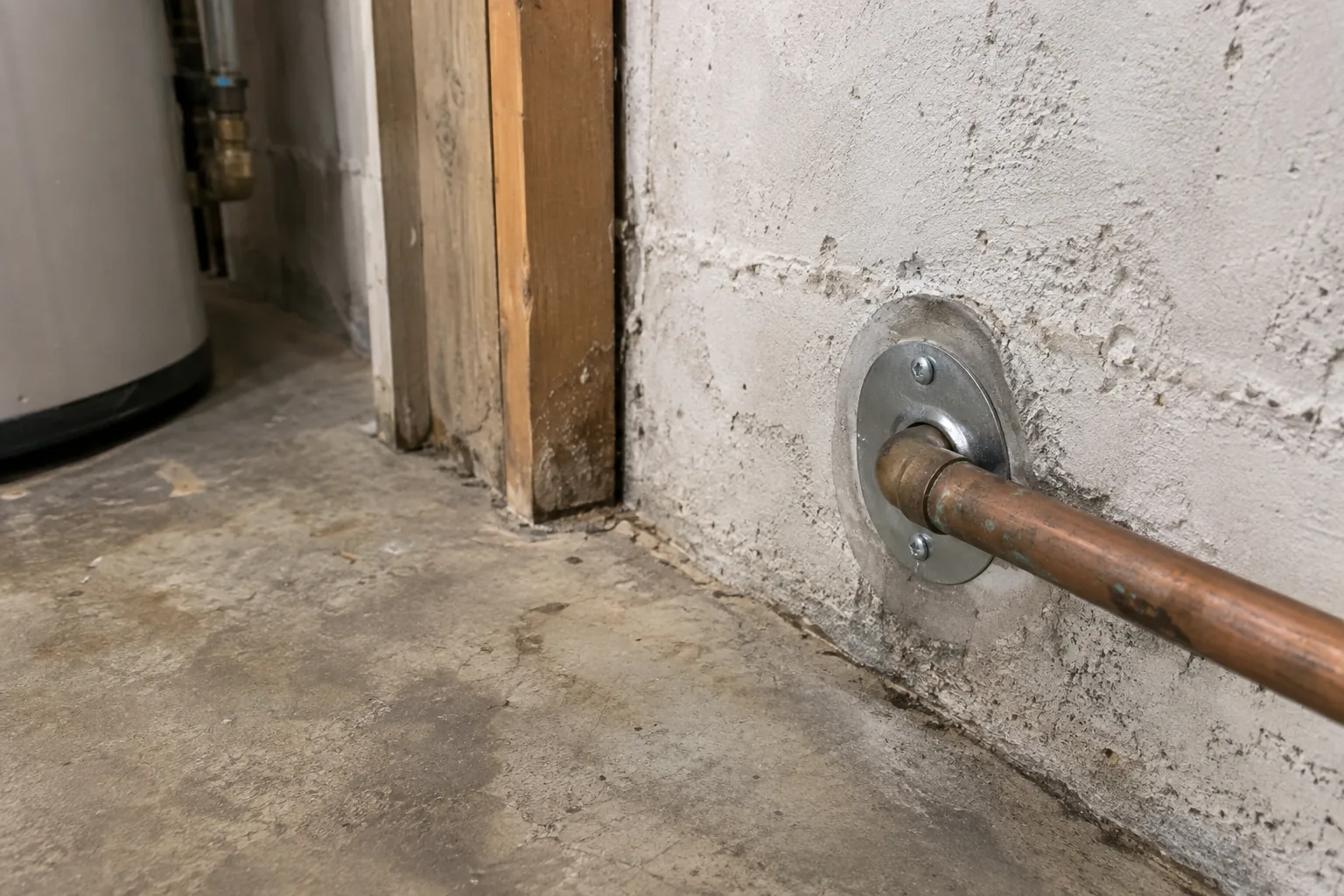
A cleaned area can be contaminated again if rodents continue entering.
Long-term success depends on:
- controlling active rodents
- reducing food and shelter
- closing entry points
- monitoring after repairs
Cleanup should be part of a larger rodent-control plan.
Does Cleanup Include Pest Control?
Sometimes.
Some pest-control companies provide both:
- active rodent control
- cleanup
Other cleanup providers may not perform trapping or pesticide work.
Ask:
- Is active rodent control included?
- Is exclusion included?
- Is cleanup included?
- Are these separate quotes?
How Do You Know Whether DIY Cleanup Is Reasonable?
A small DIY cleanup may be reasonable when:
- contamination is limited
- the area is easy to reach
- the surface is cleanable
- there is no electrical or structural hazard
- children and pets can be kept away
- you can use safe wet-cleanup methods
Professional cleanup may make more sense when:
- contamination is widespread
- insulation is affected
- attic or crawl-space access is difficult
- odor is persistent
- carcasses are difficult to reach
- contamination involves several rooms
- structural repairs are needed
When Should You Avoid DIY Cleanup?
Do not attempt cleanup in a space that is:
- heavily contaminated
- wet
- unstable
- electrically hazardous
- too tight to move safely
- difficult to ventilate safely
- mixed with unknown hazardous material
Professional assessment may be safer.
What Should You Do Before a Cleanup Visit?
Useful preparation may include:
- note which rooms show contamination
- photograph affected areas if practical
- identify previous rodent-control work
- keep children and pets away
- make safe access available
- point out leaks or electrical concerns
- tell the provider about recent pest-control treatment
Do not dry-clean the entire area before the technician arrives if the contamination is part of what needs assessment.
Should You Move Boxes Before Cleanup?
Only if they can be moved safely without spreading contamination.
Heavily contaminated boxes should not be shaken or carried through the home unnecessarily.
Ask the provider whether they want storage moved before arrival.
What Should a Rodent Cleanup Quote Include?
A useful quote should explain:
- areas to be cleaned
- contamination being addressed
- hard-surface cleaning
- nesting-material removal
- carcass removal
- insulation removal
- waste handling
- deodorizing if offered
- replacement materials if offered
- exclusion if offered
- number of visits
- what is not included
Avoid vague “sanitize everything” descriptions with no defined scope.
What May Cost Extra?
Depending on the provider, separate charges may apply for:
- attic access
- crawl-space access
- insulation removal
- insulation replacement
- hidden carcass retrieval
- structural opening
- repairs
- exclusion
- pest control
- additional visits
Ask for scope before work begins.
Does Rodent Cleanup Guarantee the Odor Will Be Gone?
No provider should assume every odor can be eliminated immediately.
Odor may remain if the source is inaccessible.
Possible hidden sources include:
- wall cavities
- ceiling voids
- contaminated insulation
- inaccessible carcasses
Cleanup can reduce accessible sources.
Some situations require time, additional access, or building repair.
Does Rodent Cleanup Prevent Future Infestations?
No.
Cleanup removes contamination.
It does not automatically stop new rodents from entering.
Prevention still requires:
- exclusion
- sanitation
- monitoring
- maintenance
See Rodent-Proofing a House: Complete Prevention Guide.
When Another Trade May Be Needed
Rodent contamination may overlap with other building problems.
Another qualified contractor may be needed for:
- damaged wiring
- plumbing leaks
- roof leaks
- structural damage
- HVAC problems
- insulation replacement
- drywall repair
A cleanup provider should not work outside the scope they are qualified to perform.
Questions to Ask a Rodent Cleanup Company
Ask:
- What areas will you clean?
- Do you remove droppings and nesting material?
- Do you remove accessible carcasses?
- Is insulation removal included?
- Is replacement insulation included?
- Is deodorizing included?
- Is rodent control included?
- Is exclusion included?
- How is waste contained?
- How many visits are included?
- What is excluded from the quote?
- What happens if hidden contamination is found?
Red Flags in a Rodent Cleanup Offer
Be cautious if a provider:
- recommends dry sweeping fresh droppings
- recommends ordinary vacuuming as the first step for fresh contamination
- promises complete sterilization
- guarantees all odor will disappear immediately
- cannot explain what materials will be removed
- cannot explain whether pest control or exclusion is included
- recommends unnecessary whole-area demolition without showing the affected scope
A useful cleanup plan should match the actual contamination.
Rodent Cleanup: The Bottom Line
Professional rodent cleanup may address:
- droppings
- urine
- nesting material
- accessible carcasses
- contaminated hard surfaces
- contaminated insulation
- persistent odor sources
The safest cleanup plan controls dust and uses wet-cleaning principles for fresh rodent waste.
Do not dry sweep or vacuum fresh droppings before wet cleanup.
A complete project should also ask:
- Are rodents still active?
- Where are they entering?
- Does insulation need removal?
- Are carcasses accessible?
- Is exclusion included?
- Is another contractor needed?
Cleanup removes what rodents left behind.
Control and exclusion reduce the chance that the same area will be contaminated again.
Continue with our rodent cleanup guide, rodent safety guide, rodent inspection guide, rodent removal services guide, rodent exclusion guide, or rodent-proofing guide.
For the broader overview, return to [Rats & Mice in the Home](/).