Deer Mouse: Identification, Signs & Behavior
Learn how to identify a deer mouse, what it looks like, where it lives, which signs it leaves behind, how it differs from a house mouse, and what to do if deer mice enter your home.
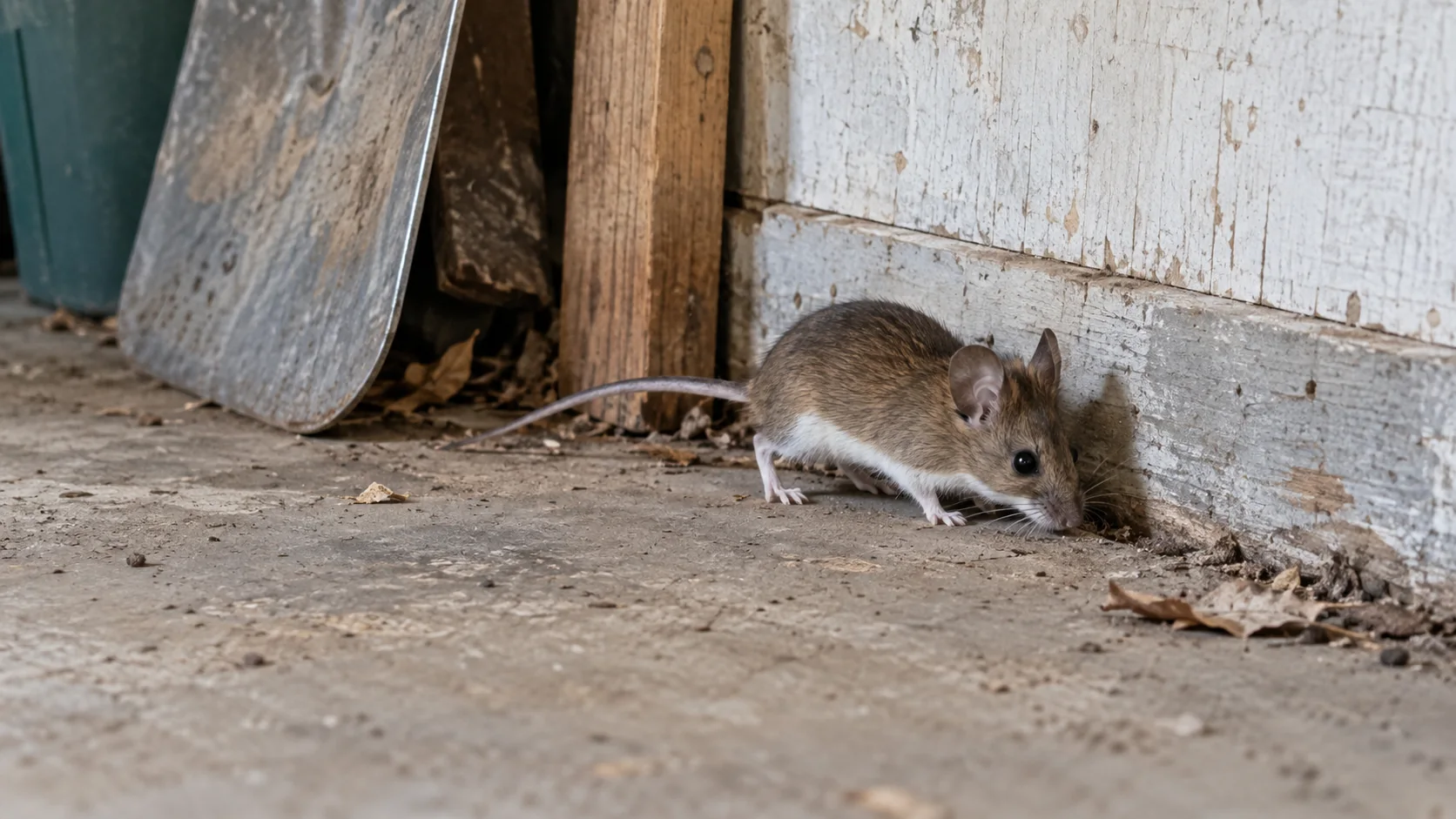
The deer mouse is a small wild mouse found across much of North America and is commonly associated with fields, woodland edges, rural properties, sheds, cabins, garages, barns, and other structures near outdoor habitat.
It can enter homes and outbuildings in search of shelter and food, especially when temperatures fall or natural food sources become less available.
Deer mice are often mistaken for house mice because both are small rodents. But deer mice usually have a more sharply two-toned appearance, with darker fur on the upper body and a noticeably white belly, feet, and underside. Their tail is also typically bicolored.
Correct identification matters because deer mice are more strongly associated with outdoor and rural habitats than house mice, and their presence can change how you inspect the property and handle contaminated areas.
This guide explains what a deer mouse looks like, how to distinguish it from a house mouse, where it lives, which signs it leaves behind, how it behaves, and what to do if deer mice enter a building.
What Is a Deer Mouse?
The deer mouse is a small wild rodent in the genus Peromyscus.
It is not the same species as the common house mouse.
Deer mice are well adapted to outdoor environments and may live around:
- - fields
- - forest edges
- - brush
- - rural properties
- - cabins
- - barns
- - sheds
- - garages
- - woodpiles
- - storage buildings
They may enter buildings for shelter, especially where a structure is close to natural habitat.
A deer mouse inside a garage or cabin may have come directly from the surrounding property rather than from a long-established indoor population.
That differs from the house mouse, which is highly adapted to living continuously inside buildings.
What Does a Deer Mouse Look Like?
A deer mouse has a small, compact body and a distinctive two-toned appearance.
Common identification features include:
- - brown, gray-brown, or reddish-brown fur on the upper body
- - a white or pale belly
- - white feet
- - a sharply bicolored tail in many individuals
- - relatively large dark eyes
- - relatively large ears
- - a pointed muzzle
- - delicate feet
The color contrast is often the most useful visual clue.
A deer mouse may look darker across the back and sides while the underside appears clean white or pale.
This can create a stronger two-tone pattern than the more uniformly gray-brown appearance of a typical house mouse.
How Big Is a Deer Mouse?
Deer mice are small rodents.
They are far smaller than adult rats and are generally in the same overall size class as other small mice.
Exact size varies by population and age.
For homeowners, the most useful comparison is not the exact measurement but the body pattern.
A deer mouse usually has:
- - a small body
- - large-looking eyes
- - relatively large ears
- - white feet
- - a pale underside
- - a bicolored tail
Size alone is not enough to distinguish a deer mouse from a house mouse.
Color pattern, tail, habitat, and where the animal is found are more useful.
Deer Mouse Face and Eyes
Deer mice often have prominent dark eyes.
The eyes can look relatively large compared with the small head.
The face is pointed and delicate.
Their ears also appear relatively large.
This combination can make a deer mouse look more like a small wild field mouse than the dusty-gray house mouse commonly found deep inside buildings.
Do not identify the species from the face alone.
Use the eyes and ears together with:
- - body color
- - belly color
- - feet
- - tail pattern
- - habitat
- - activity location
Deer Mouse Belly and Feet
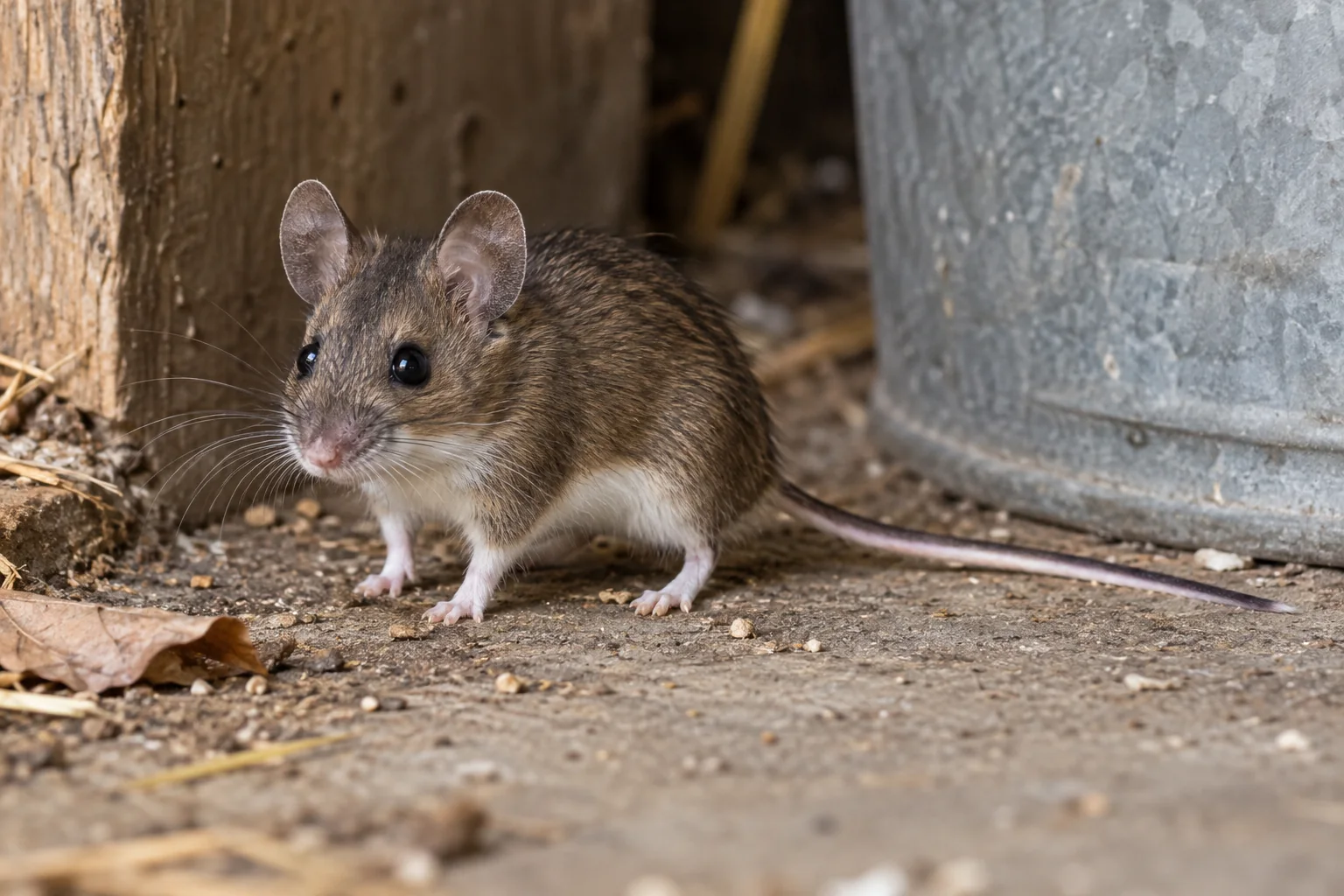
The light underside is one of the strongest visual clues.
Many deer mice have a distinctly pale or white belly that contrasts with the darker fur across the back and sides.
The feet may also appear white.
That contrast is useful because house mice usually look more uniformly gray-brown overall, without the same sharp white underside.
Lighting can affect color, so photographs taken in dark garages or attics may make the pattern less obvious.
Look at several features before deciding.
Deer Mouse Tail
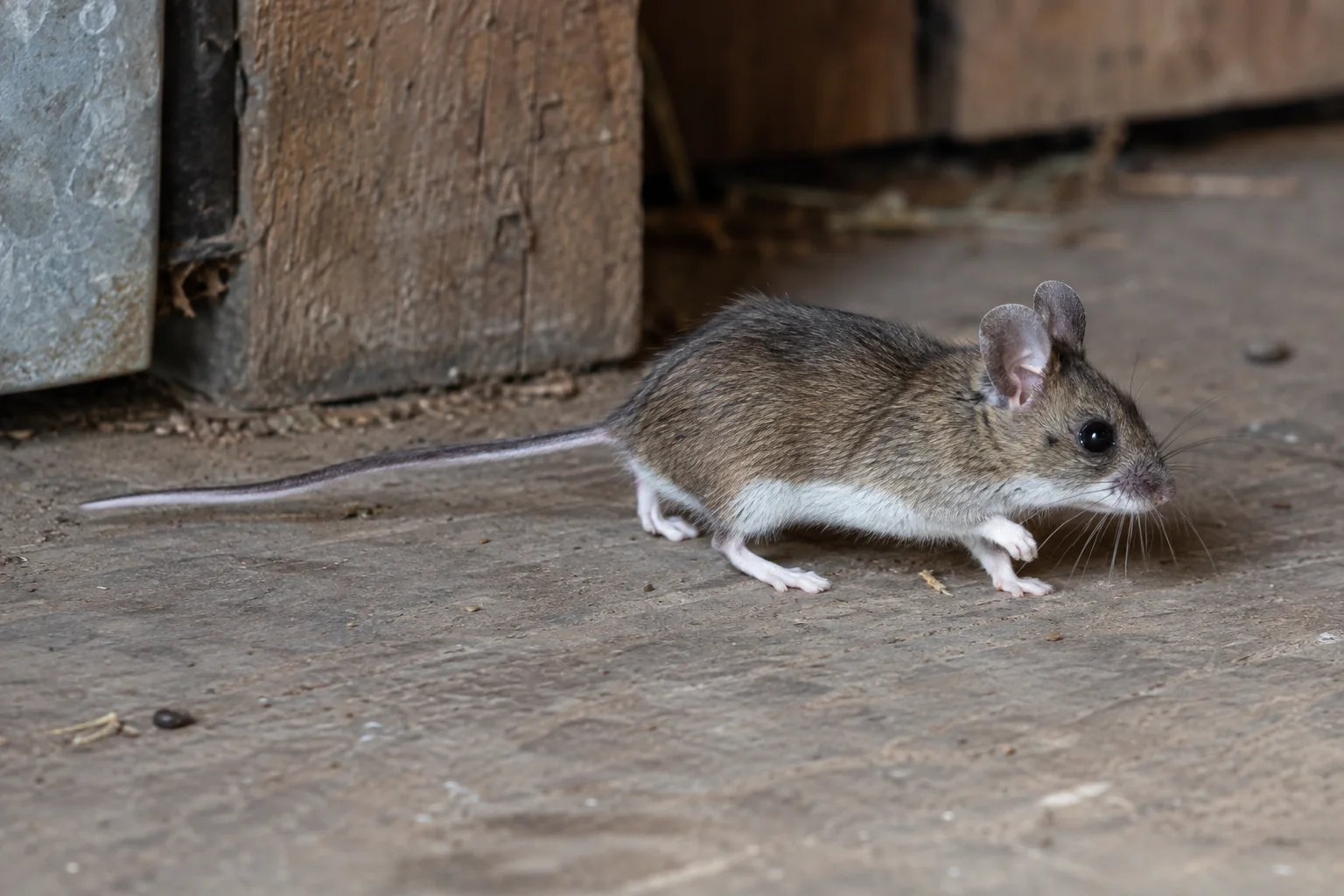
The deer mouse tail is often clearly bicolored.
The upper surface may be darker while the underside is lighter or white.
This two-tone tail can be an important identification clue.
House-mouse tails are generally more uniformly colored and look more naked or scaly.
Do not rely on tail appearance if the view is poor or the tail is partly hidden.
Use the tail together with the white belly, white feet, and outdoor-associated habitat.
Deer Mouse vs House Mouse
This is the comparison homeowners most often need.
A deer mouse commonly has:
- - stronger two-tone body coloration
- - white or pale underside
- - white feet
- - bicolored tail
- - large dark eyes
- - strong association with outdoor or rural habitat
A house mouse commonly has:
- - more uniform gray-brown coloration
- - less sharply contrasting underside
- - a more uniformly colored tail
- - strong adaptation to indoor living
- - frequent activity in kitchens, cabinets, walls, and commercial buildings
Both can enter homes.
Both can leave small droppings.
Both can use garages, attics, and storage areas.
The most reliable identification comes from combining appearance with habitat.
For the house-mouse profile, see House Mouse: Identification, Signs & Behavior.
Deer Mouse vs Rat
A deer mouse is much smaller than an adult rat.
Compared with rats, deer mice have:
- - much smaller bodies
- - smaller feet
- - thinner tails
- - smaller droppings
- - lighter gnaw damage
A rat has a heavier head, more powerful body, larger tracks, and much larger droppings.
If the rodent seems too large to be a mouse, use Rat vs Mouse: How to Tell the Difference.
Where Do Deer Mice Live?
Deer mice are strongly associated with outdoor habitat.
They may live around:
- - woodland edges
- - fields
- - brushy areas
- - rural lots
- - farms
- - cabins
- - sheds
- - barns
- - detached garages
- - woodpiles
- - rock piles
- - stored outdoor materials
They can also enter houses.
Structures near natural habitat may be more likely to encounter deer mice than dense interior urban buildings.
The surrounding property matters.
If a small two-toned mouse is found in a cabin, shed, rural garage, or home beside fields or woods, deer mouse becomes an important identification possibility.
Deer Mice in Cabins and Seasonal Buildings
Cabins and seasonal buildings can be attractive to deer mice because they may remain quiet for long periods.
Mice can enter through small structural gaps and use:
- - cabinets
- - stored bedding
- - boxes
- - wall voids
- - insulation
- - drawers
- - utility spaces
A building that has been closed for weeks or months may contain droppings or nesting material when reopened.
Do not begin by dry sweeping or vacuuming rodent waste.
Use safe wet-cleanup methods.
Our cleanup section and rodent safety section cover contaminated areas more broadly.
Deer Mice in Garages and Sheds
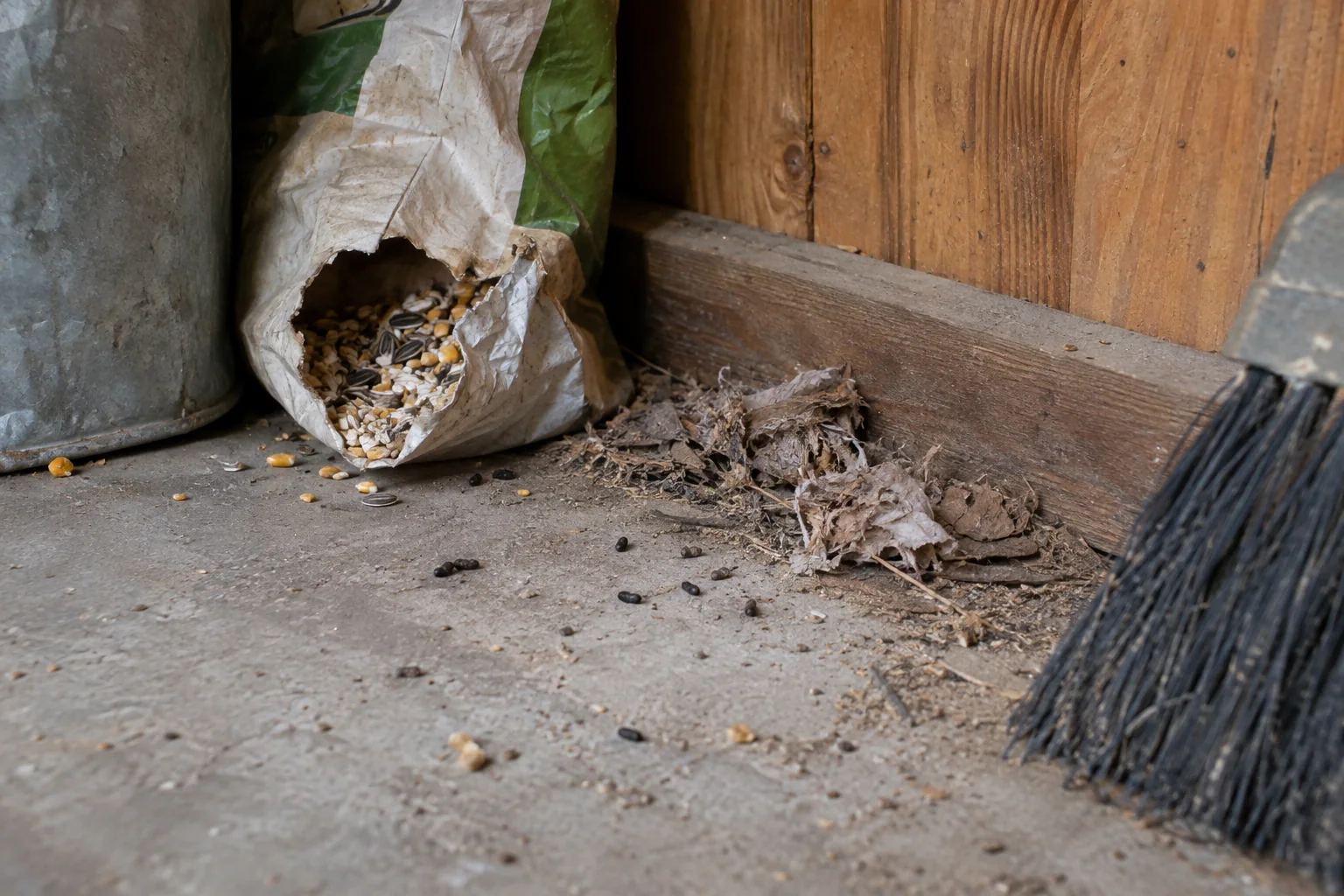
Garages and sheds create an easy transition between outdoor habitat and human structures.
Possible attractants include:
- - bird seed
- - pet food
- - grass seed
- - stored grain
- - cardboard
- - nesting material
- - clutter
Possible entry points include:
- - door gaps
- - wall-floor joints
- - utility penetrations
- - vents
- - siding gaps
- - damaged trim
A deer mouse may use the building temporarily or establish a nest if shelter and food are available.
Inspect both the interior evidence and the exterior surroundings.
Deer Mice in Attics
Deer mice can enter attics, especially in structures near natural habitat.
Possible signs include:
- - small droppings
- - nesting material
- - light scratching
- - tracks in dust
- - food caches
- - disturbed insulation
An attic mouse is not automatically a house mouse.
If the animal has a sharply white belly, white feet, and a bicolored tail, deer mouse becomes more likely.
For general attic mouse control, see Mice in the Attic: Signs, Damage & Removal.
What Do Deer Mice Eat?
Deer mice are opportunistic feeders.
Natural foods may include:
- - seeds
- - grains
- - nuts
- - berries
- - insects
- - plant material
Around buildings, they may also use:
- - bird seed
- - pet food
- - stored grain
- - pantry goods
- - food crumbs
Stored seed and feed can be especially attractive in garages, barns, and sheds.
Reducing accessible food helps make the structure less supportive.
Do Deer Mice Store Food?
Deer mice may cache food in protected places.
Small stores of seeds or other food may appear in:
- - drawers
- - boxes
- - wall voids
- - storage areas
- - garages
- - attics
A food cache can be a clue that a small rodent is repeatedly using the area.
Combine it with droppings, nesting material, tracks, or sightings before deciding which species is involved.
Deer Mouse Nesting Behavior
Deer mice build nests from soft materials.
Possible nesting material includes:
- - shredded paper
- - fabric
- - insulation
- - dried grass
- - plant fibers
- - cardboard
- - other soft debris
Nests may be located:
- - in wall voids
- - inside boxes
- - in stored materials
- - in insulation
- - in sheds
- - in garages
- - in cabins
- - in attics
Outdoor nests may also occur in natural protected spaces.
Removing a nest does not solve the entry problem.
The building still needs to be inspected for access points.
Deer Mouse Droppings
Deer-mouse droppings are small and can look similar to other small-mouse droppings.
They may be found:
- - inside cabinets
- - in garages
- - in sheds
- - in cabins
- - in attics
- - near stored seed
- - along wall edges
- - near nesting material
Droppings alone usually cannot distinguish a deer mouse from a house mouse.
Species identification is stronger when the actual mouse is seen or when the habitat and body coloration are known.
For general mouse-dropping identification and cleanup, see Mouse Droppings: What They Look Like & What They Mean.
Deer Mouse Tracks
Deer-mouse tracks are small.
They may appear in:
- - dusty sheds
- - garages
- - attic areas
- - storage buildings
- - fine dirt
Because the prints are small, they can be difficult to identify to species.
Tracks are more useful for locating travel routes than for proving deer-mouse identity.
Use them together with sightings, droppings, nests, and habitat.
Deer Mouse Gnaw Marks
Like other rodents, deer mice gnaw.
You may find light gnawing on:
- - food packaging
- - seed bags
- - cardboard
- - thin plastic
- - stored materials
The damage is generally mouse-sized rather than rat-sized.
Heavy structural gnawing and large droppings suggest that a larger rodent may be involved.
When Are Deer Mice Active?
Deer mice are commonly active at night.
They may remain hidden during the day and move after a building becomes quiet.
Homeowners may notice:
- - scratching
- - light movement
- - food damage
- - new droppings
- - a quick nighttime sighting
Daytime activity can still occur.
Do not use time of day alone to identify the species.
Can Deer Mice Climb?
Yes.
Deer mice can climb and use rough surfaces, stored objects, framing, and other structures.
They may move into:
- - shelves
- - wall voids
- - attics
- - storage areas
Their small size also allows them to exploit narrow gaps.
This is why exclusion needs to consider both low and elevated openings.
How Deer Mice Enter Buildings
Deer mice can use small structural openings.
Common entry areas include:
- - gaps around doors
- - garage-door gaps
- - utility penetrations
- - siding gaps
- - foundation openings
- - vents
- - roofline details
- - damaged screens
A building near fields, woods, or brush may receive repeated pressure from outdoor mice if those openings remain available.
Our prevention section covers rodent entry points and exclusion more broadly.
Are Deer Mice Dangerous?
Deer mice should be treated as wild rodents, not harmless indoor animals.
In the United States, deer mice are an important reservoir for Sin Nombre virus, a hantavirus that can cause hantavirus pulmonary syndrome.
You cannot tell whether a deer mouse carries a virus by looking at it.
The practical response is to avoid direct contact with wild rodents and to handle droppings, urine, nests, and dead rodents carefully.
Do not panic if you see a deer mouse.
The important steps are safe cleanup, rodent removal, and exclusion.
Safe Cleanup Around Deer Mouse Evidence
Do not dry sweep or vacuum fresh rodent droppings, urine, or nesting material.
A general safer cleanup approach includes:
- - keeping people and pets away from the area
- - ventilating enclosed spaces when practical
- - wearing suitable gloves
- - thoroughly wetting contaminated material with an appropriate disinfectant according to its label
- - allowing the required contact time
- - wiping up wet material
- - bagging waste appropriately
- - washing hands afterward
Heavy contamination in cabins, sheds, barns, attics, or other enclosed areas may require additional precautions.
Our rodent safety section and cleanup section cover these topics in more detail.
How to Tell if Deer Mice Are Still Active
Old droppings or nests can remain after mice are gone.
Look for fresh signs such as:
- - new droppings
- - new food damage
- - trap activity
- - recent sightings
- - fresh nesting material
- - new tracks
- - repeated nighttime sounds
After contaminated areas are cleaned safely, monitoring becomes easier.
New evidence shows that the building is still being used.
What to Do If You Find a Deer Mouse
Do not focus only on the individual animal.
Inspect the structure and surrounding property.
Look for:
- - droppings
- - nesting material
- - food caches
- - tracks
- - small entry gaps
- - stored seed or pet food
- - attic activity
- - garage or shed access
A practical control process may include:
- 1. reducing accessible food
- 2. using mouse-sized traps on confirmed travel routes
- 3. monitoring for new activity
- 4. identifying exterior entry points
- 5. coordinating exclusion with removal
- 6. cleaning contaminated areas safely
For general mouse control, see How to Get Rid of Mice in Your House and Mouse Traps: Types, Placement & How to Use Them.
Deer Mouse Trap Placement
Mouse-sized traps should be placed where evidence shows mice are moving.
Potential areas include:
- - along garage walls
- - near stored seed
- - in sheds
- - near cabin wall edges
- - along attic framing
- - near entry gaps
Keep traps inaccessible to children and pets.
Do not scatter traps randomly.
Use droppings, tracks, and sightings to identify active routes.
Deer Mouse Exclusion
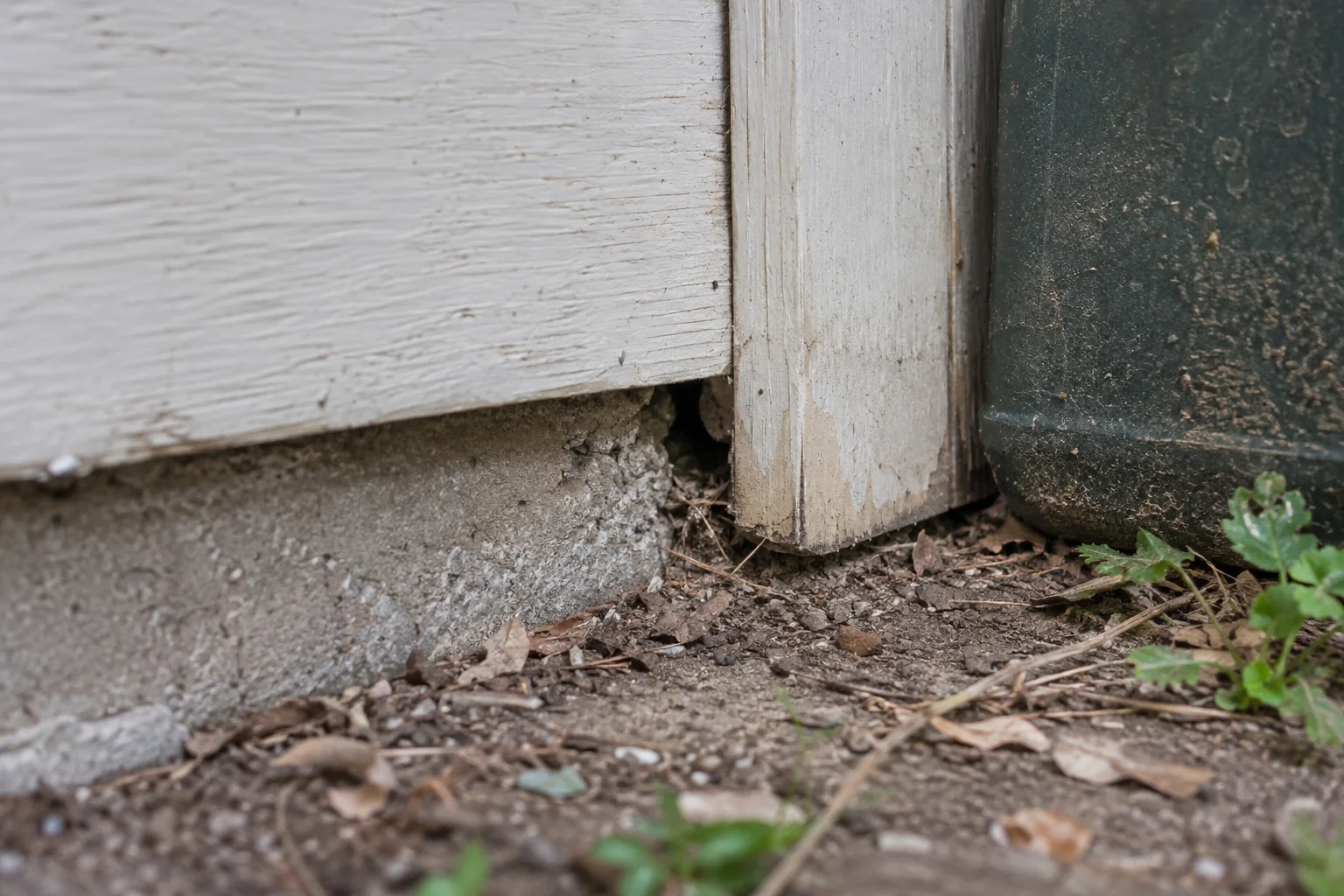
Removal without exclusion may allow new mice to enter.
Inspect for small openings around:
- - doors
- - garages
- - foundations
- - siding
- - vents
- - utilities
- - roofline details
Seal appropriate openings with durable rodent-resistant materials as part of the control process.
Buildings near natural habitat may require ongoing inspection because outdoor mouse pressure can continue.
When to Call a Professional
Professional rodent control may be useful when:
- - deer mice repeatedly enter a building
- - contamination is heavy
- - a seasonal building has widespread droppings or nests
- - entry points are difficult to locate
- - mice are active in inaccessible walls or attics
- - safe cleanup is difficult
- - trapping does not reduce activity
A useful inspection should consider both the building and the surrounding outdoor habitat.
Visit our professional rodent-control section for more information.
Deer Mouse Identification Depends on Appearance and Habitat
The deer mouse is a small wild mouse strongly associated with outdoor habitat, rural properties, cabins, sheds, garages, and other structures near fields or wooded areas.
Useful identification clues include:
- - darker upper body
- - white or pale belly
- - white feet
- - bicolored tail
- - large dark eyes
- - relatively large ears
- - small body
- - strong outdoor association
Do not rely on one clue alone.
A small mouse inside a building can be difficult to identify if you only see it briefly.
Combine appearance, habitat, droppings, nesting material, and the part of the property where activity occurs.
Once deer-mouse activity is suspected, focus on safe cleanup, mouse-sized trapping, food control, and exclusion.
Continue with our house mouse guide, Rat vs Mouse guide, mouse droppings guide, mice in the attic guide, mouse traps guide, or rodent control guide.
For the broader overview, return to Rats & Mice in the Home.