Roof Rat: Identification, Signs & Behavior
Learn how to identify a roof rat, what it looks like, where it lives, which signs it leaves behind, how it behaves, and what to do if roof rats are around your home.
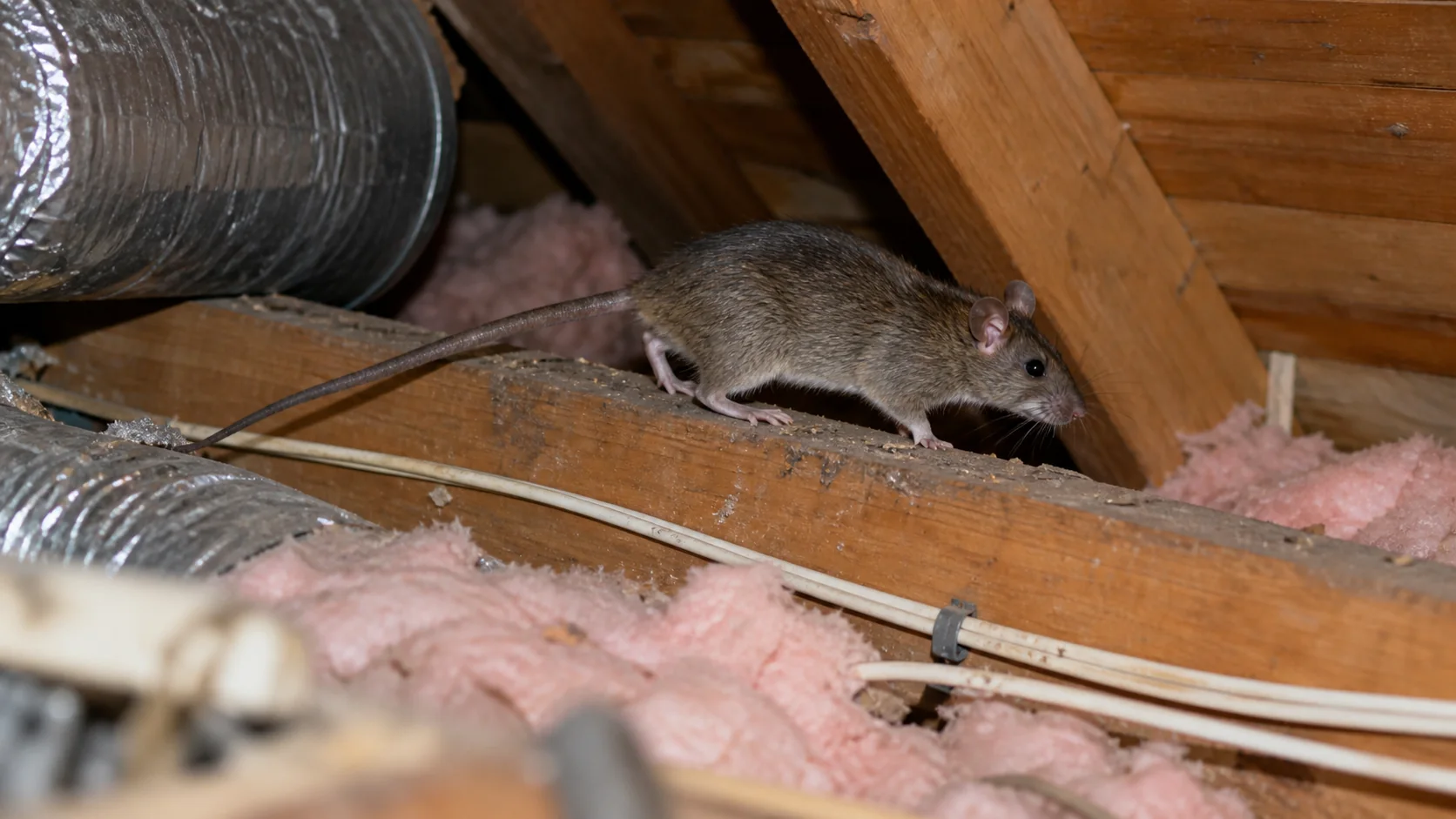
The roof rat is a slender, agile rat that is strongly associated with climbing, elevated travel routes, attics, rooflines, trees, fences, and upper parts of buildings.
Compared with the heavier Norway rat, roof rats usually have a slimmer body, a more pointed face, relatively larger ears, and a tail that is proportionally longer.
Homeowners may first notice roof-rat activity through droppings in an attic, scratching sounds above ceilings, gnaw marks, tracks, grease marks, damaged fruit or stored food, or a quick sighting along a fence, tree, roof edge, or upper wall.
Correct identification matters because roof-rat control often requires more attention to elevated access, attic routes, vegetation, roofline gaps, and climbing paths.
This guide explains what a roof rat looks like, how to distinguish it from Norway rats and mice, where it commonly lives, which signs it leaves behind, and what its behavior can tell you about an infestation.
What Is a Roof Rat?
The roof rat is a medium-to-large rodent that is well adapted to climbing.
It is commonly associated with:
- - attics
- - rooflines
- - upper wall voids
- - trees
- - fences
- - vines
- - utility routes
- - garages
- - sheds
- - elevated storage
- - fruit trees
- - dense vegetation near structures
Roof rats may spend much of their time above ground.
They can move between trees, fences, roofs, and structural openings without using the same ground-level routes commonly associated with Norway rats.
They may nest in elevated locations or use attics and upper wall cavities for shelter.
For a broader comparison of rats and mice, see Rat vs Mouse: How to Tell the Difference.
What Does a Roof Rat Look Like?
A roof rat usually has a slimmer, more streamlined body than a Norway rat.
Common identification features include:
- - slender build
- - pointed muzzle
- - relatively large ears
- - large dark eyes
- - long tail
- - lighter body weight than a similarly aged Norway rat
- - dark gray, blackish, or brownish fur
- - lighter underside in many individuals
Color can vary, so do not rely on coat color alone.
Body proportions, tail length, ear size, habitat, droppings, tracks, and where the animal is active are more useful when combined.
How Big Is a Roof Rat?
Roof rats are much larger than house mice but usually appear lighter and more agile than Norway rats.
Exact body size varies with age and condition.
For practical identification, compare the overall build.
Roof rats tend to have:
- - a slender torso
- - relatively long limbs
- - a narrower head
- - a long tail
- - proportionally large ears
- - large feet compared with mice
- - droppings larger than mouse droppings
A juvenile rat can sometimes be mistaken for a mouse.
In that situation, look at the feet, tail thickness, head shape, and body proportions rather than size alone.
Roof Rat Face and Ears
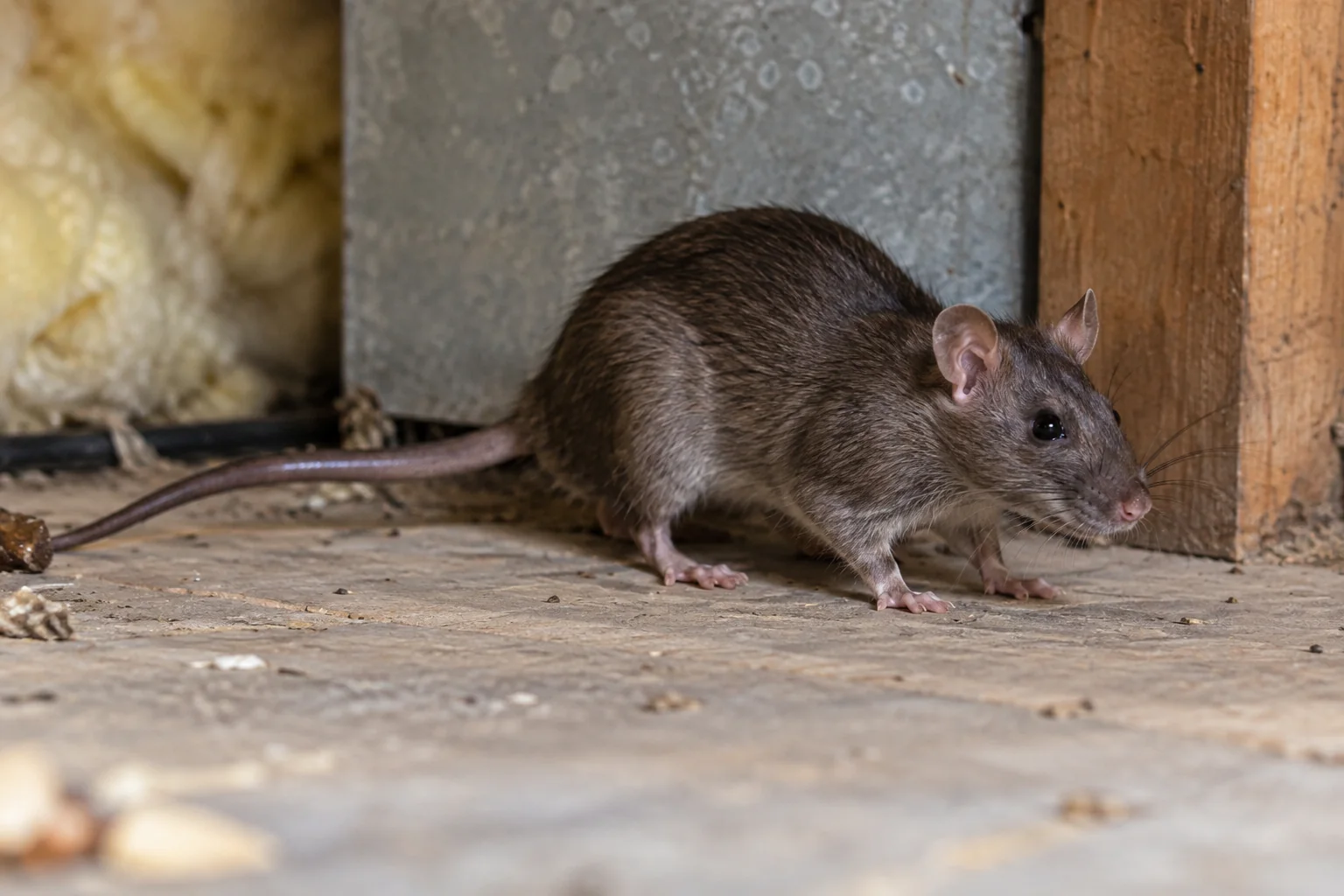
The roof rat generally has a more pointed face than a Norway rat.
Its ears appear relatively large compared with the head.
This can create a more delicate, alert appearance.
The ears are still rat-sized, but the proportion is different from the heavier head of a Norway rat.
Use face shape together with:
- - body build
- - tail proportion
- - foot size
- - droppings
- - climbing behavior
- - activity location
No single feature should be used by itself.
Roof Rat Tail
The tail is one of the most useful identification clues.
A roof rat usually has a tail that is approximately as long as or longer than the combined length of the head and body.
That differs from the Norway rat, whose tail is typically proportionally shorter.
The roof rat's tail is also relatively slender compared with the thick tail of a heavy Norway rat.
Tail proportion is easiest to judge when the full animal is visible.
Do not rely on this clue if the tail is partly hidden.
Roof Rat Feet
Roof rats have larger feet than mice and are well suited to climbing.
They can use:
- - tree bark
- - fences
- - pipes
- - framing
- - wires
- - rough siding
- - stacked materials
- - structural edges
Tracks may appear in dusty attics, garages, roof-access areas, or other elevated spaces.
A tail drag may sometimes be visible in fine dust.
Track size is most useful when combined with droppings, rub marks, and other evidence.
Roof Rat Droppings
Roof-rat droppings are much larger than mouse droppings.
They may appear somewhat narrower or more tapered than the droppings commonly associated with Norway rats, but shape varies.
They may be found:
- - in attics
- - along upper wall routes
- - in garages
- - near stored food
- - beside attic access points
- - near roofline entry areas
- - around fruit or bird feed
- - along elevated travel paths
Do not identify roof rats from droppings alone.
Use the location, tracks, body proportions, tail length, and climbing routes as additional evidence.
Our rat droppings guide explains rat feces in more detail.
Roof Rat vs House Mouse
Roof rats are much larger than house mice.
Roof rats have:
- - larger bodies
- - larger feet
- - thicker tails
- - much larger droppings
- - stronger gnaw damage
- - heavier movement
House mice have:
- - much smaller bodies
- - tiny feet
- - thin tails
- - small droppings
- - lighter gnawing
Both species can climb and use attics, so location alone does not identify the rodent.
If you are uncertain, compare the evidence with our house mouse guide and Rat vs Mouse guide.
Roof Rat vs Norway Rat
This is one of the most important rat comparisons.
Roof rats tend to be:
- - slimmer
- - more pointed-faced
- - relatively larger-eared
- - longer-tailed in proportion
- - more strongly associated with climbing
- - more common in attics and elevated routes
Norway rats tend to be:
- - heavier-bodied
- - blunter-faced
- - relatively smaller-eared
- - shorter-tailed in proportion
- - strongly associated with burrows
- - more common around foundations, crawl spaces, and ground-level routes
Habitat is useful, but not absolute.
A Norway rat can climb, and a roof rat can travel on the ground.
Use several features together.
For the Norway-rat profile, see Norway Rat: Identification, Signs & Behavior.
Where Do Roof Rats Live?
Roof rats prefer protected spaces with access to climbing routes.
Common locations include:
- - attics
- - upper wall voids
- - rooflines
- - trees
- - dense vines
- - garages
- - sheds
- - elevated storage
- - ceiling voids
- - utility routes
- - fence lines near structures
They may nest outside in vegetation and move into buildings to feed or shelter.
They may also establish nests inside attics or upper wall systems.
The building and surrounding landscaping often work together to create access.
Roof Rats in Attics
Attics are one of the most common structural locations for roof rats.
Attics provide:
- - shelter
- - warmth
- - darkness
- - insulation
- - low disturbance
- - access to upper wall voids
- - connection to roofline entry points
Signs may include:
- - large rat droppings
- - scratching or movement at night
- - disturbed insulation
- - rub marks
- - tracks in dust
- - gnaw damage
- - nesting material
For a full attic-specific guide, see Rats in the Attic: Signs, Damage & Removal.
Roof Rats Along Rooflines
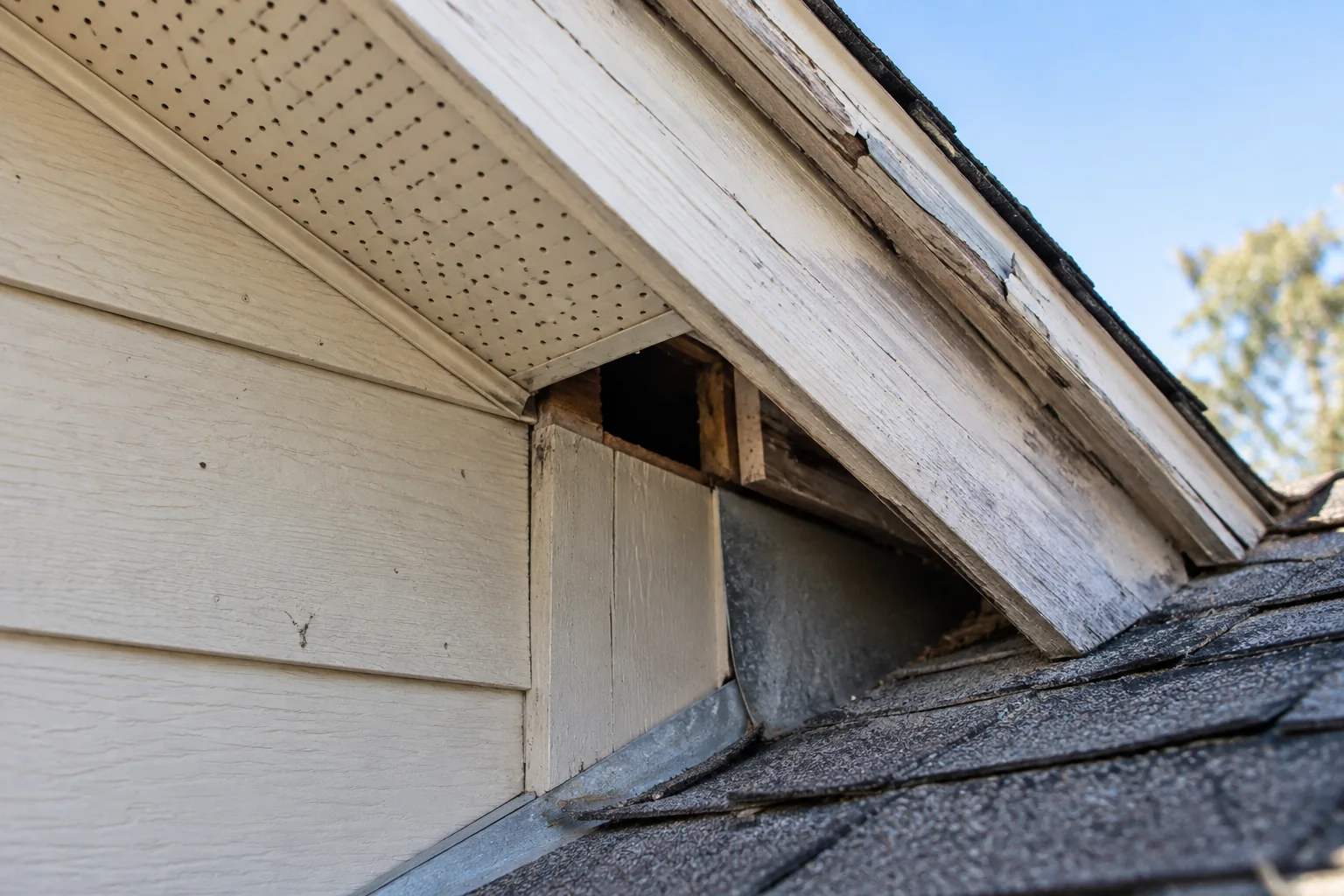
Rooflines can become active travel routes.
Roof rats may move along:
- - roof edges
- - gutters
- - fascia
- - soffits
- - ridges
- - attached structures
They may enter through:
- - damaged soffits
- - vent openings
- - loose trim
- - roof-wall intersections
- - gaps around utility lines
- - damaged screens
The opening does not need to look dramatic.
A modest structural defect can matter if it connects to an attic or wall void.
Roof Rats in Trees
Trees can provide both food and access.
Roof rats may use branches to reach:
- - roofs
- - eaves
- - fences
- - upper balconies
- - utility lines
Fruit and nuts can also provide food.
Tree activity becomes especially important when branches touch or closely overhang the house.
That does not prove the tree is the entry route.
Look for evidence where the branch or roofline connects to the structure.
Roof Rats on Fences and Utility Routes
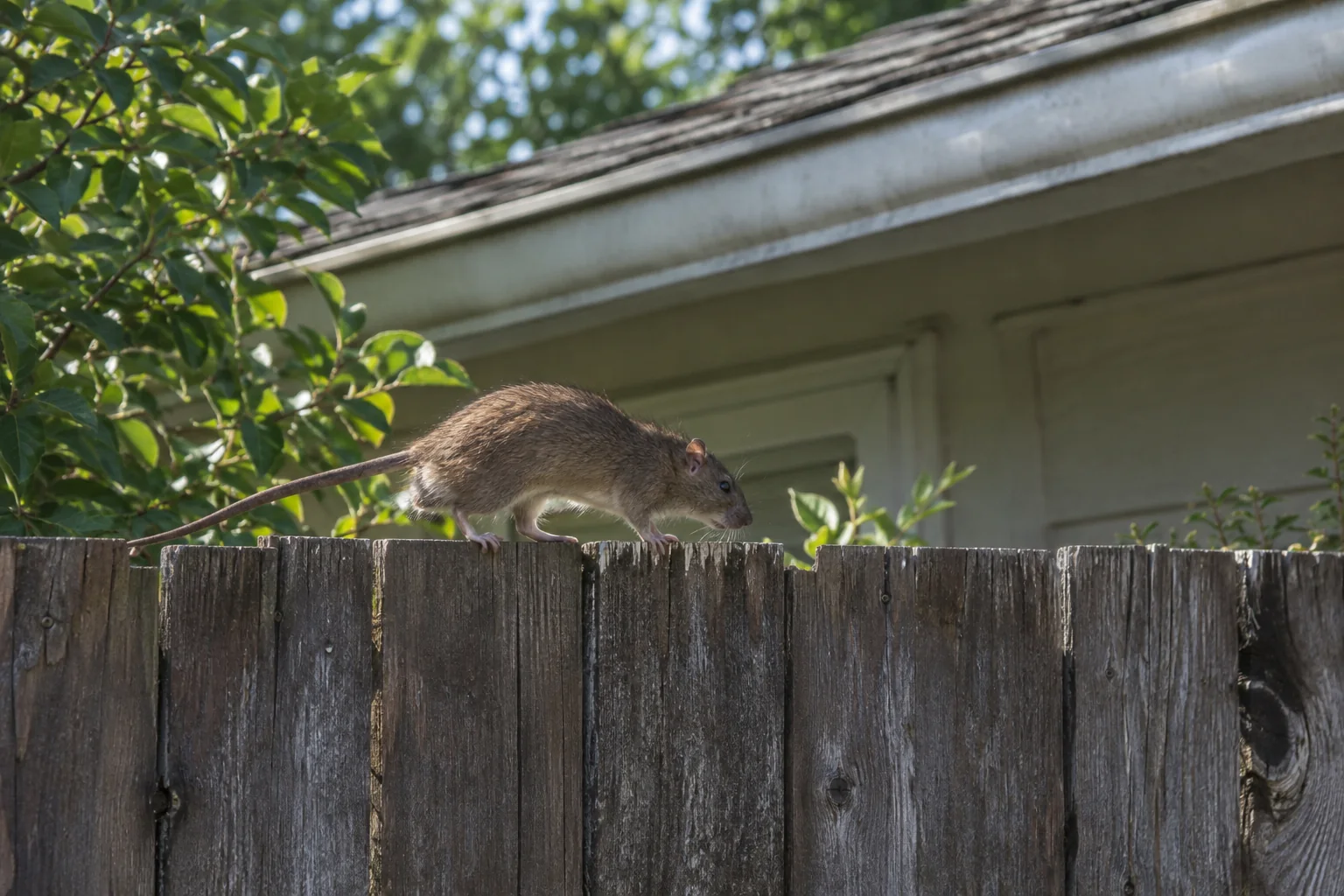
Fences, wires, pipes, and attached structures can create elevated pathways.
Roof rats may move from:
- - a fence to a roof
- - a tree to a utility line
- - a shed to a house
- - a vine to a soffit
- - a garage to an attic
This is one reason roof-rat inspection should include the entire vertical environment around a building.
Ground-level inspection alone may miss the main route.
Roof Rats in Garages
Roof rats can also use garages, especially when the garage connects to an attic.
Garages may offer:
- - pet food
- - bird seed
- - garbage
- - storage
- - wall access
- - attic access
- - utility penetrations
A roof rat may enter higher on the structure but feed in the garage.
Or it may enter the garage first and move upward through framing.
Inspect both the lower and upper parts of the garage when signs are present.
What Do Roof Rats Eat?
Roof rats are opportunistic feeders.
They may eat:
- - fruit
- - nuts
- - seeds
- - grains
- - bird seed
- - pet food
- - stored dry food
- - garbage
- - garden produce
Fruit trees can be especially attractive.
Food availability does not automatically reveal where the nest is.
A rat may feed in one place and nest somewhere else.
Reducing accessible food supports trapping and exclusion.
Do Roof Rats Need Water?
Roof rats can obtain some moisture from food, especially fruit.
They may also use available water such as:
- - pet bowls
- - irrigation leaks
- - condensation
- - standing water
- - leaking pipes
- - roof or gutter water
Remove unnecessary water sources where practical.
This is especially useful when rodent activity is already confirmed.
When Are Roof Rats Active?
Roof rats are usually most active during quiet nighttime periods.
Homeowners may hear:
- - scratching
- - scurrying
- - movement across attic framing
- - light thumping
- - gnawing
However, daytime sightings can occur.
A daytime sighting does not automatically prove a severe infestation.
Use fresh droppings, trap activity, repeated sightings, and damage to judge the broader problem.
How Roof Rats Move Around a Property
Roof rats frequently use elevated edges and narrow routes.
Common travel paths include:
- - fence tops
- - tree branches
- - roof edges
- - attic framing
- - utility lines
- - rafters
- - upper wall routes
- - vines
Repeated travel can leave rub marks on surfaces.
Droppings and tracks may also accumulate along these routes.
These patterns are useful for deciding where to inspect and where traps may be placed safely.
Can Roof Rats Climb?
Yes.
Climbing is one of the defining behaviors of roof rats.
They are capable of using rough vertical surfaces, pipes, trees, wires, fences, and framing.
Their climbing ability explains why a roof-rat problem may involve:
- - upper floors
- - attics
- - soffits
- - roof vents
- - elevated storage
Do not limit inspection to the foundation.
Can Roof Rats Jump?
Roof rats can jump short gaps and navigate uneven elevated surfaces.
They may move between:
- - branches and roofs
- - fences and walls
- - storage items
- - framing
- - structural ledges
This means the access route may not involve continuous ground contact.
Inspect nearby elevated features, not just openings directly below the activity.
Roof Rat Nesting Behavior
Roof rats may nest in:
- - attics
- - upper wall voids
- - trees
- - dense vegetation
- - garages
- - sheds
- - elevated storage
- - ceiling voids
Nesting material may include:
- - insulation
- - paper
- - fabric
- - plant material
- - cardboard
- - other soft debris
Finding a nest confirms that rats have used the area.
But removing the nest alone does not solve the infestation.
The active rats and the access route still need to be addressed.
Roof Rat Gnaw Marks
Roof rats gnaw because their front teeth grow continuously.
They may damage:
- - wood
- - plastic
- - food packaging
- - stored items
- - wiring insulation
- - flexible materials
The damage is much heavier than typical mouse gnawing.
If electrical wiring appears damaged, have it evaluated appropriately.
Rodent removal does not repair existing wiring damage.
Roof Rat Rub Marks
Repeated contact with surfaces can leave dark rub or grease marks.
These may appear on:
- - beams
- - pipes
- - wall edges
- - roof-access points
- - attic framing
- - openings
A rub mark is more useful when paired with fresh droppings, tracks, or repeated activity.
Old marks can remain long after rats are gone.
Roof Rat Tracks
Roof-rat tracks are much larger than mouse tracks.
They may be visible in:
- - attic dust
- - garage dust
- - storage areas
- - roof-access areas
A tail drag may sometimes appear in fine dust.
Tracks help confirm where the rat moves, especially when direct sightings are rare.
How Fast Do Roof Rats Reproduce?
Roof rats can reproduce quickly when food, shelter, and environmental conditions are favorable.
This means a small problem can become more difficult over time.
Do not wait for a precise rat count before acting.
Fresh droppings, repeated noise, trap captures, or ongoing sightings are enough to justify an active control plan.
How Far Do Roof Rats Travel?
Roof rats may move between nesting and feeding areas across a property.
Their routes can include several connected elevated structures.
For homeowners, the most useful approach is to map the evidence.
Check:
- - attic areas
- - roof edges
- - fences
- - trees
- - garages
- - utility routes
- - food sources
- - entry gaps
The pattern helps reveal how the property is being used.
Are Roof Rats Dangerous?
Roof rats can contaminate food and surfaces with droppings and urine.
They can also damage stored materials, insulation, wiring, and other household items.
Rodent waste should be treated as potentially contaminated material.
Do not dry sweep or vacuum fresh rat droppings before proper disinfection.
Use suitable gloves and wet-cleanup methods.
See our rodent safety section, cleanup section, and rat droppings guide for related guidance.
How to Tell if Roof Rats Are Still Active
Old droppings and rub marks can remain after rats are gone.
Look for fresh evidence such as:
- - new droppings
- - trap activity
- - fresh tracks
- - new gnawing
- - repeated attic sounds
- - new food damage
- - fresh nesting material
- - recent sightings
After old evidence is cleaned or documented safely, new signs become easier to identify.
Monitoring over time is more reliable than judging one old clue.
What to Do If You Find a Roof Rat
Do not focus only on the individual rat you saw.
Inspect the surrounding structure and elevated access.
Look for:
- - droppings
- - tracks
- - rub marks
- - gnaw damage
- - attic activity
- - roofline openings
- - trees touching the structure
- - fence connections
- - utility routes
- - food sources
- - garage access
Then begin control.
A practical process may include:
- 1. reducing food and water access
- 2. placing rat-sized traps along confirmed routes
- 3. monitoring captures and fresh signs
- 4. identifying roofline and structural entry points
- 5. coordinating exclusion with removal
- 6. cleaning contaminated areas safely
For the complete process, see How to Get Rid of Rats in Your House and our broader rodent control guide.
Roof Rat Trap Placement
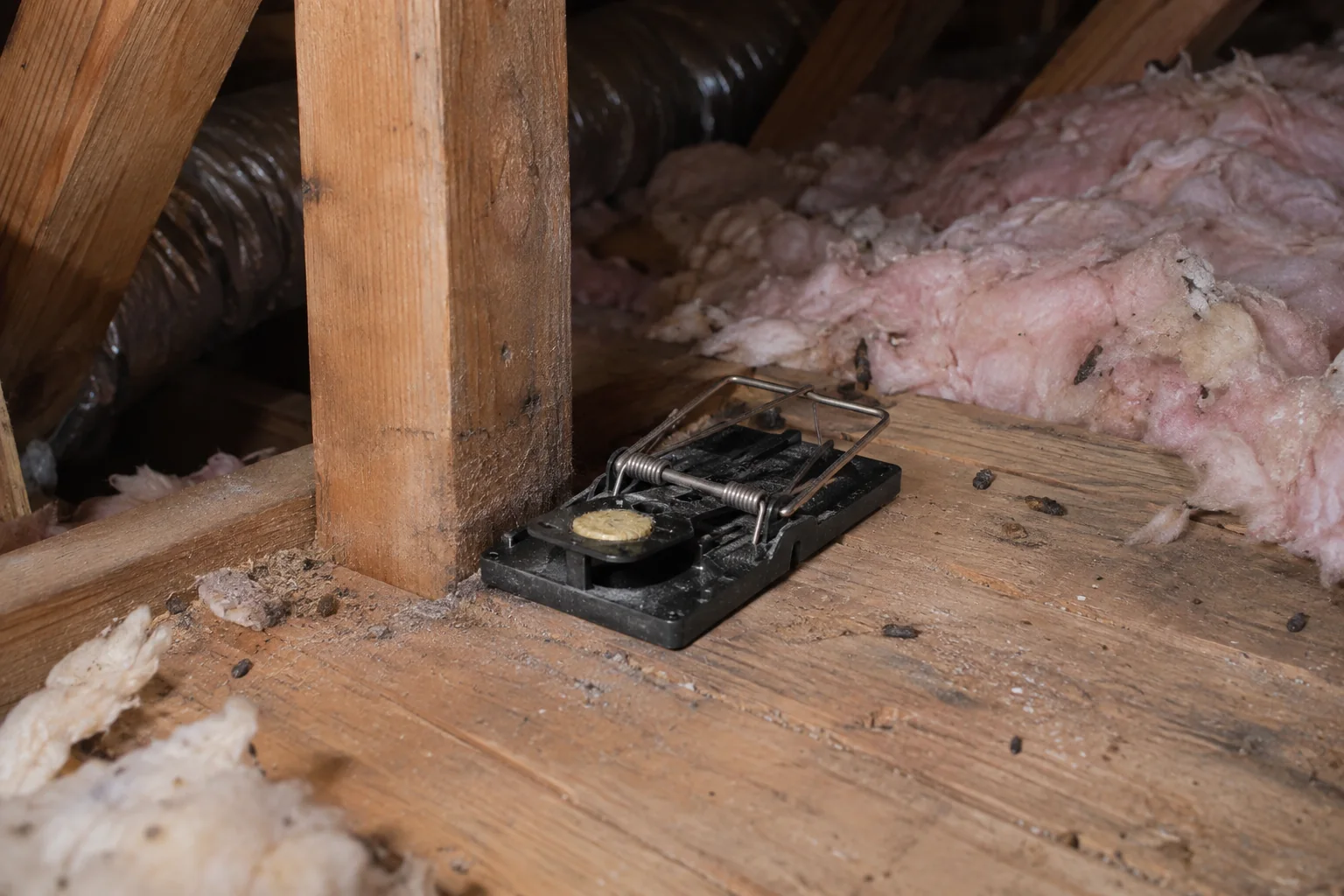
Trap placement should follow active routes.
Potential areas include:
- - attic framing
- - wall edges
- - garage routes
- - near droppings
- - near rub marks
- - close to safe, accessible roof-entry routes
Use rat-sized traps, not mouse traps.
Keep traps inaccessible to children and pets.
Do not place traps in unsafe exterior locations where they cannot be checked.
Our rat traps guide explains trap types and placement in more detail.
Roof Rat Exclusion
Long-term control requires closing the openings roof rats use.
Important inspection areas include:
- - soffits
- - attic vents
- - roof-wall joints
- - fascia
- - utility penetrations
- - garage-attic connections
- - damaged screens
Also consider access routes such as vegetation and nearby structures.
Exclusion should be coordinated with removal so active rats are not trapped inside.
Our prevention section covers rodent-proofing topics more broadly.
When to Call a Professional
Professional rodent control may be useful when:
- - rats are active in several attic areas
- - roofline entry points are difficult to access
- - the infestation repeatedly returns
- - contamination is extensive
- - wiring or insulation is damaged
- - trapping does not reduce activity
- - trees, roofs, or utility routes create complex access
- - safe trap placement is difficult
A useful inspection should examine both the attic and the exterior elevated routes.
Visit our professional rodent-control section for more information.
Roof Rat Identification Helps Focus the Control Plan
The roof rat is a slender, agile rat strongly associated with climbing, attics, rooflines, trees, fences, and elevated travel routes.
Useful identification clues include:
- - slim body
- - pointed muzzle
- - relatively large ears
- - long tail
- - tail approximately as long as or longer than head-and-body length
- - large rat droppings
- - climbing behavior
- - attic or roofline activity
Do not rely on one clue alone.
Combine the animal's appearance with the location and the evidence it leaves behind.
Once roof-rat activity is confirmed, control becomes more focused.
Use rat-sized traps, inspect elevated access routes, reduce food sources, clean contamination safely, and coordinate exclusion with removal.
Continue with our Norway rat guide, Rat vs Mouse guide, rat droppings guide, rats in the attic guide, rat traps guide, or rodent control guide.
For the broader overview, return to Rats & Mice in the Home.