Rat Exterminator: What to Expect & When to Call One
A rat exterminator is a pest-control professional who inspects for rat activity, identifies where rats are traveling and entering, applies appropriate control methods, and helps reduce the chance of the problem returning.
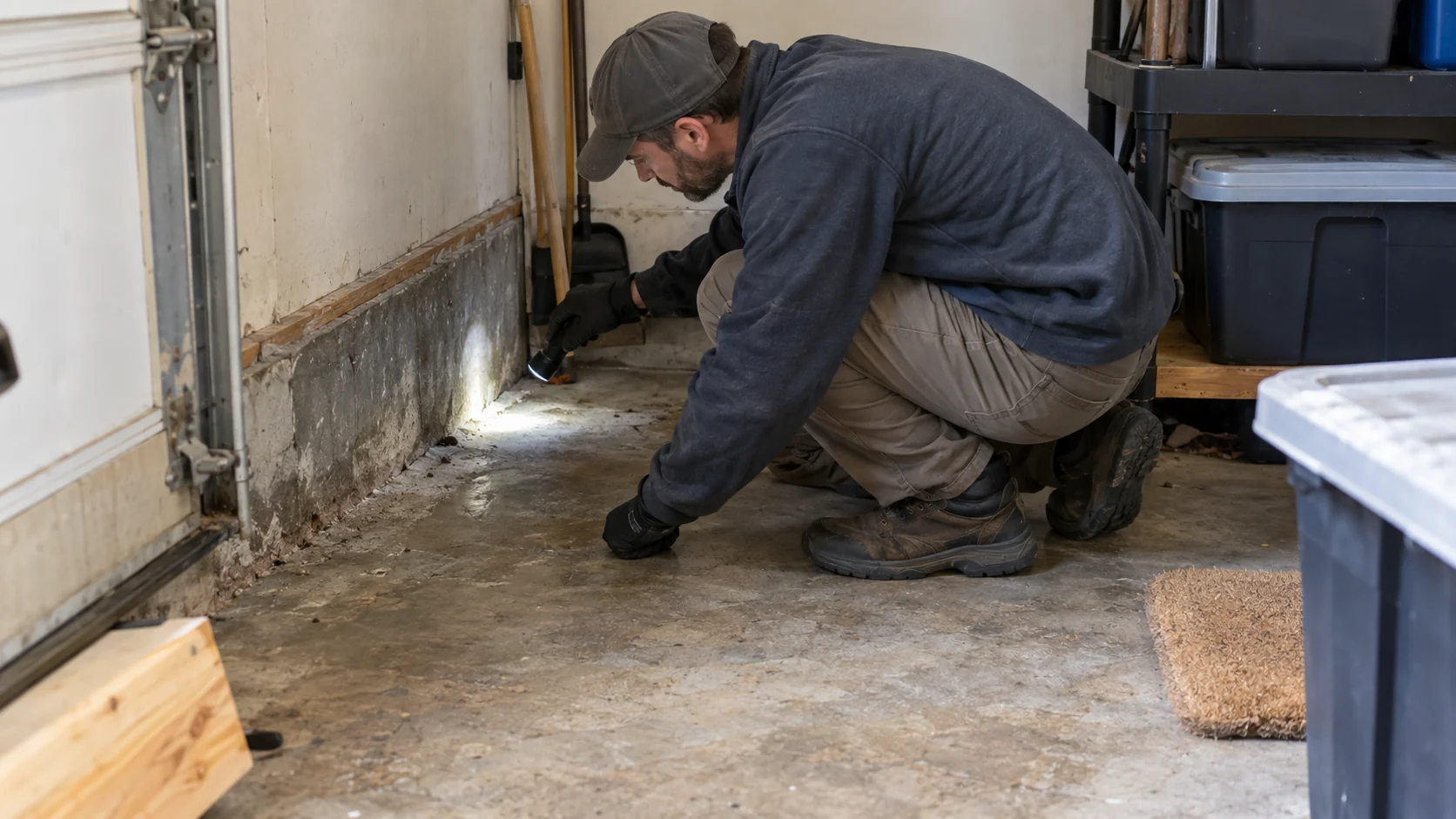
A rat exterminator is a pest-control professional who inspects for rat activity, identifies where rats are traveling and entering, applies appropriate control methods, and helps reduce the chance of the problem returning.
Professional rat control should be more than placing a few traps.
A complete service may include:
- identifying the rat species
- locating active travel routes
- inspecting garages, basements, crawl spaces, attics, and wall voids
- checking for burrows
- finding exterior entry points
- placing rat-sized traps
- using other legal control methods when appropriate
- monitoring activity
- coordinating exclusion
- advising on sanitation and cleanup
The exact plan depends on whether the problem involves Norway rats, roof rats, or another rat species, as well as where the activity is occurring.
This guide explains what a rat exterminator does, what happens during the inspection, which treatment methods may be used, how follow-up works, and when professional help makes sense.
What Does a Rat Exterminator Do?
A rat exterminator focuses on controlling rats in and around buildings.
A professional may:
- inspect the interior and exterior
- identify rat evidence
- determine whether the problem involves Norway rats or roof rats
- map travel routes
- inspect burrows
- locate entry points
- place and monitor rat-sized traps
- use bait stations when appropriate and permitted
- recommend sanitation changes
- perform or recommend exclusion
- advise on contaminated areas
- schedule follow-up visits
Some companies provide only trapping or baiting.
Others also provide exclusion, attic cleanup, crawl-space work, insulation removal, or structural repairs.
Ask exactly what is included in the quoted service.
Rat Exterminator vs General Pest Control
Rat control often requires detailed structural inspection.
A technician should understand:
- where rats are nesting
- which routes they use
- whether they are entering from ground level or the roofline
- what food or water sources support them
- how they move through the building
The goal is not only to remove the rats that are visible now.
It is to stop the cycle of entry, shelter, feeding, and reproduction.
For the broader process, see Rodent Control: Methods, Process & What to Expect.
When Should You Call a Rat Exterminator?
Professional help may make sense when:
- rats keep returning
- you hear repeated activity in walls or ceilings
- burrows are present near the foundation
- rats are active in a crawl space
- attic activity suggests roof rats
- droppings appear in several areas
- trapping is not reducing activity
- entry points cannot be found
- contamination is extensive
- structural exclusion is difficult
- you are uncomfortable handling rat-sized traps
You do not need to wait for a severe infestation.
A professional inspection can be useful when the source or species is unclear.
Signs You May Need Professional Rat Control
Common warning signs include:
- repeated rat sightings
- large droppings
- heavy gnaw damage
- grease or rub marks
- active burrows
- rat-sized tracks
- repeated trap captures
- scratching or thumping
- attic or crawl-space activity
- strong rodent odor
For a complete checklist, see Signs of Rats in Your House.
What Happens During a Rat Inspection?
A professional rat inspection should begin with the evidence.
The technician may ask:
- where rats were seen
- where droppings were found
- when noises occur
- whether burrows are present
- whether traps have already been used
- whether the problem is new or recurring
- whether pets or children are present
Then the technician may inspect:
- garages
- basements
- crawl spaces
- attics
- utility rooms
- kitchens
- exterior walls
- foundations
- rooflines
- sheds
- garbage areas
- vegetation near the structure
The goal is to connect the visible evidence to the route the rats are using.
What Evidence Does a Rat Exterminator Look For?
A technician may look for:
- large droppings
- gnaw marks
- grease marks
- rat-sized tracks
- burrows
- nesting material
- food damage
- disturbed insulation
- entry gaps
- trap activity
- rodent odor
The size and location of the evidence can help identify the likely species.
Species matters because Norway rats and roof rats often use different routes.
How a Professional Identifies Norway Rats
Norway rats are strongly associated with ground-level activity.
Evidence may include:
- burrows
- foundation routes
- crawl-space activity
- basement activity
- garage activity
- large blunt-ended droppings
- heavy rub marks
- stocky rat sightings
See Norway Rat: Identification, Signs & Behavior for a full profile.
How a Professional Identifies Roof Rats
Roof rats are more strongly associated with climbing and elevated routes.
Evidence may include:
- attic droppings
- roofline activity
- movement along fences
- tree access
- upper wall activity
- slender rat sightings
- longer-tailed body proportions
See Roof Rat: Identification, Signs & Behavior for a full profile.
Interior Inspection
Inside the structure, the technician may inspect:
- wall edges
- garage walls
- basement perimeters
- attic framing
- crawl spaces
- utility penetrations
- storage areas
- appliance spaces
Rats often follow edges and established routes.
The distribution of evidence is often more useful than a single dropping or sighting.
Exterior Inspection
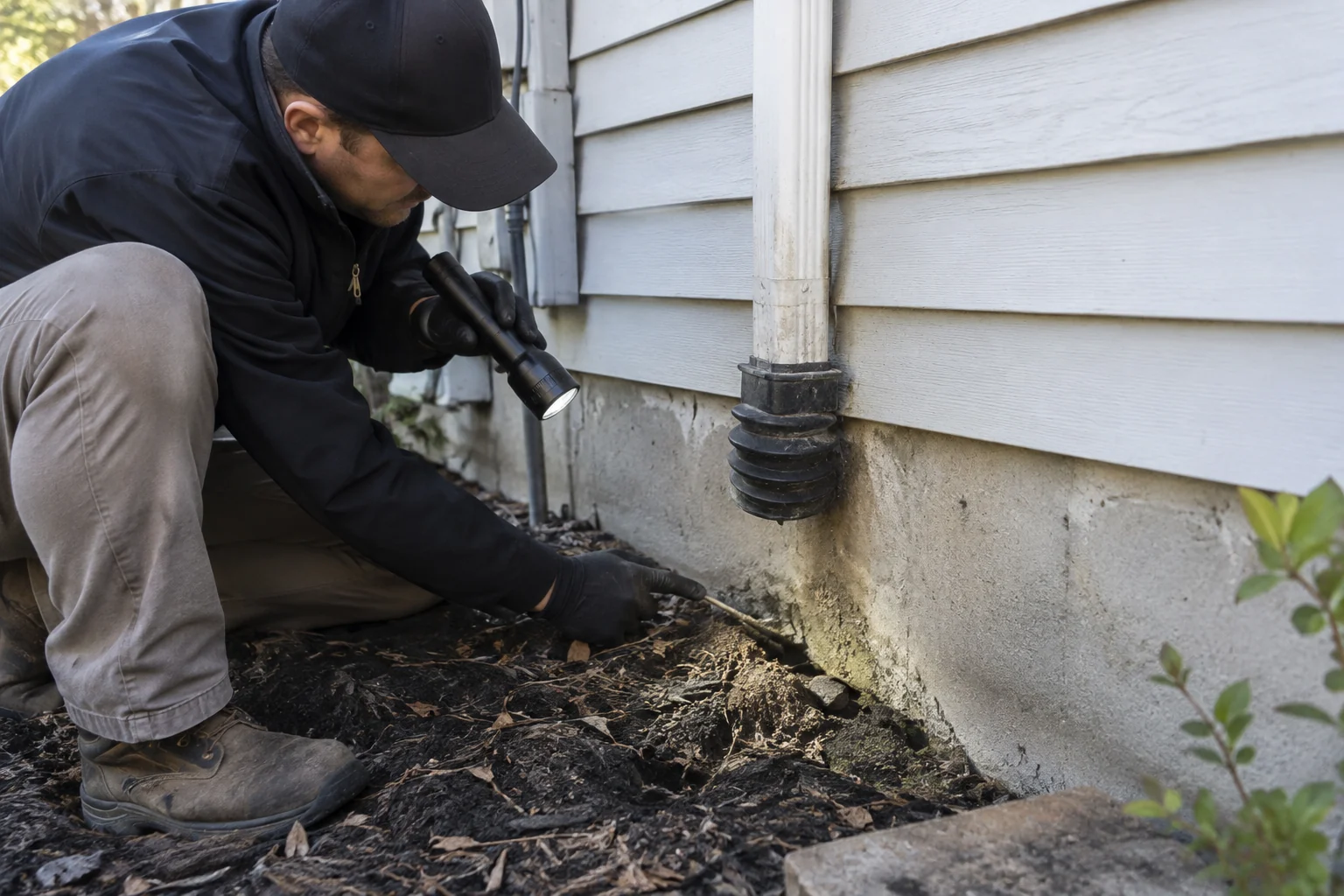
The exterior inspection is essential.
Common areas include:
- foundations
- burrows
- garage doors
- exterior doors
- crawl-space vents
- utility penetrations
- roofline gaps
- soffits
- attic vents
- trees
- fences
- dense vegetation
Our guide to How Rats Get Into Your House explains the most common entry routes in detail.
What Methods Do Rat Exterminators Use?
Professional rat control may include:
- snap traps
- enclosed traps
- monitoring devices
- bait stations when appropriate
- exclusion
- sanitation recommendations
- burrow management
- follow-up inspections
The correct method depends on:
- rat species
- location
- infestation size
- building design
- children and pets
- wildlife concerns
- accessibility
No single method is best for every property.
Professional Rat Trapping
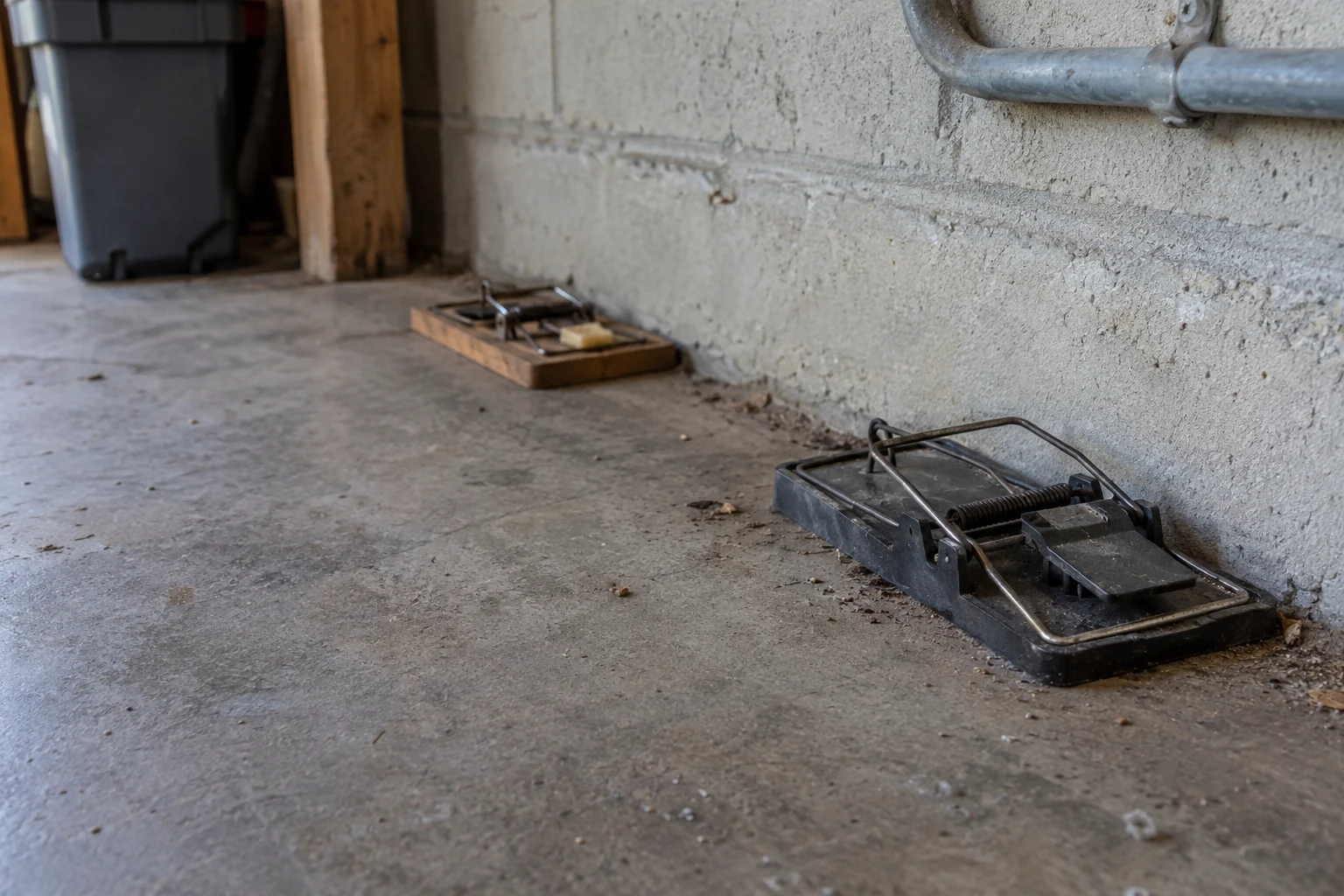
Trapping is commonly used inside buildings.
A technician should place traps based on confirmed travel routes.
Potential locations include:
- garage walls
- basement walls
- crawl-space routes
- attic framing
- near droppings
- near rub marks
- close to safe entry routes
Rat traps must be sized correctly.
A mouse trap is not a substitute for a rat-sized trap.
See Rat Traps: Types, Placement & How to Use Them for more detail.
Does a Rat Exterminator Use Poison?
Some rat-control programs use rodenticides.
When they are used, the product must be used according to its label and applicable requirements.
Important considerations include:
- children
- pets
- wildlife
- placement
- accessibility
- monitoring
- carcass risk
Inside a home, traps may be preferred in many situations because the captured rat can be located and removed.
Do not assume poison is always necessary.
What Is Rat Exclusion?
Rat exclusion means repairing or blocking the openings rats use to enter.
Common exclusion areas include:
- foundations
- garage doors
- crawl spaces
- vents
- utility penetrations
- exterior doors
- soffits
- roofline gaps
- attic vents
Exclusion is one of the most important parts of long-term control.
Removing rats without fixing the entry route can allow new rats to replace them.
Does Every Rat Exterminator Perform Exclusion?
No.
Some companies provide complete exclusion.
Others identify openings but do not repair them.
Some use a separate repair team.
Ask whether the quote includes:
- inspection
- trapping
- bait stations
- exclusion
- materials
- follow-up
- cleanup
- warranty
The phrase "rat control" can describe very different service packages.
Exclusion Must Be Timed Correctly
Sealing an active opening while rats are still inside can create new problems.
Trapped rats may:
- move into other rooms
- gnaw new openings
- create new exit routes
- die inside inaccessible voids
Removal, monitoring, and exclusion should be coordinated.
What Happens After Traps Are Placed?
Professional rat control usually requires follow-up.
A technician may:
- inspect traps
- remove captured rats
- reset traps
- move traps
- add traps
- check for fresh droppings
- inspect burrows
- recheck entry points
- adjust the plan
The service should respond to new evidence.
How Long Does Professional Rat Control Take?
There is no fixed timeline.
A limited garage problem may resolve faster than an infestation involving:
- several burrows
- a crawl space
- an attic
- roofline access
- multiple entry points
The process can take multiple visits.
Rat control is not complete simply because one rat was caught.
Fresh evidence should stop and the major entry routes should be addressed.
Can a Rat Exterminator Remove Rats From Walls?
Rats in wall voids can be difficult to access directly.
A professional may focus on:
- identifying where rats enter the wall
- trapping along accessible routes
- monitoring movement
- coordinating exclusion after removal
Opening walls is not always necessary.
See Rats in Walls: Signs, Entry Points & What to Do for more detail.
Can a Rat Exterminator Handle Attic Rats?
Many rodent-control companies inspect attics.
Possible services include:
- inspection
- trapping
- monitoring
- entry-point identification
- exclusion
- cleanup recommendations
Roof rats are especially associated with attics and elevated routes.
See Rats in the Attic: Signs, Damage & Removal for attic-specific guidance.
Can a Rat Exterminator Handle Crawl-Space Rats?
Yes, if the crawl space can be accessed safely.
A technician may inspect for:
- droppings
- tracks
- rub marks
- disturbed insulation
- burrows
- foundation gaps
- utility openings
Heavily contaminated or difficult crawl spaces may require specialized cleanup or repair work.
Can a Rat Exterminator Handle Burrows?
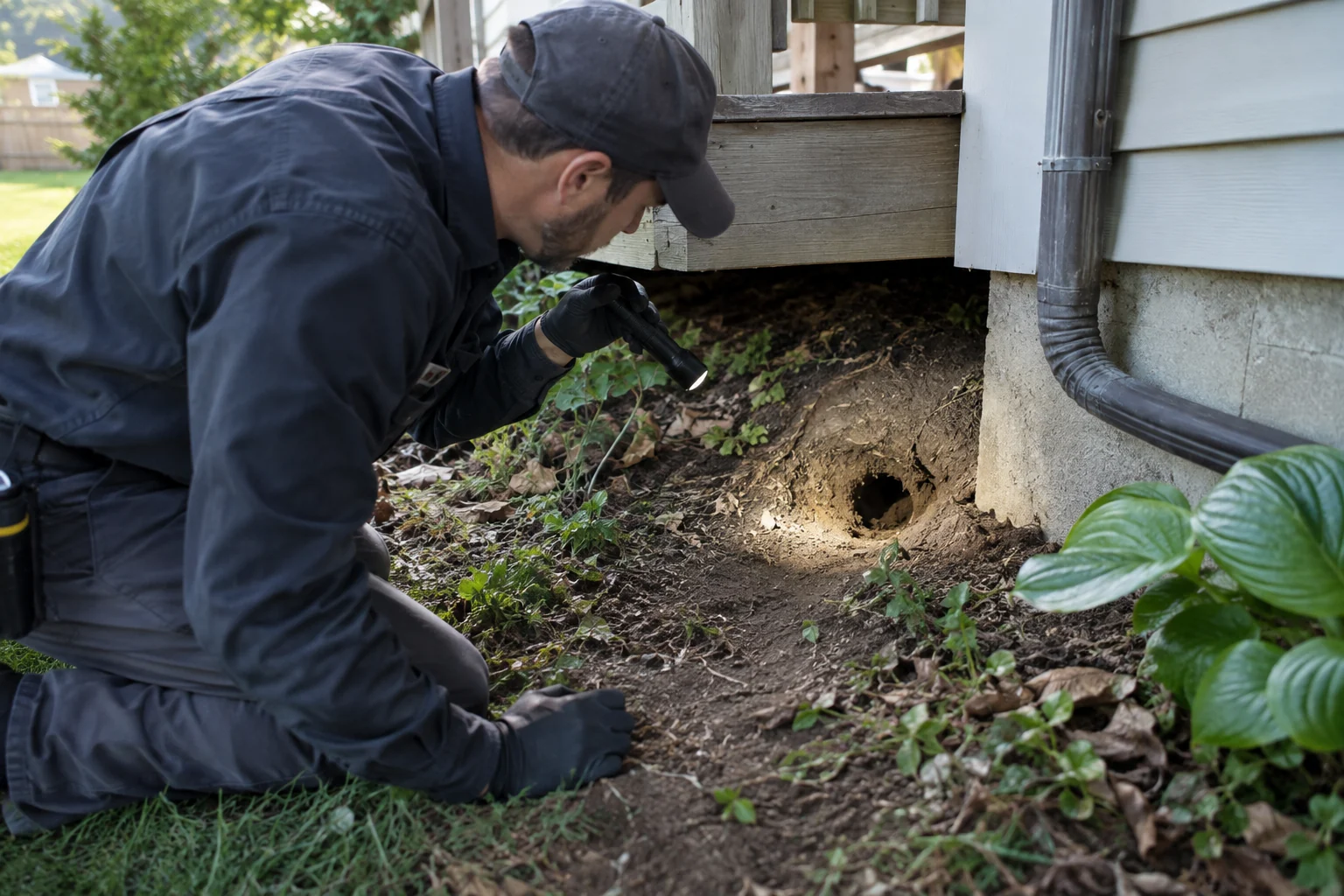
Many rat-control providers inspect and address active burrows.
The appropriate method depends on:
- burrow location
- nearby structures
- whether rats are still active
- local conditions
- treatment method
Do not collapse or seal an active burrow blindly without understanding the route.
Will a Rat Exterminator Clean Droppings?
Not always.
Some companies provide cleanup.
Others provide only pest control.
Cleanup may be quoted separately, especially for:
- attics
- crawl spaces
- widespread droppings
- contaminated insulation
- dead rats
Ask whether cleanup is included.
Safe Cleanup of Rat Droppings
Fresh rat droppings and nesting material should not be dry swept or vacuumed before proper disinfection.
Use suitable gloves and wet-cleanup methods.
Keep children and pets away from contaminated areas.
See our cleanup section and rodent safety section for related guidance.
How Much Does a Rat Exterminator Cost?
Pricing varies by property and service scope.
The cost may depend on:
- infestation severity
- number of visits
- attic or crawl-space access
- burrow activity
- exclusion work
- cleanup
- materials
- warranty terms
A low initial price may cover only trapping.
A higher quote may include inspection, exclusion, follow-up, and repair work.
Compare the scope, not only the headline number.
Questions to Ask Before Hiring a Rat Exterminator
Ask:
- Do you identify the rat species?
- Is the inspection included?
- Do you inspect the exterior?
- Do you check for burrows?
- Is exclusion included?
- How many follow-up visits are included?
- Are traps or bait stations included?
- Is cleanup included?
- What happens if activity continues?
- Are repairs guaranteed?
Clear answers make quotes easier to compare.
What Should a Rat-Control Quote Include?
A useful quote should explain:
- inspection findings
- treatment areas
- control methods
- exclusion work
- materials
- follow-up visits
- cleanup
- warranty
- exclusions from the warranty
- pricing structure
Two companies may both advertise rat control while offering very different services.
Red Flags When Hiring Rat Control
Be cautious if a provider:
- guarantees results without inspecting
- cannot explain which rat species is present
- places traps without looking for entry points
- ignores burrows or roofline access
- recommends sealing without considering rats already inside
- cannot explain follow-up
- gives vague service descriptions
- cannot explain where bait would be placed
A professional should be able to explain the logic of the plan.
DIY vs Professional Rat Control
DIY rat control can work when:
- activity is limited
- the route is obvious
- rat-sized traps can be placed safely
- entry points are accessible
- the infestation is recent
Professional help is more useful when:
- rats are active in several areas
- walls are involved
- the attic or crawl space is involved
- burrows are widespread
- roofline access is suspected
- exclusion requires structural work
- contamination is extensive
- DIY trapping has failed
Rats are larger and more cautious than mice, so placement and route identification matter.
What to Do Before the Exterminator Arrives
Helpful preparation may include:
- noting where rats were seen
- noting where droppings were found
- identifying active burrows
- recording when sounds occur
- listing traps already used
- securing pets
- providing access to garages, attics, basements, or crawl spaces
Do not disturb heavily contaminated areas just to prepare.
What to Expect During the First Visit
A good first visit may include:
- discussion of the problem
- interior inspection
- exterior inspection
- species identification
- route mapping
- trap or device placement
- exclusion recommendations
- follow-up scheduling
Some repairs may happen immediately.
Others may require a separate appointment.
What to Expect During Follow-Up Visits
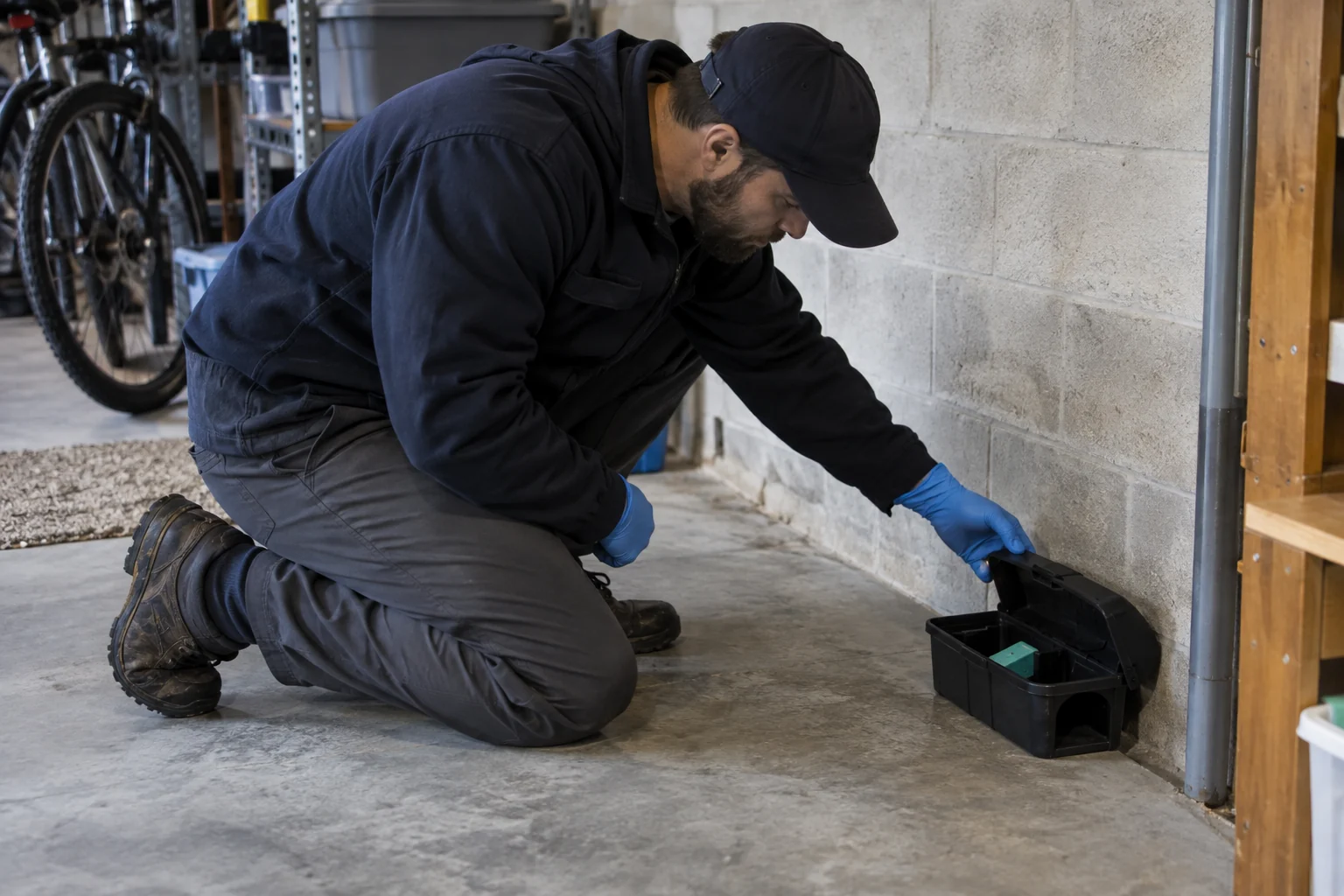
Follow-up may include:
- checking traps
- removing captures
- resetting traps
- checking bait stations where used
- inspecting burrows
- looking for fresh droppings
- checking repaired openings
- adjusting the treatment plan
The technician should use new evidence to judge whether activity is declining.
How Do You Know the Rat Problem Is Solved?
Useful indicators include:
- no new droppings
- no trap activity
- no fresh gnawing
- no repeated sightings
- no new scratching or thumping
- no fresh burrow activity
- no reopened entry points
One quiet day is not enough.
Continue monitoring after the last known activity.
Can Rats Return After Professional Treatment?
Yes.
New rats can enter if:
- another gap opens
- a garage seal fails
- an exclusion repair is damaged
- vegetation creates new access
- food remains available
- neighboring rodent pressure remains high
Professional treatment does not make a property permanently rat-proof.
Maintenance matters.
How to Reduce the Chance of Rats Returning
After treatment:
- secure garbage
- store pet food properly
- clean spilled bird seed
- maintain garage-door seals
- inspect foundations
- monitor crawl-space vents
- repair leaks
- trim vegetation that blocks inspection
- inspect roofline access
- watch for new droppings or burrows
Prevention should continue after the infestation appears resolved.
Is Professional Rat Control Worth It?
Professional service is most valuable when it solves the part of the problem you cannot reliably solve yourself.
That may include:
- identifying the species
- finding hidden entry points
- locating burrows
- handling difficult attic or crawl-space access
- coordinating exclusion
- monitoring until activity stops
For a simple problem, DIY trapping may be enough.
For recurring or widespread rat activity, professional inspection can reduce repeated trial and error.
Choose a Rat Exterminator Who Addresses the Whole Problem
A complete rat-control plan should connect:
- identification
- inspection
- trapping or other control
- exclusion
- sanitation
- monitoring
The best question is not only, "How will you get rid of the rat?"
Ask how the company will determine where rats are entering, how they will know activity has stopped, and what is included if the problem returns.
Continue with our rodent exterminator guide, Norway rat guide, roof rat guide, signs of rats guide, how rats get into a house, rats in walls guide, rats in the attic guide, or rat traps guide.
For the broader overview, return to Rats & Mice in the Home.