Mouse Bait Stations: How They Work & Where to Place Them
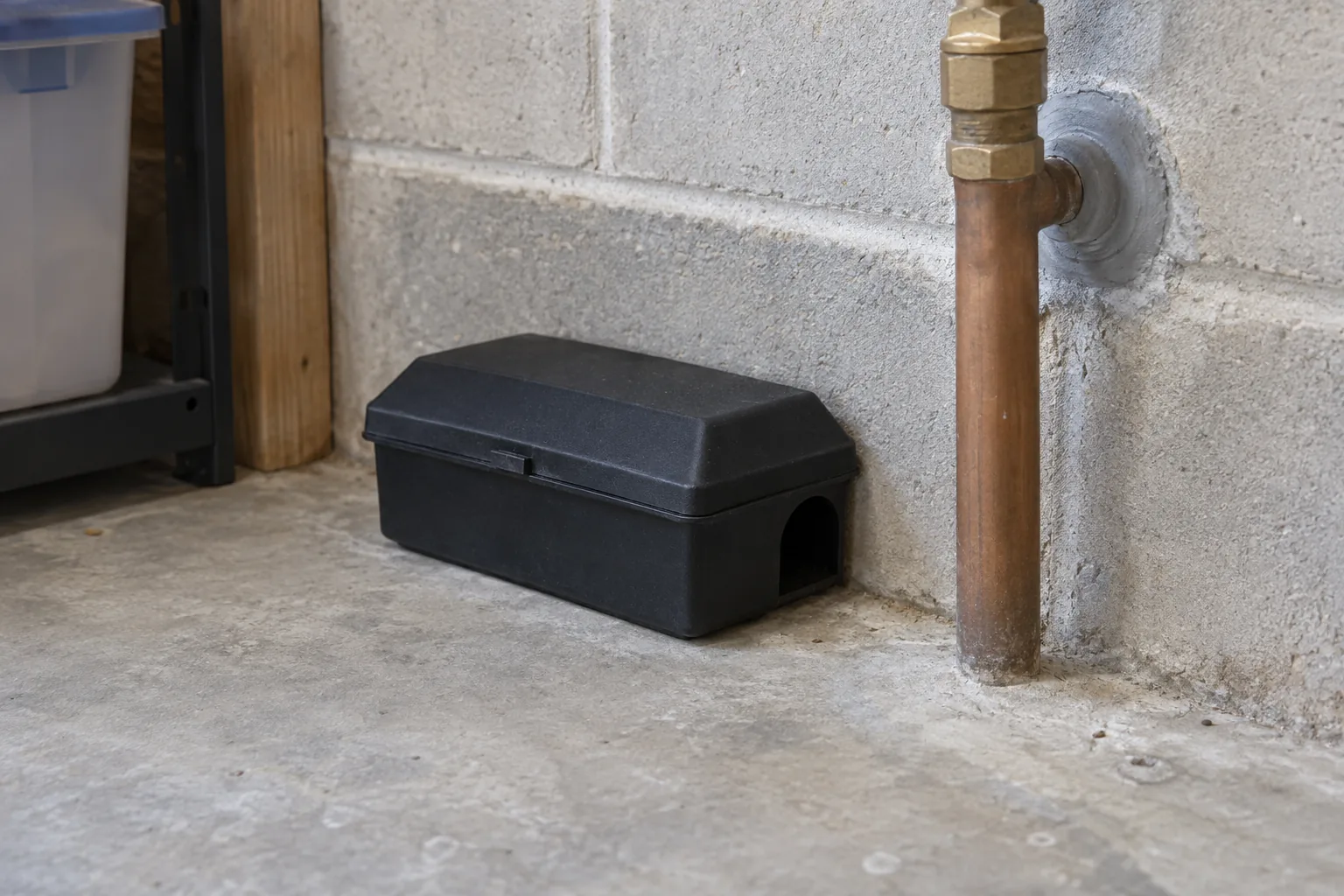
A mouse bait station is a protective housing designed to hold rodenticide bait in a controlled location. The station and the bait are not the same thing.
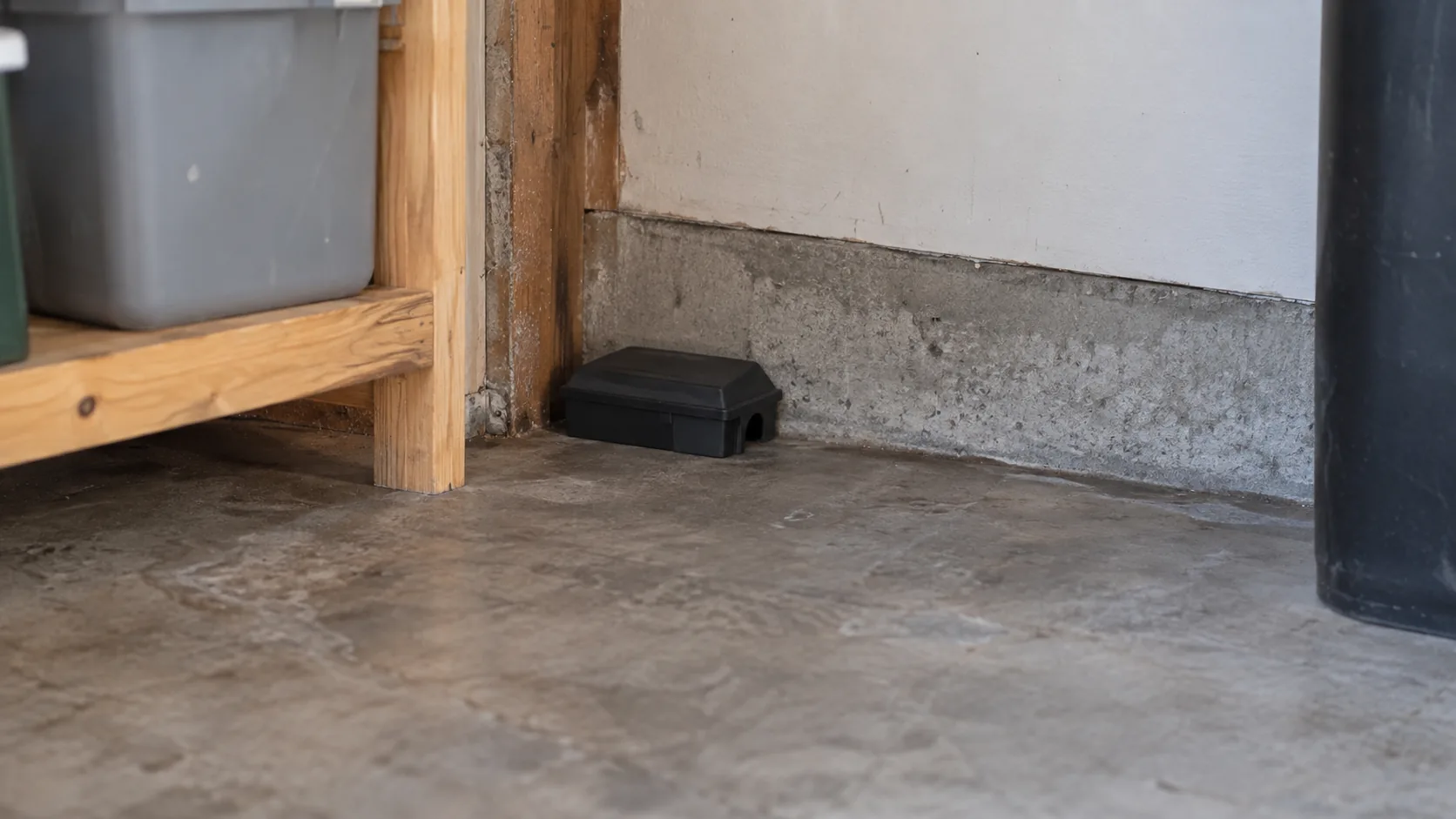
A mouse bait station is a protective housing designed to hold rodenticide bait in a controlled location.
The station and the bait are not the same thing.
The station is the enclosure.
The bait is the pesticide product placed inside it when the product label allows that use.
That distinction matters because a bait station does not make rodenticide automatically safe.
The bait still has to be:
- labeled for mice
- allowed in the intended location
- placed exactly as directed
- kept inaccessible to children, pets, and non-target animals
- checked and serviced according to the label
A bait station is one tool in a mouse-control plan.
It does not replace:
- finding entry points
- trapping
- food control
- sanitation
- exclusion
What Is a Mouse Bait Station?
A mouse bait station is an enclosure that limits direct access to rodenticide bait.
Depending on the product and station design, it may:
- contain the bait
- reduce accidental contact
- protect bait from being moved
- help keep placement consistent
- make servicing easier
Some stations are reusable.
Others may be sold as prefilled disposable units.
The label and station instructions determine how the product is intended to be used.
Is a Bait Station the Same as a Mouse Trap?
No.
A trap is designed to capture or kill the mouse mechanically.
A bait station usually holds rodenticide that a mouse enters and consumes.
Mechanical traps provide:
- known placement
- direct monitoring
- retrievable catches
Rodenticide bait stations introduce pesticide-handling and placement requirements.
For mechanical options, see Mouse Traps: Types, Placement & How to Use Them.
For snap-trap setup, see Snap Traps for Mice: How to Use Them Correctly.
What Does Tamper-Resistant Mean?
A tamper-resistant station is designed to reduce easy access to the bait.
That may involve:
- a durable housing
- restricted entry openings
- a locking or secured lid
- internal bait-holding features
But “tamper-resistant” does not mean:
- childproof
- pet-proof
- wildlife-proof
- risk-free
The station still needs to be used and placed correctly.
If the product label requires a particular level of station security or anchoring, follow that requirement.
Does a Mouse Bait Station Make Poison Safe Indoors?
No.
A station can reduce direct access, but rodenticide remains a pesticide.
Safety still depends on:
- the product label
- allowed-use location
- correct station
- correct placement
- correct servicing
- child and pet protection
Do not treat an enclosed station as permission to place rodenticide anywhere in the house.
Where Should Mouse Bait Stations Be Placed?
When the bait label permits indoor use, stations are generally most relevant along active mouse travel routes.
Possible routes can include:
- wall edges
- utility-room edges
- protected garage wall routes
- basement wall edges
- areas near confirmed mouse activity
Avoid random placement in the center of a room.
Use physical evidence to guide placement.
Look for:
- mouse droppings
- tracks
- gnawing
- repeated sightings
See Signs of Mice: How to Tell If You Have Mice.
Keep Stations Along Protected Edges
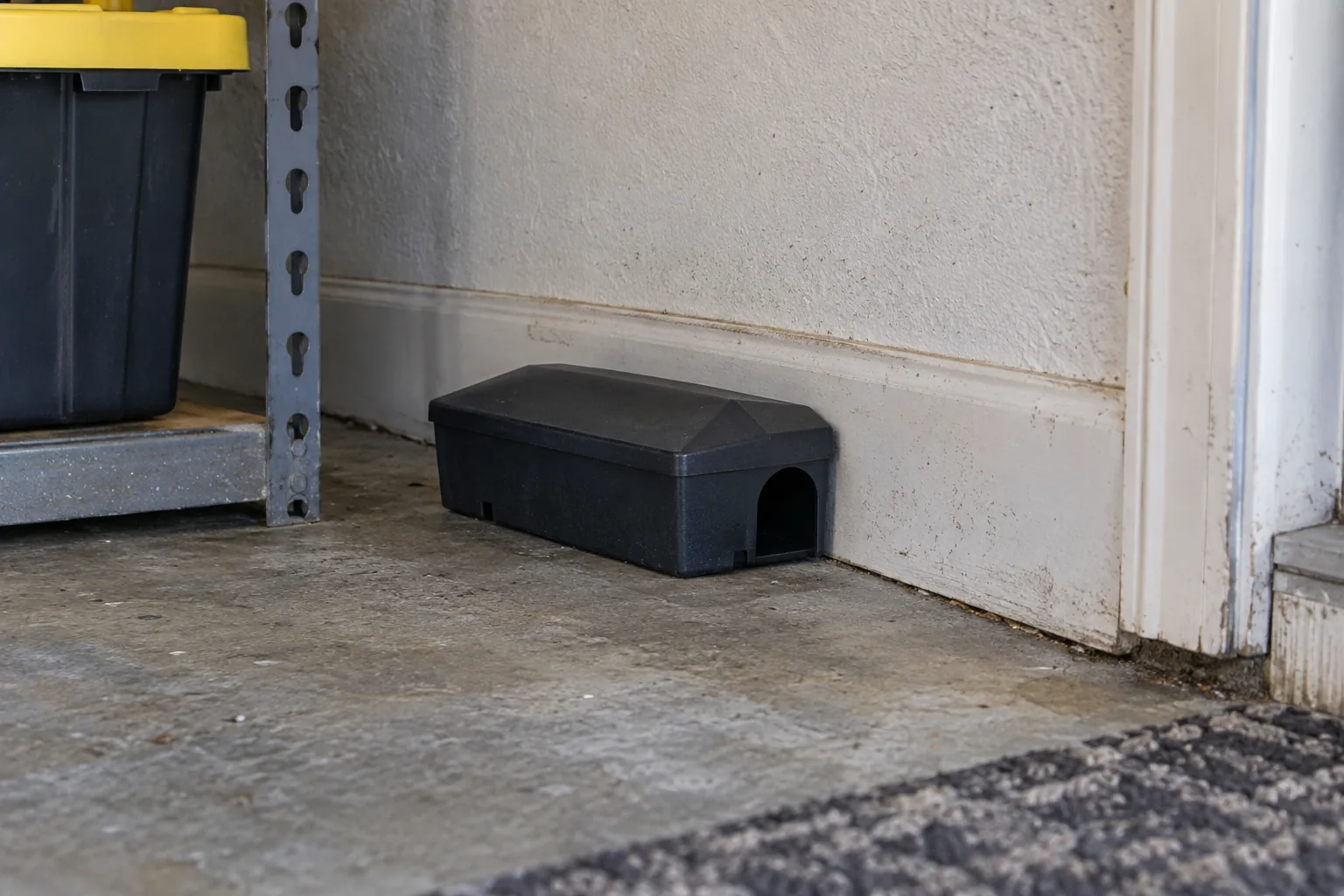
Mice often travel along:
- walls
- cabinets
- stored objects
- structural edges
A station placed directly on an active edge route is usually more logical than one sitting in open floor space.
The station should remain:
- stable
- visible enough to inspect
- retrievable
- protected from accidental contact
Do Not Put Bait Stations on Food-Preparation Surfaces
Do not place rodenticide bait stations on:
- countertops
- food-preparation tables
- cutting surfaces
- shelves holding open food
Keep pesticide treatment separated from food handling.
In kitchens, mechanical traps may often provide a simpler controlled option when they can be placed safely.
See Mice in the Kitchen: Why They’re There & What to Do.
Can Mouse Bait Stations Be Used in the Kitchen?
Only when the bait label allows the intended use and the station can be placed safely away from food-contact areas.
Avoid:
- counters
- food shelves
- open-food storage
- dishwasher machinery
- stove or refrigerator machinery
Focus on accessible structural routes.
For many kitchen situations, snap traps provide easier monitoring and retrieval.
Mouse Bait Stations in the Garage
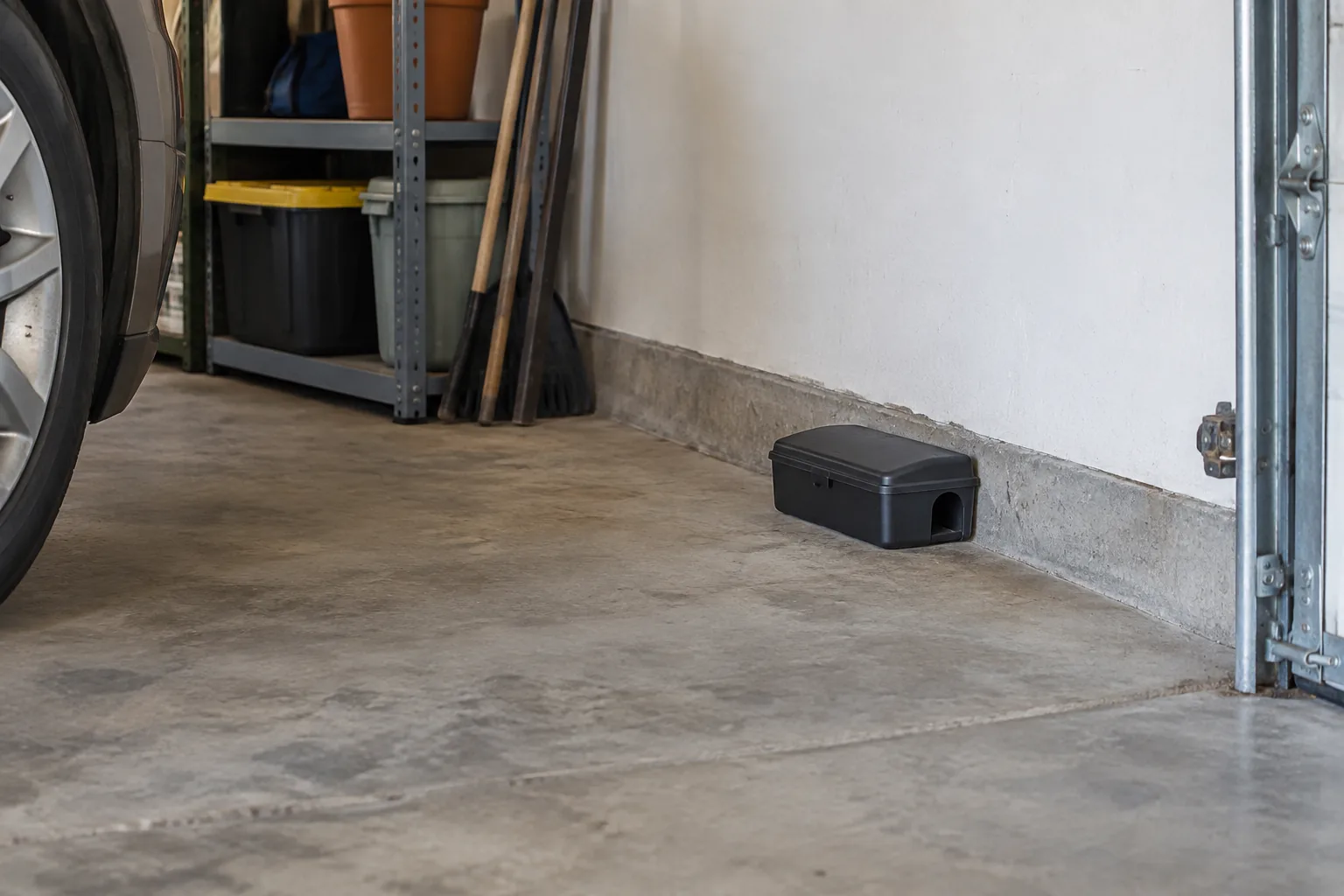
Garages may have active mouse routes along:
- wall edges
- lower door corners
- storage edges
- utility penetrations
A station may be considered only where the rodenticide label allows that placement.
Keep it away from:
- children’s play areas
- pet access
- vehicle paths
- food or feed storage
- drains
Secure bird seed, pet food, and animal feed so the bait is not competing with easier food.
See Mice in the Garage: Entry Points, Nests & Control.
Mouse Bait Stations in the Basement
Basements can have predictable wall-edge routes.
If the product label allows use there, a station should remain:
- dry
- stable
- accessible for inspection
- away from standing water
- away from electrical equipment
Do not place a station where it can be flooded or lost behind permanent storage.
See Mice in the Basement: Why They’re There & What to Do.
Mouse Bait Stations in the Attic
Attics can be difficult to service.
Do not place bait stations where they:
- disappear under insulation
- cannot be checked
- contact exposed wiring
- sit near moving equipment
- require unsafe access
If the bait label does not allow attic use, do not use it there.
If attic access is unsafe or activity is extensive, professional control may be more appropriate.
See Mice in the Attic: Signs, Damage & Removal.
Mouse Bait Stations in Crawl Spaces
Crawl spaces can create similar problems.
Do not enter a crawl space that is:
- wet
- unstable
- electrically hazardous
- heavily contaminated
- too tight for safe movement
Do not place a bait station where it cannot be serviced.
Use only locations allowed by the bait label.
Can Mouse Bait Stations Be Used Outdoors?
Only if the bait label specifically allows the intended outdoor use.
Outdoor placement may require:
- a particular station design
- anchoring
- weather protection
- specific placement restrictions
Do not assume an indoor station can be moved outdoors.
Keep outdoor pesticide bait inaccessible to:
- pets
- wildlife
- children
- non-target animals
The product label controls the allowed placement.
Where Should an Outdoor Mouse Bait Station Go?
If outdoor use is permitted by the product label, placement may focus on protected structural routes such as:
- foundation edges
- utility-entry areas
- sheltered exterior wall routes
Do not put stations randomly across the yard.
Do not place pesticide bait:
- near food gardens unless the label allows it
- where water can flood the station
- where wildlife can easily disturb it
- where children or pets routinely play
Do Not Put Bait Stations in Air Vents
Do not place:
- bait stations
- loose bait
- traps
- pesticide material
inside active HVAC supply or return airflow.
Do not spray chemicals into ducts.
If mouse activity appears near a vent, inspect the structural gap around the duct or nearby wall cavity.
See Mice in Air Vents: How They Get There & What to Do.
Do Not Put Bait Stations Inside Appliance Machinery
Do not place bait stations inside:
- refrigerator machinery
- dishwasher machinery
- furnace equipment
- HVAC equipment
- moving mechanical spaces
Keep treatment accessible and separated from powered equipment.
Do Not Put Bait Stations in Electrical Equipment
Do not place bait or bait stations:
- inside electrical panels
- inside junction boxes
- against exposed energized conductors
- inside powered equipment
If mouse activity has damaged wiring, use a qualified electrician.
Do Not Put Bait Stations in Drains
Do not place bait or stations in:
- plumbing drains
- floor drains
- condensate drains
- sump openings
Do not block drainage.
Keep Stations Retrievable
Every station should be placed where it can be:
- inspected
- serviced
- removed
- cleaned up if damaged
Do not hide stations permanently inside:
- wall voids
- ceiling voids
- sealed cabinets
- inaccessible crawl areas
A treatment you cannot retrieve is difficult to manage safely.
Should a Mouse Bait Station Be Secured?
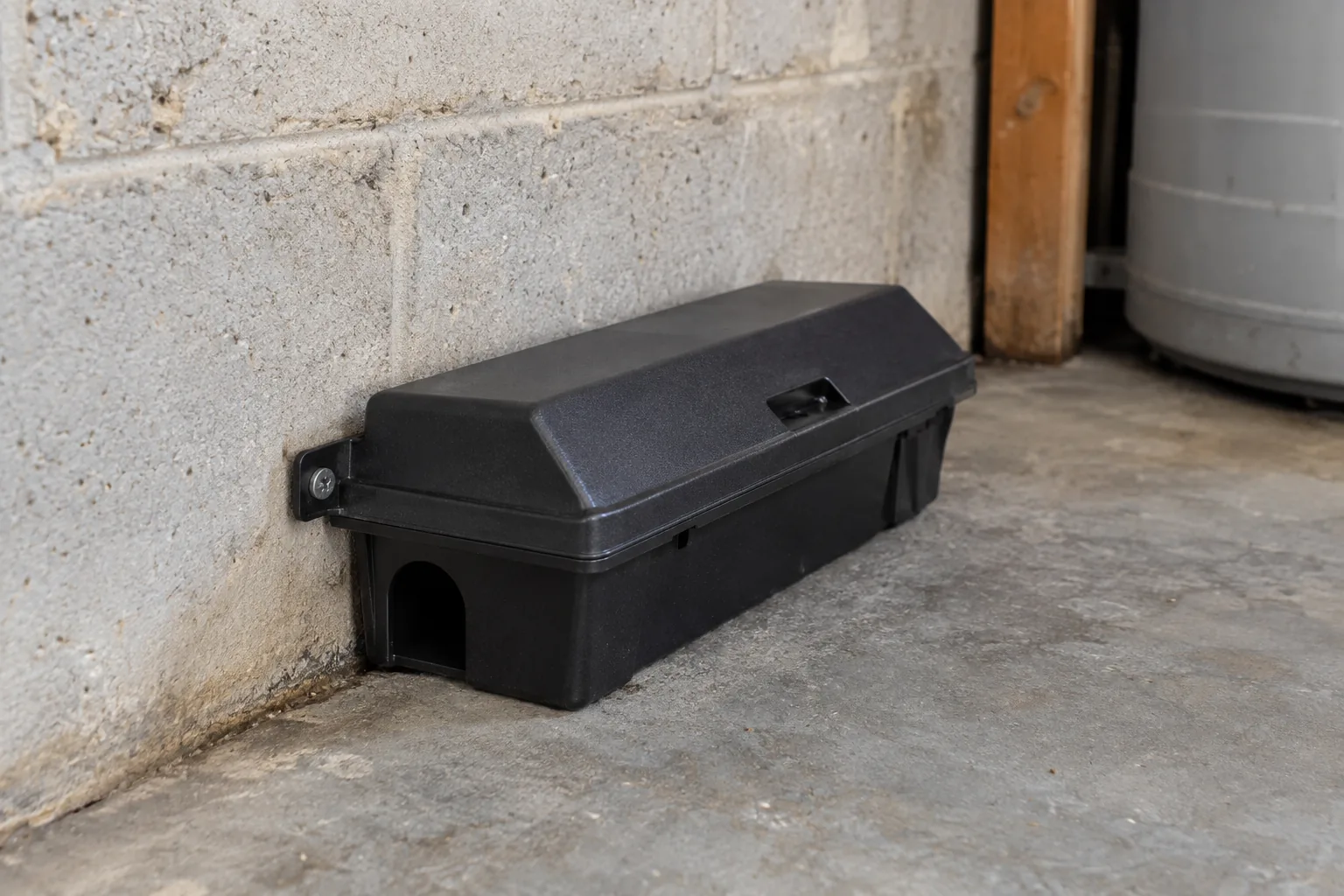
Follow the product label and station instructions.
Some situations may require the station to be:
- anchored
- fastened
- otherwise secured against movement
The goal is to prevent:
- tipping
- dragging
- relocation
- accidental access
Do not improvise a mounting method that damages utilities or creates a trip hazard.
How Close Should Stations Be to the Wall?
Place the station where mice actually travel while following all label directions.
In many indoor routes, that means keeping the station close to:
- a baseboard
- cabinet edge
- garage wall
- structural edge
Do not rely on a universal spacing measurement.
Physical evidence and label instructions matter more than a fixed number.
How Many Mouse Bait Stations Do You Need?
There is no universal number.
The number depends on:
- allowed label placement
- number of active routes
- size of the area
- station design
- severity and location of evidence
Do not use station count to estimate mouse population.
Do not scatter stations throughout the house without a route-based plan.
How Often Should You Check Mouse Bait Stations?
Follow the rodenticide product label.
Do not invent a servicing schedule.
The label determines:
- inspection frequency
- bait replacement
- replenishment
- station servicing
- when treatment should stop
A station should never be installed and forgotten.
Can You Tell How Many Mice You Have by Bait Consumption?
No.
Bait consumption does not provide a reliable population count.
Consumption can vary because of:
- competing food
- mouse activity patterns
- station location
- weather
- non-target access
- multiple visits by the same mouse
Use fresh evidence and overall activity trends instead.
What If the Bait Is Not Being Touched?
Possible reasons include:
- the station is not on the active route
- easier food is available
- mouse activity has shifted
- the station is unfamiliar
- there is little current activity
Do not respond by scattering more bait.
Reassess:
- placement
- food competition
- entry points
- fresh signs
What If the Station Moves?
A moved station may create unsafe exposure or poor treatment placement.
Check whether it needs to be secured according to:
- station instructions
- product label
Also consider whether:
- pets
- children
- storage movement
- vehicles
- wildlife
can reach the station.
What If the Station Is Damaged?
Do not continue using a station that is:
- cracked
- unable to close
- missing locking parts
- exposing bait
- structurally unstable
Follow the product instructions for safe handling and replacement.
Keep people and animals away from any spilled pesticide material and follow the product label for cleanup.
Never Leave Loose Rodenticide Outside the Station
Do not scatter loose mouse poison around:
- rooms
- garages
- attics
- crawl spaces
- basements
- yards
- wall voids
If the label requires bait to be contained in a station, use it that way.
Do not place extra loose bait beside the station.
Never Make Homemade Mouse Poison
Do not combine:
- household chemicals
- medicines
- cleaning products
- foods
- pesticides
to create a homemade poison.
Use only labeled pest-control products according to their directions.
Never Repackage Rodenticide
Keep pesticide bait in its original labeled package until it is used as directed.
Do not transfer it into:
- food jars
- pet-food tubs
- plastic bags
- unlabeled boxes
- household containers
Never crush, dilute, concentrate, or otherwise alter the formulation.
Keep Children Away From Bait Stations
A station should be inaccessible to children.
Do not place it:
- in play areas
- under furniture a child can easily reach
- beside toys
- in open walking routes
Tamper-resistant does not mean childproof.
If safe placement cannot be achieved, use professional pest control or a non-pesticide control method that can be secured safely.
Keep Pets Away From Bait Stations
Pets may:
- investigate the station
- chew it
- move it
- access bait if the station is damaged
Keep stations inaccessible to pets.
Do not assume a station is pet-safe just because it has a lid.
Protect Wildlife and Non-Target Animals
Outdoor or semi-outdoor rodenticide use can expose non-target animals if it is handled carelessly.
Use only:
- labeled products
- approved locations
- required station designs
- required security methods
Do not leave bait exposed.
What Are the Downsides of Mouse Bait Stations Indoors?
One major limitation is that a poisoned mouse may die in an inaccessible place.
Possible locations include:
- walls
- ceilings
- cabinet voids
- attics
- crawl spaces
This can create:
- odor
- cleanup difficulty
- uncertainty about the location of the dead mouse
Mechanical traps provide retrievable catches.
Are Snap Traps Better Than Bait Stations?
Neither method is automatically better in every situation.
Snap traps offer:
- visible monitoring
- known placement
- retrievable catches
- no pesticide bait
Bait stations may offer controlled pesticide placement when the label allows it.
For many household situations, snap traps are simpler to monitor indoors.
See Snap Traps for Mice: How to Use Them Correctly.
Bait Stations Do Not Replace Food Control
If mice have easier food nearby, treatment becomes harder to evaluate.
Secure:
- cereal
- flour
- rice
- pasta
- pet food
- bird seed
- animal feed
Clean:
- crumbs
- grease
- food spills
- damaged food packages
Sanitation helps make treatment more focused.
Bait Stations Do Not Replace Exclusion
A bait station does not close:
- foundation gaps
- garage-door gaps
- utility penetrations
- crawl-space vent defects
- siding openings
If the house remains open, new mice can keep entering.
See How to Keep Mice Out of Your House and Mouse Entry Points: Where to Inspect Your Home.
When Should Entry Points Be Sealed?
If mice are currently active indoors, avoid blindly sealing the only known route before you know whether mice remain inside.
A practical sequence is:
- identify active routes
- control active mice
- reduce food
- confirm activity is declining
- complete durable exclusion
- continue monitoring
This helps reduce the chance of trapping mice inside inaccessible spaces.
Mouse Bait Stations in Apartments
A renter may be able to use treatment inside the unit only when it can be done safely and consistently with the product label.
But apartment mouse activity can involve:
- shared walls
- plumbing chases
- neighboring units
- common areas
Permanent structural repair may require property management.
See Mice in an Apartment: What Renters Should Do.
Common Mouse Bait-Station Mistakes
Treating the station as automatically safe
The pesticide label still governs use.
Placing stations randomly
Use active mouse routes.
Putting stations near food
Keep pesticide treatment away from food-contact and food-storage areas.
Leaving stations where children or pets can reach them
Use inaccessible controlled placement.
Using a damaged station
Replace damaged equipment.
Scattering loose poison beside the station
Do not do this.
Installing stations and never checking them
Follow label servicing requirements.
Ignoring entry points
Treatment does not close the building.
When to Call a Professional
Professional help may make sense when:
- safe bait-station placement is difficult
- children or pets complicate treatment
- several rooms show mouse activity
- mice are active in inaccessible walls or ceilings
- entry points cannot be found
- rodenticide use would be difficult to manage safely
- electrical wiring is damaged
- contamination is extensive
A pest-control professional can help combine:
- inspection
- trapping
- labeled bait-station use
- exclusion
- monitoring
See Mouse Exterminator: What to Expect & When to Call One.
Mouse Bait Stations: The Bottom Line
Mouse bait stations are controlled housings for rodenticide bait.
They can help reduce direct access to bait, but they do not make pesticide use risk-free.
Use them only when:
- the rodenticide label allows the intended location
- the station meets the product requirements
- placement is inaccessible to children and pets
- the station remains retrievable
- servicing follows the label
Never:
- scatter loose poison
- make homemade poison
- alter or repackage rodenticide
- put stations in HVAC airflow, electrical equipment, appliance machinery, drains, or inaccessible voids
- use treatment as a substitute for exclusion
For many indoor mouse problems, mechanical traps remain a simple way to get known placement and retrievable catches.
Long-term control still depends on:
- sanitation
- monitoring
- entry-point repair
- exclusion
Continue with our mouse bait guide, snap traps for mice guide, mouse traps guide, mouse entry points guide, how to keep mice out guide, or how to get rid of mice.
For the broader overview, return to [Rats & Mice in the Home](/).