Mice in an Apartment: What Renters Should Do
Finding a mouse in an apartment can be harder to solve than finding one in a detached house because mice may move through shared walls, floor and ceiling voids, plumbing chases, utility gaps, and neighboring units.
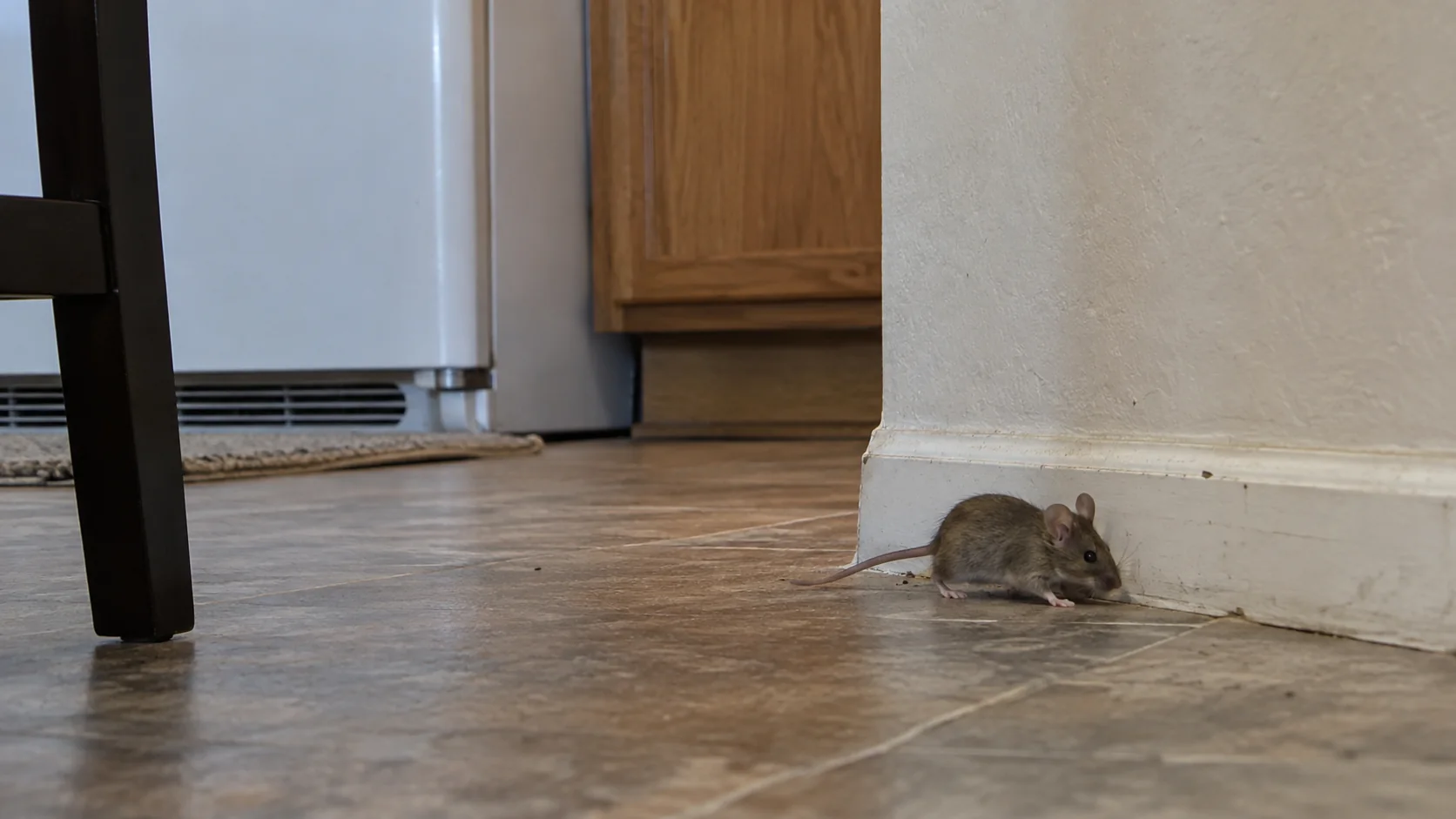
Finding a mouse in an apartment can be harder to solve than finding one in a detached house.
In an apartment building, mice may move through:
- shared walls
- floor and ceiling voids
- plumbing chases
- utility penetrations
- hallways
- trash areas
- basements
- garages
- neighboring units
That means the mouse you see in your apartment may be using a route that extends beyond your unit.
The best response is usually a combination of:
- documenting the activity
- protecting food
- cleaning safely
- using monitored traps where appropriate
- reporting the problem to property management
- identifying building entry points
- coordinating repairs and pest control
One mouse sighting does not tell you how many mice are present or where they entered the building.
The practical goal is to determine:
- where activity is occurring inside your unit
- whether fresh signs continue
- which gaps or shared routes may be involved
- what you can safely address as a renter
- what needs maintenance, management, or professional pest control
This guide explains what renters should do after finding mice in an apartment and how to reduce the chance of the problem continuing.
What Should You Do First If You See a Mouse in Your Apartment?
Start with four steps:
- document where and when you saw it
- check the immediate area for droppings or damaged food
- secure accessible food
- notify your landlord or property manager through the normal building process
If the building has an:
- maintenance portal
- management email
- pest-control request form
- emergency maintenance number
use the appropriate documented channel.
Keep a record of what you report and when.
Lease terms and local housing rules vary, so this guide focuses on practical pest-control steps rather than legal advice.
Does One Mouse in an Apartment Mean an Infestation?
Not necessarily.
One sighting confirms that at least one mouse was present.
It does not tell you:
- how many mice are in the building
- whether there is a nest in your unit
- whether the route comes from a neighboring unit
- whether the problem is building-wide
Look for additional signs such as:
- fresh droppings
- gnawing
- scratching
- tracks
- nesting material
- repeated sightings
See Signs of Mice: How to Tell If You Have Mice.
Why Are Mice Common in Apartment Buildings?
Apartment buildings can provide many connected routes.
Mice may move through:
- shared wall cavities
- plumbing penetrations
- electrical penetrations
- gaps around heating lines
- ceiling voids
- basement utility rooms
- trash areas
- garages
- common corridors
A small opening in one part of the building can allow mice to move into several units.
This is why treating only the visible mouse in one apartment may not solve the underlying route.
Can Mice Move Between Apartments?
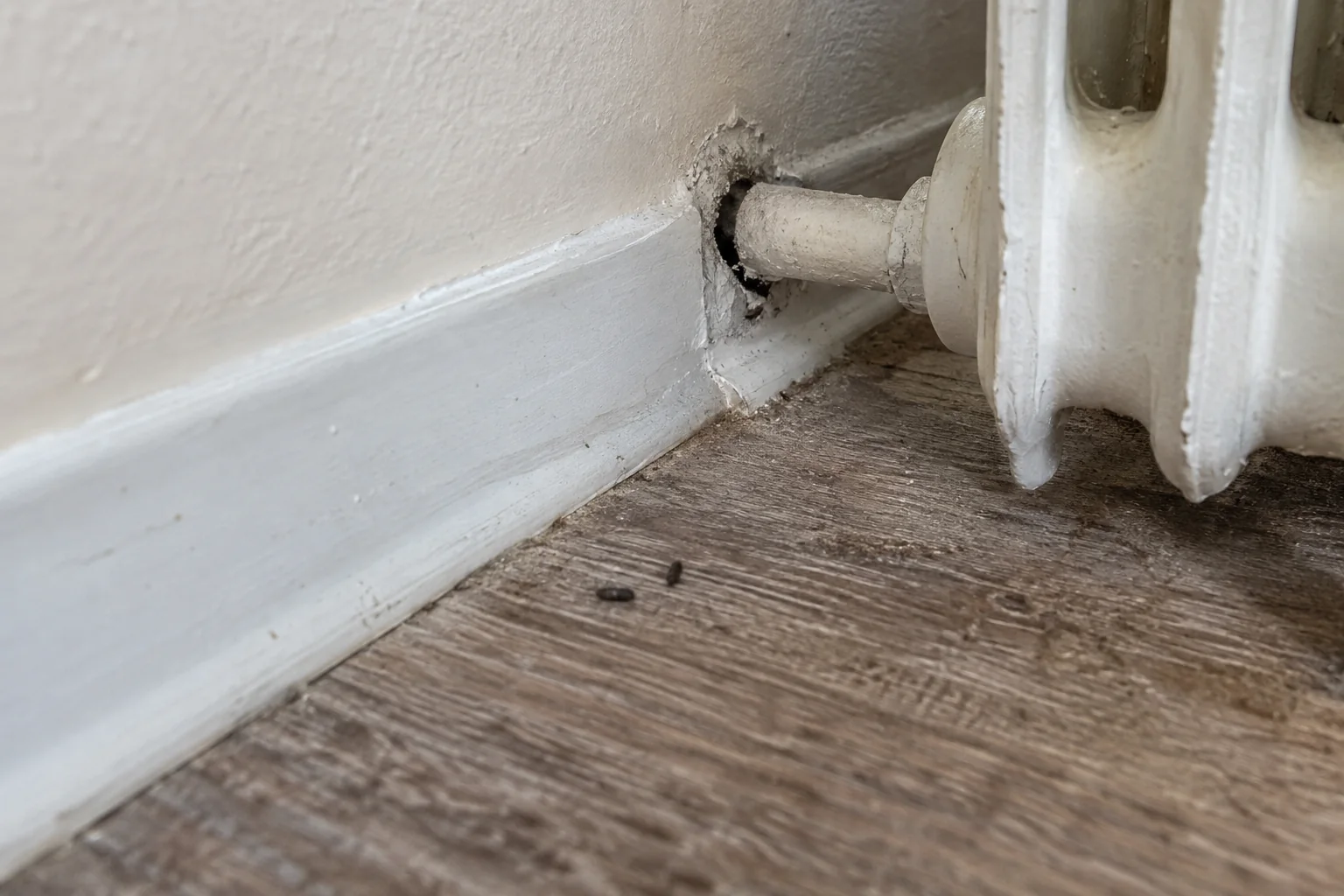
Yes.
Mice can move through connected structural spaces.
Possible routes include:
- plumbing chases
- gaps around pipes
- wall cavities
- floor penetrations
- ceiling voids
- utility shafts
A mouse in your unit may have entered through a route shared with another part of the building.
But do not assume a specific neighbor caused the problem.
The source may be:
- a basement
- a trash room
- a utility room
- an exterior opening
- another structural area
Where Do Mice Hide in Apartments?
Common hiding and travel areas include:
- behind refrigerators
- under sinks
- behind stoves
- inside lower cabinets
- along baseboards
- utility closets
- wall cavities
- ceiling voids
- radiator or pipe penetrations
Mice usually prefer edges and protected spaces.
They are less likely to spend long periods in the middle of an open room.
Mice in an Apartment Kitchen
Kitchens provide:
- food
- crumbs
- grease
- water
- cabinets
- appliance gaps
Check:
- under the sink
- behind the refrigerator
- beside the stove
- pantry corners
- cabinet toe kicks
- pipe penetrations
See Mice in the Kitchen: Why They’re There & What to Do.
Mice Behind the Refrigerator in an Apartment
The refrigerator area can provide:
- warmth
- darkness
- crumbs
- a protected wall edge
- utility openings
Do not pull a heavy refrigerator out alone if it cannot be moved safely.
See Mice Behind the Refrigerator: Why They Hide There.
Mice Under the Kitchen Sink
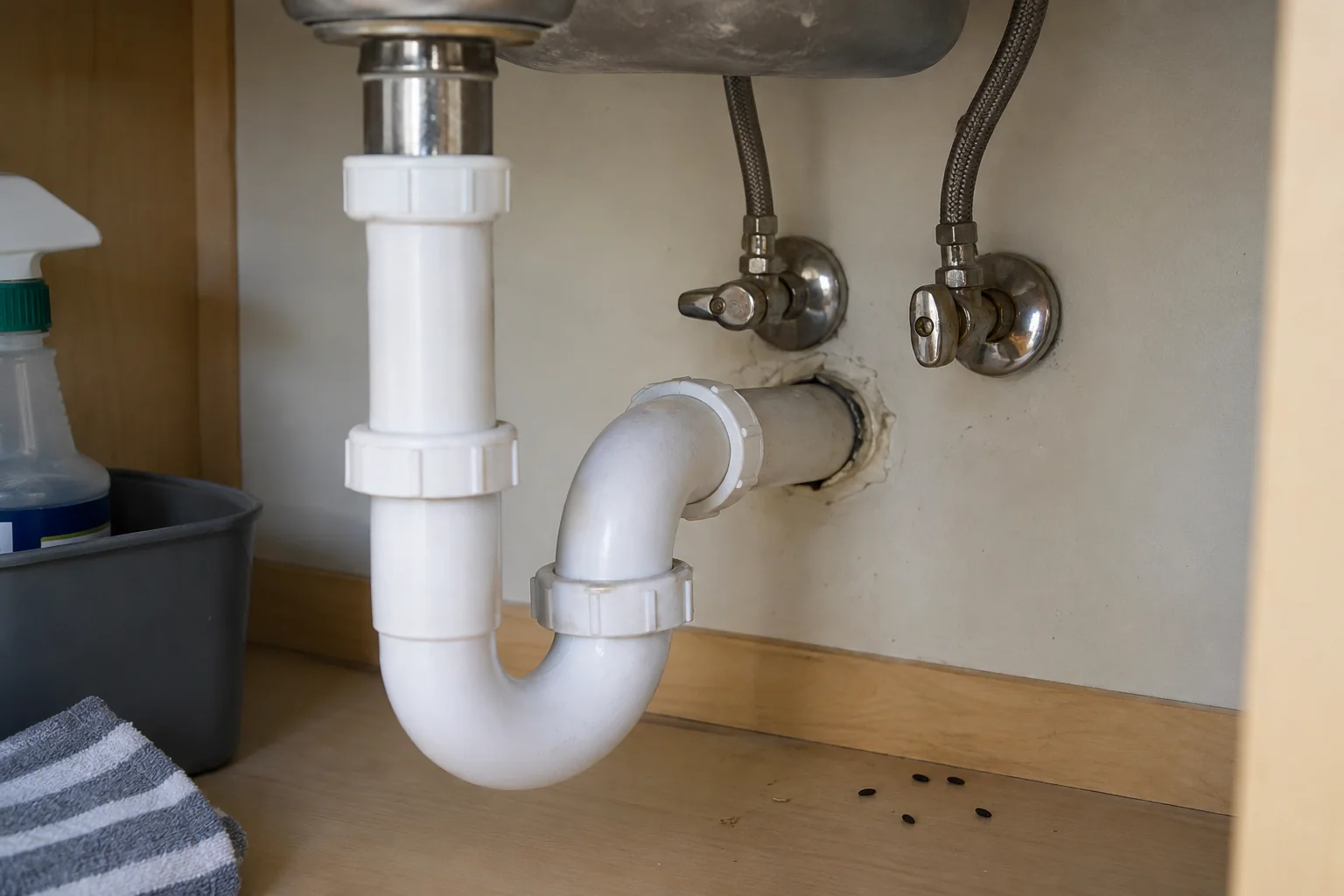
Sink cabinets often contain openings around:
- drain pipes
- water lines
- dishwasher lines
These gaps can connect to shared walls or utility chases.
Look for:
- droppings
- gnaw marks
- a visible gap
- disturbed stored items
Do not disconnect plumbing to investigate.
Mice in Apartment Walls
Shared walls can conceal mouse movement.
Possible signs include:
- scratching
- gnawing
- droppings near wall openings
- activity around pipes or outlets
Do not open drywall as a first step.
See Mice in Walls: Signs, Entry Points & What to Do.
Mice in Apartment Ceilings
Mice may use:
- ceiling voids
- floor cavities above
- utility chases
- suspended ceilings
Sound alone does not prove mice.
See Mice in the Ceiling: Signs, Sounds & Removal.
Mice Near Apartment Air Vents
A mouse near an air register may be:
- around the duct boot
- inside a wall cavity
- above the ceiling
- below the floor
It is not automatically inside the duct.
Do not block required ventilation or put traps or poison inside active HVAC airflow.
See Mice in Air Vents: How They Get There & What to Do.
What Do Mouse Droppings in an Apartment Look Like?
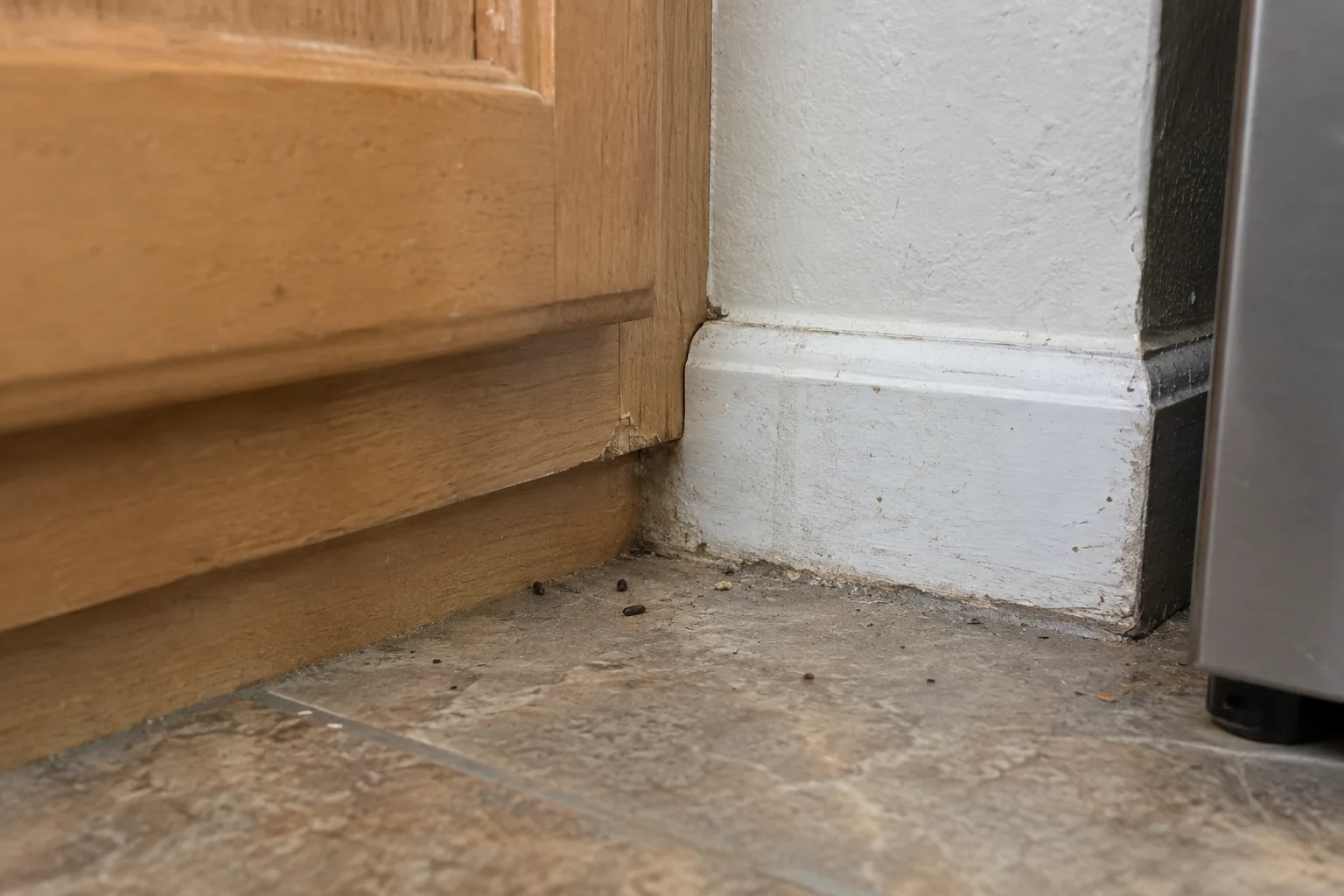
Mouse droppings are typically:
- small
- dark
- found along protected routes
Common locations include:
- cabinet corners
- behind appliances
- under sinks
- along baseboards
- pantry edges
Do not use dropping count to estimate mouse population.
See Mouse Droppings: What They Look Like & What They Mean.
Mouse Gnaw Marks in an Apartment
Mice may gnaw:
- food packaging
- cardboard
- cabinet edges
- baseboards
- soft plastic
- wire insulation
Fine gnawing becomes more useful when combined with droppings or sightings.
See Mouse Gnaw Marks: How to Identify Rodent Damage.
Mouse Tracks in an Apartment
Tiny tracks may appear in:
- dust
- flour-like spills
- utility closets
- behind appliances
Real mouse tracks are often incomplete.
See Mouse Tracks: What They Look Like & Where to Find Them.
Mouse Nest in an Apartment
A mouse nest may be made from:
- shredded paper
- fabric fibers
- insulation
- soft debris
Possible locations include:
- behind cabinets
- behind appliances
- inside accessible storage areas
- wall voids
Do not assume a mouse sighting means a nest is inside your unit.
See Mouse Nests: What They Look Like & Where to Find Them.
Mouse Urine Smell in an Apartment
Repeated activity can create a musky or urine-like odor.
But odor alone does not prove mice.
Other possible sources include:
- moisture
- drains
- garbage
- mold
- other pests
See Mouse Urine Smell: What It Smells Like & How to Find It.
How to Document a Mouse Problem for Property Management
Keep the record simple and factual.
Document:
- date
- time
- room
- sighting location
- fresh droppings
- damaged food
- gnawing
- scratching
- visible structural gaps
Photos can be useful when they clearly show:
- droppings
- a pipe gap
- damaged food packaging
- a baseboard opening
Avoid exaggerating the number of mice.
Report what you actually observed.
What Should You Tell Your Landlord or Property Manager?
A useful report can include:
- where you saw the mouse
- which rooms show evidence
- whether droppings are fresh
- whether food was damaged
- whether there are visible wall or pipe gaps
- whether the problem has happened more than once
Ask for:
- inspection
- pest-control service
- repair of building entry points where appropriate
The exact maintenance process depends on the building and lease.
Should You Contact Management After One Mouse?
Yes, reporting the issue early can be useful in a multi-unit building.
Even one confirmed mouse may reveal:
- a shared structural route
- a basement problem
- a trash-area problem
- a utility penetration
- activity in multiple units
Early reporting gives building management a chance to inspect the broader route.
Can You Fix Mouse Holes Yourself in an Apartment?
Small temporary renter-safe steps may sometimes be appropriate.
But permanent building repairs may involve:
- walls
- plumbing
- electrical systems
- HVAC
- fire-rated assemblies
- shared structural cavities
Do not make permanent alterations unless you are authorized to do so.
Report visible building gaps to management.
Should You Fill Pipe Gaps Yourself?
Do not interfere with:
- plumbing movement
- shutoff valves
- electrical systems
- fire stopping
- ventilation
- required access
A visible gap around a pipe may need proper building repair rather than a quick cosmetic patch.
Document it and report it.
Should You Seal a Mouse Hole Immediately?
Not always.
If mice are already inside a wall or unit and the only active route is sealed, they may:
- move into another room
- enter another apartment
- gnaw a new opening
- die in an inaccessible void
Removal, monitoring, and exclusion should be coordinated.
See Rodent Exclusion: How to Keep Rats & Mice Out.
What Food Should Renters Protect?
Store vulnerable food in sturdy containers.
Pay special attention to:
- cereal
- rice
- pasta
- flour
- snacks
- pet food
- bird seed
Clean:
- crumbs
- spills
- grease
- food under appliances
Do not leave open food bags in lower cabinets if mice are active.
What About Pet Food?
Pet food can support mouse activity.
If possible:
- feed on a schedule
- remove leftovers
- clean spilled kibble
- store bulk food securely
Keep traps or bait inaccessible to pets.
What About Trash?
Use a container with a functioning lid when practical.
Clean spills around:
- trash cans
- recycling
- food-waste containers
In an apartment building, shared trash areas may also need building-level attention.
Should You Use Mouse Traps in an Apartment?
Mouse-sized traps can be useful when placed on confirmed accessible routes.
Possible locations include:
- along baseboards
- behind accessible appliances
- beside cabinet edges
- near a confirmed pipe or wall gap
Keep traps:
- stable
- accessible for checking
- away from children and pets
See Mouse Traps: Types, Placement & How to Use Them and Best Mouse Traps: Which Type Works Best & How to Choose.
Where Should You Put Mouse Traps in an Apartment?
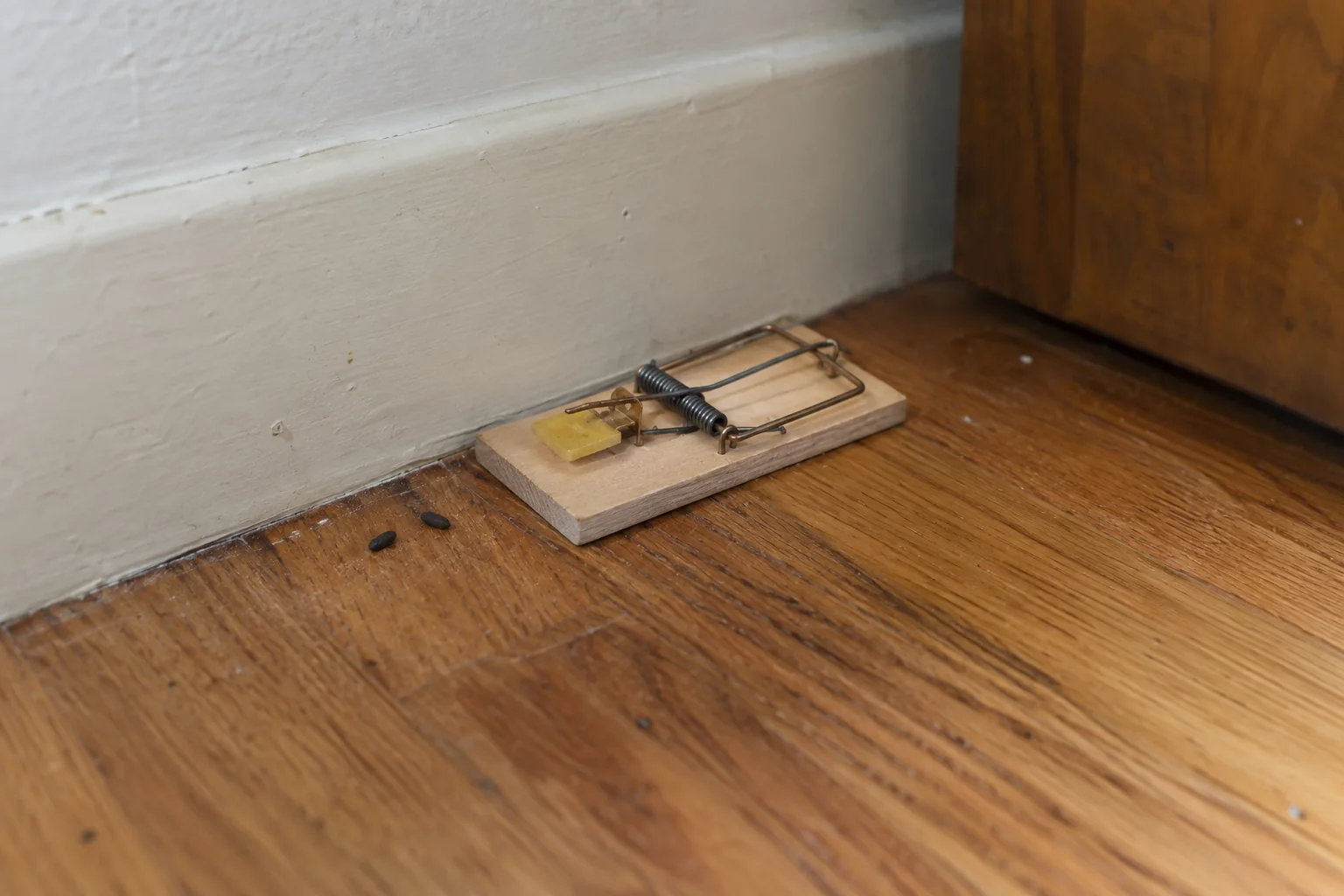
Place traps where fresh evidence is strongest.
Good placement follows:
- wall edges
- cabinet edges
- appliance routes
Do not scatter traps randomly across the middle of the room.
Do not place traps:
- inside vents
- inside appliance machinery
- inside electrical spaces
- where they cannot be retrieved
How Many Traps Should You Use?
The number depends on:
- the size of the unit
- the number of active routes
- where evidence occurs
Do not use trap count as a way to estimate population.
It is more useful to cover the confirmed routes and check traps consistently.
Should Renters Use Poison for Mice?
Do not scatter loose rodenticide in an apartment.
Rodenticides must be used according to:
- the product label
- placement requirements
- child and pet safety requirements
- building rules
A poisoned mouse may die inside:
- a wall
- a ceiling
- a cabinet void
- another apartment-accessible cavity
and create an odor problem.
In a multi-unit building, building-wide pest management is often more important than isolated poison placement in one unit.
Can You Use Ultrasonic Repellents?
Do not rely on an ultrasonic device as the primary solution.
The important control steps are:
- food protection
- monitored trapping
- structural inspection
- building repairs
- exclusion
A device does not correct a shared wall gap or building entry point.
How to Clean Mouse Droppings in an Apartment Safely
For a small accessible contaminated area:
- keep children and pets away
- wear suitable gloves
- avoid dry sweeping or vacuuming
- wet droppings and the nearby hard surface with an appropriate disinfecting solution
- allow the product’s required contact time
- wipe or collect the waste
- bag it appropriately
- clean the surrounding hard surface
- wash hands after removing gloves
Do not dry sweep or vacuum fresh mouse droppings or nesting material before wet cleanup.
See the cleanup section and rodent safety section.
What If Droppings Keep Returning?
Fresh droppings after cleanup suggest continuing activity.
Document:
- where they reappear
- how quickly they return
- whether traps show activity
- whether new gaps are visible
Report recurring evidence to management.
Repeated cleanup alone will not solve an active structural route.
What If Mice Are in Several Apartments?
That usually suggests the building needs a broader inspection.
Possible shared sources include:
- exterior openings
- utility chases
- basement areas
- trash rooms
- garages
- common walls
Do not assume one tenant caused the problem.
A building-wide route may require:
- property management
- pest-control professionals
- maintenance staff
to coordinate the response.
What If the Neighbor Has Mice?
You may suspect a neighboring unit if sounds or activity occur along a shared wall.
But you usually cannot confirm the source from your unit alone.
Focus on:
- your own evidence
- your own food storage
- your own trap monitoring
- reporting shared structural gaps
Let building management investigate common routes.
Can Mice Enter From the Hallway?
Yes.
A mouse can move through:
- door gaps
- corridor edges
- utility areas
Check the apartment entry door for obvious gaps.
Do not alter:
- fire-rated doors
- closers
- thresholds
- shared corridor systems
without building authorization.
Can Mice Come From the Basement?
Yes.
Apartment buildings may have basement:
- storage
- utilities
- trash areas
- boiler rooms
- laundry areas
Mice can move upward through connected walls and pipes.
If your unit is above a basement, lower utility routes may be relevant.
Can Mice Come Through Heating Pipes or Radiator Openings?
They can use gaps around pipes.
The mouse usually travels through the structural gap around the pipe rather than through the pipe itself.
Do not alter heating systems.
Report oversized penetrations to management.
Can Mice Get Through Apartment Door Gaps?
Yes, sufficiently large gaps can become routes.
Look for visible space along:
- the bottom
- side edges
- damaged trim
Door repair must preserve:
- safe operation
- required fire protection
- building rules
Permanent changes may require management.
What If You Rent a Studio Apartment?
In a studio, kitchen, sleeping, and living spaces are close together.
That makes food control especially important.
Prioritize:
- sealed food
- clean counters
- clean appliance edges
- stable trap placement
- rapid reporting of visible gaps
The same structural principles apply.
What If You Rent With Children or Pets?
Trap and bait safety becomes especially important.
Keep control devices:
- inaccessible to children
- inaccessible to pets
- out of play areas
- away from food preparation surfaces
Avoid loose rodenticide.
If safe trap placement is difficult, ask management or a professional pest-control provider for a protected setup.
When Should Renters Ask for Professional Pest Control?
Professional service may make sense when:
- sightings continue
- droppings keep returning
- mice are active in walls or ceilings
- several units may be affected
- the route cannot be identified
- traps do not reduce activity
- inaccessible contamination is present
- building repairs are needed
- children or pets make safe DIY placement difficult
See Mouse Exterminator: What to Expect & When to Call One.
What Can a Pest-Control Professional Check in an Apartment Building?
A professional may inspect:
- mouse travel routes
- droppings
- trap placement
- utility penetrations
- cabinet gaps
- shared structural routes
- common areas
Building maintenance may still be needed for:
- wall repairs
- pipe gaps
- door repairs
- ventilation issues
- structural exclusion
Pest control and building repair often work together.
How to Know Whether the Apartment Mouse Problem Is Improving
Monitor for:
- no new droppings
- no new gnawing
- no trap activity
- no repeated sightings
- no new scratching
- no new odor
One quiet night is not proof the problem is gone.
Look for the absence of fresh evidence over time.
What If the Problem Comes Back?
Recurring activity usually means one of these remains unresolved:
- exterior building entry
- shared wall route
- pipe penetration
- basement source
- trash-area source
- food access
- unsealed structural opening
Document the recurrence and report it again.
The long-term solution depends on correcting the route, not only catching the mouse you can see.
Mice in an Apartment: The Bottom Line
Apartment mouse problems can be more complex because mice may move through shared building spaces.
If you find mice in an apartment:
- document sightings and fresh evidence
- notify property management through the normal documented channel
- protect food and pet food
- clean crumbs and spills
- use mouse-sized traps on safe accessible routes
- keep traps and any pest-control products away from children and pets
- wet-clean droppings safely
- do not open walls, vents, electrical systems, or appliance internals
- report shared structural gaps
- coordinate trapping with building repairs and exclusion
- monitor until fresh evidence stops
One mouse does not automatically mean a large infestation.
The important question is whether the building still provides an active route.
Continue with our signs of mice guide, mouse droppings guide, mice in the kitchen guide, mice behind the refrigerator guide, mice in walls guide, mice in the ceiling guide, mouse traps guide, how to get rid of mice, how mice get into a house, or rodent exclusion guide.
For the broader overview, return to [Rats & Mice in the Home](/).