Rat Bait: What Works & How to Use It Safely
Rat bait can mean food used to attract a rat to a mechanical trap or rodenticide bait formulated to kill rats. Those two uses should stay clearly separated.
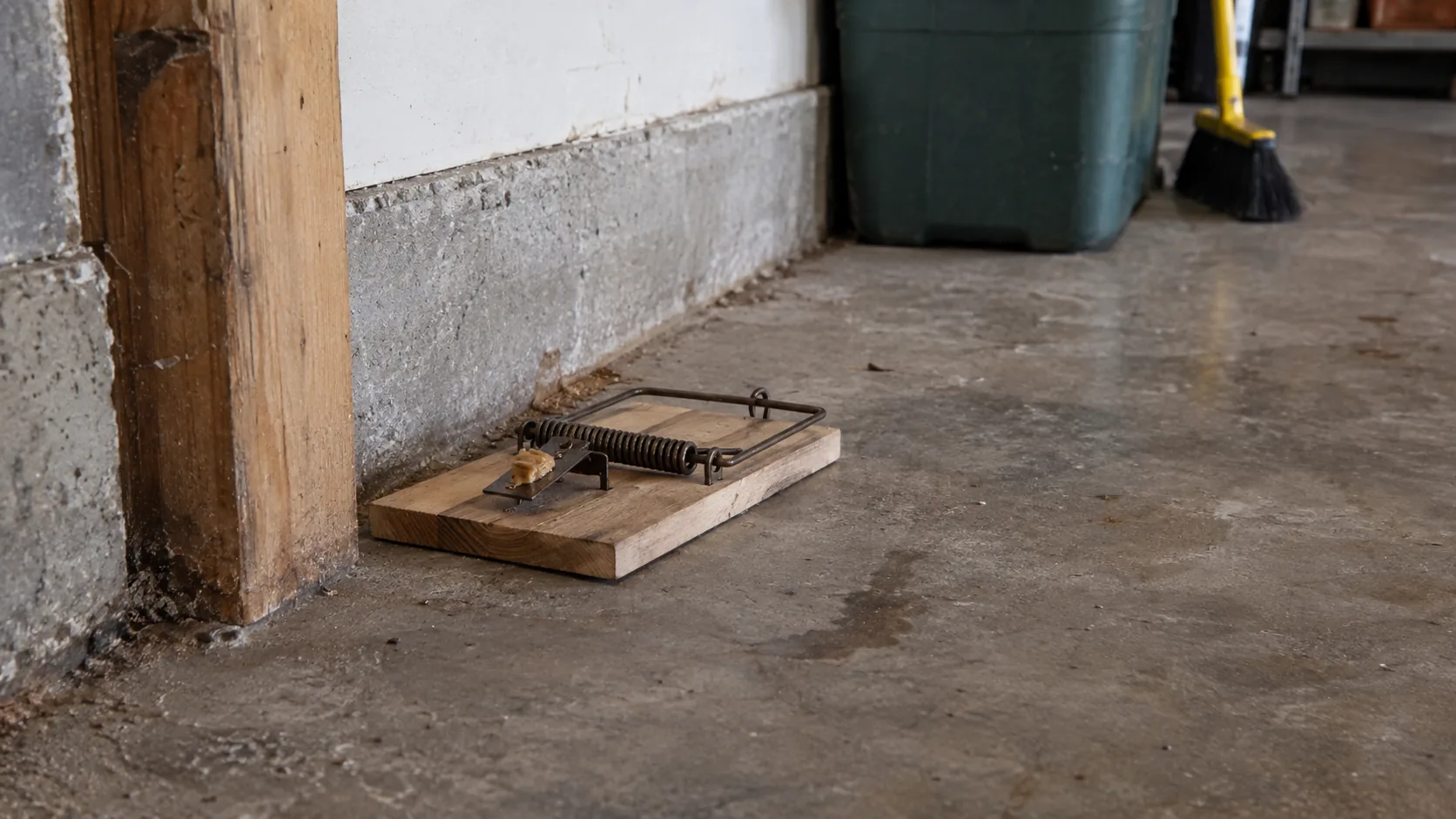
“Rat bait” can mean two very different things.
It may refer to:
- food used to attract a rat to a mechanical trap
- rodenticide bait formulated to kill rats
Those should not be treated as the same thing.
Food bait on a trap is an attractant.
Rodenticide bait is a pesticide product and must be used exactly according to its label.
For many household rat problems, a practical starting plan is:
- identify the active route
- remove competing food
- use correctly sized rat traps
- use only a small amount of trap bait
- monitor activity
- repair entry points after active rats are addressed
The bait is only one part of the control system.
What Is the Best Bait for Rat Traps?
There is no single bait that works best in every home.
Useful trap baits may include a very small amount of:
- peanut butter
- nut spread
- oats
- cereal
- nuts or seed
- soft food rats are already eating
- pet food or feed already associated with the activity
The strongest clue is often what the rats are already taking from the property.
If rats are repeatedly feeding on:
- bird seed
- pet food
- stored grain
- fruit
- garbage
a small amount of that familiar food may be more useful than introducing something completely different.
Is Peanut Butter Good Rat Bait?
Yes.
A small smear of peanut butter or another sticky nut-based spread can work well on a mechanical rat trap.
It can be useful because it:
- has odor
- stays on the trigger
- encourages the rat to interact with the trap
Use only a small amount.
A large pile can allow feeding from the side without enough interaction with the trigger.
How Much Bait Should You Put on a Rat Trap?
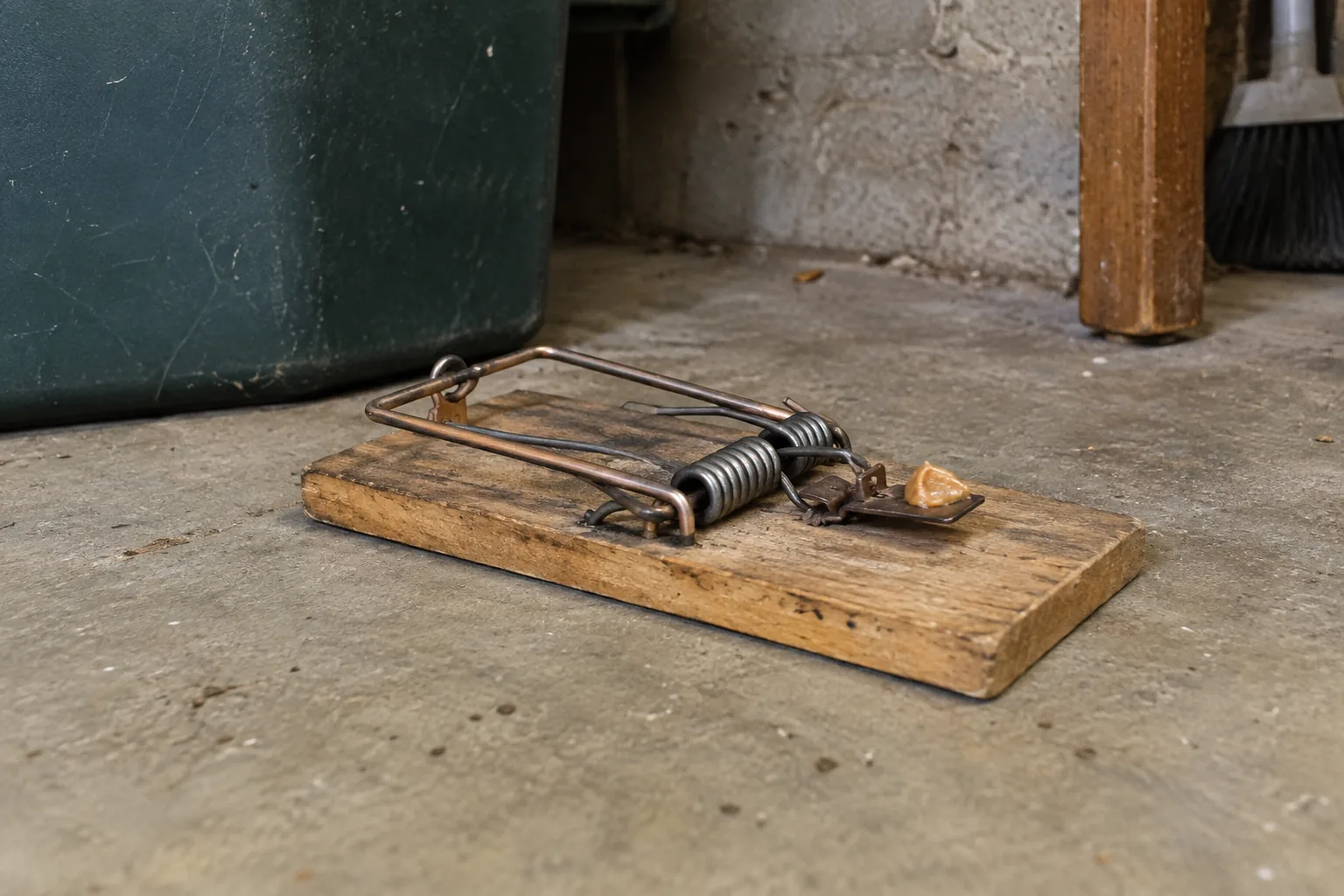
Use a small amount.
More bait is not automatically better.
Too much can:
- reduce trigger contact
- be stolen from the edge
- attract insects
- create a mess
- let the rat feed without fully entering the trap position
The purpose of trap bait is not to feed the rat.
The purpose is to make the rat interact with the trap.
Where Should the Bait Go on a Rat Snap Trap?
Put the bait directly on the trap’s trigger or bait area.
Do not place a pile of food beside the trap.
The rat should need to interact with the trigger to reach the bait.
Follow the trap manufacturer’s setup instructions.
For broader mechanical trap placement, see Rat Traps: Types, Placement & How to Use Them.
Placement Matters More Than Bait
A perfect bait will still fail if the trap is not on an active route.
Rat traps are most useful where fresh evidence appears, such as:
- along wall edges
- beside garage walls
- basement routes
- crawl-space access areas
- behind accessible appliances
- utility-room edges
- attic travel routes that can be reached safely
Look for:
- rat droppings
- tracks
- rub marks
- gnawing
- repeated sightings
See Signs of Rats: How to Tell If You Have Rats.
Rats Can Be Cautious Around New Objects
Rats may be cautious around unfamiliar objects.
That can include a newly placed trap.
A trap may be ignored even when the bait is attractive.
Possible reasons include:
- the trap is unfamiliar
- the trap is not on the route
- easier food is nearby
- the trap is unstable
- the rat approaches from the wrong direction
Do not keep changing bait before checking placement and food competition.
What Is Prebaiting for Rats?
Prebaiting means placing a small amount of bait on or in an unset mechanical trap before the trap is activated.
This can be useful when rats avoid a new trap.
A simple sequence is:
- place the trap on an active route
- leave it unset with a small amount of bait
- monitor whether the bait is being investigated
- set the trap later according to the manufacturer’s instructions
Prebaiting is optional.
It is not needed for every rat problem.
Can You Use Food Rats Are Already Eating?
Yes.
If rats are clearly feeding on one food, a small amount of that familiar food can be useful.
Examples may include:
- pet food
- bird seed
- cereal
- grain
- fruit
- feed
At the same time, secure the main food source.
Otherwise the trap competes with an easier meal.
Is Cheese Good Rat Bait?
Cheese can attract rats, but it is not automatically the best bait.
Sticky or familiar foods are often easier to secure directly on a trigger.
The more important factors are:
- trap location
- stability
- food competition
- whether the rat already uses that route
Do not rely on one “magic” bait.
Can You Use Meat as Rat Bait?
A small amount of food with a strong odor can sometimes attract rats.
But there is no need to create a large meat bait or leave perishable food exposed.
Perishable bait can:
- spoil
- attract insects
- create odor
- contaminate surfaces
Use a small controlled amount of food that can be attached safely to the trigger.
Can You Use Nuts, Seeds, or Grain?
Yes.
Nuts, seeds, or grain can be useful when rats are already feeding on those foods.
This may be especially relevant around:
- bird seed
- animal feed
- garages
- sheds
- pantry storage
Use only a small amount.
Do not leave loose piles around the trap.
Can Fruit Work as Rat Bait?
It can in some situations, especially where rats are already feeding on fallen or stored fruit.
But fruit can dry out, spoil, or be removed easily.
Use familiar food as a clue, not as a guaranteed formula.
Why Do Rats Ignore Baited Traps?
Common reasons include:
- trap placement is poor
- the trap is new
- competing food is abundant
- the rat has an established route elsewhere
- the trap is unstable
- bait can be reached without triggering the mechanism
Before changing bait, reassess the route.
Why Does the Bait Disappear Without a Catch?
Possible reasons include:
- too much bait
- bait placed beside the trigger
- the trap is set incorrectly
- the trap is unstable
- insects or other animals are taking the food
- the rat is approaching from the side
Try:
- less bait
- a stickier bait
- correct placement on the trigger
- better trap orientation
- protected placement
Do not expose powerful rat traps where children or pets can reach them.
Remove Competing Food
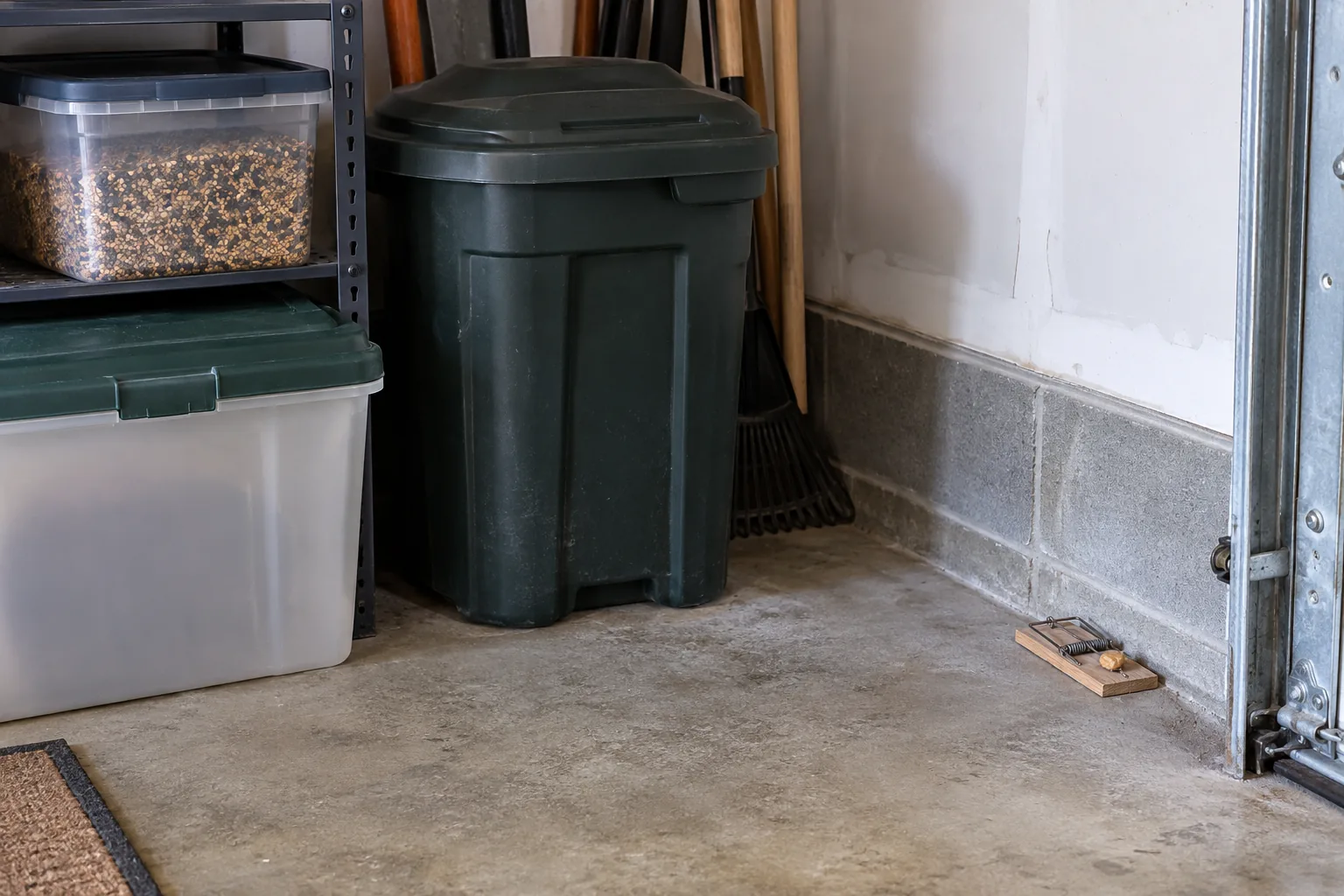
Trap bait is more useful when easy food is controlled.
Secure:
- pet food
- bird seed
- cereal
- grain
- garbage
- animal feed
- stored snacks
Clean:
- food spills
- grease
- fallen fruit
- damaged packages
Sanitation does not replace trapping or exclusion.
It makes treatment more focused.
Rat Bait in the Kitchen
Kitchens may provide:
- food
- grease
- water
- appliance cover
Before relying on trap bait:
- clean crumbs and grease
- secure pantry food
- inspect under sinks
- check behind accessible appliances
- remove damaged food packages
Do not place baited traps on food-preparation surfaces.
See Rats in the Kitchen: Why They’re There & What to Do.
Rat Bait Behind Appliances
Large appliances may hide:
- food debris
- droppings
- wall-floor gaps
- utility penetrations
Keep traps outside appliance machinery.
Do not place traps:
- in compressor compartments
- beside moving fan parts
- where a power cord or water line can contact them
Do not move a heavy appliance alone if it cannot be moved safely.
Rat Bait in the Garage
Garages can have strong food competition.
Common attractants include:
- pet food
- bird seed
- feed
- grass seed
- garbage
Secure those items before judging whether trap bait works.
Place traps along:
- walls
- storage edges
- confirmed door-corner routes
Keep powerful rat traps inaccessible to:
- children
- pets
See Rats in the Garage: Entry Points, Nests & Control.
Rat Bait in the Basement
Basements may have useful wall-edge routes.
Place traps only where they are:
- stable
- dry
- retrievable
- away from electrical equipment
- away from standing water
See Rats in the Basement: Why They’re There & What to Do.
Rat Bait in the Crawl Space
Crawl spaces can be difficult treatment areas.
Do not enter a crawl space that is:
- wet
- unstable
- electrically hazardous
- heavily contaminated
- too tight for safe movement
Do not place traps or bait where they cannot be checked and retrieved.
See Rats in the Crawl Space: Signs & Removal.
Rat Bait in the Attic
Trap bait may be useful in an attic when:
- rat activity is confirmed
- the trap sits on a stable surface
- the area can be checked safely
Do not bury traps in insulation.
Do not place traps where they can contact:
- exposed wiring
- moving equipment
- unsafe roof openings
See Rats in the Attic: Signs, Damage & Removal.
Rat Bait in an Apartment
In an apartment, mechanical traps may help control activity inside the unit.
But rat activity may involve:
- shared walls
- utility chases
- common spaces
- neighboring units
- exterior building defects
Document fresh evidence and report structural problems through the normal property-management process.
See Rats in an Apartment: What Renters Should Do.
Is Rat Bait the Same as Rat Poison?
Not always.
“Rat bait” may mean:
Trap bait
A small amount of food used to attract a rat to a mechanical trap.
Rodenticide bait
A pesticide product formulated to kill rodents.
These require very different safety practices.
What Is Rodenticide Rat Bait?
Rodenticide bait is a pesticide product intended to kill rats after it is consumed.
It may be sold in labeled forms such as:
- blocks
- pellets
- soft bait
- other formulations
Use only a product labeled for the intended pest and location.
Follow the product label exactly.
The label determines:
- allowed locations
- required placement
- station requirements
- servicing
- child and pet protection
- disposal and handling
Do not improvise.
Should You Scatter Rat Poison?
No.
Do not scatter loose rodenticide around:
- kitchens
- garages
- attics
- crawl spaces
- basements
- wall voids
- yards
where it can be:
- lost
- spilled
- contacted
- moved
- eaten by non-target animals
Use only the placement method specified on the product label.
Should Rodenticide Rat Bait Be Used in a Bait Station?
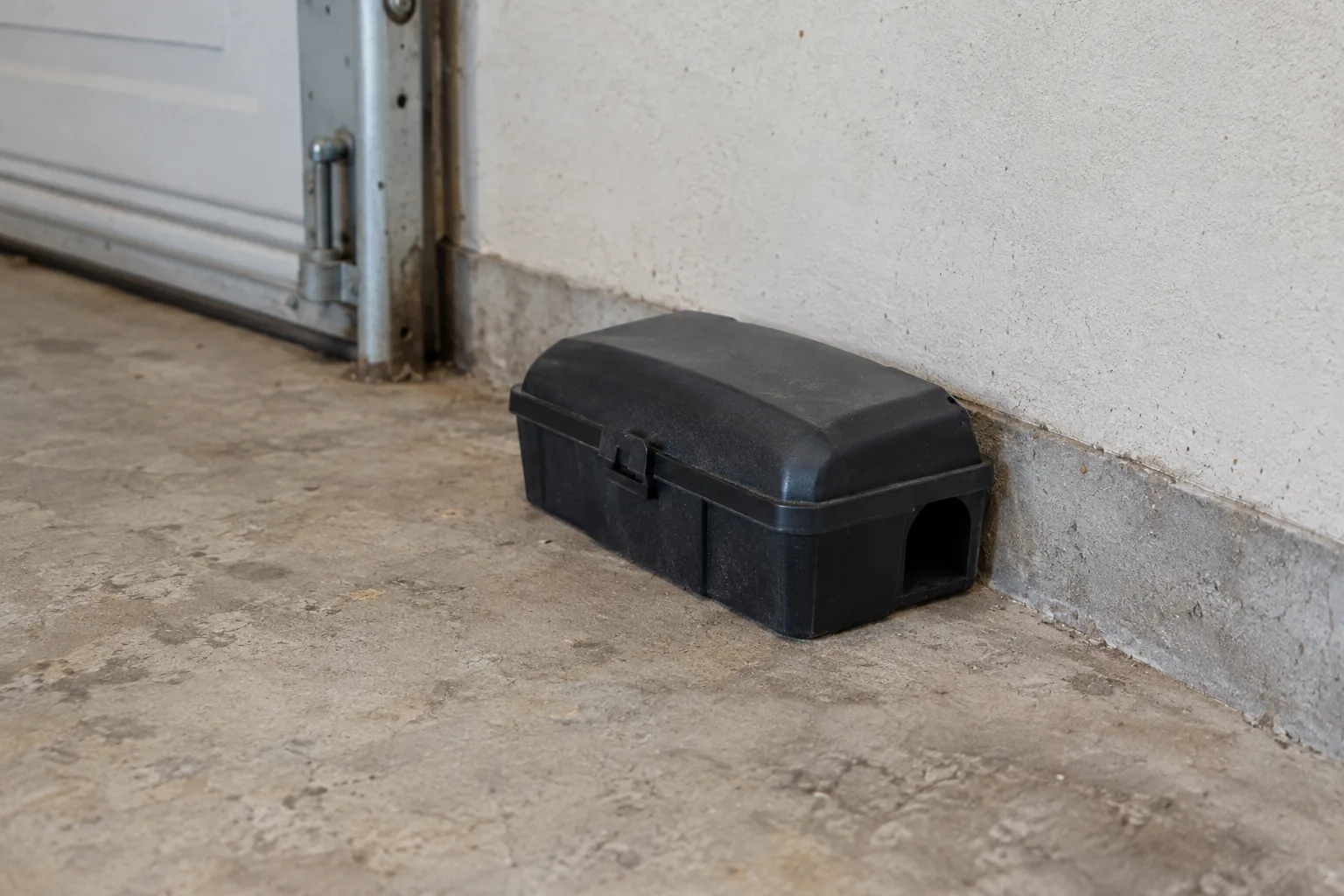
Use the bait station or other placement method required by the product label.
A properly used station can help:
- contain bait
- control placement
- reduce accidental contact
- keep servicing organized
But a station is not automatically safe just because it is enclosed.
It still must be:
- used correctly
- placed according to the label
- secured as required
- kept inaccessible to children and pets
Never Transfer Rat Poison Into Food Containers
Keep pesticide bait in its original labeled packaging until used as directed.
Do not move it into:
- jars
- bags
- food containers
- pet-food tubs
- unlabeled boxes
This prevents dangerous confusion.
Do Not Make Homemade Rat Poison
Do not mix:
- cleaning products
- medicines
- household chemicals
- food ingredients
- pesticides
to make rat poison.
Improvised toxic mixtures can harm:
- people
- pets
- wildlife
- surfaces
- food
Use only labeled pest-control products according to their instructions.
Do Not Mix Rodenticide With Food Bait
Do not modify pesticide bait by mixing it with:
- peanut butter
- pet food
- cereal
- meat
- seed
- other attractants
unless the product label specifically directs that use.
Do not alter the formulation.
Do Not Crush, Dilute, or Repackage Pesticide Bait
Do not:
- crush blocks
- dissolve bait
- dilute it
- concentrate it
- repackage it
- portion it into homemade containers
Use it only in the form and manner described by the label.
What Are the Downsides of Rodenticide Bait Indoors?
One major disadvantage is that a poisoned rat may die in an inaccessible location.
Possible places include:
- wall cavities
- ceilings
- crawl spaces
- attic voids
- cabinet voids
That can create:
- odor
- cleanup difficulty
- uncertainty about where the rat died
Mechanical traps provide known placement and retrievable catches.
Is Rodenticide Better Than Rat Traps?
Not automatically.
Mechanical rat traps provide:
- known placement
- visible monitoring
- retrievable catches
- no pesticide bait left in the environment
Rodenticide may have a role in some control programs, but it adds:
- label restrictions
- child and pet concerns
- non-target risks
- dead-rodent location uncertainty
For many household situations, correctly placed rat traps are a simple first-line control tool.
See Rat Traps: Types, Placement & How to Use Them.
What If Children Live in the Home?
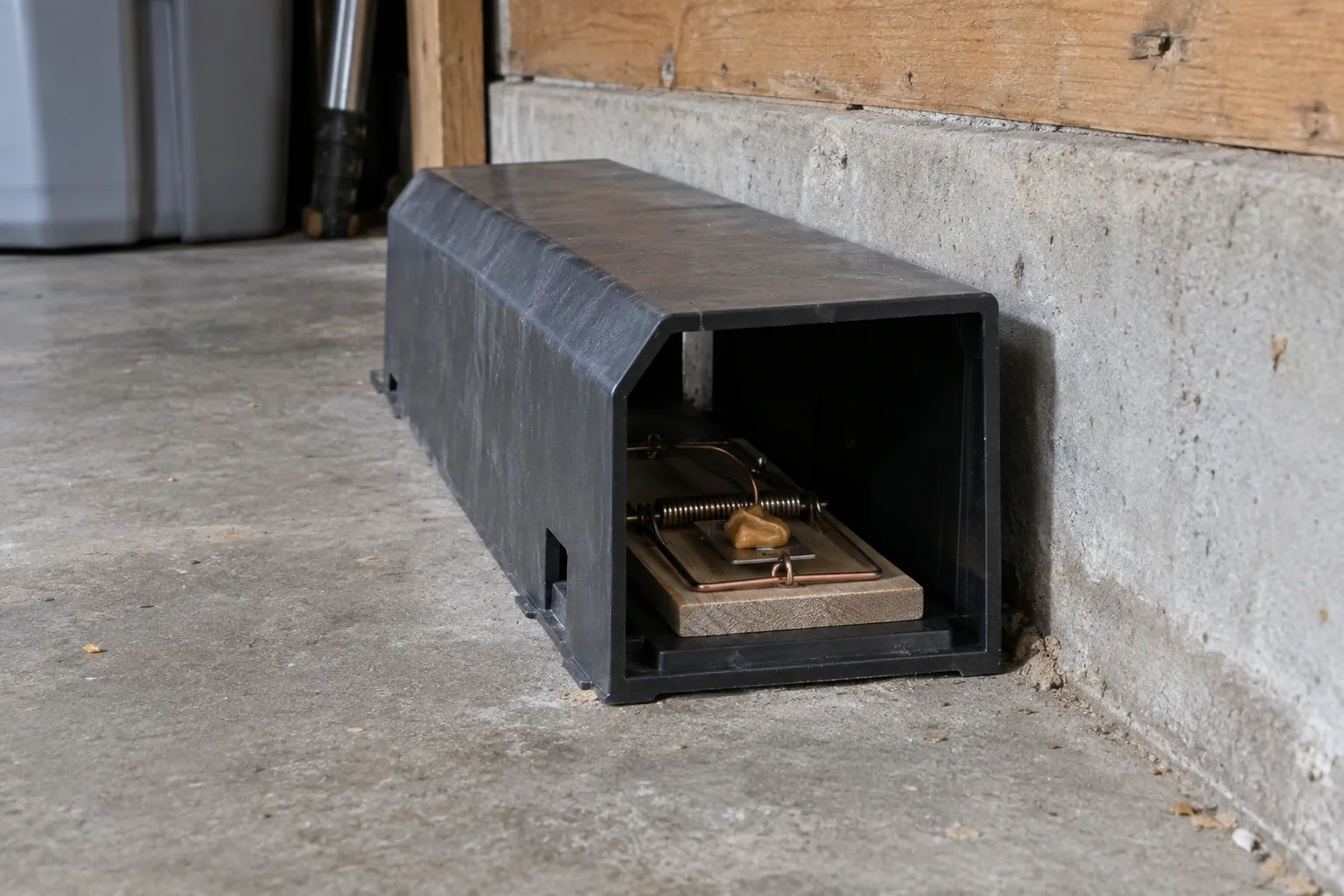
Powerful rat traps and pesticide bait must be kept inaccessible to children.
For mechanical traps:
- use protected placement
- keep traps out of play areas
- use enclosed setups where appropriate
For rodenticide:
- follow all label requirements
- use only the required station or placement method
- keep the product inaccessible
If safe placement cannot be achieved, use professional pest control.
What If Pets Live in the Home?
Pets can:
- investigate trap bait
- trigger powerful traps
- move traps
- contact pesticide bait
Use protected placement.
Do not assume a trap or bait station behind furniture is automatically pet-safe.
What About Wildlife and Non-Target Animals?
Outdoor or semi-outdoor treatment can create risks for:
- birds
- squirrels
- other wildlife
- neighborhood pets
Do not leave rodenticide exposed.
Follow the label exactly.
Can You Put Rat Bait Inside Walls?
Do not place loose food bait or rodenticide blindly inside inaccessible wall or ceiling cavities.
Problems include:
- no inspection access
- no retrieval
- possible contamination
- inability to find a dead rat
- unknown contact with wiring or utilities
Use controlled, accessible placements.
If activity is inside inaccessible voids, professional inspection may be appropriate.
Can You Put Rat Bait in Air Vents?
Do not put:
- food bait
- traps
- rodenticide
- loose material
inside active HVAC supply or return airflow.
Do not spray chemicals into ducts.
If rat activity appears near a vent, inspect the structural route around the duct or nearby cavity.
See Rats in Air Vents: How They Get There & What to Do.
Should You Put Rat Bait Into Burrows?
Do not improvise pesticide placement in a suspected burrow.
A ground hole may not belong to a rat.
If a labeled rodenticide product allows a specific outdoor placement method, follow the label exactly.
Do not:
- flood burrows
- smoke them
- burn them
- pour chemicals into them
- use gasoline or exhaust
- blindly collapse them
See Rats in the Yard: Why They’re There & What to Do.
How Often Should You Check Baited Rat Traps?
Check active mechanical traps regularly.
A practical routine is at least daily when traps are set indoors.
Regular checks help you:
- remove catches promptly
- reset sprung traps
- replace stolen bait
- adjust poor placements
How Often Should You Check Rodenticide Bait?
Follow the product label.
Do not create your own servicing schedule.
The label should determine:
- inspection frequency
- replenishment
- station servicing
- when to discontinue use
How Do You Know Whether Trap Bait Is Working?
Look for:
- bait interaction
- triggered traps
- captures
- reduction in fresh signs over time
Do not estimate rat population from:
- bait consumption
- trap catches
- droppings
If bait disappears but traps do not catch rats, reassess:
- trap placement
- trap stability
- trigger setup
- competing food
- non-target access
How Do You Know Whether Rat Activity Is Declining?
Monitor for:
- no new droppings
- no fresh tracks
- no new rub marks
- no fresh gnawing
- no trap activity
- no repeated sightings
One quiet night is not enough to prove the problem is over.
Look for the absence of fresh evidence over time.
Bait Does Not Replace Exclusion
Trap bait and rodenticide do not close:
- foundation openings
- garage-door gaps
- crawl-space defects
- utility penetrations
- soffit or roofline openings
If those routes remain open, new rats can continue entering.
See How to Keep Rats Out of Your House and Rat Entry Points: Where to Inspect Your Home.
Common Rat-Bait Mistakes
Using too much food bait
Use a small amount.
Changing bait before checking placement
Route selection matters more than constant bait changes.
Leaving food competition
Secure pet food, seed, garbage, and feed.
Scattering poison
Use pesticide bait only as the label directs.
Making homemade poison
Do not improvise toxic mixtures.
Putting treatment where children or pets can reach it
Use controlled, protected placement.
Putting bait in inaccessible voids
Keep treatment serviceable and retrievable.
Treating without exclusion
Repair entry points after active rats are addressed.
When to Call a Professional
Professional help may make sense when:
- rats keep returning
- several rooms or areas show activity
- burrows are close to structures
- safe trap or pesticide placement is difficult
- children or pets make treatment placement complicated
- rats are active in inaccessible walls or ceilings
- entry points cannot be found
- electrical wiring is damaged
- contamination is extensive
A pest-control professional can help combine:
- inspection
- trapping
- bait decisions
- exclusion
- monitoring
See Rat Exterminator: What to Expect & When to Call One.
Rat Bait: The Bottom Line
For mechanical rat traps:
- use only a small amount of food bait
- place it directly on the trigger
- use familiar food when practical
- remove competing food
- expect some rats to be cautious around new objects
- consider prebaiting when traps are avoided
- focus on route placement more than bait quantity
For rodenticide bait:
- use only labeled products
- follow the label exactly
- use the required bait station or placement method
- keep bait inaccessible to children, pets, wildlife, and non-target animals
- never scatter loose poison
- never make homemade poison
- never alter or repackage pesticide bait
- never mix pesticide bait with food unless the label specifically directs it
No bait solves the whole rat problem.
Long-term control combines:
- treatment
- sanitation
- monitoring
- entry-point repair
- exclusion
Continue with our rat traps guide, best rat traps guide, signs of rats guide, rat entry points guide, how to keep rats out guide, or how to get rid of rats.
For the broader overview, return to [Rats & Mice in the Home](/).