Black Rat: Identification, Habitat & Control
The black rat is a slender, agile rat species known scientifically as Rattus rattus.
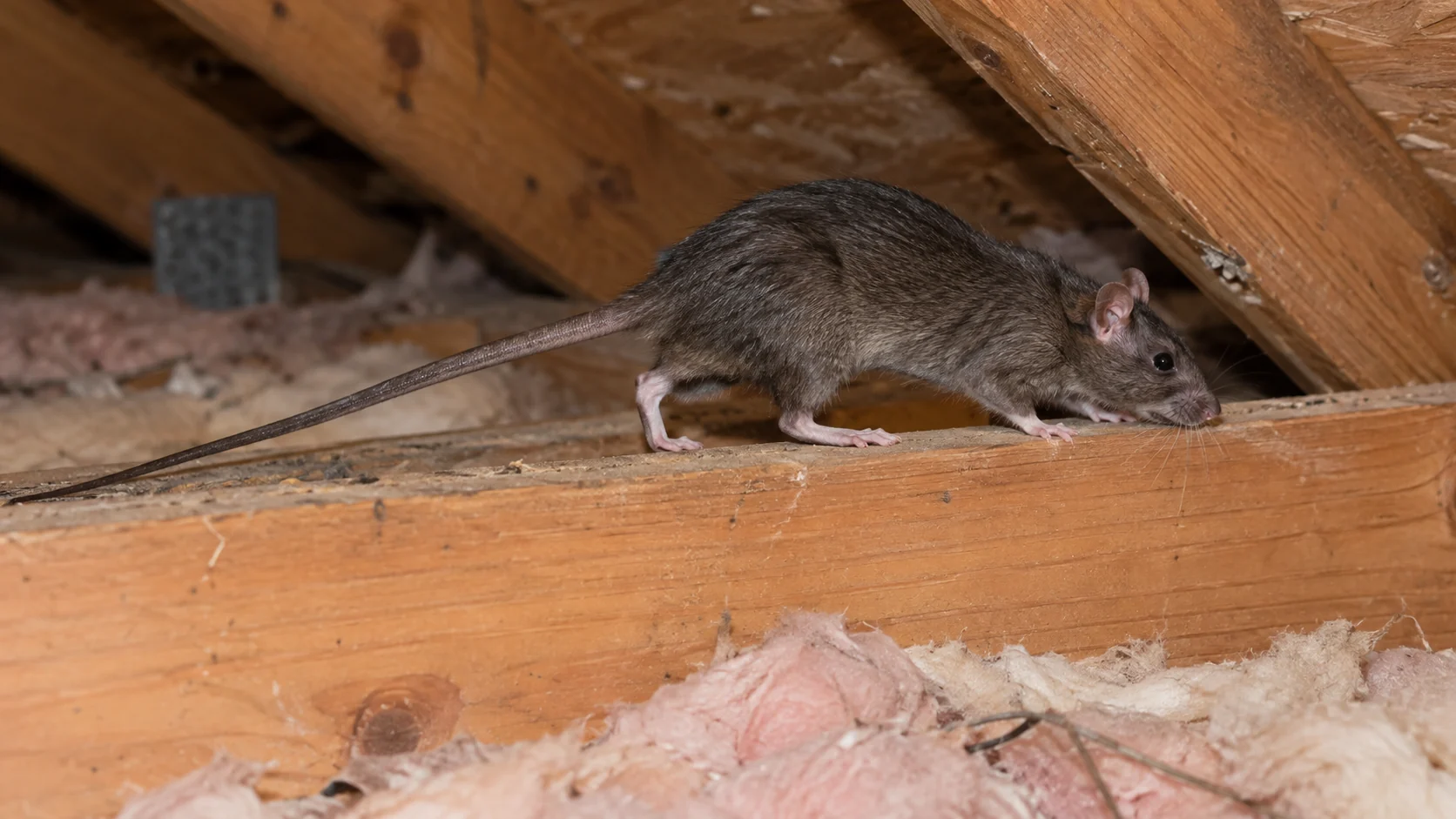
The black rat is a slender, agile rat species known scientifically as Rattus rattus.
In the United States, the same species is commonly called the roof rat because it is an excellent climber and frequently uses:
- attics
- rooflines
- trees
- fences
- upper wall spaces
- elevated utility routes
The name “black rat” can be misleading.
Not every black rat is actually black.
Individuals may be:
- dark gray
- charcoal
- gray-brown
- brown
- nearly black
Body shape and proportions are more useful identification clues than fur color alone.
A typical black rat has:
- a slim body
- a pointed muzzle
- relatively large ears
- relatively large eyes
- a long, thin tail that is usually longer than the combined head-and-body length
If you are dealing with rats around a U.S. home, the dedicated roof rat guide covers the same species from a structural-pest perspective.
This page focuses specifically on what the term “black rat” means, how to identify the species, where it lives, what evidence it leaves, and how black-rat control works around homes.
Is a Black Rat the Same as a Roof Rat?
Yes, in most U.S. pest-control contexts.
Black rat and roof rat are common names for Rattus rattus.
Other names sometimes used for the species include:
- ship rat
- house rat
- black ship rat
“Roof rat” is especially useful when discussing infestations in buildings because the name reflects the animal’s strong climbing behavior.
That does not mean every Rattus rattus lives on a roof.
Black rats can also travel at ground level, enter garages, use wall voids, and forage around yards.
The two names describe the same species, not two separate rats.
Why Are They Called Black Rats?
The common name comes from the dark appearance of many individuals.
However, black-rat fur is variable.
A rat may look:
- blackish
- dark brown
- gray-brown
- slate gray
Some individuals are much lighter than the name suggests.
That is why color is one of the weaker identification features.
A brown-looking rat can still be a black rat.
Black Rat Identification at a Glance
| Feature | Typical Black Rat / Roof Rat |
|---|---|
| Scientific name | Rattus rattus |
| Body build | Slender and agile |
| Muzzle | Pointed |
| Ears | Relatively large |
| Eyes | Relatively large |
| Tail | Long and thin, usually longer than head + body |
| Fur color | Variable: gray-brown to dark brown or blackish |
| Strong behavior clue | Excellent climber |
| Common structural location | Attics, rooflines, upper walls |
| Outdoor routes | Trees, fences, vines, elevated structures |
No single feature should be used alone.
A clear identification combines:
- body proportions
- tail length
- muzzle shape
- ear size
- activity location
- droppings
- tracks
- travel routes
What Does a Black Rat Look Like?
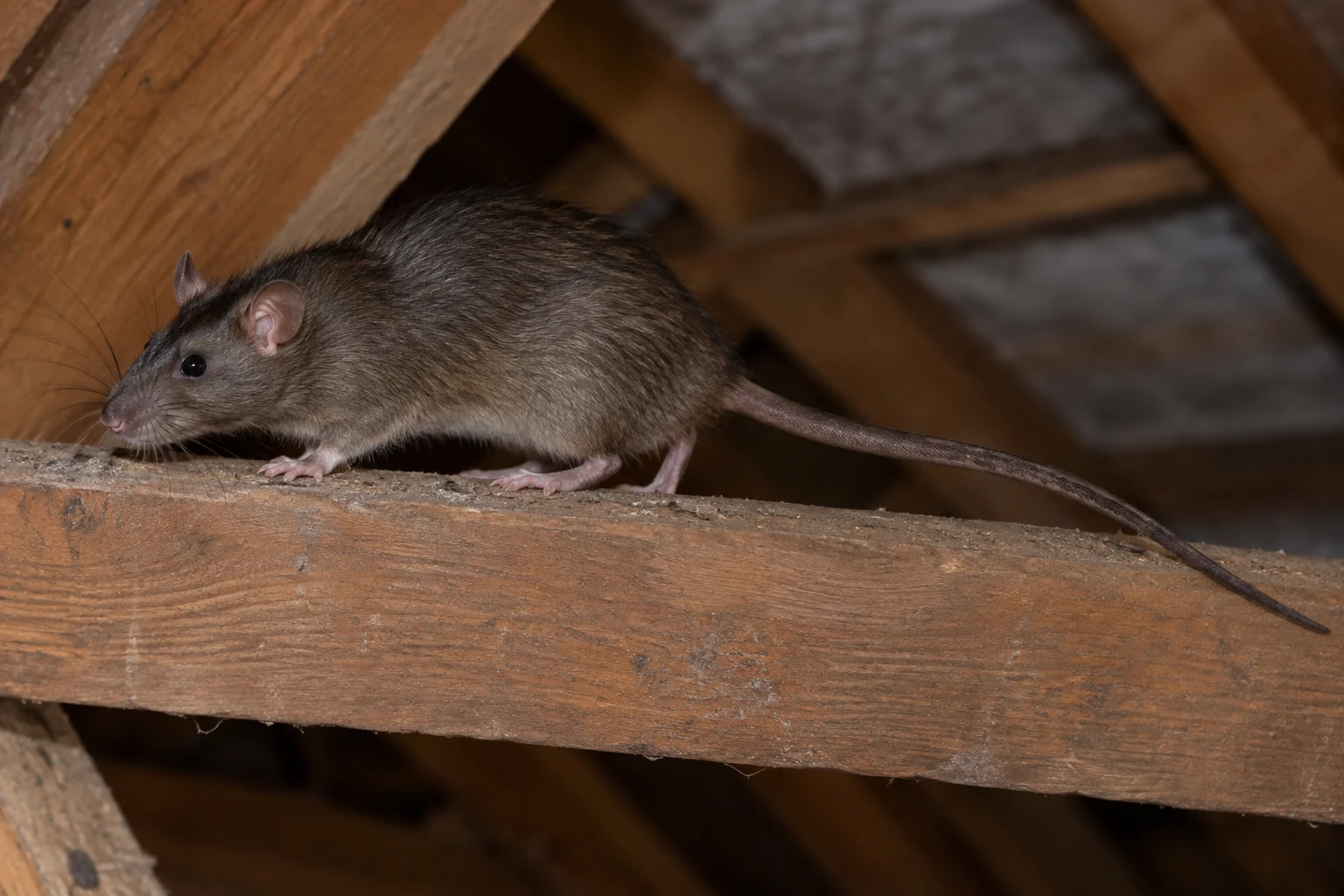
A black rat usually has a more refined, narrow-bodied appearance than a Norway rat.
From the side, look for:
- a slim torso
- a relatively narrow head
- a pointed nose
- prominent ears
- large-looking eyes
- a long tail
The animal often looks built for climbing rather than burrowing.
Its legs and body appear relatively light and agile.
Black Rat Body Shape
The body is usually:
- slender
- elongated
- relatively light-framed
This is one of the strongest clues when comparing a black rat with a heavier Norway rat.
A mature black rat should not have the thick, blocky body typical of a large Norway rat.
Black Rat Muzzle
Black rats typically have a pointed muzzle.
The head narrows toward the nose.
This contrasts with the broader, blunter muzzle of a Norway rat.
A clear side-profile image is especially useful for comparing head shape.
Black Rat Ears
The ears are relatively large compared with the head.
They usually look more prominent than the ears of a Norway rat.
Ear size can vary with viewing angle, so use it together with:
- muzzle shape
- body build
- tail length
Black Rat Eyes
Black rats generally have relatively large, prominent eyes.
The eyes contribute to the species’ lighter, more delicate facial appearance.
Do not identify the species from eye size alone.
Lighting and photographs can exaggerate this feature.
Black Rat Tail
The tail is one of the most useful identification clues.
A black rat usually has a tail that is:
- long
- thin
- flexible
- longer than the combined head-and-body length
The long tail assists with balance during climbing.
A Norway rat usually has a shorter tail relative to its body.
See Roof Rat vs Norway Rat: How to Tell Them Apart for the full comparison.
How Big Is a Black Rat?
Black rats are full-sized rats, not large mice.
Exact size varies with:
- age
- sex
- nutrition
- individual development
They are generally more lightly built than Norway rats.
A young black rat can be confused with a large mouse at a quick glance.
Tail proportions, paws, head shape, and rat-sized droppings help distinguish them.
See Rat vs Mouse: How to Tell the Difference.
Black Rat Color
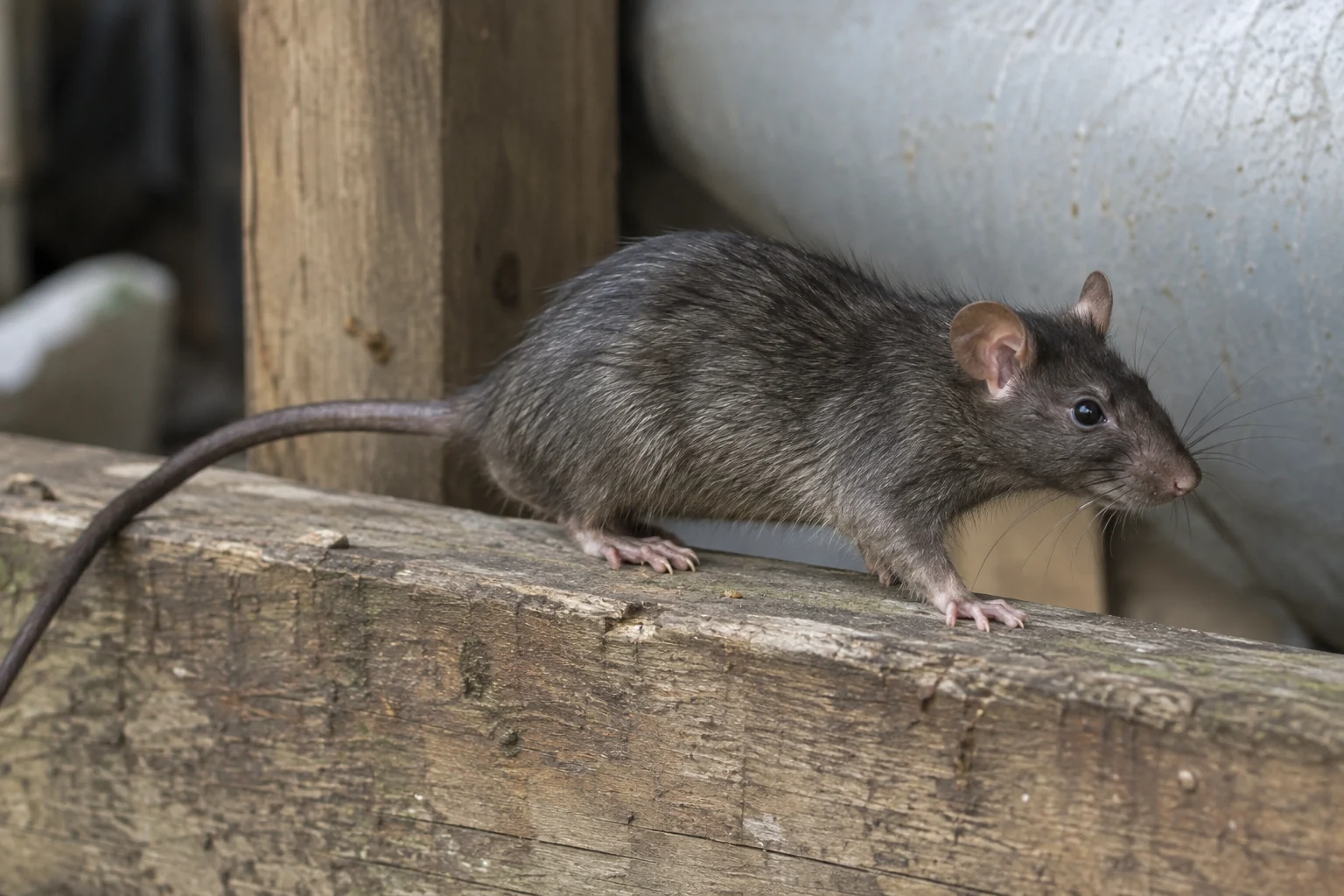
Despite the name, fur color is variable.
Common appearances include:
- dark gray
- smoky gray
- gray-brown
- dark brown
- blackish
The belly may be somewhat lighter.
Do not rule out black rat just because the animal is brown.
Likewise, do not identify every dark rat as Rattus rattus.
Black Rat vs Norway Rat
The most important comparison is black rat versus Norway rat.
Black Rat
Usually has:
- slim body
- pointed muzzle
- larger ears
- larger-looking eyes
- tail longer than head + body
- stronger climbing behavior
Norway Rat
Usually has:
- stockier body
- blunter muzzle
- smaller ears
- smaller-looking eyes
- tail shorter than head + body
- stronger burrowing behavior
Habitat helps support the identification.
Repeated attic and roofline activity fits black rats better.
Repeated foundation burrowing and lower-level activity fits Norway rats better.
See Norway Rat: Identification, Signs & Behavior for the full Norway-rat profile.
Black Rat vs Mouse
A young black rat can sometimes be mistaken for a mouse.
Look for rat proportions.
A juvenile black rat usually has:
- larger feet
- a heavier head
- a thicker tail
- rat-sized droppings as it grows
- a body that quickly becomes much larger than a house mouse
Mouse traps are not the correct default equipment for an adult black rat.
Use rat-sized devices for confirmed rat activity.
Where Do Black Rats Live?
Black rats are strongly associated with places that offer elevated shelter and climbing access.
Around homes, they may use:
- attics
- upper wall voids
- garages
- rafters
- rooflines
- trees
- vines
- fences
- sheds
- storage buildings
They can also forage at ground level.
The species is flexible and should not be treated as exclusively arboreal.
Black Rats in Attics
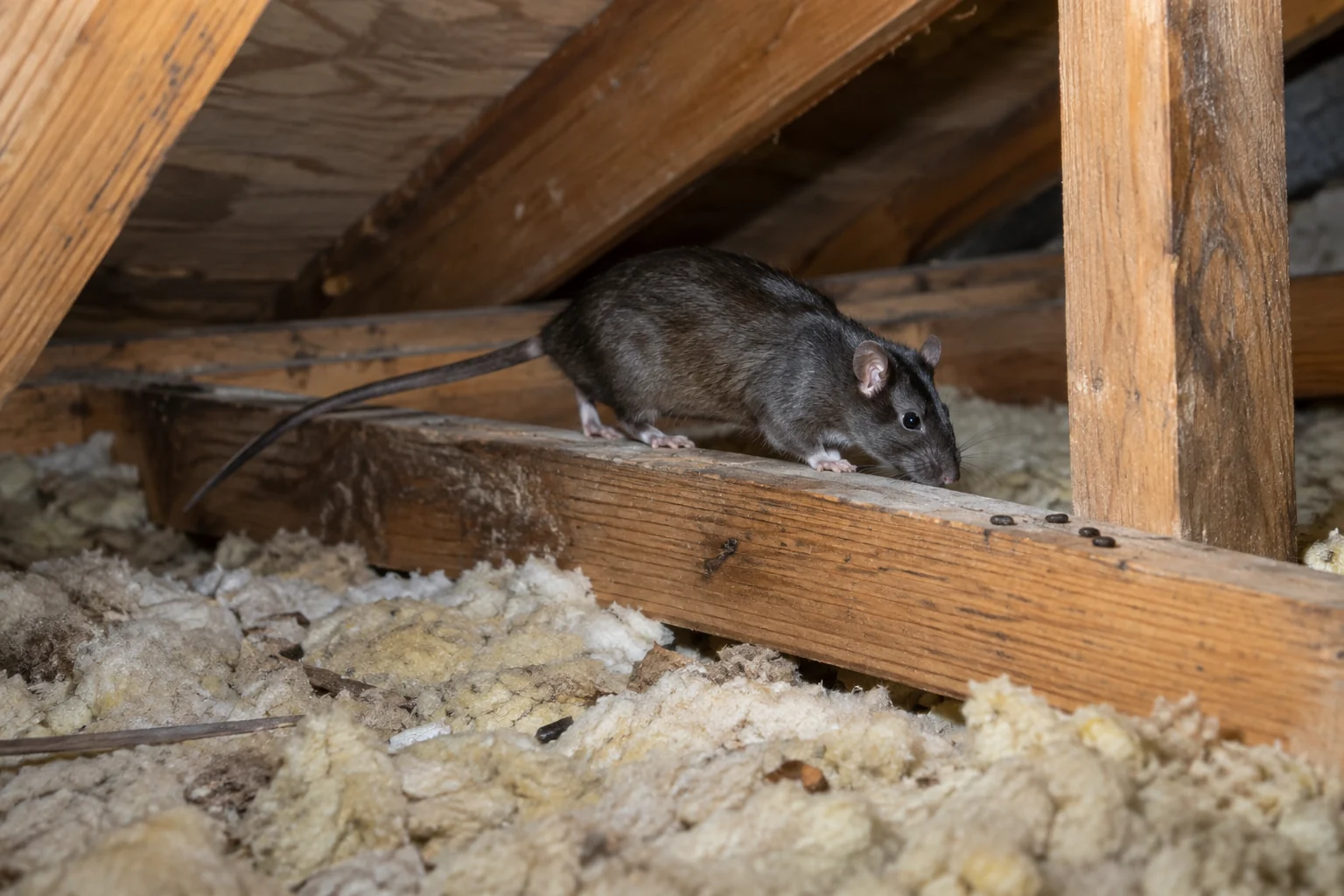
Attics are one of the most characteristic black-rat locations.
An attic can provide:
- shelter
- insulation
- nesting material
- low disturbance
- travel routes
- access to wall voids
Evidence may include:
- rat-sized droppings
- tracks
- gnaw marks
- rub marks
- disturbed insulation
- nighttime movement
See Rats in the Attic: Signs, Damage & Removal.
Black Rats on Roofs
A black rat may reach a roof from:
- tree branches
- fences
- vines
- attached structures
- utility routes
- rough exterior surfaces
Once at roof level, the rat may inspect:
- soffits
- vents
- roof-wall intersections
- fascia gaps
- damaged trim
Seeing one rat on a roof does not prove species by itself.
But repeated elevated activity combined with black-rat body proportions is a strong clue.
Black Rats in Trees
Black rats are excellent climbers and may move through trees to reach:
- fruit
- seeds
- shelter
- nearby roofs
Branches that directly contact or closely approach a structure can create convenient travel routes.
Tree activity is particularly relevant when attic signs are present.
Black Rats in Garages
Black rats can use garages as:
- entry points
- feeding areas
- travel corridors
- routes into attics or wall systems
Inspect:
- garage-door corners
- stored pet food
- bird seed
- shelving
- rafters
- wall penetrations
- attic connections
A garage infestation may involve both ground-level entry and elevated travel.
Black Rats in Walls
Black rats can use wall voids to move between levels.
Possible clues include:
- scratching
- thumping
- droppings near openings
- rub marks
- activity near attic or garage connections
You usually do not need to open a wall immediately.
First identify the accessible routes leading into and out of the wall system.
See Rats in Walls: Signs, Entry Points & What to Do.
Where Are Black Rats Found in the United States?
Black-rat distribution is not uniform across the country.
They are especially important in many:
- warmer regions
- coastal areas
- urban areas
- agricultural areas
- port-connected environments
Local populations vary.
Geography alone cannot identify a rat.
A rat in a region where roof rats occur still needs to match the species’ physical and behavioral traits.
What Do Black Rats Eat?
Black rats are opportunistic.
They may feed on:
- fruit
- seeds
- nuts
- grains
- pet food
- bird seed
- stored foods
- household food waste
Around homes, fruiting vegetation and accessible stored food can support activity.
Reducing food availability improves control but does not replace trapping or exclusion.
Are Black Rats Nocturnal?
Black rats are primarily active at night.
Homeowners may hear or see activity during:
- evening
- overnight
- early morning
Nighttime movement may occur in:
- attics
- walls
- garages
- trees
- rooflines
Daytime sightings can occur and do not automatically reveal infestation size.
Are Black Rats Good Climbers?
Yes.
Climbing ability is one of the defining behavioral traits of Rattus rattus.
They can travel along:
- beams
- pipes
- fences
- branches
- structural edges
- rough walls
- attic framing
This behavior should influence both inspection and trap placement.
Do Black Rats Burrow?
They can use ground-level shelter, but extensive burrowing is more strongly associated with Norway rats.
If the property has a large active burrow network near the foundation, Norway rat becomes more likely.
If evidence is concentrated in trees, rooflines, and attics, black rat becomes more likely.
What Do Black Rat Droppings Look Like?
Black-rat droppings are rat-sized and may be:
- elongated
- dark
- tapered
- spindle-shaped
They are generally much larger than mouse droppings.
Dropping shape can vary, so do not identify species from feces alone.
Location matters too.
Rat droppings on attic framing or elevated routes support a roof-rat pattern.
See Rat Droppings: What They Look Like & What They Mean.
Black Rat Droppings vs Norway Rat Droppings
Black-rat droppings are often described as more tapered.
Norway-rat droppings are often described as:
- thicker
- more capsule-like
- more blunt-ended
There is overlap.
Diet, hydration, age, and individual size can affect appearance.
Use droppings as supporting evidence, not a standalone species test.
Black Rat Tracks
Black rats leave rat-sized tracks.
Tracks may be visible in:
- attic dust
- garage dust
- storage areas
- sheltered ledges
Track location can be more useful than exact dimensions.
Elevated tracks support the climbing behavior expected from black rats.
Black Rat Rub Marks
Repeated rat travel can leave greasy rub marks.
Look along:
- beams
- pipes
- wall edges
- rafters
- structural corners
A dark rub mark on an elevated route can help confirm repeated use.
Do not assume every dark stain is a rat mark.
Look for droppings, tracks, or gnawing nearby.
Black Rat Gnawing
Black rats gnaw for normal rodent reasons, including maintaining their incisors and accessing food or routes.
Possible damage includes:
- food packaging
- wood
- cardboard
- plastic
- stored materials
- wiring insulation
Heavy rat gnawing is generally larger than mouse gnawing.
Where Do Black Rats Nest?
Black rats often choose protected elevated spaces.
Possible nesting locations include:
- attics
- wall voids
- rafters
- dense vegetation
- storage areas
- upper structural cavities
Nest material may include:
- paper
- fabric
- insulation
- plant material
- shredded packaging
Finding young rats or a nest means breeding has occurred nearby.
See Baby Rat: What Newborn & Young Rats Look Like.
How Do Black Rats Get Into Houses?
Common entry areas include:
- soffit gaps
- attic vents
- fascia defects
- roof-wall intersections
- garage openings
- utility penetrations
- siding gaps
- damaged vents
Because black rats climb, the inspection should not stop at ground level.
See How Rats Get Into Your House for the full entry-point guide.
Signs of a Black Rat Infestation
Possible signs include:
- large droppings
- nighttime attic sounds
- scratching in upper walls
- gnawing
- grease marks
- tracks
- damaged stored food
- disturbed insulation
- rat sightings on fences, trees, or roofs
No single sign proves black rat.
Combine the evidence with the animal’s proportions and travel pattern.
See Signs of Rats in Your House.
How to Control Black Rats
Black-rat control usually requires several steps working together.
A practical process is:
- identify active routes
- confirm rat-sized evidence
- place rat-sized traps on accessible routes
- reduce available food and water
- inspect the building from ground level to roofline
- identify entry points
- coordinate trapping with exclusion
- monitor until fresh activity stops
The key is to control the rats already inside while preventing new rats from entering.
Best Traps for Black Rats
For many indoor problems, rat-sized snap traps are a practical starting point.
Trap placement should match the route.
For black rats, that may include safe, accessible locations along:
- attic framing
- garage rafters
- upper wall routes
- protected ledges
- ground-level wall routes when evidence confirms use
Keep traps inaccessible to children and pets.
Do not place traps on unsafe roof surfaces.
See Best Rat Traps: Which Type Works Best & How to Choose and Rat Traps: Types, Placement & How to Use Them.
Pre-Baiting for Cautious Black Rats
Rats can be cautious around new objects.
If a trap is being avoided, pre-baiting may help.
That means:
- place the trap on the confirmed route
- add a small amount of bait
- leave the trap unset initially
- allow the rat to become comfortable
- set the trap once it is being approached
Remove competing food sources where practical.
Rodenticide and Black Rats
Some professional rat-control programs use rodenticides.
If rodenticides are used, they must be used according to:
- the product label
- applicable legal requirements
- required bait-station and placement rules
They must be kept inaccessible to children, pets, and non-target animals.
Rodenticide should not replace exclusion.
If the building remains open, new rats can continue entering.
Black Rat Exclusion
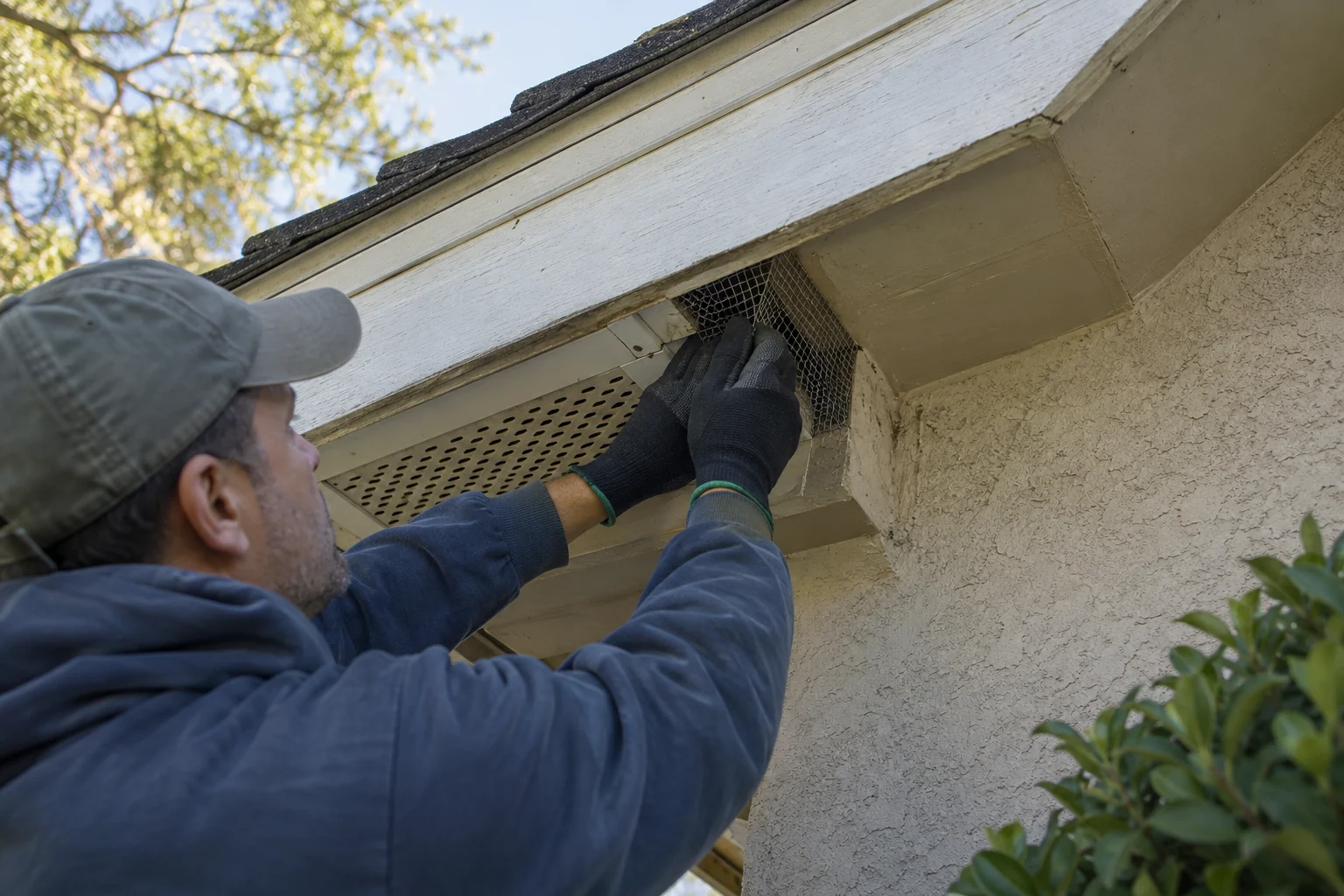
Exclusion is essential for long-term control.
For black rats, inspect both lower and elevated entry points.
Pay special attention to:
- soffits
- attic vents
- roof-wall intersections
- fascia
- garage doors
- utility gaps
- siding transitions
Use durable rodent-resistant materials appropriate for the construction detail.
See Rodent Exclusion: How to Keep Rats & Mice Out.
Trees, Vines, and Roof Access
Vegetation can create travel routes.
Inspect:
- branches touching the roof
- dense vines on walls
- trees close to upper structures
- fences connected to roof-access points
Vegetation management can reduce convenient access and make inspection easier.
It does not replace structural repairs.
Should You Seal the Entry Point Immediately?
Not always.
If rats are still inside, sealing the only active exit may trap them in the structure.
That can cause:
- movement into new areas
- increased gnawing
- attempts to create another exit
- odor if an animal dies inside an inaccessible void
Removal and exclusion should be coordinated.
Black Rat Cleanup
Rat-contaminated areas may contain:
- droppings
- urine
- nesting material
- damaged food
- contaminated insulation
Do not dry sweep or vacuum fresh rodent droppings before proper wet cleanup.
Use suitable gloves and appropriate disinfecting procedures.
See the cleanup section and rodent safety section.
When to Call a Professional
Professional rat control may make sense when:
- rats are active in an attic
- roofline entry is suspected
- safe access is difficult
- activity continues after trapping
- several areas of the home are involved
- contamination is extensive
- structural exclusion is complicated
See Rat Exterminator: What to Expect & When to Call One.
Black Rat: The Bottom Line
A black rat is generally the same species U.S. homeowners and pest professionals call the roof rat: Rattus rattus.
Do not identify one by color alone.
The strongest clues are:
- slim body
- pointed muzzle
- relatively large ears
- relatively large eyes
- long tail that usually exceeds head-and-body length
- strong climbing behavior
- activity around attics, rooflines, trees, fences, and upper walls
A black rat may be brown, gray, or blackish.
If the evidence fits this species, focus on both elevated routes and structural entry points.
Trap rats already inside, reduce food sources, repair the building, and monitor for fresh signs.
Continue with our roof rat guide, roof rat vs Norway rat comparison, Norway rat guide, signs of rats guide, rat droppings guide, how rats get into a house, best rat traps guide, or rodent exclusion guide.
For the broader overview, return to Rats & Mice in the Home.