Woodrat / Pack Rat: Identification & Home Problems
A pack rat is usually a woodrat in the genus Neotoma.
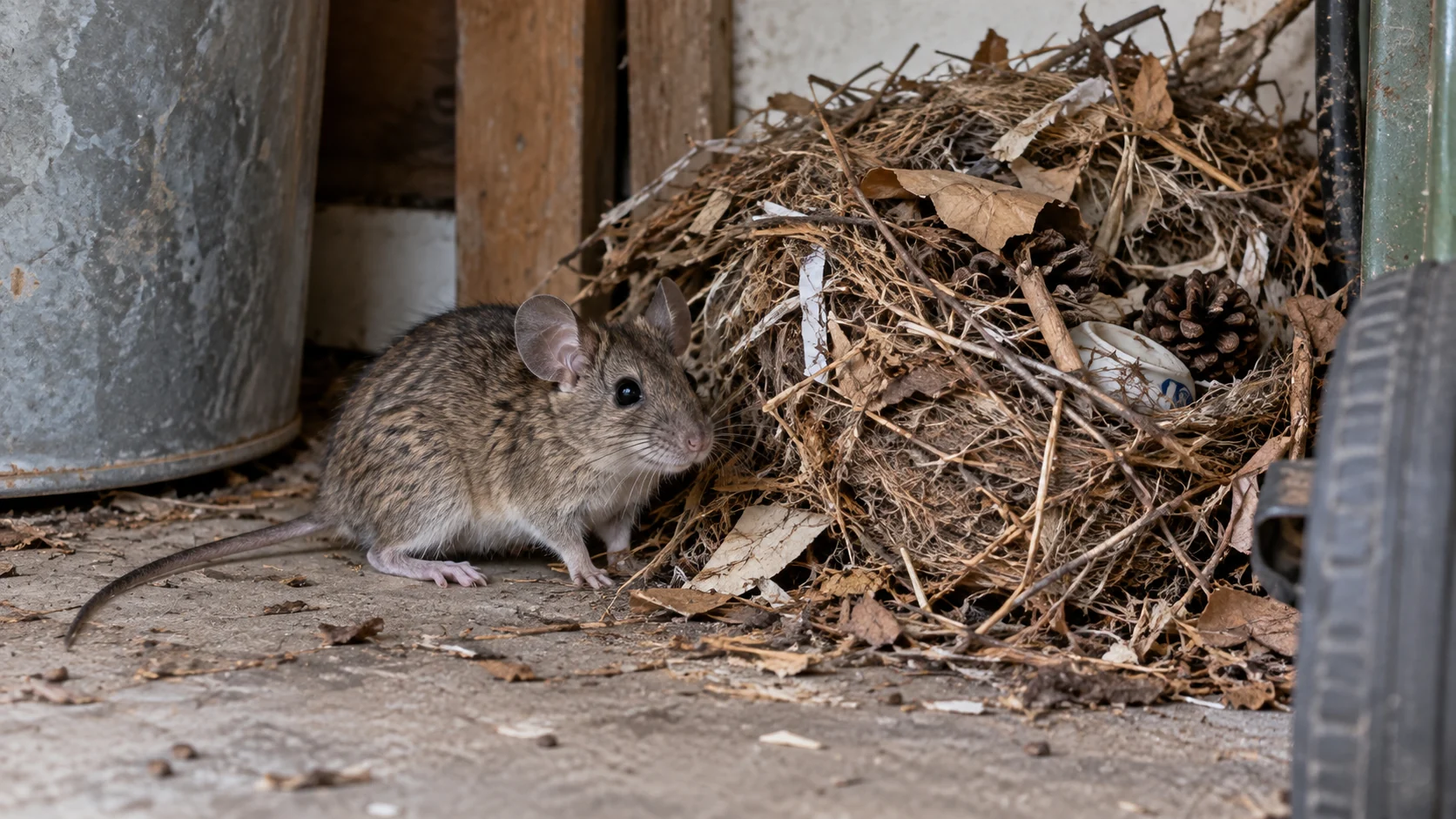
A pack rat is usually a woodrat in the genus Neotoma.
These native North American rodents are different from the Norway rats and roof rats that commonly infest buildings.
Pack rats are known for building large nests or middens from materials such as:
- sticks
- leaves
- plant fibers
- cactus pieces
- paper
- insulation
- fabric
- small human-made objects
They may live around:
- rocky areas
- brush
- desert vegetation
- woodland edges
- sheds
- garages
- crawl spaces
- attics
- abandoned structures
A pack rat can enter a home or outbuilding when it finds shelter, nesting material, food, and a usable opening.
The most useful identification clues are usually:
- a woodrat-like body rather than the sleek shape of a roof rat
- large rounded ears
- relatively large eyes
- soft gray, brown, or tan fur
- a furred tail rather than the mostly naked, scaly tail typical of Rattus
- a bulky nest or midden made from sticks and collected material
This guide explains what pack rats look like, why they are called woodrats, how they differ from roof rats and Norway rats, what their nests and droppings look like, where they enter homes, and what to do when pack-rat activity appears around a property.
Is a Pack Rat the Same as a Woodrat?
Yes, in common U.S. usage.
“Pack rat” is a common name for several species of woodrats in the genus Neotoma.
The exact species varies by region.
That means “pack rat” does not refer to one single species across the entire United States.
Different woodrat species can differ in:
- size
- color
- tail appearance
- preferred habitat
- geographic range
The shared traits that matter to homeowners are their nesting behavior, large eyes and ears, furred appearance, and tendency to build substantial nests or middens.
Why Are They Called Pack Rats?
The name comes from their habit of collecting and moving objects into or around their nesting sites.
Pack rats may gather:
- twigs
- leaves
- fibers
- paper
- cardboard
- insulation
- cloth
- plastic fragments
- small miscellaneous objects
The popular idea that pack rats always steal shiny objects is exaggerated.
They may collect many kinds of movable material.
The important pest-control clue is not whether something is shiny.
It is the presence of a large, layered nest or midden containing natural material mixed with household debris.
Pack Rat Identification at a Glance
| Feature | Typical Woodrat / Pack Rat |
|---|---|
| Scientific group | Neotoma species |
| Body | Medium-sized, soft-furred rodent |
| Ears | Large and rounded |
| Eyes | Relatively large |
| Fur | Gray, brown, tan, or mixed tones |
| Tail | Usually visibly furred; appearance varies by species |
| Strong clue | Bulky nest or midden made from sticks and collected materials |
| Common setting | Desert, brush, rocky habitat, woodland edges, sheds, garages, crawl spaces |
| Building problem | Nesting, droppings, gnawing, contamination, stored-material damage |
Species vary, so no single physical feature should be treated as universal.
What Does a Pack Rat Look Like?

A typical pack rat has a softer, more rounded appearance than a Norway rat or roof rat.
Common features may include:
- soft gray or brown fur
- a pale underside
- large rounded ears
- large dark eyes
- a pointed or moderately tapered muzzle
- relatively large hind feet
- a tail with visible fur
Depending on species, the tail may be:
- moderately furry
- strongly furred
- darker above and lighter below
- somewhat bushy
The tail is one of the easiest ways to separate many woodrats from the classic scaly-tailed rats found in buildings.
How Big Is a Pack Rat?
Woodrats are larger than house mice but vary considerably by species.
Some may look like a very large mouse.
Others may approach the overall body size people associate with a small rat.
That overlap can create confusion.
Do not identify the animal from body size alone.
Instead, compare:
- ear size
- eye size
- fur texture
- tail covering
- nest type
- activity location
Pack Rat Ears
Pack rats usually have relatively large rounded ears.
The ears often stand out clearly from the head.
They can look more mouse-like than the relatively small ears of a Norway rat.
Ear size should still be used as a supporting clue rather than a standalone test.
Pack Rat Eyes
Woodrats commonly have large dark eyes.
The eyes contribute to their mouse-like appearance even though they are larger than ordinary house mice.
A quick sighting in poor light can make a juvenile roof rat, large mouse, and woodrat difficult to distinguish.
A clear side photograph is much more useful.
Pack Rat Fur
Woodrat fur is usually soft and dense.
Color can include:
- gray
- brown
- gray-brown
- tan
- buff tones
The underside may be lighter.
Color varies by species and region.
Do not identify a pack rat from color alone.
Pack Rat Tail
The tail is an important clue.
Many woodrats have a tail that is visibly furred rather than bare and scaly.
This contrasts with:
- Norway rats
- roof rats
- house mice
which have more obviously scaly tails.
Tail appearance differs among woodrat species, so avoid treating one exact tail pattern as universal.
The key practical question is whether the tail looks substantially furred.
Pack Rat vs Roof Rat
Pack rats and roof rats can both enter attics, garages, and upper structural areas.
But they are different rodents.
Pack Rat / Woodrat
Often has:
- softer, denser fur
- large rounded ears
- large eyes
- a visibly furred tail
- bulky stick-and-debris nests or middens
Roof Rat
Usually has:
- a slimmer, sleeker body
- pointed muzzle
- large ears
- long, mostly scaly tail
- strong climbing behavior
- more conventional rat nesting material
The tail and nest type are especially useful clues.
See Roof Rat: Identification, Signs & Behavior.
Pack Rat vs Norway Rat
The differences are usually stronger.
Pack Rat / Woodrat
Often appears:
- softer-furred
- large-eared
- large-eyed
- more mouse-like
- furred-tailed
Norway Rat
Usually appears:
- heavier
- stockier
- blunt-muzzled
- small-eared
- equipped with a thick, scaly tail
Norway rats are also strongly associated with ground-level travel and burrows.
See Norway Rat: Identification, Signs & Behavior.
Pack Rat vs Mouse
A small woodrat can be mistaken for a large mouse.
Look for:
- overall body mass
- foot size
- large nest structures
- larger droppings
- substantial gnawing
- furred tail characteristics
A house mouse is generally smaller and more strongly associated with hidden indoor nesting in walls, cabinets, and appliance areas.
See Rat vs Mouse: How to Tell the Difference and House Mouse: Identification, Signs & Behavior.
Where Do Pack Rats Live?
Woodrats occur across much of North America, but individual species have different ranges.
They are especially associated with habitats such as:
- deserts
- rocky slopes
- shrubland
- woodland
- canyon areas
- brushy edges
- rural properties
Around homes, they may use:
- sheds
- detached garages
- crawl spaces
- attics
- barns
- stacked materials
- abandoned vehicles
- utility structures
A property next to natural habitat is more likely to encounter woodrats than a sealed urban apartment high above ground.
Are Pack Rats Common in the Southwest?
Several woodrat species are especially well known in the western and southwestern United States.
Dry landscapes can provide abundant nesting locations around:
- cactus
- rock piles
- brush
- sheds
- rural homes
But woodrats are not limited to deserts.
Different Neotoma species occur in other habitats and regions as well.
Do not use geography alone to identify the animal.
What Is a Pack Rat Midden?
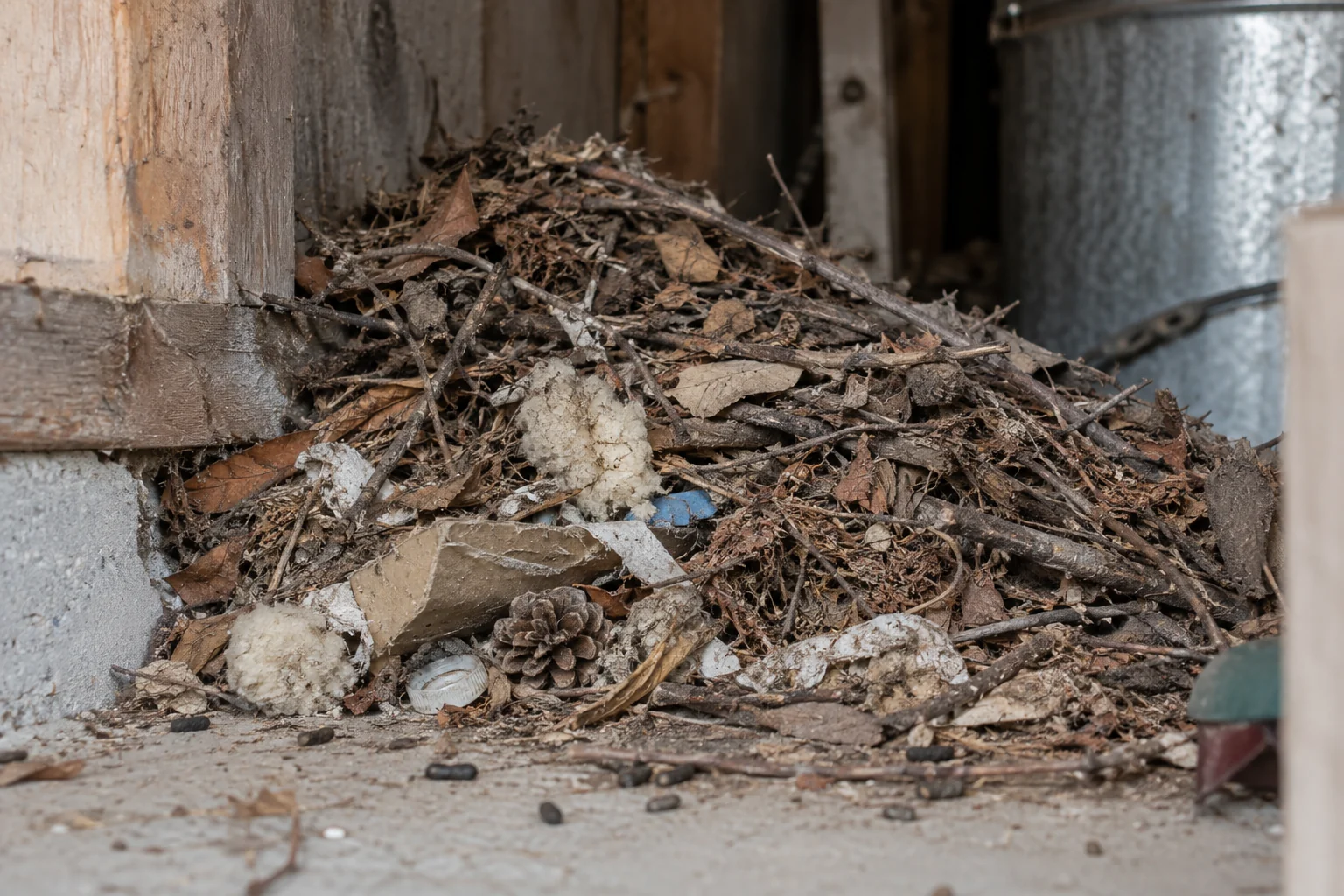
A midden is a long-used accumulation of nesting material, food debris, plant matter, and other collected objects.
A woodrat midden may contain:
- sticks
- leaves
- cactus pieces
- seeds
- fibers
- paper
- small objects
- droppings
- urine-stained material
Some middens are built in:
- rock crevices
- dense vegetation
- sheds
- crawl spaces
- abandoned structures
A midden can become much larger and more obvious than an ordinary mouse nest.
What Does a Pack Rat Nest Look Like?
A pack-rat nest is often bulky and layered.
It may look like a pile or mound of:
- twigs
- sticks
- shredded plant material
- paper
- insulation
- fabric
- stored debris
In a building, the nest may be tucked behind:
- stored boxes
- wall framing
- insulation
- equipment
- shelving
- crawl-space supports
The mixture of natural sticks and household material can be a useful clue.
Pack Rat Nests in Attics
Pack rats may use attics where regional species and building access make it possible.
An attic nest may include:
- insulation
- shredded paper
- twigs
- plant material
- fabric
- stored debris
Look for supporting signs such as:
- droppings
- gnawing
- tracks
- odor
- disturbed insulation
See Rats in the Attic: Signs, Damage & Removal for the broader attic-control process.
Pack Rats in Crawl Spaces
Crawl spaces can provide:
- darkness
- shelter
- structural cavities
- nesting material
- access to utility routes
A woodrat may build a nest near:
- foundation corners
- stored material
- pipes
- framing
- insulation
Crawl spaces can also contain other rodents.
Use the actual animal, tail, droppings, and nest structure together for identification.
Pack Rats in Garages
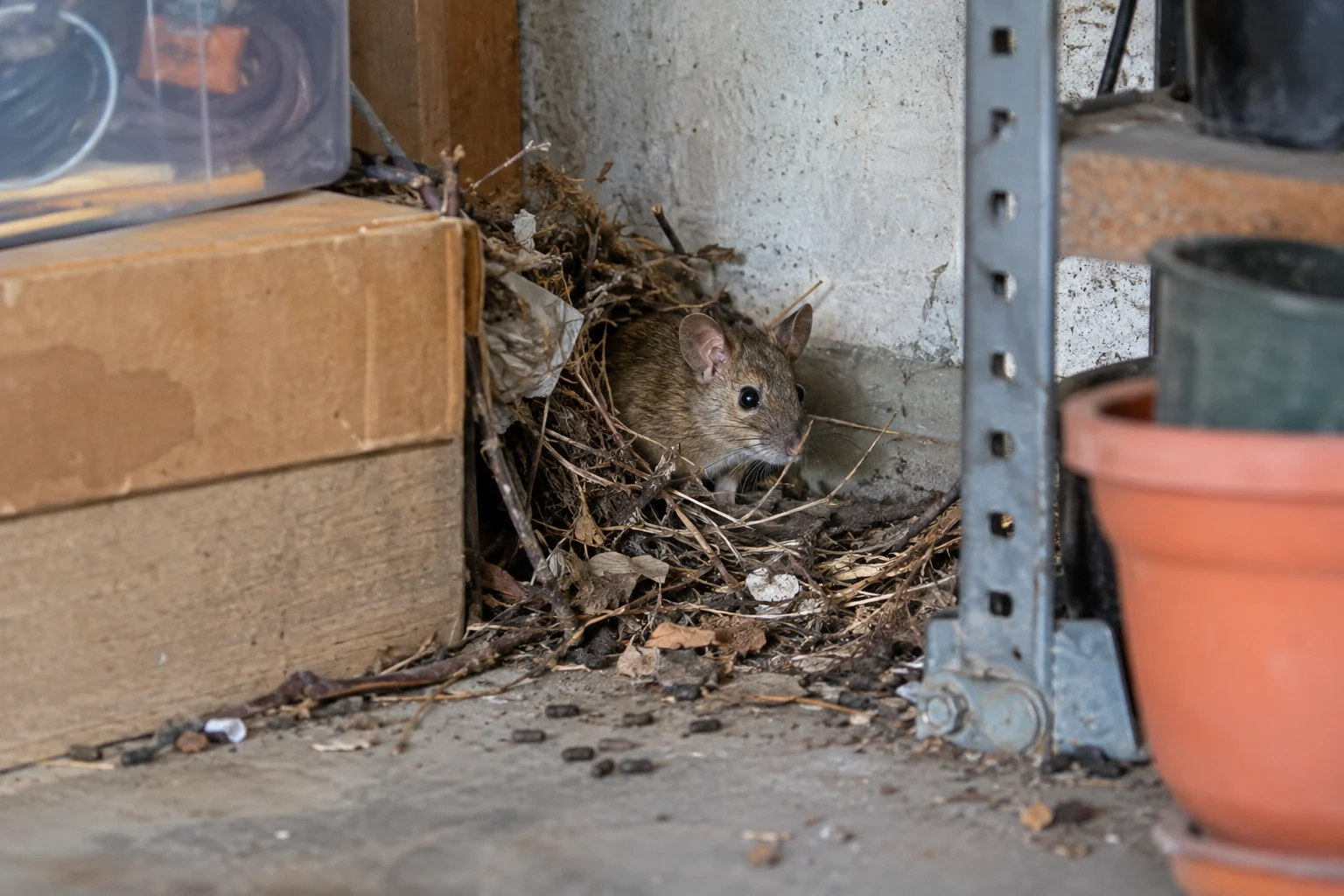
Garages are common transition spaces between outdoor habitat and a home.
A pack rat may enter through:
- door gaps
- damaged seals
- open side doors
- utility penetrations
- wall openings
Inside, it may use:
- cardboard
- cloth
- storage material
- insulation
- shelving
A garage nest can become established if the area remains quiet for long periods.
Pack Rats in Sheds
Sheds can be especially attractive because they may provide:
- low disturbance
- open gaps
- stored nesting material
- seed or feed
- sheltered corners
A large stick-and-debris nest in a rural shed is a stronger pack-rat clue than one small ball of shredded paper.
Pack Rats in Vehicles
Woodrats can sometimes nest in or around infrequently used vehicles or equipment, especially in rural areas.
Potential nesting locations include protected compartments where material can accumulate.
Rodents may also gnaw:
- wiring insulation
- hoses
- stored materials
If a vehicle sits unused near natural habitat, inspect it periodically for nesting debris and fresh droppings.
What Do Pack Rat Droppings Look Like?
Pack-rat droppings are larger than typical house-mouse droppings.
They may appear:
- dark
- pellet-shaped
- elongated
- moderately thick
Exact size and shape vary by woodrat species.
Do not identify a pack rat from droppings alone.
Droppings should be combined with:
- nest structure
- tracks
- tail appearance
- body sightings
- habitat
See Mouse vs Rat Droppings: How to Tell the Difference for general rodent-dropping comparison.
Pack Rat Tracks
Woodrats can leave tracks in:
- dust
- garages
- sheds
- crawl spaces
- attics
- fine soil
Track dimensions overlap with other medium-sized rodents.
Tracks are more useful for identifying:
- active routes
- nest access
- travel direction
than for confirming the exact species.
Pack Rat Gnawing
Like other rodents, pack rats gnaw.
Possible targets include:
- wood
- cardboard
- food packaging
- stored materials
- plastic
- wiring insulation
Gnawing confirms rodent activity but usually does not identify the species by itself.
The nest and tail provide stronger clues.
Why Do Pack Rats Collect Things?
Collecting material is part of their nesting and caching behavior.
Objects may be moved into or near the nest.
The collected material may serve as:
- nesting structure
- cover
- stored material
- environmental clutter around the midden
Do not expect every pack-rat nest to contain shiny objects.
That stereotype is much narrower than the real behavior.
Are Pack Rats Nocturnal?
Woodrats are primarily active at night.
Homeowners may hear movement during:
- evening
- overnight
- early morning
Sounds may come from:
- attics
- crawl spaces
- sheds
- garages
Noise alone cannot distinguish a pack rat from other rodents.
Look for the physical evidence.
Signs of Pack Rats Around a Home
Possible signs include:
- bulky stick-and-debris nests
- larger rodent droppings
- nighttime movement
- gnaw marks
- shredded storage material
- disturbed insulation
- missing or moved small objects
- tracks in dusty areas
- sightings of a large-eared, furred-tailed rodent
A midden is one of the strongest clues.
Do Pack Rats Damage Homes?
They can.
Potential problems include:
- contaminated storage areas
- damaged insulation
- gnawed materials
- damaged food packaging
- nesting debris
- wiring damage
- odor
- droppings and urine
The severity depends on:
- nest location
- infestation duration
- number of animals
- access to stored materials
Are Pack Rats Dangerous?
A pack rat usually tries to avoid people.
The main household concern is contamination and property damage rather than direct aggression.
Treat:
- droppings
- urine
- nests
- contaminated material
as potentially unsanitary.
Avoid unnecessary direct contact with the animal or nest.
Safe Cleanup of Pack Rat Droppings and Nests
Do not dry sweep or vacuum fresh rodent droppings or nesting material before proper wet cleanup.
A practical approach is:
- keep children and pets away
- ventilate the space when appropriate
- wear suitable gloves
- wet droppings and contaminated nesting material with an appropriate disinfecting solution
- allow adequate contact time
- wipe up or collect the material
- bag waste appropriately
- clean the surrounding surface
- wash hands after removing gloves
Large old middens or heavily contaminated spaces may justify professional cleanup.
See the cleanup section and rodent safety section.
How Do Pack Rats Get Into Homes?
A woodrat may use openings around:
- doors
- garage doors
- foundations
- crawl-space vents
- utility penetrations
- siding
- rooflines
- damaged screening
The active entry point depends on where the nest is located.
A crawl-space nest suggests a different inspection priority than an attic nest.
How Small a Gap Can a Pack Rat Use?
There is no useful single gap measurement for every woodrat species and body size.
The practical rule is to inspect any opening large enough for the animal's head and shoulders.
Look for:
- rub marks
- droppings
- tracks
- nesting material
- disturbed dust
around suspected openings.
Pack Rat Exclusion
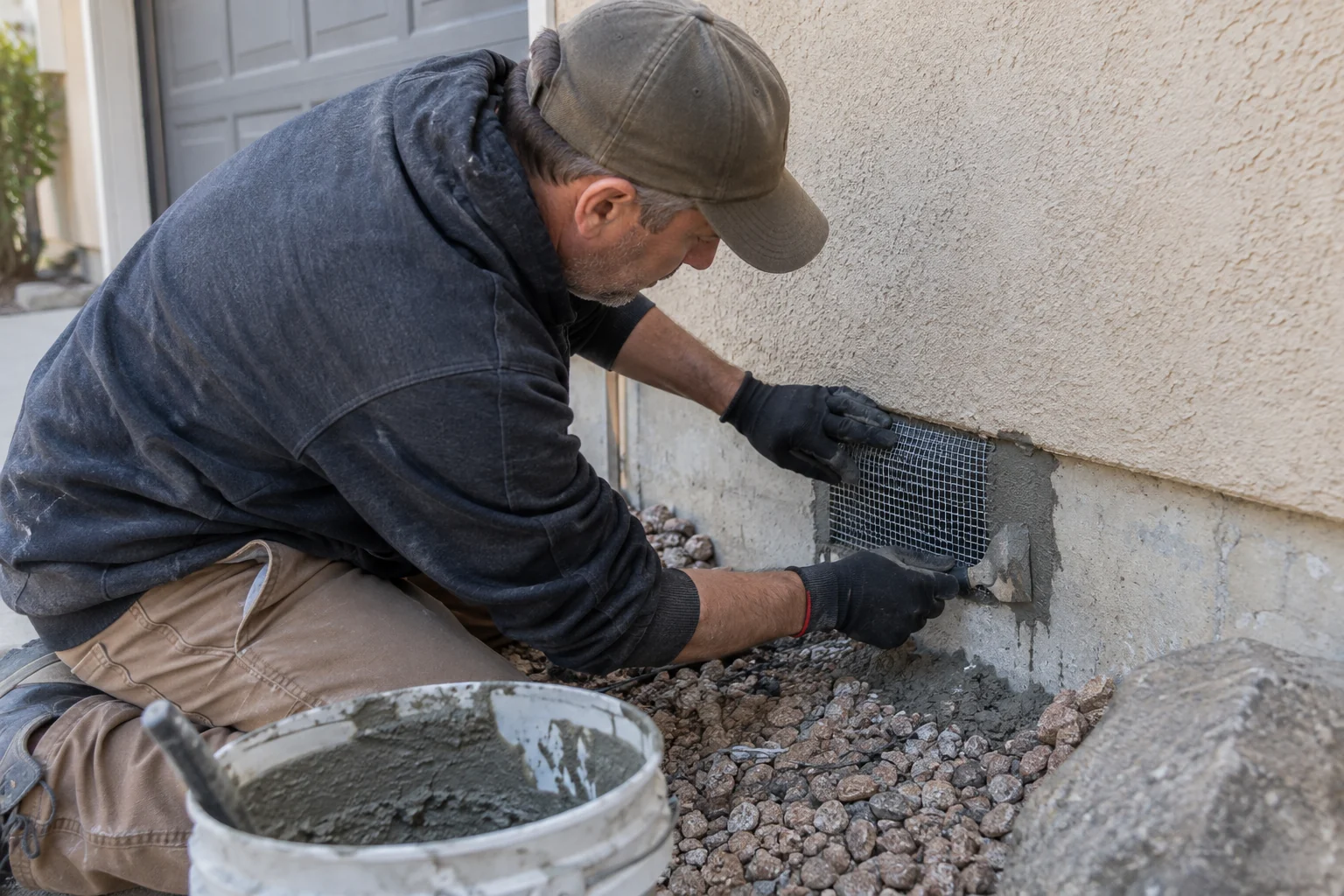
Long-term control requires blocking re-entry.
Inspect:
- garage-door seals
- exterior doors
- vents
- utility gaps
- crawl-space access
- siding defects
- roofline gaps
Use durable rodent-resistant materials appropriate for the construction detail.
Do not block required:
- ventilation
- drainage
- appliance exhaust
See Rodent Exclusion: How to Keep Rats & Mice Out.
Should You Remove the Nest Before Sealing?
Removal and exclusion should be coordinated.
If the active animal is still inside, sealing the only route can trap it in the structure.
That may lead to:
- new gnawing
- movement into other areas
- attempts to create another exit
- odor if an animal dies in an inaccessible void
Confirm activity and removal before permanently closing the final active route.
How to Get Rid of Pack Rats
A practical control plan is:
- confirm that the rodent is a woodrat rather than a roof rat, Norway rat, or mouse
- identify the active nest or midden
- map travel routes
- reduce accessible food
- remove clutter that supports nesting where practical
- use appropriately sized traps on confirmed routes
- coordinate nest removal with animal removal
- repair entry points
- clean contaminated areas safely
- monitor for fresh signs
Do not rely only on nest removal.
If the animal can still enter, a new nest may appear.
What Traps Work for Pack Rats?
Trap selection depends on the size of the local woodrat species.
Many adult woodrats require a larger trap than a house mouse.
Use a device appropriate for the animal's actual size.
Potential options may include:
- appropriately sized snap traps
- enclosed mechanical traps
- live-capture devices where legally and practically appropriate
Place traps on confirmed travel routes, not randomly.
Keep traps inaccessible to:
- children
- pets
- non-target wildlife
For general rat-trap principles, see Rat Traps: Types, Placement & How to Use Them and Best Rat Traps: Which Type Works Best & How to Choose.
Pack Rat Trap Placement
Useful locations may include:
- beside the nest route
- along walls
- near droppings
- beside structural edges
- near storage routes
- close to the confirmed entry point
Avoid placing traps where people or pets can contact them.
If the animal ignores the trap, reassess the travel route and device size.
Food and Clutter Management
Pack rats may be supported by:
- pet food
- bird seed
- stored grain
- fallen fruit
- garbage
- dense clutter
Reduce accessible food and nesting material where practical.
Outdoor cleanup can include:
- removing unnecessary debris
- organizing storage
- keeping feed in rodent-resistant containers
- reducing dense clutter close to buildings
Habitat modification supports control but does not replace exclusion.
When to Call a Professional
Professional rodent control may make sense when:
- you cannot distinguish a pack rat from another rat
- the nest is inside an attic or crawl space
- contamination is extensive
- multiple nests are present
- trapping is not working
- wiring or insulation damage is significant
- exclusion requires structural repairs
- the property is also used by non-target wildlife
A professional can help identify the rodent before choosing the control method.
Pack Rat vs Roof Rat: Why Correct Identification Matters
These animals can use some of the same buildings, but they differ in ecology and appearance.
A roof rat is an introduced Rattus species with a long scaly tail and sleek climbing body.
A pack rat is a native Neotoma woodrat with a more visibly furred appearance and characteristic nesting or midden behavior.
Misidentification can lead to:
- wrong trap size
- poor trap placement
- missed nest sites
- unnecessary treatment
Start with the evidence.
Woodrat / Pack Rat: The Bottom Line
A pack rat is usually a woodrat in the genus Neotoma.
The strongest practical clues are:
- large rounded ears
- large dark eyes
- soft gray or brown fur
- a visibly furred tail
- a bulky nest or midden made from sticks and collected material
- activity around rural, desert, rocky, brushy, or semi-natural habitat
Pack rats are not the same as roof rats or Norway rats.
If one enters a home, garage, shed, attic, or crawl space, the control process should focus on:
- correct identification
- the active nest
- travel routes
- appropriately sized traps
- exclusion
- safe cleanup
Continue with our rat vs mouse guide, roof rat guide, Norway rat guide, roof rat vs Norway rat comparison, signs of rats guide, rodent exclusion guide, or rodent control guide.
For the broader overview, return to Rats & Mice in the Home.