Mouse Nests: What They Look Like & Where to Find Them
A mouse nest is usually a small, hidden mass of soft shredded material built in a protected place.
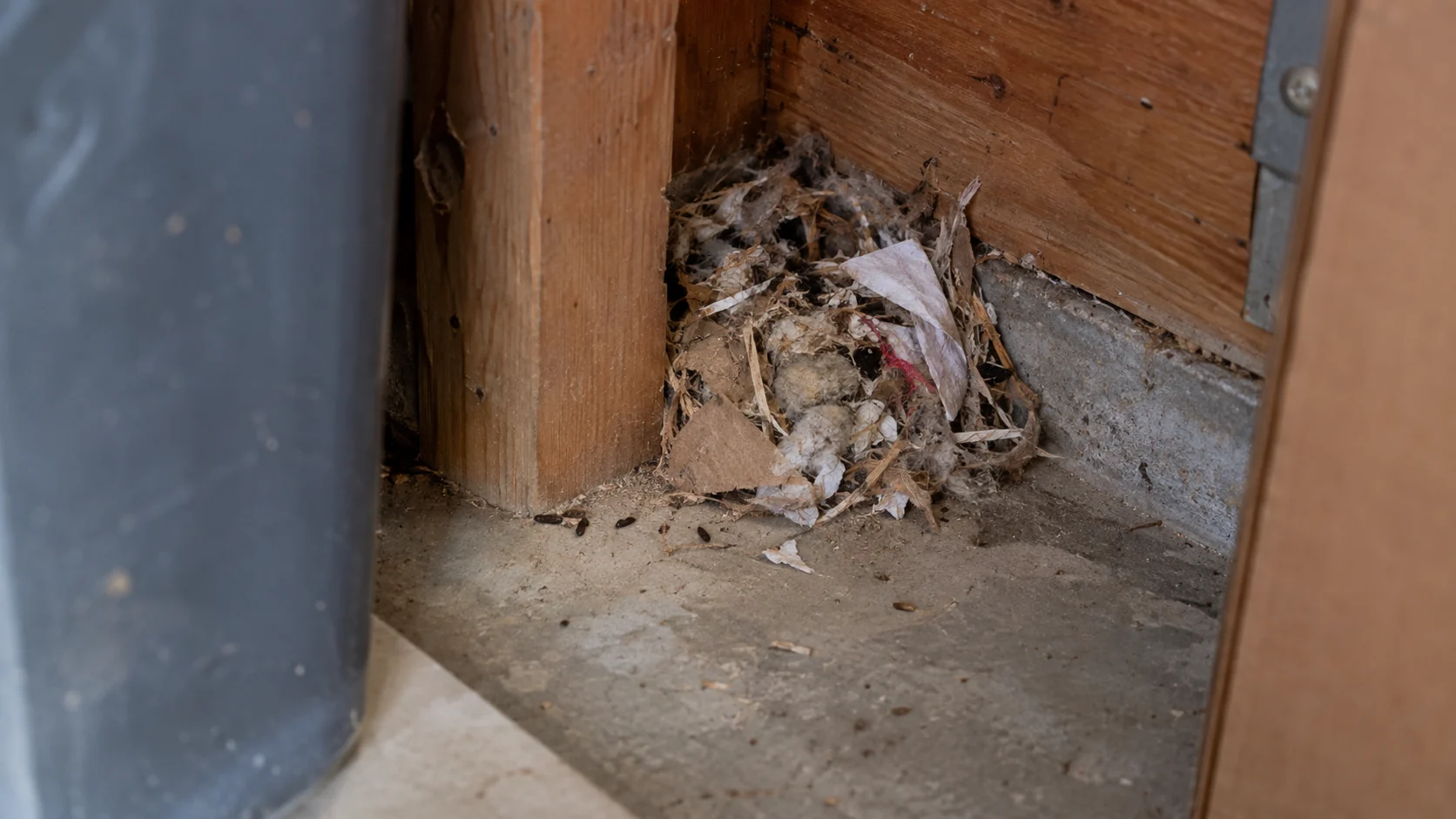
A mouse nest is usually a small, hidden mass of soft shredded material built in a protected place.
Common nesting materials include:
- shredded paper
- cardboard fibers
- fabric
- insulation
- stuffing
- string
- dried plant material
- soft packaging
Mouse nests do not always look like neat bird nests.
Inside a home, a nest may look more like:
- a loose ball of shredded material
- a shallow cup
- a compact pocket inside insulation
- a messy pile tucked into a cabinet, box, wall void, or appliance space
The most important clue is location.
Mice usually choose places that are:
- hidden
- dry
- relatively warm
- low disturbance
- close to protected travel routes
- reasonably close to food
If you find a mouse nest, especially one with fresh droppings or baby mice, it is strong evidence that mice are actively using or recently used that part of the structure.
This guide explains what mouse nests look like, where to search for them, how to tell whether a nest may still be active, and how to handle contaminated nesting material safely.
What Does a Mouse Nest Look Like?
A typical mouse nest is made from soft material gathered from the surrounding area.
It may contain:
- torn paper
- shredded cardboard
- insulation fibers
- cotton or fabric
- tissue
- stuffing
- dried grass
- leaves
- string
- bits of packaging
The nest may be:
- rounded
- cup-shaped
- loosely packed
- compressed into a hidden cavity
The exact shape depends on the space.
A mouse nesting inside a wall may build a compact pocket.
A mouse nesting in a cardboard box may build a visible ball of shredded material.
A mouse in attic insulation may create a shallow hollow that is much harder to recognize.
What Size Is a Mouse Nest?
There is no single exact nest size.
A mouse nest must be large enough to provide a protected resting area, but its appearance depends on:
- the cavity
- available material
- whether young mice are present
- how long the site has been used
- the mouse species
A nest inside a drawer may be compact.
A nest in loose attic insulation may spread over a larger area without looking like a distinct ball.
Do not identify a nest from size alone.
What Materials Do Mice Use for Nests?
Mice prefer material that can be shredded, carried, and arranged.
Common indoor materials include:
- paper towels
- tissues
- toilet paper
- newspaper
- cardboard
- insulation
- cloth
- cotton
- foam
- furniture stuffing
- string
Outdoor or semi-outdoor nests may also contain:
- grass
- leaves
- plant fibers
- seed husks
The material often reflects what is available nearby.
If you see a pile of shredded material that does not belong there, inspect the surrounding area for mouse evidence.
Do Mice Shred Paper for Nests?
Yes.
Shredded paper is a common nesting material.
Signs may include:
- torn paper edges
- missing corners from cardboard
- chewed tissue
- shredded paper inside drawers
- small piles behind boxes
Paper damage is more meaningful when it appears with:
- mouse droppings
- gnaw marks
- food damage
- a hidden cavity
Shredded paper alone does not prove mice.
Do Mice Use Insulation for Nests?
Yes.
Attic, wall, and crawl-space insulation can provide soft material and shelter.
A mouse may:
- tunnel into loose insulation
- compress a small nesting pocket
- pull fibers into another cavity
- mix insulation with paper or plant material
Disturbed insulation is not automatically a mouse nest.
Look for droppings, tracks, gnawing, or nearby entry routes.
Where Do Mice Build Nests in a House?
Mice usually nest in protected spaces that people rarely disturb.
Common locations include:
- wall voids
- kitchen cabinets
- drawers
- behind appliances
- attics
- garages
- basements
- crawl spaces
- storage boxes
- closets
- furniture cavities
- utility areas
The best place to search is where several signs overlap.
For example:
- droppings behind a refrigerator
- gnawed packaging in a pantry
- scratching in one wall
- shredded material under a cabinet
together can help narrow the nest location.
See Signs of Mice in Your House for the broader evidence pattern.
Mouse Nests in Kitchen Cabinets
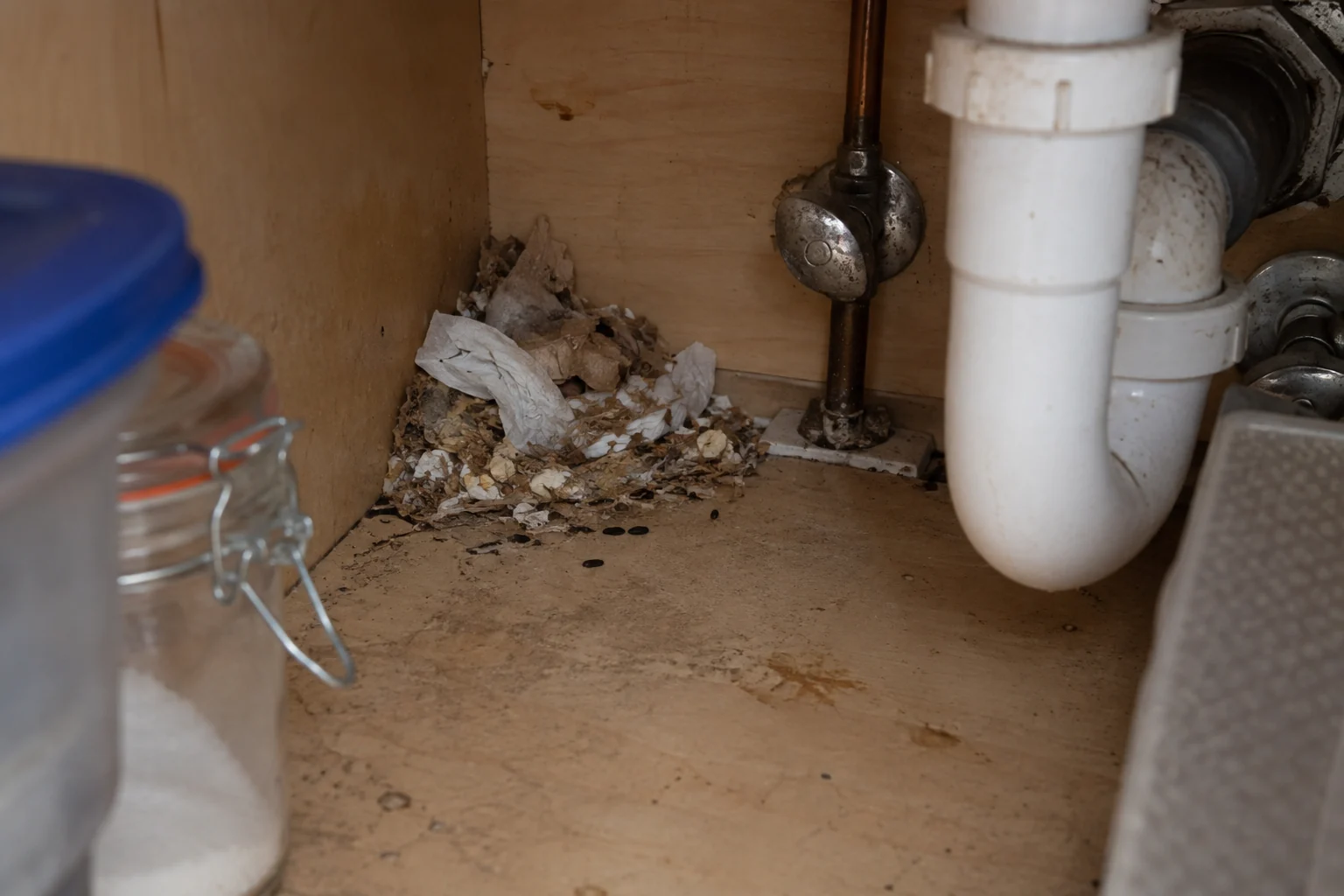
Kitchen cabinets provide:
- darkness
- shelter
- food access
- wall penetrations
- low disturbance
Look especially in:
- lower cabinets
- back corners
- under sinks
- cabinet voids
- spaces near plumbing
A nest may be hidden behind stored items rather than sitting in the open.
Fresh mouse droppings in the same cabinet increase the likelihood that the area is actively used.
See Mouse Droppings: What They Look Like & What They Mean.
Mouse Nests Behind Appliances
Mice may use spaces behind or beneath:
- refrigerators
- stoves
- dishwashers
- freezers
These areas can provide:
- warmth
- crumbs
- wall edges
- utility penetrations
- low disturbance
The nest itself may not be directly behind the appliance.
The appliance space may simply be part of the route leading to a wall or cabinet cavity.
Inspect for:
- droppings
- gnawing
- shredded material
- plumbing or wiring gaps
Mouse Nests in Walls
Wall voids provide excellent shelter.
A mouse nest inside a wall may be impossible to see directly.
Possible clues include:
- scratching
- light movement sounds
- droppings near a wall opening
- activity around plumbing penetrations
- shredded material pulled through a gap
Do not open a wall immediately just because you hear movement.
First identify accessible entry and exit routes.
See Mice in Walls: Signs, Entry Points & What to Do.
Mouse Nests in Attics
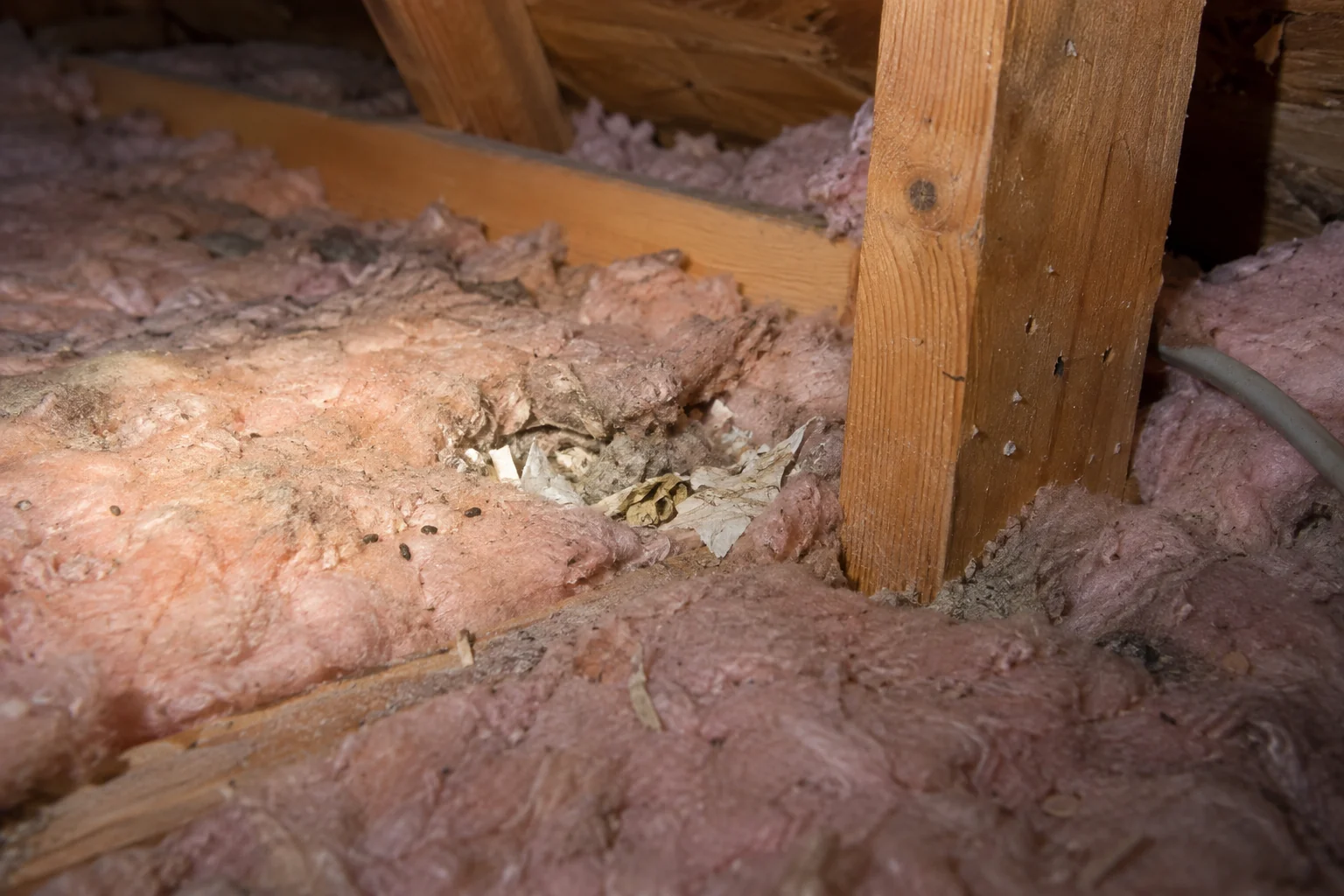
Attics offer many nesting opportunities.
Mice may nest:
- under insulation
- beside framing
- inside stored boxes
- near wall connections
- around low-disturbance corners
A nest in attic insulation can be subtle.
Look for:
- small droppings
- narrow travel paths
- shredded paper
- disturbed insulation
- tiny gnaw marks
See Mice in the Attic: Signs, Damage & Removal.
Mouse Nests in Garages
Garages can provide both entry routes and nesting material.
Common nest areas include:
- cardboard storage
- shelving
- stored fabric
- pet-food areas
- wall corners
- insulation
- unused equipment
Inspect garage-door corners and exterior penetrations if nesting activity is present.
A nest may be only a few feet from the exterior opening that allowed the mice inside.
Mouse Nests in Basements
Basements may offer:
- storage
- utility routes
- foundation gaps
- wall cavities
- low disturbance
Look behind:
- stored boxes
- shelving
- utility equipment
- wall edges
Small droppings and shredded material can help identify the active zone.
Mouse Nests in Crawl Spaces
Crawl spaces can provide:
- insulation
- floor cavities
- pipe penetrations
- dark protected routes
Mouse nests may be difficult to distinguish from other debris.
Do not enter a tight, unsafe, or heavily contaminated crawl space without appropriate precautions.
If the evidence is extensive, professional inspection may be more practical.
Mouse Nests in Boxes
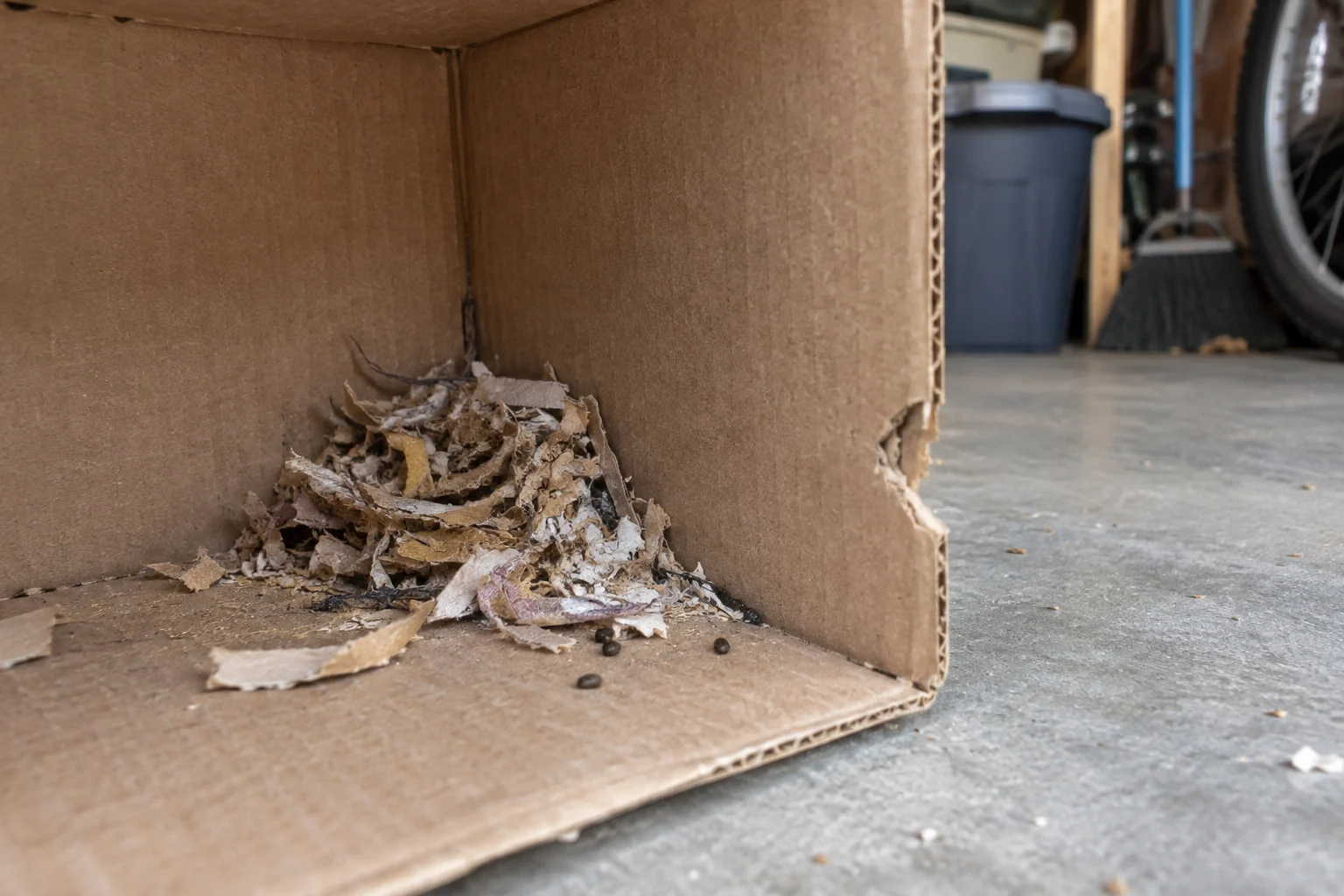
Cardboard boxes are attractive because they provide both shelter and nesting material.
A mouse may:
- chew an opening
- shred the box
- pull in paper or fabric
- nest beneath stored objects
Boxes containing:
- paper
- fabric
- decorations
- stored food
deserve extra attention when mouse activity is present.
Mouse Nests in Drawers
Drawers can become nesting sites when they remain undisturbed.
Possible signs include:
- shredded paper
- torn cloth
- droppings
- urine staining
- small gnaw marks
A drawer nest strongly suggests that mice have access to the surrounding cabinet or wall system.
Mouse Nests in Furniture
Mice can use cavities inside:
- upholstered furniture
- stored mattresses
- rarely moved seating
- hollow furniture
Look for:
- damaged fabric
- exposed stuffing
- droppings beneath furniture
- shredded filling
Do not assume every damaged cushion is caused by mice.
Confirm rodent evidence nearby.
Mouse Nests in Vehicles or Stored Equipment
Mice may nest in infrequently used vehicles, lawn equipment, or stored machinery, especially in garages, barns, or sheds.
They may use:
- insulation
- paper
- leaves
- fabric
- padding
Rodents can also damage wiring insulation.
Inspect equipment that sits unused for long periods in mouse-active areas.
What Does an Active Mouse Nest Look Like?
There is no safe visual test that proves a nest is active at one glance.
Supporting signs of recent activity include:
- fresh-looking droppings nearby
- new shredded material
- recent gnawing
- repeated nighttime sounds
- mouse sightings
- trap activity
- newly disturbed stored items
Do not touch droppings or nesting material to test freshness.
Use visual monitoring instead.
What Does an Old Mouse Nest Look Like?
An old nest may appear:
- dusty
- flattened
- dry
- abandoned
- partially decomposed
- mixed into old storage debris
But old-looking material can still be contaminated.
Do not handle it with bare hands.
Before cleanup, inspect for current mouse activity.
A site can contain an old nest while mice remain active elsewhere.
Does a Mouse Nest Mean You Have an Infestation?
A nest proves that at least one mouse used the location for shelter.
If the nest contains or recently contained young mice, breeding occurred there.
That is stronger evidence of established activity than one isolated sighting.
However, the nest alone does not tell you:
- how many mice are present
- whether the nest is currently occupied
- whether there are additional nests
Inspect the rest of the structure.
Does One Mouse Nest Mean There Are More?
Possibly.
Mice can use more than one shelter or nesting location over time.
A building may also contain:
- one active nest
- old abandoned nests
- separate activity zones
Do not estimate the number of mice from the number of nests.
Use current signs such as:
- fresh droppings
- trap activity
- sightings
- new gnawing
to judge whether activity continues.
Do Baby Mice Mean the Nest Is Active?
Finding newborn or very young mice strongly suggests that the nest is active or was active very recently.
Newborn mice are dependent on the mother.
If baby mice are present, do not assume the mother is gone simply because you cannot see her.
See Baby Mouse: What Newborn & Young Mice Look Like.
How Many Baby Mice Are in a Nest?
Litter size varies.
Do not try to estimate the total mouse population from one litter.
A nest with young tells you that breeding occurred.
The more important control questions are:
- where adult mice are traveling
- how they entered
- whether other activity zones exist
Mouse Nest vs Rat Nest
A mouse nest is generally built for a much smaller animal.
Mouse nesting material tends to be associated with:
- tiny droppings
- small gnaw marks
- narrow routes
- mouse-sized tracks
Rat activity generally produces:
- larger droppings
- heavier gnawing
- wider travel routes
- larger body sightings
Do not identify a nest from the material alone.
The same paper, insulation, or fabric can be used by different rodents.
See Rat vs Mouse: How to Tell the Difference and Mouse vs Rat Droppings: How to Tell the Difference.
Mouse Nest vs Pack Rat Midden
A pack-rat midden is usually much larger and may contain substantial:
- sticks
- plant material
- collected debris
- layered nesting material
A house-mouse nest is typically smaller and softer.
Pack rats are also much larger rodents with different body and tail characteristics.
See Woodrat / Pack Rat: Identification & Home Problems.
Mouse Nest vs Bird Nest
Bird nests are usually built in more open or structured locations and often contain:
- twigs
- grass
- plant fibers
Mouse nests are more often hidden inside cavities, storage, cabinets, insulation, or walls.
A bird nest may look deliberately woven or supported.
An indoor mouse nest often looks more like shredded soft debris packed into shelter.
Location and nearby droppings are important clues.
What Do Mouse Droppings Near a Nest Mean?
Droppings near a nest can help confirm that mice used the area.
Small mouse droppings may appear:
- around the nest
- along wall routes
- behind stored items
- near food
The number of droppings does not tell you exactly how many mice are present.
See Mouse Droppings: What They Look Like & What They Mean.
Does a Mouse Nest Smell?
A mouse nest may contribute to a musky or stale rodent odor.
Odor can come from a combination of:
- urine
- droppings
- nesting material
- body oils
- contaminated food
A strong odor does not identify the exact nest location by itself.
Use smell only as one clue.
Are Mouse Nests Dangerous?
The main concern is contamination.
A nest area may contain:
- urine
- droppings
- contaminated nesting material
- damaged food packaging
Avoid direct contact.
Do not allow children or pets to play near the nest.
Can Mouse Nests Carry Disease?
Rodent nesting material should be treated as potentially contaminated.
You cannot tell whether a nest is safe by appearance.
Use appropriate cleanup precautions around:
- nests
- droppings
- urine
- dead rodents
For homes near rural or natural habitat, species identification can also matter.
See Deer Mouse: Identification, Signs & Behavior and Deer Mouse vs House Mouse: Key Differences.
How to Clean Up a Mouse Nest Safely
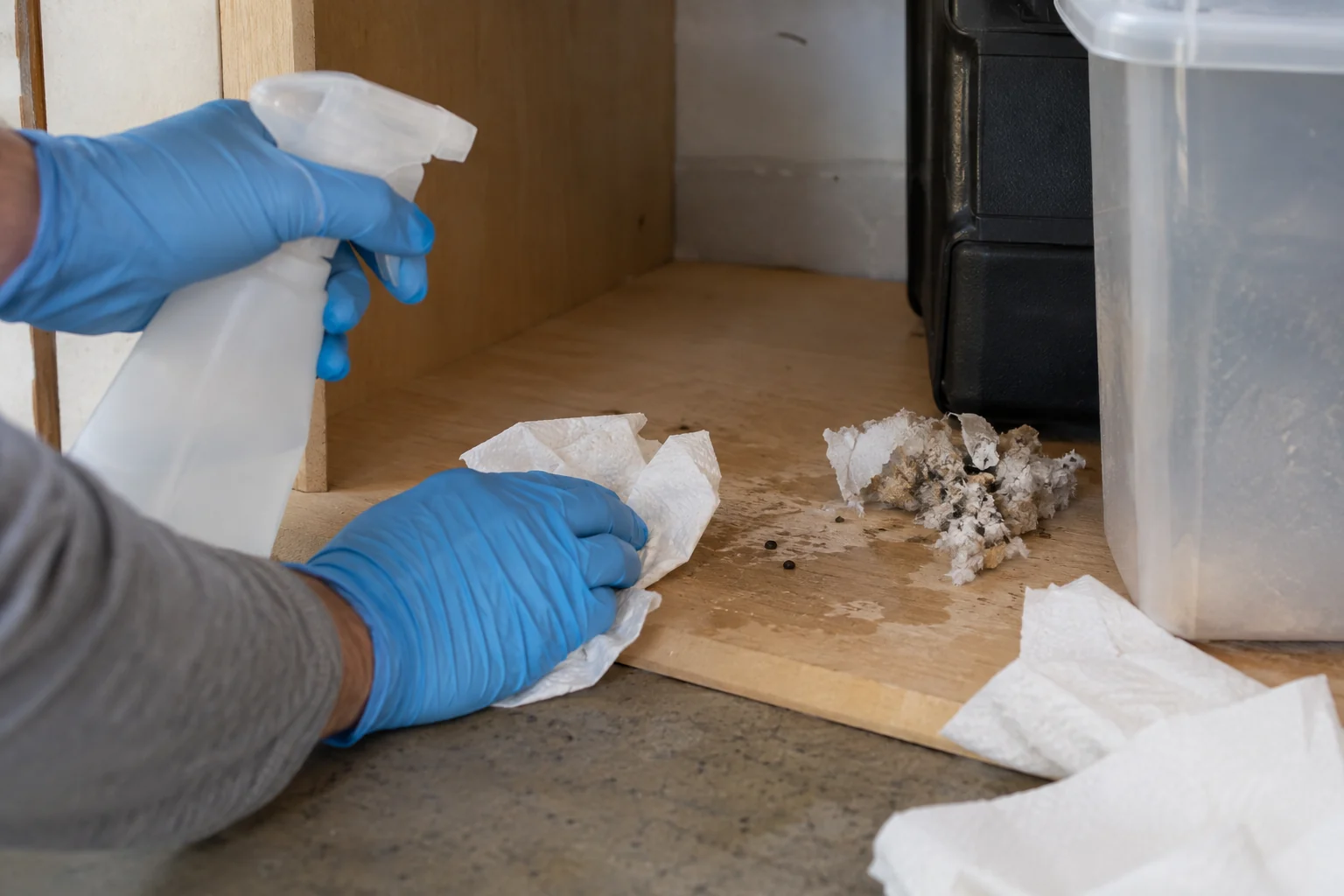
Do not dry sweep or vacuum fresh rodent droppings or nesting material before wet cleanup.
A practical process is:
- keep children and pets away
- ventilate the area when appropriate
- wear suitable gloves
- wet the nest, droppings, and contaminated material with an appropriate disinfecting solution
- allow adequate contact time according to the product instructions
- wipe up or collect the material
- bag waste appropriately
- clean the surrounding surface
- wash hands after removing gloves
Avoid stirring contaminated dust unnecessarily.
See the cleanup section and rodent safety section.
Should You Vacuum a Mouse Nest?
Do not vacuum fresh rodent droppings or nesting material before proper wet cleanup.
Dry vacuuming can disturb contaminated dust.
Wet and disinfect the material first, then follow appropriate cleanup procedures for the surface and equipment involved.
Should You Remove the Nest Immediately?
If the nest is accessible and the rodent-control plan is already underway, contaminated nesting material should eventually be removed safely.
But do not mistake nest removal for complete control.
If mice are still entering, they can:
- rebuild
- move to another cavity
- establish a new nesting area
Address:
- adult mice
- travel routes
- food
- entry points
at the same time.
What to Do After Finding a Mouse Nest
A practical sequence is:
- keep people and pets away
- document the nest location
- inspect for droppings and adult travel routes
- look for entry points
- place mouse-sized traps on accessible active routes
- reduce accessible food
- coordinate trapping with exclusion
- remove contaminated nesting material safely
- monitor for fresh evidence
Do not seal the only active route while mice are still trapped inside.
See How to Get Rid of Mice in Your House and Rodent Exclusion: How to Keep Rats & Mice Out.
Where Should You Put Traps Near a Mouse Nest?
Place traps on the routes adult mice use to reach the nest.
Good locations may include:
- along nearby walls
- beside cabinet edges
- behind appliances
- near utility penetrations
- along garage routes
- on stable attic framing
Do not bury traps inside loose nesting material.
Keep them inaccessible to children and pets.
See Best Mouse Traps: Which Type Works Best & How to Choose and Mouse Traps: Types, Placement & How to Use Them.
How to Find the Entry Point From the Nest
Work outward from the active area.
Inspect nearby:
- baseboards
- plumbing gaps
- cable penetrations
- doors
- garage-door corners
- foundation gaps
- vents
- siding transitions
- attic or roofline openings
Droppings and rub routes can help show direction of travel.
See How Mice Get Into Your House.
When to Call a Professional
Professional mouse control may make sense when:
- the nest is inside a wall
- several nests are suspected
- baby mice are in an inaccessible cavity
- attic or crawl-space contamination is extensive
- trapping is not reducing activity
- the entry point cannot be found
- exclusion requires structural repair
See Mouse Exterminator: What to Expect & When to Call One.
Mouse Nests: The Bottom Line
A mouse nest usually looks like a hidden mass of soft shredded material made from:
- paper
- cardboard
- fabric
- insulation
- plant fibers
- stuffing
The nest is more likely to be found in a protected, low-disturbance location than in the middle of an open room.
Common places include:
- cabinets
- wall voids
- attics
- garages
- storage boxes
- basements
- crawl spaces
Finding a nest means mice used that location.
Finding fresh signs or baby mice makes current activity more likely.
Do not simply throw the nest away and assume the problem is solved.
Find the mouse routes, trap the mice already inside, locate the entry point, complete exclusion, and clean contaminated material safely.
Continue with our signs of mice guide, mouse droppings guide, baby mouse guide, house mouse guide, how to get rid of mice, how mice get into a house, or rodent exclusion guide.
For the broader overview, return to Rats & Mice in the Home.