Rats in the Yard: Why They’re There & How to Control Them
Rats in the yard usually mean the property is offering something useful: food, water, shelter, protected travel routes, burrowing areas, or access toward buildings.
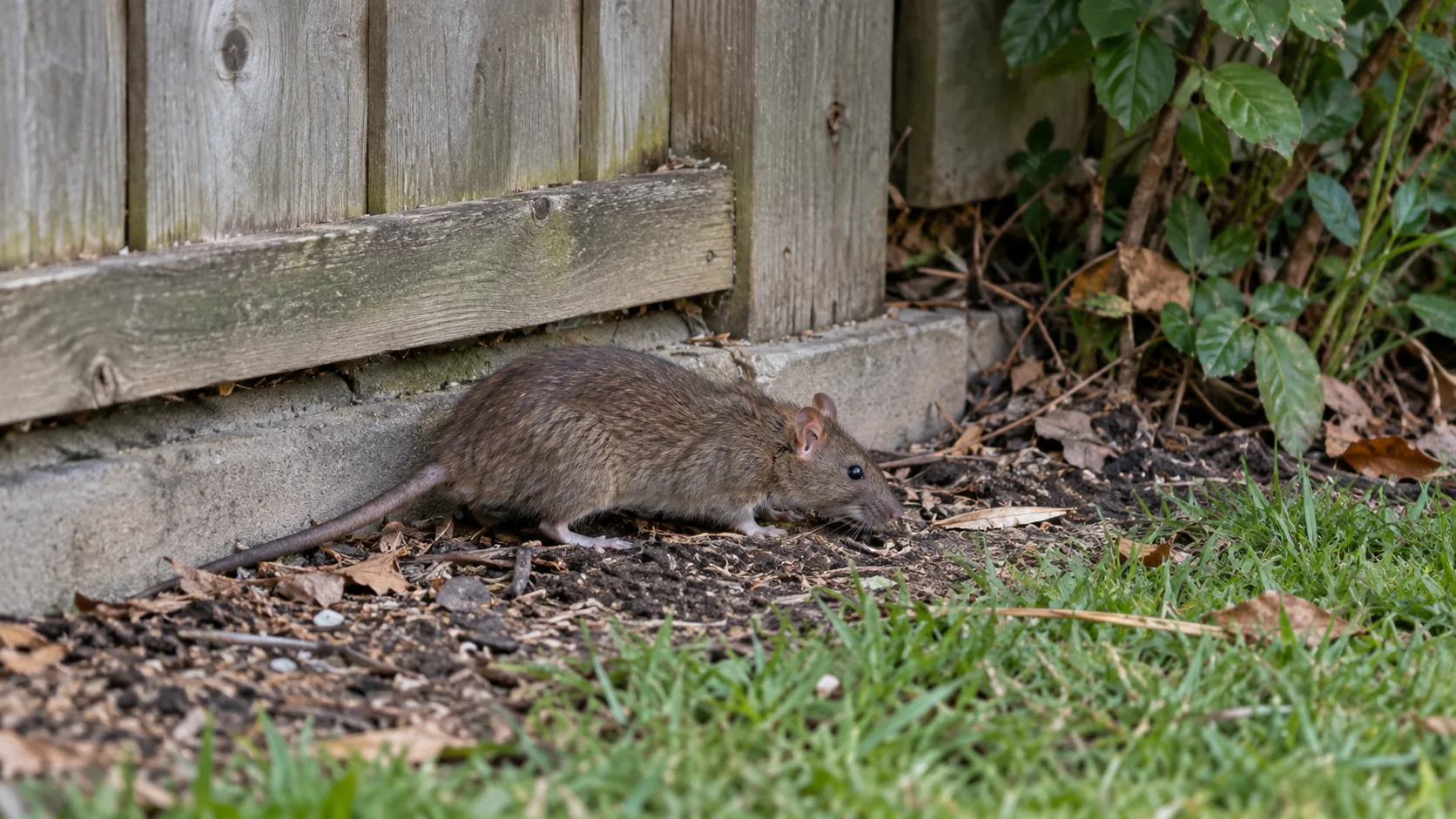
Seeing a rat in the yard does not automatically mean rats are living inside the house.
A yard can attract rats because it provides some combination of:
- food
- water
- shelter
- hiding places
- travel routes
- access to nearby buildings
Outdoor rat activity may center around:
- garbage
- bird feeders
- pet food
- animal feed
- fallen fruit
- gardens
- compost
- dense vegetation
- sheds
- decks
- fences
- foundation edges
The practical goal is to determine:
- whether the activity is current
- what is attracting rats to the yard
- where rats are traveling or burrowing
- whether the route reaches the house, garage, shed, or another structure
- how to reduce attractants and shelter
- whether trapping, exclusion, or professional control is needed
This guide explains why rats come into yards, what signs to look for, how to reduce outdoor rat activity, and how to keep yard rats from becoming an indoor problem.
Why Are Rats in My Yard?
Rats use yards because residential properties can provide the same basic resources they use in other environments.
They look for:
- accessible food
- water
- protected hiding areas
- nesting sites
- safe travel routes
A yard does not need to be dirty to attract rats.
Even a well-maintained property can provide:
- bird seed
- fruit
- pet food
- dense landscaping
- a deck
- a shed
- a fence line
- utility openings
Rats are adaptable.
The most useful approach is to identify which resources are actually supporting activity on the property.
Does One Rat in the Yard Mean an Infestation?
Not necessarily.
One sighting tells you that at least one rat was present at that time.
It does not reveal:
- how many rats are nearby
- whether rats are nesting on the property
- whether the rat came from a neighboring area
- whether rats are inside the house
Look for additional evidence.
Useful signs include:
- active-looking burrows
- fresh droppings
- runways
- tracks
- gnawing
- repeated sightings
- damaged food containers
- activity near structures
Do not estimate population size from one sign.
Does a Rat in the Yard Mean Rats Are in the House?
No.
Outdoor rats may remain outside.
However, yard activity matters because rats can move from outdoor shelter toward:
- garages
- crawl spaces
- basements
- wall openings
- attics
- utility penetrations
If rats repeatedly travel close to the foundation, inspect the building for entry points.
See How Rats Get Into Your House.
What Attracts Rats to a Yard?
The most common attractants are food, water, and shelter.
Food
Possible food sources include:
- bird seed
- pet food
- livestock or poultry feed
- garbage
- compost
- fallen fruit
- garden produce
- outdoor cooking scraps
- unsecured stored food
Water
Possible water sources include:
- leaking outdoor faucets
- pet water bowls
- irrigation leaks
- standing water
- damaged drainage
- condensate
Shelter
Possible shelter areas include:
- dense vegetation
- stacked materials
- clutter
- sheds
- decks
- retaining walls
- fence lines
- foundation edges
Reducing these conditions makes the yard less supportive of rat activity.
Rats Around Bird Feeders
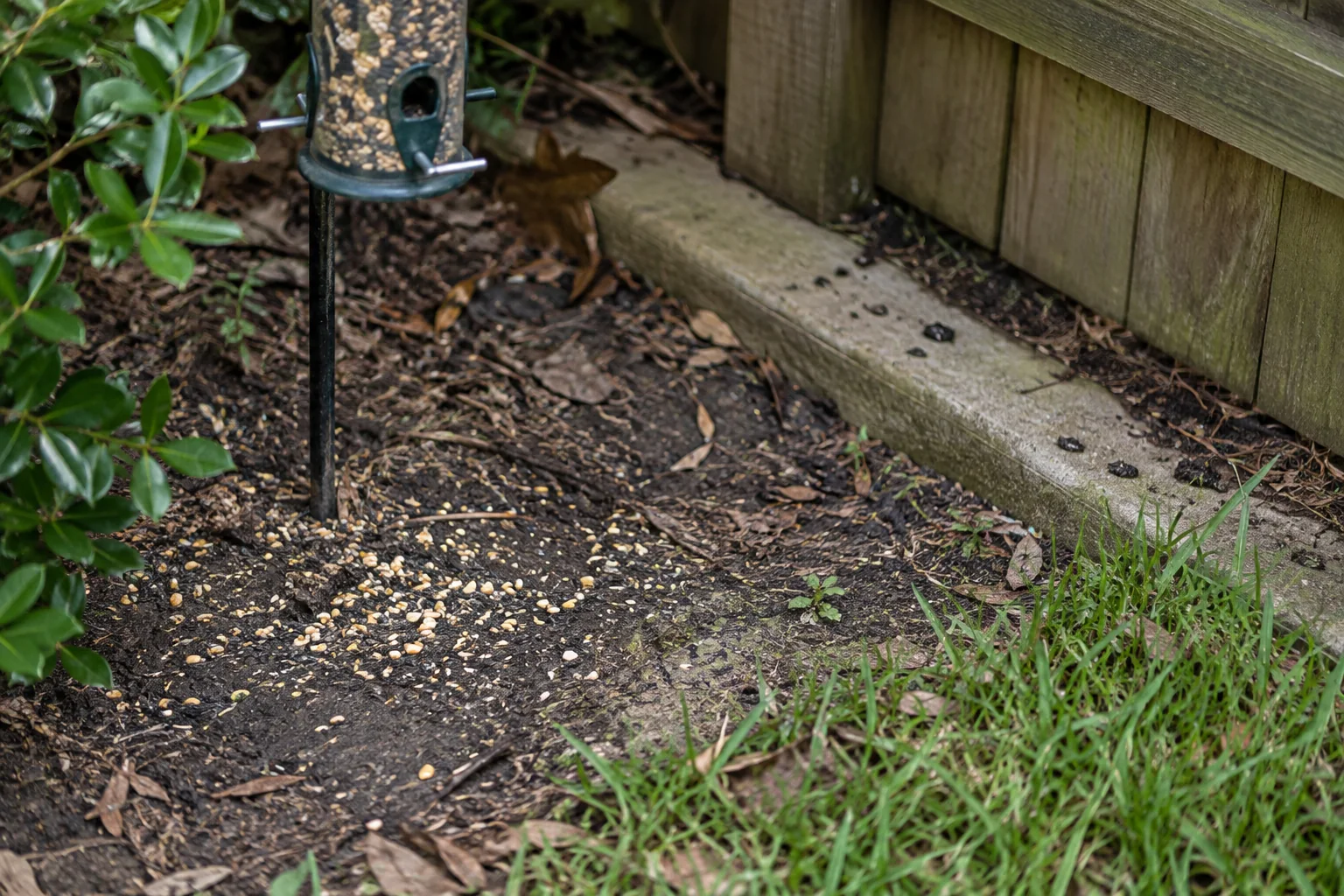
Bird feeders are a common outdoor food source.
The main problem is often not the feeder itself.
It is seed that falls to the ground.
Rats may feed on:
- spilled seed
- seed stored in bags
- food accumulated beneath feeders
If rat activity is present:
- reduce spilled seed
- clean the ground beneath feeders
- store seed in sturdy containers
- avoid leaving large amounts of food available overnight
Removing accessible food can reduce repeat visits.
Rats Eating Pet Food Outside
Pet food left outdoors can attract rats.
If possible:
- feed pets on a schedule
- remove leftover food
- clean spilled kibble
- store bulk food securely
Do not leave open food bags in:
- garages
- sheds
- patios
- porches
especially when rat activity is already present.
Rats Around Garbage
Garbage can provide a reliable food source.
Check whether:
- lids close properly
- bags are exposed
- food waste spills around containers
- containers have cracks or holes
Keep the surrounding area clean.
A rat problem that repeatedly centers around garbage may continue until access to the food is reduced.
Rats Around Compost
Compost can attract rats when it contains accessible food.
The risk depends on:
- what is added
- how the compost is contained
- whether food scraps remain exposed
Avoid treating a compost pile as an automatic rat source.
Look for actual evidence such as:
- burrows
- droppings
- gnawing
- repeated sightings
Rats Around Fruit Trees
Fallen fruit can provide food.
If rats are active:
- collect ripe fallen fruit
- avoid leaving large amounts of damaged fruit on the ground
- inspect nearby cover and travel routes
Fruit trees can also provide elevated access for climbing rats when branches connect to structures.
Rats in Vegetable Gardens
Rats may feed on:
- vegetables
- seeds
- fruit
- stored garden products
Look for:
- gnawing
- droppings
- tracks
- nearby burrows
Do not assume every damaged plant is caused by rats.
Other wildlife and insects can create similar damage.
Rats Around Chicken Coops or Animal Feed
Feed can be highly attractive to rats.
Common problem areas include:
- spilled grain
- open feed bags
- feed beneath containers
- gaps under structures
Store feed securely.
Clean spills.
Inspect the surrounding ground and structure for:
- burrows
- runways
- gnawing
- droppings
Use control methods that protect poultry, pets, and non-target wildlife.
Rats Around Outdoor Pet Water
Water alone usually does not create a rat problem.
But reliable water can support activity when food and shelter are also available.
Empty unnecessary standing water.
Repair leaks.
Do not deprive pets of needed water.
The goal is to remove avoidable water sources, not create unsafe conditions for animals.
Where Do Rats Hide in a Yard?
Rats usually prefer protected areas.
Possible hiding places include:
- dense shrubs
- ivy
- ground cover
- wood piles
- stacked materials
- sheds
- decks
- retaining walls
- fence lines
- foundation edges
Open lawn is usually less protective than edges and covered routes.
Rats Under Sheds
The space under a shed can provide:
- shelter
- shade
- protected soil
- nearby food access
Look for:
- burrow openings
- worn paths
- droppings
- gnawing
- repeated sightings
Do not crawl beneath unstable structures to inspect.
Rats Under Decks
Decks can create protected ground-level shelter.
Rats may use:
- gaps beneath framing
- soil along the foundation
- stored materials
- vegetation around the perimeter
If rat activity is present, inspect the perimeter and nearby food sources.
Do not block access blindly if rats may still be using the space.
Rats Along Fences
Fence lines can act as travel routes.
Rats may follow:
- continuous edges
- vegetation
- utility lines
- neighboring structures
Roof rats may also use fences as elevated travel routes.
But a rat on a fence does not by itself identify the species.
Rats in Dense Vegetation
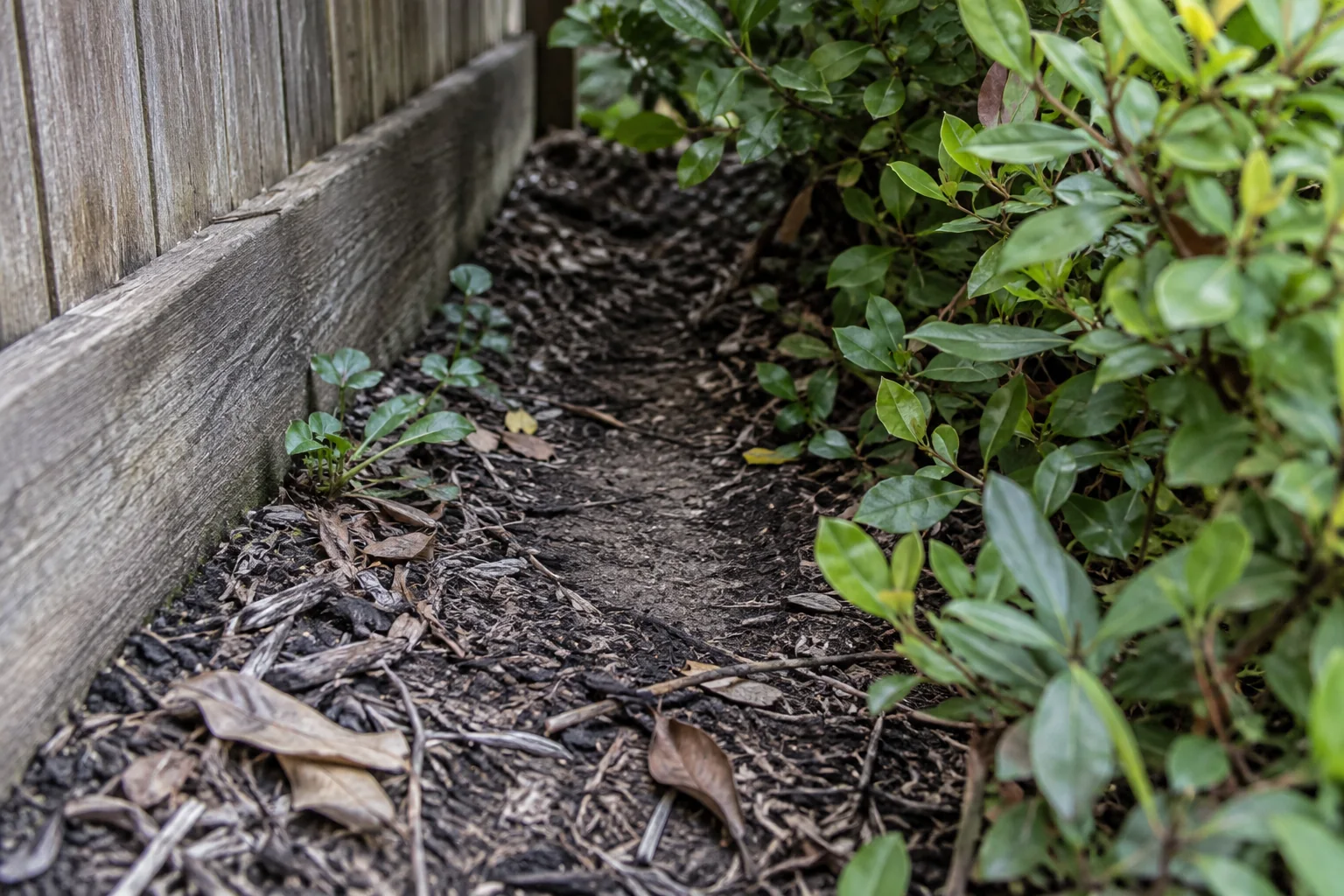
Dense vegetation can provide:
- cover
- protected movement
- concealment around burrows
Reducing excessive ground-level cover near active areas can make routes easier to inspect.
Do not remove landscaping indiscriminately.
Focus on vegetation that directly hides:
- burrows
- foundation openings
- active runways
What Does a Rat Burrow in the Yard Look Like?
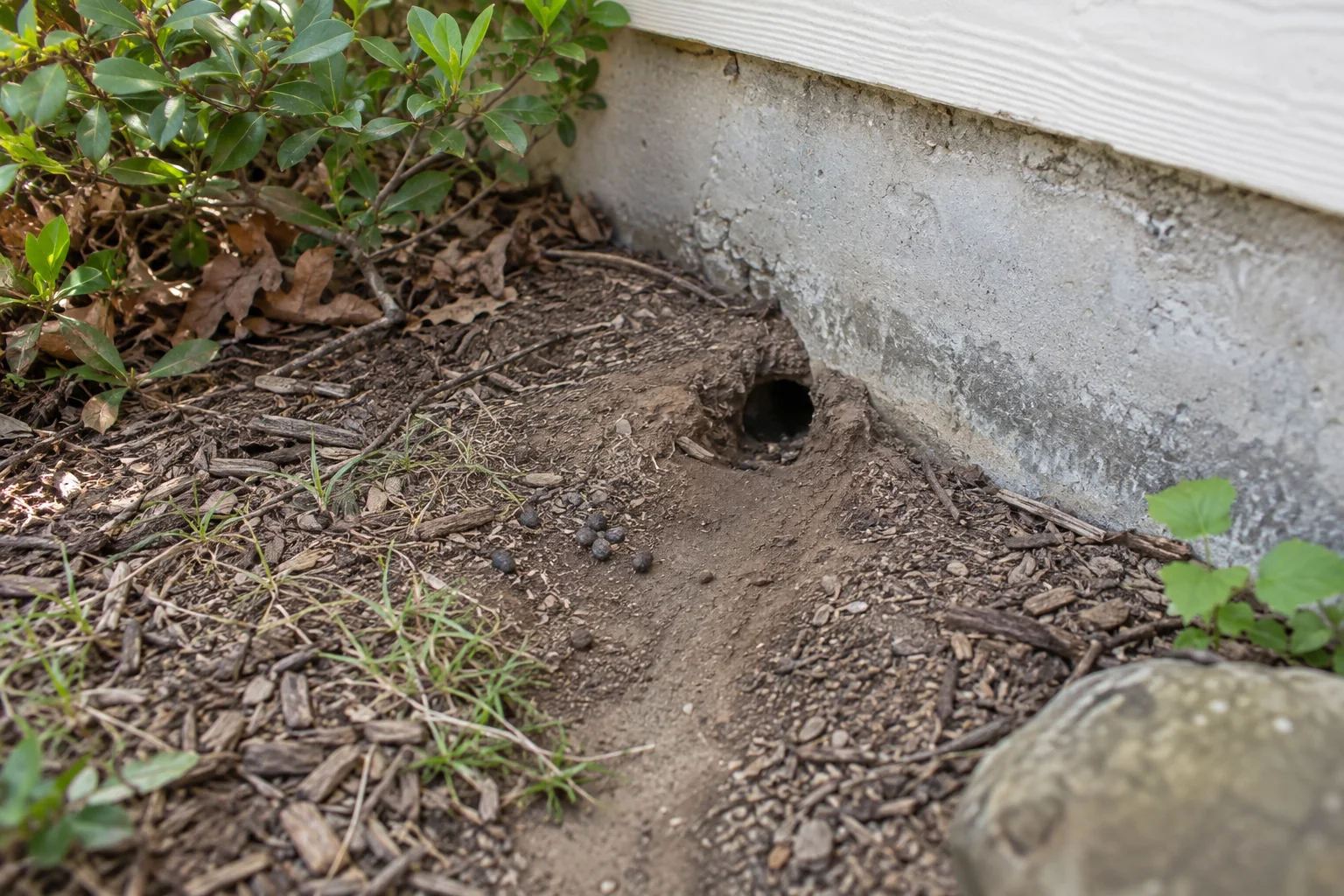
A rat burrow may appear as a ground opening near:
- foundations
- sheds
- decks
- retaining walls
- dense vegetation
- stored materials
Possible signs of current activity include:
- smooth entry edges
- fresh soil
- worn paths
- droppings nearby
- repeated sightings
But not every hole belongs to a rat.
Other animals can create burrows.
Use multiple clues before deciding.
Where Do Norway Rats Burrow?
Norway rats are strongly associated with:
- ground-level routes
- foundations
- basements
- crawl spaces
- outdoor burrows
They may burrow near:
- buildings
- sheds
- decks
- retaining walls
- dense cover
A ground burrow can fit Norway-rat behavior.
It is not species proof by itself.
See Norway Rat: Identification, Signs & Behavior.
Do Roof Rats Live in Yards?
Yes.
Roof rats may use yards that provide:
- trees
- shrubs
- fences
- overhead utility routes
- roof access
- fruit
They are more strongly associated with climbing and elevated routes than Norway rats.
But both species can use outdoor properties.
See Roof Rat: Identification, Signs & Behavior and Roof Rat vs Norway Rat: How to Tell Them Apart.
Rat Droppings in the Yard
Rat droppings may appear near:
- feeding areas
- burrows
- garbage
- walls
- sheds
- travel routes
Outdoor droppings weather quickly.
Use their location with other evidence.
Do not use dropping count to estimate how many rats are present.
See Rat Droppings: What They Look Like & What They Mean.
Rat Tracks in the Yard
Tracks may appear in:
- soft soil
- mud
- dust
- landscaping material
Rat tracks may show:
- smaller front prints
- longer hind prints
- occasional tail drag marks
Outdoor tracks can be incomplete.
See Rat Tracks: What They Look Like & Where to Find Them.
Rat Runways
Repeated travel can create narrow worn routes along:
- fences
- walls
- vegetation
- foundations
- stored materials
A runway becomes more useful as evidence when combined with:
- droppings
- tracks
- burrows
- sightings
Rat Rub Marks Outside
Rats may leave greasy-looking marks where they repeatedly contact:
- walls
- fence openings
- structural gaps
- pipes
- foundation edges
Do not identify rats from a dark mark alone.
Dirt, moisture, and ordinary wear can look similar.
Rat Gnaw Marks in the Yard
Rats may gnaw:
- plastic bins
- wood
- feed containers
- garden materials
- soft building materials
Heavier gnawing becomes more meaningful when rat droppings or tracks are nearby.
See Rat Gnaw Marks: How to Identify Rodent Damage.
Seeing Rats During the Day in the Yard
Daytime rat activity can occur.
Possible reasons include:
- disturbance
- feeding opportunities
- competition
- shelter nearby
- normal movement
A daytime sighting does not automatically prove a severe infestation.
See Seeing a Rat During the Day: What It Means.
Should You Flood a Rat Burrow?
No.
Do not pour large amounts of water into a suspected rat burrow.
Flooding can:
- redirect rats
- damage soil
- affect foundations or landscaping
- fail to remove the rats
It may also affect non-target animals if the hole was misidentified.
Should You Smoke or Burn Rats Out of a Burrow?
No.
Do not use:
- fire
- smoke
- gasoline
- exhaust
- improvised gases
- household chemicals
inside burrows.
These methods can create serious:
- fire
- poisoning
- environmental
- non-target animal
hazards.
Should You Collapse a Rat Burrow?
Not blindly.
If a burrow appears active, first determine how it fits into the control plan.
Simply collapsing the opening may:
- redirect the rat
- cause new digging
- make monitoring harder
- leave the underlying problem unchanged
Burrow management should be coordinated with food reduction, trapping or other legal control, and structural exclusion.
What to Do Right After Seeing a Rat in the Yard
A practical first response is:
- note where the rat was seen
- inspect the immediate area for food and water
- look for burrows, droppings, tracks, and runways
- inspect nearby structures
- secure garbage and animal feed
- remove repeated food spills
- reduce unnecessary cover around active routes
- inspect the house exterior for entry points
- choose a safe control method if activity continues
- monitor for fresh evidence
Do not begin by scattering poison or sealing random holes.
Remove Food Sources First
Food reduction is one of the most important outdoor steps.
Focus on:
- spilled bird seed
- pet food
- animal feed
- garbage
- fallen fruit
- accessible compost
- outdoor food waste
You do not need to remove every possible food source from the property.
Prioritize the sources connected to actual rat activity.
Reduce Water Sources
Repair avoidable water sources such as:
- leaking faucets
- broken irrigation
- standing water from drainage problems
Keep necessary pet or livestock water available.
The goal is to remove unnecessary water, not deprive animals.
Reduce Shelter and Clutter
Inspect active routes around:
- stacked lumber
- unused containers
- dense ground cover
- stored materials
- debris
Reduce unnecessary shelter near:
- burrows
- foundations
- sheds
- garages
Do not create unsafe piles or unstable storage while cleaning.
Keep Rats Away From the House
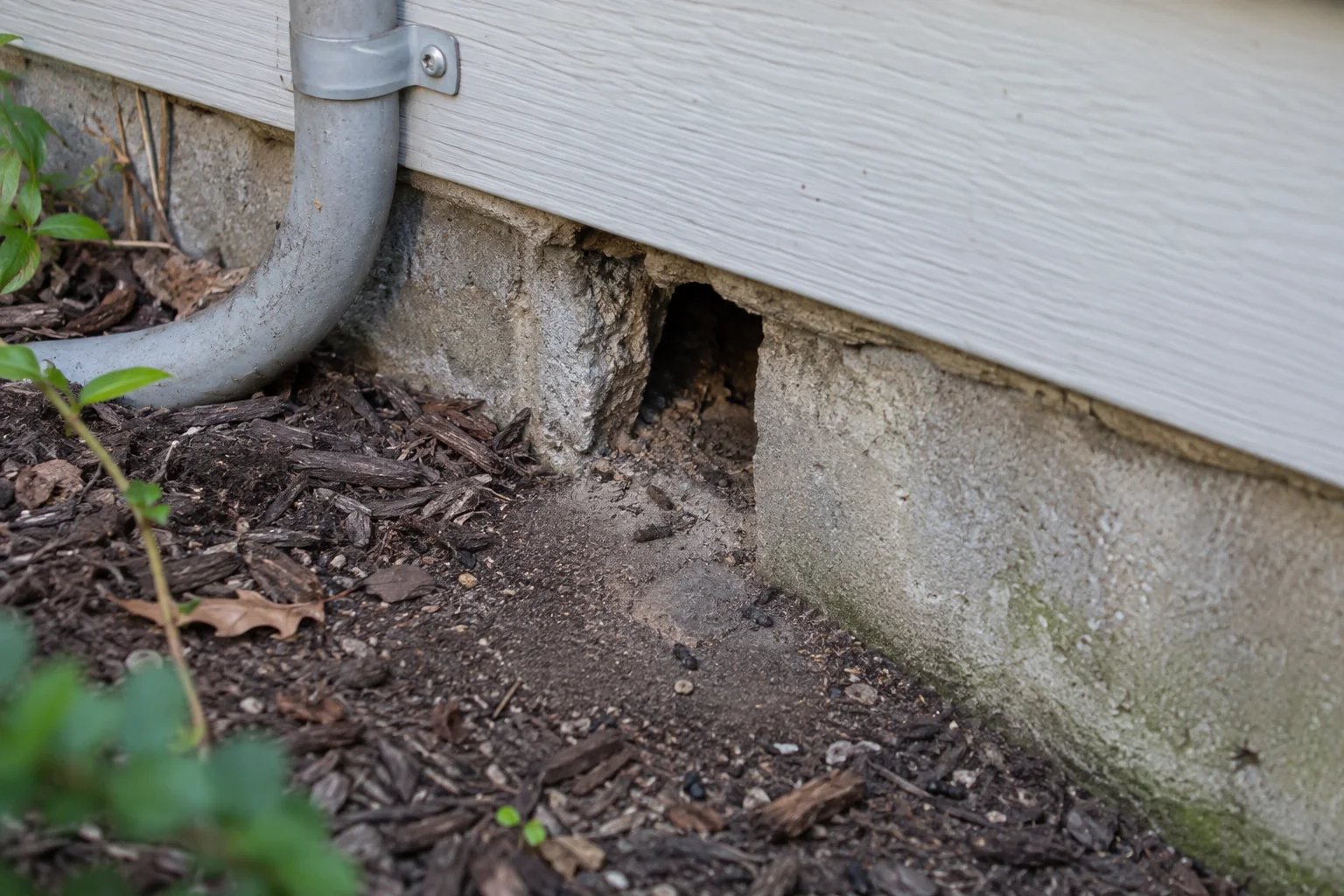
Outdoor rat control should include a building inspection.
Check:
- garage-door corners
- foundation gaps
- crawl-space openings
- utility penetrations
- vents
- damaged doors
- roofline or soffit defects
See Rodent Exclusion: How to Keep Rats & Mice Out.
Yard Rats and the Garage
A garage can become the next step between the yard and the house.
Inspect:
- door seals
- stored pet food
- bird seed
- wall gaps
- utility penetrations
See Rats in the Garage: Entry Points, Nests & Control.
Yard Rats and the Crawl Space
Ground-level rats may reach crawl spaces through:
- foundation openings
- damaged vents
- access doors
- utility gaps
See Rats in the Crawl Space: Signs & Removal.
Yard Rats and the Basement
Foundation-level activity may connect to basements through:
- pipe penetrations
- sill areas
- windows
- doors
- utility routes
See Rats in the Basement: Why They’re There & What to Do.
Can Rats Reach the Attic From the Yard?
Yes.
Rats may reach elevated areas by using:
- trees
- fences
- utility routes
- walls
- connected structures
Roof rats are especially associated with elevated travel.
See Rats in the Attic: Signs, Damage & Removal.
Should You Trap Rats Outdoors?
Outdoor trapping may be appropriate when it can be done safely.
Use rat-sized traps.
Trap placement should be based on confirmed rat routes.
Outdoor traps must be protected so they are not accessible to:
- children
- pets
- birds
- squirrels
- other wildlife
Do not leave powerful rat traps exposed in open areas.
See Rat Traps: Types, Placement & How to Use Them and Best Rat Traps: Which Type Works Best & How to Choose.
Where Should Outdoor Rat Traps Go?
When outdoor trapping is appropriate, possible protected locations include:
- along confirmed wall routes
- near a structure where rats travel
- inside a suitable protected trapping setup
Do not place traps randomly across open lawn.
Monitoring should determine whether placement is working.
Should You Use Rat Poison in the Yard?
Do not scatter loose rodenticide outdoors.
Rodenticides must be used according to:
- the product label
- applicable laws
- placement requirements
- child and pet safety requirements
Where a product requires a secured bait station, use an appropriate tamper-resistant station.
Outdoor rodenticide use also requires attention to non-target wildlife.
If you are unsure how to use a product legally and safely, professional control may be more appropriate.
Can a Poisoned Rat Die Inside the House?
Yes.
A rat feeding outdoors may later move into:
- a wall
- a crawl space
- a garage
- a basement
- another inaccessible void
before it dies.
That is one reason indoor and structural activity should be considered before choosing a control method.
Should You Seal Exterior Holes Right Away?
Not always.
If rats are already inside a structure, immediately sealing the only active route can trap them indoors.
Coordinate:
- removal
- monitoring
- exclusion
How to Monitor Yard Rat Activity
After reducing attractants and beginning control, watch for:
- fresh droppings
- new tracks
- reopened or active burrows
- new gnawing
- repeated sightings
- trap activity
A single quiet day is not enough to prove the problem is solved.
Look for the absence of fresh evidence over time.
When to Call a Professional
Professional rat control may make sense when:
- rats are repeatedly seen
- active burrows are close to the house
- rats are entering structures
- outdoor trapping cannot be protected from non-target animals
- the species or route is unclear
- activity continues after sanitation changes
- multiple structures are involved
- exclusion work is complicated
- you are unsure how to use rodenticide safely or legally
See Rat Exterminator: What to Expect & When to Call One.
Rats in the Yard: The Bottom Line
Rats enter yards because yards can provide:
- food
- water
- shelter
- burrowing areas
- travel routes
- access to buildings
Useful signs include:
- burrows
- rat droppings
- tracks
- runways
- rub marks
- gnawing
- repeated sightings
If you find rats in the yard:
- identify the active area
- remove accessible food
- correct avoidable water sources
- reduce unnecessary shelter around active routes
- inspect burrows without using unsafe flooding, smoke, fire, or chemicals
- inspect the house exterior for entry points
- use only protected outdoor trapping where non-target access is controlled
- use rodenticides only according to the label and applicable requirements
- coordinate removal with structural exclusion
- monitor for fresh evidence
One rat in the yard does not automatically mean the house is infested.
The goal is to reduce the outdoor conditions supporting rat activity and prevent rats from turning the property into a route into the home.
Continue with our signs of rats guide, rat droppings guide, rat tracks guide, rat gnaw marks guide, Norway rat guide, roof rat guide, rats in the garage guide, rats in the crawl space guide, how to get rid of rats, how rats get into a house, or rodent exclusion guide.
For the broader overview, return to [Rats & Mice in the Home](/).