How Many Mice Are in My House? How to Estimate an Infestation
Most homeowners want a simple answer after finding mouse signs: how many mice are actually in the house?
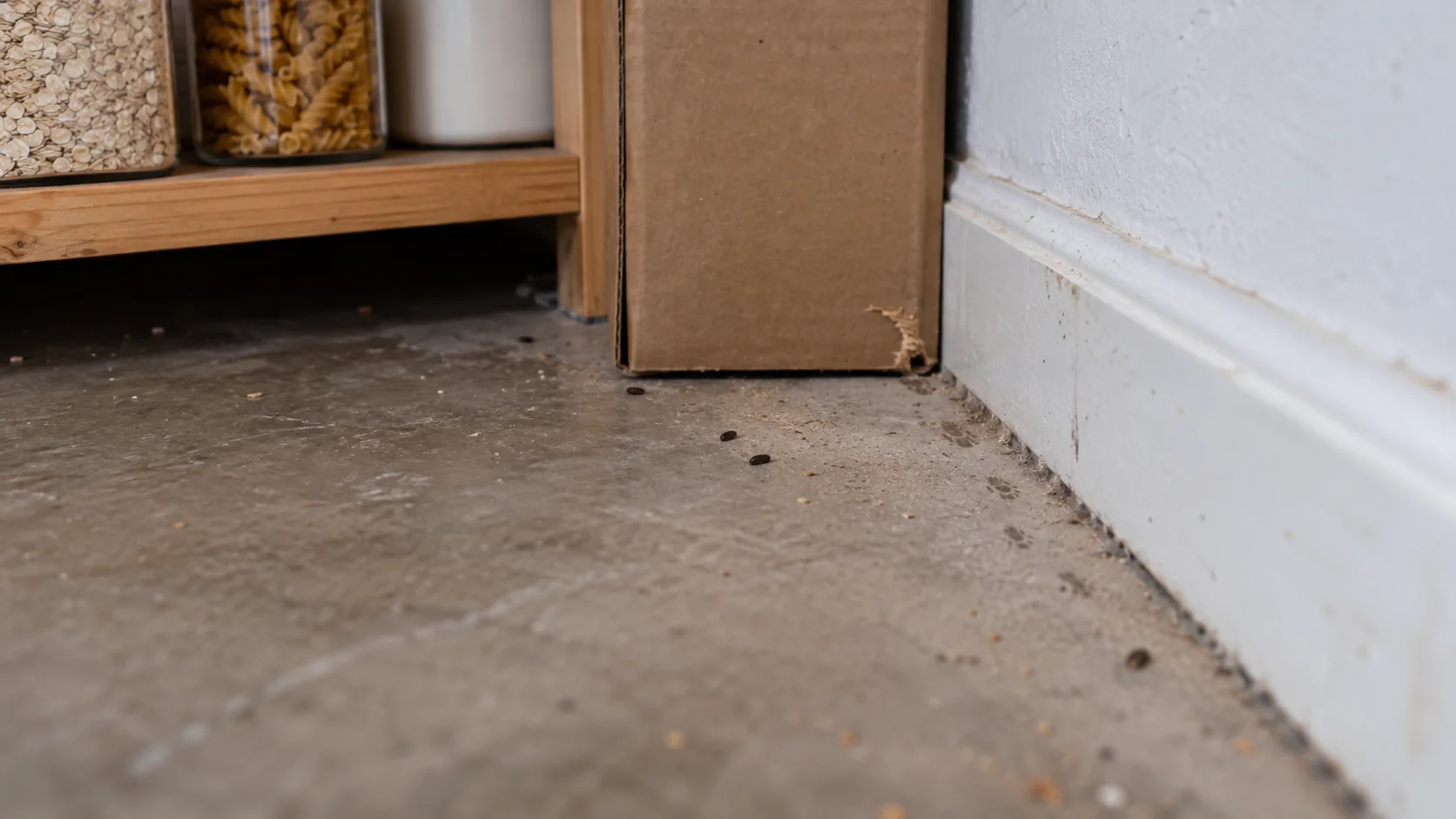
Most homeowners want a simple answer after finding mouse signs:
How many mice are actually in the house?
Unfortunately, household evidence usually cannot provide an exact count.
One mouse can leave:
- many droppings
- many footprints
- repeated gnaw marks
- several sightings over time
At the same time, several mice may remain hidden and leave only limited visible evidence.
That means there is no reliable formula such as:
- one sighting equals five mice
- ten droppings equal two mice
- one nest equals a certain population
Instead, the practical goal is to estimate the level and spread of activity.
You can do that by combining:
- sightings
- fresh droppings
- tracks
- gnaw marks
- nests
- scratching sounds
- trap results
- the number of active locations
- whether new evidence keeps appearing
A single isolated sign may represent limited activity.
Fresh evidence appearing in several areas over multiple days is more consistent with an established mouse problem.
This guide explains how to estimate mouse activity without pretending household signs can reveal an exact population.
Can You Tell Exactly How Many Mice Are in a House?
Usually, no.
Mice spend much of their time in hidden areas such as:
- wall voids
- cabinets
- attics
- garages
- storage areas
- crawl spaces
A homeowner normally sees only part of the activity.
Even professional inspections often focus more on:
- where mice are active
- how extensive the activity is
- where they are entering
- whether control is reducing the activity
than on producing one exact mouse count.
An exact count is less useful than knowing whether the activity is:
- isolated
- localized
- spread through several areas
- continuing despite control
Does Seeing One Mouse Mean There Are More?
Possibly, but not always.
One mouse can enter a house alone.
A single sighting does not prove:
- a large infestation
- a nest
- breeding
- multiple mice
However, one mouse is enough reason to inspect for other signs.
If you find:
- fresh droppings
- repeated sightings
- a nest
- several active routes
then additional mice become more plausible.
See Does One Mouse Mean You Have an Infestation?.
Why You Should Not Use a “One Mouse Equals X More” Rule
There is no dependable multiplier.
A mouse sighting is affected by:
- where people spend time
- how active the mouse is
- how much cover exists
- when the mouse moves
- how often the room is occupied
One highly visible mouse may be seen several times.
Several hidden mice may rarely be seen.
Therefore, sighting count and mouse count are not the same thing.
Can Mouse Droppings Tell You How Many Mice You Have?
Not exactly.
One mouse can produce many droppings over time.
Droppings also accumulate if they are not cleaned.
That means a pile of droppings may represent:
- one mouse using the area repeatedly
- multiple mice
- old activity
- a mix of old and current activity
The more useful question is:
Are fresh droppings continuing to appear?
After proper cleanup, recurring new droppings provide strong evidence that mouse activity is ongoing.
See Mouse Droppings: What They Look Like & What They Mean.
Does the Number of Droppings Equal the Number of Mice?
No.
Dropping quantity is not a reliable population counter.
Do not use formulas such as:
- 10 droppings = one mouse
- 50 droppings = five mice
The relationship is too variable.
Use droppings to identify:
- active locations
- travel routes
- whether activity is continuing
not to calculate an exact mouse population.
Fresh Droppings vs Old Droppings
Fresh activity matters more than total accumulation.
Old droppings may remain long after mice are gone.
A better monitoring method is:
- document where droppings are found
- clean them using appropriate wet-cleanup methods
- inspect the same locations again
- note whether new droppings appear
New droppings after cleanup indicate current activity.
The number still does not reveal the exact number of mice.
Can Mouse Tracks Tell You How Many Mice Are Present?
No.
One mouse can make many tracks while using the same runway repeatedly.
Several mice can also share one route.
Tracks are better for identifying:
- movement corridors
- wall-edge runways
- access between rooms
- locations for traps
See Mouse Tracks: What They Look Like & Where to Find Them.
Can Multiple Track Routes Suggest More Activity?
Yes.
If fresh tracks appear in several separated areas, that suggests broader activity than one isolated route.
For example, tracks in:
- the kitchen
- garage
- attic
suggest that mice may be using a larger portion of the structure.
But this still does not prove there is one mouse per route.
The same mouse can travel between areas.
Can a Mouse Nest Tell You How Many Mice Are Present?
Not exactly.
A nest proves that the area has been used for shelter.
It does not reliably reveal:
- how many adult mice are present now
- whether young mice are still present
- whether another nest exists elsewhere
A nest plus fresh droppings and repeated sightings is stronger evidence of established activity.
See Mouse Nests: What They Look Like & Where to Find Them.
Does Finding More Than One Nest Matter?
Yes.
Multiple separate nesting areas can indicate more extensive use of the building.
However, old nests may remain after activity has ended.
Inspect each location for:
- fresh droppings
- new gnawing
- tracks
- current sightings
Do not assume every nest is active.
Can Gnaw Marks Tell You How Many Mice Are Present?
No.
One mouse can repeatedly chew:
- food packages
- cardboard
- baseboards
- utility openings
- plastic
Gnawing is useful for identifying:
- active routes
- food access
- entry gaps
- fresh damage
not population size.
See Mouse Gnaw Marks: How to Identify Rodent Damage.
Does Heavy Gnawing Mean Many Mice?
Not necessarily.
Repeated use by one mouse can create substantial damage over time.
Heavy damage becomes more meaningful when it appears together with:
- several fresh dropping locations
- multiple sightings
- nests
- trap activity
Use the whole evidence pattern.
Can Mouse Sightings Help Estimate Activity?
Yes, but only in context.
One sighting is weak population evidence.
Repeated sightings become more useful when they occur:
- on different days
- in different rooms
- at different routes
- along with fresh physical signs
If you repeatedly see mice in several areas, broader activity becomes more likely.
What If I See the Same Mouse Several Times?
That is possible.
You usually cannot tell whether repeated sightings involve:
- the same mouse
- different mice
unless the animals are directly distinguishable.
Do not count each sighting as a separate mouse.
What If I See Two Mice at the Same Time?
Seeing two mice simultaneously confirms that at least two mice were present at that moment.
It does not reveal the full population.
Use the sighting as stronger evidence of active mouse presence and inspect for:
- droppings
- nests
- tracks
- food damage
- entry points
Does Seeing a Mouse During the Day Mean There Are Many Mice?
Not automatically.
Daytime movement can occur because of:
- disturbance
- food
- water
- quiet daytime conditions
- route changes
Heavy infestations can increase the chance of visible activity, but time of day alone does not measure population size.
See Seeing a Mouse During the Day: What It Means.
Do Nighttime Scratching Sounds Reveal Mouse Count?
No.
One mouse moving inside a wall can make repeated noise.
Walls can also amplify sounds.
Scratching may come from:
- mice
- rats
- squirrels
- other causes
Use wall sounds as one clue, not a population counter.
See Scratching in Walls at Night: Could It Be Mice or Rats?.
Can Trap Catches Tell You How Many Mice Are in the House?
Trap catches provide useful monitoring information, but they do not automatically reveal the total population.
If you catch one mouse, there may or may not be others.
If you catch several mice over multiple days, ongoing activity is clearly present.
However:
- some mice may avoid traps
- some traps may be poorly placed
- new mice may enter through an open route
The useful question is whether catches and fresh signs are declining after control begins.
If I Catch One Mouse, Am I Done?
Not necessarily.
After a catch:
- reset monitoring traps
- inspect for fresh droppings
- check active routes
- inspect entry points
If no new evidence appears, the problem may have been limited.
If catches or signs continue, more activity remains.
What If Traps Keep Catching Mice?
Repeated catches indicate that the problem is ongoing.
This may mean:
- several mice were already inside
- an entry point remains open
- multiple routes are active
Continue control while finding and correcting entry points.
Do not assume the number caught equals the original full population.
What Does a Small Mouse Problem Look Like?
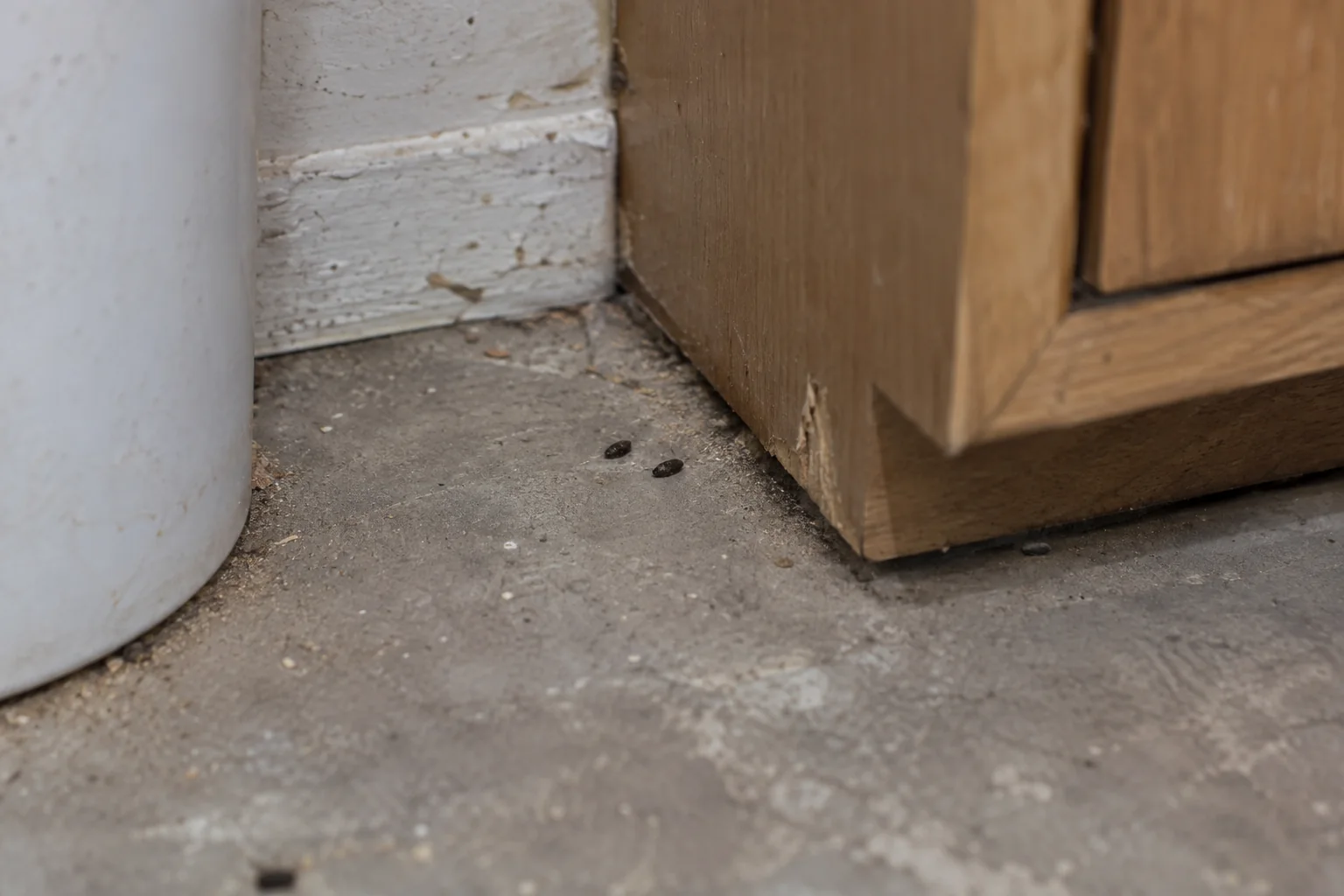
A limited activity pattern may include:
- one sighting
- one localized dropping area
- one travel route
- no nest found
- no recurring evidence after trapping and cleanup
This does not guarantee that only one mouse was present.
It means the visible evidence is localized.
Continue monitoring before declaring the problem resolved.
What Does a Moderate Mouse Problem Look Like?
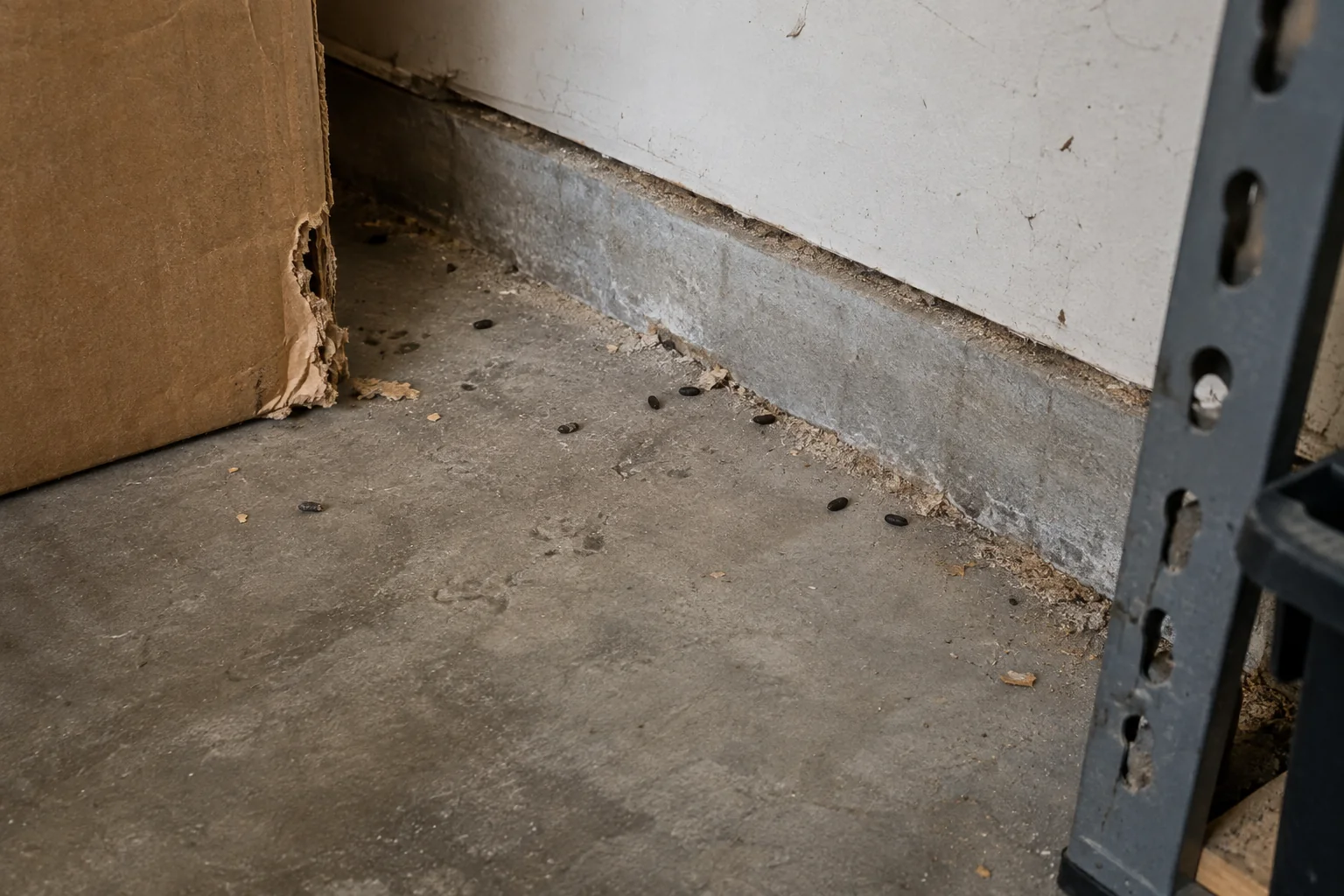
More established activity may include:
- fresh droppings returning
- multiple rooms showing signs
- several gnawed items
- repeated sightings
- trap catches over several days
- more than one active route
At this point, the problem is broader than an isolated incident.
What Does a Heavy Mouse Problem Look Like?
Heavy activity may include multiple signs across a large area:
- fresh droppings in many locations
- repeated sightings
- multiple nests or nesting zones
- ongoing gnaw damage
- several trap catches
- activity in walls, attic, garage, or kitchen
- strong recurring odor
Even here, an exact mouse count is usually not necessary for control.
The priority is eliminating active mice and closing entry routes.
Does Mouse Activity in Several Rooms Mean Many Mice?
It suggests broader use of the structure.
But it still does not prove one mouse per room.
Mice can travel through:
- wall cavities
- utility chases
- attics
- floor voids
One animal may move between several rooms.
The spread of activity matters because it can make control and exclusion more complex.
How to Estimate Mouse Activity Room by Room
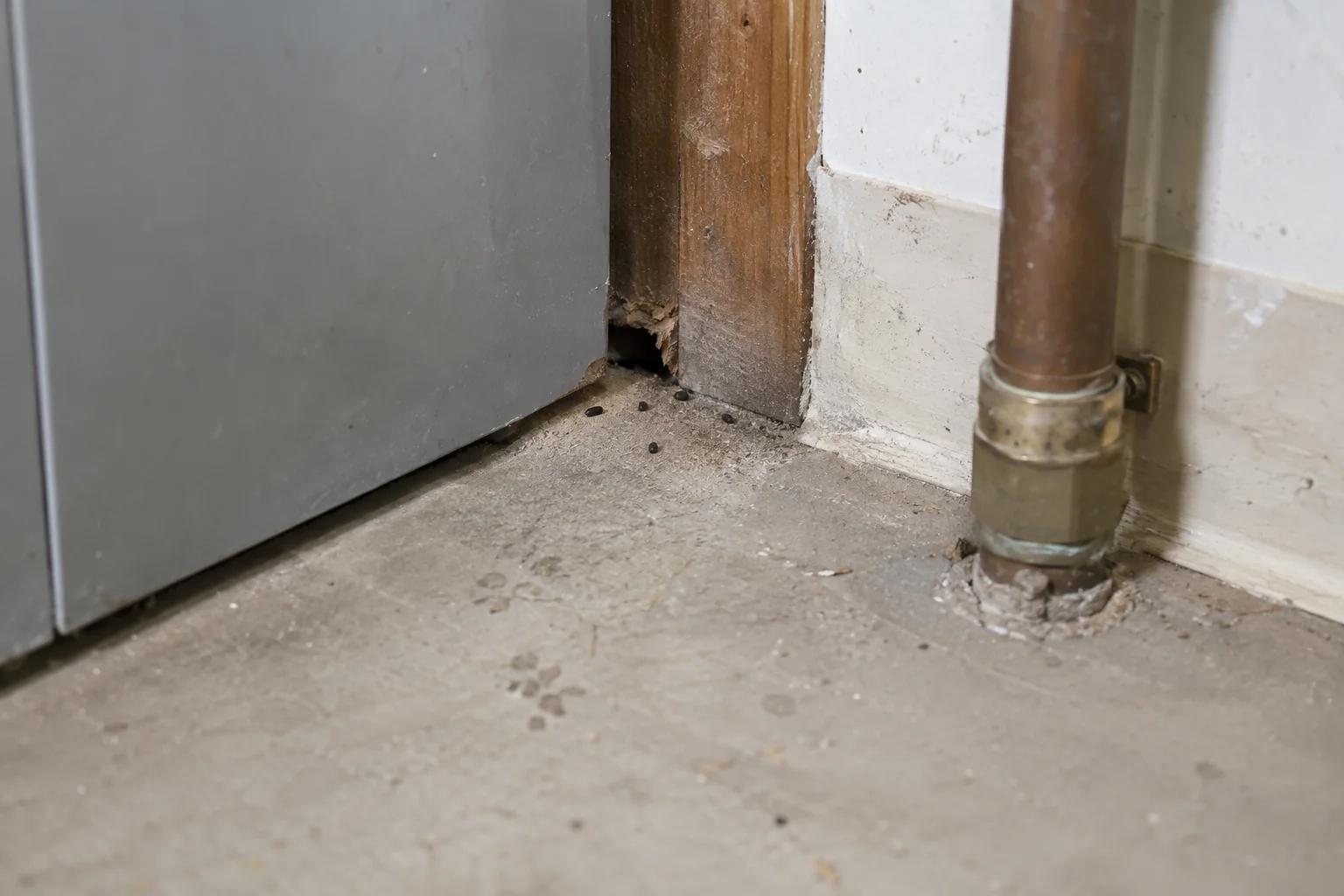
Create a simple activity map.
For each room, note:
- sightings
- fresh droppings
- tracks
- gnawing
- nesting material
- trap activity
- entry gaps
This helps separate:
- inactive rooms
- occasional routes
- high-activity zones
The goal is not an exact mouse number.
The goal is to understand where control should be concentrated.
Start With the Most Active Area
The most active area often has several signs together.
For example:
- fresh droppings
- tracks
- gnawing
- trap catches
Common high-activity areas include:
- kitchens
- pantries
- garages
- attics
- utility rooms
Start inspection there and work outward.
Check the Kitchen
Inspect:
- lower cabinets
- pantry corners
- behind appliances
- under the sink
- food storage
Repeated fresh signs in the kitchen suggest mice are using the area regularly.
Check the Garage
Inspect:
- garage-door corners
- pet food
- bird seed
- storage boxes
- wall penetrations
A garage may be both:
- an activity area
- an entry point into the house
Check the Attic
Inspect for:
- droppings
- tracks
- nests
- gnawing
- disturbed insulation
See Mice in the Attic: Signs, Damage & Removal.
Check Wall Routes
If you hear scratching or find signs near a wall, inspect accessible areas around:
- baseboards
- cabinets
- plumbing penetrations
- utility openings
See Mice in Walls: Signs, Entry Points & What to Do.
How to Monitor Mouse Activity for Several Days
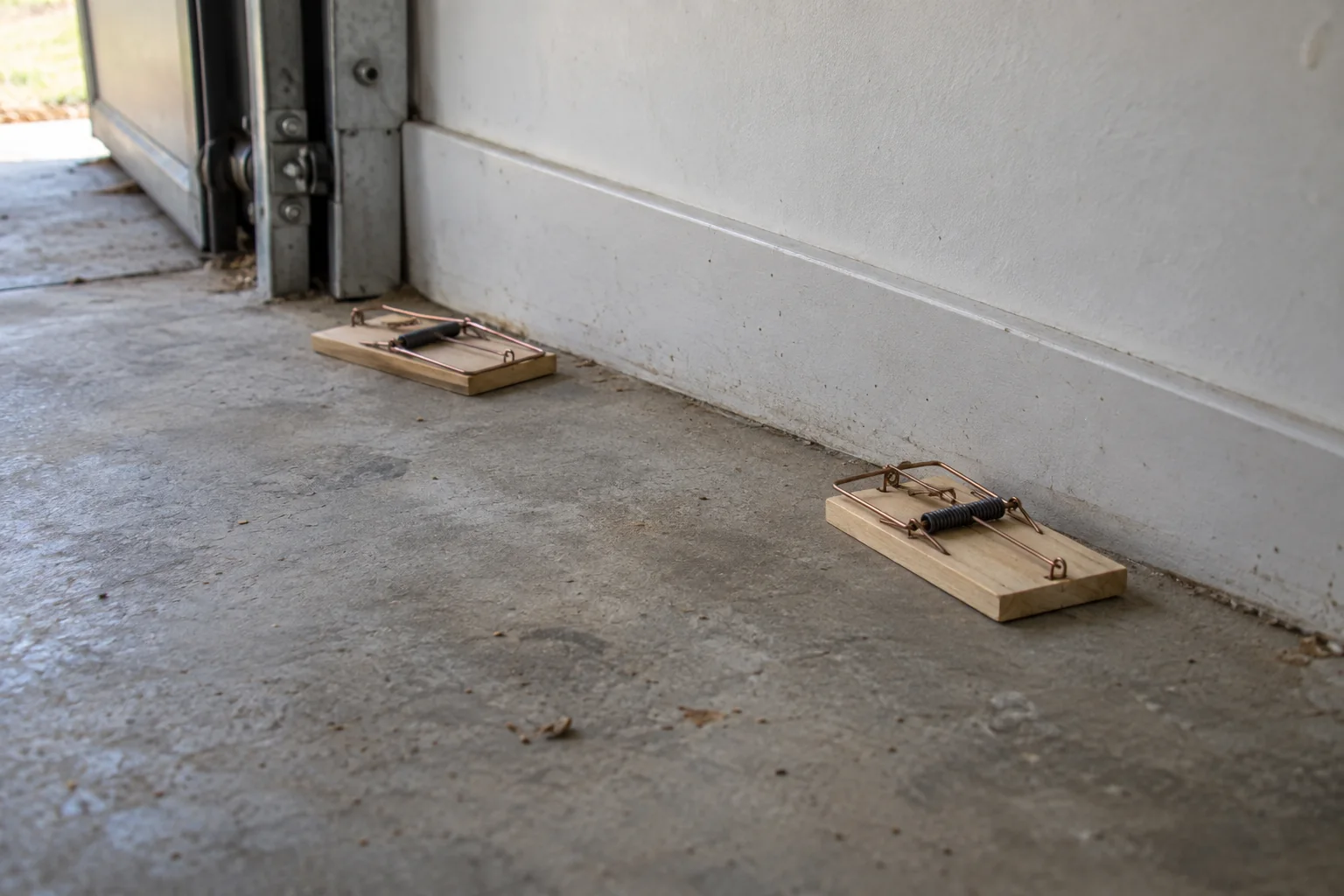
Consistency is important.
Use the same locations each time.
A practical monitoring routine is:
- photograph active areas
- clean droppings safely
- place mouse-sized traps on confirmed routes
- record catches
- check for fresh droppings
- note new gnawing
- inspect entry points
- repeat observations
A declining pattern suggests control is working.
Continued or expanding evidence suggests activity remains.
Should You Count Every Dropping?
Usually not.
Counting individual droppings can create a false sense of precision.
A more useful record is:
- none
- a few fresh droppings
- repeated fresh droppings
- heavy recurring contamination
Location and recurrence matter more than exact pellet count.
Should You Count Every Track?
No.
One mouse may cross the same dusty surface many times.
Record:
- where tracks appear
- whether new tracks appear after disturbance
- whether the route connects important areas
Do not convert footprint count into mouse count.
Should You Count Every Sighting?
Record sightings, but do not treat each sighting as a different mouse.
Useful notes include:
- date
- time
- room
- direction of travel
- whether physical signs were present
Patterns are more useful than raw sighting totals.
Can Cameras Help Estimate Mouse Activity?
A camera can sometimes show:
- repeated routes
- timing
- whether more than one mouse appears together
But a camera only records the area it covers.
It cannot prove there are no mice elsewhere.
Use camera evidence as one monitoring tool, not a complete census.
Can You Estimate Mice From Food Consumption?
Not reliably.
Missing bait or food can be affected by:
- insects
- pets
- other rodents
- moisture
- one mouse feeding repeatedly
Do not convert food loss into a mouse population estimate.
Can You Estimate Mice From Urine Odor?
No.
Odor strength depends on:
- ventilation
- contamination age
- surface
- moisture
- accumulation
A strong smell does not equal a specific number of mice.
See Mouse Urine Smell: What It Smells Like & How to Find It.
Can You Estimate Mice From Noise?
No.
Sound is affected by:
- wall construction
- distance
- insulation
- room acoustics
One mouse close to drywall can sound surprisingly loud.
Do not estimate population size from noise volume.
What Matters More Than the Exact Number of Mice?
Three things matter most:
1. Is Activity Current?
Look for:
- new droppings
- recent sightings
- fresh gnawing
- trap activity
2. How Widely Is Activity Spread?
Compare:
- one localized route
- several rooms
- attic plus kitchen
- garage plus wall activity
3. Is New Activity Continuing?
After trapping and cleanup, ask:
- are droppings returning?
- are traps still catching mice?
- are new signs appearing?
These questions are more useful than trying to calculate an exact number.
What to Do If You Think There Are Several Mice
A practical response is:
- map active areas
- place multiple mouse-sized traps on confirmed routes
- remove accessible food
- store food securely
- inspect entry points
- continue monitoring
- coordinate exclusion with trapping
- clean contamination safely
See How to Get Rid of Mice in Your House.
Where Should You Put Traps?
Place traps where mouse evidence is strongest.
Common routes include:
- along walls
- behind appliances
- cabinet edges
- garage walls
- stable attic routes
Use mouse-sized traps.
Keep traps inaccessible to children and pets.
See Mouse Traps: Types, Placement & How to Use Them and Best Mouse Traps: Which Type Works Best & How to Choose.
Should You Seal Entry Points Immediately?
Not always.
If mice are still inside, sealing the only active route may trap them in the structure.
Coordinate trapping and exclusion.
See Rodent Exclusion: How to Keep Rats & Mice Out.
How to Find the Entry Points
Inspect:
- plumbing gaps
- cable penetrations
- garage-door corners
- exterior door gaps
- foundation openings
- siding transitions
- attic connections
See How Mice Get Into Your House.
How to Clean Mouse Droppings Safely
If you find rodent waste:
- keep children and pets away
- wear suitable gloves
- wet contaminated material with an appropriate disinfecting solution
- follow product contact-time instructions
- wipe or collect the waste
- wash hands after removing gloves
Do not dry sweep or vacuum fresh rodent droppings or nesting material before wet cleanup.
See the cleanup section and rodent safety section.
When to Call a Professional
Professional mouse control may make sense when:
- activity occurs in several rooms
- fresh droppings keep returning
- several mice are caught but activity continues
- mice are inside walls or attics
- several entry points may be involved
- trapping does not reduce evidence
- exclusion work is difficult
See Mouse Exterminator: What to Expect & When to Call One.
How Many Mice Are in My House? The Bottom Line
Most household signs cannot tell you the exact number of mice.
Do not calculate population from:
- droppings
- tracks
- one nest
- noise
- odor
- one daytime sighting
- one trap catch
Instead, estimate the extent of activity.
Limited activity may involve:
- one localized route
- one sighting
- no recurring evidence
More established activity may involve:
- recurring fresh droppings
- repeated sightings
- several active routes
- trap catches over multiple days
- nests
- activity in several areas
The most useful goal is not counting every mouse.
It is determining whether activity is current, where it is concentrated, whether it is spreading, and whether control is reducing it.
Continue with our one-mouse guide, daytime mouse guide, signs of mice guide, mouse droppings guide, mouse tracks guide, mouse gnaw marks guide, mouse nest guide, how to get rid of mice, or rodent exclusion guide.
For the broader overview, return to [Rats & Mice in the Home](/).