Does One Mouse Mean You Have an Infestation?
Seeing one mouse in your house does not automatically prove that you have a large mouse infestation.
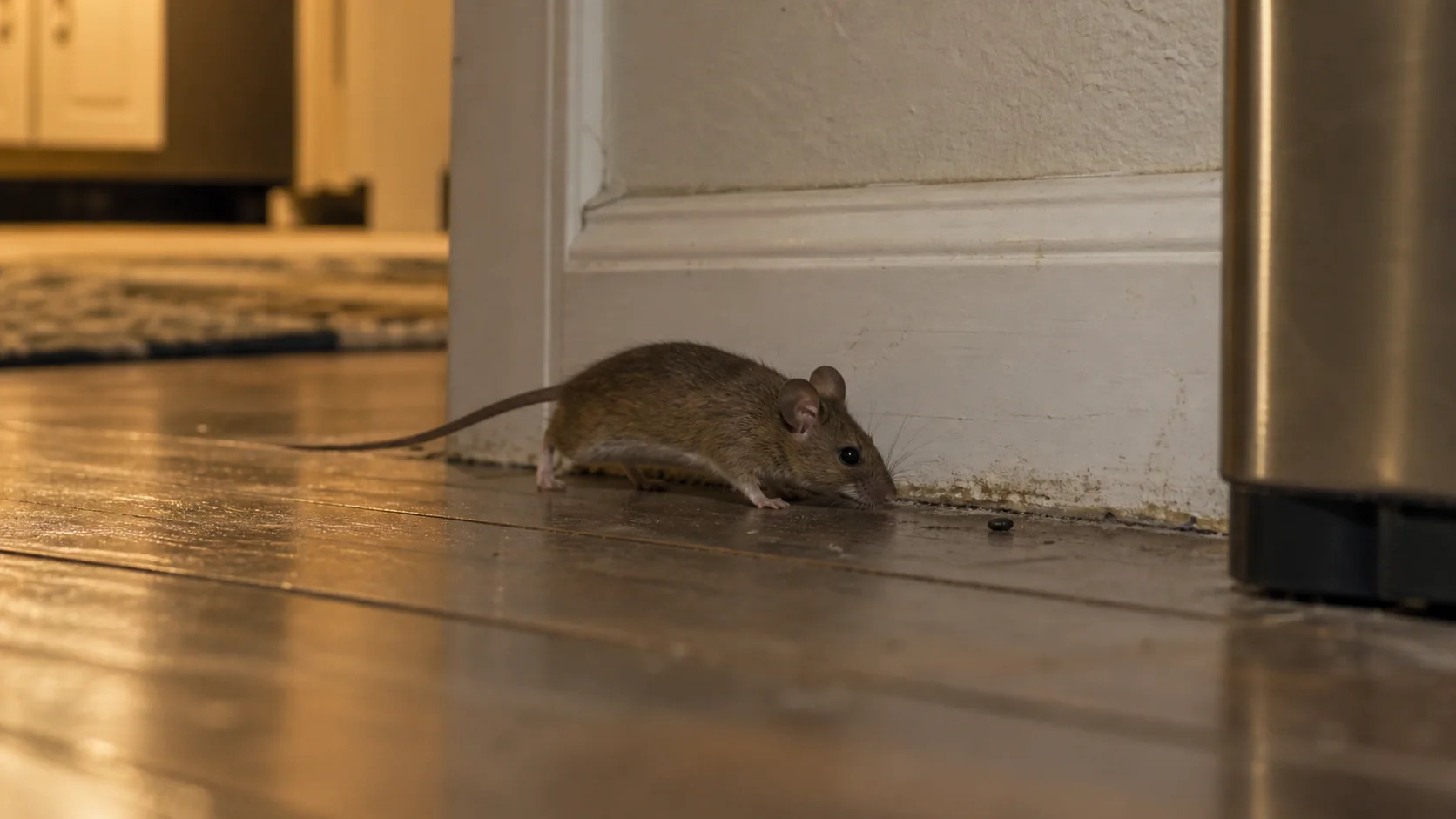
Seeing one mouse in your house does not automatically prove that you have a large mouse infestation.
A single mouse can enter a home through:
- an open door
- a garage
- a small exterior gap
- a utility penetration
- an attic or crawl-space route
It is possible for one mouse to get inside without a large established population already living in the house.
However, an indoor mouse sighting should not be ignored.
Mice are small, secretive, and often active when people are asleep. If one mouse is visible, there may be additional activity hidden in:
- walls
- cabinets
- attics
- garages
- storage areas
- behind appliances
The correct conclusion is not:
“One mouse definitely means there are dozens.”
It is:
“One mouse is enough reason to inspect for other signs.”
The most useful evidence includes:
- mouse droppings
- gnaw marks
- tracks
- nests
- urine odor
- scratching sounds
- repeated sightings
This guide explains what one mouse can mean, how to tell whether more mice are likely present, where to inspect, and what to do after a single mouse sighting.
Can There Really Be Just One Mouse in a House?
Yes.
A lone mouse may enter accidentally while searching for:
- food
- water
- warmth
- shelter
This is more plausible when:
- the sighting happens near an exterior door or garage
- no droppings are found
- no gnawing is visible
- no nesting material is present
- traps show no additional activity
- no more mice are seen
But absence of obvious evidence does not immediately prove there is only one mouse.
Some signs can be hidden.
That is why monitoring matters.
Does One Mouse Mean There Are More?
Sometimes, but not always.
Mice can live near each other, and a home that offers:
- food
- water
- shelter
- entry points
can support more than one mouse.
But you cannot determine population size from a single sighting.
The strongest clues that more mice may be present are:
- droppings in several locations
- repeated nighttime noises
- multiple fresh gnaw marks
- a nest
- several track routes
- repeated sightings
- traps catching more than one mouse over time
Use evidence, not assumptions.
Why One Mouse Still Matters
Even if only one mouse is present, it can:
- contaminate food
- leave droppings and urine
- gnaw packaging
- damage materials
- enter wall voids
- enlarge small openings
A single mouse also tells you that the building may have an access point.
Finding that route can prevent future mice from entering.
How Likely Is It That One Mouse Is Alone?
There is no reliable percentage.
The answer depends on:
- where the mouse was seen
- whether other signs exist
- how long activity has been present
- building condition
- food access
- season
- entry points
A mouse seen once beside an open garage door is different from a mouse seen in a kitchen where droppings have been appearing for a week.
Do not use a fixed “one mouse equals X more mice” rule.
What Signs Suggest More Than One Mouse?
Look for a pattern of activity.
Multiple mice become more plausible when you find several of these signs together:
- droppings in more than one area
- droppings appearing again after cleanup
- multiple gnawed packages
- several active travel routes
- a nest
- scratching in different locations
- repeated sightings
- more than one mouse caught
The amount of evidence matters more than one isolated clue.
See Signs of Mice in Your House for the full evidence checklist.
Mouse Droppings After One Sighting
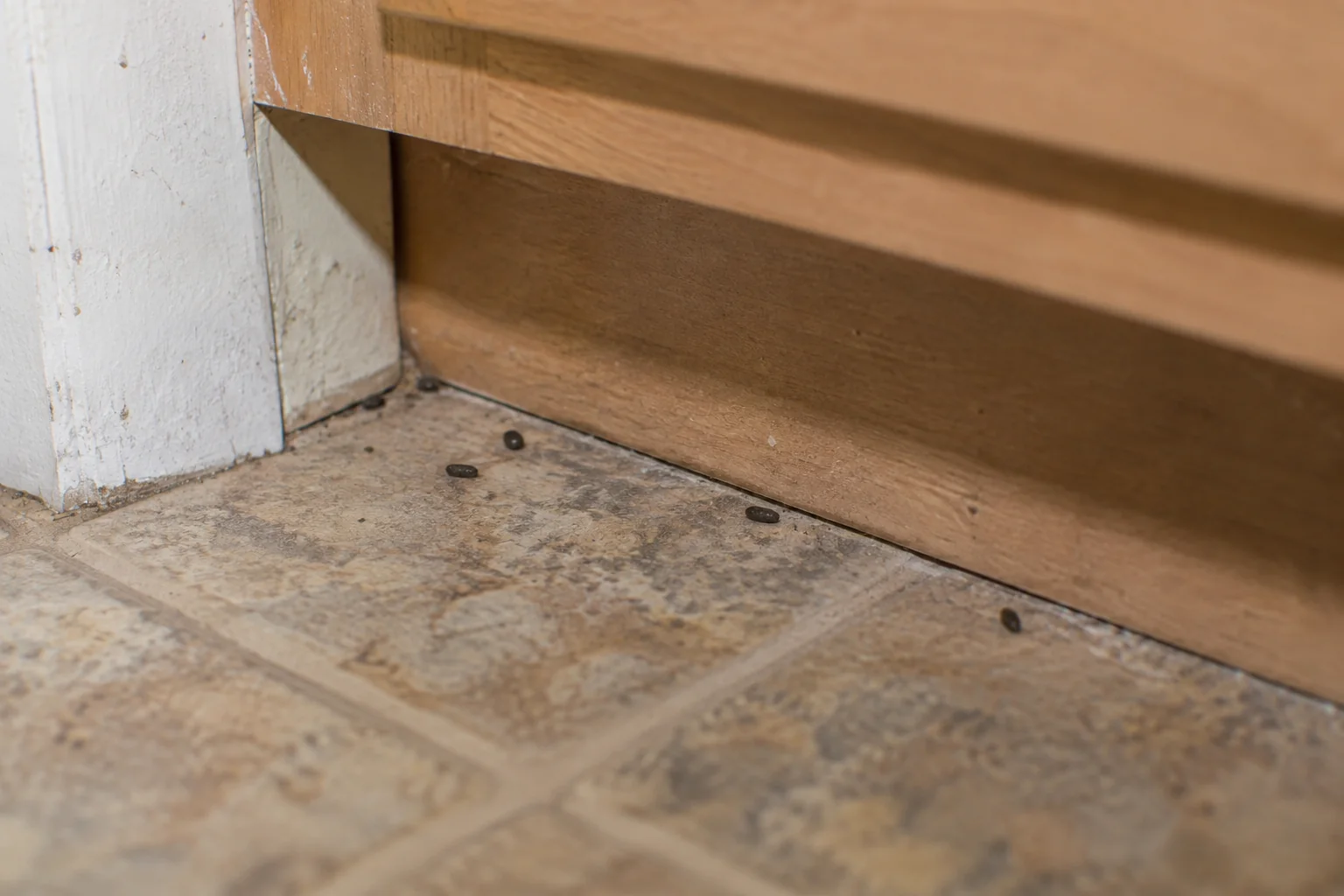
Droppings are one of the most useful clues.
Look around:
- wall edges
- kitchen cabinets
- pantry corners
- behind appliances
- garages
- attics
- storage rooms
Mouse droppings are typically:
- small
- dark
- pellet-shaped
A few old-looking droppings do not reveal exactly how many mice are present.
Fresh droppings continuing to appear after cleanup are stronger evidence of ongoing activity.
See Mouse Droppings: What They Look Like & What They Mean.
A Mouse Nest Is Stronger Evidence
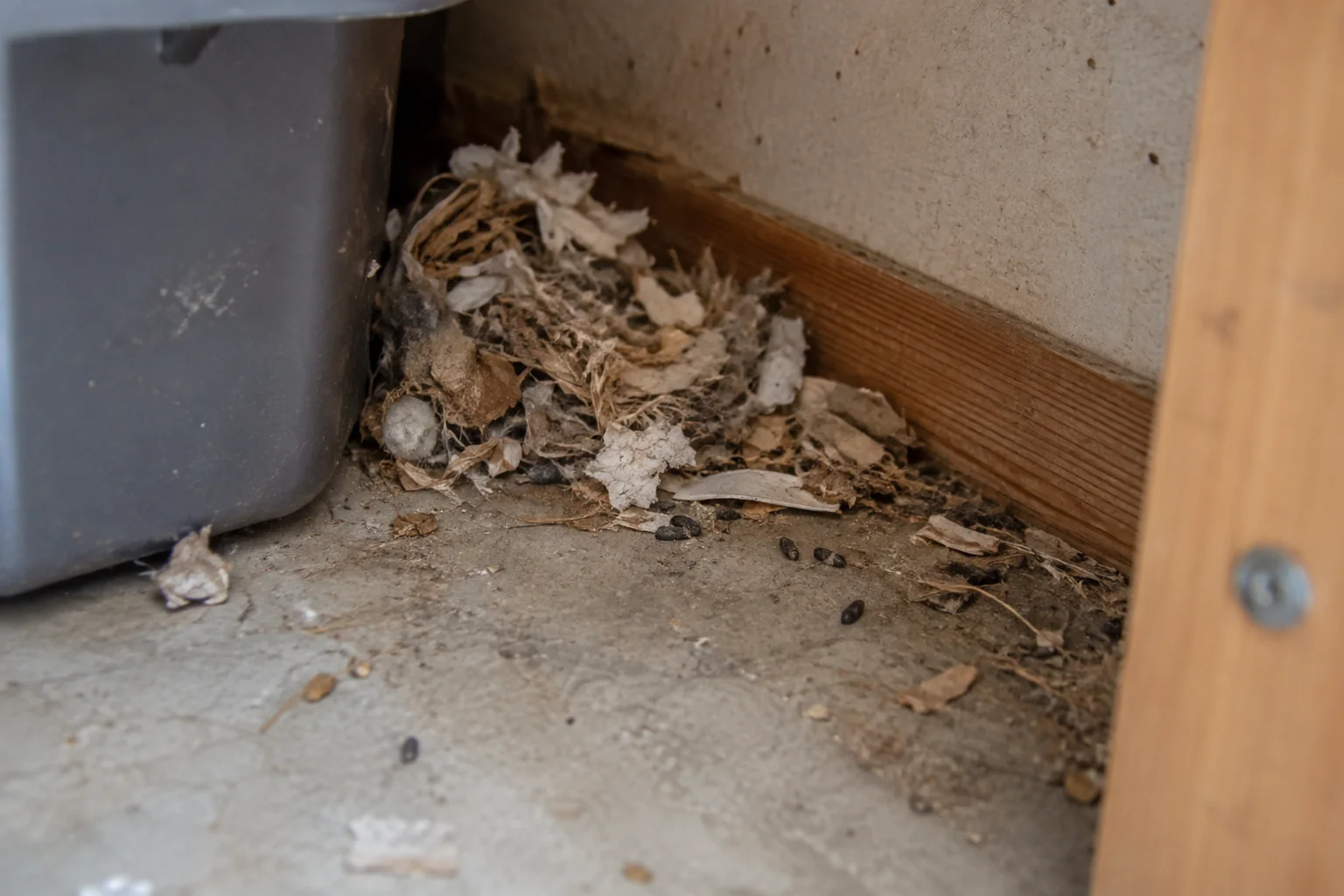
Finding a mouse nest suggests that the space has been used for shelter.
A mouse nest may contain:
- shredded paper
- cardboard fibers
- fabric
- insulation
- other soft material
A nest does not tell you exactly how many mice are present.
But it is stronger evidence of established activity than one quick sighting.
See Mouse Nests: What They Look Like & Where to Find Them.
Gnaw Marks After Seeing One Mouse
Fresh-looking gnawing can indicate continued activity.
Mice may chew:
- food packaging
- cardboard
- wood edges
- plastic
- utility openings
- wire insulation
Gnawing near droppings or a travel route is more meaningful than one old damaged corner.
See Mouse Gnaw Marks: How to Identify Rodent Damage.
Mouse Tracks Can Show a Travel Route
Tiny footprints in dust can reveal where mice are moving.
Look along:
- wall edges
- garages
- attic framing
- storage areas
- behind appliances
Tracks do not tell you exactly how many mice are using the route.
One animal can make many prints.
See Mouse Tracks: What They Look Like & Where to Find Them.
Mouse Urine Smell After One Sighting
A persistent musky or urine-like odor may suggest repeated activity.
But smell alone cannot prove:
- mice are the source
- how many mice are present
Use odor with droppings, gnaw marks, nests, or tracks.
See Mouse Urine Smell: What It Smells Like & How to Find It.
Scratching Sounds After Seeing One Mouse
Nighttime scratching can support the possibility of hidden mouse activity.
Common areas include:
- walls
- ceilings
- cabinets
- attics
But scratching can also come from:
- rats
- squirrels
- birds
- insects
- pipes
- ducts
See Scratching in Walls at Night: Could It Be Mice or Rats?.
Does Seeing a Mouse in the Kitchen Mean an Infestation?
Not automatically.
A kitchen is attractive because it may provide:
- food
- crumbs
- water
- cabinets
- appliance gaps
One kitchen sighting should trigger an inspection of:
- lower cabinets
- pantry shelves
- behind the refrigerator
- behind the stove
- under the sink
- nearby wall gaps
If you also find droppings or food damage, ongoing activity becomes more likely.
Does Seeing One Mouse in the Garage Mean More Are Inside?
Not necessarily.
A garage is directly connected to the outdoors and may be easier for a lone mouse to enter.
Inspect:
- garage-door corners
- stored food
- bird seed
- pet food
- boxes
- wall penetrations
- the door into the house
A mouse in the garage still indicates an access opportunity that should be addressed.
One Mouse in the Attic
An attic sighting is worth investigating because mice can remain hidden there for long periods.
Look for:
- droppings
- nests
- tracks
- gnawing
- disturbed insulation
See Mice in the Attic: Signs, Damage & Removal.
One Mouse Near a Wall
A mouse disappearing into a baseboard or wall opening may indicate access to a wall void.
Inspect nearby:
- pipe penetrations
- cabinet gaps
- baseboards
- utility openings
If you also hear scratching inside the wall, inspect the accessible route before opening drywall.
See Mice in Walls: Signs, Entry Points & What to Do.
One Mouse Behind the Refrigerator
The refrigerator area can provide:
- warmth
- food debris
- hidden travel routes
- utility gaps
After one sighting, inspect for:
- droppings
- gnawing
- nesting material
- wall openings
Do not move a heavy appliance unsafely.
One Mouse in a Bedroom
A bedroom sighting does not necessarily mean the nest is in the bedroom.
The mouse may have traveled through:
- a wall
- hallway
- closet
- floor gap
- nearby utility route
Inspect along walls and under accessible furniture.
Do not leave food accessible overnight.
One Mouse Upstairs
An upstairs mouse may have arrived through:
- wall cavities
- attic routes
- plumbing chases
- stair or floor voids
Inspect the attic and upper-wall access areas when safe.
Finding one mouse upstairs is not proof of a large infestation, but it suggests the animal can move through the structure.
One Mouse During Renovation or Construction
Renovation can disturb hidden areas.
A mouse may appear after:
- drywall is opened
- cabinets are removed
- stored materials are moved
- exterior work changes access
This can expose a previously hidden route.
Inspect the newly disturbed area for:
- droppings
- nests
- gnaw marks
- entry gaps
Do not assume renovation itself created the problem.
Can One Mouse Reproduce in the House?
One mouse alone cannot produce young without having mated.
However, a female may already be pregnant when she enters.
You usually cannot determine reproductive status from a quick sighting.
This is another reason to inspect promptly rather than assume a lone mouse will always remain a lone mouse.
How Fast Can Mouse Activity Grow?
House mice can reproduce quickly when:
- food is available
- shelter is available
- temperatures are favorable
But the presence of one mouse does not let you predict how many mice will be present later.
The useful action is to address the access and activity now.
Does One Baby Mouse Mean More Mice Are Nearby?
A very young mouse indoors is stronger evidence of nearby breeding than a single adult sighting.
Young mice do not travel as widely as independent adults.
If you find a very young mouse, inspect for:
- nesting material
- droppings
- wall or cabinet voids
See Baby Mouse: What Newborn & Young Mice Look Like.
Could the Animal Be a Rat Instead?
Yes, especially if the sighting was fast or in low light.
Compare:
- body size
- ears
- snout
- tail proportions
- droppings
- tracks
See Rat vs Mouse: How to Tell the Difference.
House Mouse vs Deer Mouse
Not every small mouse indoors is a house mouse.
Deer mice can enter homes, cabins, garages, sheds, and other structures.
Identification may matter because behavior and health context can differ.
See Deer Mouse vs House Mouse: Key Differences and House Mouse: Identification, Signs & Behavior.
What to Do Immediately After Seeing One Mouse
A practical first response is:
- note exactly where the mouse was seen
- inspect nearby wall edges
- check for droppings
- inspect food packaging
- look for gnaw marks
- inspect likely entry gaps
- place mouse-sized traps on confirmed routes
- reduce accessible food
- monitor for new evidence
Do not wait for many sightings before checking the area.
Should You Clean Droppings Immediately?
Yes, but use appropriate wet-cleanup methods.
If you find rodent waste:
- keep children and pets away
- use suitable gloves
- wet contaminated material with an appropriate disinfecting solution
- follow product contact-time instructions
- wipe or collect the material
- wash hands after removing gloves
Do not dry sweep or vacuum fresh rodent droppings or nesting material before wet cleanup.
See the cleanup section and rodent safety section.
Where Should You Put Mouse Traps After One Sighting?
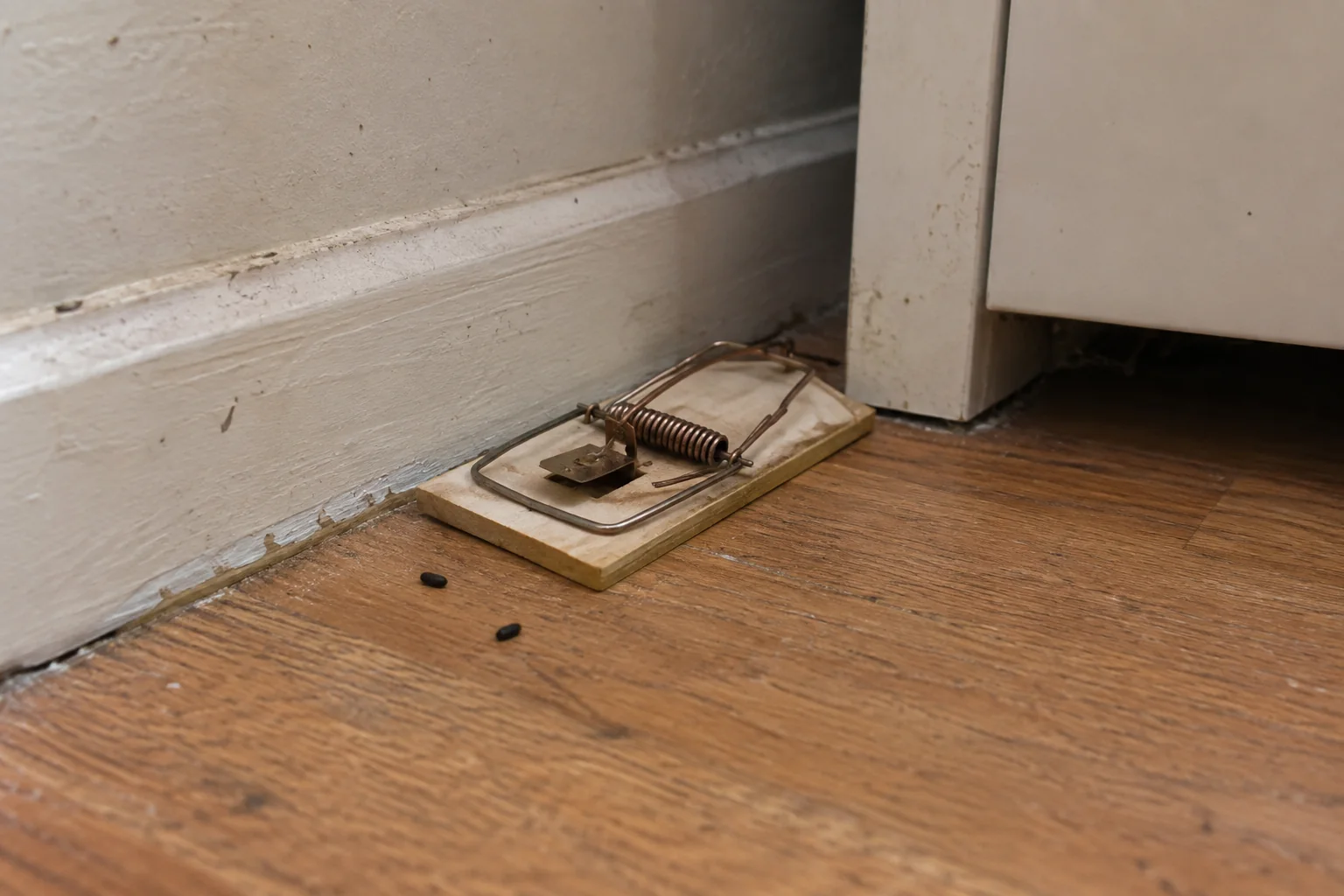
Trap placement should follow the likely travel route.
Useful locations include:
- along walls
- behind appliances
- cabinet edges
- garage routes
- attic framing
Use traps designed for mice.
Keep traps inaccessible to children and pets.
See Mouse Traps: Types, Placement & How to Use Them and Best Mouse Traps: Which Type Works Best & How to Choose.
Should You Put a Trap in the Middle of the Room?
Usually, wall-edge routes are more useful.
Mice often travel close to:
- walls
- objects
- cover
A trap placed directly on a confirmed runway is generally more logical than one placed randomly in an open room.
Should You Use Poison for One Mouse?
Do not assume rodenticide is the first or simplest answer to one sighting.
Rodenticides must be used according to:
- the product label
- applicable placement requirements
- child and pet safety requirements
A mouse that dies in an inaccessible wall can create an odor problem.
For a small indoor activity area, monitored trapping plus exclusion is often easier to evaluate.
Should You Seal the Entry Point Immediately?
Not always.
If the mouse is still inside and you seal the only active route, it may:
- move to another room
- gnaw another opening
- become trapped in a wall or void
Coordinate trapping with exclusion.
See Rodent Exclusion: How to Keep Rats & Mice Out.
How to Find Where the Mouse Got In
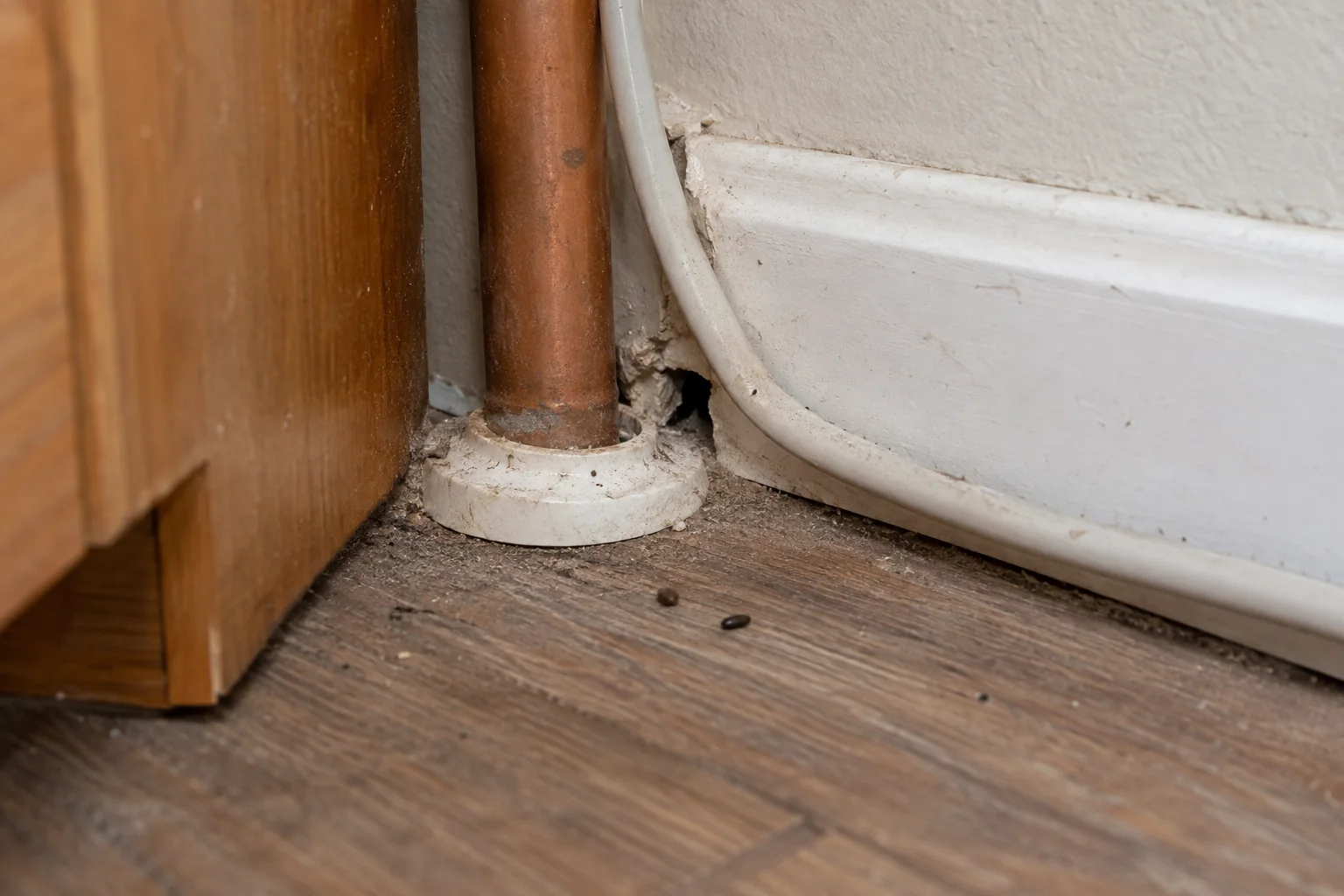
Inspect likely access points around:
- plumbing penetrations
- cable gaps
- garage-door corners
- exterior doors
- foundation openings
- siding
- attic connections
Mice can use surprisingly small openings.
See How Mice Get Into Your House.
How Long Should You Monitor After One Mouse?
There is no universal number of days that proves the house is clear.
Monitor until:
- traps remain quiet
- no fresh droppings appear
- no new gnawing appears
- no additional sightings occur
- the entry point has been addressed
The exact monitoring period depends on the building and activity.
If You Catch One Mouse, Are You Done?
Not necessarily.
After one mouse is caught:
- continue monitoring
- inspect for fresh droppings
- check other likely routes
- inspect entry points
If no additional evidence appears, the event may have been isolated.
If new signs continue, more mice may be present.
If You See a Second Mouse
A second sighting increases the likelihood of ongoing activity.
Especially if the sightings are:
- on different days
- in different rooms
- accompanied by droppings
At that point, treat the situation as an active mouse problem rather than an isolated visitor.
If Droppings Reappear After Cleanup
Fresh droppings appearing after proper cleanup are strong evidence that mice are still active.
Compare:
- location
- quantity
- route
Continue trapping and entry-point inspection.
Do not estimate the exact number of mice from dropping count alone.
If You Hear Scratching but Never See Another Mouse
Hidden wall or attic activity is possible.
Inspect:
- attic areas
- cabinets
- garages
- accessible wall routes
Do not open walls as the first step.
Use droppings, traps, and route evidence to narrow the location.
When Does One Mouse Become an Infestation?
There is no simple moment where one sighting becomes a precisely measurable infestation.
In practical home pest control, the concern increases when evidence shows:
- repeated activity
- multiple mice
- nesting
- reproduction
- continued contamination
- several active routes
The important distinction is between:
- a possible isolated intruder
- established ongoing mouse activity
Your response should be based on evidence.
Can a Clean House Still Get One Mouse?
Yes.
Mice enter buildings for shelter as well as food.
Even a clean home can have:
- door gaps
- utility openings
- garage access
- attic gaps
Sanitation helps reduce food access, but exclusion is also important.
Does One Mouse Mean the House Is Dirty?
No.
A mouse can enter a well-maintained home if it finds an opening.
Conditions such as accessible food or clutter can make a building more attractive and make detection harder, but cleanliness alone does not determine whether mice can enter.
When to Call a Professional
Professional mouse control may make sense when:
- you see mice repeatedly
- droppings keep returning
- mice are inside walls or attics
- several rooms show signs
- trapping does not stop activity
- you cannot find the entry point
- exclusion work is difficult
- you are unsure whether the animal is a mouse or rat
See Mouse Exterminator: What to Expect & When to Call One.
Does One Mouse Mean You Have an Infestation? The Bottom Line
One mouse does not automatically mean you have a large infestation.
It could be:
- an isolated intruder
- the first visible sign of hidden activity
- one member of a larger population
The sighting alone cannot tell you which.
Inspect for:
- droppings
- gnaw marks
- tracks
- nests
- urine odor
- scratching
- repeated sightings
Then:
- place mouse-sized traps on confirmed routes
- reduce accessible food
- locate entry points
- coordinate trapping with exclusion
- monitor for fresh evidence
If no additional signs appear after monitoring and the access point is corrected, the mouse may have been isolated.
If fresh signs continue, treat the situation as an active mouse problem.
Continue with our signs of mice guide, mouse droppings guide, mouse nest guide, mouse gnaw marks guide, mouse tracks guide, how to get rid of mice, how mice get into a house, or rodent exclusion guide.
For the broader overview, return to [Rats & Mice in the Home](/).