Scratching in Walls at Night: Could It Be Mice or Rats?
Scratching in a wall at night can be one of the first signs that an animal is moving through a hidden part of the house.
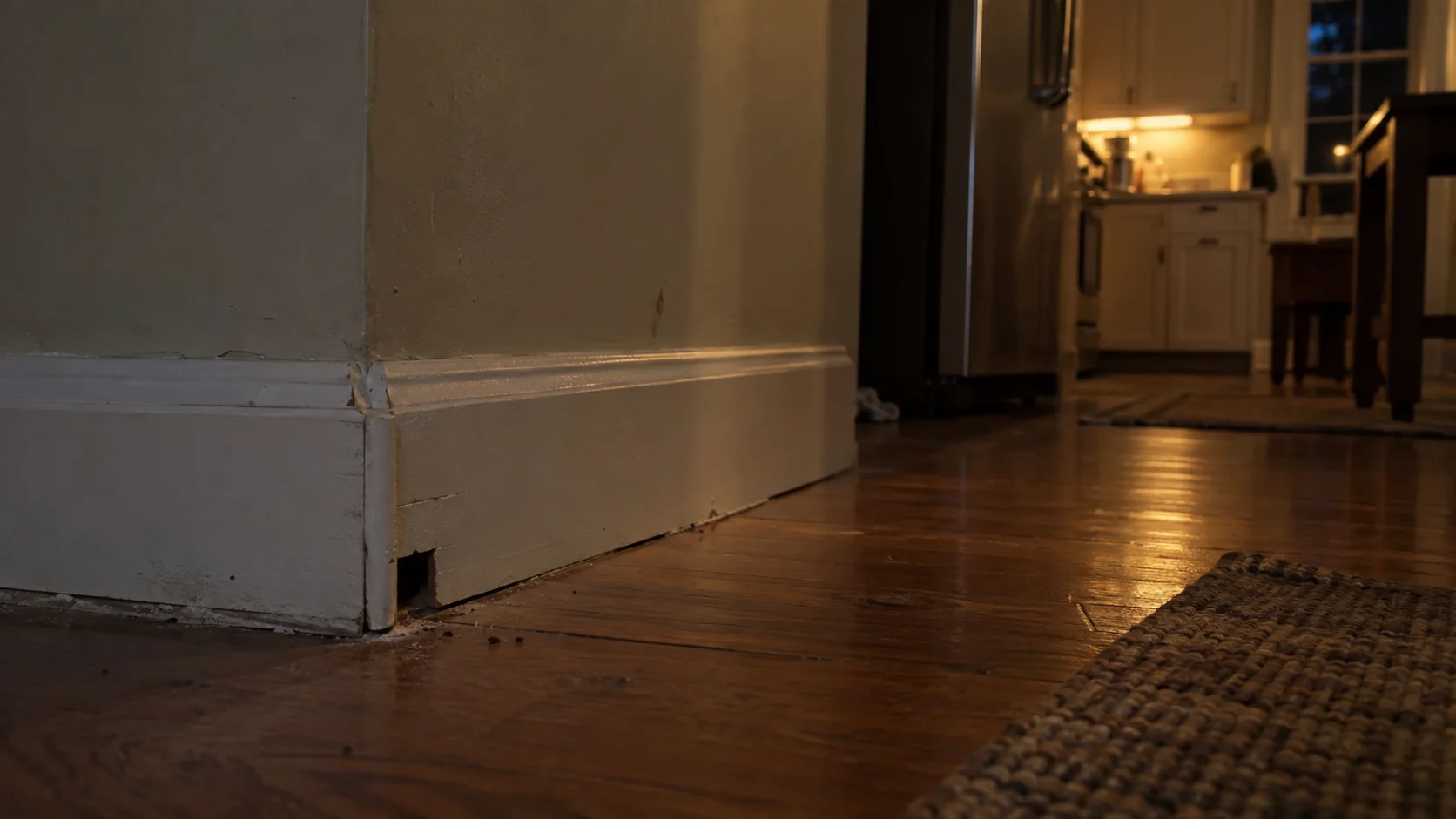
Scratching in a wall at night can be one of the first signs that an animal is moving through a hidden part of the house.
Mice and rats are common possibilities, especially when the sound happens:
- after dark
- in the same wall repeatedly
- near a kitchen, garage, attic, basement, or crawl space
- together with droppings, gnaw marks, or other rodent signs
But scratching does not automatically mean mice or rats.
Similar noises can come from:
- squirrels
- birds
- insects
- pipes
- ductwork
- building materials expanding or contracting
The timing, volume, location, and supporting evidence matter.
Mouse activity often produces lighter, faster scratching or rustling.
Rat activity may sound heavier and can include:
- louder scratching
- thumps
- gnawing
- stronger movement through wall or ceiling voids
Sound alone usually cannot identify the exact animal.
The best approach is to combine what you hear with physical signs.
This guide explains what mouse and rat sounds may be like, why rodents are often heard at night, where to inspect, what other noises can be mistaken for rodents, and what to do when scratching keeps coming back.
Why Do You Hear Scratching in Walls at Night?
Many rodents are most active from evening through the overnight hours.
A quiet house also makes small sounds easier to notice.
During the day, ordinary household noise can mask:
- scratching
- gnawing
- rustling
- running
- movement inside insulation
At night, the same activity may become obvious.
Rodents may be moving through walls to reach:
- food
- water
- nests
- attics
- kitchens
- garages
- exterior entry points
Nighttime sound is therefore a useful clue, but it still needs confirmation.
Can Mice Make Scratching Sounds in Walls?
Yes.
Mice can enter wall voids and move through narrow structural spaces.
Common mouse sounds may include:
- light scratching
- faint rustling
- rapid small movements
- soft chewing or gnawing
- brief bursts of activity
Because mice are small, their movement may sound delicate rather than heavy.
But acoustics can amplify sound inside a wall.
A mouse close to drywall can sound louder than expected.
See Mice in Walls: Signs, Entry Points & What to Do for the full mouse-wall guide.
Can Rats Make Scratching Sounds in Walls?
Yes.
Rats can also use wall systems, especially when a building connects walls with:
- garages
- attics
- basements
- crawl spaces
- utility openings
Rat movement may sound heavier than mouse movement.
Possible rat sounds include:
- louder scratching
- thumping
- heavier scurrying
- gnawing
- movement that seems to travel farther through the structure
Still, sound intensity alone is not enough to prove rats.
See Rats in Walls: Signs, Entry Points & What to Do.
Mouse Sounds vs Rat Sounds
There is overlap.
A practical comparison is:
| Clue | Mouse | Rat |
|---|---|---|
| Scratching | Light, quick | Often heavier |
| Running | Fast, delicate | Heavier scurrying |
| Thumping | Less common | More noticeable |
| Gnawing | Fine, lighter | Heavier, stronger |
| Droppings | Small | Much larger |
| Travel gap | Small openings | Larger openings |
| Body sighting | Small mouse | Full-sized rat |
Use sound as only one part of the identification.
What Does a Mouse in the Wall Sound Like?
A mouse may sound like:
- fingernails lightly scratching drywall
- paper rustling
- quick tapping
- tiny footsteps
- faint chewing
The sound may occur in short bursts.
A mouse may stop when:
- lights come on
- someone approaches
- the wall is disturbed
Then activity may resume later.
What Does a Rat in the Wall Sound Like?
Rat activity may sound more substantial.
People may notice:
- stronger scraping
- louder movement
- thumps
- gnawing
- slower heavy scurrying
A large rat moving through framing or insulation can create sounds that seem too loud for a rodent.
Walls and ceilings can amplify the noise.
Is Scratching at Night More Likely to Be Rodents?
Nighttime activity makes rodents more plausible, but it is not proof.
Mice and rats are primarily nocturnal.
However:
- raccoons may move at night
- some insects make nighttime sounds
- plumbing can change with temperature
- building materials can contract after sunset
Look for physical evidence before deciding.
Why Does the Scratching Stop When I Turn the Lights On?
Rodents are cautious.
If activity stops after:
- footsteps
- lights
- cabinet movement
- nearby vibration
the animal may simply be pausing because it detected disturbance.
That behavior can occur with both mice and rats.
It is a clue, not a species test.
Why Does the Noise Happen at the Same Time Every Night?
Repeated timing may reflect a regular travel pattern.
Rodents often learn consistent routes between:
- nests
- food
- water
- entry points
A sound that appears at roughly the same time can indicate that the same route is being used repeatedly.
Do not assume there is only one animal.
Scratching in the Wall Near the Kitchen
A kitchen-adjacent wall is an important inspection area.
Rodents may be attracted by:
- food
- crumbs
- water
- cabinets
- appliance voids
- plumbing penetrations
Inspect nearby:
- lower cabinets
- pantry corners
- under the sink
- behind appliances
- baseboards
Look for droppings and gnawing.
Scratching Behind Kitchen Cabinets
Cabinets often connect to wall voids.
Mice can use very small gaps around:
- plumbing
- wiring
- cabinet backs
- floor-wall joints
Rats need more space but may use larger utility penetrations.
If scratching is concentrated behind one cabinet run, inspect the accessible lower and back corners.
Scratching Behind the Refrigerator
The refrigerator area may provide:
- warmth
- food debris
- wall-edge travel
- utility gaps
Mouse droppings behind the refrigerator strongly support mouse activity.
Larger rat droppings or heavy grease marks suggest a larger rodent.
Do not move a heavy refrigerator unsafely.
Scratching in the Wall Near the Garage
A garage is a common connection point between outdoors and interior walls.
Rodents may enter through:
- garage-door gaps
- exterior wall penetrations
- utility openings
- damaged seals
Then they may move into:
- wall voids
- kitchens
- attics
Inspect the garage side of the wall when possible.
Scratching in Upstairs Walls
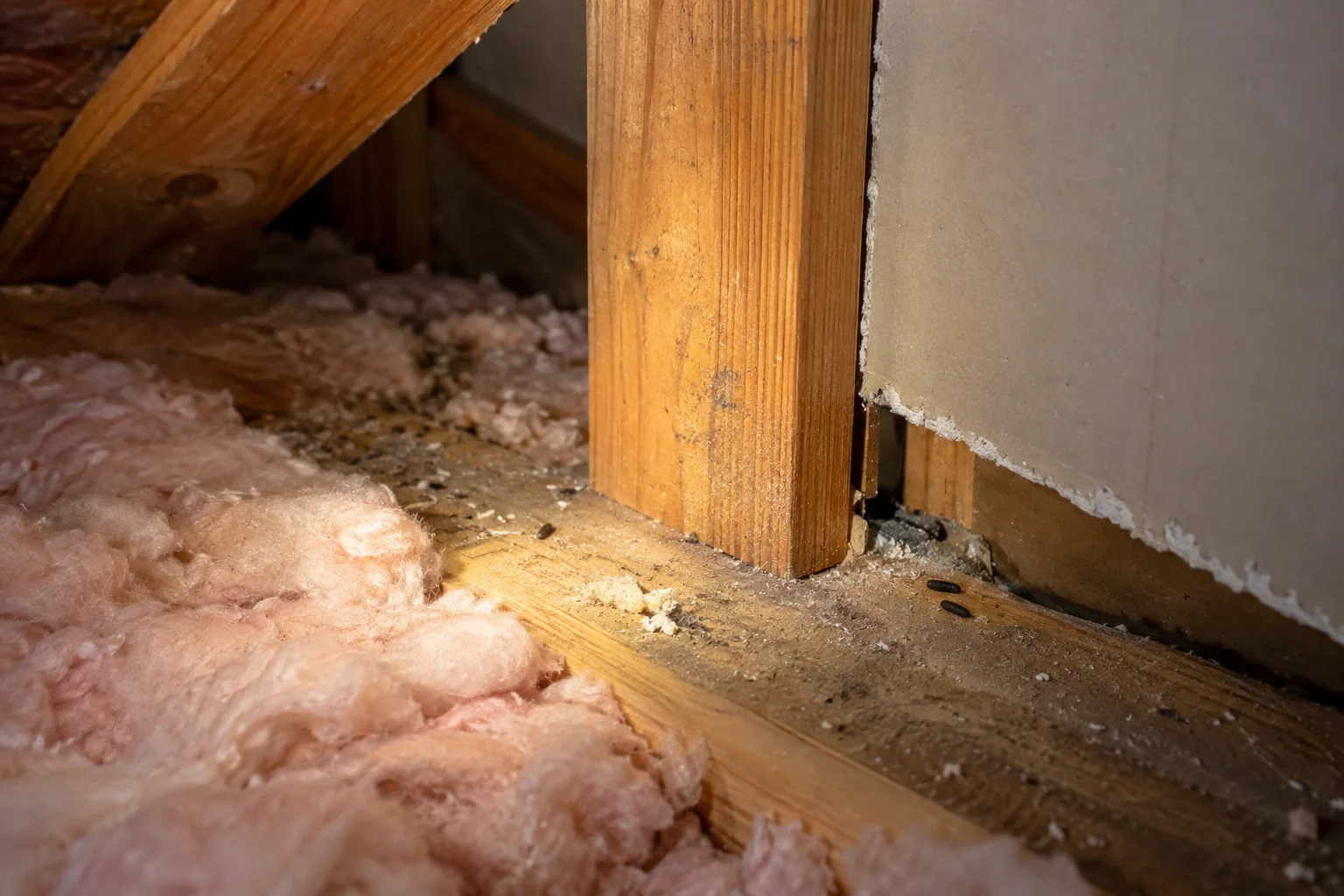
Upper-wall activity may be connected to:
- attic routes
- soffits
- roofline openings
- utility chases
Mice can reach upper levels through wall cavities.
Roof rats are especially capable climbers.
See Roof Rat: Identification, Signs & Behavior.
Scratching in Lower Walls or Near the Basement
Lower-wall activity may connect with:
- foundation gaps
- basement utility penetrations
- crawl spaces
- garages
Norway rats are more strongly associated with lower structural routes and ground-level access.
See Norway Rat: Identification, Signs & Behavior.
Scratching in the Ceiling at Night
Ceiling sounds may originate from the attic rather than the wall itself.
Possible causes include:
- mice
- roof rats
- squirrels
- other wildlife
If the sound is above the ceiling, inspect the attic for:
- droppings
- tracks
- disturbed insulation
- nests
- gnawing
See Mice in the Attic: Signs, Damage & Removal and Rats in the Attic: Signs, Damage & Removal.
Scratching in the Wall but No Droppings
Not finding droppings does not rule out rodents.
Droppings may be:
- inside the wall
- behind appliances
- in the attic
- in the garage
- in a crawl space
But if there is no rodent evidence anywhere accessible, keep other explanations open.
Do not treat sound alone as confirmation.
How to Confirm Mice Are Causing the Scratching
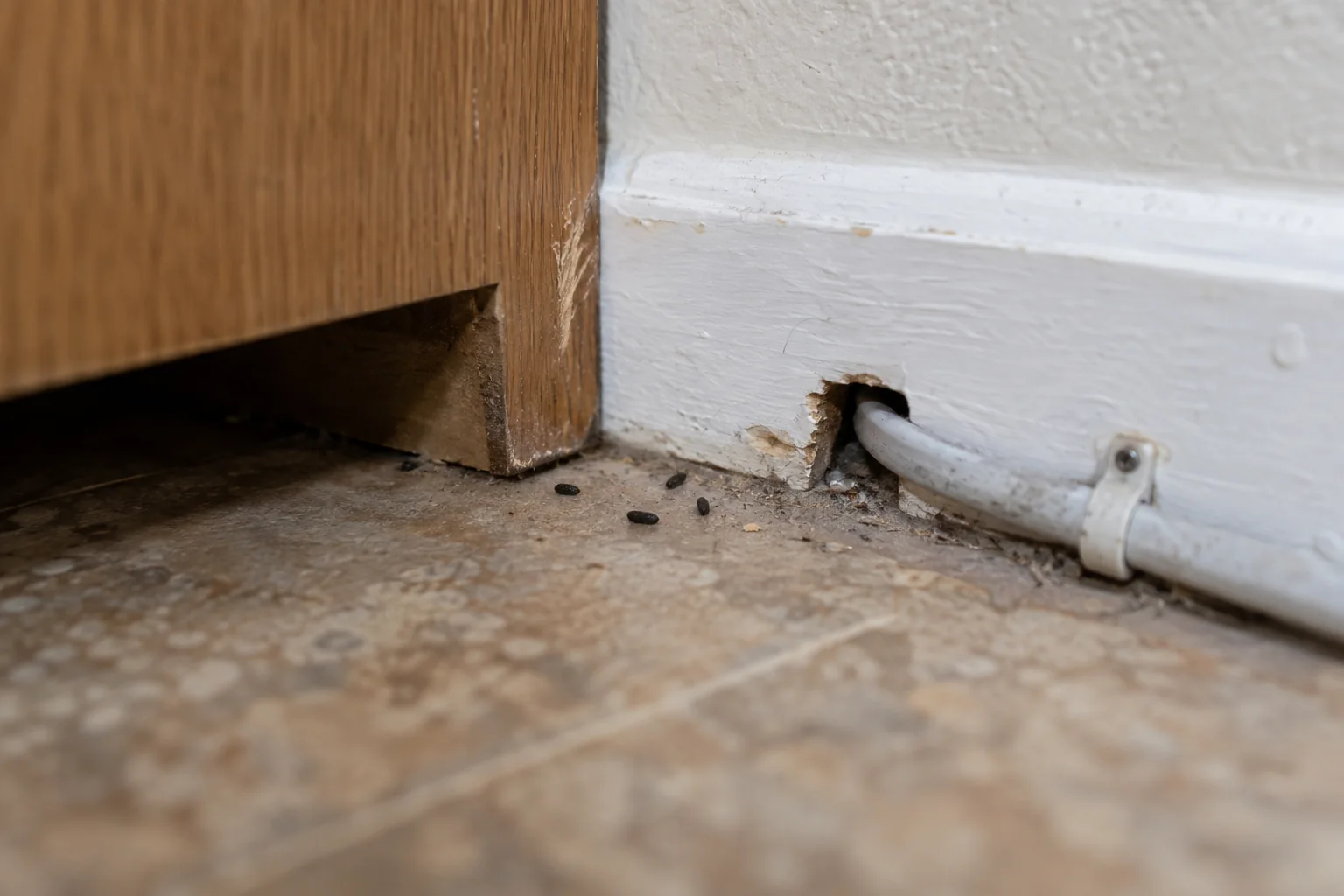
Look for multiple mouse-sized signs.
Useful evidence includes:
- small dark droppings
- fine gnaw marks
- shredded nesting material
- mouse sightings
- tiny tracks
- small entry gaps
See Mouse Droppings: What They Look Like & What They Mean and Signs of Mice in Your House.
How to Confirm Rats Are Causing the Scratching
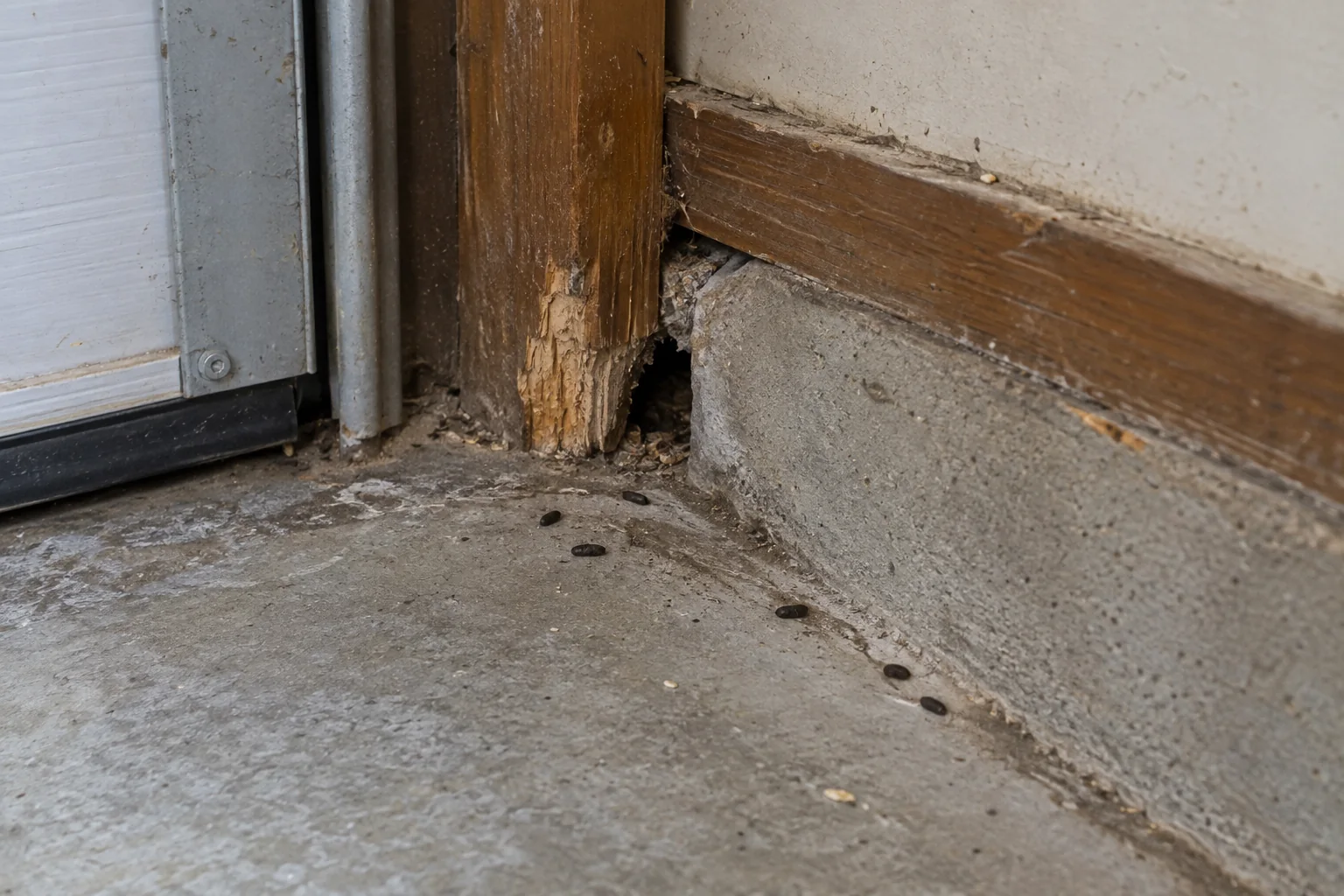
Rat activity is more likely when you find:
- larger droppings
- heavier gnawing
- grease marks
- larger tracks
- burrows
- rat sightings
- larger entry openings
See Rat Droppings: What They Look Like & What They Mean and Signs of Rats in Your House.
Mouse Droppings vs Rat Droppings Near a Noisy Wall
Droppings can be much more useful than sound.
Mouse droppings are typically much smaller.
Rat droppings are substantially larger.
If the size is unclear, see Mouse vs Rat Droppings: How to Tell the Difference.
Do not identify the exact rat species from droppings alone.
Can Rodents Gnaw Inside Walls?
Yes.
Both mice and rats gnaw.
Possible targets include:
- wood
- cardboard
- plastic
- stored materials
- wiring insulation
Gnawing may sound like repetitive scraping or chewing.
Rat gnawing is generally heavier than mouse gnawing.
Does Loud Scratching Mean There Are Rats?
Not necessarily.
Sound transmission can be misleading.
A mouse directly against drywall may sound surprisingly loud.
A rat farther away may sound faint.
The structure itself affects what you hear.
Use sound quality together with physical evidence.
Does Constant Scratching Mean There Are Many Rodents?
No.
One animal can create repeated noise.
Likewise, multiple rodents may remain quiet while resting.
You cannot estimate population size from sound frequency alone.
Use:
- droppings
- sightings
- trap activity
- fresh damage
to evaluate the level of activity.
Can Squirrels Sound Like Rats in Walls?
Yes.
Squirrels can create:
- scratching
- running
- gnawing
- thumping
They are more strongly associated with daytime activity.
Sounds concentrated during daylight or early morning may increase the likelihood of squirrels rather than rats.
But timing alone is not definitive.
Can Birds Cause Scratching in Walls or Ceilings?
Birds may create sounds around:
- vents
- soffits
- chimneys
- wall cavities
Their activity is often more obvious during daylight.
Fluttering or repeated movement near an exterior vent can suggest birds.
Do not block an opening until you know what is using it.
Can Insects Sound Like Scratching?
Some insects can produce:
- tapping
- rustling
- clicking
- faint chewing-like sounds
These sounds are usually lighter than full rodent movement.
If no rodent signs are present, insect activity should remain a possibility.
Can Pipes Sound Like Animals in Walls?
Yes.
Plumbing can produce:
- tapping
- ticking
- knocking
- expansion noises
These sounds may occur after:
- hot-water use
- heating cycles
- pressure changes
Pipe noises are often more mechanical and repeatable than animal movement.
Can HVAC Ducts Cause Wall Noises?
Yes.
Ductwork can:
- pop
- flex
- click
- expand
- contract
Temperature changes can create nighttime noises that resemble movement.
Check whether the sound follows the heating or cooling cycle.
Why You Should Not Open the Wall Immediately
Opening drywall is usually not the first step.
Before cutting into a wall:
- inspect accessible rooms
- check the attic or crawl space
- look for droppings
- inspect utility gaps
- use traps on accessible routes
- inspect exterior entry points
The rodent often enters and exits the wall through a route that can be addressed without opening it.
How to Inspect a Noisy Wall Safely
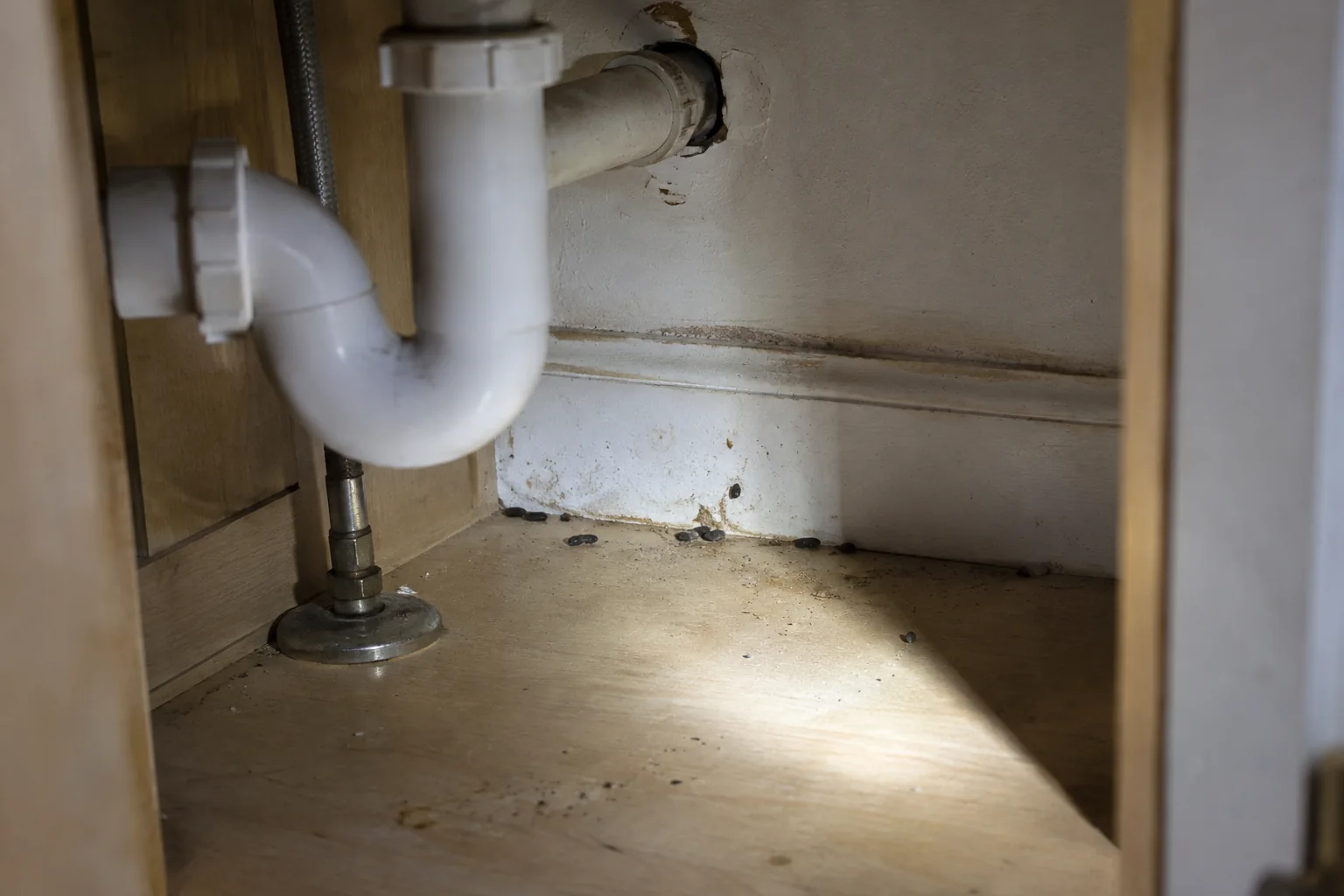
Start with accessible surfaces.
Inspect:
- baseboards
- cabinet backs
- plumbing penetrations
- utility openings
- attic connections
- garage-side walls
- basement or crawl-space access
Use a flashlight from a normal working position.
Do not insert hands into hidden wall openings.
Do not disturb electrical wiring.
Can a Camera Help Identify Wall Activity?
A small inspection camera can sometimes help in an existing accessible opening.
Do not create unsafe openings around:
- electrical wiring
- plumbing
- structural components
For most homeowners, droppings, traps, and exterior inspection are more useful first steps.
Should You Put Poison Inside a Wall?
Avoid placing rodenticide casually inside inaccessible wall cavities.
A poisoned rodent may die where it cannot be removed, creating odor.
If rodenticides are used, they must be used according to:
- the product label
- applicable legal requirements
- required placement rules
For indoor wall activity, trapping and exclusion are often easier to monitor.
Where Should You Put Traps if the Noise Is in the Wall?
Place traps on accessible routes outside the wall.
For mice, that may include:
- cabinet edges
- behind appliances
- garage walls
- attic framing
For rats, that may include:
- garage routes
- basement walls
- crawl-space routes
- attic routes
Use the correct trap size.
See Mouse Traps: Types, Placement & How to Use Them and Rat Traps: Types, Placement & How to Use Them.
Should You Seal the Wall Entry Point Right Away?
Not always.
If rodents are still inside the building, sealing the only active route may trap them.
That can lead to:
- movement into new areas
- additional gnawing
- attempts to create a new exit
- odor if an animal dies in an inaccessible void
Coordinate removal with exclusion.
See Rodent Exclusion: How to Keep Rats & Mice Out.
How Mice Get Into Wall Voids
Mice may enter through:
- plumbing gaps
- cable penetrations
- foundation openings
- garage gaps
- siding defects
- attic connections
Once inside the structure, they can use narrow wall cavities as protected travel routes.
See How Mice Get Into Your House.
How Rats Get Into Wall Voids
Rats may enter through:
- garage gaps
- foundation defects
- crawl-space openings
- utility penetrations
- roofline openings
- soffit or vent defects
Roof rats and Norway rats often prioritize different routes.
See How Rats Get Into Your House.
What to Do If You Hear Scratching Tonight
A practical first response is:
- note the exact wall or ceiling area
- note the time
- listen for scratching, gnawing, running, or thumping
- inspect accessible nearby areas for droppings
- check nearby food and storage
- identify likely entry routes
- place the correct traps on confirmed accessible routes
- monitor for fresh evidence
Do not rely on sound alone.
How Long Should You Monitor the Noise?
If you hear the sound repeatedly, begin inspecting immediately rather than waiting for weeks.
A short period of monitoring can help identify:
- timing
- route
- whether the sound moves
- whether traps detect activity
If fresh droppings or sightings appear, you already have stronger evidence than sound.
When to Call a Professional
Professional rodent inspection may make sense when:
- scratching continues but the source cannot be identified
- rats may be inside upper walls or roofline areas
- several rooms are involved
- wall activity continues after trapping
- the entry point cannot be found
- attic or crawl-space access is difficult
- structural exclusion is complicated
See Rodent Exterminator: What to Expect & When to Call One.
Scratching in Walls at Night: The Bottom Line
Nighttime scratching can be caused by mice or rats, but the sound by itself is not enough to identify the animal.
Mouse activity is more likely to sound:
- light
- quick
- rustling
- delicate
Rat activity may sound:
- heavier
- louder
- more forceful
- more likely to include thumping or strong gnawing
But wall acoustics can distort both.
The best evidence comes from combining sound with:
- dropping size
- gnaw marks
- tracks
- nests
- rub marks
- sightings
- entry-point location
Inspect accessible areas before opening walls.
Trap rodents on their accessible travel routes, identify the exterior entry point, and coordinate removal with exclusion.
Continue with our mice in walls guide, rats in walls guide, signs of mice guide, signs of rats guide, mouse droppings guide, rat droppings guide, how mice get into a house, how rats get into a house, or rodent exclusion guide.
For the broader overview, return to [Rats & Mice in the Home](/).