Mouse Gnaw Marks: How to Identify Rodent Damage
Mouse gnaw marks are small tooth marks created when mice chew on food packaging, wood, cardboard, plastic, wiring insulation, and other materials around a home.
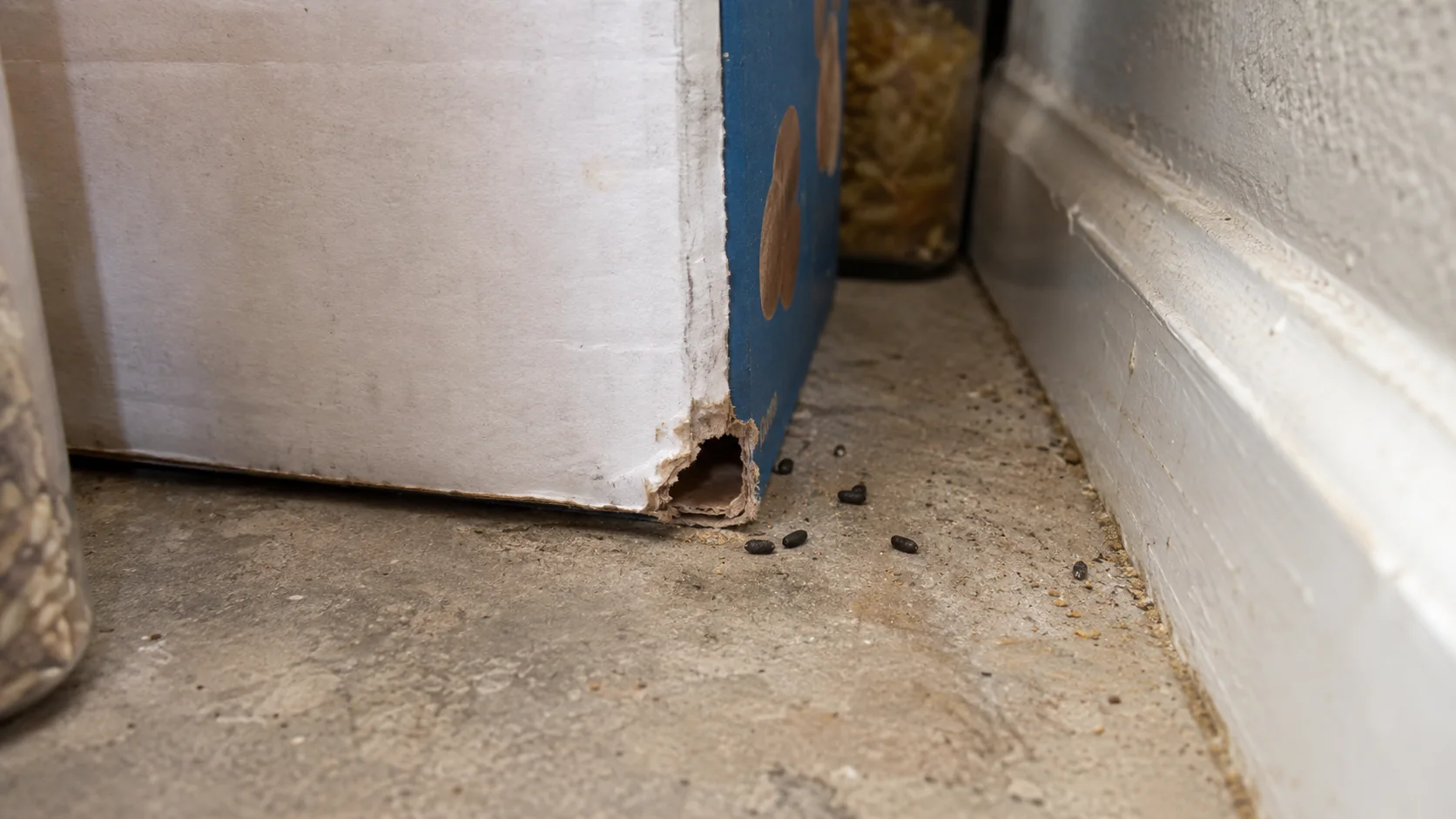
Mouse gnaw marks are small tooth marks created when mice chew on food packaging, wood, cardboard, plastic, wiring insulation, and other materials around a home.
They can be an important sign of mouse activity, especially when they appear with:
- mouse droppings
- shredded nesting material
- small tracks
- nighttime scratching
- food damage
- mouse sightings
Typical mouse gnaw damage is relatively small and may show:
- narrow paired grooves
- roughened or shaved edges
- tiny tooth marks along corners
- small openings enlarged by repeated chewing
- fresh lighter-colored material beneath an older surface
Mice have continuously growing incisors, so gnawing is a normal part of rodent behavior.
But gnaw marks alone do not always identify the animal.
Rats also gnaw, and some damage can come from:
- insects
- pets
- squirrels
- normal wear
- tools or mechanical abrasion
The most reliable identification comes from combining the damage with other evidence.
This guide explains what mouse gnaw marks look like, where to find them, how they compare with rat gnawing, which materials mice commonly damage, and what to do when you find fresh chewing in your home.
What Do Mouse Gnaw Marks Look Like?
Mouse gnaw marks are usually small and concentrated along edges.
You may see:
- short parallel grooves
- scraped-looking corners
- frayed cardboard
- tiny punctures
- shallow channels
- a small opening that has been widened
Because the upper and lower incisors work against each other, gnawing can leave paired or repeated marks.
The exact appearance depends on the material.
On cardboard, the damage may look torn and fuzzy.
On wood, it may look scraped or chiseled.
On plastic, it may look rough and irregular.
Why Do Mice Gnaw?
Mouse incisors grow continuously.
Gnawing helps keep the teeth worn to a functional length.
Mice also gnaw to:
- reach food
- enlarge an opening
- access nesting material
- move through packaging
- modify sheltered spaces
Not every gnawed object is part of a nest.
Sometimes a mouse is simply opening a food package or widening a travel route.
How Small Are Mouse Gnaw Marks?
Mouse gnawing is usually much smaller and finer than rat gnawing.
Instead of focusing on one exact measurement, look for the overall scale:
- tiny paired grooves
- delicate scraping
- small corner damage
- narrow openings
A large, deep, heavy chewing pattern is less typical of a house mouse.
However, material hardness and repeated use can make mouse damage look larger over time.
Where Are Mouse Gnaw Marks Commonly Found?
Common locations include:
- pantry shelves
- kitchen cabinets
- food packaging
- cardboard boxes
- baseboards
- door corners
- garage storage
- attic framing
- wall openings
- utility penetrations
- plastic containers
- wire insulation
The location matters.
Gnaw marks near droppings or a travel route are more meaningful than isolated damage with no other rodent evidence.
Mouse Gnaw Marks on Food Packaging
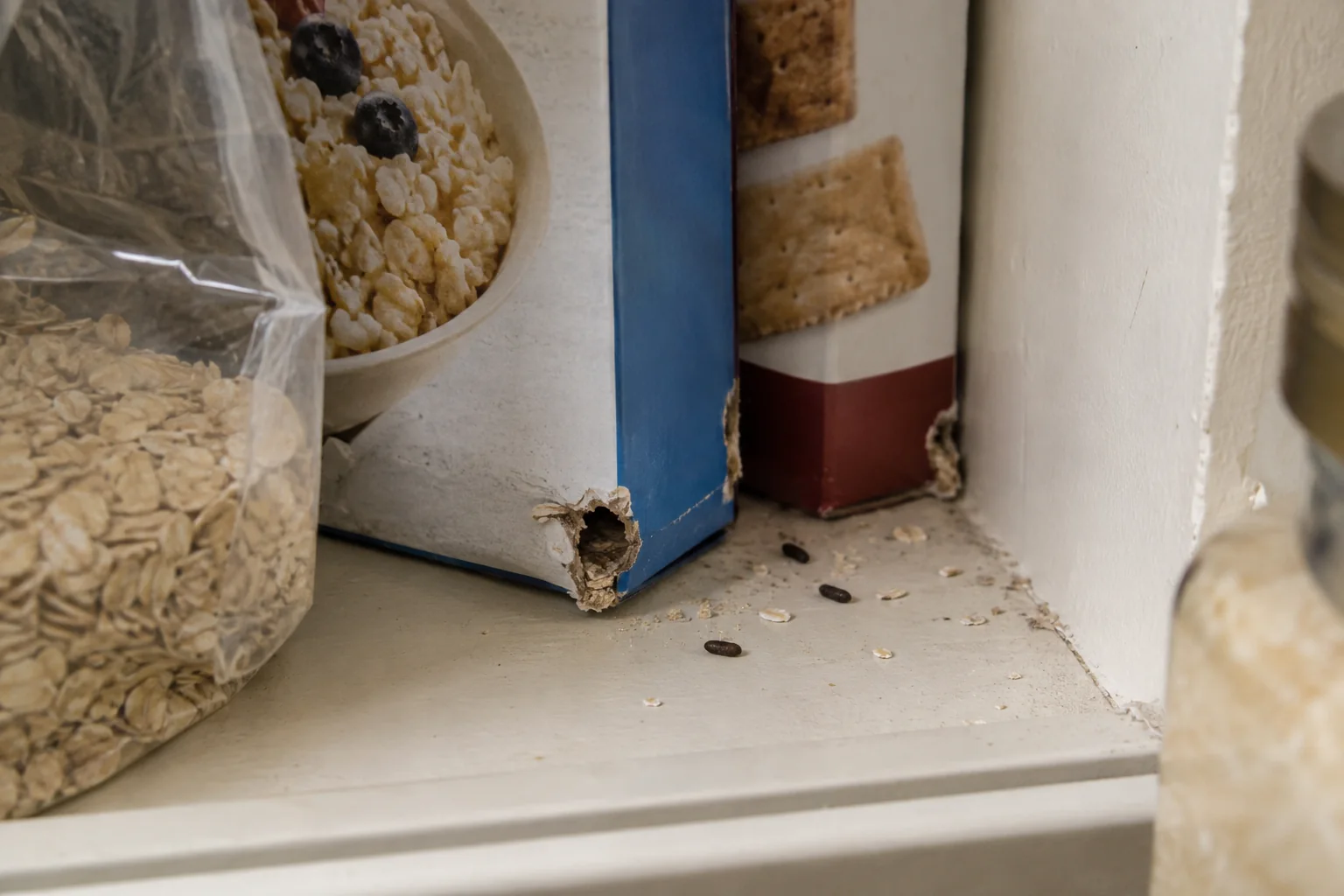
Food packaging is a common target.
Mice may gnaw through:
- cereal boxes
- snack bags
- paper sacks
- thin plastic packaging
- cardboard cartons
Damage often begins at:
- corners
- seams
- folded edges
- areas close to walls
If food packaging has been contaminated by rodents, discard the affected food.
Do not rely on the outer package looking mostly intact.
Mouse Gnaw Marks on Cardboard
Cardboard is easy for mice to chew.
Damage may appear as:
- ragged corners
- shredded edges
- small openings
- peeled layers
- loose fibers
Cardboard can serve as both:
- a barrier to food or shelter
- nesting material
A chewed storage box with droppings inside is a stronger mouse clue than an isolated torn box.
Mouse Gnaw Marks on Wood
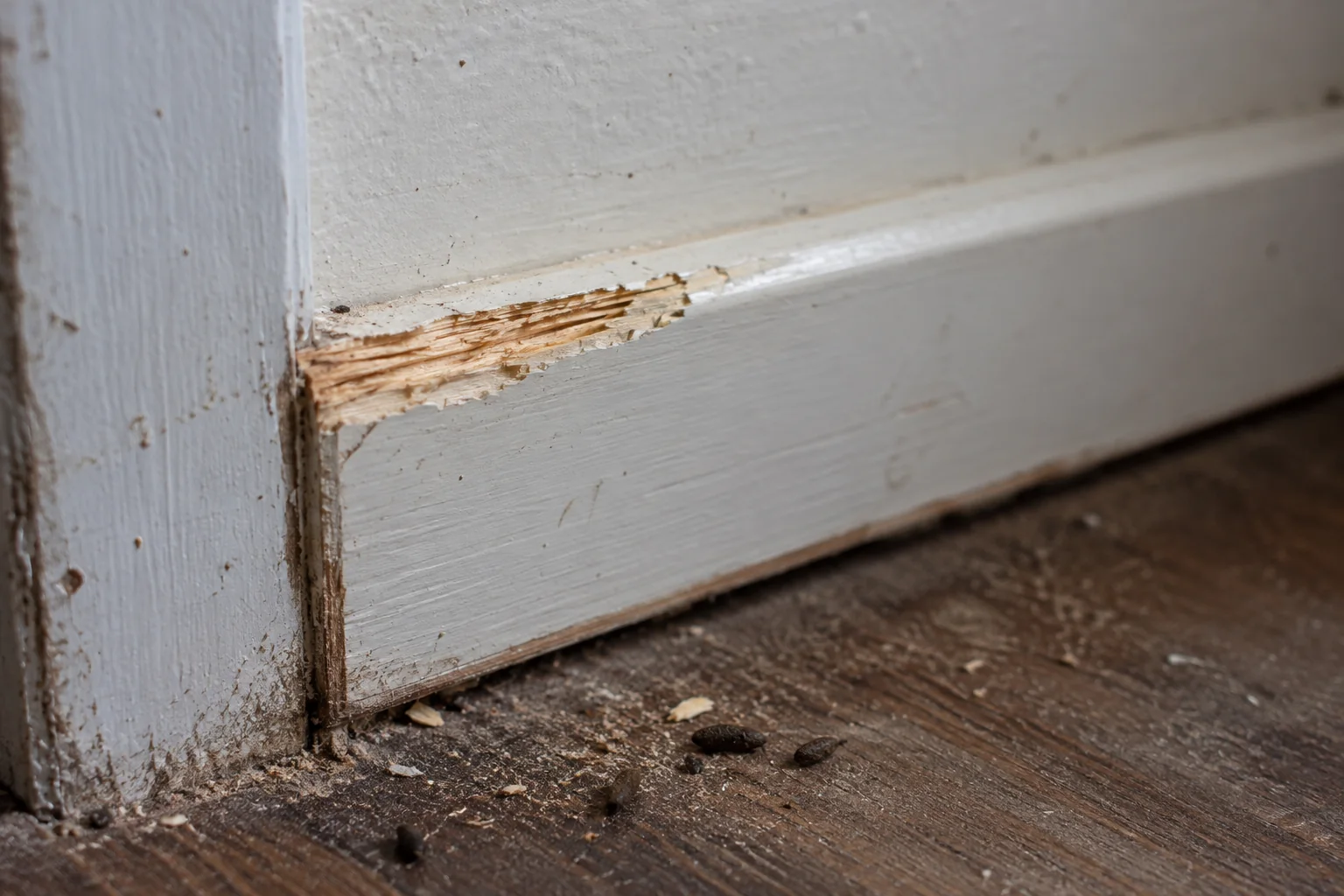
Mice can gnaw wood, especially along:
- thin edges
- trim
- cabinet backs
- framing corners
- small openings
Fresh wood damage may expose a lighter interior surface.
Older damage can darken or collect dust.
Do not judge freshness from color alone.
Lighting, wood species, paint, and surface dirt can change the appearance.
Mouse Gnaw Marks on Baseboards
Baseboards can show damage where mice repeatedly travel along a wall.
Look around:
- corners
- gaps
- pipe penetrations
- cabinet ends
- door trim
A mouse may gnaw a small defect to make a route easier to use.
Supporting evidence may include tiny droppings along the same wall.
Mouse Gnaw Marks on Doors
Mice may gnaw near:
- lower door corners
- weatherstripping
- damaged thresholds
- garage-door edges
Repeated chewing can enlarge a small existing gap.
The damage is especially relevant when the door connects:
- a garage to the exterior
- a utility room to outside
- a storage area to the house
Mouse Gnaw Marks Around Pipes
Utility penetrations are common rodent routes.
Mice may gnaw around:
- plumbing pipes
- cable penetrations
- conduit
- cabinet openings
They are usually exploiting an existing construction gap rather than chewing through a solid wall from scratch.
Inspect both sides of the penetration when accessible.
Mouse Gnaw Marks Behind Appliances
Behind refrigerators, stoves, and dishwashers, mice may encounter:
- food debris
- warm spaces
- wall gaps
- wiring
- plastic components
Gnaw marks behind an appliance become more meaningful when combined with:
- droppings
- urine odor
- nesting material
- small tracks
Do not move heavy appliances unsafely.
Mouse Gnaw Marks in the Garage
Garages often contain chewable materials and entry points.
Inspect:
- cardboard storage
- pet-food bags
- bird-seed containers
- weatherstripping
- lower wall gaps
- shelving
- stored fabric
Chewed garage-door seals may indicate an entry route.
See How Mice Get Into Your House for common entry points.
Mouse Gnaw Marks in the Attic
Attic damage may appear on:
- stored boxes
- insulation backing
- small wood edges
- soft plastic
- wiring insulation
Attic gnawing should be interpreted with:
- mouse droppings
- nesting material
- tracks
- disturbed insulation
See Mice in the Attic: Signs, Damage & Removal.
Do Mice Chew Electrical Wires?
Mice can gnaw the insulation around electrical wiring.
This can be a serious problem because damaged insulation may increase the risk of:
- electrical faults
- short circuits
- equipment damage
- fire
Do not touch exposed or damaged wiring.
Do not attempt electrical repairs unless you are qualified to do so.
If wiring appears damaged, keep people away from the area and have it evaluated by a qualified electrician or other appropriate professional.
What Does Mouse-Chewed Wire Look Like?
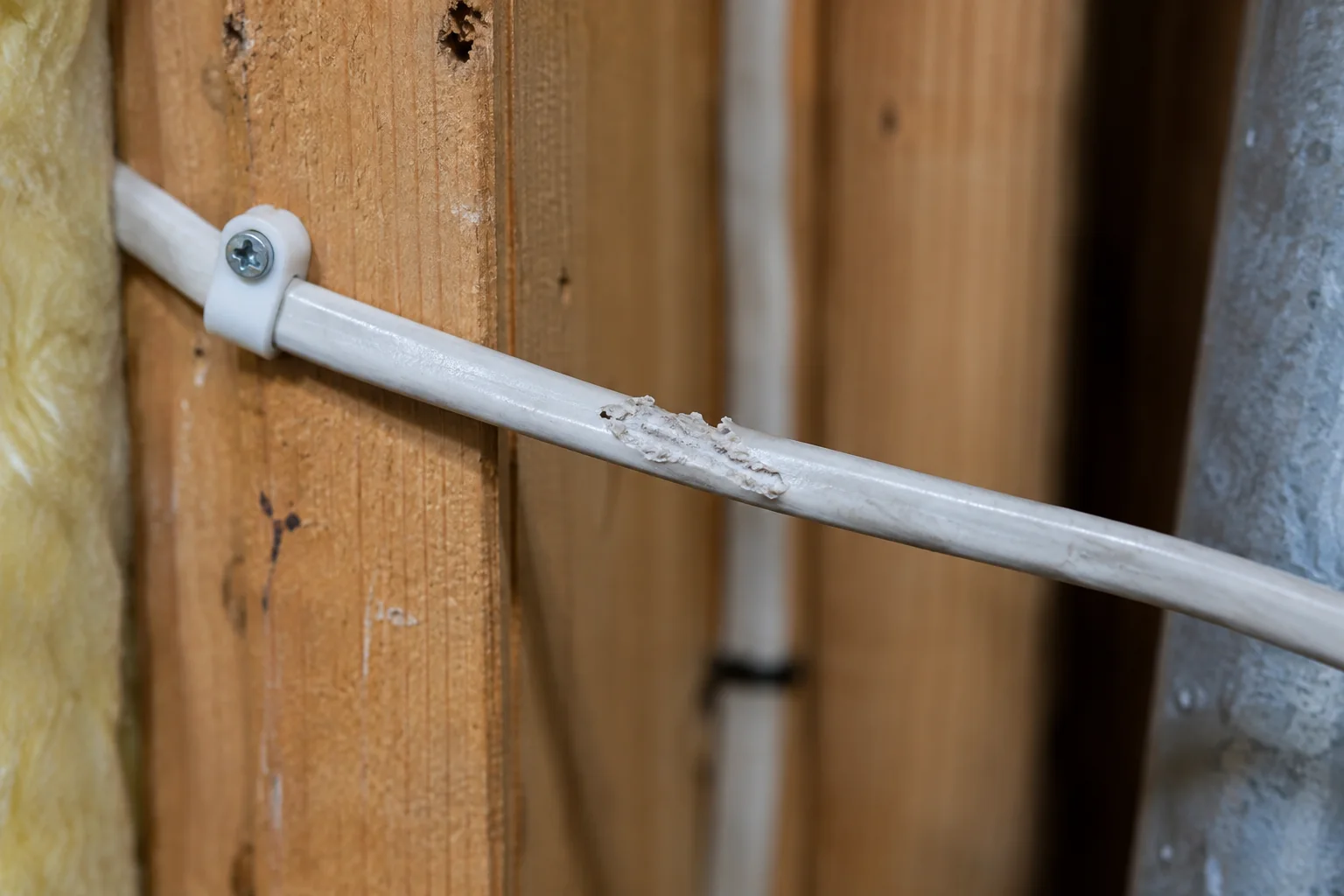
Possible signs include:
- rough bite marks in the insulation
- small missing sections of insulation
- scraped or exposed conductor covering
- repeated tooth marks along one section
Rodents are not the only cause of damaged wire.
Heat, abrasion, age, tools, or other animals can also damage insulation.
Treat any exposed conductor as an electrical issue first.
Do Mice Gnaw Plastic?
Yes.
Mice can damage:
- thin storage containers
- packaging
- flexible plastic
- soft appliance components
- plastic around openings
Thick, hard plastic may resist chewing better than thin material, but no ordinary household container should automatically be assumed rodent-proof.
For stored food, use sturdy containers with secure lids.
Do Mice Gnaw Metal?
Mice are much less likely to chew through solid metal than softer materials.
Metal mesh, flashing, and other suitable rodent-resistant materials are commonly used in exclusion.
However, the material and installation matter.
A poorly secured patch can fail even if the metal itself is durable.
See Rodent Exclusion: How to Keep Rats & Mice Out.
Do Mice Gnaw Drywall?
Mice may damage softer edges or enlarge existing openings around drywall.
They are more likely to exploit:
- gaps
- broken corners
- utility penetrations
- unfinished edges
than to create a large route through an intact wall surface.
A hole in drywall is not automatically mouse damage.
Check the surrounding evidence.
Fresh Mouse Gnaw Marks
Fresh gnawing may look:
- cleaner
- sharper
- lighter in color on wood
- less dusty
- recently disturbed
But these clues are not exact.
A light-colored mark can remain visible for a long time.
The best evidence of current activity is change over time.
For example:
- a newly damaged package
- fresh debris beneath the mark
- fresh droppings nearby
- new trap activity
Old Mouse Gnaw Marks
Older damage may become:
- dusty
- darker
- rounded by wear
- less distinct
But appearance alone cannot reliably date the damage.
A house may contain old gnaw marks even after the infestation has ended.
Look for fresh evidence before assuming mice are currently active.
How to Tell If Gnawing Is Still Active
Use monitoring rather than guessing from color.
You can:
- photograph the damage
- note the date
- remove loose debris safely
- monitor for new chewing
- check for fresh droppings
- place traps on confirmed travel routes
If the damage changes or new material appears, activity is more likely to be current.
Mouse Gnaw Marks vs Rat Gnaw Marks
Rat gnawing is generally larger, deeper, and heavier.
Mouse Gnawing
Usually appears:
- small
- fine
- narrow
- concentrated on thin edges or packaging
Rat Gnawing
Usually appears:
- broader
- deeper
- heavier
- capable of damaging more substantial materials
There is overlap, especially when damage has been repeated.
Do not identify species from gnawing alone.
See Rat vs Mouse: How to Tell the Difference.
Mouse Gnaw Marks vs Insect Damage
Some insect damage can be confused with rodent chewing.
Insect damage may include:
- tiny holes
- fine powder
- tunneling
- surface feeding
Mouse activity is more likely to appear with:
- droppings
- tracks
- shredded nesting material
- food damage
- sightings
If the damage is in structural wood and the cause is unclear, a pest professional may be needed to distinguish rodent damage from wood-destroying insects.
Mouse Gnaw Marks vs Pet Damage
Pets may chew:
- door trim
- furniture
- plastic
- baseboards
Pet damage is often larger and occurs in accessible areas.
Mouse damage is more likely along:
- hidden edges
- cabinet routes
- behind appliances
- storage corners
- small openings
Again, look for mouse droppings or other evidence.
Can Gnaw Marks Tell You Where Mice Are Traveling?
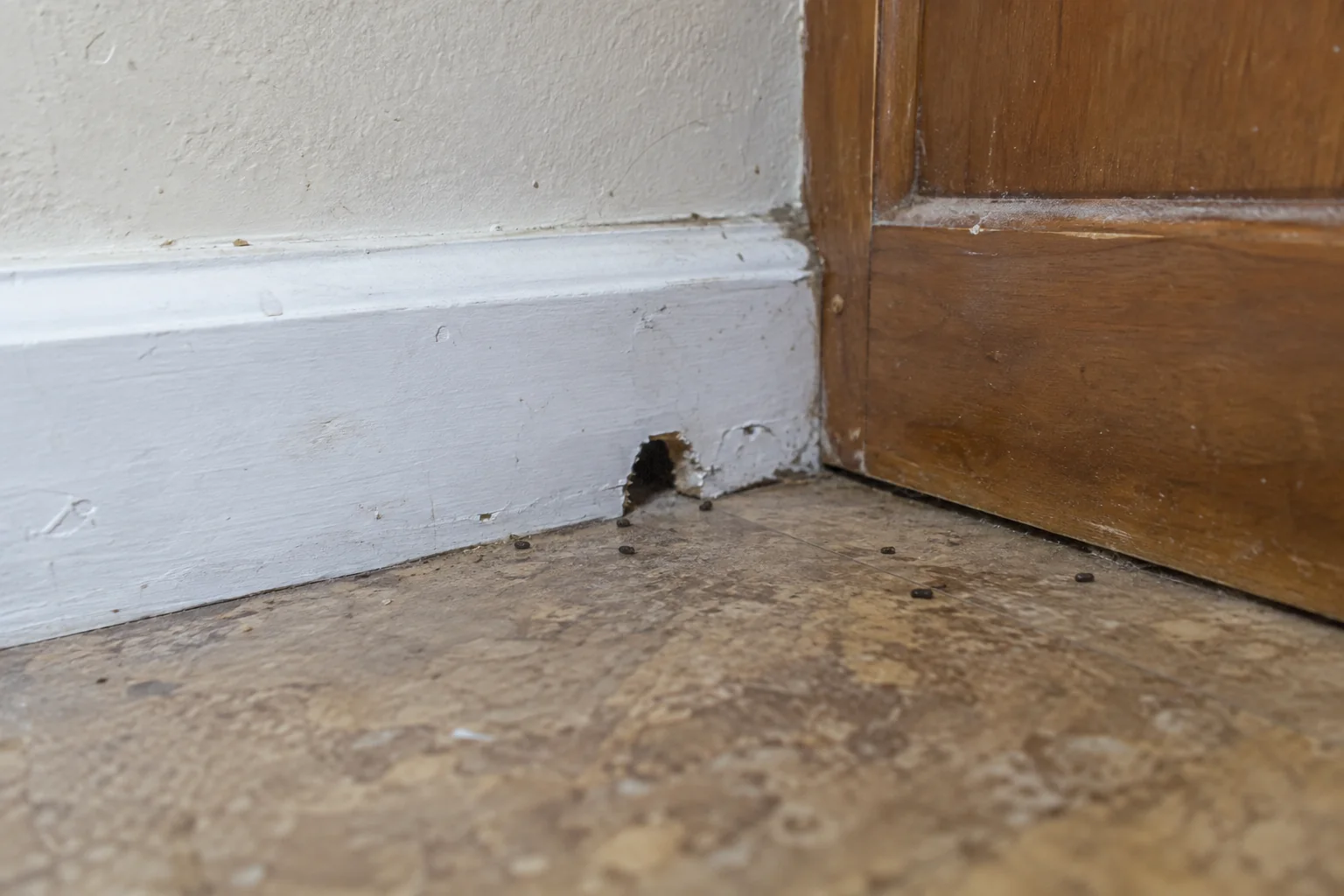
Sometimes.
Repeated chewing around a small opening can identify an active route.
Pay attention to:
- wall edges
- cabinet backs
- door corners
- utility penetrations
- garage seals
If droppings continue on both sides of the gnawed area, the route may still be active.
Can Gnaw Marks Help You Find a Mouse Nest?
They can help narrow the search.
Gnawing near:
- shredded paper
- insulation
- fabric
- stored boxes
may indicate nearby nesting activity.
But mice also gnaw far from the nest.
See Mouse Nests: What They Look Like & Where to Find Them.
Gnaw Marks and Mouse Droppings Together
Gnawing plus droppings is stronger evidence than either sign alone.
Mouse droppings are typically:
- small
- dark
- pellet-shaped
If the droppings are much larger, consider rat activity instead.
See Mouse Droppings: What They Look Like & What They Mean and Mouse vs Rat Droppings: How to Tell the Difference.
Gnaw Marks and Scratching Sounds
Gnawing inside or near a wall may produce:
- scraping
- chewing
- light repetitive sounds
If you also hear nighttime movement, inspect accessible areas around the noisy wall.
See Scratching in Walls at Night: Could It Be Mice or Rats?.
Does One Gnaw Mark Mean You Have Mice?
Not necessarily.
One mark may be:
- old
- caused by another animal
- mechanical damage
- normal wear
Mouse activity becomes more likely when several clues agree.
Look for:
- droppings
- fresh food damage
- nesting material
- tracks
- sightings
- repeated new gnawing
What to Do If You Find Fresh Mouse Gnaw Marks
A practical response is:
- photograph and document the damage
- inspect nearby walls and storage
- look for mouse droppings
- check food packaging
- inspect likely entry points
- place mouse-sized traps on confirmed routes
- remove accessible food
- coordinate trapping with exclusion
- monitor for new damage
Do not repair every opening immediately if mice are still trapped inside the structure.
Where Should You Put Traps Near Gnaw Marks?
Place traps on the travel route, not directly on the damaged object unless that is where the mouse is moving.
Useful locations include:
- along walls
- beside cabinet edges
- behind appliances
- near utility gaps
- along garage routes
- on stable attic framing
Use mouse-sized traps.
Keep traps inaccessible to children and pets.
See Best Mouse Traps: Which Type Works Best & How to Choose and Mouse Traps: Types, Placement & How to Use Them.
Should You Seal a Gnawed Opening Immediately?
Not always.
If mice are still inside, sealing the only active route can trap them in the building.
That can lead to:
- movement into other rooms
- new gnawing
- attempts to create another exit
- odor if an animal dies in an inaccessible area
Coordinate removal and exclusion.
How to Repair Mouse-Gnawed Entry Points
The repair depends on the construction detail.
Common durable exclusion materials may include:
- metal mesh
- flashing
- mortar
- appropriate sealant used with rodent-resistant backing
- replacement trim or weatherstripping
Do not block required:
- drainage
- ventilation
- appliance exhaust
The repair must address both the opening and the reason it became accessible.
When to Call a Professional
Professional help may be useful when:
- fresh gnawing continues despite trapping
- several rooms show damage
- mice are inside walls
- the entry point cannot be found
- electrical wiring is damaged
- attic or crawl-space access is difficult
- structural repair is required
See Mouse Exterminator: What to Expect & When to Call One.
Mouse Gnaw Marks: The Bottom Line
Mouse gnaw marks are usually:
- small
- narrow
- paired or repeated
- concentrated on edges, corners, packaging, or openings
Common targets include:
- cardboard
- food packaging
- wood
- plastic
- baseboards
- utility gaps
- wiring insulation
Fresh-looking chewing becomes much more meaningful when it appears with:
- mouse droppings
- nesting material
- scratching sounds
- small tracks
- mouse sightings
Do not identify the exact rodent from gnaw marks alone.
If the damage is new, inspect the surrounding route, trap mice already inside, find the entry point, complete exclusion, and monitor for additional chewing.
Treat damaged electrical wiring as an electrical safety issue and have it evaluated appropriately.
Continue with our signs of mice guide, mouse droppings guide, mouse nest guide, scratching-in-walls guide, house mouse guide, how to get rid of mice, how mice get into a house, or rodent exclusion guide.
For the broader overview, return to [Rats & Mice in the Home](/).