How Fast Do Mice Reproduce?
Mice can reproduce quickly when they have reliable food, shelter, and nesting space.
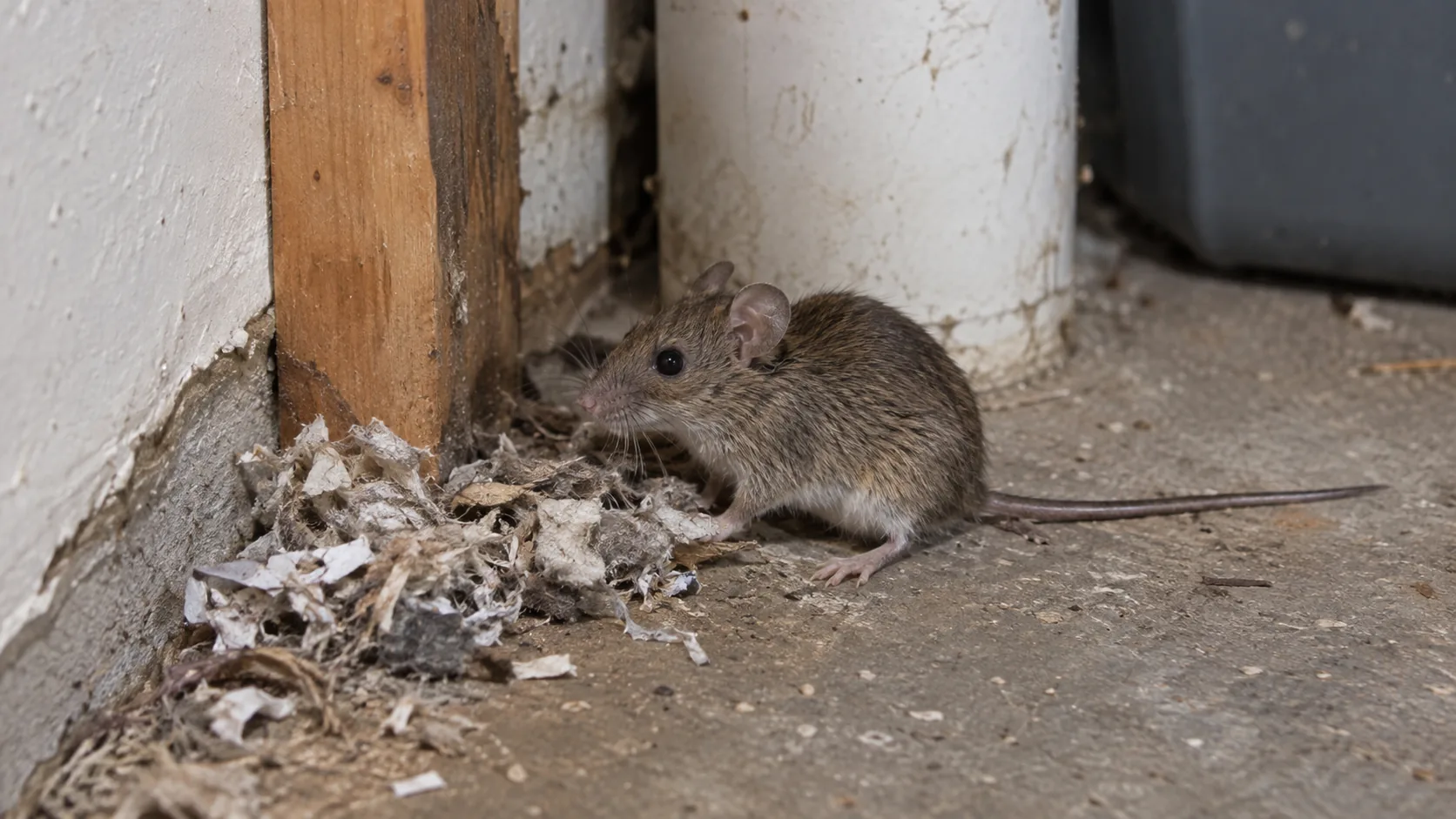
Mice can reproduce quickly when they have reliable food, shelter, and nesting space.
For the house mouse—the species most commonly associated with indoor infestations—a pregnancy typically lasts about three weeks.
A female may produce a litter of roughly five or six pups on average, although litter size can be smaller or larger.
Young house mice can reach reproductive maturity in roughly six to eight weeks, sometimes earlier under favorable conditions.
That combination explains why a small indoor mouse problem can become much larger if it is ignored.
But real infestations do not grow at a perfect mathematical rate.
Not every mouse survives.
Not every female becomes pregnant immediately.
Food, temperature, stress, nesting space, control efforts, and competition all affect population growth.
How Quickly Can House Mice Reproduce?
House mice can move through the reproductive cycle quickly.
A simplified timeline looks like this:
- mating
- about three weeks of pregnancy
- birth of a litter
- nursing and early development
- young mice reaching reproductive maturity within several weeks
Under favorable indoor conditions, adult females may produce repeated litters.
That is one reason house mice can become established in:
- kitchens
- garages
- basements
- attics
- crawl spaces
- storage rooms
- wall voids
where food and shelter are continuously available.
See House Mouse: Identification, Signs & Control for the species most relevant to indoor reproduction.
How Long Is a Mouse Pregnant?
House-mouse gestation is usually about 19 to 21 days.
That means pregnancy lasts only around three weeks.
The exact duration can vary.
Biology, age, litter conditions, and whether the female is already nursing can affect timing.
For homeowners, the important point is that the reproductive cycle is measured in weeks rather than months.
How Many Babies Do Mice Have at Once?
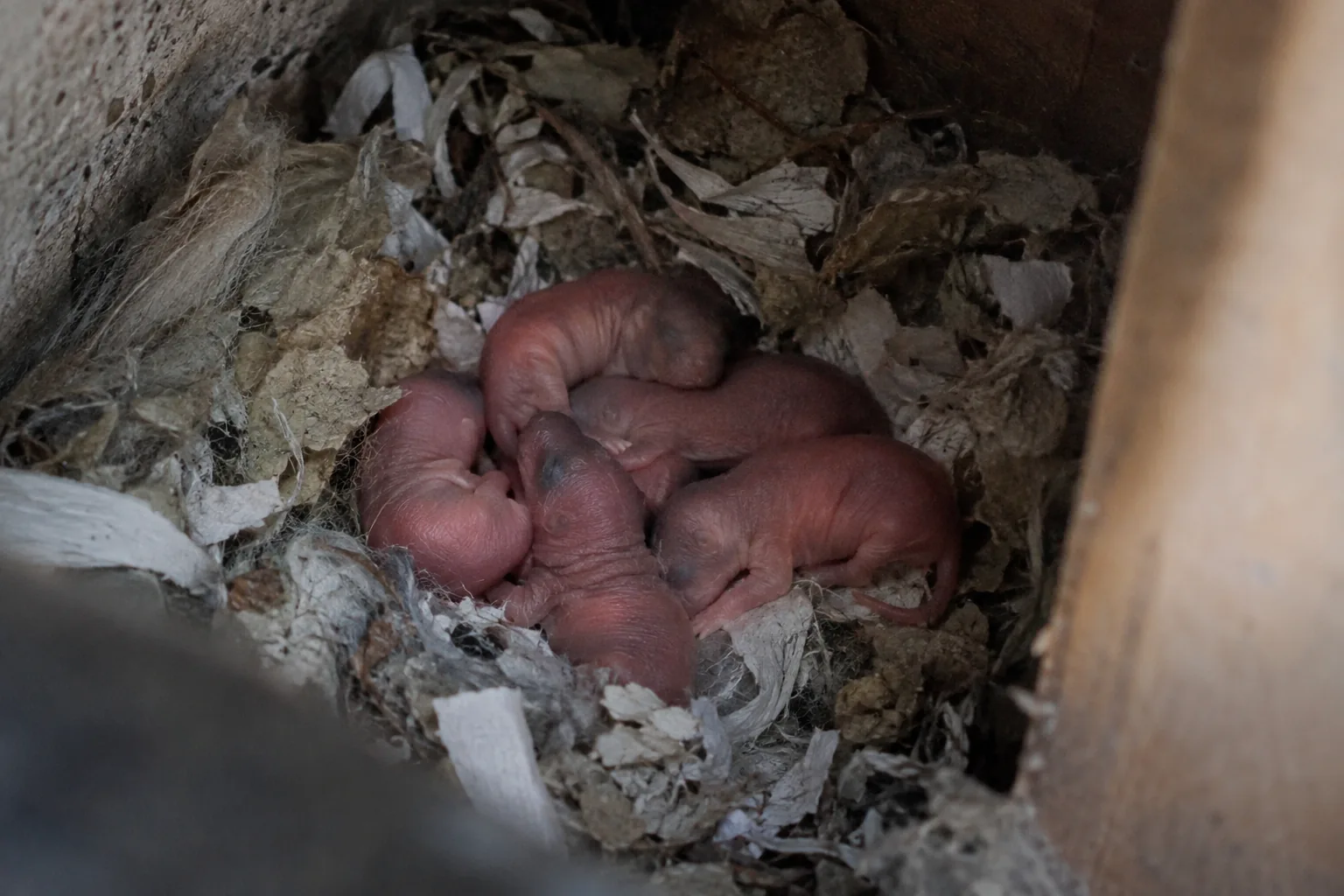
A typical house-mouse litter often contains around five or six pups.
But litter size varies.
A litter may be:
- smaller
- larger
- affected by the mother’s age
- affected by nutrition
- affected by environmental conditions
It is better to think in ranges than to assume every litter has the same number.
How Often Can Mice Have Litters?
House mice can produce multiple litters when conditions are favorable.
A female may become reproductively active again shortly after giving birth.
That means the next reproductive cycle can begin while the previous litter is still developing.
This does not mean every female continuously produces litters at the biological maximum.
Real conditions matter.
Can a Mouse Become Pregnant Again After Giving Birth?
Yes.
House mice are capable of mating again soon after giving birth.
That biological ability contributes to rapid population growth under favorable conditions.
But whether another pregnancy occurs depends on:
- access to a male
- health
- nutrition
- stress
- shelter
- population density
Maximum reproductive capacity should not be confused with what always happens in a house.
How Old Are Mice When They Can Reproduce?
Young house mice can reach sexual maturity in roughly six to eight weeks.
Some may mature somewhat earlier.
That means a litter born today can potentially contribute to another generation within a relatively short period.
This overlapping-generation pattern is one reason established mouse populations can grow faster than homeowners expect.
Do Mice Reproduce Year-Round?
House mice living indoors can reproduce throughout the year when conditions remain favorable.
A heated building can provide:
- stable temperature
- food
- water
- nesting material
- shelter from predators
Outdoor mouse populations may show more seasonal patterns.
Species also differ.
For example, deer mice are often associated with outdoor habitats and may show stronger seasonal breeding patterns than house mice living inside buildings.
See Deer Mouse: Identification, Habitat & Risks for that species.
Why Do Indoor Mice Reproduce So Quickly?
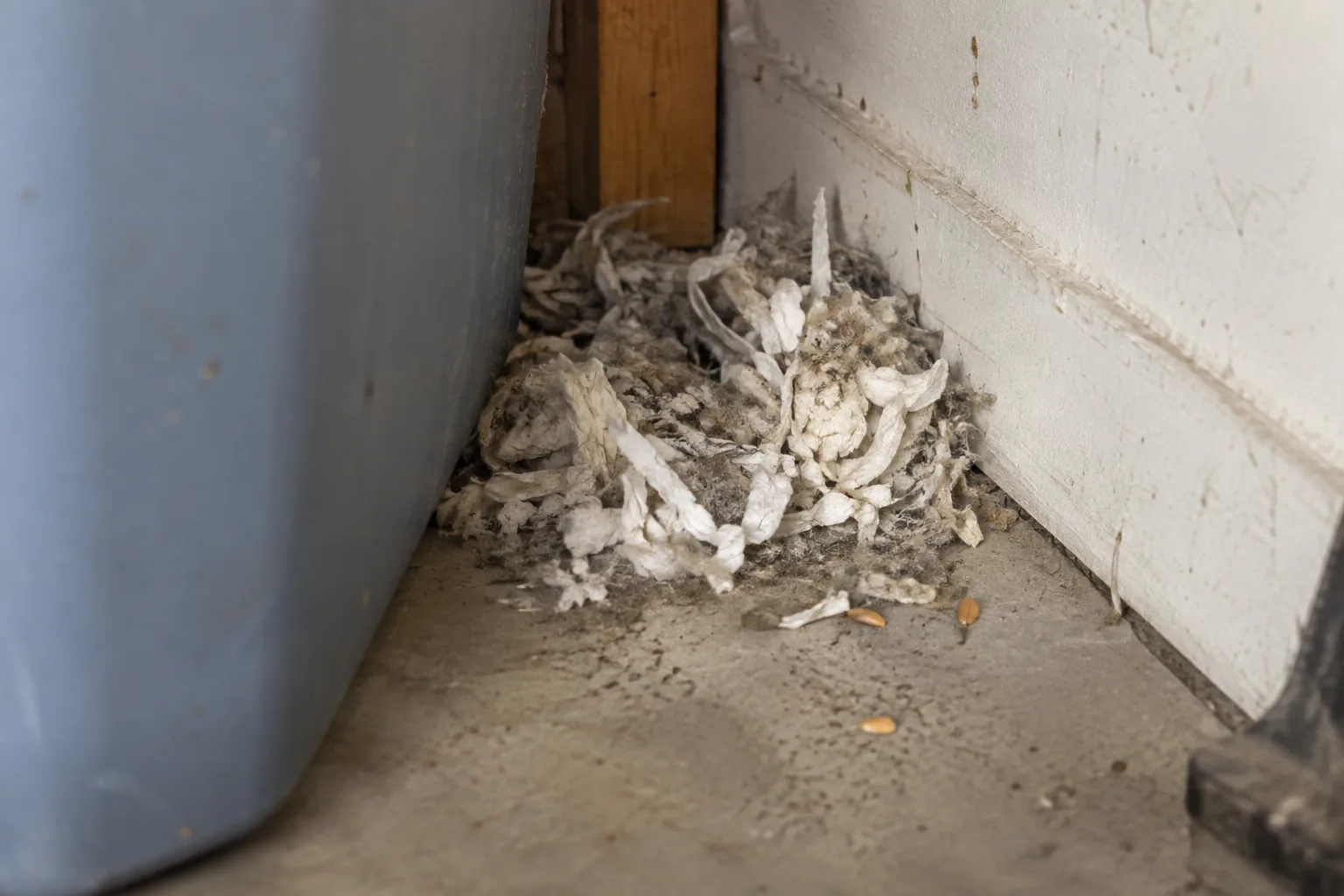
Indoor structures remove some of the limits mice face outside.
A house may provide:
Food
Mice may feed on:
- cereal
- grain
- crumbs
- pet food
- bird seed
- stored snacks
Shelter
They may nest in:
- wall voids
- insulation
- cabinets
- stored boxes
- attic edges
- crawl-space insulation
Stable temperature
Indoor conditions can remain suitable during cold or hot weather.
Fewer predators
An indoor nest may be more protected from predators than an outdoor nest.
Together, these conditions can support repeated breeding.
Does One Male and One Female Mouse Mean You Will Have Hundreds?
Not necessarily.
This is where many online mouse-reproduction claims become misleading.
You may see calculations that assume:
- every female survives
- every litter is large
- every daughter reproduces immediately
- every pregnancy succeeds
- food never runs out
- control never occurs
- no mouse leaves
- no mouse dies
That is not how real homes work.
Mouse populations can grow quickly.
But a theoretical maximum is not a prediction for an actual property.
How Many Mice Can One Female Produce?
There is no single number that applies to every female.
A house mouse may produce several litters during favorable conditions.
But lifetime reproductive output varies with:
- survival
- age
- food
- health
- stress
- temperature
- access to mates
- competition
- control efforts
A population estimate should not be calculated by multiplying one assumed litter size by an assumed number of pregnancies.
Why “One Pair Becomes Thousands” Is a Bad Infestation Estimate
Exponential examples are useful for showing biological potential.
They are poor tools for estimating a real infestation.
They usually ignore:
- mortality
- limited nesting space
- limited food
- disease
- predators
- dispersal
- sex ratio
- failed pregnancies
- pest-control efforts
If you find mice in a home, inspect the actual evidence.
Do not rely on a population calculator.
Does Finding Baby Mice Mean They Are Reproducing Inside?
Finding very young mice or an active nest strongly suggests breeding occurred nearby.
Newborn pups remain dependent on the nest.
They do not travel through the house like adults.
A nest may be located in:
- insulation
- stored material
- wall voids
- cabinets
- attic edges
- garage storage
See Mouse Nests: What They Look Like & Where to Find Them.
Do not tear into walls or unsafe building cavities just to search for a nest.
What Do Newborn Mice Look Like?
Newborn house mice are:
- very small
- hairless or nearly hairless
- pinkish
- eyes closed
- dependent on the mother
They change rapidly during the first weeks of life.
This page focuses on reproductive speed rather than a complete developmental timeline.
How Quickly Do Baby Mice Grow?
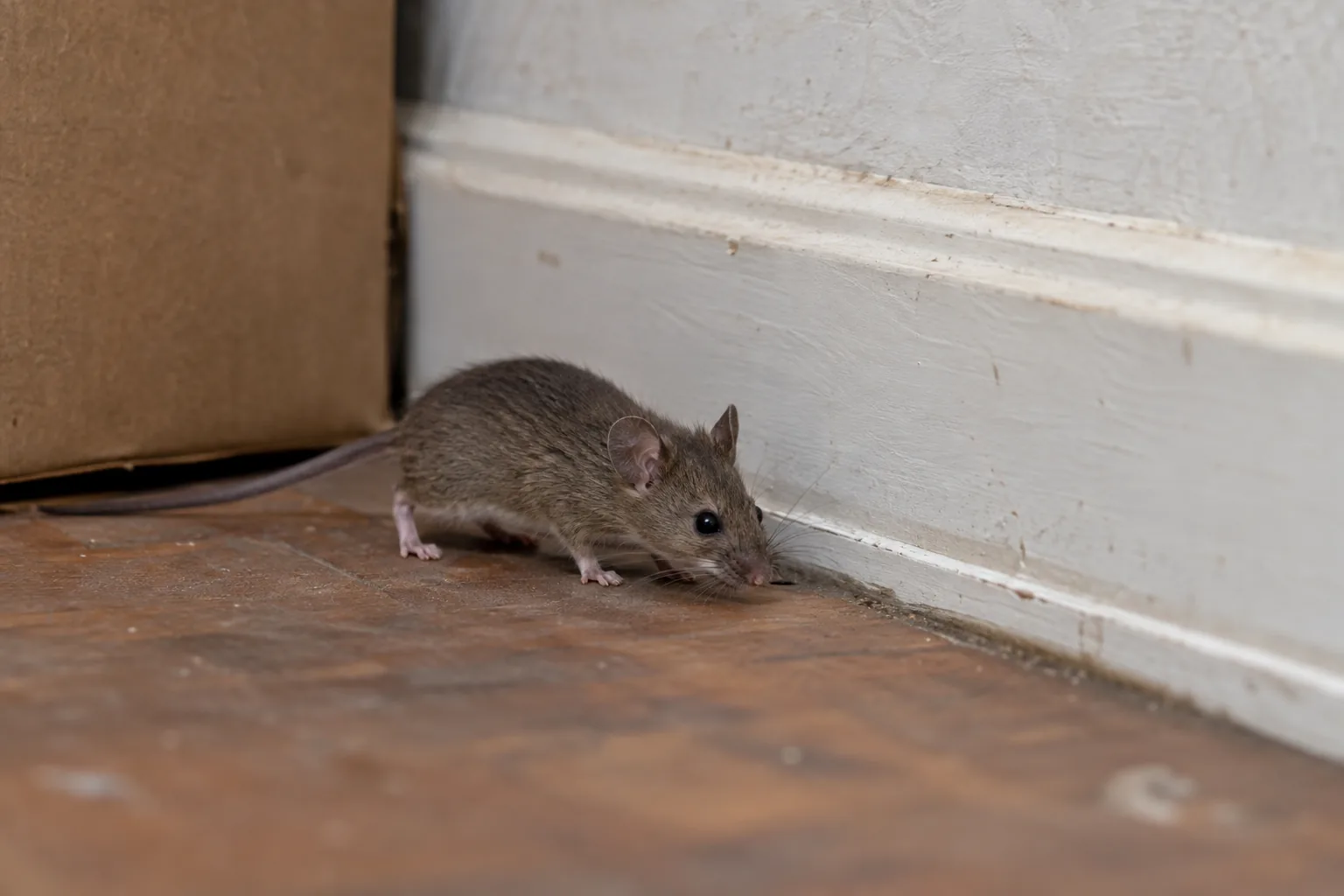
Mouse pups develop quickly.
During the first few weeks they:
- gain fur
- open their eyes
- become mobile
- begin exploring around the nest
After weaning, young mice become increasingly independent.
Within several more weeks, some may be capable of reproducing.
That short interval between birth and maturity is important in indoor infestations.
Can Several Generations Live in the Same House?
Yes.
An established infestation may contain:
- breeding adults
- older juveniles
- younger juveniles
- dependent pups
That does not mean every mouse occupies one nest.
Several nesting and travel areas can exist in the same building.
Do Different-Sized Droppings Prove There Are Baby Mice?
No.
Dropping size can vary because of:
- species
- age
- diet
- moisture
- degradation
Finding droppings of different sizes may add context, but it does not provide an exact age breakdown or population count.
See Mouse Droppings: What They Look Like & Where to Find Them.
Can One Mouse Start an Infestation?
A single mouse does not automatically mean a breeding population.
But one sighting deserves attention.
The mouse may be:
- alone
- one of several
- a male
- a female
- a pregnant female
- a juvenile from a nearby nest
You usually cannot know from the sighting alone.
See Does One Mouse Mean You Have an Infestation?.
Does a Pregnant Mouse Mean You Have an Infestation?
A pregnant female inside a structure can create a new litter there.
That increases the urgency of:
- inspection
- control
- exclusion
But even then, you should not assume an exact population.
The practical goal is to identify active routes and prevent continued breeding.
How Can You Tell If Mice Are Reproducing in the House?
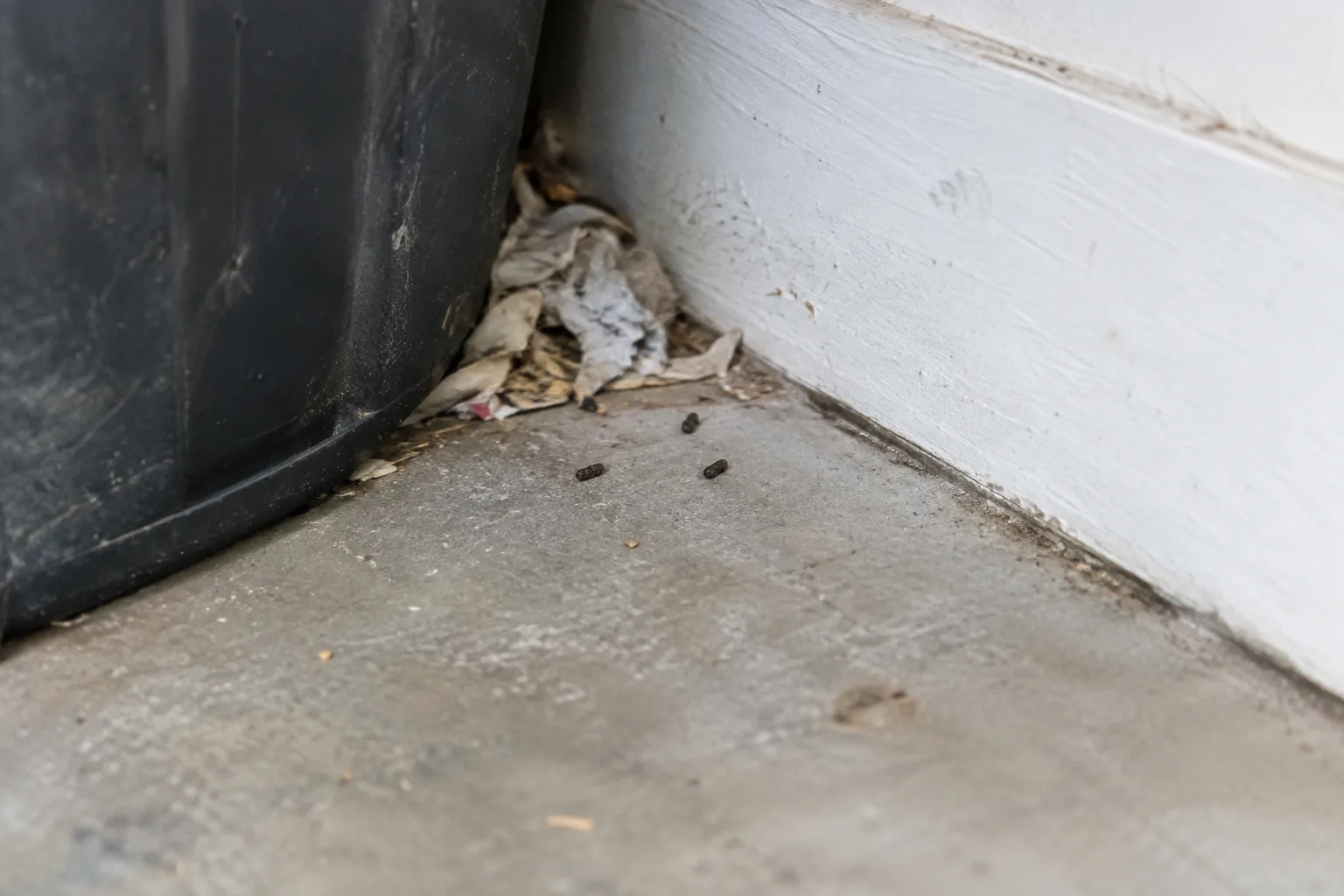
Possible clues include:
- an active nest
- very young mice
- repeated juvenile sightings
- fresh droppings appearing in several areas
- repeated activity over several weeks
- nesting material
- recurring scratching in walls or ceilings
No single clue provides a precise count.
The pattern matters.
See Signs of Mice in the House.
Do Daytime Mouse Sightings Mean Rapid Reproduction?
Not necessarily.
A mouse seen during the day may be active because of:
- disturbance
- competition
- food availability
- nesting behavior
- normal activity variation
Daytime sightings can occur in established infestations, but they do not measure reproduction directly.
See Seeing a Mouse During the Day: What It Means.
How Many Mice Might Be in the House?
There is no reliable formula based on one sign.
Do not estimate population from:
- one sighting
- one trap catch
- one nest
- one dropping pile
- one night of scratching
Instead, evaluate:
- how many areas show fresh signs
- whether activity continues
- how many routes are active
- whether new droppings appear
- whether trapping results persist
See How Many Mice Are in Your House?.
Why Mouse Reproduction Matters for Control
Fast reproduction changes the goal.
You do not want to remove one visible mouse while leaving:
- food
- shelter
- nesting sites
- active entry points
A control plan should address the conditions that allow the population to persist.
That usually means combining:
- removal
- sanitation
- exclusion
- monitoring
Does Killing One Mouse Stop Reproduction?
Not necessarily.
Removing one mouse may help.
But if other mice remain, reproduction can continue.
That is why follow-up matters.
A single catch should not automatically end the control program.
How Quickly Should You Act After Finding Mice?
Prompt action is useful because a small problem is usually easier to address than a larger established one.
Useful first steps include:
- note where you saw the mouse
- inspect for fresh droppings
- protect food
- reduce clutter
- place appropriate traps on active routes
- inspect likely entry points
- monitor for continued activity
See How to Get Rid of Mice for the full control process.
Does Food Removal Stop Mice From Reproducing?
Reducing food can make a property less supportive.
But sanitation alone does not remove an established population.
Mice may still use:
- hidden food
- crumbs
- pet food
- stored seed
- inaccessible food debris
Food control should support trapping and exclusion.
Does Sealing Entry Points Stop Reproduction?
Exclusion helps prevent new mice from entering.
But timing matters.
Do not blindly seal active mice inside.
A practical control sequence may involve:
- identifying active routes
- controlling mice already inside
- closing entry points
- monitoring afterward
See Mouse Entry Points: Where Mice Get In and Mouse-Proofing a House.
How Fast Can a Mouse Problem Return After Treatment?
If entry points remain open, new mice may enter after the original population is controlled.
That can look like the old infestation returning.
Continued prevention requires:
- exclusion
- sanitation
- monitoring
- maintenance
Reproduction inside the building is only one part of the problem.
Re-entry matters too.
When Should You Call a Professional?
Professional help may make sense when:
- mice keep returning
- several rooms show fresh evidence
- an attic or crawl space is involved
- nesting is widespread
- entry points are unclear
- DIY trapping is not reducing activity
- children or pets complicate safe device placement
See Professional Mouse Control: Methods & What to Expect.
How Does a Professional Evaluate Reproduction?
A technician usually does not calculate a theoretical mouse population.
Instead, they may evaluate:
- fresh droppings
- nest evidence
- juvenile sightings
- trap activity
- food sources
- travel routes
- entry points
- changes between visits
That produces a more useful control plan than reproductive math alone.
What Should You Do If You Find a Mouse Nest?
Avoid disturbing contaminated nesting material dry.
Keep children and pets away.
If the area is accessible and safe, follow appropriate wet-cleanup practices when cleanup is ready to begin.
If active mice are still present, control and inspection may need to come first.
How Fast Do Mice Reproduce? The Bottom Line
House mice reproduce quickly.
A typical pregnancy lasts about 19 to 21 days.
A litter often contains around five or six pups, although litter size varies.
Young mice may become reproductively mature in roughly six to eight weeks.
Indoor house mice can breed throughout the year when food, shelter, and temperature remain favorable.
That does not mean every mouse population grows at the theoretical maximum.
Real growth is affected by:
- mortality
- food
- nesting space
- stress
- competition
- control
- movement in and out of the building
The practical lesson is simple:
Do not wait for a population calculation.
If you find recurring mouse evidence, inspect the active routes, control the mice already inside, reduce food and shelter, close entry points at the right time, and continue monitoring.
Continue with our house mouse guide, mouse nest guide, how many mice are in the house guide, mouse entry points guide, how to get rid of mice guide, or professional mouse control guide.