Professional Mouse Control: Methods & What to Expect
Professional mouse control is more than placing a few traps. A complete service usually starts with inspection and connects activity, travel routes, food, entry points, treatment, monitoring, and exclusion timing.
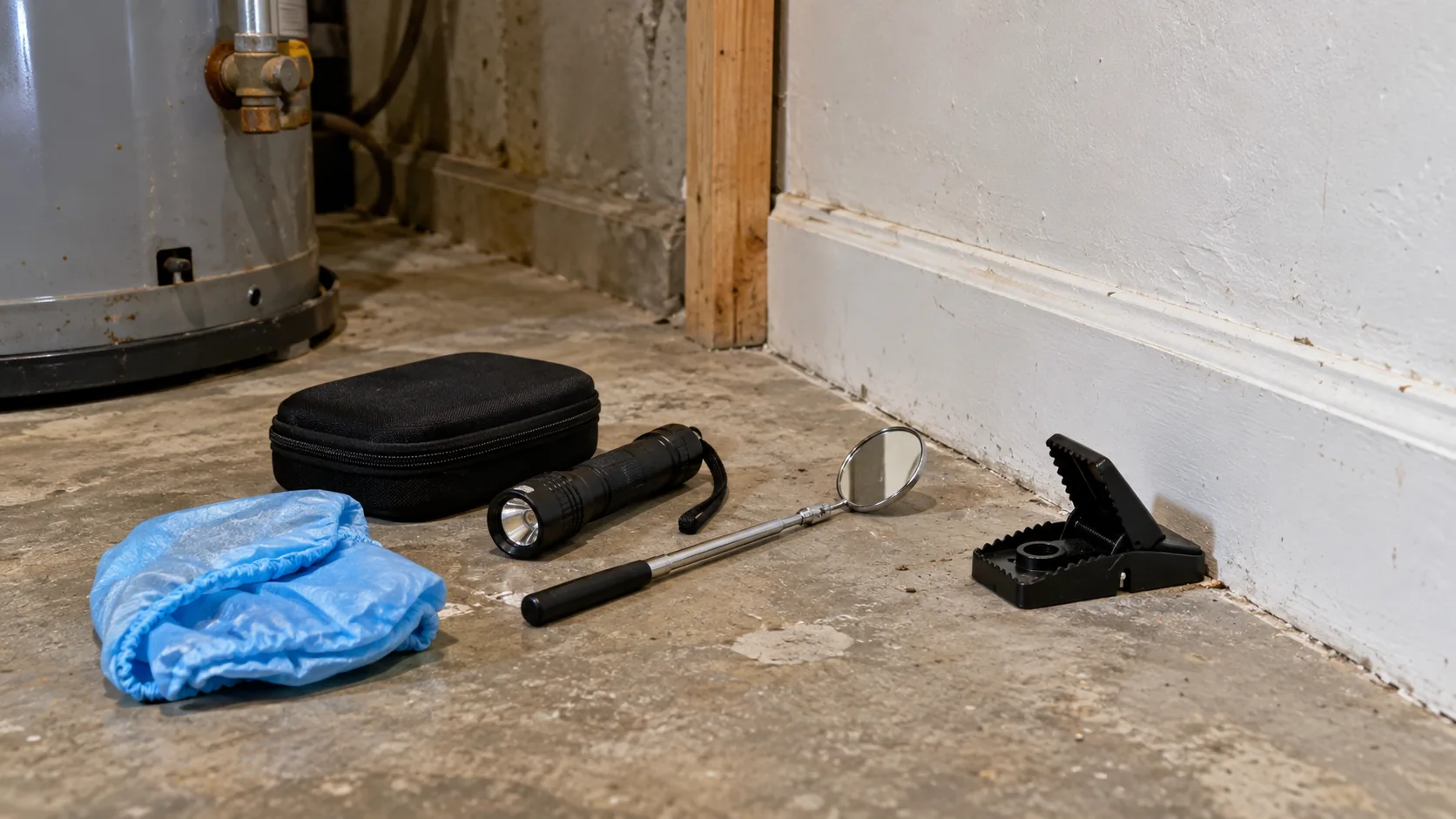
Professional mouse control is more than placing a few traps.
A complete service usually starts with inspection and then connects several parts of the problem:
- where mice are active
- how they are moving through the building
- what food or water supports them
- where they may be entering
- which control method fits the location
- how activity will be monitored
- when exclusion should be completed
The exact methods vary by company and property.
Some services focus mainly on trapping and monitoring.
Others may also provide:
- exclusion
- sanitation recommendations
- accessible carcass removal
- attic or crawl-space work
- follow-up visits
- cleanup services
The most useful professional program is one that explains what will be done and why.
What Is Professional Mouse Control?
Professional mouse control is a structured service for identifying, reducing, and preventing mouse activity in and around a building.
A technician may:
- inspect the home
- confirm mouse evidence
- map travel routes
- locate likely entry points
- place traps
- use other legal control methods when appropriate
- recommend sanitation changes
- coordinate exclusion
- monitor until fresh activity declines
The goal should not be simply to remove the mouse you happened to see.
The goal is to break the cycle of:
- entry
- shelter
- feeding
- reproduction
- repeated re-entry
Professional Mouse Control vs a Mouse Exterminator
The terms often overlap.
A mouse exterminator is a professional who provides mouse-control services.
This page focuses specifically on how professional mouse-control programs work.
For the broader question of when to hire one and what to expect from the provider relationship, see Mouse Exterminator: What to Expect & When to Call One.
What Happens During the First Mouse-Control Visit?
The first visit should usually begin with inspection.
A technician may ask:
- where mice were seen
- when activity occurs
- which rooms show signs
- whether traps have already been used
- whether pets or children are present
- whether food damage has occurred
- whether the problem is recurring
Then the technician may inspect:
- kitchen cabinets
- pantry areas
- appliance edges
- under sinks
- garages
- basements
- attics
- crawl spaces
- utility penetrations
- exterior foundation areas
- doors and garage doors
- vents and siding transitions
A good inspection should look beyond the exact place where you saw a mouse.
Why Inspection Comes Before Treatment
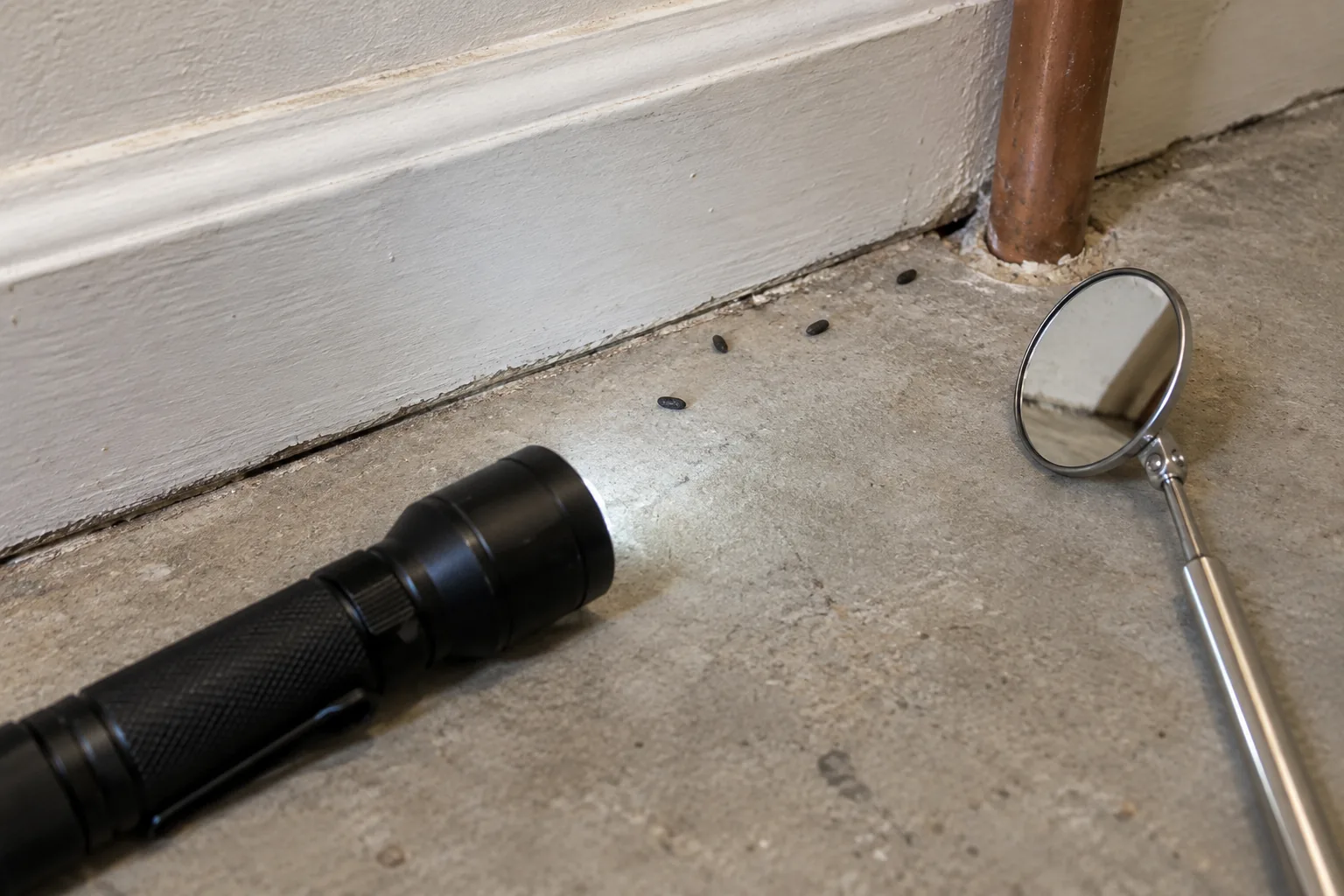
Mouse activity is easier to control when treatment is placed on the actual route.
A trap in the wrong room may do nothing.
An exclusion repair on the wrong opening may not stop entry.
Inspection helps connect:
- signs
- travel paths
- food sources
- shelter
- structural openings
That information should guide treatment.
See Signs of Mice: How to Tell If You Have Mice.
How Professionals Confirm Mouse Activity
Useful evidence may include:
- droppings
- tracks
- gnaw marks
- food damage
- nesting material
- repeated sightings
- trap catches
- scratching or movement sounds
No single clue should be treated as a perfect population estimate.
Droppings can help identify active areas, but they do not reveal the exact number of mice.
See Mouse Droppings: What They Look Like & What They Mean.
Mouse vs Rat Identification Matters
Control changes if the rodent is actually a rat.
Mouse-sized traps and rat-sized traps are not interchangeable.
Entry-point priorities may also differ.
A professional should consider:
- body size
- dropping size
- tracks
- gnawing
- direct sightings
- building routes
See Rat vs Mouse: How to Tell the Difference.
Professional Mouse Trap Placement
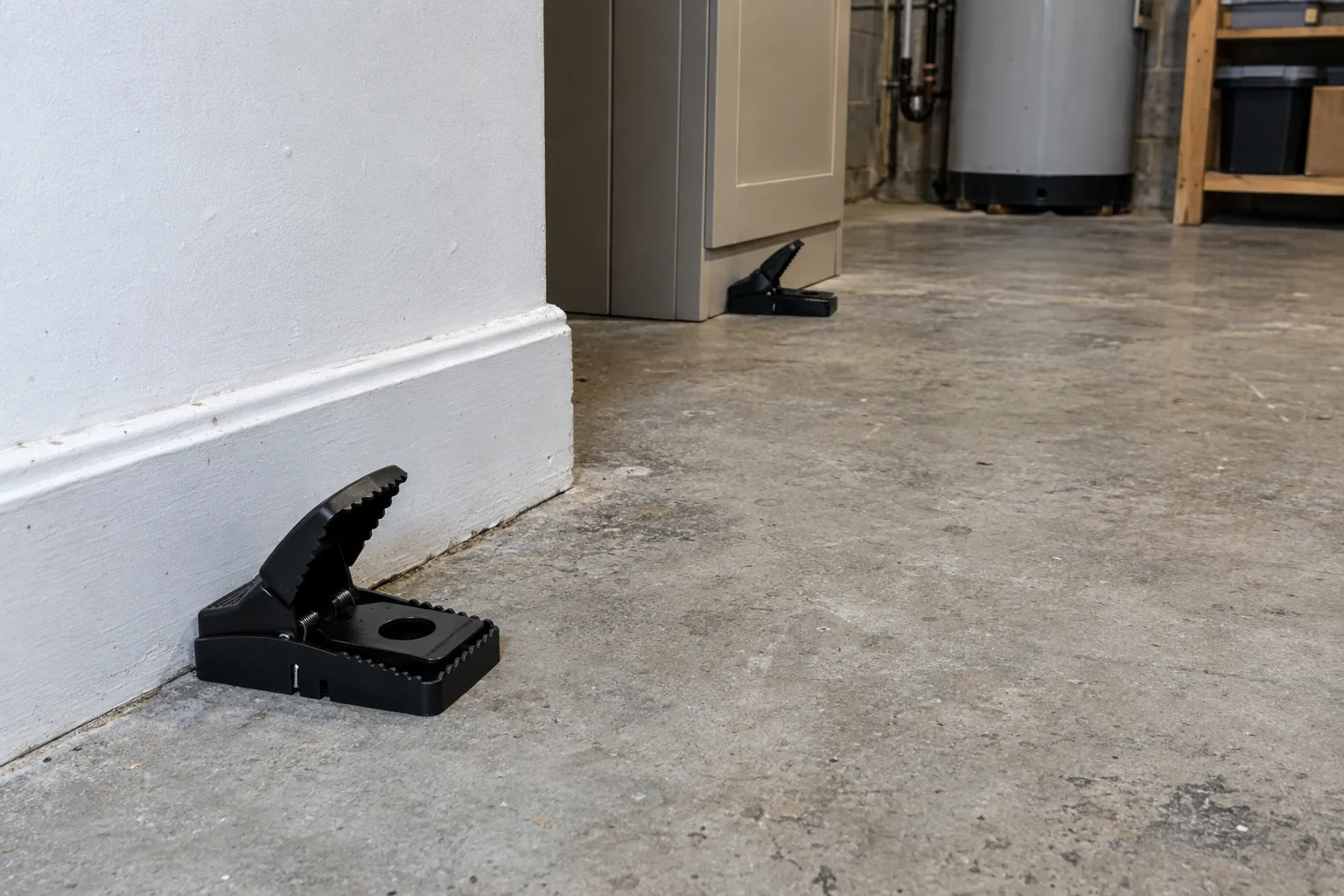
Mechanical trapping is a common indoor control method because it provides:
- known placement
- direct monitoring
- retrievable catches
- no pesticide bait left behind
A professional may place traps along:
- baseboards
- cabinet edges
- appliance routes
- garage walls
- basement edges
- accessible attic routes
- utility paths
Trap placement should follow evidence.
See Where to Place Mouse Traps for Best Results.
What Types of Mouse Traps May Professionals Use?
Possible mechanical options include:
- snap traps
- enclosed mechanical traps
- other serviceable trapping devices
The exact choice depends on:
- route
- access
- children
- pets
- room use
- technician preference
- service protocol
No one trap type is automatically best in every building.
For the broader trap overview, see Mouse Traps: Types, Placement & How to Use Them.
How Professionals Use Snap Traps
Snap traps can work well when they are:
- mouse-sized
- stable
- placed on active routes
- kept retrievable
- protected from children and pets
A technician may place them:
- perpendicular to a wall
- parallel to a wall
- inside a protective enclosure
depending on the route and trap design.
See Snap Traps for Mice: How to Use Them Correctly.
Do Professionals Use Mouse Poison?
Some professional programs may use rodenticide.
Others may rely mainly on mechanical trapping.
Rodenticide is a pesticide.
If used, it must follow the product label.
That includes:
- allowed locations
- station requirements
- servicing
- child and pet protection
- handling
- disposal
Professional use does not make label requirements optional.
Professional Bait Stations
A bait station is a housing for rodenticide bait.
It may help:
- control access
- keep placement organized
- protect bait from being moved
- support servicing
But a station does not make pesticide bait risk-free.
Tamper-resistant does not mean:
- childproof
- pet-proof
- completely safe
See Mouse Bait Stations: How They Work & Where to Place Them.
Traps vs Poison in Professional Mouse Control
For many indoor homes, mechanical traps provide clearer monitoring and retrievable catches.
Rodenticide may have a role in some professional programs when:
- the label allows the location
- exposure can be controlled
- the station can be serviced
- the technician considers it appropriate
One practical disadvantage of poison is that a mouse may die in an inaccessible cavity.
See Mouse Traps vs Poison: Which Is Better?.
Professional Mouse Control in the Kitchen
Kitchens often provide:
- food
- water
- appliance cover
- cabinet routes
- plumbing penetrations
A professional may inspect:
- lower cabinets
- under sinks
- behind accessible appliances
- pantry edges
- wall-floor gaps
Treatment should stay away from:
- food-preparation surfaces
- appliance machinery
- unsafe electrical areas
See Mice in the Kitchen: Why They’re There & What to Do.
Professional Mouse Control in the Garage
Garage inspection may focus on:
- lower door corners
- wall edges
- shared walls
- utility penetrations
- stored food
- bird seed
- pet food
A professional should keep traps or stations:
- outside vehicle paths
- away from moving garage-door hardware
- protected from children and pets
- retrievable
Professional Mouse Control in the Basement
Basement routes may involve:
- foundation edges
- storage
- plumbing
- utility penetrations
- sill areas
Treatment should not interfere with:
- electrical equipment
- gas systems
- standing water
- plumbing access
A technician may recommend another qualified trade if structural or utility repairs are needed.
Professional Mouse Control in the Attic
Attic work can be more complex because of:
- insulation
- wiring
- narrow access
- roofline entry points
- contamination
A professional may inspect:
- attic edges
- soffits
- vents
- roof-wall transitions
- utility penetrations
Treatment should remain retrievable.
Traps should not be buried in insulation.
See Mice in the Attic: Signs, Damage & Removal.
Professional Mouse Control in a Crawl Space
Crawl spaces may involve:
- tight access
- moisture
- electrical hazards
- plumbing
- contamination
- damaged vents
A professional should not treat a crawl space like an ordinary room.
Safe access comes first.
See Mice in the Crawl Space: Signs & Removal.
Professional Mouse Control in an Apartment
Apartment mouse control may require coordination because activity can involve:
- shared walls
- plumbing chases
- utility spaces
- common areas
- neighboring units
A service inside one unit may reduce activity without correcting the larger building route.
A technician may document visible openings or recurring patterns for property management.
See Mice in an Apartment: What Renters Should Do.
Do Professionals Seal Mouse Entry Points?
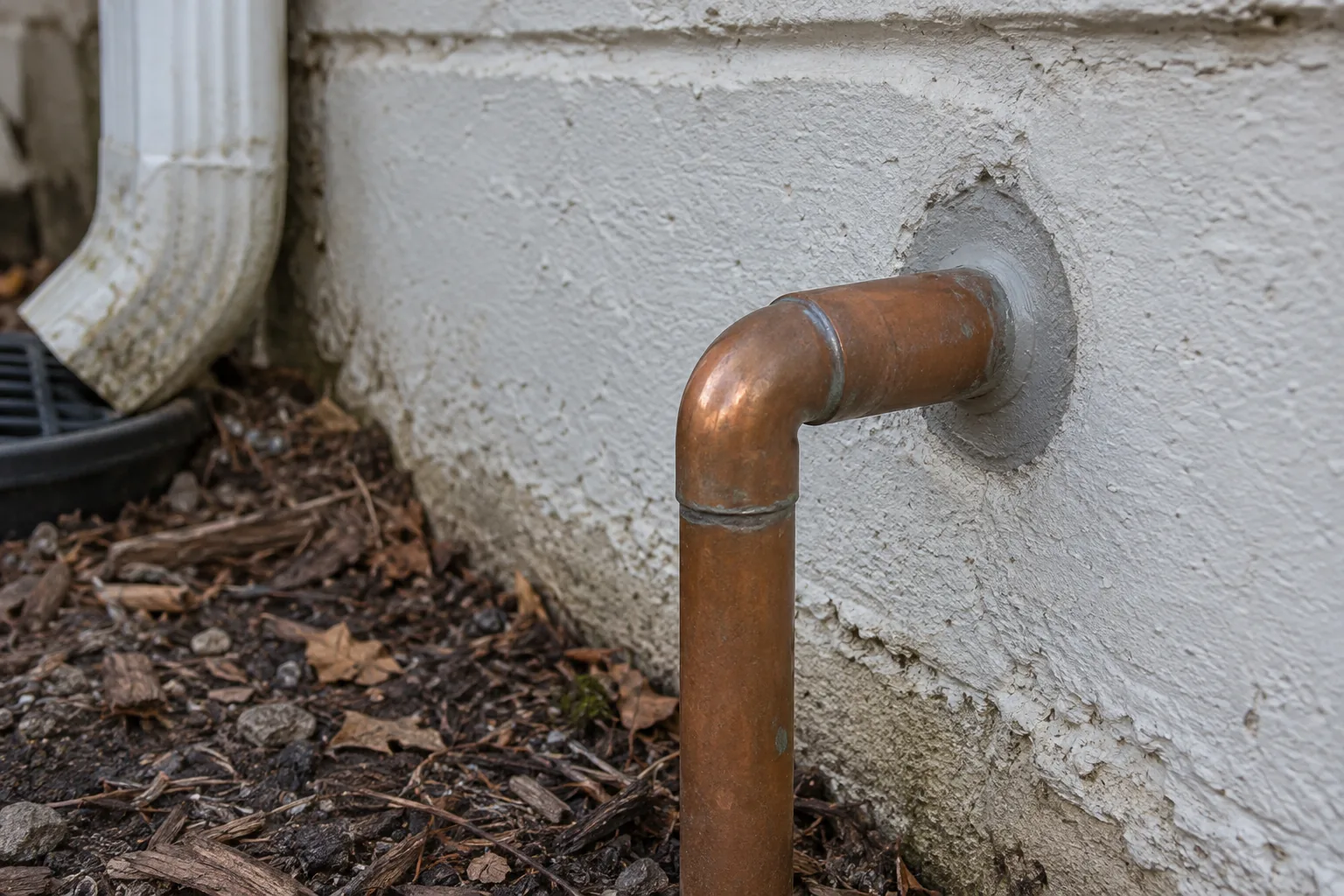
Some do.
Some do not.
Exclusion may be:
- included
- quoted separately
- referred to another contractor
- limited to certain repairs
Ask specifically what is included.
Professional exclusion may involve:
- door gaps
- garage-door corners
- utility penetrations
- foundation gaps
- siding transitions
- vents
- soffits
- roofline details
See Rodent Exclusion: How to Keep Rats & Mice Out.
Why Exclusion Timing Matters
If mice are still active inside, blindly sealing the only route can create new problems.
Mice may:
- move deeper into the structure
- gnaw another opening
- enter another room
- die in an inaccessible cavity
A practical professional sequence is often:
- inspect
- identify active routes
- control mice already inside
- reduce food
- complete durable exclusion
- monitor
What Materials May Be Used for Exclusion?
The correct material depends on the building detail.
A professional may use combinations of:
- metal screening
- flashing
- rodent-resistant backing
- compatible sealant
- mortar
- door sweeps
- weatherstripping
- repair materials matched to the surface
The repair should preserve:
- drainage
- ventilation
- service access
- door operation
- utility clearance
Avoid oversized cosmetic foam repairs that do not create a durable barrier.
Does Professional Mouse Control Include Cleanup?
Not always.
Some companies provide:
- limited accessible cleanup
- carcass removal
- sanitation recommendations
Others refer cleanup to a separate service.
Ask before assuming cleanup is included.
For fresh rodent waste, safe wet-cleaning principles still apply.
See the cleanup section and rodent safety section.
What Happens to Captured Mice?
If traps are used, accessible catches can usually be removed during:
- scheduled service
- homeowner checks
- follow-up visits
The exact process depends on the service agreement.
Traps should remain:
- retrievable
- serviceable
- safely placed
No trap should be hidden permanently in an inaccessible void.
What Happens During Follow-Up Visits?
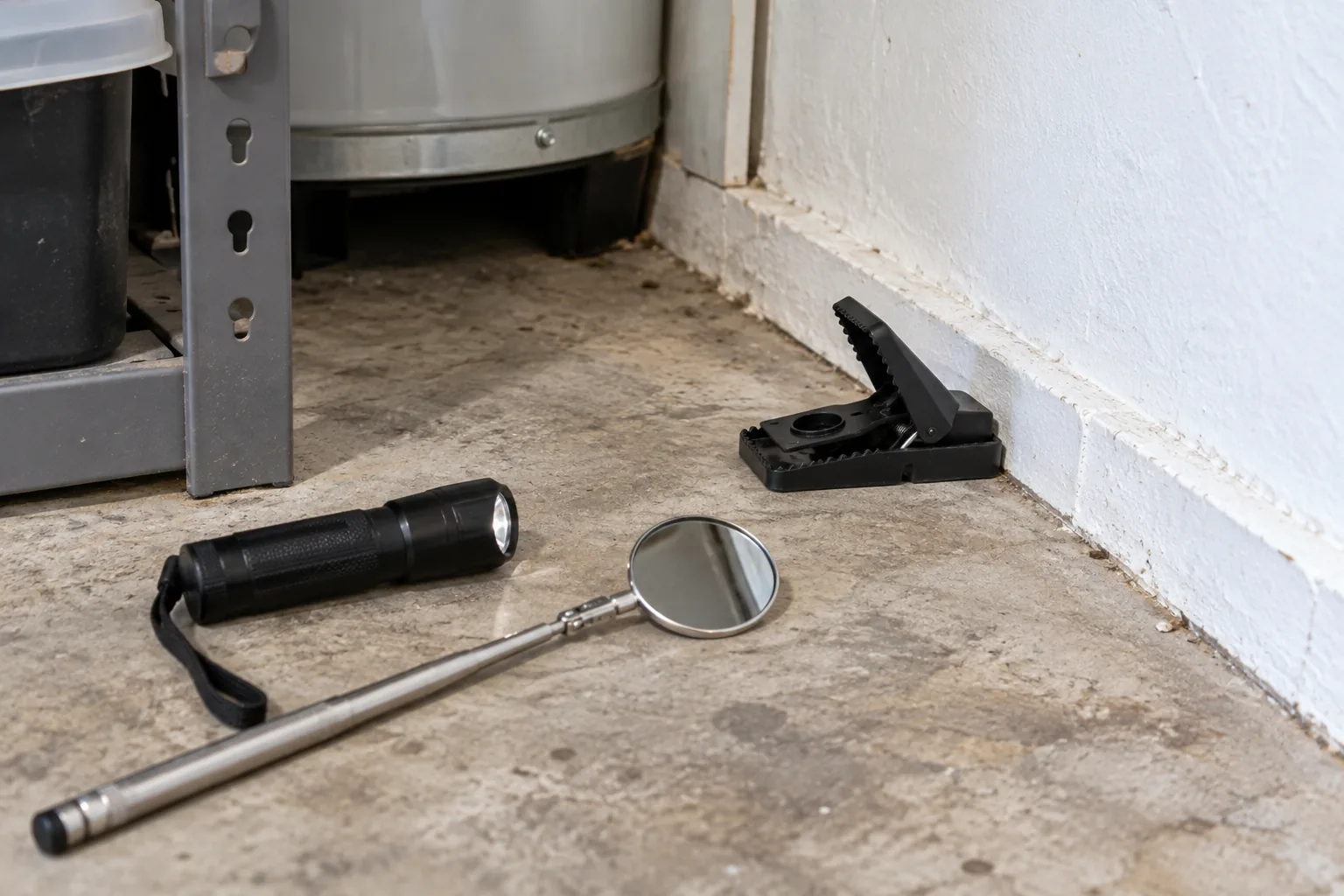
Follow-up may include:
- checking traps
- removing catches
- resetting or moving traps
- inspecting for fresh droppings
- checking bait stations where used
- reassessing food sources
- reviewing entry-point repairs
- adjusting the plan
A follow-up visit should use new evidence.
It should not simply repeat the first visit without evaluating results.
How Do Professionals Know Mouse Activity Is Declining?
Useful signs include:
- fewer or no new droppings
- no new gnawing
- no trap activity
- no repeated sightings
- no new scratching
- no reopened entry points
One quiet night is not proof that the problem is solved.
Monitoring should continue long enough to establish that fresh evidence is no longer appearing.
Can a Professional Tell Exactly How Many Mice You Have?
Usually not with certainty.
Professionals may assess activity level using:
- amount of fresh evidence
- number of active areas
- trap results
- recurrence
But those signs do not produce a precise mouse count.
See How Many Mice Are in Your House?.
How Long Does Professional Mouse Control Take?
There is no universal timeline.
Duration depends on:
- number of active routes
- access
- trap response
- food competition
- entry-point complexity
- follow-up schedule
- whether exclusion is included
A limited accessible problem may improve quickly.
A recurring whole-building issue may take longer.
Avoid providers who promise a precise universal timeline before inspecting the property.
What Should You Do Before a Professional Visit?
Useful preparation may include:
- note where mice were seen
- photograph fresh signs if practical
- avoid cleaning away all evidence immediately before inspection
- make accessible areas reachable
- secure pets if requested
- identify known leaks or food damage
- list previous trapping or treatment attempts
Do not dismantle:
- appliances
- electrical equipment
- walls
- HVAC systems
just to prepare for service.
Should You Clean Droppings Before the Technician Arrives?
If the area is safe to leave undisturbed temporarily, fresh evidence may help the inspection.
If cleanup is necessary:
- wear suitable gloves
- do not dry sweep or vacuum fresh droppings
- wet contaminated hard surfaces appropriately
- follow disinfectant contact-time instructions
- collect waste carefully
If contamination is extensive, ask the provider how they want the area handled before the appointment.
What Should a Professional Mouse-Control Quote Explain?
A useful quote or service agreement should clarify:
- inspection scope
- treatment methods
- number of planned visits
- whether follow-up is included
- whether exclusion is included
- whether cleanup is included
- whether bait stations are used
- what areas will be serviced
- what warranty or guarantee means
- what is excluded from coverage
Do not rely only on a single price number.
The service scope matters.
What Questions Should You Ask Before Hiring?
Useful questions include:
- How will you confirm the problem is mice?
- What areas will you inspect?
- Will you use traps, bait, or both?
- How will traps or stations be protected from children and pets?
- Is exclusion included?
- Are follow-up visits included?
- How do you decide when activity is resolved?
- Is cleanup included?
- What does the warranty cover?
- What repairs are not included?
Does Every Mouse-Control Company Offer Exclusion?
No.
Some companies focus mainly on:
- traps
- bait
- monitoring
Others provide structural exclusion.
If exclusion is not included, ask:
- which openings were found
- what needs repair
- whether another contractor is recommended
- when repairs should be completed
When Another Trade May Be Needed
Pest-control technicians do not replace every building trade.
A qualified specialist may be needed for:
- damaged electrical wiring
- plumbing leaks
- HVAC repair
- roof repair
- structural damage
- appliance service
Mouse control and building repair sometimes overlap, but they are not the same job.
Is Professional Mouse Control Worth It?
Professional service is most useful when it solves a problem that is difficult to manage reliably yourself.
That may include:
- hidden entry routes
- activity across several rooms
- recurring mice
- attic or crawl-space problems
- difficult exclusion
- child/pet safety constraints
- contamination
- damaged wiring
For a simple accessible mouse route, DIY control may still be reasonable.
See DIY Rodent Control vs Professional Extermination.
Professional Mouse Control vs DIY
DIY may be practical when:
- activity is limited
- routes are accessible
- traps can be used safely
- entry points are simple
Professional service becomes more useful when:
- activity keeps returning
- several areas are involved
- entry points are unclear
- safe access is difficult
- repairs are complex
The decision should be based on complexity, not fear.
What If Mice Return After Professional Treatment?
Recurring activity may mean:
- an opening was missed
- a repair failed
- a new opening developed
- food remains available
- another route became active
Recurrence does not automatically mean the original treatment did nothing.
It means the control system needs another inspection.
Can Professional Mouse Control Prevent Mice Forever?
No service can make a house permanently immune to mice.
Buildings change.
New openings can appear because of:
- worn door seals
- utility work
- storm damage
- siding movement
- roof repairs
- foundation changes
Long-term prevention requires maintenance.
See How to Keep Mice Out of Your House and Mouse-Proofing a House: Complete Checklist.
Signs a Professional Program Is Working
A useful program should show measurable progress.
Look for:
- fewer fresh droppings
- fewer sightings
- declining trap activity
- no new food damage
- no new gnawing
- corrected entry routes
- repaired exclusion points staying closed
The goal is not simply to keep replacing bait or traps indefinitely.
Signs the Plan Needs Reassessment
Ask for reassessment when:
- fresh signs continue in the same place
- mice appear in new rooms
- traps remain untouched while evidence continues
- repairs reopen
- new droppings appear after treatment
- the provider cannot explain the likely route
- follow-up does not change the plan despite ongoing activity
Professional Mouse Control: The Bottom Line
Professional mouse control should connect:
- inspection
- route identification
- treatment
- sanitation
- exclusion
- monitoring
Mechanical traps are often a strong indoor method because they provide:
- known placement
- direct monitoring
- retrievable catches
Rodenticide may be used in some programs, but only according to the product label and with controlled placement.
A good professional service should explain:
- what was found
- what method is being used
- where treatment is placed
- what repairs are needed
- how progress will be monitored
Professional service does not guarantee that mice can never return.
Long-term control still depends on keeping the building less accessible and less attractive to mice.
Continue with our mouse exterminator guide, rodent exterminator guide, mouse trap placement guide, mouse entry points guide, rodent exclusion guide, or DIY vs professional rodent control guide.
For the broader overview, return to [Rats & Mice in the Home](/).