What Does an Exterminator Do for Rats?
A professional rat exterminator usually does more than place a trap or bait station.
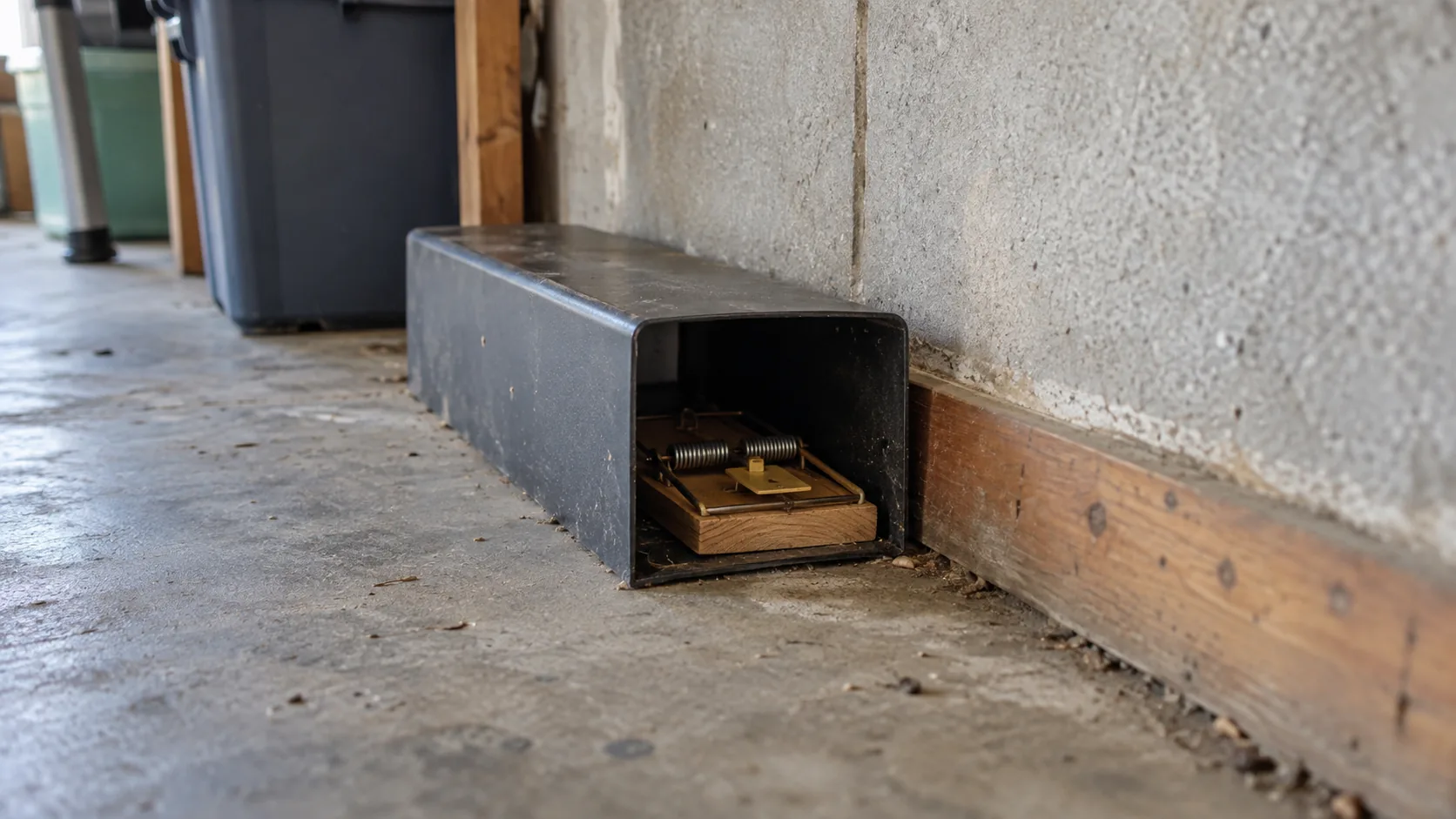
A professional rat exterminator usually does more than place a trap or bait station.
A typical service may include:
- inspecting the property
- confirming rat activity
- tracing indoor and exterior travel routes
- placing protected traps or monitored bait stations where appropriate
- checking suspected entry points
- evaluating burrows or exterior shelter
- recommending exclusion and sanitation changes
- returning for follow-up
- adjusting the plan as fresh evidence changes
The exact process varies by property.
A rat seen once in a garage is very different from ongoing rat activity involving:
- crawl spaces
- attic routes
- yards
- decks
- foundations
- several rooms
The treatment should match the route.
What Happens During the First Rat Exterminator Visit?
The first visit usually starts with questions.
The technician may ask:
- Where have you seen rats?
- Was the activity indoors or outside?
- What time of day did you see them?
- Where are droppings appearing?
- Are you hearing scratching?
- Have you found gnaw damage?
- Have you already used traps or bait?
- Are children or pets present?
- Have you noticed burrows near the structure?
The technician then inspects the property.
The goal is to identify:
- whether the signs fit rats
- where rats are traveling
- how they may be entering
- where traps or stations can be used safely
- what repairs may be needed
See Rodent Inspection: What Professionals Check.
Does an Exterminator Confirm It Is Rats?
A good service should.
Rat control is different from mouse control.
The technician may evaluate:
- droppings
- tracks
- gnaw marks
- rub marks
- burrow signs
- sighting descriptions
- travel routes
No single sign should be used alone if the evidence is unclear.
See Rat vs Mouse: How to Tell the Difference.
What Does an Exterminator Look for Inside the House?
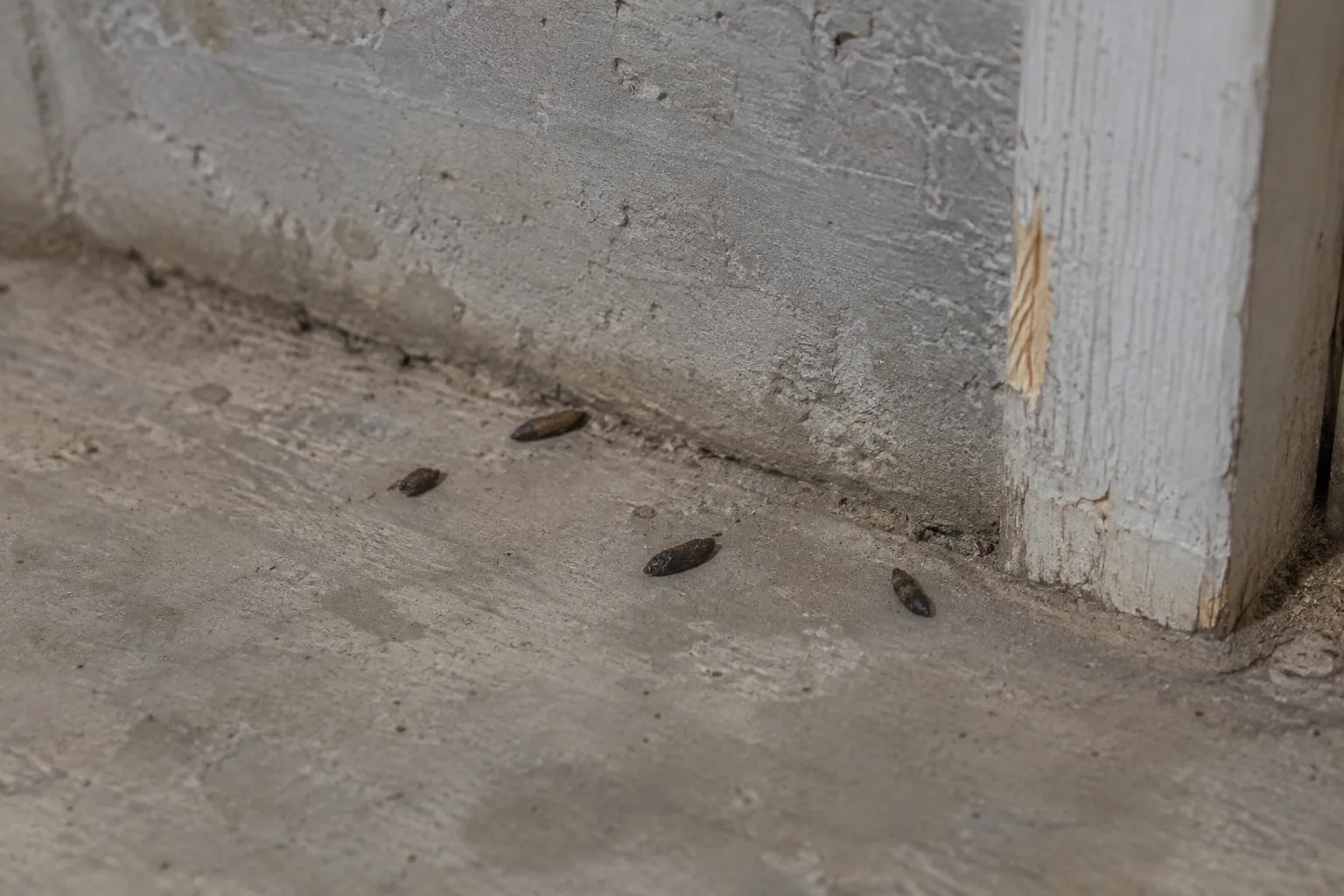
Common interior inspection areas include:
- garage
- kitchen
- basement
- utility room
- attic
- crawl space
- wall edges
- appliance routes
The technician may look for:
- rat droppings
- food damage
- gnawing
- rub marks
- nesting material
- tracks
- greasy travel edges
- access to food or water
The strongest current evidence usually determines where treatment is concentrated.
Why Does the Exterminator Check the Exterior?
Rats often use outdoor routes before entering the house.
A technician may inspect:
- foundation edges
- garage perimeter
- garbage areas
- sheds
- decks
- fences
- vegetation
- rooflines
- crawl-space vents
- suspected burrows
Exterior inspection can help explain why indoor activity keeps returning.
Why Are Wall and Foundation Routes Important?
Rats often travel along:
- walls
- foundation edges
- fences
- stored materials
- utility lines
- covered routes
The technician uses those routes to decide where devices should be placed.
A trap or station placed away from the active path may be much less useful.
What Traps Do Exterminators Use for Rats?
Mechanical rat snap traps are common.
Rat traps may be placed:
- along garage walls
- in basements
- on safe crawl-space routes
- on stable attic service routes
- in protected exterior-adjacent areas
Rat traps are powerful.
They should be:
- correctly sized
- stable
- retrievable
- protected from children and pets where necessary
See Rat Traps: Types, Placement & Safety.
Why Are Rat Traps Often Protected?
A rat trap can injure:
- children
- pets
- wildlife
- anyone reaching into the wrong area
A professional may use:
- a protective tunnel
- an enclosure
- another controlled placement method
The trap still needs to remain:
- accessible for servicing
- stable
- on the active route
Why Does Trap Placement Matter?
Professional rat control is not about scattering traps around the house.
The technician may use:
- fresh droppings
- tracks
- rub marks
- sightings
- route geometry
to decide where traps should go.
Placement is usually more important than simply increasing the number of traps.
Do Exterminators Use Bait for Rats?
Sometimes.
A professional may use rodenticide when it is appropriate for the site and allowed by the product label.
Not every rat job requires bait.
A provider may use:
- protected traps
- monitored bait stations
- a combination
- another approved approach
The decision depends on:
- indoor vs exterior activity
- route accessibility
- children
- pets
- wildlife
- building type
- service plan
Do Exterminators Put Rat Poison Loose Around the Property?
They should not use loose rodenticide contrary to the product label.
Where rodenticide is used, a suitable station may be required.
The label controls:
- placement
- station requirements
- servicing
- handling
- target use
See Rat Bait Stations: How They Work & Where to Place Them.
Why Do Exterminators Use Exterior Bait Stations?
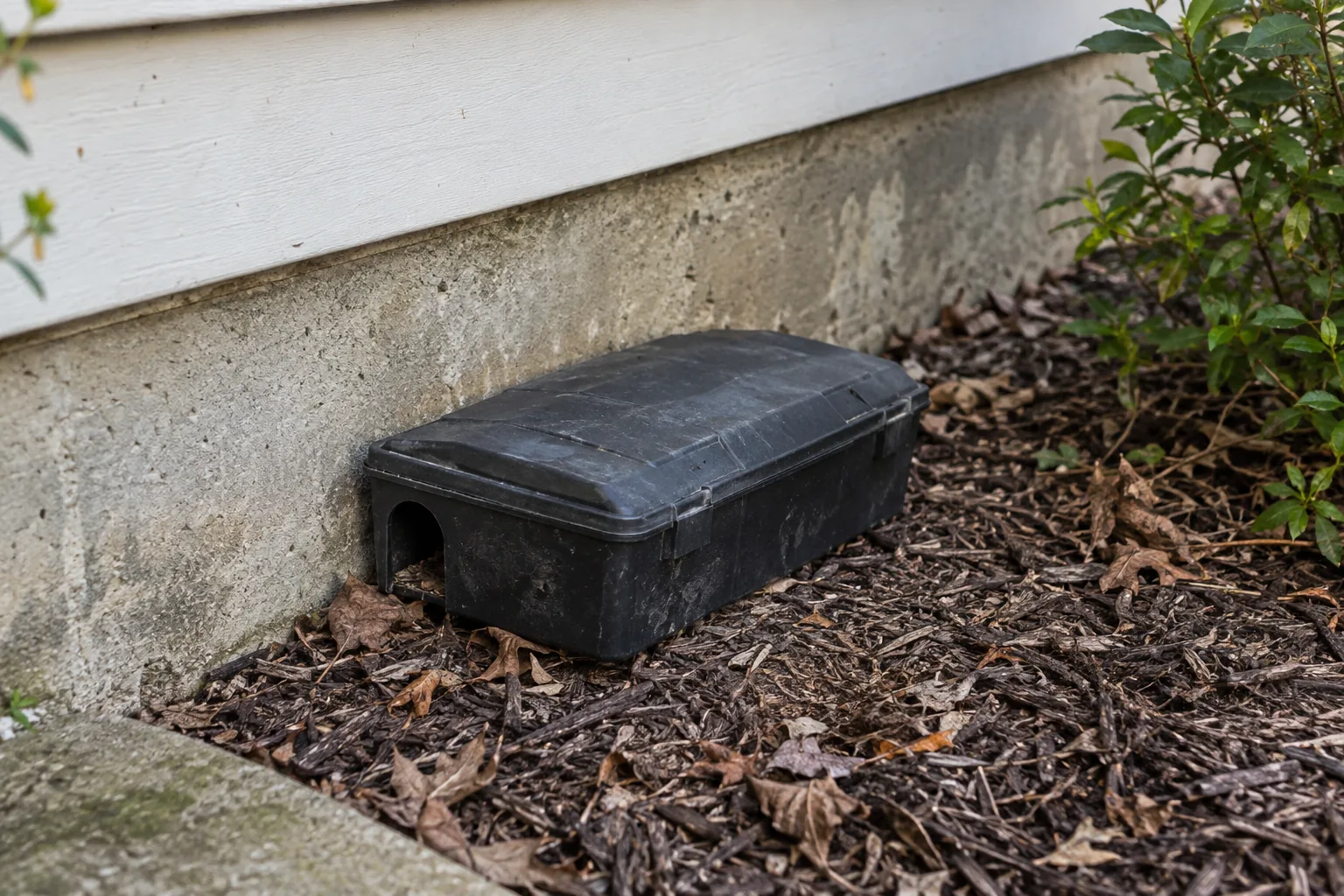
Exterior stations may be used to monitor or control rats around approved locations.
A technician may place them near:
- foundation routes
- garbage areas
- service alleys
- exterior travel paths
The station should be:
- closed
- stable
- serviceable
- positioned according to the product label
An exterior station does not replace exclusion.
Why Does the Exterminator Check Food Sources?
Food availability can make rat control harder.
Common sources include:
- open garbage
- pet food
- bird seed
- livestock or poultry feed
- fallen fruit
- spilled grain
- outdoor food debris
A technician may recommend reducing these sources.
Sanitation supports treatment.
It does not replace trapping or exclusion.
Why Does the Exterminator Check Water Sources?
Rats may use:
- leaking plumbing
- outdoor bowls
- standing water
- irrigation leaks
- crawl-space moisture
Correcting accessible water sources can support the control plan.
Plumbing repair may require another qualified professional.
Does a Rat Exterminator Inspect Burrows?
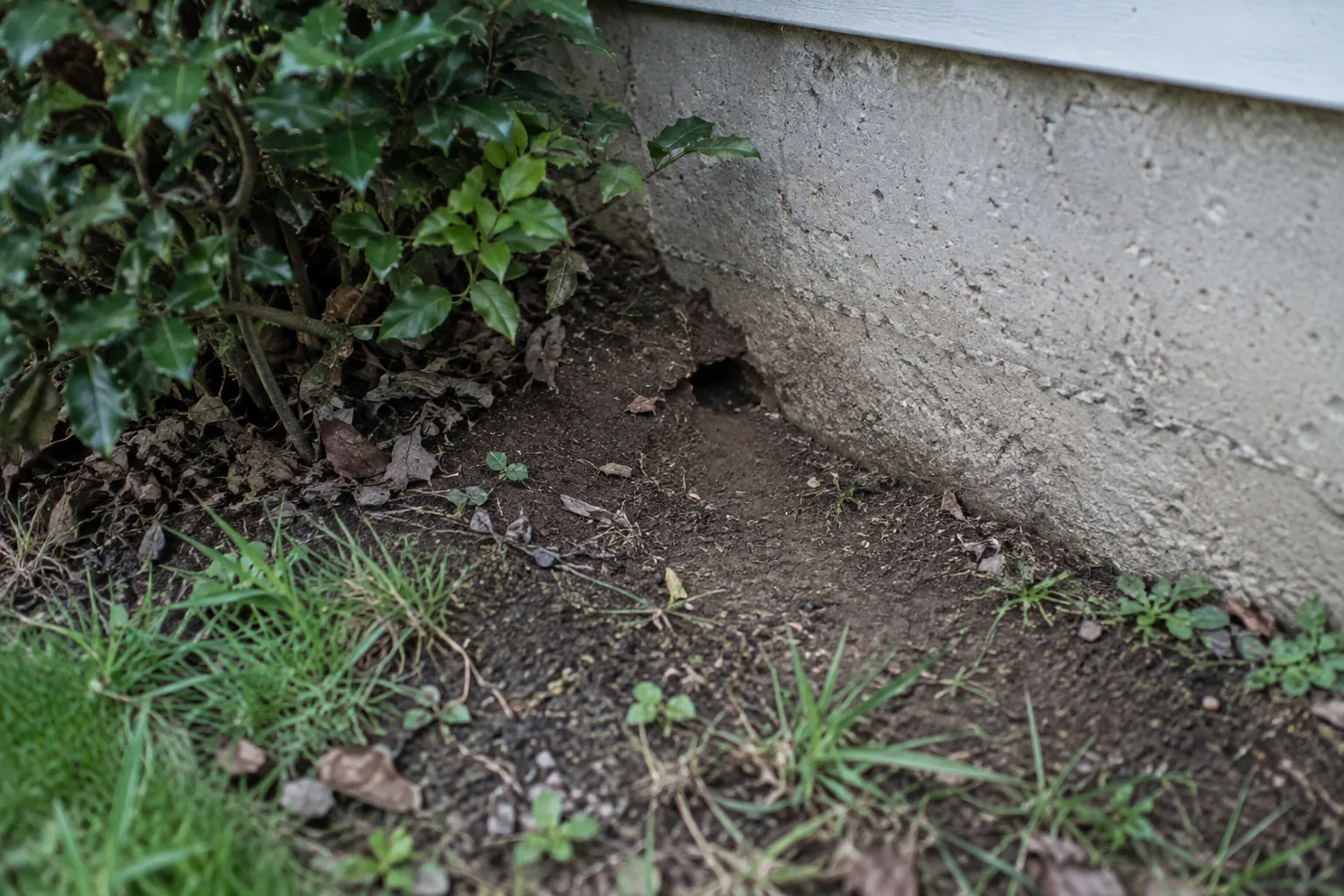
Often, if exterior activity suggests them.
A suspected rat burrow may be evaluated for:
- fresh soil
- tracks
- droppings
- worn paths
- repeated sightings
- position relative to the structure
Not every hole is a rat burrow.
The surrounding evidence matters.
What Does an Exterminator Do With Rat Burrows?
The exact method depends on:
- location
- species
- property
- label requirements
- local conditions
A professional should not improvise with unsafe household methods.
Do not use:
- gasoline
- exhaust
- smoke
- fire
- boiling water
- household chemicals
- blind flooding
- blind collapse
The burrow should be managed as part of the larger rat-control plan.
Does a Rat Exterminator Check the Yard?
Sometimes.
A yard inspection may look for:
- burrows
- dense cover
- stored materials
- garbage
- fallen fruit
- pet food
- travel paths
See Rats in the Yard for that specific situation.
Does a Rat Exterminator Check Under Decks?
Sometimes.
Decks can provide:
- shelter
- protected travel
- access to foundation routes
A technician may inspect the accessible perimeter.
Unsafe crawling beneath a low or unstable deck should be avoided.
See Rats Under a Deck.
Does a Rat Exterminator Check Under the House?
Sometimes.
Under-house areas may include:
- crawl spaces
- foundation routes
- utility openings
- burrows
Unsafe areas should not be entered routinely.
Avoid entry when there is:
- standing water
- unstable framing
- electrical hazard
- heavy contamination
- very restricted access
See Rats Under the House.
Does a Rat Exterminator Check the Crawl Space?
Yes, when evidence points there and access is safe.
The technician may inspect:
- foundation openings
- access doors
- vents
- plumbing routes
- utility penetrations
- droppings
- tracks
- nesting material
Does a Rat Exterminator Check the Attic?
Sometimes.
Roof rats and other rat activity may involve:
- rooflines
- soffits
- attic vents
- wall tops
- utility routes
A technician may inspect accessible attic routes and exterior roofline clues.
See Rats in the Attic.
Does a Rat Exterminator Find Entry Points?
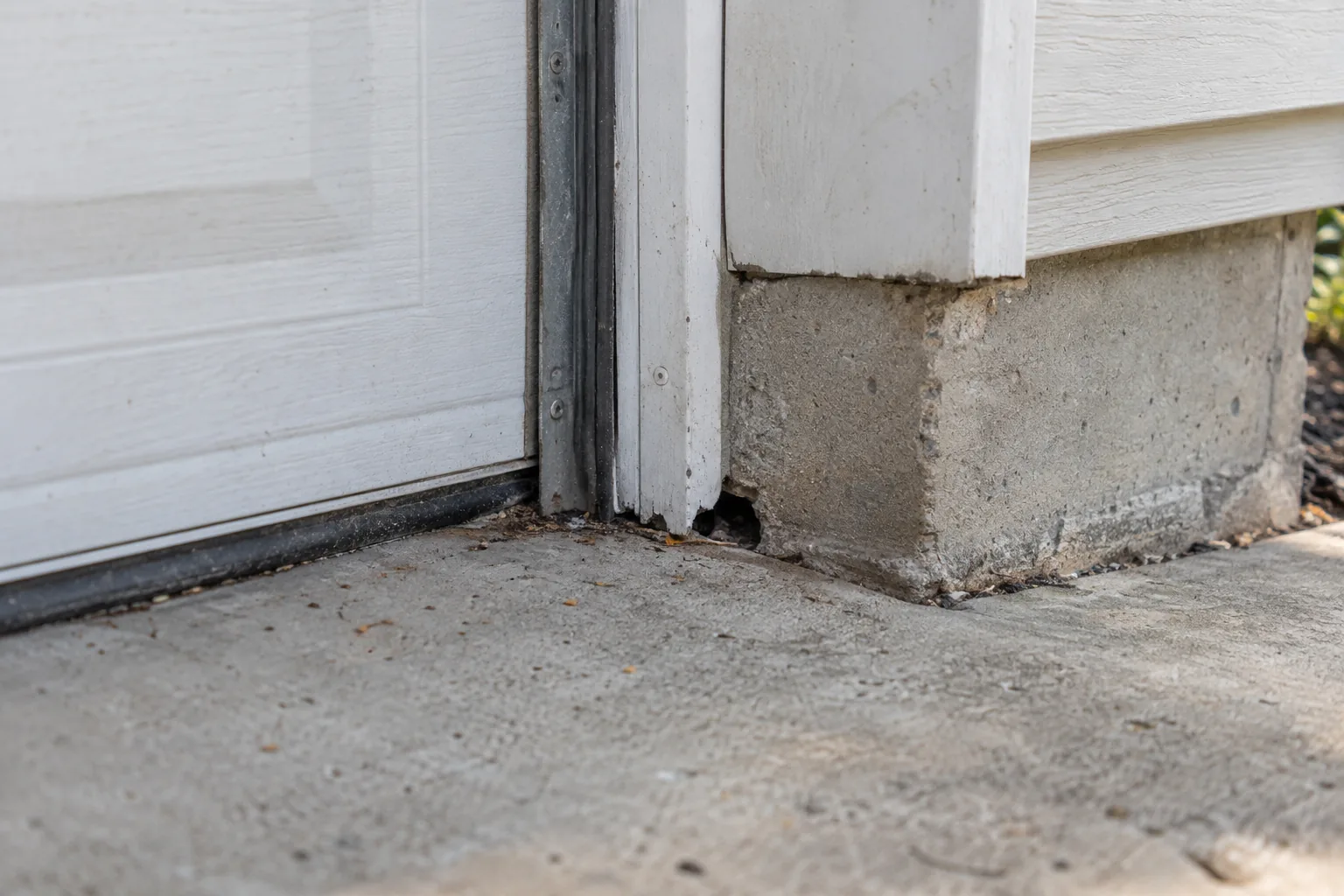
Often.
A technician may check:
- foundation defects
- crawl-space vents
- garage-door gaps
- utility penetrations
- siding transitions
- soffits
- roofline openings
See Rat Entry Points: Where Rats Get In.
Does the Exterminator Seal the Entry Points?
Sometimes.
Some companies perform exclusion.
Others:
- quote it separately
- repair only simple openings
- refer larger work to another contractor
See Rodent Exclusion: How to Keep Rats & Mice Out.
Ask what the service includes.
Why Should Active Rats Not Be Sealed Inside?
Exclusion timing matters.
Closing routes too early may:
- trap rats inside
- redirect them
- create new gnawing
- push them into another part of the house
- create inaccessible carcasses
A professional may coordinate active control with exclusion.
The sequence depends on the property.
What Does Rat Exclusion Usually Address?
Rat exclusion may focus on:
- larger foundation openings
- crawl-space access
- damaged vents
- garage-door gaps
- utility penetrations
- roofline details
- soffits
- structural transitions
The repair should preserve:
- drainage
- ventilation
- utility access
- door operation
- weatherproofing
- service access
See Rat-Proofing a House.
Does a Rat Exterminator Treat Inside Walls?
Wall activity is usually approached from accessible routes.
A technician may treat around:
- baseboards
- utility routes
- attic connections
- crawl-space connections
- garage routes
Standard rat service does not automatically mean opening walls.
Another contractor may be needed if structural access is required.
How Does the Exterminator Know the Treatment Is Working?
Progress may be measured through:
- fewer fresh droppings
- fewer sightings
- fewer trap contacts
- less scratching
- no new gnaw damage
- reduced station activity
- no fresh burrow signs
One quiet day is not enough to prove the problem is resolved.
The trend over time matters.
Does the Exterminator Come Back?
Often.
Follow-up may involve:
- checking traps
- removing catches
- resetting traps
- moving traps
- servicing stations
- checking fresh signs
- reassessing burrows
- reviewing exclusion work
Some services include follow-up.
Others bill separately.
Ask before hiring.
How Long Does Rat Extermination Take?
A limited rat problem may improve within several days.
More established activity can take one to several weeks.
Longer projects may involve:
- exterior routes
- crawl spaces
- attics
- several entry points
- burrows
- repeated monitoring
See How Long Does Rodent Control Take?.
Does a Rat Exterminator Remove Dead Rats?
Sometimes.
Accessible catches may be removed during service.
But a rat inside:
- a wall
- ceiling
- sealed soffit
- inaccessible crawl-space area
- structural void
may require another service or building access.
Ask whether carcass removal is included.
Does a Rat Exterminator Clean Droppings?
Not always.
Pest control and cleanup can be separate.
A provider may:
- point out contamination
- clean limited accessible areas
- offer a separate cleanup service
- refer remediation elsewhere
See Rodent Cleanup: Droppings, Urine & Contaminated Areas.
Should Rat Droppings Be Vacuumed?
Fresh dry droppings should not be vacuumed or dry swept as the first cleanup step.
Use appropriate wet-cleanup methods.
Keep children and pets away from contaminated areas.
Follow disinfectant label instructions.
Does a Rat Exterminator Replace Insulation?
Usually not as part of a basic service.
Some companies offer insulation work.
Others refer it.
Insulation may need attention when it is:
- heavily contaminated
- repeatedly used for nesting
- physically damaged
- holding persistent odor
Not every rat problem requires insulation replacement.
Does a Rat Exterminator Repair Chewed Wires?
Usually not.
A pest-control technician may identify damage.
Electrical repair should be handled by a qualified electrician.
The same applies to:
- plumbing
- roofing
- HVAC
- structural work
Pest control does not replace other building trades.
What Should You Do Before the Exterminator Arrives?
Useful preparation may include:
- note where rats were seen
- photograph fresh evidence if practical
- note suspected outdoor routes
- keep pets away from service areas
- secure loose food
- secure pet food and bird seed
- make affected areas accessible
- tell the technician about previous traps or bait
- report leaks or moisture
Do not destroy all evidence before inspection.
The technician needs to see where activity occurred.
Should You Move Existing Rat Traps?
Tell the technician where you have already used traps.
Do not hide previous treatment attempts.
Useful information includes:
- trap locations
- catches
- missed traps
- bait use
- timing
The technician may use that history to understand routes.
Does the Exterminator Need Access to the Whole Property?
Not necessarily.
The service may focus on:
- active rooms
- garage
- basement
- crawl space
- attic
- exterior foundation
- yard
- deck
The inspection should follow the evidence.
What May Be Included in a Rat Exterminator Service?
Depending on the company, service may include:
- inspection
- protected traps
- stations
- follow-up
- catch removal
- exterior monitoring
- burrow assessment
- entry-point recommendations
- exclusion
- cleanup guidance
- re-service
Do not assume every item is included.
Ask for a written scope.
What May Cost Extra?
Possible separate charges include:
- attic access
- crawl-space service
- exterior work
- exclusion
- cleanup
- carcass retrieval
- insulation work
- roof repair
- additional visits
- after-hours service
See Rat Exterminator Cost for broader pricing guidance.
What Should a Written Rat-Control Quote Explain?
A useful quote should identify:
- inspection scope
- areas being treated
- treatment method
- trap or station use
- number of visits
- trap checking
- station servicing
- exterior scope
- exclusion
- cleanup
- re-service
- extra charges
Avoid vague “rat treatment” quotes with no service details.
Questions to Ask a Rat Exterminator
Ask:
- How did you confirm rats?
- Which routes are active?
- Is activity indoors, outdoors, or both?
- What treatment will you use?
- Where will traps or stations go?
- How are children, pets, and wildlife protected?
- How many visits are included?
- Who checks traps?
- Will you inspect for burrows?
- Is exclusion included?
- Is cleanup included?
- What work is separate?
- What signs show progress?
- What happens if activity continues?
These questions make the service easier to evaluate.
Red Flags in Rat Extermination
Be cautious if a provider:
- guarantees every rat is gone after one visit
- cannot explain where activity is located
- scatters traps or stations without route logic
- recommends exposed pesticide bait
- ignores children, pets, or wildlife
- promises permanent control without discussing entry points
- recommends dangerous burrow treatments
- recommends major repair work without showing the defect
Professional rat control should be evidence-based.
What Does an Exterminator Do for Rats? The Bottom Line
A rat exterminator typically does more than place traps.
A professional service may include:
- inspection
- species confirmation
- indoor and exterior route mapping
- protected rat-trap placement
- monitored bait stations where appropriate
- burrow assessment
- follow-up
- exclusion recommendations
- cleanup guidance
The exact scope varies.
The most useful service should clearly explain:
- where rats are active
- what method is being used
- why traps or stations are placed where they are
- which entry points matter
- what exterior factors are supporting activity
- what follow-up is included
- what work is separate
The best rat-control plan is not the one with the most devices or the strongest promise.
It is the one that matches the actual routes and is adjusted as fresh evidence changes.
Continue with our professional rat control guide, rat exterminator guide, rodent inspection guide, rat traps guide, rat entry points guide, or rodent exclusion guide.