Mouse Life Cycle: Birth, Maturity & Lifespan
The house mouse life cycle moves quickly.
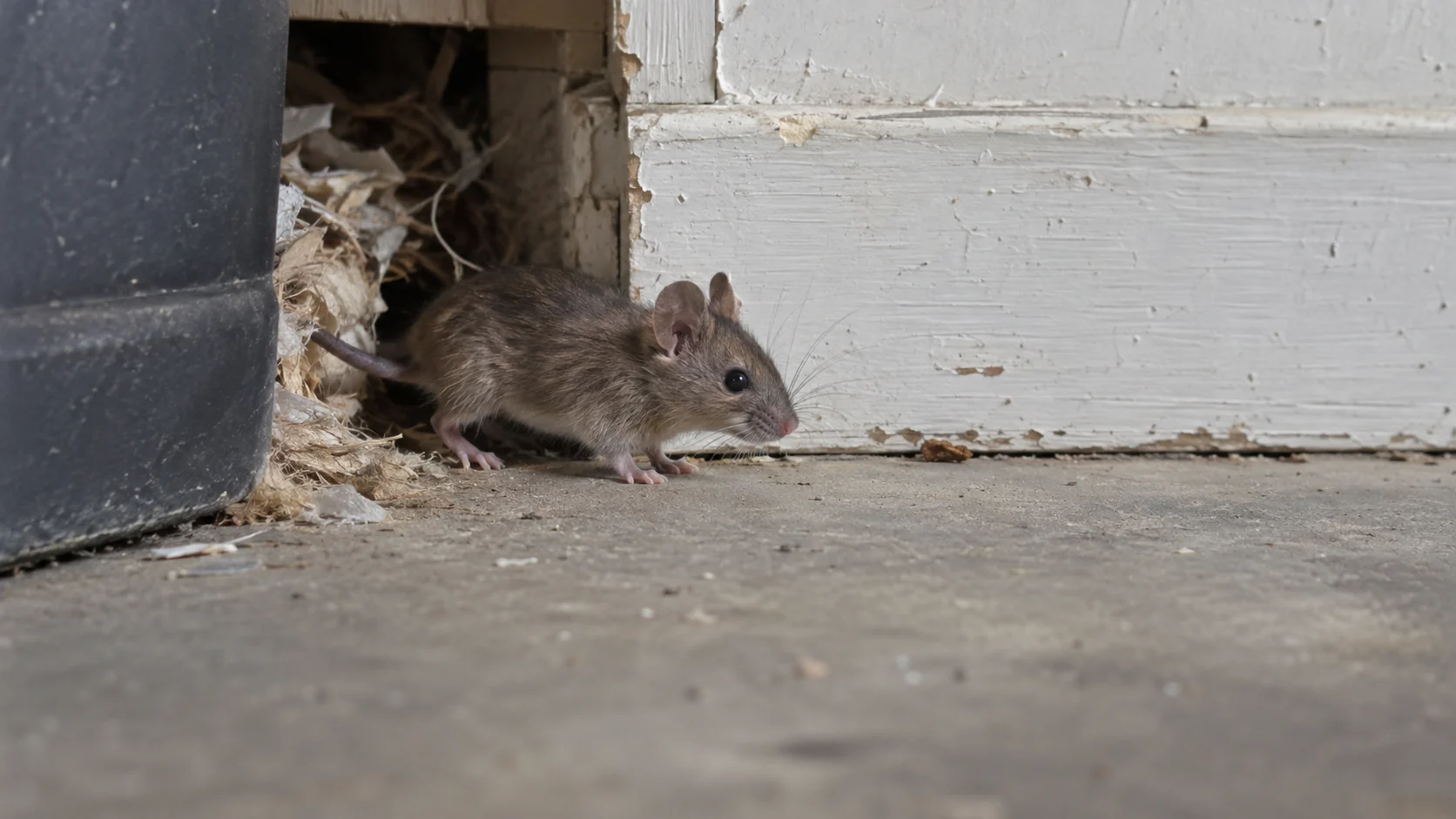
The house mouse life cycle moves quickly.
A mouse is born:
- hairless
- blind
- almost completely dependent on the nest
Within about two weeks, it has fur and open eyes.
At around three weeks, young mice begin leaving the nest and eating solid food.
Within roughly five to seven weeks, some house mice can reach sexual maturity.
That fast development helps explain why a mouse problem can grow quickly when food, shelter, and entry points remain available.
For homeowners, the important stages are:
- pregnancy
- newborn pups
- developing pups
- weaning
- juvenile independence
- sexual maturity
- adult life
The timing varies somewhat between individual mice and conditions.
What Is the House Mouse Life Cycle?
The house mouse life cycle begins before birth with a short pregnancy.
House-mouse gestation is usually around 19 to 21 days.
After birth, pups develop rapidly.
A simplified timeline is:
- Birth: hairless, blind, dependent
- First 1–2 weeks: fur develops; pups remain in the nest
- Around 2 weeks: eyes open and movement increases
- Around 3 weeks: weaning and short trips from the nest
- About 5–7 weeks: sexual maturity may begin
- Adult stage: feeding, nesting, territorial behavior, and reproduction
- Later life: survival varies greatly with conditions
This page focuses on those developmental stages rather than reproduction rate alone.
For reproduction speed, see How Fast Do Mice Reproduce?.
Stage 1: Pregnancy Before Birth
The life cycle begins with pregnancy.
House-mouse gestation is short—usually about 19 to 21 days.
During that period, a female uses a sheltered nesting area.
Possible indoor nest locations include:
- wall voids
- cabinet voids
- attic insulation
- garage storage
- crawl-space insulation
- boxes
- stored fabric
A short gestation means new pups can appear quickly after mice become established.
But pregnancy length alone does not tell you how many mice are in the house.
Stage 2: Newborn Mouse Pups
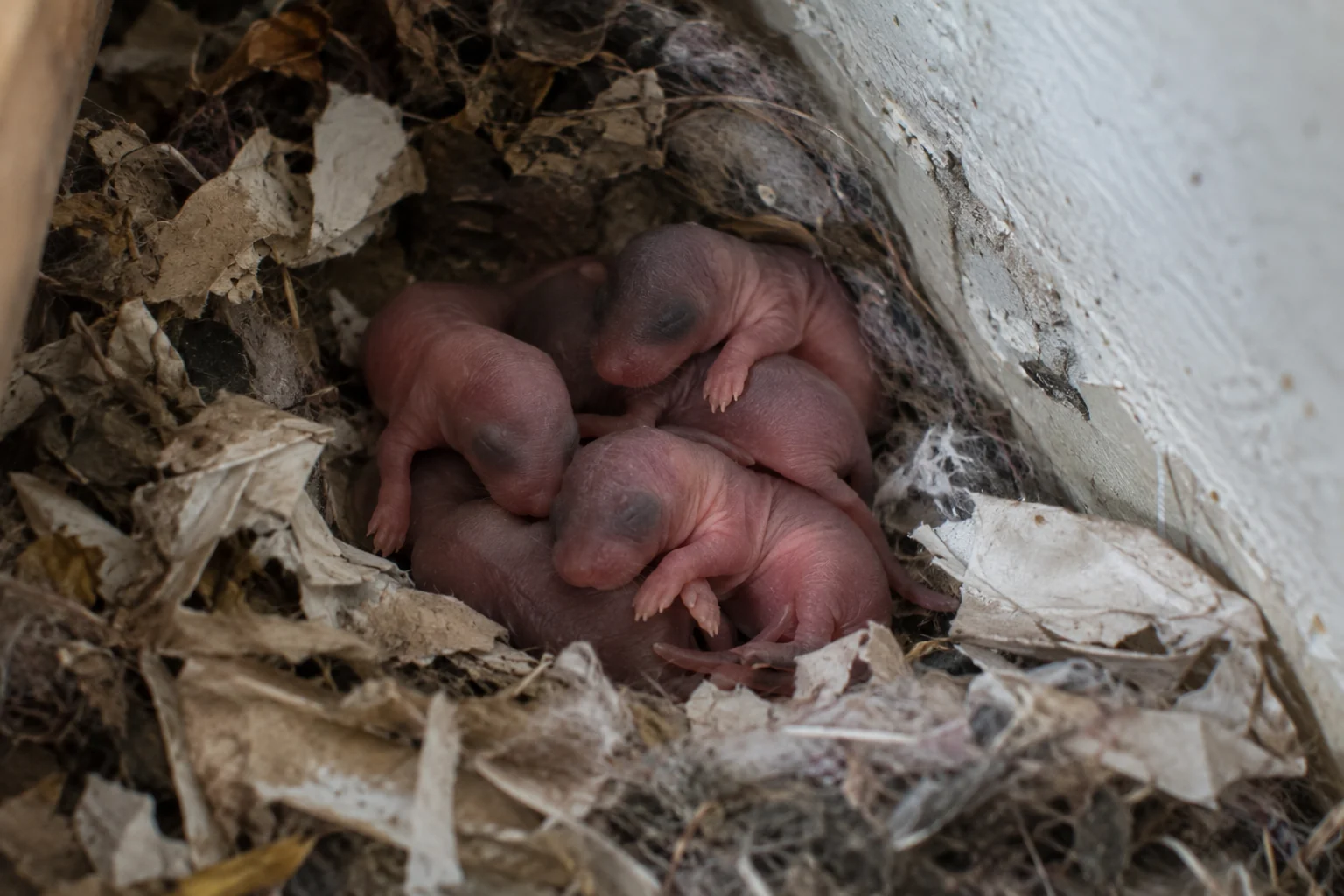
Newborn house mice are extremely undeveloped.
They are typically:
- hairless
- pinkish
- blind
- very small
- unable to regulate themselves like adults
- dependent on the mother
They remain in the nest.
A newborn mouse does not normally travel across a kitchen or garage like an adult.
If you find very young pups, breeding almost certainly occurred nearby.
See Baby Mice: What They Look Like for identification details.
What Does Finding Newborn Mice Mean?
Newborn pups suggest there is or recently was an active nest close to the discovery point.
That may be in:
- insulation
- shredded paper
- stored boxes
- wall cavities
- cabinets
- sheltered garage storage
But finding pups does not tell you:
- the exact number of adult mice
- whether there is only one nest
- the exact age of the infestation
- the exact entry point
A nest is evidence.
It is not a complete population count.
Stage 3: The First Week
During the first week, mouse pups remain dependent on the nest.
Their bodies begin changing quickly.
Fur starts to develop.
The pups become stronger, but they are still not independent.
At this stage, the mother provides nearly all care.
A homeowner is unlikely to see a one-week-old mouse moving around an open room unless the nest has been disturbed.
Stage 4: About 10 Days Old
By around ten days, house-mouse pups are typically much more fully furred.
They still look very young.
Their proportions are different from adults:
- smaller body
- softer juvenile appearance
- limited independence
- close association with the nest
Exact appearance varies.
Do not try to assign an exact age from a photo alone.
Stage 5: Eyes Open at About Two Weeks
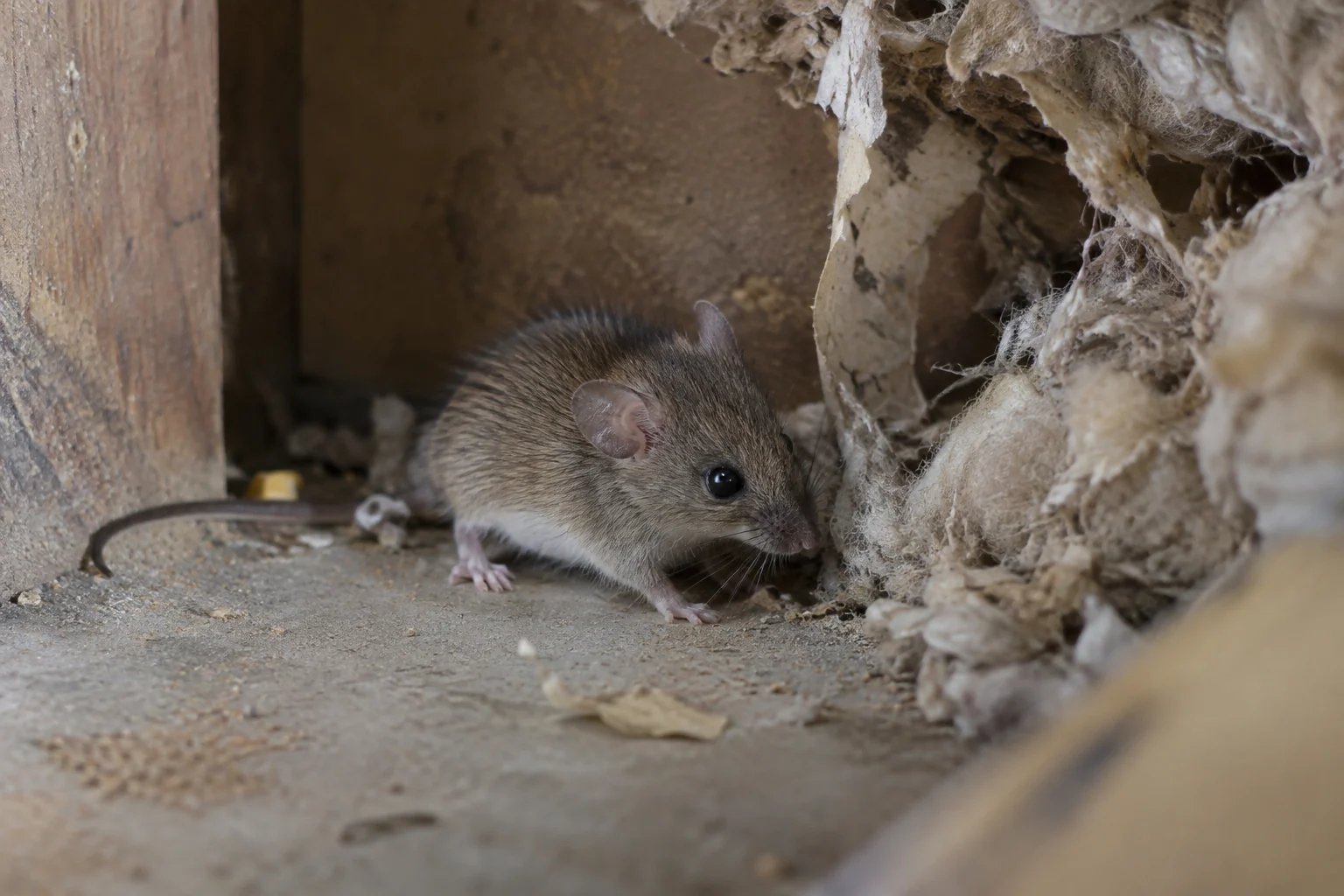
House-mouse eyes commonly open at around two weeks of age.
At this point, young mice become more mobile.
They may begin:
- moving around the nest
- exploring nearby shelter
- interacting more with siblings
- responding more actively to disturbance
They are still not equivalent to fully independent adults.
Can You Age a Mouse by Its Eyes?
Only approximately.
Closed eyes indicate a very young pup.
Open eyes indicate the mouse has reached a later developmental stage.
But eye appearance alone cannot tell you an exact age in days.
Development can vary.
Use age estimates as broad biological context, not precise dating.
Stage 6: Weaning at Around Three Weeks
House mice are commonly weaned at about three weeks.
Weaning is a major transition.
Young mice begin relying less on milk and more on solid food.
They also become more independent from the nest.
At this stage, juveniles may begin appearing on short routes near:
- food
- wall edges
- cabinets
- stored materials
A three-week-old mouse is still smaller than an adult.
But it may already be mobile enough to be noticed by a homeowner.
What Does a Juvenile Mouse Look Like?
A juvenile house mouse is:
- fully furred
- mobile
- smaller than a mature adult
- proportioned more like a mouse than a newborn pup
- capable of exploring beyond the nest
It may have a slightly more youthful body shape.
But size alone is not a precise age tool.
Food, genetics, sex, and development all affect body size.
Stage 7: Juvenile Independence
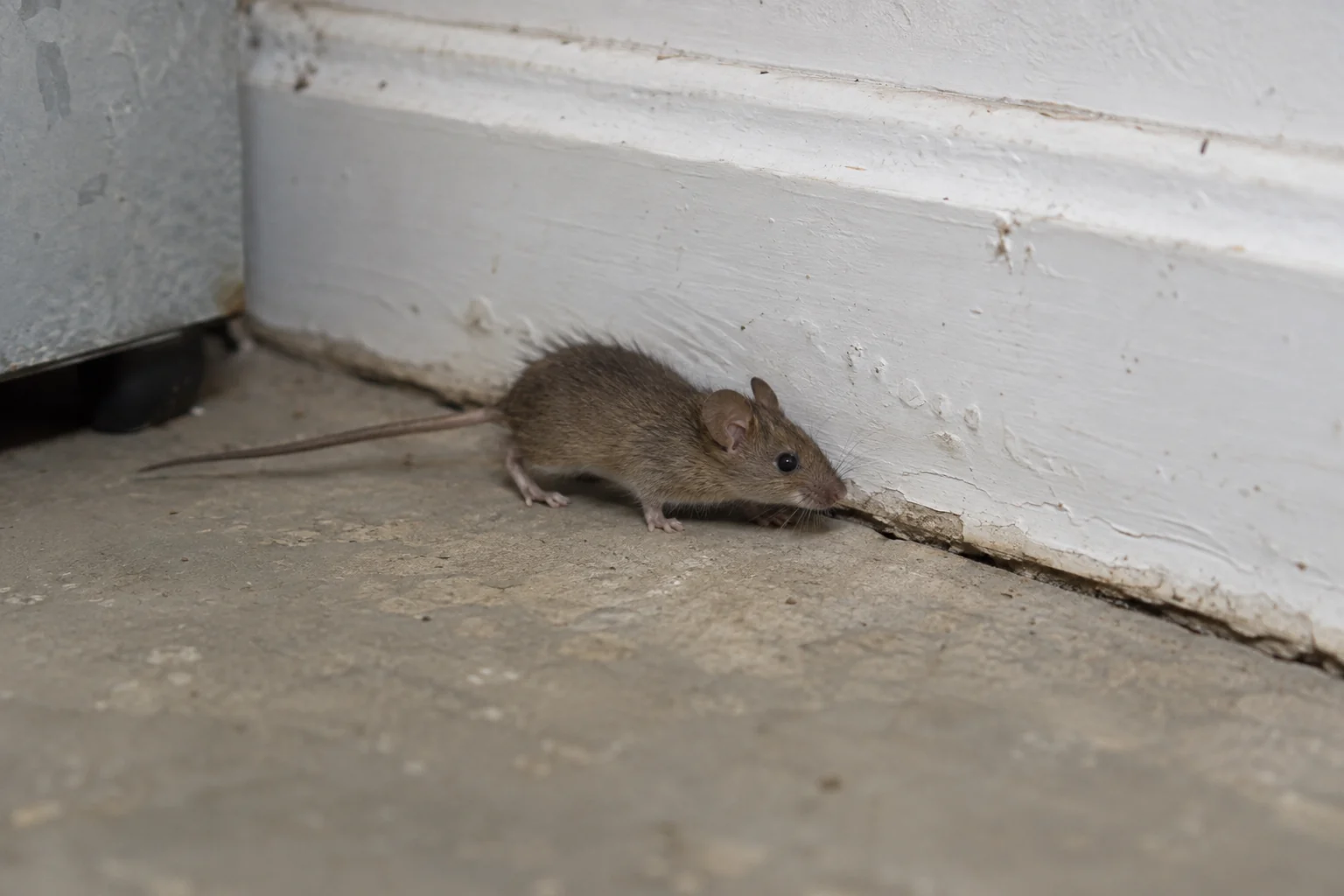
After weaning, young mice become increasingly independent.
They begin:
- feeding on solid food
- moving farther from the nest
- using wall-edge routes
- exploring nearby shelter
- competing for space
This is the stage when a homeowner may start seeing multiple small mice rather than only one adult.
That can be a clue that breeding occurred.
It still does not reveal an exact population.
Do Several Small Mice Mean There Is a Nest Nearby?
Possibly.
Repeated juvenile sightings can suggest a recent litter in the building.
But juveniles can disperse.
They may travel away from the original nest.
A better response is to inspect:
- where sightings occur
- where fresh droppings appear
- where food is available
- where nesting material is present
- which entry routes are active
Stage 8: Sexual Maturity
House mice mature quickly.
They may reach sexual maturity at roughly five to seven weeks.
For practical homeowner discussions, this is often rounded to about six to eight weeks because development varies.
That means a mouse can move from newborn to reproductive adult in a relatively short period.
This is one reason established indoor populations can produce overlapping generations.
Does Every Mouse Reproduce at Six Weeks?
No.
Sexual maturity is a biological range.
It does not mean every mouse:
- mates immediately
- survives long enough to breed
- has access to a mate
- produces a litter
Population growth depends on conditions.
For the reproduction-rate discussion, see How Fast Do Mice Reproduce?.
Stage 9: Adult House Mouse
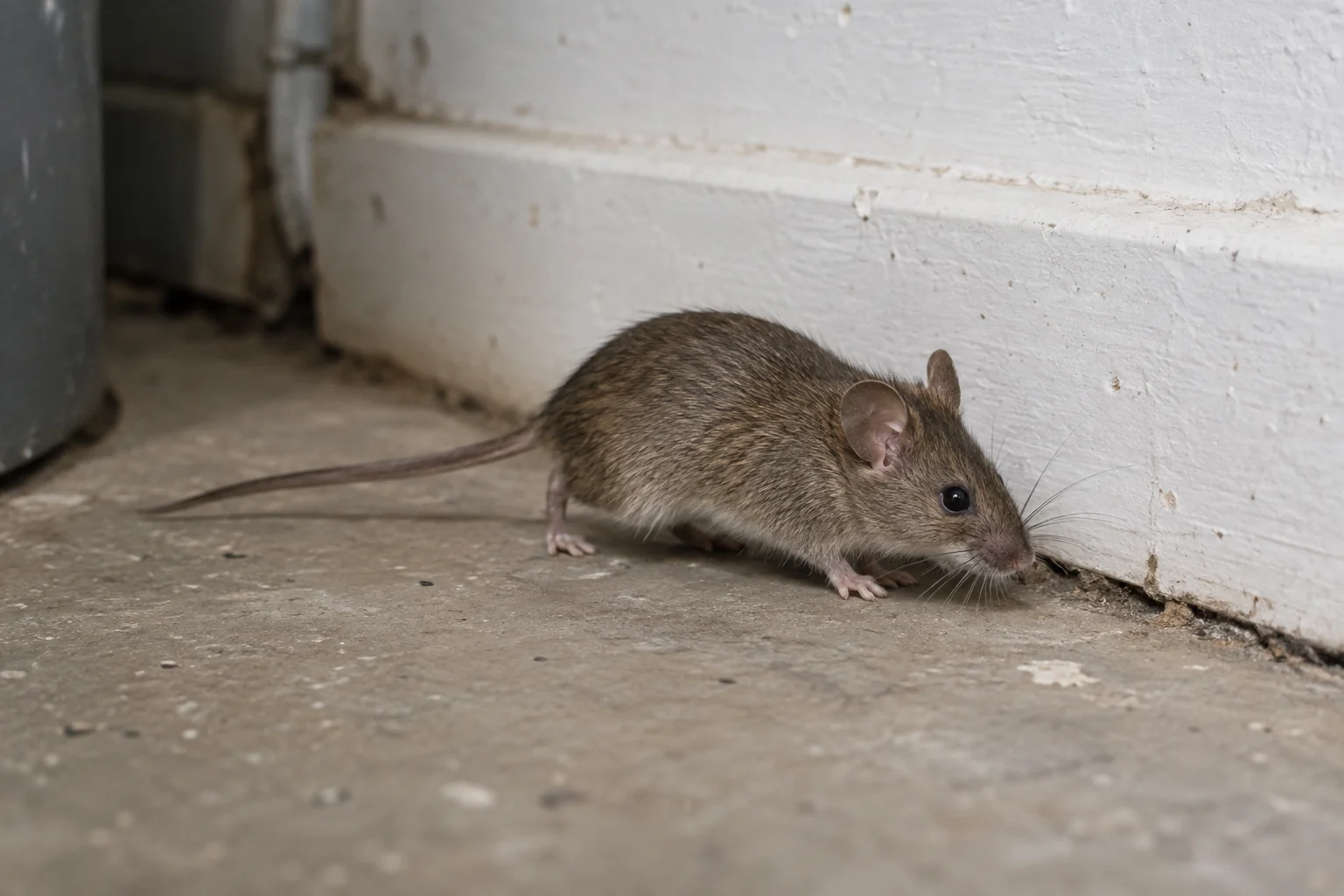
An adult house mouse spends much of its time:
- feeding
- exploring
- nesting
- maintaining travel routes
- avoiding threats
- reproducing when conditions allow
Adults may use:
- kitchens
- garages
- basements
- attics
- crawl spaces
- wall voids
- utility routes
They usually prefer routes that provide cover.
See House Mouse: Identification, Signs & Control.
What Does an Adult House Mouse Look Like?
An adult house mouse usually has:
- compact body
- pointed muzzle
- relatively large ears
- long thin tail
- gray-brown fur
- small feet compared with rats
Exact color and size vary.
Do not use body size alone to estimate age.
A small adult and a large juvenile can overlap in appearance.
How Long Does the Adult Stage Last?
Adult survival varies widely.
House mice living under wild or commensal conditions often do not survive beyond roughly 12 to 18 months.
Many die sooner.
Protected captive mice can live longer.
For a homeowner, the more important point is that house mice can reach reproductive maturity long before the end of their natural lifespan.
This page keeps lifespan brief because lifespan itself is a separate topic.
Why Mouse Lifespan Does Not Tell You How Old an Infestation Is
Finding an adult mouse does not mean the infestation has existed for a year.
An adult may have:
- entered recently
- been born inside
- moved from another part of the building
- dispersed from a nearby population
Likewise, finding juveniles does not tell you exactly when the first mouse entered.
Biology can show what is possible.
It cannot date an infestation precisely.
Can Adult and Juvenile Mice Live Together?
Yes.
An established population may contain:
- adult males
- adult females
- newly weaned juveniles
- younger pups
- more than one litter
Several life stages can overlap.
That is why seeing mice of different sizes may suggest continuing reproduction.
It still does not provide an exact count.
Can Several Litters Be Present at the Same Time?
Yes.
When conditions are favorable, breeding can overlap.
One female may be nursing while another female elsewhere in the structure has a different litter.
Several nesting locations may exist.
Do not assume all mice in a house belong to one nest.
Where Do Mice Raise Young Indoors?
House mice choose sheltered locations near resources.
Common areas include:
- insulation
- cabinet voids
- wall voids
- stored boxes
- garage storage
- attic edges
- crawl-space material
Nests are often made from:
- shredded paper
- fabric
- insulation
- soft packing material
- plant material
See Mouse Nests: What They Look Like & Where to Find Them.
Does Nest Size Tell You How Many Mice Are Present?
No.
A nest can be:
- active
- abandoned
- used by one female
- reused
- part of a larger population
Do not estimate infestation size from nest size alone.
The same caution applies to droppings.
Can Droppings Show the Mouse’s Life Stage?
Not precisely.
Mouse droppings can vary because of:
- age
- diet
- moisture
- drying
- species
Smaller droppings do not automatically prove that a juvenile produced them.
Dropping size is more useful for broad identification than exact age.
See Mouse Droppings: What They Look Like & Where to Find Them.
Does Seeing a Tiny Mouse Mean It Is a Baby?
Not always.
A small mouse could be:
- a juvenile house mouse
- a small adult house mouse
- another mouse species
For example, deer mice differ from house mice in appearance and habitat.
See Deer Mouse vs House Mouse for identification clues.
House Mouse vs Deer Mouse Life Cycle
House mice are the main focus of this page because they are strongly associated with indoor infestations.
Deer mice have different habitat patterns and can show more seasonal breeding outdoors.
Their developmental timing also differs somewhat.
Do not apply every house-mouse milestone universally to every mouse species.
Why the Mouse Life Cycle Matters in a Home
The life cycle explains why delayed action can make control harder.
A house can contain:
- adults using food routes
- juveniles exploring new areas
- dependent pups hidden in a nest
Removing one visible adult may not address:
- a nearby nest
- other adults
- open entry points
- food
- shelter
Control should focus on the whole activity pattern.
What Life Stage Is Most Important for Pest Control?
There is no single “most important” stage.
A practical control plan must address:
Adults
because they are actively moving and reproducing.
Juveniles
because they can soon become reproductive.
Nesting sites
because they show where shelter is available.
Entry points
because new mice can enter even after the original population is controlled.
The goal is to interrupt the cycle.
Can One Trap Catch End the Life Cycle?
Not necessarily.
One catch removes one mouse.
If other mice remain, the population can continue.
If an entry point remains open, new mice can enter.
That is why control usually combines:
- trapping
- sanitation
- exclusion
- monitoring
Why Exclusion Matters at Every Stage
Exclusion helps stop new mice from entering.
Potential routes include:
- utility penetrations
- garage-door corners
- lower door gaps
- foundation openings
- siding transitions
- attic openings
See Mouse Entry Points: Where Mice Get In.
Do not blindly seal active mice inside.
Control and exclusion should be coordinated.
Why Food and Shelter Matter
A life cycle can continue only when mice have resources.
Food may include:
- crumbs
- cereal
- grain
- pet food
- bird seed
- stored snacks
Shelter may include:
- clutter
- boxes
- insulation
- wall voids
- stored fabric
Reducing food and shelter makes the environment less supportive.
Does Cleaning Up a Nest Stop the Life Cycle?
Not by itself.
Removing nesting material may remove shelter.
But active mice can build another nest if:
- food remains
- entry points remain open
- hiding places remain
If the nest is contaminated, avoid disturbing it dry.
Cleanup should follow appropriate wet-cleanup practices.
What If You Find a Nest With Pups?
Keep children and pets away.
Avoid unnecessary disturbance.
Do not dry sweep or vacuum contaminated nesting material.
If mice are still active, inspection and control may need to happen before full cleanup.
A hidden nest may also indicate that additional adult mice are nearby.
How Can You Tell Whether the Life Cycle Is Continuing?
Look for trends over time.
Possible signs include:
- fresh droppings
- repeated sightings
- juvenile sightings
- new nesting material
- new gnawing
- continued trap activity
- scratching in the same areas
Old evidence alone does not prove that reproduction is continuing.
Fresh evidence matters more.
Does One Juvenile Mouse Prove a Large Infestation?
No.
One juvenile suggests recent reproduction somewhere nearby.
It does not tell you:
- how many adults exist
- how many siblings survived
- whether there are multiple nests
- how long the infestation has existed
Inspect the property rather than extrapolating from one animal.
What Should You Do After Seeing Mice at Different Life Stages?
If you see adults and smaller juveniles, treat that as evidence that the problem may be established.
Useful next steps include:
- identify active rooms
- check for fresh droppings
- inspect likely nesting areas
- use appropriate traps on active routes
- reduce accessible food
- inspect entry points
- monitor after control
See Professional Mouse Control: Methods & What to Expect if activity is widespread or difficult to manage.
Mouse Life Cycle: The Bottom Line
The house mouse life cycle moves quickly.
A typical sequence is:
- Pregnancy: about 19–21 days
- Birth: pups are hairless and blind
- About 10 days: fur is well developed
- About 2 weeks: eyes open
- About 3 weeks: weaning and early independence
- About 5–7 weeks: sexual maturity may begin
- Adult life: feeding, nesting, reproduction, and continued movement through the property
House mice living under wild or commensal conditions often do not survive beyond roughly 12–18 months, although lifespan varies and many die earlier.
The key homeowner lesson is not to calculate an exact population from the life cycle.
Instead, use the biology to understand why a property can contain:
- newborn pups
- juveniles
- reproductive adults
at the same time.
If you find recurring evidence, focus on active routes, food, shelter, nesting areas, entry points, and monitoring.
Continue with our house mouse guide, baby mouse guide, mouse nest guide, how fast mice reproduce guide, mouse entry points guide, or professional mouse control guide.