Mice in the Ceiling: Signs, Sounds & Removal
Hearing scratching above a ceiling can make it seem as if mice are living directly inside the ceiling surface.
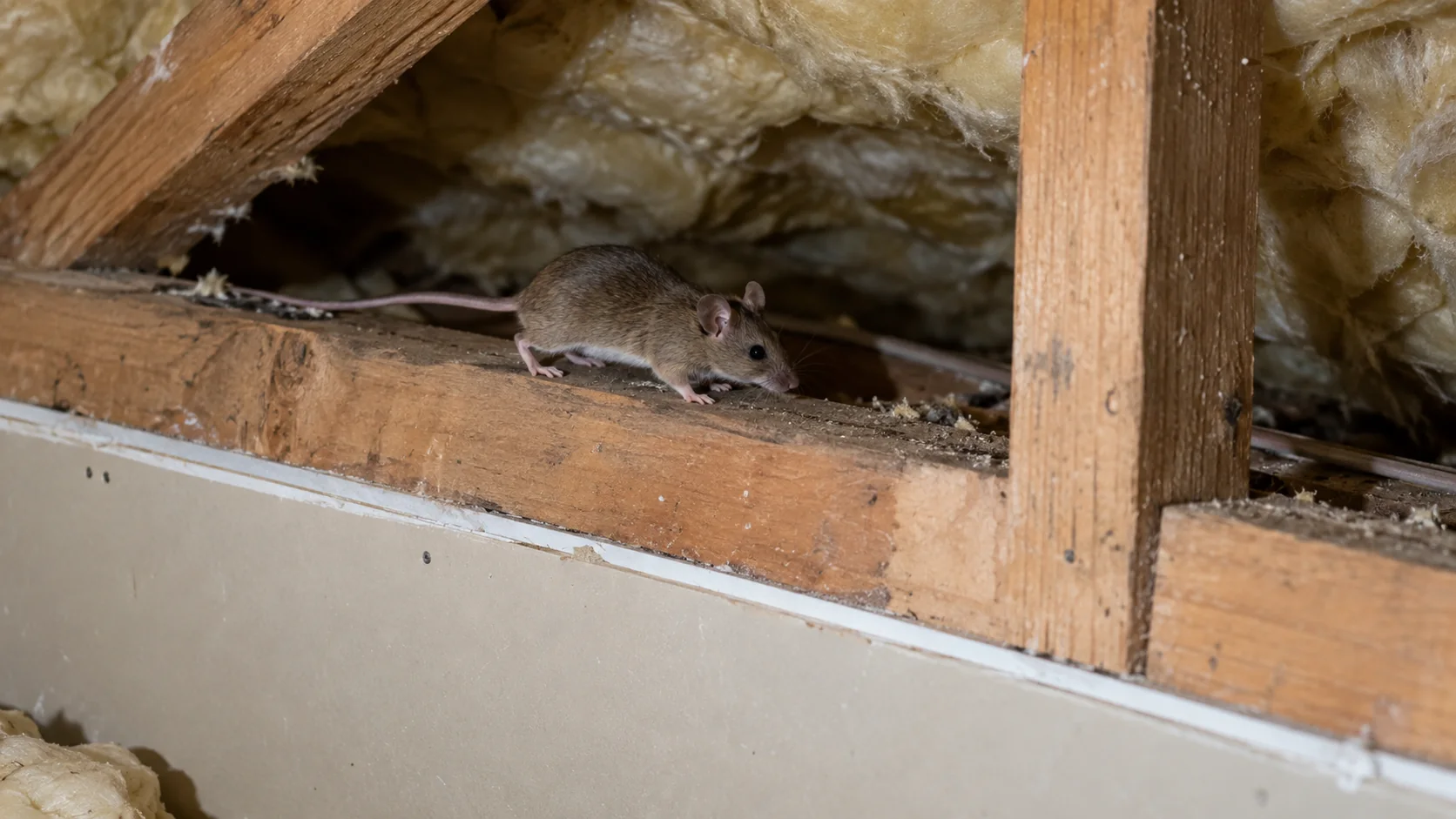
Hearing scratching above a ceiling can make it seem as if mice are living directly inside the ceiling surface.
Usually, the activity is in a hidden structural space such as:
- a joist cavity between floors
- an attic floor above drywall
- a soffit or chase
- a suspended or drop-ceiling void
- a wall cavity that opens into the ceiling
- a utility route around pipes, ducts, or wiring
Mice may use these spaces for:
- travel
- shelter
- nesting
- access between rooms or levels
Common signs include:
- light scratching or rustling
- gnawing sounds
- small droppings in accessible ceiling or attic areas
- tiny tracks in dust
- shredded nesting material
- a musky or urine-like odor
- activity along nearby walls, attic edges, or utility penetrations
- occasional mouse sightings in the room below or nearby
Sound alone does not prove mice.
Rats, squirrels, insects, plumbing, ductwork, and normal building movement can create noises that seem to come from a ceiling.
The practical goal is to determine:
- whether the noise is really from mice
- where the mice are entering the ceiling route
- whether the activity connects to an attic, wall, basement, crawl space, or garage
- where traps can be placed safely on an accessible route
- when the entry point can be closed without trapping mice inside
This guide explains what ceiling mouse activity sounds like, which signs help confirm it, how mice reach ceiling cavities, and what to do next.
Can Mice Live in a Ceiling?
Yes.
Mice can use hidden spaces above ceilings for:
- shelter
- nesting
- travel between wall cavities
- access to food elsewhere in the house
A ceiling cavity can be especially attractive when it is:
- dark
- warm
- quiet
- connected to other voids
- lined with insulation or soft material
But a mouse heard above the ceiling may not spend all of its time there.
It may be traveling between:
- an attic
- a wall void
- a kitchen
- a basement
- a crawl space
- a garage
- another floor
What Does “Mice in the Ceiling” Usually Mean?
In most homes, there is not one separate hollow “ceiling space.”
The location depends on the building.
Ceiling Below an Attic
The mouse may be moving on or between framing directly above the ceiling drywall.
Ceiling Between Two Floors
The activity may be inside a floor-joist cavity.
Drop or Suspended Ceiling
A mouse may move above removable ceiling tiles if the space connects to walls or utilities.
Soffit or Chase
The mouse may be using a boxed-in structural or utility route that runs above a room.
Understanding the construction helps narrow the route.
What Do Mice in the Ceiling Sound Like?
Mouse activity may sound like:
- light scratching
- faint rustling
- quick scurrying
- intermittent gnawing
- soft movement that starts and stops
The noise may seem louder than expected because drywall and framing can transmit sound.
One small mouse close to the ceiling surface can sound surprisingly noticeable.
Sound volume does not reveal how many mice are present.
Are Mice Noisier at Night?
They are often easier to notice at night because the house is quieter.
Mouse activity may also be more concentrated during quiet periods.
But mice can move at any time.
Do not use time of day alone to determine:
- population size
- severity
- species
See Scratching in Walls at Night: Could It Be Mice or Rats?.
Can Mice Scratch in the Ceiling During the Day?
Yes.
Daytime activity can occur because of:
- disturbance
- food or water
- a quiet room
- a changed route
- movement between shelter areas
A daytime sound does not automatically mean a severe infestation.
See Seeing a Mouse During the Day: What It Means.
Is Scratching in the Ceiling Always Mice?
No.
Possible sources include:
- rats
- squirrels
- insects
- plumbing
- ducts
- thermal expansion
- building movement
That is why sound should be combined with physical evidence.
Useful mouse evidence includes:
- small droppings
- mouse-sized tracks
- fine gnawing
- nesting material
- direct sightings
Mice vs Rats in the Ceiling
Rats can also use ceiling and floor cavities.
Rat activity may sound:
- heavier
- slower
- more forceful
Rat droppings, tracks, and gnawing are also larger.
But sound alone is not enough to distinguish them.
See Rat vs Mouse: How to Tell the Difference and Mouse vs Rat Droppings: How to Tell the Difference.
Could the Noise Be a Squirrel?
Possibly, especially if activity is connected to:
- an attic
- a roofline
- exterior tree access
Squirrel movement is often heavier than mouse movement, but acoustics vary.
Do not identify an animal from sound alone.
Look for direct evidence in accessible areas.
Where Do Mice Hide Above a Ceiling?
Possible locations include:
- joist bays
- insulation
- wall-to-ceiling junctions
- utility chases
- attic-floor edges
- soffits
- drop-ceiling voids
Mice prefer protected routes.
They often travel along:
- framing
- pipes
- wall edges
- structural transitions
rather than crossing open spaces randomly.
How Do Mice Get Into Ceiling Cavities?
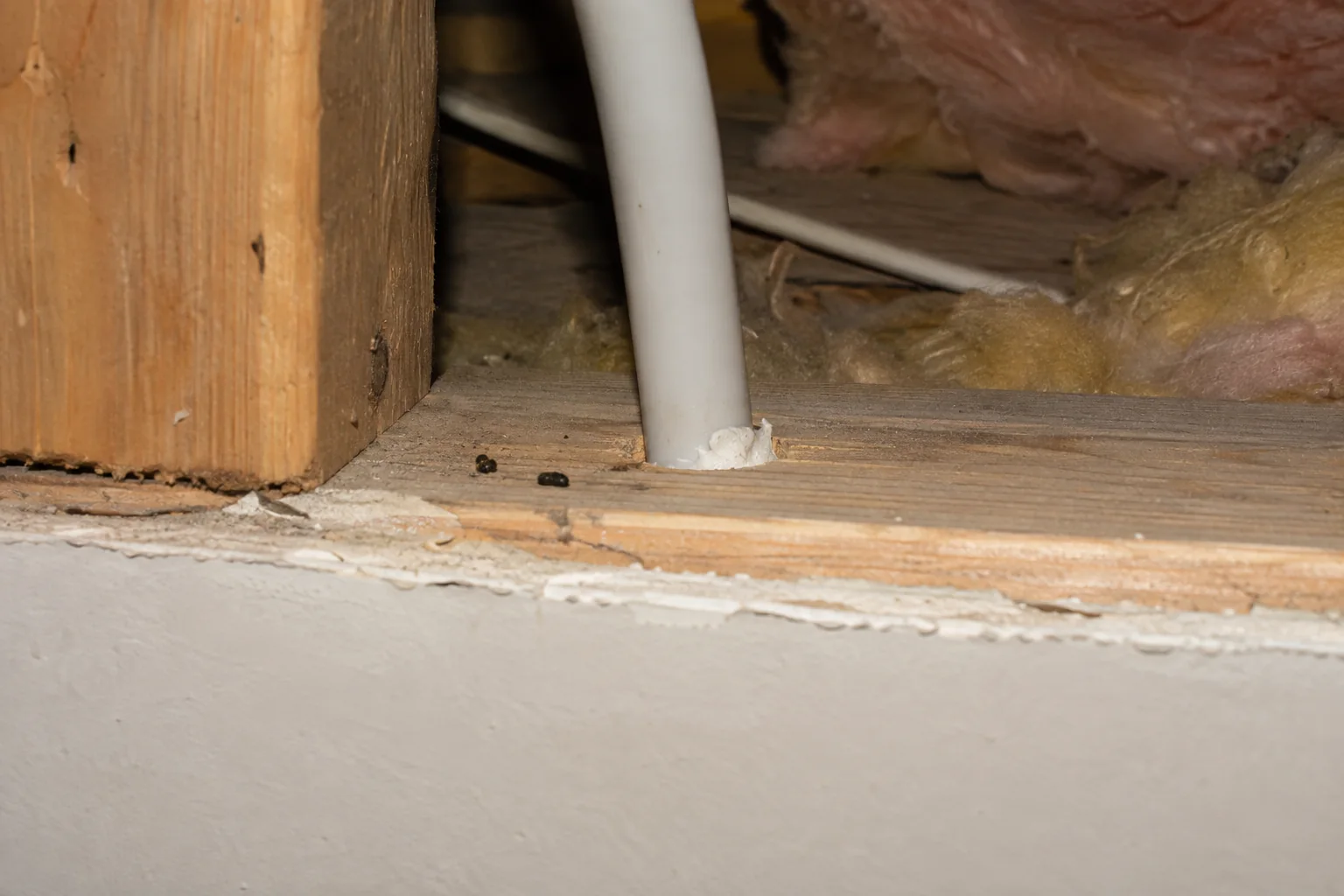
Mice usually reach a ceiling cavity through another connected structural route.
Common pathways include:
- wall voids
- attic access
- plumbing chases
- cable or electrical penetrations
- garage framing
- basement framing
- crawl-space routes
The exterior entry point may be far from the room where the noise is heard.
See How Mice Get Into Your House.
Mice Coming From the Attic Into the Ceiling
If the ceiling is directly below an attic, attic activity is one of the first areas to inspect.
Look for mouse evidence along:
- attic framing
- insulation edges
- top plates
- utility routes
- the perimeter above the noisy room
Do not step between structural supports or onto unsupported ceiling material.
See Mice in the Attic: Signs, Damage & Removal.
Mice Coming From Walls Into the Ceiling
Wall cavities can connect directly to ceiling and floor voids.
A mouse may move upward through:
- plumbing chases
- framing gaps
- utility penetrations
and then travel horizontally above the ceiling.
If scratching is heard in both the wall and ceiling, the routes may be connected.
See Mice in Walls: Signs, Entry Points & What to Do.
Mice Coming From the Basement
Basements can act as the initial entry level.
Mice may move upward through:
- pipe chases
- unfinished wall voids
- cable penetrations
- framing gaps
A mouse heard above a first-floor ceiling may have entered the building far below.
See Mice in the Basement: Why They’re There & What to Do.
Mice Coming From the Crawl Space
Crawl spaces can connect to walls that lead upward into ceiling cavities.
If evidence appears:
- below the floor
- inside lower walls
- above the ceiling
the structure may provide one continuous route.
See Mice in the Crawl Space: Signs & Removal.
Mice Coming From the Garage
Attached garages often contain:
- exposed framing
- utility penetrations
- attic connections
- wall voids
Mice may enter through the garage and move into a ceiling route shared with the house.
See Mice in the Garage: Entry Points, Nests & Control.
Mice in a Ceiling Below a Kitchen
A kitchen may provide food while the ceiling cavity provides shelter or travel.
Inspect accessible kitchen areas for:
- droppings
- gnawed food packaging
- plumbing gaps
- cabinet routes
The mouse may move between the ceiling and kitchen through a wall or plumbing chase.
See Mice in the Kitchen: Why They’re There & What to Do.
Mice in a Drop Ceiling
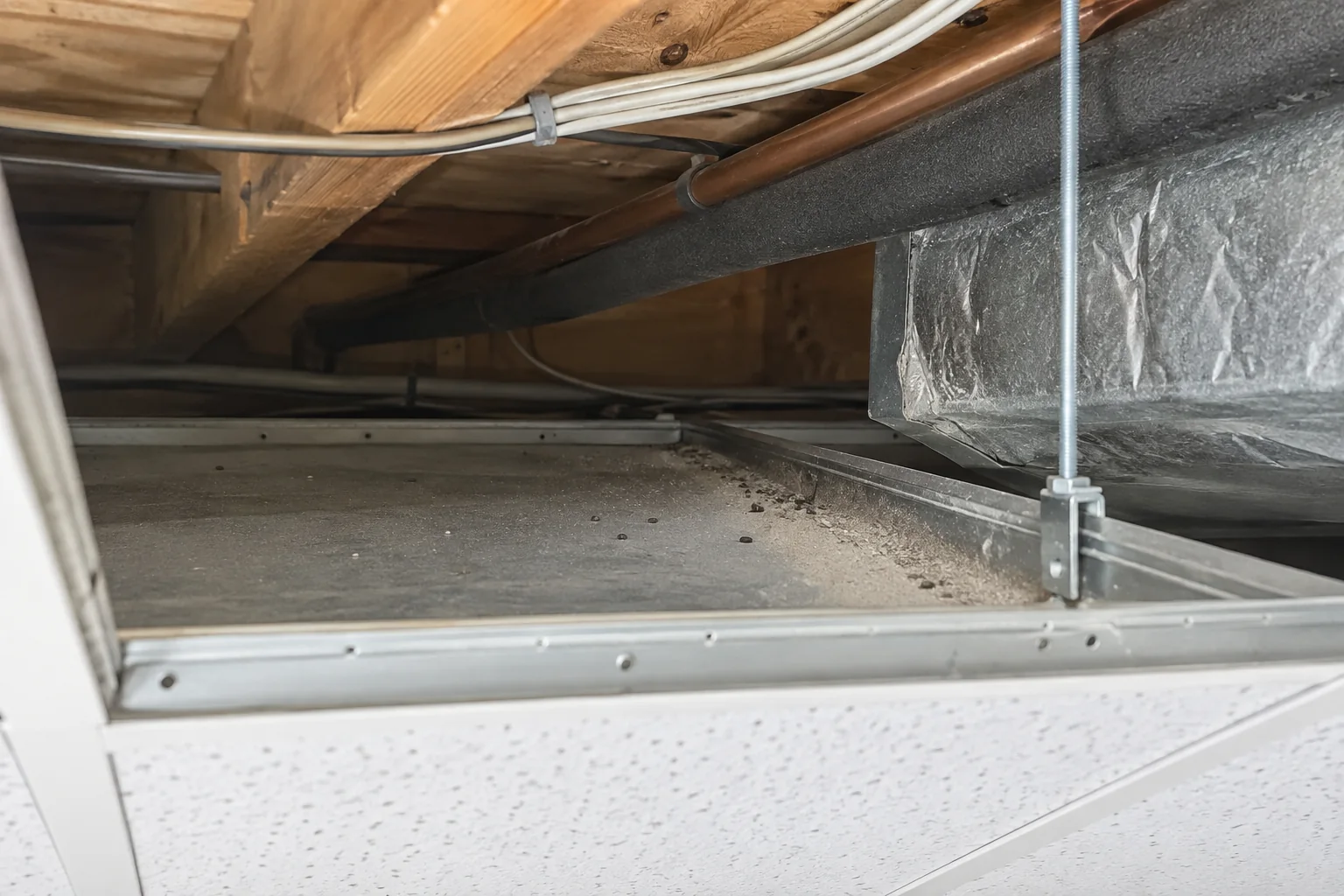
A drop ceiling can provide an accessible void above removable tiles.
Mice may travel along:
- wall edges
- pipes
- cable routes
- structural framing
If inspection is safe and the ceiling system allows access, look from an existing access point rather than damaging tiles unnecessarily.
Do not stand beneath unstable or contaminated ceiling material.
Do not reach blindly into the void.
Mice Between Floors
A floor-joist cavity between two occupied levels can conceal mouse movement.
Possible routes include:
- plumbing
- electrical lines
- duct chases
- stair framing
- wall cavities
Because the cavity is hidden, focus first on accessible connected areas rather than opening the ceiling.
Do Mice Nest in Ceiling Voids?
They can.
A ceiling or joist cavity may contain:
- insulation
- paper backing
- soft debris
- shredded material
that can be used for nesting.
However, hearing a mouse above the ceiling does not prove a nest is there.
The mouse may only be traveling through.
See Mouse Nests: What They Look Like & Where to Find Them.
What Does a Mouse Nest Above a Ceiling Look Like?
When accessible from an attic or removable ceiling system, a mouse nest may appear as a small irregular mass of:
- shredded paper
- insulation fibers
- fabric-like fibers
- soft debris
It should not look like a neat bird nest.
Nearby clues may include:
- tiny droppings
- gnawing
- urine odor
- disturbed insulation
Do not handle nesting material with bare hands.
Mouse Droppings Above a Ceiling
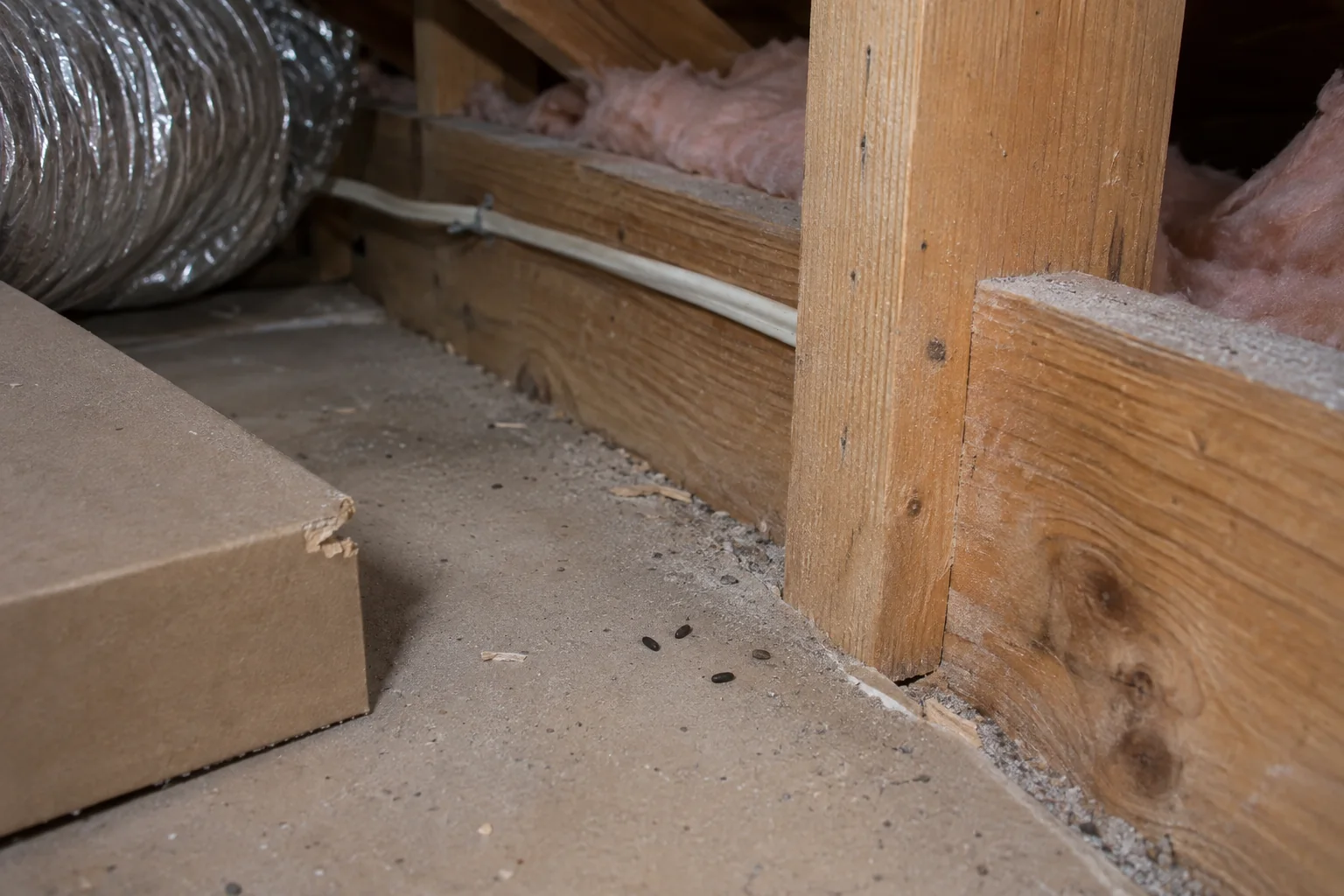
Droppings may appear in accessible areas such as:
- attic-floor edges
- top plates
- drop-ceiling framing
- utility routes
- access-panel areas
Mouse droppings are typically small and dark.
Do not use dropping count to estimate population.
See Mouse Droppings: What They Look Like & What They Mean.
Mouse Tracks Above a Ceiling
Dusty framing or attic surfaces may preserve tiny tracks.
Look along:
- joists
- wall-top edges
- utility routes
- dusty access areas
Real mouse tracks are often incomplete.
One mouse can create many footprints.
See Mouse Tracks: What They Look Like & Where to Find Them.
Mouse Gnaw Marks in Ceiling Routes
Mice may gnaw:
- wood edges
- insulation backing
- soft plastic
- utility-opening edges
- wire insulation
Fine gnawing is more useful when combined with other mouse evidence.
See Mouse Gnaw Marks: How to Identify Rodent Damage.
Mouse Urine Smell From the Ceiling
Repeated activity can create a musky or urine-like odor.
The smell may be noticeable:
- near an attic access
- below a heavily used cavity
- around a nest
- near porous insulation
Odor alone does not prove mice.
See Mouse Urine Smell: What It Smells Like & How to Find It.
Can Mice Damage Ceiling Insulation?
Yes.
Mice may:
- compress insulation
- pull fibers into nests
- contaminate material
- create narrow travel paths
Minor disturbance does not automatically mean the insulation needs replacement.
Heavily contaminated porous material may be harder to clean.
Can Mice Damage Wiring Above a Ceiling?
Yes.
Mice can gnaw wire insulation.
If accessible wiring appears damaged:
- do not touch exposed conductors
- keep people away from unsafe wiring
- have electrical damage evaluated appropriately
Do not work around energized electrical systems unless qualified.
Rodent control does not replace electrical repair.
Can Mice Damage Plumbing Above a Ceiling?
Mice are more likely to travel around plumbing than damage metal pipe itself.
They may gnaw:
- soft insulation
- plastic material
- sealant around penetrations
If you see:
- active leaking
- water stains
- sagging drywall
address the water problem before rodent work.
A wet ceiling can become a structural and electrical hazard.
Can Mice Fall Through the Ceiling?
Normally, intact drywall or ceiling material separates the living space from the void above.
A mouse is more likely to enter through:
- an existing opening
- a damaged access point
- a fixture gap
- a wall route
than to break through intact drywall.
If ceiling material is:
- water-damaged
- sagging
- cracked
- structurally compromised
do not work underneath it until the hazard is evaluated.
Should You Cut Open the Ceiling to Find Mice?
Usually not as a first step.
Opening drywall blindly can damage:
- wiring
- plumbing
- insulation
- structural components
It may also spread contamination into the room.
Start with accessible areas such as:
- attic access
- wall routes
- basement
- crawl space
- garage
- utility penetrations
Only consider opening a finished surface when the exact reason and location are clear.
How to Inspect for Mice Without Opening the Ceiling
A practical inspection sequence is:
- note the exact area where sounds are heard
- note the time and pattern of activity
- inspect the nearest attic or accessible void
- inspect wall routes connected to that area
- check lower-level utility routes
- look for droppings, tracks, gnawing, and nests
- inspect exterior entry points
- identify an accessible route for traps
The goal is to trace the mouse pathway, not chase the sound through drywall.
What to Do Right After Hearing Mice in the Ceiling
Start by documenting:
- which room
- which part of the ceiling
- whether the sound moves
- whether it is light scratching or heavier movement
- whether mouse evidence exists elsewhere
Then inspect accessible connected areas.
Do not:
- hit the ceiling
- flood the cavity
- spray chemicals into the void
- cut random holes
These actions do not solve the structural route.
Where Should You Put Mouse Traps for Ceiling Activity?
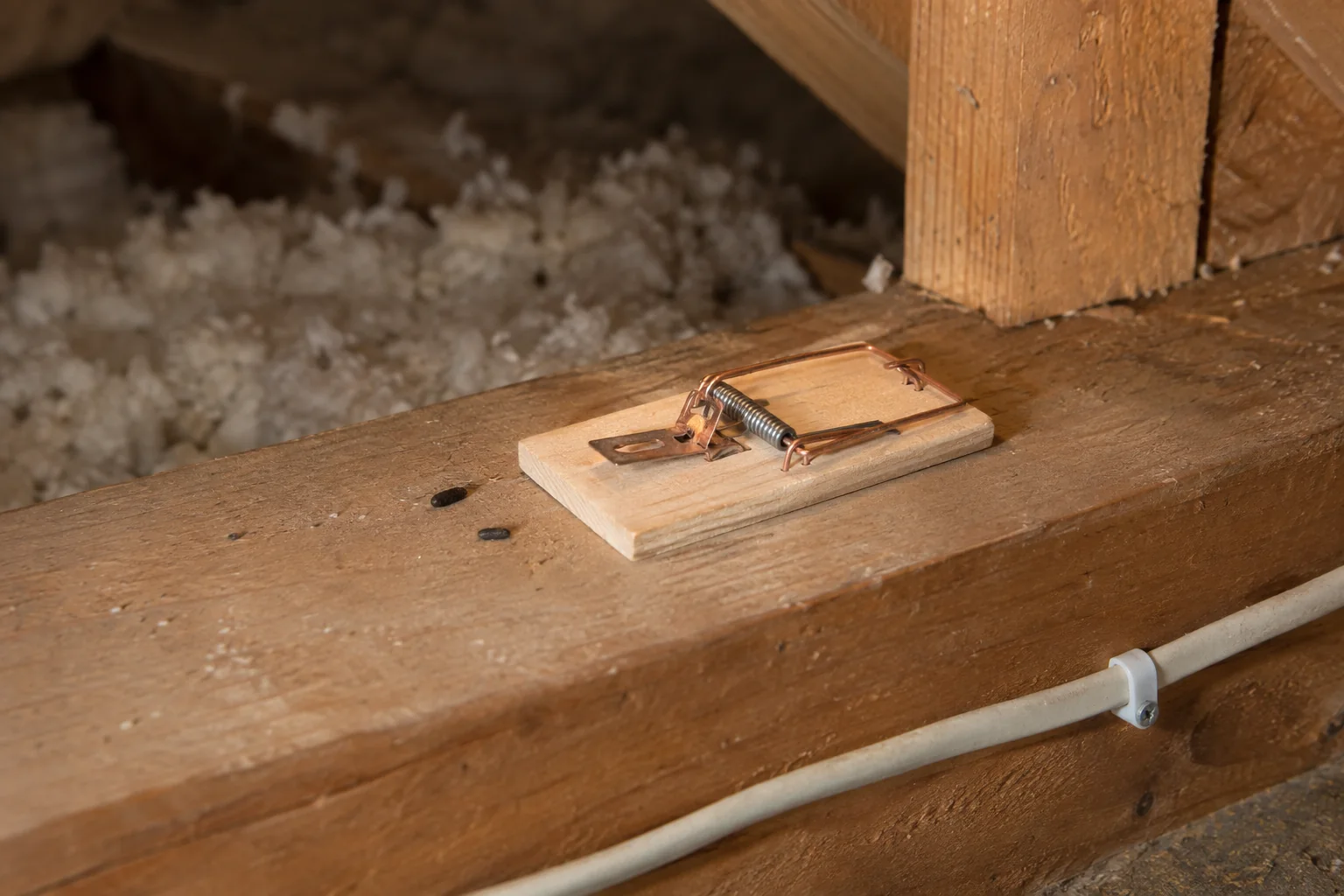
Place traps on accessible confirmed mouse routes.
Good locations may include:
- attic framing near the active area
- wall-edge routes
- garage or basement connections
- stable access areas near utility penetrations
Use traps designed for mice.
Keep traps:
- stable
- accessible for checking
- away from children and pets
Do not place a trap where it can fall into an inaccessible ceiling cavity.
See Mouse Traps: Types, Placement & How to Use Them and Best Mouse Traps: Which Type Works Best & How to Choose.
Should You Put Traps Inside the Ceiling Void?
Only if the location is safely accessible and the trap can be:
- placed securely
- checked regularly
- retrieved easily
Do not drop or slide traps blindly into an inaccessible cavity.
A trap you cannot inspect or retrieve creates another problem.
Should You Use Poison in a Ceiling Void?
Do not place loose rodenticide casually inside an inaccessible ceiling cavity.
Rodenticides must be used according to:
- the product label
- applicable placement requirements
- child and pet safety requirements
A poisoned mouse may die in an inaccessible ceiling or wall void and create an odor problem.
For indoor structural activity, monitored trapping on accessible routes plus exclusion is often easier to evaluate.
Should You Seal the Entry Point Immediately?
Not always.
If mice are still inside and the only active route is sealed, they may:
- move deeper into the structure
- enter another room
- gnaw another opening
- die in an inaccessible void
Coordinate removal and exclusion.
See Rodent Exclusion: How to Keep Rats & Mice Out.
How to Find the Exterior Entry Point
Inspect likely exterior routes such as:
- foundation gaps
- siding transitions
- utility penetrations
- garage-door corners
- soffit or roofline defects
- damaged vents
The entry point may be several rooms away from the ceiling noise.
Follow the evidence through connected structural spaces.
How to Seal Mouse Entry Routes
The correct repair depends on the construction.
Durable exclusion may involve:
- metal mesh
- flashing
- mortar
- rodent-resistant backing plus suitable sealant
- repaired vent screening
- replacement weatherstripping
- trim or siding repair
Do not block:
- drainage
- ventilation
- appliance exhaust
- combustion air
- required utility access
Repairs should match the actual building detail.
How to Clean Mouse Droppings Above a Ceiling Safely
If droppings are found in a small accessible attic or ceiling-access area, use wet-cleanup principles.
A practical sequence is:
- keep unnecessary people and pets away
- wear suitable gloves
- wet droppings and contaminated material with an appropriate disinfecting solution
- allow the product’s required contact time
- wipe or collect the waste
- bag waste appropriately
- clean the surrounding hard surface
- wash hands after removing gloves
Do not dry sweep or vacuum fresh mouse droppings or nesting material before wet cleanup.
See the cleanup section and rodent safety section.
What About Contaminated Insulation Above the Ceiling?
Not every disturbed section needs removal.
Professional cleanup may be more appropriate when:
- droppings are widespread
- nesting contamination is extensive
- insulation is heavily soiled
- access is difficult
- electrical or structural hazards are present
Avoid disturbing large contaminated areas unnecessarily.
How to Know Whether the Ceiling Mouse Problem Is Improving
Monitor for:
- reduced scratching
- no new droppings
- no new trap activity
- no new gnawing
- no new sightings
One quiet night is not proof that the problem is solved.
Look for the absence of fresh evidence over time.
When to Call a Professional
Professional mouse control may make sense when:
- ceiling sounds continue
- mice are active in several structural areas
- the route cannot be identified
- traps do not reduce activity
- the attic or ceiling area is difficult to access
- damaged wiring is present
- plumbing leaks or water-damaged ceiling material are present
- contamination is extensive
- exclusion requires roofline or structural repair
See Mouse Exterminator: What to Expect & When to Call One.
Mice in the Ceiling: The Bottom Line
Mice can use ceiling and floor cavities for:
- travel
- shelter
- nesting
- access between structural areas
Common clues include:
- light scratching or rustling
- tiny droppings
- tracks
- fine gnawing
- nesting material
- urine odor
- evidence in connected walls or attic areas
If you suspect mice in the ceiling:
- confirm the animal with physical evidence
- inspect accessible attic, wall, basement, crawl-space, and garage routes
- avoid cutting open drywall blindly
- place mouse-sized traps on accessible confirmed routes
- wet-clean accessible contamination safely
- inspect exterior entry points
- coordinate trapping with exclusion
- monitor until fresh evidence stops
The long-term solution is not simply making the noise disappear.
It is tracing the route, removing active mice, and closing the openings that allowed them into the structure.
Continue with our signs of mice guide, scratching-noise guide, mouse droppings guide, mouse tracks guide, mouse gnaw marks guide, mouse nest guide, mice in walls guide, mice in the attic guide, how to get rid of mice, how mice get into a house, or rodent exclusion guide.
For the broader overview, return to [Rats & Mice in the Home](/).