Rat Urine Smell: What It Smells Like & What It Means
Rat urine can create a strong, persistent odor when rats repeatedly use the same travel routes, feeding areas, nesting sites, or enclosed structural spaces.
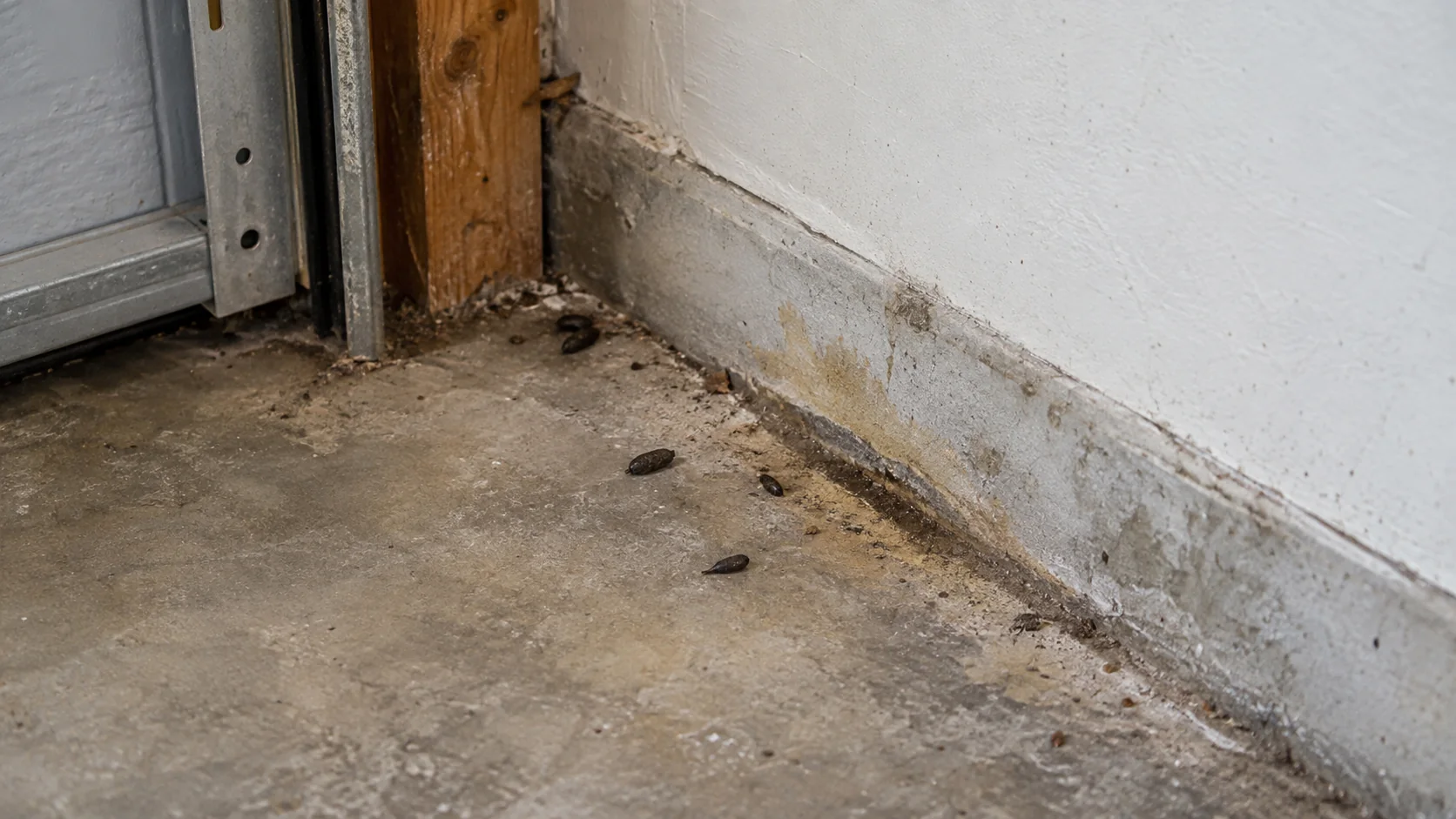
Rat urine can create a strong, persistent odor when rats repeatedly use the same travel routes, feeding areas, nesting sites, or enclosed structural spaces.
People often describe rat urine odor as:
- musky
- sharp
- stale
- urine-like
- sometimes ammonia-like when contamination is concentrated or old
The smell can become especially noticeable in:
- garages
- basements
- crawl spaces
- attics
- wall voids
- storage rooms
- areas near rat nests or burrows
But smell alone cannot prove rats are the source.
Other odors can come from:
- mice
- pets
- drains
- damp organic material
- old food
- dead animals
- other contamination
Rat urine odor becomes much more meaningful when it appears together with:
- rat-sized droppings
- heavy gnaw marks
- grease or rub marks
- rat nests
- burrows
- scratching or movement sounds
- rat sightings
This guide explains what rat urine may smell like, where odor is commonly strongest, how to narrow down the source, what UV light can and cannot show, and how to clean contaminated areas safely.
What Does Rat Urine Smell Like?
Rat urine is commonly described as having a strong musky or stale urine odor.
In enclosed areas with repeated contamination, the smell may become sharper and may seem ammonia-like.
The exact odor varies with:
- amount of urine
- ventilation
- temperature
- humidity
- surface type
- age of the contamination
A small amount of contamination in a ventilated garage may be difficult to notice.
Repeated urination in an enclosed attic, crawl space, cabinet, or wall area can produce a much stronger odor.
Does Rat Urine Smell Like Ammonia?
It can.
Old or concentrated urine can develop an ammonia-like smell as waste breaks down.
However, an ammonia-like odor is not unique to rats.
Similar smells may come from:
- mouse urine
- pet urine
- cleaning chemicals
- damp organic material
- other animal contamination
Do not identify a rat infestation from smell alone.
Look for physical rat evidence.
Is Rat Urine Smell Stronger Than Mouse Urine Smell?
A rat is larger than a mouse and can produce more urine, so heavy rat activity can create a strong odor.
But odor intensity is not a reliable way to distinguish rats from mice.
A severe mouse infestation in a closed space can smell stronger than light rat activity.
Use the physical evidence instead.
Rat activity is more likely to include:
- larger droppings
- heavier gnaw marks
- wider travel routes
- larger tracks
- stronger rub marks
See Mouse Urine Smell: What It Smells Like & How to Find It for the mouse-specific guide.
What Does a Rat-Infested Area Smell Like?
An active rat area may develop a general rodent odor made up of:
- urine
- droppings
- nesting material
- body oils
- contaminated food
- damp debris
People may describe the overall smell as:
- musky
- sour
- stale
- sharp
- dirty or animal-like
The strongest odor may be near a nest, repeated travel route, or enclosed contaminated material.
The smell does not reveal exactly how many rats are present.
Where Does Rat Urine Smell Come From?
Rats may urinate along regular travel routes and in the areas where they feed, rest, or nest.
Contamination may occur on:
- floors
- wall edges
- shelving
- insulation
- stored material
- attic framing
- crawl-space surfaces
- garage routes
- basement edges
The strongest odor does not always come from one obvious wet spot.
It may come from many small deposits accumulated over time.
Common Places to Smell Rat Urine
Rat urine odor may be strongest around:
- garage walls
- basement edges
- crawl spaces
- attic routes
- storage areas
- wall openings
- rat nests
- burrow-to-building routes
- pet-food or bird-seed storage
Start your inspection where odor and physical signs overlap.
See Signs of Rats in Your House for the broader evidence pattern.
Rat Urine Smell in the Garage
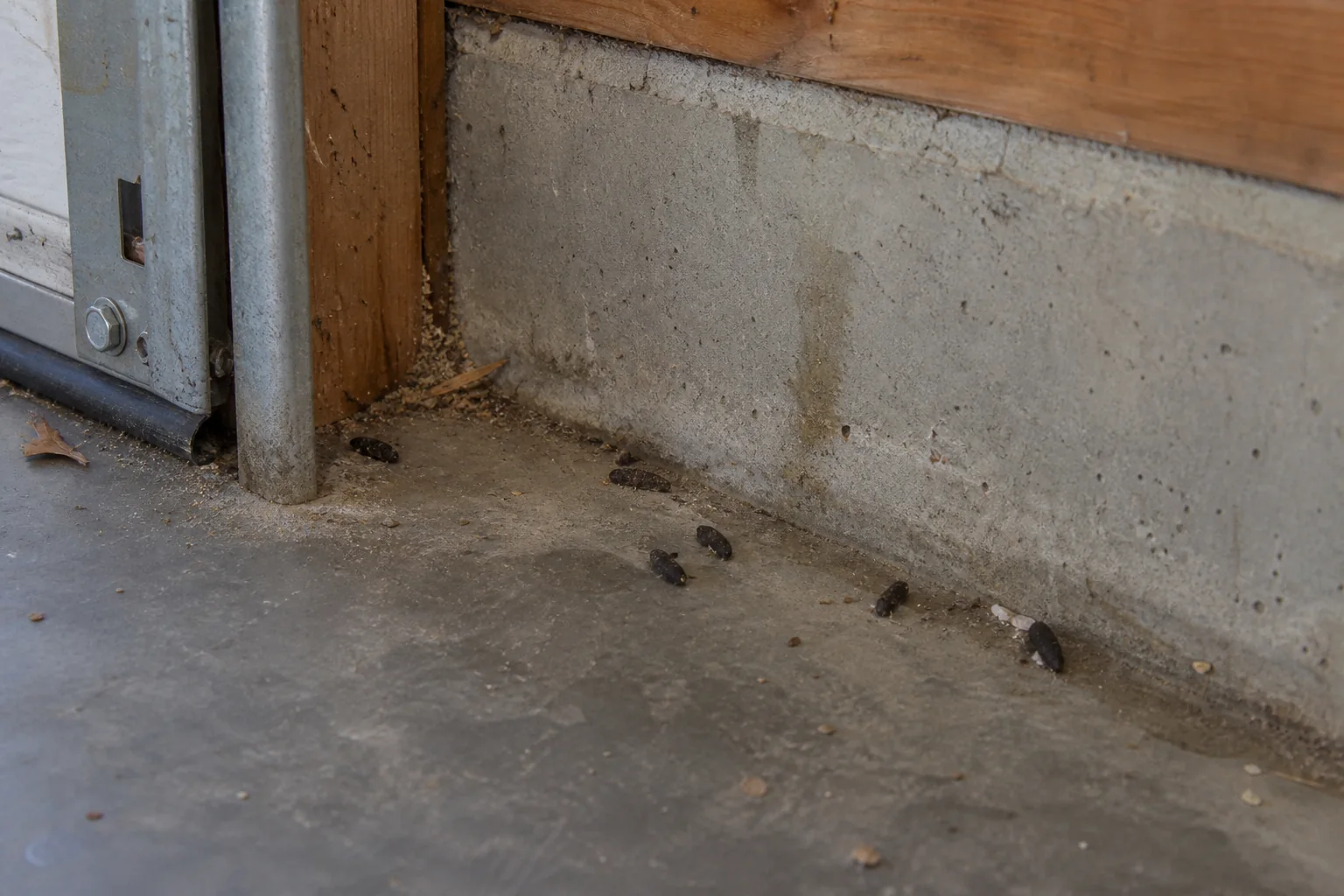
Garages are common rat activity zones.
They may provide:
- exterior entry gaps
- food storage
- cardboard
- shelving
- wall routes
- attic access
Odor may collect near:
- garage-door corners
- shelving edges
- wall-floor junctions
- storage boxes
- utility penetrations
- nesting areas
Norway rats may use ground-level garage routes.
Roof rats may use a garage as a route into upper walls or attic spaces.
Rat Urine Smell in the Basement
Basements are more strongly associated with Norway-rat activity.
Look around:
- foundation walls
- utility lines
- storage
- floor edges
- crawl-space connections
Supporting evidence may include:
- large droppings
- grease marks
- gnawing
- nearby exterior burrows
See Norway Rat: Identification, Signs & Behavior.
Rat Urine Smell in the Crawl Space
Crawl spaces can hold odor because they are enclosed and may have limited airflow.
Possible sources include:
- rat urine
- droppings
- nesting material
- contaminated insulation
- damp soil or debris
Rat activity may occur near:
- foundation edges
- pipes
- insulation
- utility penetrations
- exterior burrow routes
Do not enter an unsafe or heavily contaminated crawl space without appropriate precautions.
Rat Urine Smell in the Attic
Attics are strongly associated with roof-rat activity in many areas.
Odor may collect around:
- nesting zones
- attic framing
- insulation
- upper wall connections
- stored boxes
Look for:
- rat-sized droppings
- rub marks
- gnawing
- tracks
- disturbed insulation
See Rats in the Attic: Signs, Damage & Removal.
Rat Urine Smell in Walls
Urine odor inside a wall can be difficult to trace.
Possible clues include:
- smell strongest near a baseboard or wall opening
- scratching or movement sounds
- large droppings near an accessible gap
- activity in an adjoining garage, attic, basement, or crawl space
Do not open a wall solely because of smell.
First identify accessible routes and supporting evidence.
See Rats in Walls: Signs, Entry Points & What to Do.
Rat Urine Smell Near a Nest
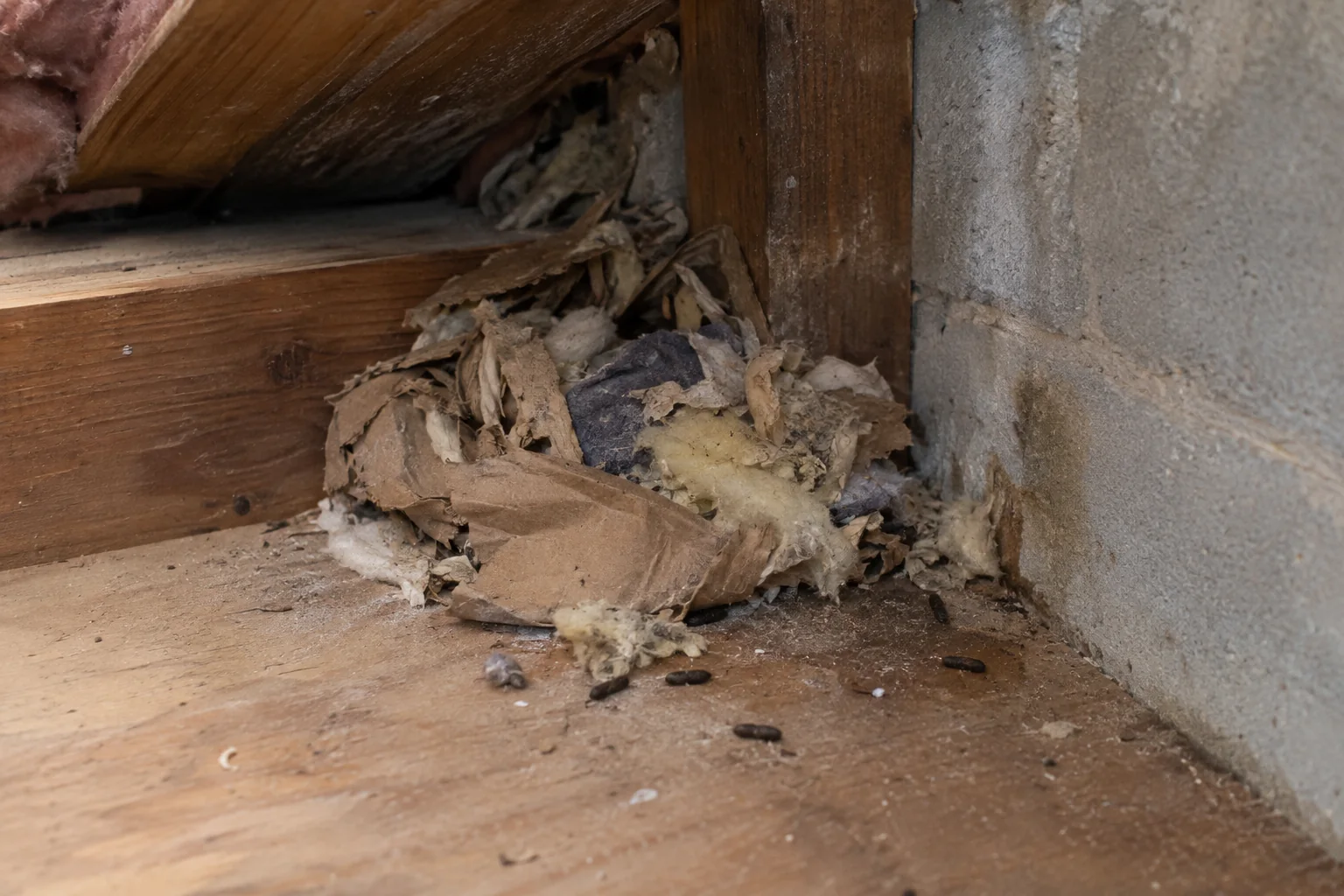
Rat nests can accumulate:
- urine
- droppings
- body oils
- food debris
- contaminated nesting material
A nest may create a stronger odor than a simple travel route.
Common nesting locations include:
- attics
- crawl spaces
- garages
- basements
- wall voids
- protected storage
- outdoor burrows
See Rat Nests: What They Look Like & Where to Find Them.
Rat Urine Smell Near a Burrow
Norway rats may nest in underground burrows close to structures.
Odor from an outdoor burrow may be subtle.
The stronger clues are often:
- worn openings
- fresh soil
- runways
- nearby droppings
- nighttime rat activity
If a burrow is close to the building and indoor rat signs are present, inspect the foundation for access points.
Can Rat Urine Stain Surfaces?
Yes.
Repeated contamination may leave staining on some materials.
Possible signs include:
- yellowish discoloration
- darker patches
- staining near nesting material
- discoloration on cardboard
- marks on unfinished wood or insulation
The appearance varies with surface type and age.
Do not identify rat urine from staining alone.
What Color Is Rat Urine?
Fresh urine is usually pale and may be difficult to see in small amounts.
As it dries or accumulates, staining may look:
- yellowish
- tan
- darker than the surrounding material
Surface color can change the appearance significantly.
Use stains as supporting evidence, not proof.
Can You See Rat Urine With a Black Light?
Some dried biological residues can fluoresce under ultraviolet light.
A UV flashlight may help reveal suspicious areas worth inspecting.
However, UV fluorescence is not specific to rat urine.
Other substances can also fluoresce, including:
- cleaners
- pet urine
- food residue
- adhesives
- fibers
- other biological material
A glowing spot is only an inspection clue.
It does not prove rat urine.
What Color Does Rat Urine Glow Under UV Light?
There is no single reliable glow color that confirms rat urine.
Fluorescence can vary with:
- surface material
- age
- contamination
- UV wavelength
- other substances present
Do not rely on claims that one exact color proves a rat was present.
Use UV inspection only as one part of a broader evidence check.
How to Use a UV Light to Inspect for Rat Activity
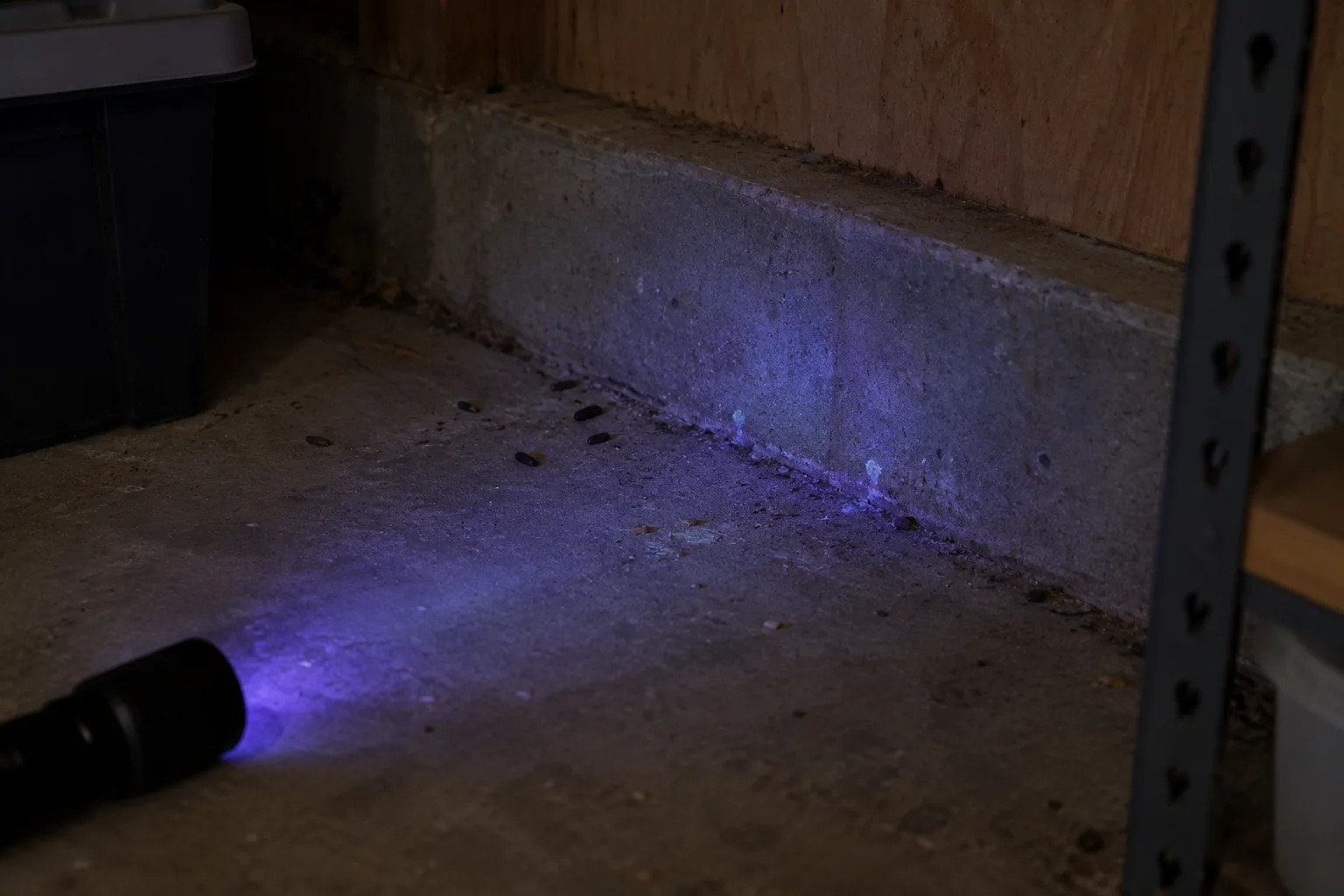
If you use a UV flashlight:
- darken the room enough to see fluorescence
- scan likely rat routes
- note suspicious areas
- compare them with droppings, rub marks, gnawing, or nesting
- clean confirmed contamination safely
Useful areas to inspect may include:
- garage wall-floor edges
- basement routes
- attic framing
- storage areas
- nesting zones
Do not touch suspicious residues with bare hands.
Rat Urine Smell vs Rat Droppings
Urine and droppings often occur in the same active areas.
Rat droppings are usually easier to identify visually.
They are much larger than typical mouse droppings.
Depending on the species, rat droppings may be:
- thicker and blunt-ended
- more elongated and tapered
Dropping shape alone does not reliably identify roof rat versus Norway rat.
See Rat Droppings: What They Look Like & What They Mean.
Rat Urine Smell vs Mouse Urine Smell
You generally cannot distinguish rat urine from mouse urine by smell alone.
Instead, inspect the physical evidence.
Rat evidence
More likely to include:
- larger droppings
- heavy gnawing
- broad rub marks
- rat-sized tracks
- larger nests
Mouse evidence
More likely to include:
- tiny droppings
- delicate gnawing
- smaller nests
- narrow travel routes
See Rat vs Mouse: How to Tell the Difference and Mouse vs Rat Droppings: How to Tell the Difference.
Rat Urine Smell vs Pet Urine
Pet urine may smell very similar.
Use context.
Rat urine is more likely when you also find:
- large rodent droppings
- grease marks
- gnawing
- rat nests
- burrows
- rat sightings
Pet urine is more likely in accessible areas repeatedly used by the animal.
Do not assume rats solely because a room smells like urine.
Rat Urine Smell vs Dead Rat Odor
A dead rat usually produces a stronger decomposition smell.
It may be described as:
- foul
- rotten
- sweet-sickly
- decaying
Urine odor is more often:
- musky
- stale
- sharp
- ammonia-like
The odors can overlap in a heavily contaminated area.
Do not open walls unnecessarily based only on smell.
Does Rat Urine Smell Mean the Infestation Is Active?
Not necessarily.
Porous materials can hold odor after rats are gone.
An old nesting area may continue to smell.
Current activity is more likely when odor appears with:
- fresh droppings
- new gnawing
- trap activity
- recent sightings
- fresh burrow activity
- newly disturbed nesting material
Use current physical evidence to judge whether rats are still active.
Is Rat Urine Smell Dangerous?
Odor intensity is not a reliable measure of health risk.
The concern is contact with contaminated rodent material.
Avoid direct contact with:
- urine
- droppings
- nesting material
- contaminated food
- dead rodents
Do not intentionally put your face close to contaminated surfaces to identify the smell.
Can Rat Urine Make You Sick?
Rat urine and other rodent contamination should be handled cautiously.
Some rodents can carry organisms that may contaminate urine, droppings, food, or surfaces.
You cannot determine whether contamination is safe from:
- smell
- appearance
- color
The practical response is to avoid direct contact and use appropriate cleanup methods.
If contamination is extensive, professional cleanup may be appropriate.
How to Clean Rat Urine Safely
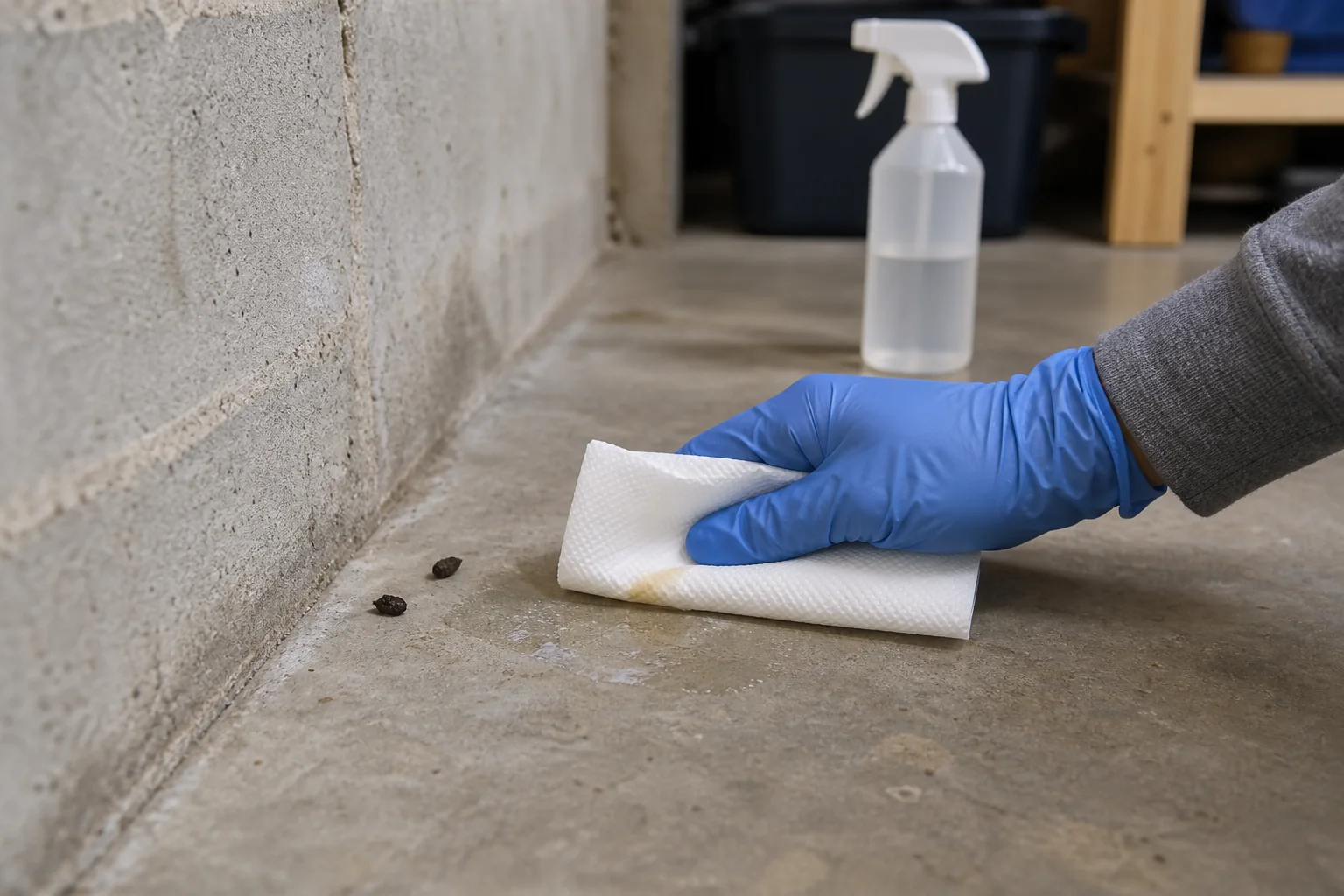
A practical cleanup sequence is:
- keep children and pets away
- ventilate the area when appropriate
- wear suitable gloves
- wet contaminated areas with an appropriate disinfecting solution
- allow adequate contact time according to the product instructions
- wipe or collect the contaminated material
- bag waste appropriately
- clean the surrounding surface
- wash hands after removing gloves
Do not dry sweep or vacuum fresh rodent droppings or nesting material before proper wet cleanup.
See the cleanup section and rodent safety section.
How to Clean Rat Urine From a Hard Floor
For a hard washable surface:
- wet the contaminated area
- apply an appropriate disinfecting product
- allow the required contact time
- wipe with disposable absorbent material
- clean the surrounding area
Avoid spreading contamination across a larger surface.
Follow the product label.
How to Clean Rat Urine From Concrete
Concrete is porous and can hold odor.
For light contamination:
- wet-clean the affected surface
- use an appropriate disinfecting method
- allow the area to dry
Repeated or heavy contamination may penetrate deeper.
If odor persists after the rats are gone and the surface is cleaned, additional remediation may be necessary.
How to Clean Rat Urine From Wood
Unsealed wood can absorb urine.
The amount of contamination matters.
Light surface contamination may respond to wet cleaning.
Heavily contaminated:
- framing
- shelving
- subfloor
- stored wood
may retain odor.
Do not soak structural material unnecessarily.
How to Clean Rat Urine From Insulation
Insulation can hold urine, droppings, and nesting contamination.
If insulation is:
- heavily stained
- saturated
- mixed with droppings
- mixed with rat nests
removal may be more practical than surface treatment.
Large attic or crawl-space cleanup jobs may justify professional help.
Why Does Rat Urine Smell Come Back After Cleaning?
Recurring odor may mean:
- rats are still active
- contaminated material remains
- a hidden nest was missed
- urine soaked into porous material
- the wrong area was cleaned
If fresh rat signs continue, solve the infestation before focusing only on odor control.
Do Air Fresheners Remove Rat Urine Smell?
Air fresheners may cover odor temporarily.
They do not remove:
- urine residue
- droppings
- nesting material
- active rats
The source must be removed.
Do not use fragrance as a substitute for cleanup or control.
How to Find the Rat Entry Point
Once rat activity is confirmed, inspect outward from the contaminated zone.
Ground-level activity
Inspect:
- foundation gaps
- garage doors
- crawl-space openings
- utility penetrations
- lower vents
- exterior burrows
Elevated activity
Inspect:
- soffits
- attic vents
- fascia
- roof-wall intersections
- tree and fence routes
See How Rats Get Into Your House.
Should You Seal the Entry Point Immediately?
Not always.
If rats are still inside, sealing the only active route can trap them in the structure.
That may lead to:
- movement into new areas
- heavier gnawing
- attempts to create another opening
- odor if an animal dies in an inaccessible void
Coordinate removal and exclusion.
See Rodent Exclusion: How to Keep Rats & Mice Out.
How to Stop Rat Urine Smell From Returning
The long-term solution is stopping the rat activity.
A practical process is:
- identify active routes
- trap rats already inside
- reduce accessible food and water
- locate nests or burrows
- identify entry points
- complete exclusion
- clean contaminated materials safely
- monitor for fresh signs
See How to Get Rid of Rats in Your House.
When to Call a Professional
Professional rat control or cleanup may make sense when:
- odor is strong but the source is hidden
- contamination is inside walls
- attic or crawl-space contamination is extensive
- burrows are widespread
- several areas are involved
- trapping does not reduce activity
- entry points cannot be found
- structural exclusion is difficult
See Rat Exterminator: What to Expect & When to Call One.
Rat Urine Smell: The Bottom Line
Rat urine may smell:
- musky
- stale
- sharp
- urine-like
- ammonia-like when contamination is concentrated or old
But smell alone cannot confirm rats.
Look for supporting evidence such as:
- rat-sized droppings
- gnaw marks
- rub marks
- nests
- burrows
- tracks
- sightings
UV light can help locate suspicious residue, but fluorescence does not specifically identify rat urine.
Once rat activity is confirmed:
- trap rats already inside
- find nests or burrows
- identify entry points
- complete exclusion
- wet-clean contaminated areas safely
- replace heavily contaminated porous material when appropriate
- monitor for fresh signs
Continue with our signs of rats guide, rat droppings guide, rat nest guide, roof rat guide, Norway rat guide, how to get rid of rats, how rats get into a house, or rodent exclusion guide.
For the broader overview, return to [Rats & Mice in the Home](/).