How Long Do Mice Live?
House mice can live much longer under protected conditions than they usually survive in the wild or around buildings.
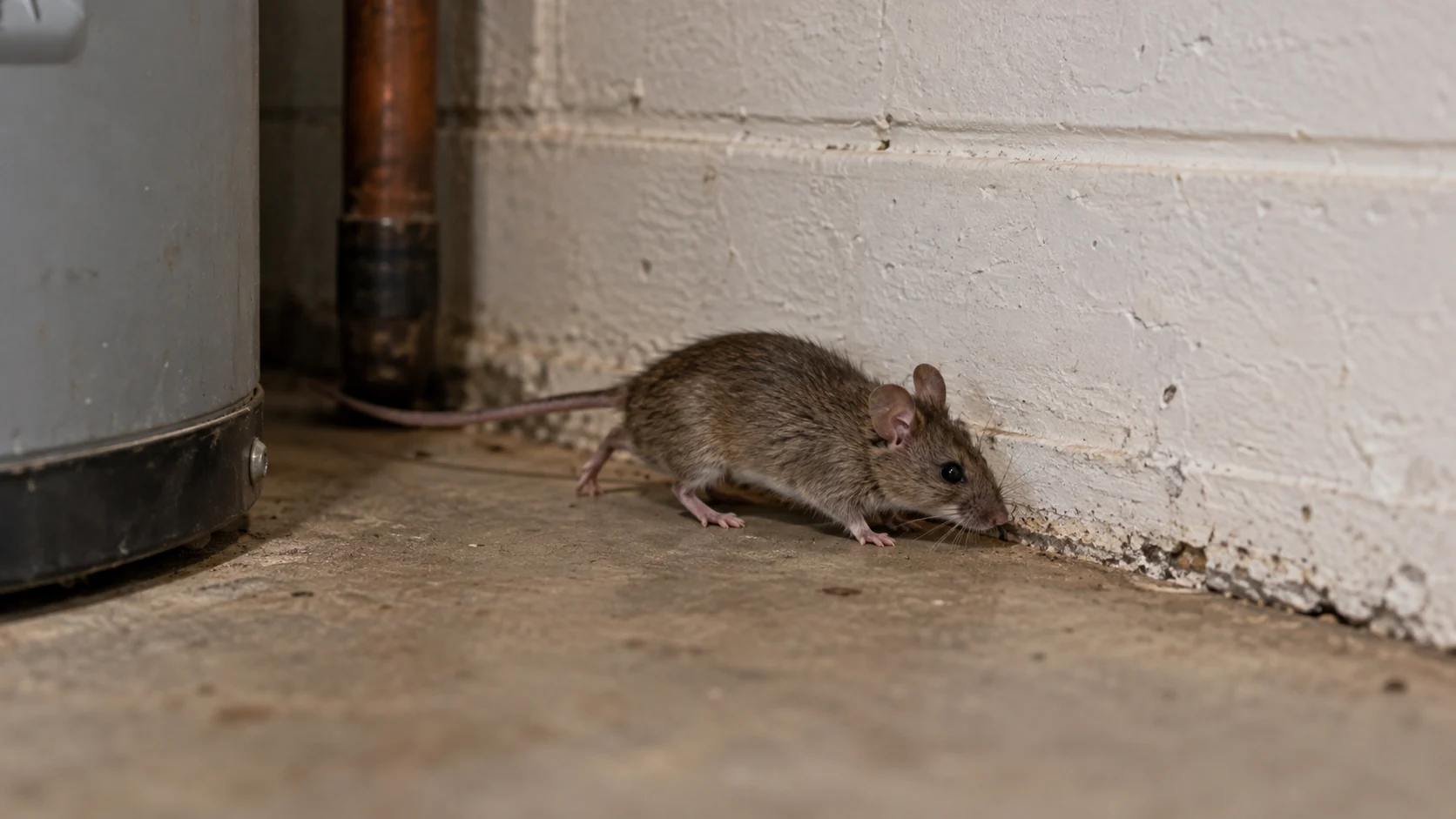
House mice can live much longer under protected conditions than they usually survive in the wild or around buildings.
In real-world commensal settings, many house mice die within months rather than years.
A mouse living around a home may survive:
- several months
- around a year
- sometimes longer if food, shelter, and protection are unusually favorable
Under highly protected captive conditions, house mice can live roughly 1.5 to 3 years, and some individuals may live longer.
That captive lifespan should not be treated as the normal lifespan of a pest mouse in a house.
Wild and commensal mice face:
- predators
- cold or heat
- food shortages
- disease
- injury
- competition
- traps
- pest-control pressure
Those factors shorten survival dramatically.
How Long Does a House Mouse Usually Live?
There is no single lifespan that applies to every house mouse.
In homes, garages, farms, warehouses, and other buildings, many mice survive for less than a year.
Some may live around a year or longer when conditions are unusually favorable.
A protected indoor environment can reduce risks from:
- weather
- predators
- food shortages
But indoor mice still face:
- competition
- disease
- injuries
- control efforts
- movement through dangerous spaces
The useful answer is:
House mice can live for months to more than a year in real-world settings, while protected captive mice may live for a few years.
Why Do Lifespan Estimates Vary So Much?
Mouse lifespan depends strongly on environment.
Two genetically similar mice can have very different outcomes.
One may live in:
- a protected heated building
- a stable food-rich area
- a low-predator environment
Another may live outdoors where it faces:
- winter
- predators
- limited food
- exposure
That is why a single exact number is misleading.
How Long Do Mice Live Indoors?
Mice living indoors can sometimes survive longer than mice living outdoors.
A house can provide:
- stable temperature
- food
- water
- nesting material
- shelter from predators
Those advantages can extend survival.
But indoor survival is not unlimited.
Mice may still die from:
- competition
- injuries
- disease
- traps
- rodent control
- dehydration
- movement through appliances or building systems
An indoor mouse may live for months and, in favorable conditions, around a year or longer.
How Long Do Mice Live Outdoors?
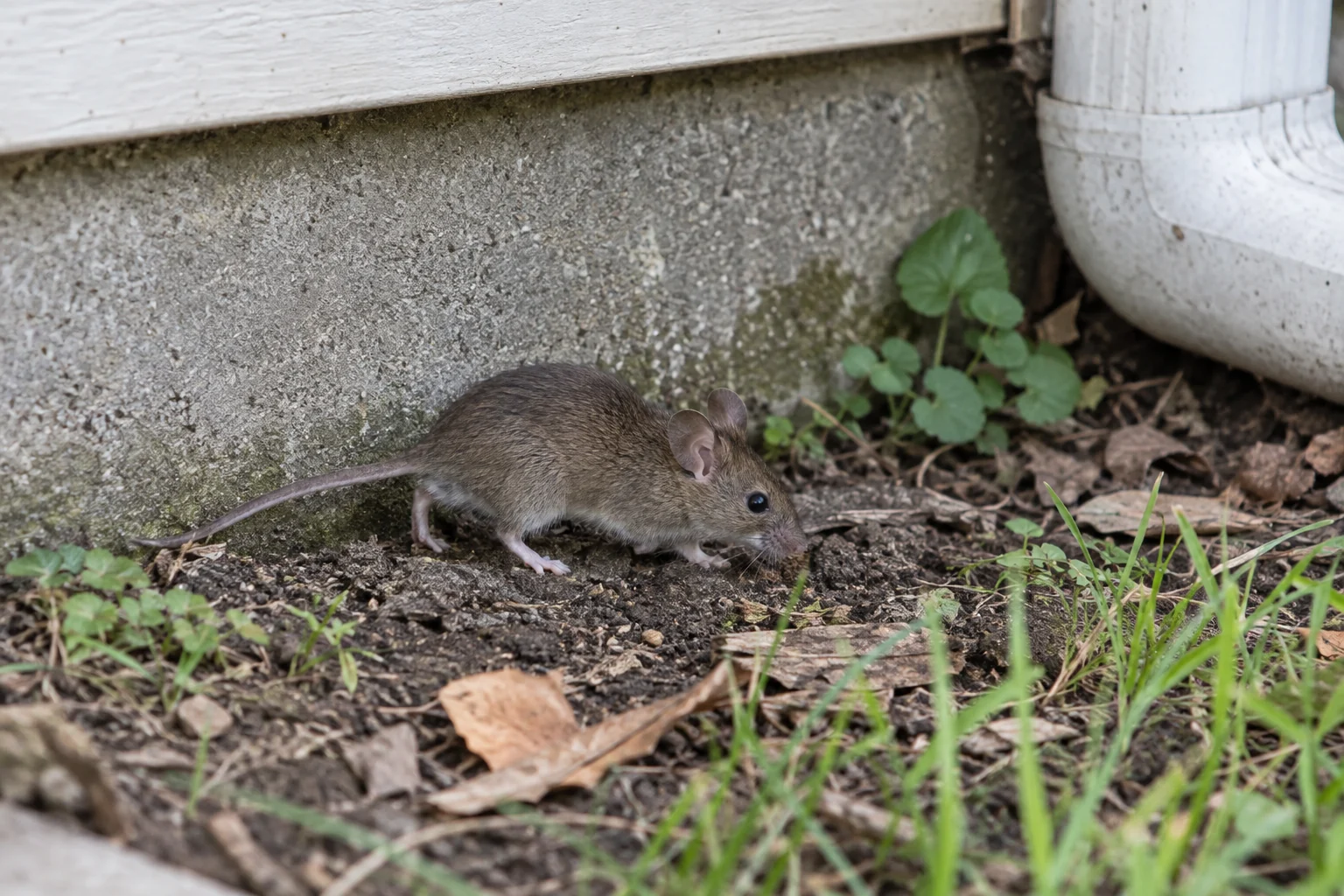
Outdoor house mice often face harsher conditions.
Their survival may be shortened by:
- predators
- cold
- heat
- rain
- flooding
- food shortages
- territorial conflict
- disease
Many outdoor mice do not survive long enough to approach their maximum biological lifespan.
The exact lifespan depends on:
- climate
- habitat
- season
- food availability
- predator pressure
Do Mice Live Longer in Houses?
They can.
Indoor shelter can remove some of the risks that shorten outdoor life.
For example, a house may offer:
- warmer winter conditions
- fewer predators
- steady food
- dry nesting material
But a house also introduces other hazards.
These may include:
- traps
- pest-control devices
- machinery
- pets
- competition with other mice
So “indoors” does not automatically mean “long-lived.”
How Long Do Pet or Laboratory Mice Live?
Protected captive mice can often live around 1.5 to 3 years.
They may have:
- regular food
- reliable water
- stable temperature
- veterinary care
- no predators
That is very different from a house mouse living behind cabinets or inside a garage.
Captive lifespan is useful for understanding biological potential.
It should not be used to estimate how long a pest mouse will remain in a home.
Can a Mouse Live Three Years in a House?
It is biologically possible for a mouse to live for years under highly protected conditions.
But that would be unusually long for a free-ranging pest mouse around a home.
A house mouse outside a cage must still navigate:
- food competition
- injuries
- disease
- control pressure
- changing shelter
- movement through the building
Most homeowner mouse problems should not be evaluated by maximum captive lifespan.
Does Mouse Species Affect Lifespan?
Yes.
Different mouse species have different biology and habitat pressures.
This page focuses on the house mouse, the species most strongly associated with indoor infestations.
Other mice, such as deer mice, live in different habitats and face different seasonal pressures.
See House Mouse: Identification, Signs & Control and Deer Mouse: Identification, Habitat & Risks.
Does a Deer Mouse Live as Long as a House Mouse?
Not necessarily.
Deer mice are often more strongly associated with:
- outdoor habitats
- garages
- sheds
- cabins
- seasonal movement into buildings
Their lifespan depends heavily on:
- weather
- predators
- habitat quality
- food availability
Do not apply every house-mouse lifespan estimate to every mouse species.
How Long Do Baby Mice Live?
A newborn mouse faces a high-risk period.
Young pups depend on:
- the mother
- nest warmth
- milk
- shelter
Not every pup survives to adulthood.
Some die because of:
- poor nutrition
- disturbance
- disease
- cold
- competition
- loss of the mother
Those early losses are one reason theoretical mouse-population calculations often exaggerate real growth.
See Baby Mice: What They Look Like for developmental details.
Do Juvenile Mice Have a Shorter Lifespan?
Juveniles have not yet survived the full set of risks that adults have already passed.
Their survival depends on:
- food
- shelter
- competition
- dispersal
- predation
- control pressure
A juvenile can reach adulthood quickly.
But reaching adulthood is not guaranteed.
How Long Do Adult Mice Live?
An adult house mouse may survive for:
- several months
- around a year
- sometimes longer
depending on conditions.
The adult stage can include:
- nesting
- feeding
- travel
- reproduction
- territorial competition
An adult mouse does not need to be old to reproduce.
House mice can reach reproductive maturity within weeks.
See Mouse Life Cycle: Birth, Maturity & Lifespan.
What Shortens a Mouse’s Lifespan?
Many factors shorten survival.
Predators
Outdoor mice may be taken by:
- owls
- hawks
- snakes
- foxes
- cats
- other predators
Weather
Cold, heat, flooding, and storms can reduce survival.
Food shortages
A mouse may struggle when food is scarce or inaccessible.
Water shortages
Dehydration can become a limiting factor.
Disease and parasites
Illness can reduce survival.
Competition
Crowded populations compete for:
- food
- shelter
- nesting space
Injury
Mice can be injured by:
- falls
- machinery
- structural hazards
- fights
- vehicles
Pest control
Trapping and other control programs can shorten survival.
What Can Extend a Mouse’s Lifespan?
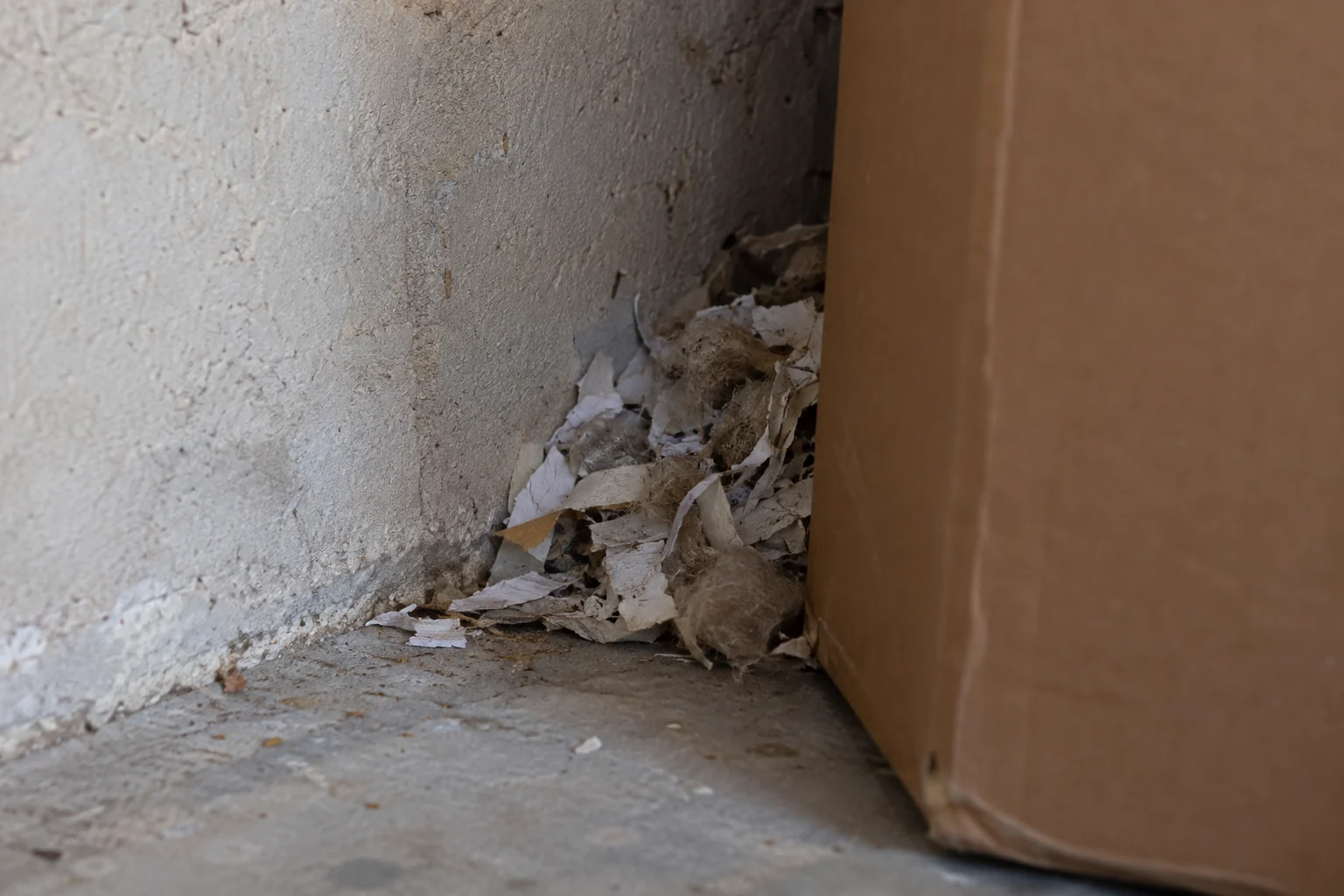
Survival can improve when a mouse has:
- reliable food
- reliable water
- stable shelter
- warm nesting areas
- few predators
- low competition
- limited disturbance
That is why some buildings can support persistent mouse populations.
The building does not make mice immortal.
It simply removes some of the risks they would face outdoors.
Does Warm Indoor Temperature Help Mice Live Longer?
It can.
Stable indoor temperature reduces exposure to:
- freezing
- extreme heat
- storms
A heated structure can also support breeding during seasons when outdoor conditions are less favorable.
Temperature is only one factor.
Food, water, competition, disease, and control still matter.
Does Food Availability Affect Lifespan?
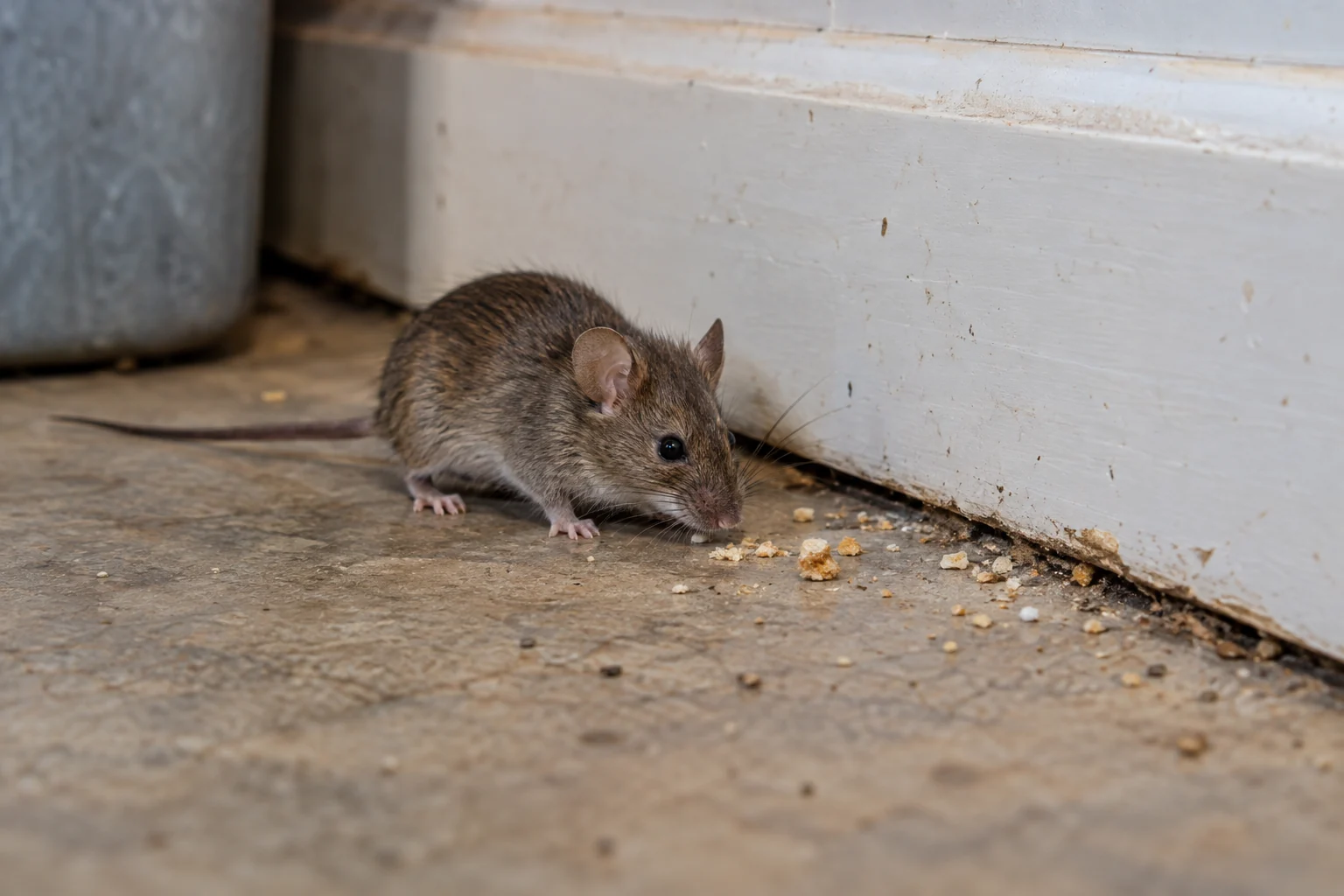
Yes.
Reliable food supports:
- body condition
- growth
- reproduction
- survival
Common household food sources include:
- cereal
- grain
- pet food
- bird seed
- crumbs
- stored snacks
Reducing accessible food can make the environment less supportive.
Sanitation alone does not remove an established infestation.
Does Water Availability Affect Mouse Survival?
Yes.
Mice obtain moisture from:
- food
- condensation
- leaks
- pet water
- other sources
A property with reliable moisture can support activity.
Repair accessible leaks where practical.
Do not work around unsafe electrical or plumbing conditions.
Does Shelter Matter as Much as Food?
Shelter is extremely important.
Mice may survive in:
- wall voids
- cabinets
- attic insulation
- crawl-space insulation
- garages
- stored boxes
- clutter
Shelter protects them from:
- weather
- predators
- disturbance
A warm sheltered nest can make a property much more supportive.
Does Clutter Help Mice Survive Longer?
It can.
Clutter may provide:
- hiding places
- nesting material
- protected travel routes
It can also make:
- inspection harder
- trap placement harder
- cleanup harder
Reducing unnecessary clutter can improve monitoring and control.
Does a Mouse’s Lifespan Explain Why Infestations Persist?
Partly.
A single adult can survive for months.
But long-term infestations often persist because of more than one mouse.
They may continue because:
- reproduction occurs
- juveniles mature
- new mice enter
- food remains available
- entry points stay open
Lifespan is only one part of the infestation cycle.
Why Reproduction Matters More Than Maximum Lifespan
A mouse does not need to live for years to contribute to an infestation.
House mice can reproduce while still relatively young.
That means the population can renew itself before older adults die.
See How Fast Do Mice Reproduce?.
This is why control should not wait for mice to “die out.”
Will a Mouse Infestation Eventually Disappear on Its Own?
Do not assume it will.
Even if individual mice have short lifespans, the population may continue through:
- reproduction
- immigration
- overlapping generations
Food and shelter can support replacement mice.
A homeowner should respond to ongoing fresh evidence rather than wait for natural mortality.
Can Mice Live Their Entire Lives Inside a House?
Yes.
House mice can be born, mature, reproduce, and die inside buildings.
They do not need to go outdoors if indoor resources are sufficient.
A building may provide everything they need:
- food
- water
- nesting material
- shelter
That is why interior activity can persist even when outdoor sightings are rare.
Can One Mouse Stay in the Same Room for Its Entire Life?
Not necessarily.
Mice use routes that may connect:
- kitchens
- cabinets
- walls
- garages
- basements
- attics
- crawl spaces
One sighting location does not define the mouse’s entire range.
An adult seen in a kitchen may also use hidden wall or utility routes.
Does Finding an Adult Mouse Tell You How Long It Has Been There?
No.
An adult mouse may have:
- entered yesterday
- entered weeks ago
- been born in the house
- moved from another room
- dispersed from a nearby nest
Adult appearance does not date the infestation.
Does Finding a Juvenile Tell You How Old the Infestation Is?
Only broadly.
A juvenile suggests recent reproduction.
But it cannot tell you:
- when the first mouse entered
- how many adults are present
- whether there is one nest or several
- whether mice have been present for weeks or months
Use juvenile sightings as evidence that the population may be established.
Do not convert them into an exact infestation timeline.
Can Mouse Fur Color Show Age?
Not precisely.
Fur color varies with:
- species
- genetics
- lighting
- condition
- age
An older mouse may show wear.
But fur color cannot provide a reliable exact age.
Can Body Size Show Age?
Only roughly.
Newborns, juveniles, and adults differ strongly in size.
But once a mouse is fully grown, body size is not a precise aging tool.
A small adult can overlap with a large juvenile.
Species differences also matter.
Can Droppings Show How Long a Mouse Has Been Alive?
No.
Droppings tell you about activity.
They do not reveal the lifespan or exact age of the mouse that produced them.
Dropping size can vary with:
- species
- body size
- diet
- moisture
See Mouse Droppings: What They Look Like & Where to Find Them.
Does Finding Old Droppings Mean the Mouse Is Dead?
No.
Old droppings only show past activity.
The mouse may be:
- gone
- dead
- still present
- using another area
Look for fresh evidence over time.
How Long Can Mice Survive Without Food?
This is not a useful way to plan control.
Mice can obtain food from very small, hidden sources.
A property may contain:
- crumbs
- seeds
- pet food
- grease
- stored food
Trying to “starve out” mice is unreliable.
A better plan combines:
- sanitation
- trapping
- exclusion
- monitoring
How Long Can Mice Survive Without Water?
Mice can obtain moisture from food and small water sources.
Exact survival without water varies with:
- food moisture
- temperature
- health
Do not rely on dehydration as a control strategy.
Fix leaks and reduce unnecessary water sources where practical.
Does a Mouse Live Longer in an Attic?
Not automatically.
An attic may provide:
- warmth
- insulation
- shelter
But it may also expose mice to:
- temperature swings
- limited food
- traps
- predators entering the attic
- structural hazards
Attic shelter can support activity.
It does not guarantee longer lifespan.
See Mice in the Attic.
Does a Mouse Live Longer in a Crawl Space?
A crawl space can provide:
- shelter
- darkness
- insulation
- protected travel
But survival depends on:
- moisture
- food access
- temperature
- predators
- control
Does a Mouse Live Longer in a Garage?
A garage may provide:
- stored food
- bird seed
- pet food
- boxes
- shelter
It may also have:
- large temperature changes
- open doors
- predators
- traps
Garage conditions vary widely.
See Mice in the Garage.
Why Lifespan Matters for Mouse Control
Lifespan changes how you think about persistence.
If mice can survive for months and reproduce within weeks, waiting is not a reliable strategy.
A control plan should address:
- mice already inside
- food
- shelter
- entry points
- monitoring
The goal is to break the cycle rather than wait for individual mice to die naturally.
Why One Catch Is Not the End of Monitoring
One trapped mouse tells you that at least one mouse used that route.
It does not tell you:
- whether other mice remain
- whether juveniles are present
- whether entry points remain open
Continue monitoring for:
- fresh droppings
- new sightings
- scratching
- trap activity
See How Many Mice Are in Your House?.
Does Sealing Entry Points Affect Lifespan?
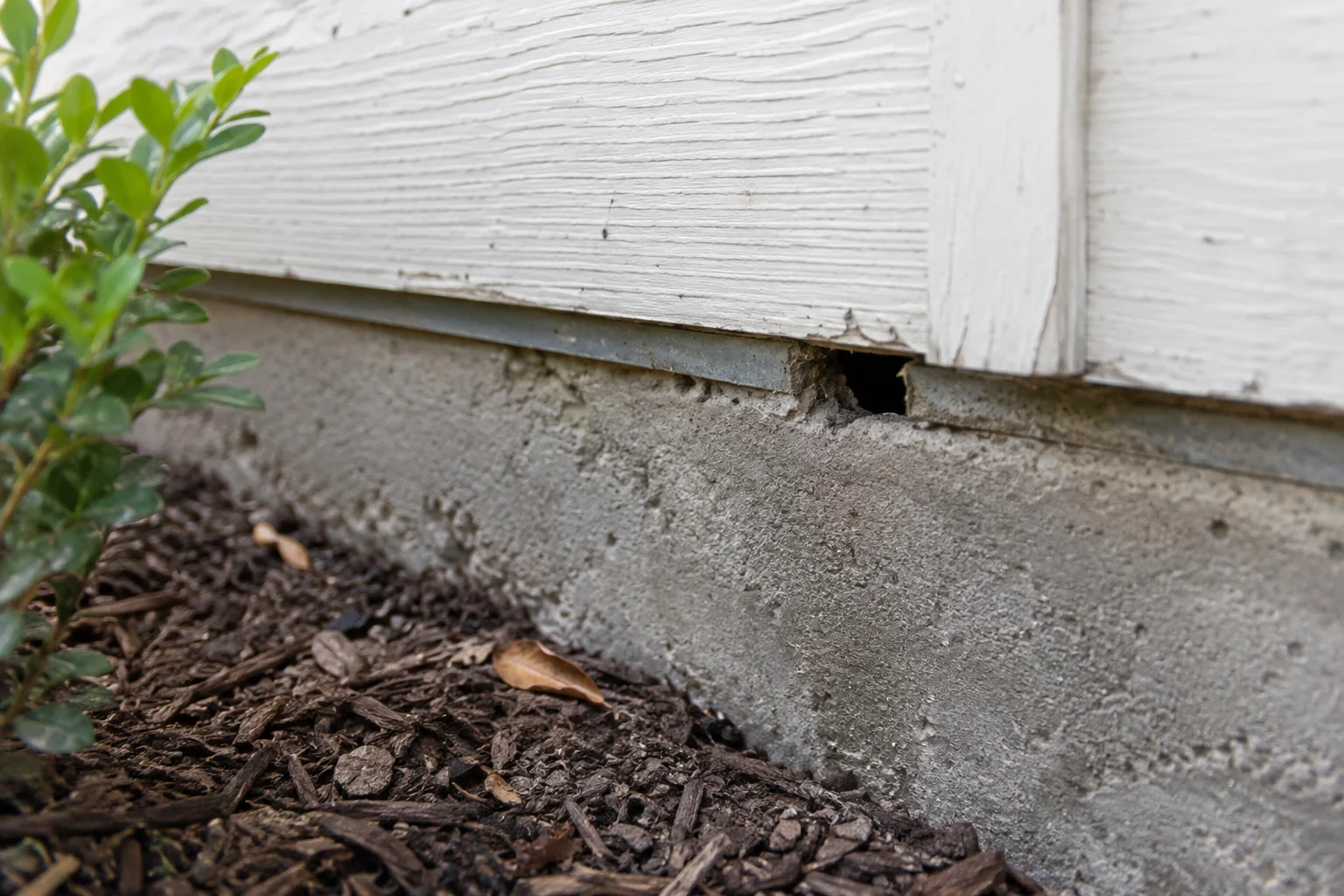
Exclusion does not shorten the natural lifespan directly.
It changes whether mice can:
- enter
- re-enter
- move between indoor and outdoor shelter
Do not blindly seal active mice inside.
See Mouse Entry Points: Where Mice Get In and Mouse-Proofing a House.
When Should You Call a Professional?
Professional help may make sense when:
- fresh mouse activity continues
- several rooms are active
- juveniles are appearing
- attic or crawl-space activity is involved
- entry points are unclear
- trapping is not reducing activity
- children or pets complicate safe device placement
See Professional Mouse Control: Methods & What to Expect.
How Long Do Mice Live? The Bottom Line
House mice can live longer under protected conditions than they usually survive around homes and outdoors.
In real-world commensal settings:
- many mice die within months
- some survive around a year
- favorable shelter can allow some individuals to live longer
Under highly protected captive conditions, house mice can often live roughly 1.5 to 3 years.
That does not mean a pest mouse in a house will live that long.
Its survival depends on:
- food
- water
- shelter
- temperature
- predators
- disease
- competition
- injury
- pest control
The most important homeowner lesson is that lifespan does not tell you how old an infestation is.
An adult mouse may have entered recently.
A juvenile may indicate recent reproduction.
Several age groups may coexist.
If fresh evidence continues, focus on the actual routes, food, shelter, entry points, trapping, and monitoring rather than waiting for mice to die naturally.
Continue with our house mouse guide, mouse life cycle guide, how fast mice reproduce guide, mouse droppings guide, mouse entry points guide, or professional mouse control guide.