Attic Rodent Removal Cost: Mice, Rats & Cleanup
Attic rodent removal often costs more than a simple kitchen, garage, or basement job because access is harder and the work may involve more than trapping.
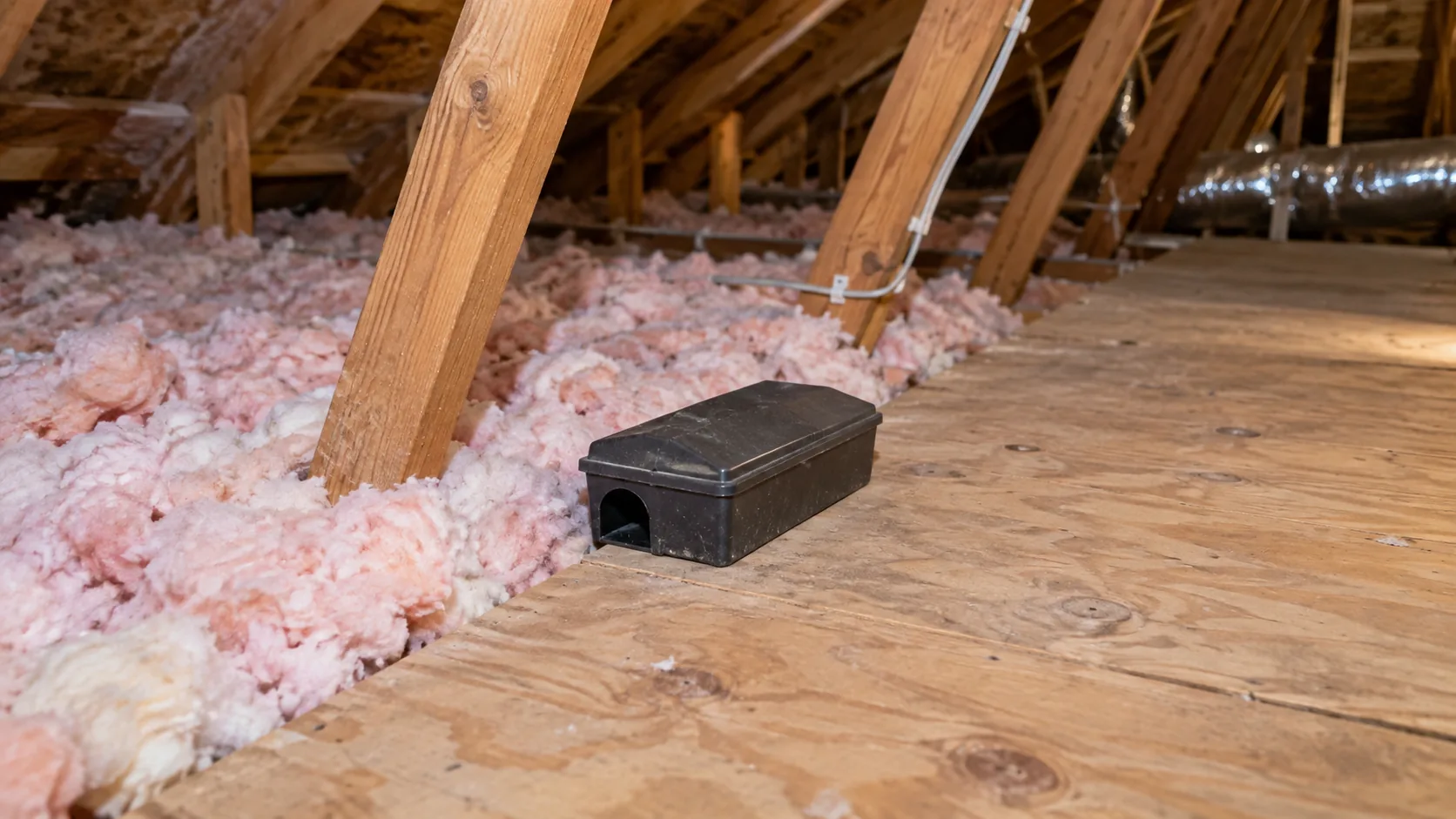
Attic rodent removal often costs more than a simple kitchen, garage, or basement job because access is harder and the work may involve more than trapping.
For broad national planning:
- the active rodent-removal portion of an attic job is often a few hundred dollars
- common mouse-control pricing still begins from the broader $150–$550 range
- common rat-control pricing still begins from the broader $200–$650 range
- attic access, repeated monitoring, roofline exclusion, contamination, and insulation work can push the total above $1,000
- extensive attic remediation can move into several thousand dollars when substantial insulation removal, replacement, or building repair is actually necessary
These are planning ranges, not guaranteed quotes.
The biggest cost question is not simply whether the attic contains mice or rats.
It is how much work is required to:
- confirm the active routes
- remove or control the rodents
- close the entry points
- clean contaminated areas when needed
- monitor the attic afterward
How Much Does Attic Rodent Removal Cost?
A straightforward attic rodent job may remain in the few-hundred-dollar range when:
- access is safe
- activity is limited
- traps can be placed on stable retrievable routes
- the entry point is simple
- contamination is light
- only a small number of visits are needed
The project becomes more expensive when it involves:
- several attic zones
- multiple roofline openings
- difficult access
- rat-sized equipment
- repeated follow-up
- contaminated insulation
- carcass retrieval
- soffit or fascia repair
- roof work
- electrical damage
- structural repair
That is why attic rodent removal can range from a normal pest-control service to a larger remediation project.
Attic Rodent Removal Cost vs General Rodent Removal Cost
General rodent removal may involve accessible areas such as:
- kitchens
- garages
- basements
- utility rooms
Attic work adds another layer:
- safe access
- stable footing
- insulation
- wiring
- roofline entry points
- ventilation
- contamination
See Rodent Removal Cost: What Affects the Price? for the broader removal-cost picture.
An attic-specific quote should explain which of those extra factors apply.
Mouse Removal From an Attic: What Affects Cost?
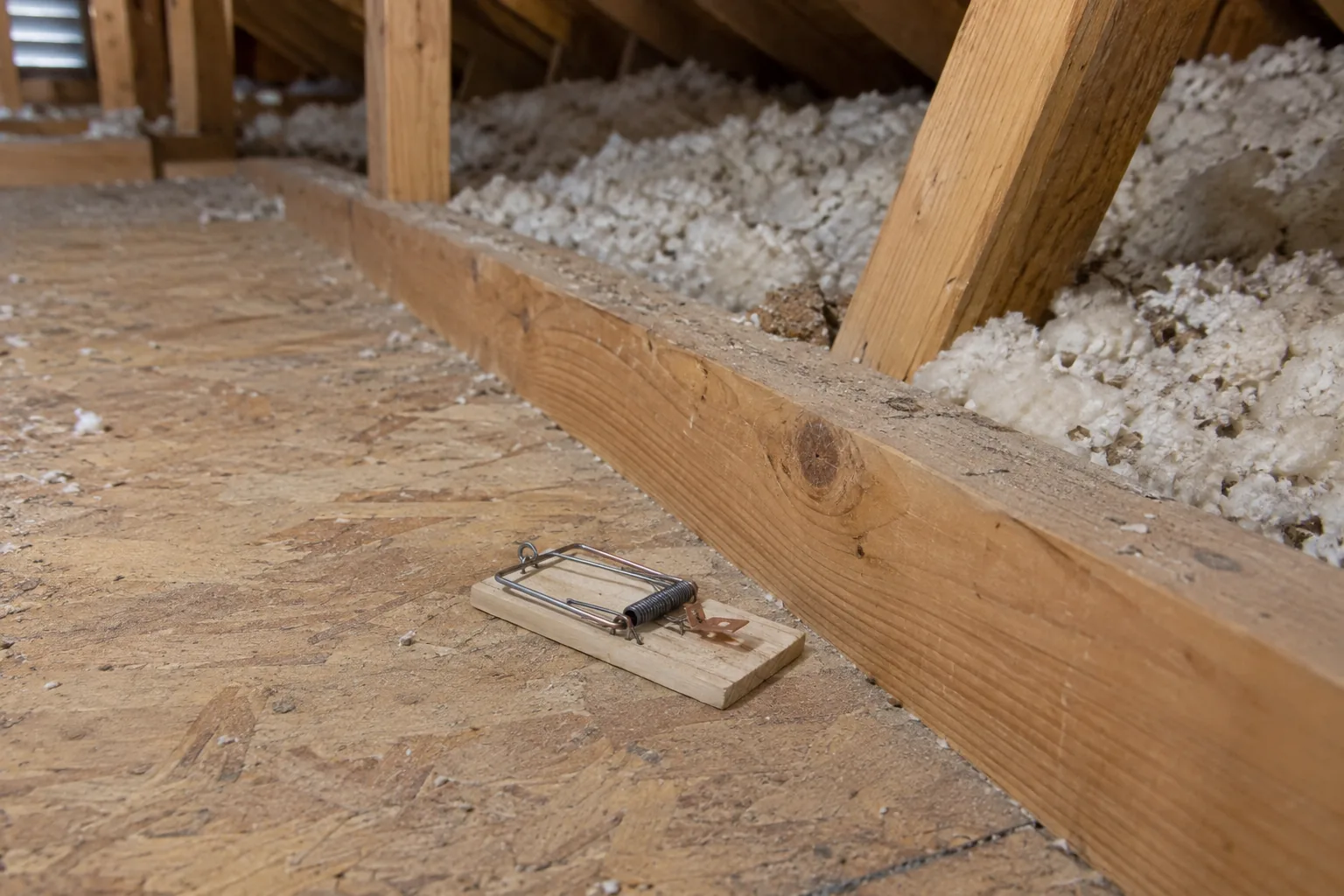
Mouse attic removal may involve:
- attic-edge routes
- soffit or vent entry points
- utility penetrations
- insulation paths
- mouse-sized traps
- follow-up monitoring
The broader mouse-control planning range is around $150–$550 for many ordinary jobs.
Attic complexity can push the project toward the upper end of that range or beyond it.
See Mouse Exterminator Cost for the species-specific baseline.
Rat Removal From an Attic: What Affects Cost?
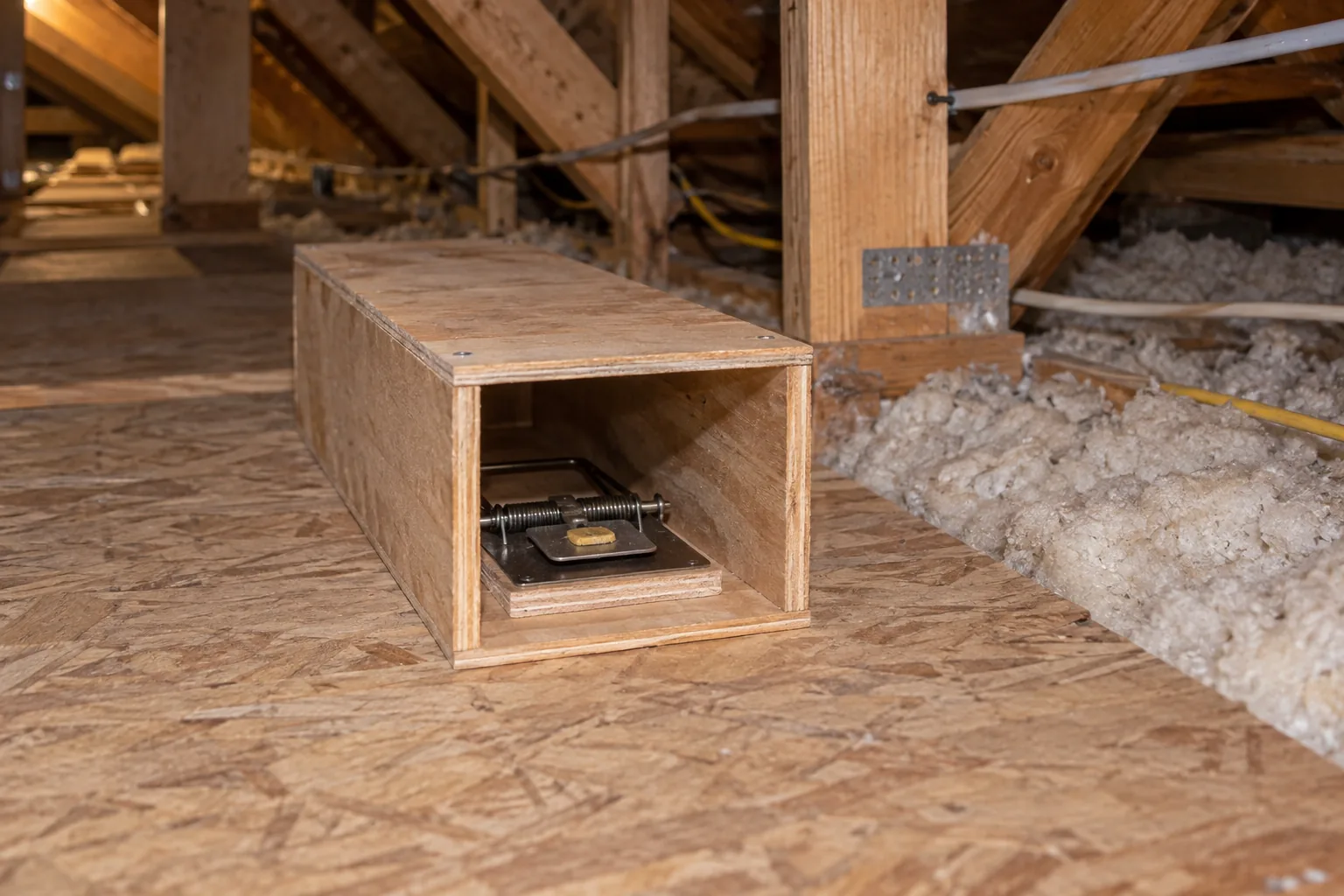
Rat attic work can be more complicated because the equipment is larger and the travel routes may include:
- rooflines
- trees
- fences
- soffits
- attic vents
- wall tops
- utility routes
The broader rat-control planning range is around $200–$650 for many ordinary jobs.
Attic access, protected rat-trap placement, exterior route inspection, and exclusion can push the total higher.
Is Attic Inspection Included?
Sometimes.
When charged separately, a professional rodent inspection may often cost around $100–$200.
Some providers:
- include inspection in treatment
- charge separately
- credit the fee toward service
- provide a no-charge inspection
The attic portion of the inspection should focus on safe accessible areas.
A technician may look for:
- droppings
- tracks
- gnawing
- nesting material
- insulation disturbance
- roofline openings
- vent defects
- soffit gaps
- utility penetrations
See Rodent Inspection: What Professionals Check.
Why Safe Attic Access Changes the Price
Attic access can be easy or difficult.
A straightforward attic may have:
- a normal access hatch
- stable framing
- a service walkway
- enough headroom
- clear routes
A difficult attic may involve:
- low clearance
- deep insulation
- limited stable footing
- complicated framing
- wiring
- HVAC equipment
- heat
- contamination
More difficult access increases:
- inspection time
- service time
- safety requirements
- follow-up difficulty
A provider should not treat unsafe access as ordinary room service.
Do More Droppings Mean a Higher Price?
Not in a simple one-to-one way.
Droppings may show that an area has been used.
They do not reveal the exact number of rodents.
Pricing should not be based on:
- price per dropping
- price per mouse
- price per rat
Cost is more strongly affected by:
- number of active zones
- access
- treatment points
- visits
- exclusion
- cleanup
How Much Does Attic Trapping Cost?
Professional trapping and monitoring across many residential rodent jobs may often fall around $150–$600.
Attic trapping can move toward the upper end when it requires:
- multiple safe trap locations
- repeated checks
- protected rat traps
- repositioning
- several attic zones
- difficult access
The trap itself is not the main cost.
The service cost also includes:
- inspection
- placement
- monitoring
- catch removal
- adjustment
- follow-up
Why Traps Must Be Retrievable in an Attic
Attic traps should be placed on stable, accessible routes.
They should not be:
- buried in insulation
- pushed into inaccessible voids
- balanced on unstable surfaces
- placed next to exposed electrical hazards
A trap that cannot be checked or retrieved creates a service problem.
Good placement may reduce repeat labor and unnecessary callbacks.
Does Attic Rodent Removal Require Multiple Visits?
Often.
Follow-up may be needed to:
- inspect traps
- remove catches
- move traps
- check for fresh droppings
- confirm route changes
- inspect exclusion work
When billed separately, a follow-up visit may often be around $50–$150.
Many providers include follow-up in the original service price.
Ask how many visits are included.
Why Attic Mice May Require More Than One Trap Location
Mice may use several narrow routes through:
- insulation edges
- wall tops
- utility runs
- attic framing
One trap in the middle of the attic may not cover the active routes.
See Mice in the Attic: Signs, Damage & Removal for the problem-specific guide.
Why Attic Rats Can Be More Expensive to Manage
Rat traps are:
- larger
- more powerful
- more demanding to protect
Rat attic activity may also connect to:
- rooflines
- trees
- fences
- soffits
- exterior walls
That can expand the inspection beyond the attic itself.
See Rats in the Attic: Signs, Damage & Removal.
Does Attic Exclusion Add to the Price?
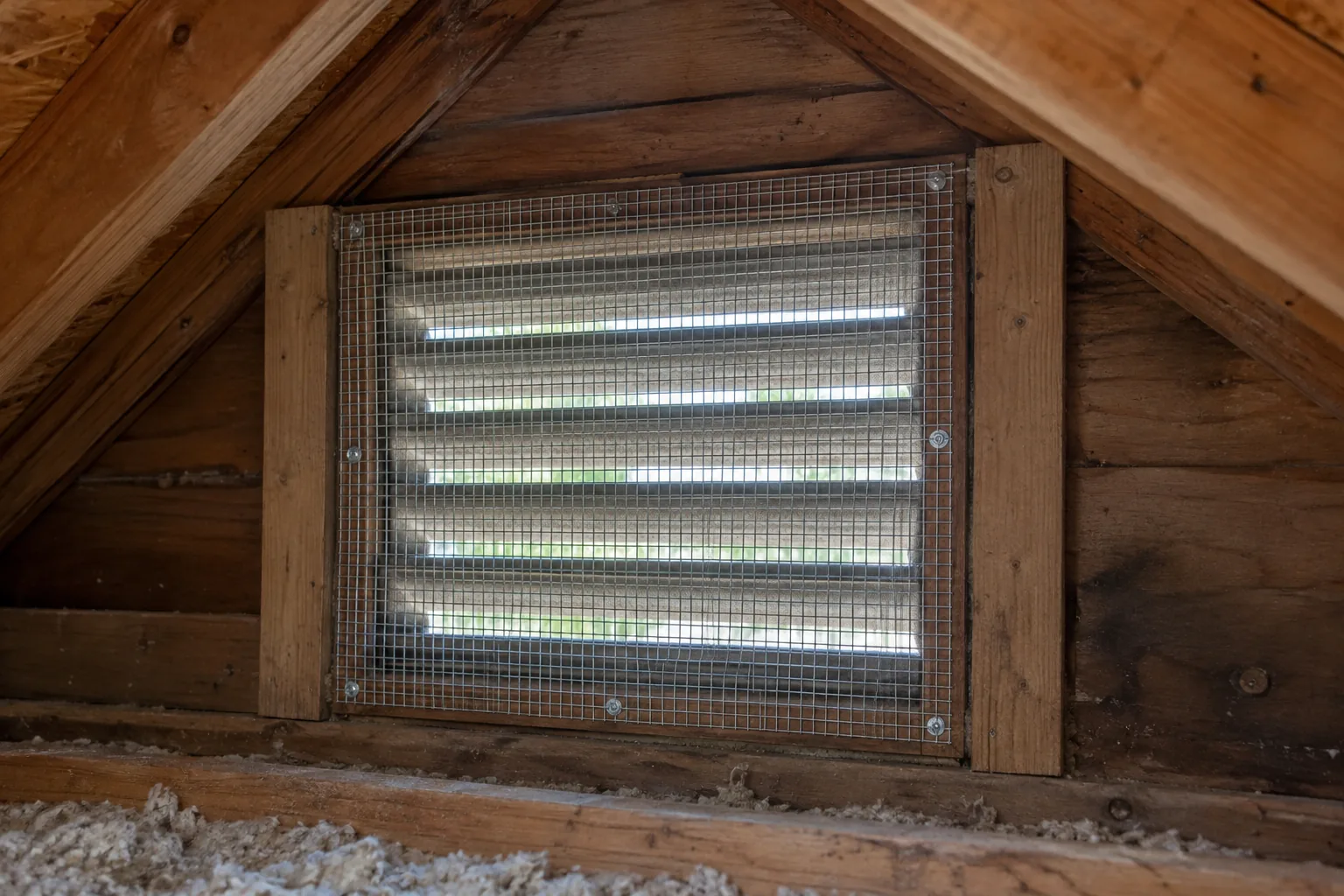
Yes.
Attic removal and attic exclusion are separate parts of the project.
Possible attic entry repairs include:
- soffits
- fascia
- attic vents
- roof-wall transitions
- utility penetrations
- siding-to-roof details
Simple accessible exclusion repairs may fall around $200–$600.
Broader multi-point exclusion may move into the $600–$1,500+ range.
See Rodent Exclusion Cost: Sealing & Repair Pricing.
Why Roofline Exclusion Can Cost More
Roofline repairs add:
- height
- access
- weatherproofing
- carpentry
- roofing details
- safety constraints
A pest-control company may handle some repairs.
Other work may require:
- roofer
- carpenter
- siding contractor
Do not assume roof repair is included in a rodent-removal quote.
Does Attic Cleanup Add to the Cost?
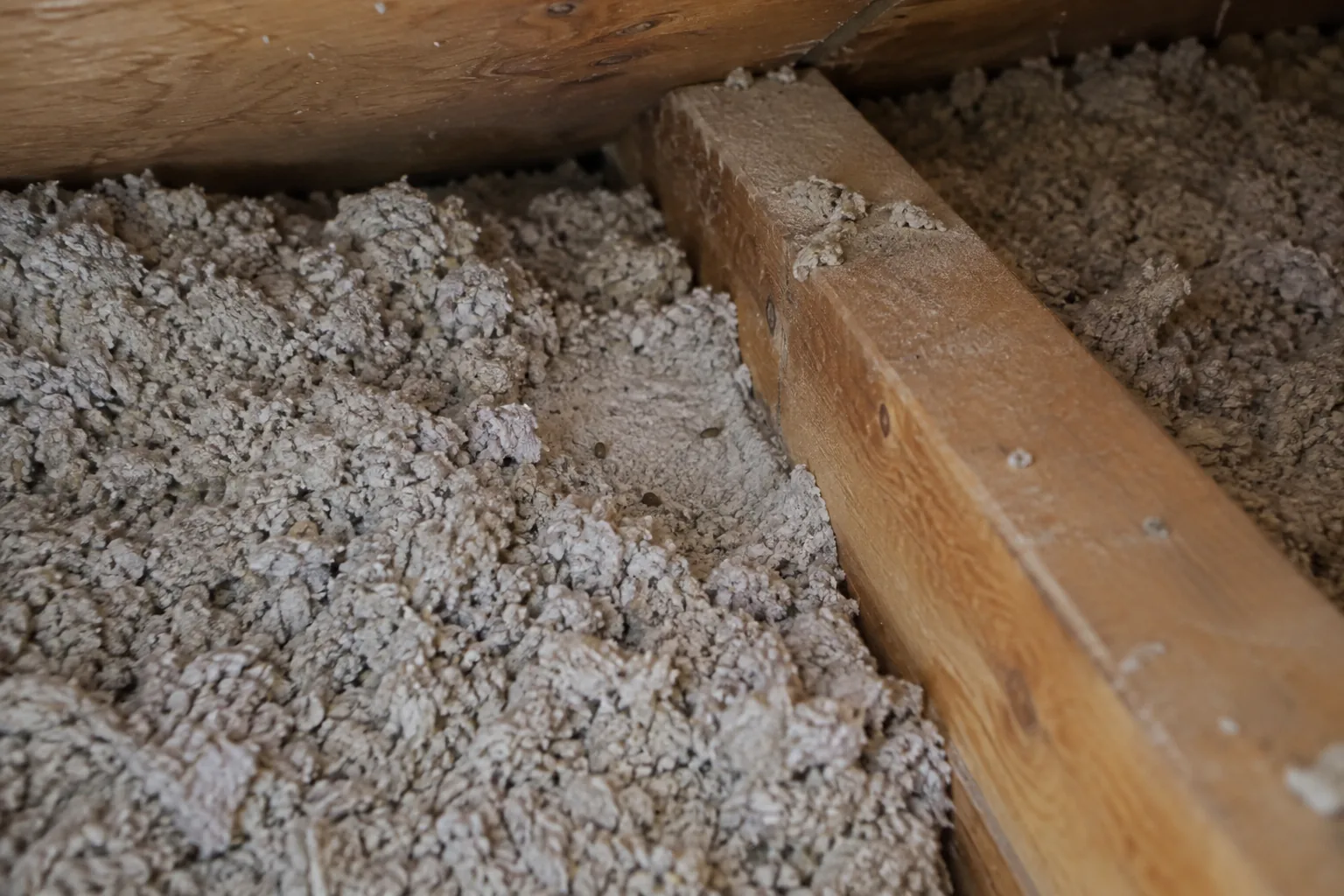
Yes, when contamination is significant.
Possible cleanup work includes:
- droppings
- nesting material
- urine contamination
- accessible carcasses
- contaminated insulation
A light, localized contamination area is very different from a heavily affected attic.
Cleanup should be quoted based on the actual affected area.
See Rodent Cleanup: Droppings, Urine & Contaminated Areas.
Does Every Attic Need Insulation Removal?
No.
Rodent activity does not automatically mean all attic insulation should be removed.
Localized contamination may affect only a limited area.
More extensive removal may make sense when insulation is:
- heavily contaminated
- repeatedly used for nesting
- saturated
- holding persistent odor
- physically damaged
Ask the provider to show which material is affected.
How Much Can Insulation Work Add?
Insulation work can significantly increase the project total because it may involve:
- removal
- containment
- cleanup underneath
- replacement
That can push a project above $1,000 and, when extensive remediation is genuinely necessary, into several thousand dollars.
Do not assume the entire attic needs replacement without a clear reason.
Mouse Contamination in Attic Insulation
Mice may create:
- small nesting pockets
- compressed paths
- localized droppings
- urine contamination
See Mice in Insulation: Signs, Damage & Cleanup.
The extent of contamination matters more than one isolated sign.
Rat Contamination in Attic Insulation
Rats may create:
- larger travel paths
- heavier disturbance
- larger droppings
- nesting contamination
See Rats in Insulation: Signs, Damage & Cleanup.
Again, inspection should define the affected area before cleanup is priced.
Does Carcass Removal Cost Extra?
Sometimes.
Accessible carcass removal may be included when the rodent is:
- in a trap
- on a safe attic route
- near the access point
Cost may increase when a carcass is inside:
- a wall
- ceiling
- sealed soffit
- inaccessible cavity
Opening and repairing the structure may be separate.
What If the Odor Comes From an Inaccessible Area?
A provider may be able to narrow the likely source.
But odor does not guarantee the carcass can be reached without opening the structure.
Additional work may require:
- drywall access
- soffit access
- repair
- another trade
Deodorizing alone does not replace source removal when the source is accessible.
Does Wiring Damage Increase the Cost?
It can.
Rodents can gnaw wire insulation.
If visible wiring appears damaged:
- do not touch exposed conductors
- do not open energized equipment
- keep the area clear
An electrician may need to inspect and repair the damage.
Electrical repair is usually separate from rodent-removal pricing.
Does HVAC Equipment Affect Attic Removal Cost?
It can affect access.
Attics may contain:
- ducts
- air handlers
- electrical equipment
- condensate lines
Rodent-control work should not:
- block airflow
- place traps inside ducts
- interfere with equipment
- spray chemicals into HVAC systems
HVAC repair may require a qualified contractor.
Does Roof Damage Increase the Price?
Yes, if the rodent entry point is tied to:
- damaged soffit
- fascia
- roof flashing
- vent damage
- roof-to-wall defects
Pest control may identify the route.
Roof repair may be a separate cost.
Does Home Size Matter?
Yes, but attic layout matters more than simple square footage.
A larger attic may require:
- more inspection time
- more monitoring locations
- more roofline inspection
But a small attic with:
- difficult access
- several hidden routes
- contamination
- roof defects
can still be expensive.
Do not compare attic-removal quotes by square footage alone.
Does Attic Height Matter?
It can.
Low-clearance attics can be difficult to move through safely.
High or open attics may be easier in some areas but can still contain:
- wiring
- HVAC
- insulation
- unstable footing
Access difficulty should be reflected in the scope.
DIY Attic Rodent Removal Cost
DIY can cost less upfront when:
- the attic is safely accessible
- activity is limited
- routes are obvious
- traps can be placed on stable retrievable surfaces
- no electrical, structural, or contamination hazard is present
DIY expenses may include:
- traps
- protective enclosures
- basic exclusion materials
- cleanup supplies
Do not enter an attic that appears:
- unstable
- heavily contaminated
- electrically hazardous
- extremely tight
- unsafe to traverse
A lower material cost is not worth unsafe access.
When Professional Attic Removal May Be Worth the Cost
Professional help may be more useful when:
- activity keeps returning
- several attic zones are active
- the species is unclear
- roofline entry is suspected
- safe trap placement is difficult
- contamination is extensive
- wiring is damaged
- exclusion requires roof work
- carcasses are difficult to access
The value is often in:
- diagnosis
- safe access
- placement
- monitoring
- exclusion planning
not simply the physical trap.
What Should an Attic Rodent Removal Quote Include?
A useful written quote should explain:
- inspection
- target pest
- attic areas being serviced
- trap or station method
- number of visits
- who checks traps
- accessible carcass removal
- roofline or soffit inspection
- exclusion
- cleanup
- insulation removal
- insulation replacement
- repairs
- follow-up
- warranty or re-service
- possible additional charges
If the quote only says “attic rodent removal,” ask for more detail.
What May Cost Extra?
Depending on the provider, separate charges may apply for:
- additional visits
- difficult attic access
- roofline work
- soffit or fascia repair
- carcass retrieval
- cleanup
- contaminated insulation removal
- replacement insulation
- electrical repair
- roofing
- structural repair
The quote should separate active removal from these additional scopes.
Why the Cheapest Attic Quote Is Not Always Cheapest
A low quote may include:
- one visit
- a few traps
- no follow-up
- no roofline inspection
- no exclusion
If rodents continue entering, the homeowner may pay again.
A more complete quote may cost more but include:
- inspection
- monitoring
- several visits
- entry-point work
That does not mean the higher quote is automatically better.
Compare the scope.
Why the Highest Attic Quote Is Not Automatically Better
A large attic-remediation estimate should be supported by visible findings.
Ask the provider to show:
- active routes
- entry points
- contaminated areas
- insulation damage
- roofline defects
Do not approve whole-attic removal or major repair work that cannot be explained.
Questions to Ask About Attic Rodent Removal Cost
Before hiring, ask:
- Is inspection included?
- Is the problem mice, rats, or uncertain?
- How many attic zones are active?
- How many visits are included?
- Who checks traps?
- Is accessible carcass removal included?
- Is roofline inspection included?
- Is exclusion included?
- Is cleanup included?
- Does insulation need removal?
- Is replacement insulation included?
- What repair work is separate?
- What could increase the final price?
These questions make quotes easier to compare.
Attic Rodent Removal Cost: The Bottom Line
Attic rodent removal often begins in the few-hundred-dollar range, but the total can rise quickly when the job expands beyond active removal.
For planning:
- ordinary mouse-control jobs broadly fall around $150–$550
- ordinary rat-control jobs broadly fall around $200–$650
- separate inspections may often be around $100–$200
- professional trapping/monitoring may often be around $150–$600
- simple exclusion repairs may often be around $200–$600
- broader exclusion can move into $600–$1,500+
An attic project can exceed $1,000 when it includes:
- difficult access
- repeated monitoring
- roofline exclusion
- cleanup
- contaminated insulation
- repairs
Extensive remediation can move into several thousand dollars when substantial insulation removal/replacement or building repair is actually required.
The most useful quote separates:
- active removal
- exclusion
- cleanup
- insulation work
- repairs
That makes it clear what you are paying for and which work is truly necessary.
Continue with our rodent removal cost guide, rodent exclusion cost guide, mouse exterminator cost guide, rat exterminator cost guide, rodent inspection guide, or rodent cleanup guide.
For broader pricing topics, visit the rodent cost section.