Rodent Inspection: What Professionals Check
A professional rodent inspection finds evidence of rats or mice, traces their routes, identifies likely entry points, and helps determine what should happen next.
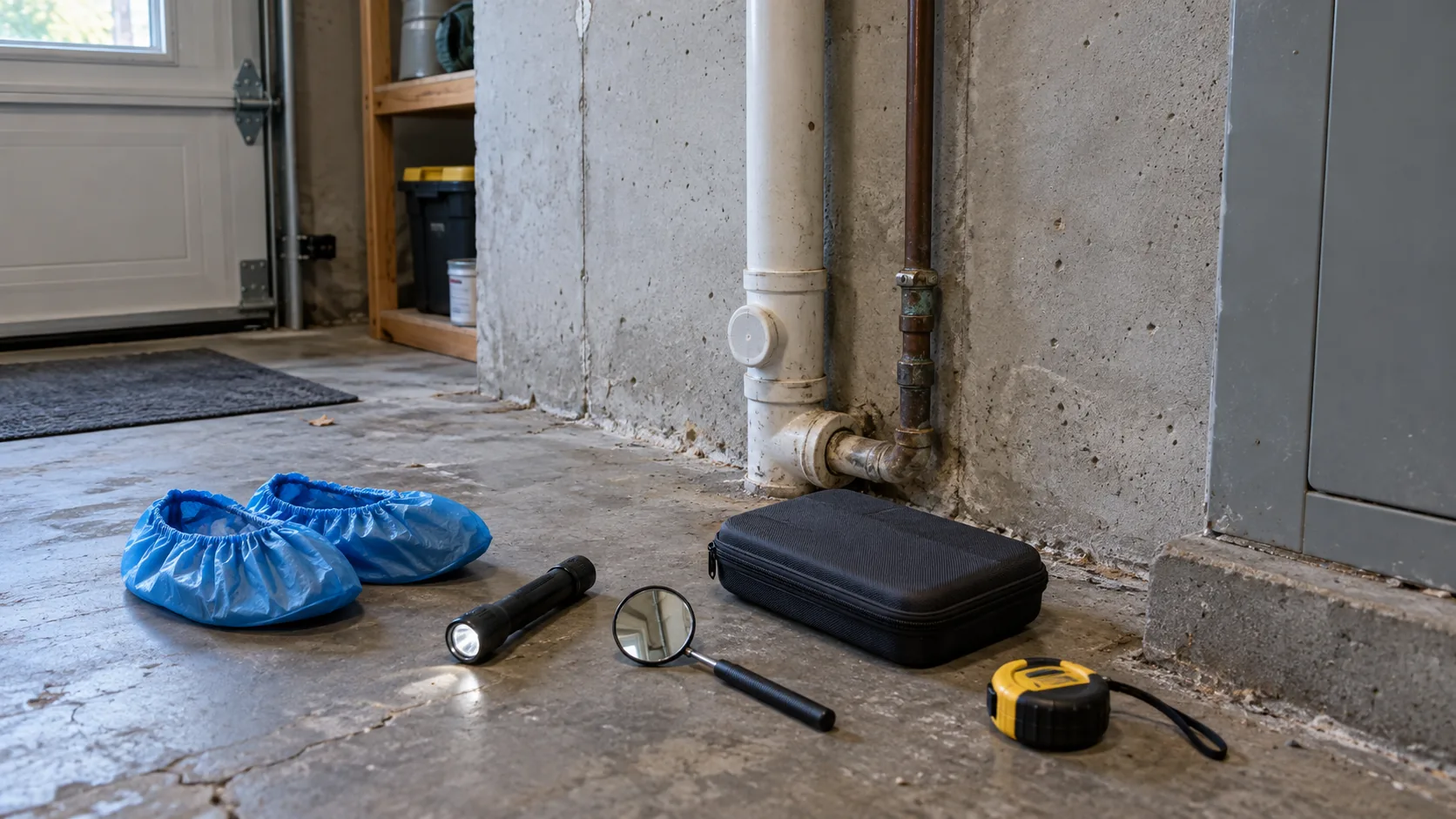
A professional rodent inspection is the process of finding evidence of rats or mice, tracing where they are moving, identifying likely entry points, and deciding what needs to happen next.
The inspection should come before the treatment plan.
A technician may look for:
- droppings
- tracks
- gnaw marks
- rub marks
- nesting material
- food damage
- repeated sightings
- scratching or movement sounds
- burrows
- structural openings
The goal is not simply to confirm that a rodent exists.
A useful inspection should help answer:
- Is the problem more likely mice, rats, or both?
- Where is activity concentrated?
- Which routes appear active?
- How are rodents getting into or through the building?
- What food, water, or shelter supports the activity?
- Is there damage or contamination that needs separate attention?
- What control and exclusion work should come next?
What Is a Professional Rodent Inspection?
A professional rodent inspection is a focused pest-control evaluation of a home or building for rat and mouse activity.
It may include:
- interior inspection
- exterior inspection
- species assessment
- evidence mapping
- entry-point inspection
- food and shelter assessment
- damage assessment
- treatment recommendations
- exclusion recommendations
The exact scope varies by company.
Some inspections are part of a treatment visit.
Others may be sold as a separate inspection.
Ask what is included before booking.
Why Inspection Comes Before Rodent Treatment
Rodent control depends heavily on location.
A trap in the wrong room may sit untouched.
A bait station on an inactive route may provide little useful information.
An exclusion repair on the wrong opening may not stop the actual entry path.
Inspection helps connect:
- signs
- routes
- building openings
- food
- water
- shelter
That makes the treatment plan more targeted.
See Rodent Control: Methods, Process & What to Expect.
What Does a Rodent Inspector Check First?
The first step is usually the history of the problem.
A technician may ask:
- What did you see?
- Was it a mouse or rat?
- Where was it seen?
- When does activity occur?
- Which rooms show signs?
- Are noises coming from walls or ceilings?
- Has the problem happened before?
- Have traps or bait already been used?
- Are children or pets present?
- Have any repairs recently been made?
Those answers help prioritize the inspection.
How Inspectors Confirm Rodent Activity
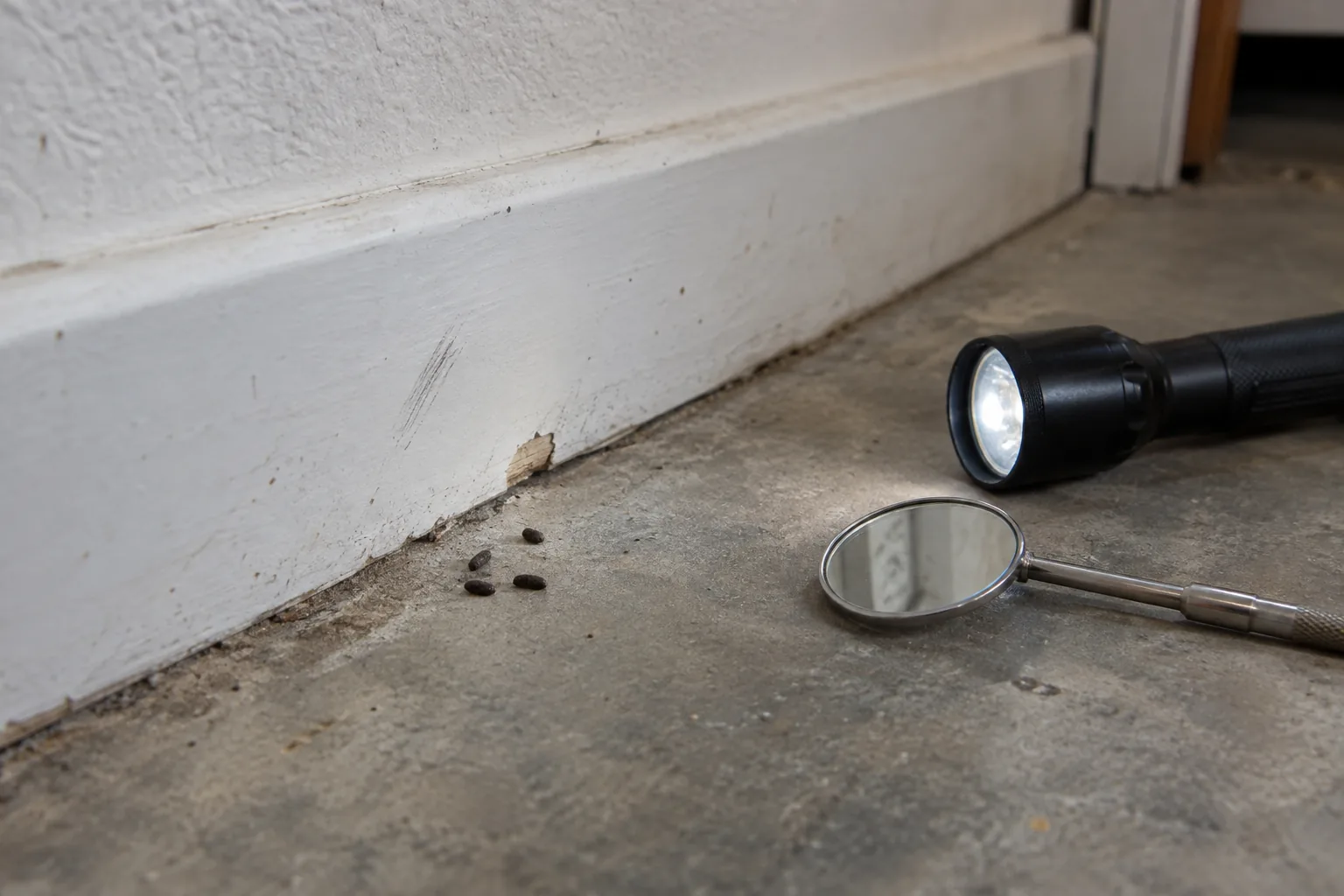
Inspectors may look for several forms of evidence together.
Useful evidence can include:
- droppings
- tracks
- gnaw marks
- food damage
- nesting material
- rub marks
- sightings
- trap catches
- scratching sounds
- burrows
One sign by itself may be misleading.
A good inspection looks for patterns.
Do Droppings Show Where Rodents Are Active?
They can help.
Fresh droppings may indicate recent use of an area.
Common locations include:
- cabinet edges
- appliance routes
- garage walls
- basement edges
- attic paths
- crawl-space routes
- utility areas
But droppings do not reveal:
- the exact number of rodents
- the exact nest
- the exact exterior entry point
They are one part of the route map.
See Mouse Droppings and Rat Droppings.
Can Inspectors Tell Whether Droppings Are Fresh?
Sometimes they can make a practical assessment.
Fresh-looking droppings may differ from older dry or dusty material.
But environmental conditions can affect appearance.
An inspector should not pretend the age of every dropping can be determined precisely.
The strongest evidence comes from combining:
- appearance
- location
- repeated monitoring
- tracks
- sightings
- new damage
Do Inspectors Look for Tracks?
Yes.
Tracks can help show:
- direction of travel
- repeated routes
- transitions between rooms
- exterior-to-interior movement
Tracks may be especially useful in:
- dusty garages
- crawl spaces
- attics
- basement edges
See Mouse Tracks and Rat Tracks.
Do Inspectors Look for Gnaw Marks?
Yes.
Rodents may gnaw:
- food packaging
- wood
- plastic
- sealants
- insulation backing
- wiring insulation
- opening edges
Fresh gnawing can help identify an active route.
See Mouse Gnaw Marks and Rat Gnaw Marks.
What Are Rat Rub Marks?
Rats repeatedly traveling along the same route may leave dark grease or rub marks.
These can appear along:
- walls
- framing
- pipes
- foundation edges
- narrow travel paths
But ordinary dirt or moisture staining can look similar.
Inspectors should combine rub marks with other rat evidence.
Do Inspectors Look for Nests?
They may.
Possible nesting material can include:
- shredded paper
- fabric
- insulation
- cardboard
- soft plant material
But nesting material alone does not always identify the species.
The inspector should consider:
- location
- dropping size
- tracks
- gnawing
- direct sightings
How Inspectors Tell Mice From Rats
Mouse and rat control require different equipment and route priorities.
Inspectors may compare:
- body size
- dropping size
- track size
- gnawing
- route width
- direct sightings
See Rat vs Mouse: How to Tell the Difference.
No single sign should be treated as perfect proof.
Can an Inspection Identify Norway Rats vs Roof Rats?
Sometimes the overall evidence strongly supports one pattern.
Norway rats are commonly associated with:
- ground-level routes
- foundations
- lower building areas
- burrows
Roof rats are more often associated with:
- attics
- rooflines
- trees
- fences
- elevated routes
But location alone is not enough.
A professional should combine:
- physical identification
- droppings
- tracks
- sightings
- route evidence
- building context
See Norway Rat and Roof Rat.
What Do Inspectors Check in the Kitchen?
Kitchen inspection may include:
- lower cabinets
- under sinks
- pantry edges
- wall-floor transitions
- accessible appliance edges
- plumbing penetrations
- food storage
The inspector may look for:
- droppings
- gnawing
- damaged food
- nesting material
- wall gaps
Do not open powered appliance machinery just to inspect for rodents.
What Do Inspectors Check in the Garage?
Garages often provide clear rodent routes.
An inspector may check:
- lower wall edges
- garage-door corners
- weather seals
- shared walls
- utility penetrations
- storage edges
- pet food
- bird seed
- animal feed
See Mice in the Garage and Rats in the Garage.
What Do Inspectors Check in the Basement?
Basement inspection may focus on:
- foundation edges
- sill areas
- storage routes
- utility penetrations
- plumbing
- doors and windows
- floor-wall transitions
The technician should avoid disturbing:
- energized electrical equipment
- gas components
- unsafe plumbing
- standing water
What Do Inspectors Check in the Attic?
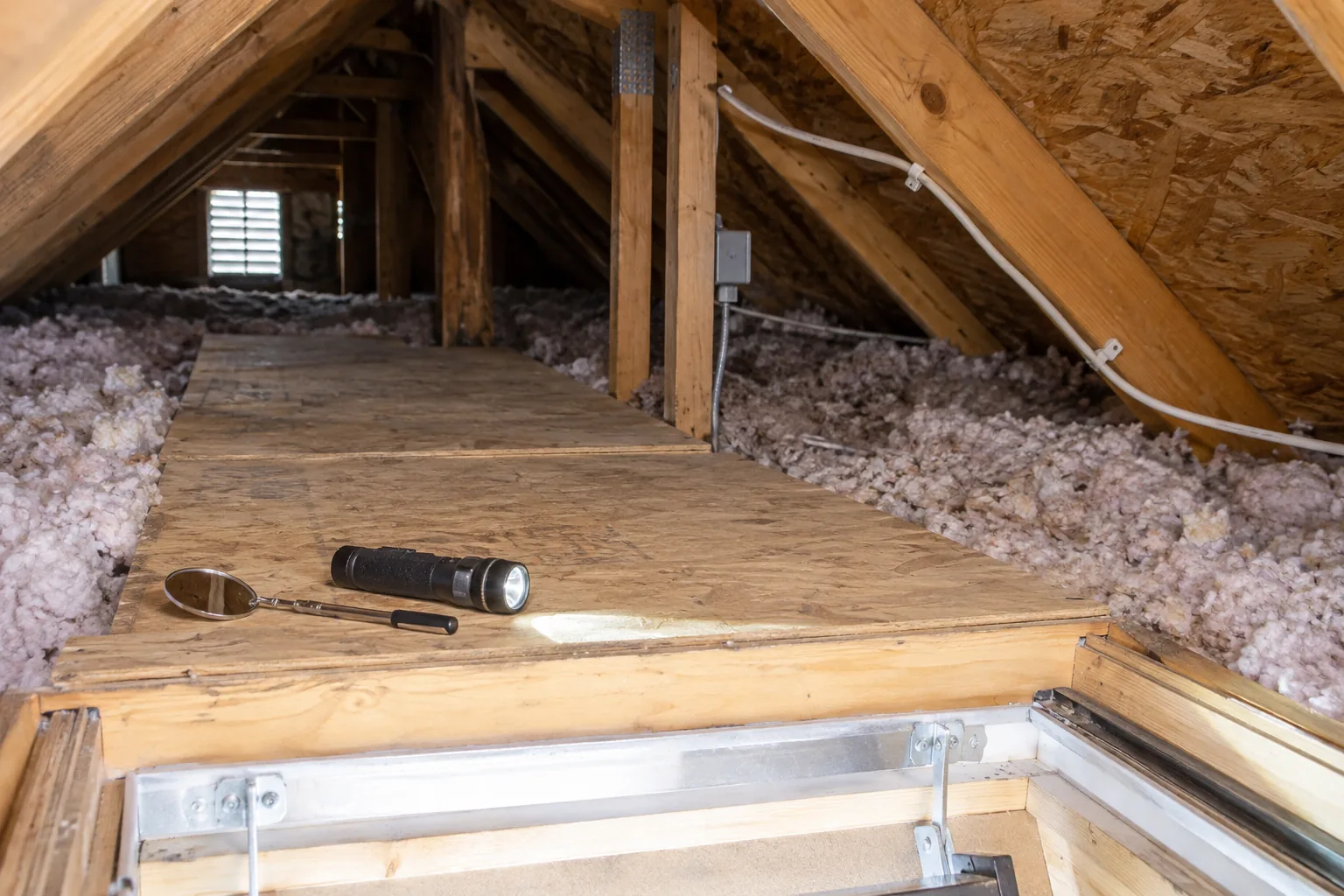
Attic inspection may include:
- stable accessible framing
- insulation disturbance
- droppings
- nesting material
- gnawing
- roofline openings
- vents
- soffits
- fascia
- utility penetrations
Not every attic is safe to enter.
An inspector may limit access if there is:
- unstable footing
- exposed wiring
- severe contamination
- tight clearance
- unsafe roof access
See Mice in the Attic and Rats in the Attic.
What Do Inspectors Check in Crawl Spaces?
Crawl-space inspection may include:
- foundation walls
- vents
- access doors
- plumbing penetrations
- insulation
- droppings
- tracks
- gnawing
- moisture
- structural openings
Safe access comes first.
Inspection may be limited when the space is:
- wet
- unstable
- electrically hazardous
- heavily contaminated
- too tight to enter safely
See Mice in the Crawl Space and Rats in the Crawl Space.
Do Inspectors Check Inside Walls?
Usually not by opening walls during a standard inspection.
A technician may infer wall activity from:
- sounds
- droppings near openings
- tracks
- utility routes
- attic or crawl-space connections
Some professionals may use an inspection camera or borescope where appropriate.
But a standard rodent inspection does not mean walls will automatically be cut open.
Do Inspectors Use Cameras or Borescopes?
Some do.
Possible inspection tools include:
- flashlight
- inspection mirror
- camera
- borescope
- measuring tools
- protective equipment
The exact tools vary.
A borescope may help inspect an accessible opening without major demolition.
It should not be used as an excuse to damage electrical, plumbing, fire-rated, or structural assemblies.
Do Inspectors Check the Exterior?
A complete rodent inspection often benefits from exterior inspection.
Important areas may include:
- foundation
- doors
- garage door
- siding
- utility penetrations
- crawl-space vents
- basement openings
- soffits
- fascia
- attic vents
- roof-wall transitions
The indoor sighting may be far from the original exterior entry point.
What Entry Points Do Professionals Look For?
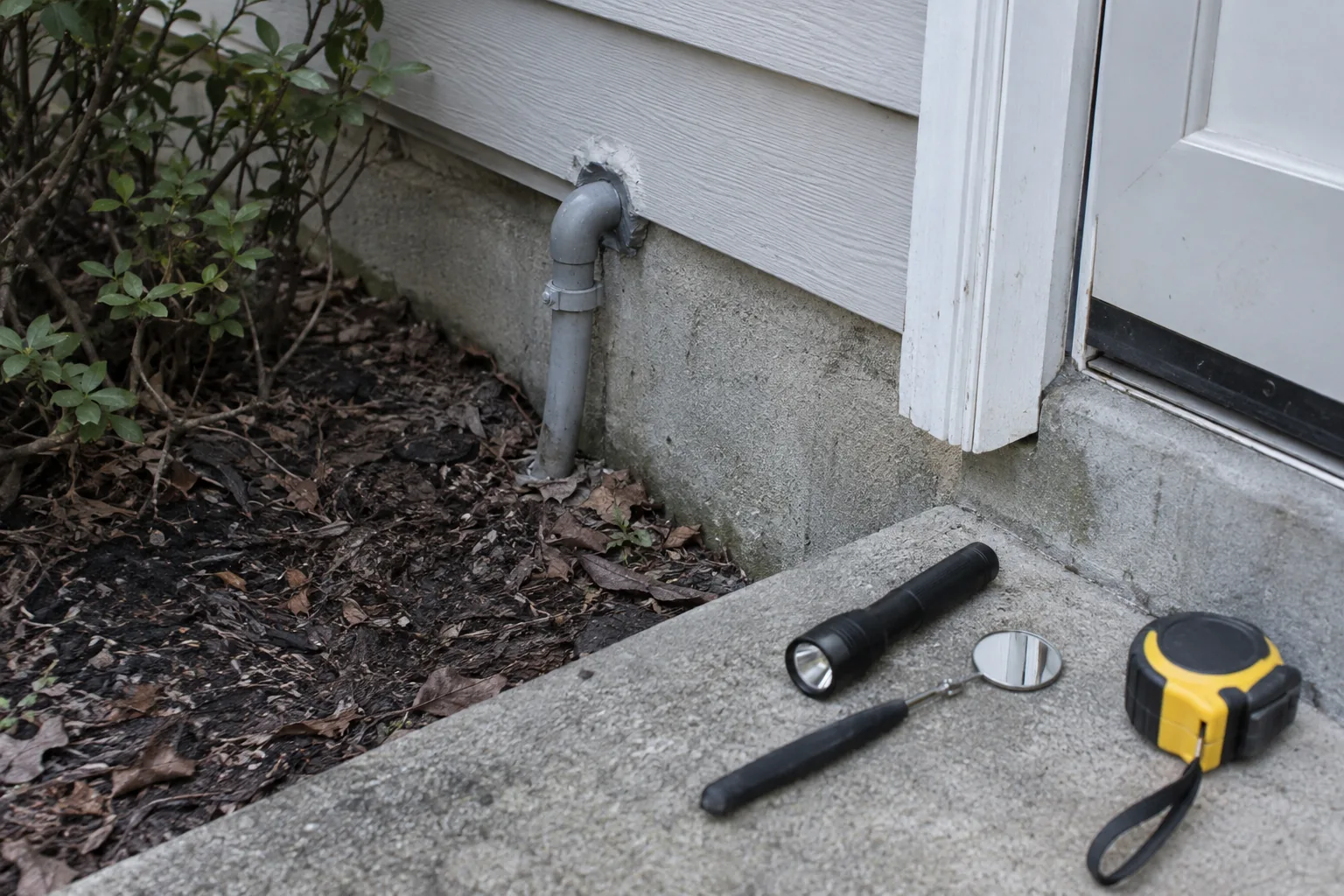
Inspectors may look for:
- door gaps
- worn weatherstripping
- garage-door corners
- utility gaps
- foundation defects
- damaged vents
- siding gaps
- soffit damage
- roofline openings
The size and priority of openings depend on whether the problem involves mice or rats.
See Mouse Entry Points and Rat Entry Points.
Do Inspectors Seal Entry Points During the Inspection?
Not always.
The inspection may:
- identify openings
- photograph them
- mark priorities
- recommend repairs
Exclusion may be:
- included
- quoted separately
- scheduled later
- referred to another contractor
Ask before assuming repairs are part of the inspection.
See Rodent Exclusion: How to Keep Rats & Mice Out.
Why Inspectors Should Not Seal Every Gap Immediately
If rodents are still active indoors, blindly sealing the only known route may:
- trap them inside
- redirect them deeper into the building
- cause new gnawing
- create inaccessible carcass problems
A practical sequence is often:
- identify active routes
- control rodents already inside
- reduce food and shelter
- complete exclusion
- monitor
Do Inspectors Check Food Sources?
Yes.
Food availability can support ongoing activity.
Inspectors may note:
- pantry food
- damaged packaging
- pet food
- bird seed
- animal feed
- garbage
- fallen fruit
- grease and crumbs
The goal is not to judge housekeeping.
It is to identify resources that make control harder.
Do Inspectors Check Water Sources?
They may.
Possible water sources include:
- plumbing leaks
- condensation
- pet water
- standing water
- exterior irrigation problems
A pest-control technician may identify the issue.
Plumbing or drainage repair may require another qualified trade.
Do Inspectors Check Shelter and Clutter?
Yes.
Rodents benefit from protected spaces.
Inspectors may look at:
- stored boxes
- wall-side clutter
- dense garage storage
- attic nesting material
- crawl-space debris
- yard cover
Reducing shelter can make routes easier to inspect and control.
What Do Inspectors Check Outside for Rats?
Exterior rat inspection may include:
- foundation edges
- garbage areas
- pet food
- bird seed
- fallen fruit
- sheds
- decks
- dense vegetation
- suspected burrows
Outdoor evidence should be connected to the building route whenever possible.
See Rats in the Yard: Why They’re There & What to Do.
How Do Inspectors Assess Suspected Rat Burrows?
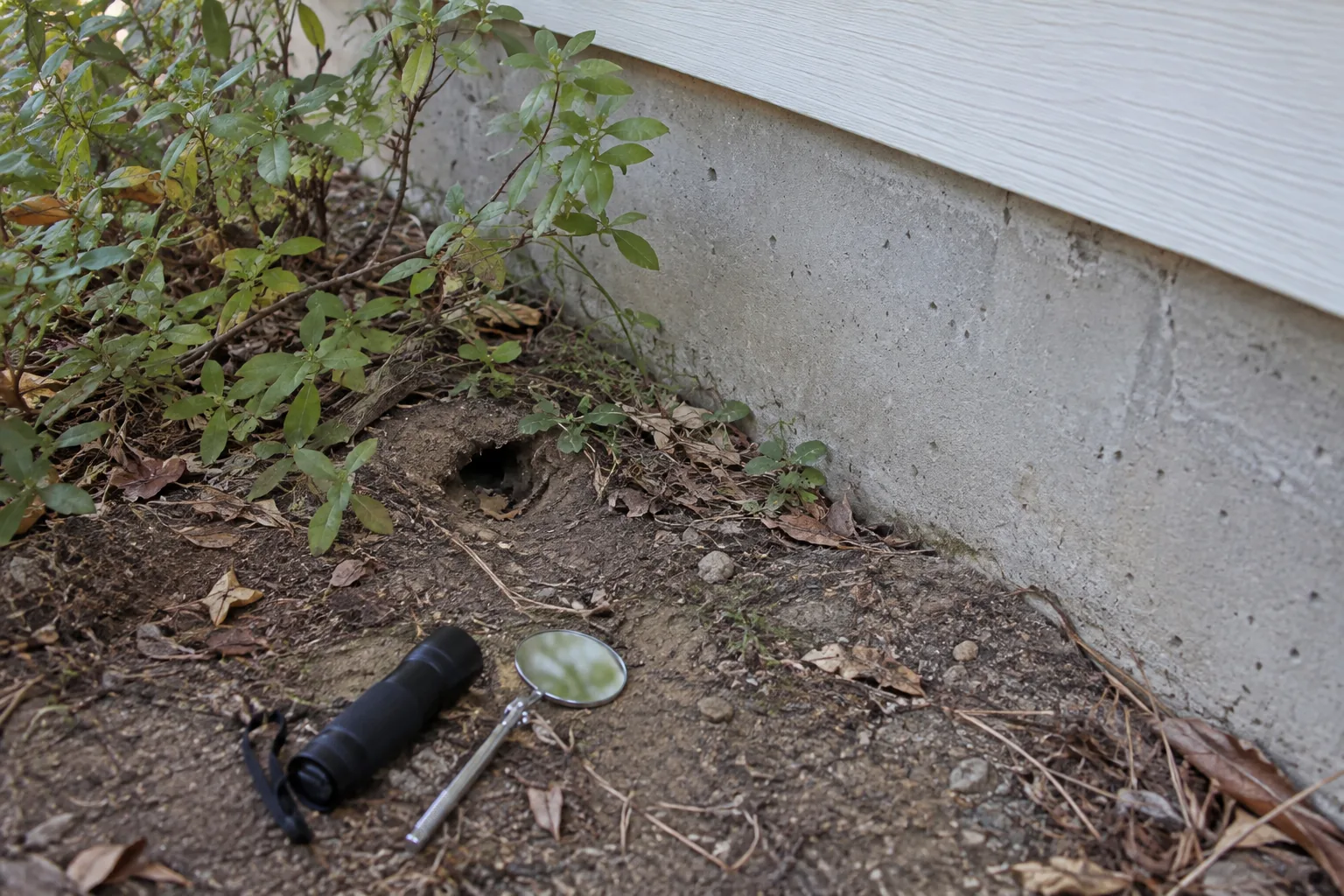
A hole is not automatically a rat burrow.
An inspector may look for:
- smooth openings
- fresh soil
- tracks
- droppings
- worn travel paths
- repeated sightings
Do not respond to a suspected burrow by:
- flooding it
- smoking it
- burning it
- pouring gasoline or household chemicals into it
- using exhaust
- using boiling water
- blindly collapsing it
Burrow management should be coordinated with the larger rat-control plan.
Do Inspectors Look for Rodent Damage?
Yes.
Possible damage includes:
- gnawed food packaging
- damaged insulation
- chewed sealants
- enlarged openings
- damaged stored goods
- wiring damage
An inspector may identify visible damage but may not be qualified to repair every system.
What If Wiring Looks Damaged?
Rodents can gnaw wire insulation.
If visible wiring appears damaged:
- do not touch exposed conductors
- do not open energized electrical equipment
- keep people away from the hazard
A qualified electrician may be needed.
Rodent control does not replace electrical repair.
Do Inspectors Assess Contamination?
They may note:
- droppings
- urine staining
- nesting material
- contaminated insulation
- accessible carcasses
The inspection may help define the affected area.
Cleanup may be:
- included
- quoted separately
- referred to another service
This page does not treat inspection as a substitute for a cleanup plan.
See the rodent cleanup section.
Is It Safe to Clean Before the Inspection?
You do not need to preserve every dropping.
But removing all evidence immediately before the visit can make route mapping harder.
If cleanup is necessary:
- wear suitable gloves
- do not dry sweep or vacuum fresh rodent waste
- wet contaminated hard surfaces appropriately
- follow disinfectant contact-time instructions
- collect waste carefully
If contamination is extensive, ask the provider how they want the area handled before the appointment.
What Should You Do Before a Rodent Inspection?
Useful preparation may include:
- note where rodents were seen
- note when activity occurs
- photograph fresh signs if practical
- make cabinets and utility areas accessible
- identify previous trap locations
- list previous treatment attempts
- point out known leaks
- note recent construction or repairs
- secure pets if requested
Do not dismantle:
- appliances
- walls
- electrical equipment
- HVAC systems
just to prepare.
Does a Rodent Inspection Include Treatment?
Sometimes.
An inspection may be:
- inspection only
- combined with initial trap placement
- part of a larger treatment service
Ask whether treatment starts during the same appointment.
Do not assume an inspection fee automatically includes control work.
Does a Rodent Inspection Include a Written Report?
Sometimes.
A provider may give:
- written findings
- photos
- a diagram
- a treatment proposal
- verbal recommendations
A useful summary should identify:
- evidence found
- likely active areas
- suspected entry points
- food or shelter concerns
- recommended next steps
Ask what documentation is included.
Can an Inspection Tell Exactly How Many Rodents You Have?
No.
An inspector may estimate whether activity appears:
- limited
- moderate
- widespread
based on the amount and distribution of fresh evidence.
But there is no simple formula that converts:
- droppings
- catches
- noises
- sightings
- bait use
into an exact population count.
Can One Inspection Find Every Entry Point?
Not always.
Rodent routes can be:
- hidden
- intermittent
- inside assemblies
- difficult to reach
- newly created after the visit
A good inspection improves the odds of finding important routes.
It does not make the building permanently predictable.
Follow-up may reveal another opening.
When Is a Follow-Up Inspection Useful?
Follow-up may make sense when:
- fresh signs continue
- traps remain untouched
- activity moves to another area
- exclusion repairs reopen
- new droppings appear
- burrow activity continues
- the original route remains uncertain
New evidence should change the plan.
When Another Trade May Be Needed
A rodent inspection may reveal problems outside normal pest-control work.
Another qualified professional may be needed for:
- electrical wiring
- plumbing leaks
- roof defects
- structural damage
- HVAC problems
- appliance repair
- drainage problems
The pest inspector can identify a concern without being the correct trade to repair it.
What Should You Ask Before Booking a Rodent Inspection?
Ask:
- What areas will you inspect?
- Is exterior inspection included?
- Will you inspect the attic?
- Will you inspect the crawl space if access is safe?
- Is treatment included?
- Is exclusion included?
- Will you provide photos or a written summary?
- Is follow-up included?
- Will you identify whether the activity is mice or rats?
- What happens if the route cannot be found on the first visit?
Red Flags in a Rodent Inspection Offer
Be cautious when a provider:
- skips inspection and immediately recommends one product
- cannot explain what areas will be checked
- promises an exact population count from droppings
- guarantees every entry point will be found in one visit
- promises permanent rodent prevention without maintenance
- cannot explain whether treatment or exclusion is included
A useful inspection should produce a clear next-step plan.
Rodent Inspection vs Rodent Removal Service
Inspection is the diagnostic stage.
Removal is the active-control stage.
A rodent removal service may include inspection, but the two terms are not identical.
See Rodent Removal Services: What’s Included?.
Rodent Inspection vs Professional Mouse Control
A mouse inspection identifies:
- mouse evidence
- routes
- entry points
- attractants
Professional mouse control adds the actual treatment and monitoring plan.
See Professional Mouse Control: Methods & What to Expect.
Rodent Inspection vs Professional Rat Control
Rat inspection often places more emphasis on:
- exterior routes
- foundations
- crawl spaces
- decks
- yards
- burrows
- elevated roofline routes where relevant
Professional rat control adds active trapping, bait-station decisions where appropriate, exclusion, and follow-up.
See Professional Rat Control: Methods & What to Expect.
Rodent Inspection: The Bottom Line
A good professional rodent inspection should do more than confirm that rats or mice are present.
It should connect:
- evidence
- travel routes
- food and shelter
- entry points
- damage
- contamination
- next steps
The inspector may check:
- kitchens
- garages
- basements
- attics
- crawl spaces
- foundations
- doors
- utility penetrations
- vents
- roofline details
- exterior rat routes
The final value of the inspection is the plan it produces.
A useful inspection should explain:
- what evidence was found
- whether mice or rats are more likely
- which areas appear active
- what openings deserve attention
- what treatment is recommended
- whether exclusion, cleanup, or another trade is needed
- how progress should be monitored
Continue with our rodent removal services guide, rodent exterminator guide, professional mouse control guide, professional rat control guide, rodent exclusion guide, or rodent control guide.
For the broader overview, return to [Rats & Mice in the Home](/).