Rat Traps vs Poison: Which Is Better?
For many ordinary indoor rat problems, mechanical traps are usually the more controlled first-line option because they provide known placement, visible monitoring, and retrievable catches without pesticide bait.
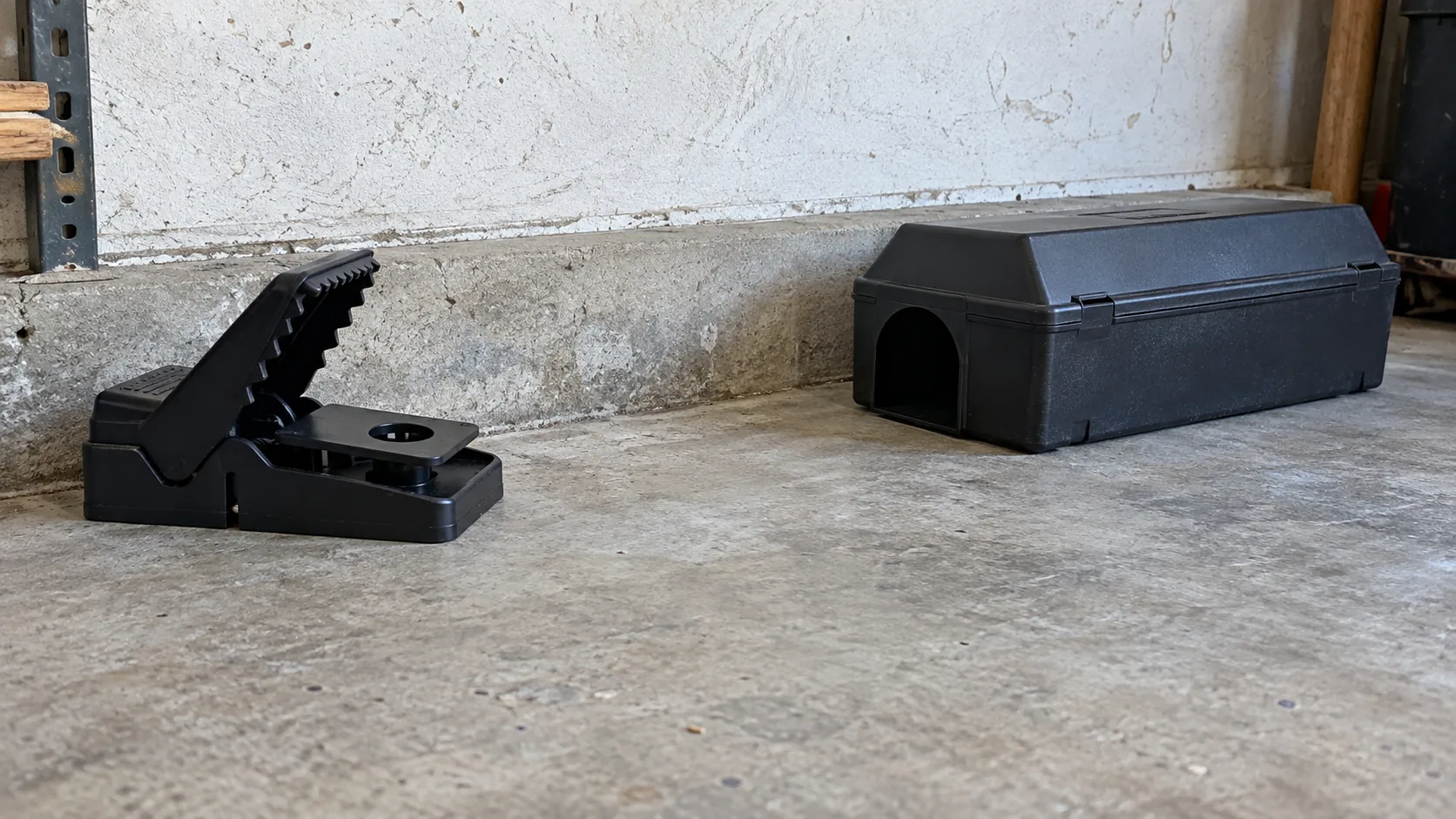
For many ordinary indoor rat problems, mechanical traps are usually the more controlled first-line option.
They give you:
- known placement
- visible monitoring
- retrievable catches
- no pesticide bait left behind
Rat poison can have a role in some control programs, but rodenticide is a pesticide.
That means its use comes with:
- label restrictions
- placement requirements
- child and pet precautions
- non-target animal concerns
- servicing requirements
- uncertainty about where a poisoned rat may die
So the practical question is not simply:
“Which one kills rats better?”
A better question is:
“Which method gives the safest and most controllable result in this location?”
Quick Answer: Rat Traps vs Poison
Rat traps
Main advantages:
- known location
- direct monitoring
- retrievable catch
- no pesticide bait
- easy to remove from service immediately
- useful for confirming whether an active route is still being used
Main limitations:
- powerful mechanisms require safe placement
- rats may be cautious around new traps
- traps need regular checking
- poor placement can result in no catches
- several active routes may require several traps
Rat poison
Possible advantages:
- may be used as part of some larger rodent-control programs
- can be contained in a label-compliant bait station
- does not require the rat to be physically caught in a mechanical device
Main limitations:
- pesticide exposure concerns
- strict label requirements
- child/pet/wildlife risk if used incorrectly
- poisoned rats may die in inaccessible places
- bait consumption is harder to interpret than a confirmed trap catch
- treatment does not repair entry points
Are Rat Traps Safer Than Poison?
For many indoor settings, traps are easier to control because they do not contain rodenticide.
That does not mean a rat trap is automatically safe.
Rat traps are much more powerful than mouse traps.
An exposed trap can injure:
- fingers
- paws
- non-target animals
Use protected placement when children or pets are present.
The practical advantage of a mechanical trap is that you know:
- where it is
- whether it fired
- whether it caught a rat
- when it has been removed
See Rat Traps: Types, Placement & How to Use Them.
Is Rat Poison Safe?
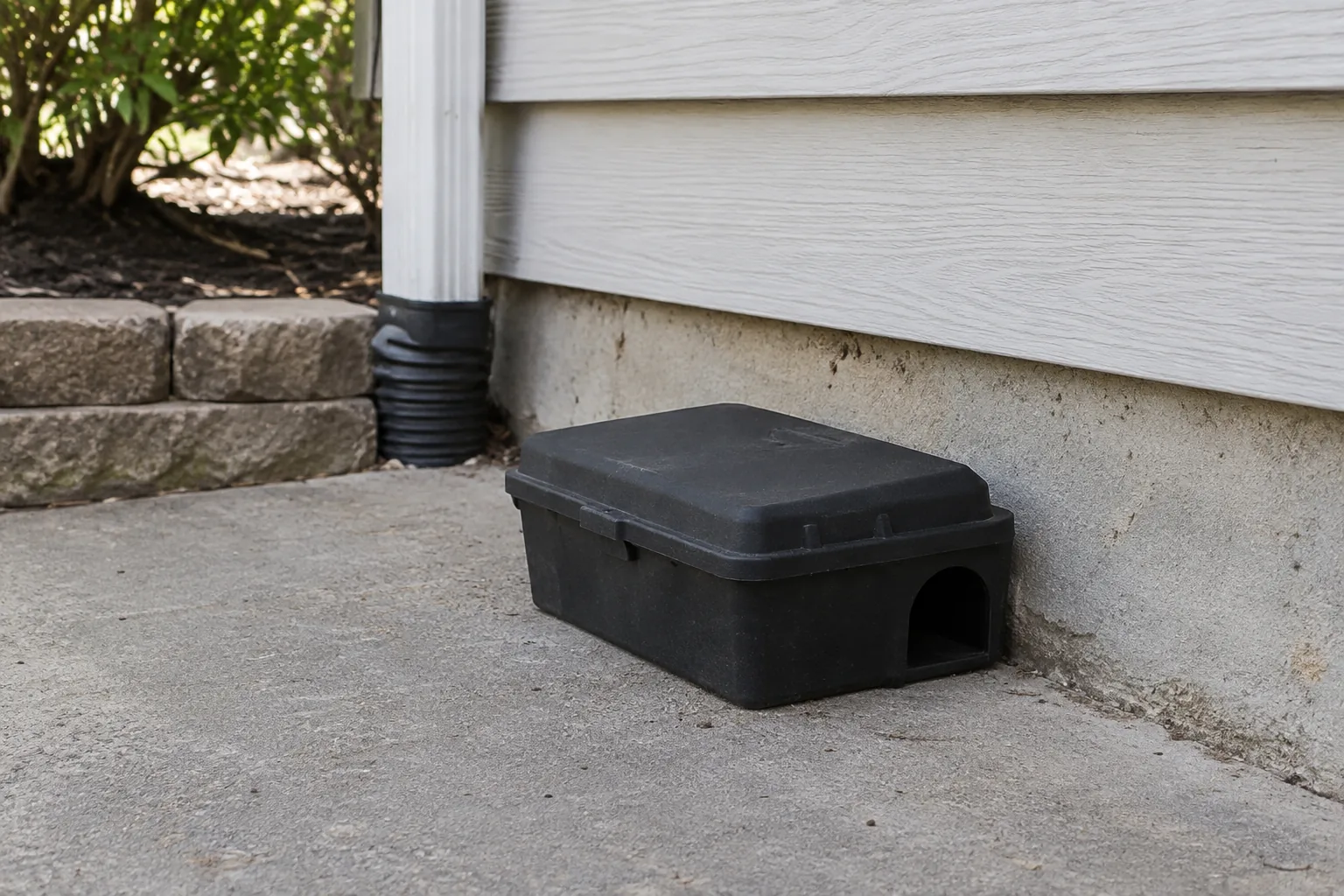
Rodenticide is a pesticide.
Use only a product labeled for:
- rats
- the intended location
- the intended type of placement
Follow the product label exactly.
The label determines:
- where the bait may be used
- whether a station is required
- how the station must be secured
- servicing requirements
- protection for children and pets
- handling and disposal
Do not improvise.
See Rat Bait: What Works & How to Use It Safely.
Which Is Better Around Children?
Both methods require planning.
With traps
Use:
- inaccessible placement
- protected trap tunnels or enclosures where appropriate
- locations away from play areas
Do not leave powerful rat traps exposed where a child can touch them.
With rodenticide
Follow all label requirements.
Use only:
- the permitted station
- the permitted location
- the required security method
A tamper-resistant station does not mean childproof.
If safe placement cannot be achieved, professional pest control may be the better option.
Which Is Better Around Pets?
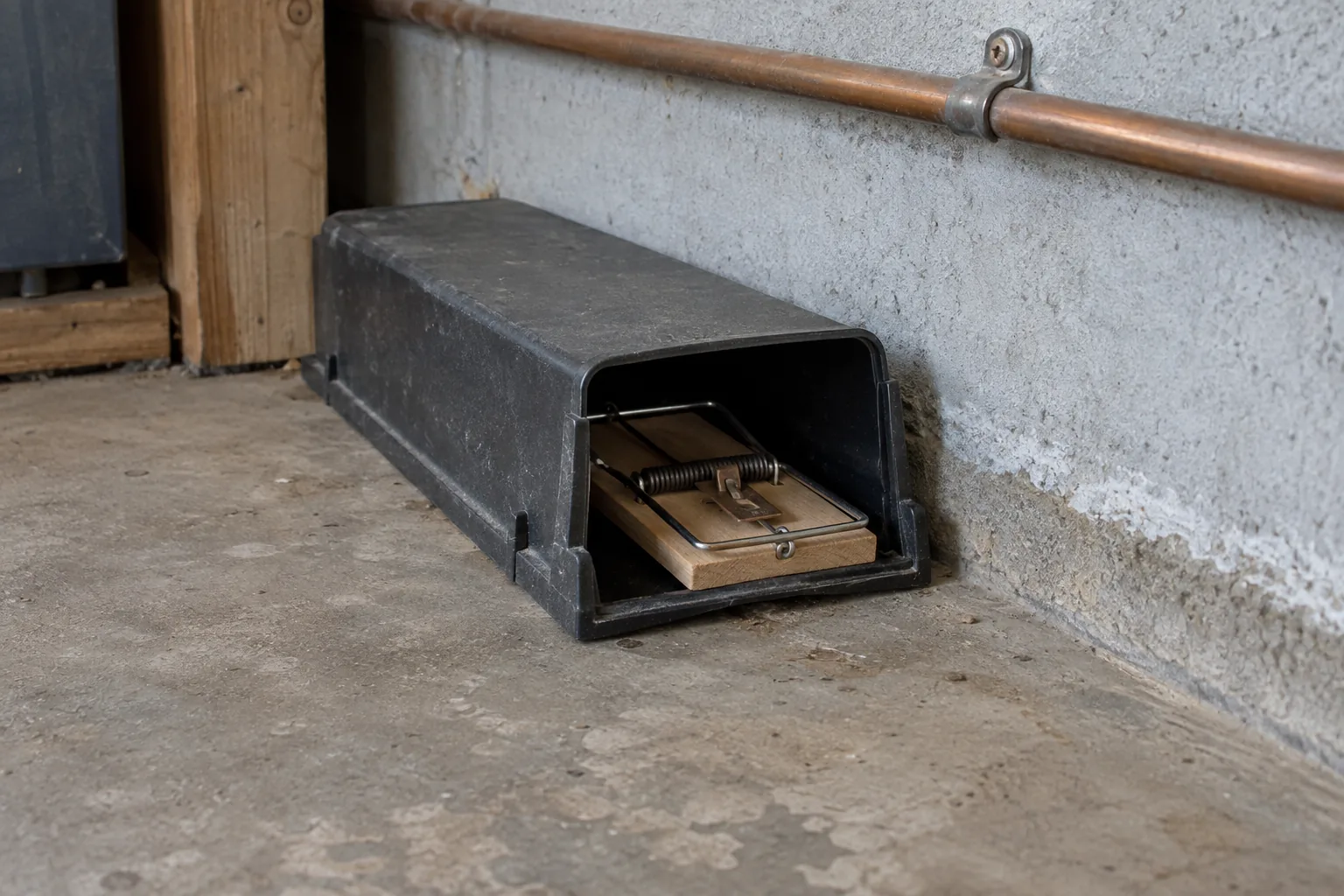
Pets can interfere with both methods.
They may:
- investigate food bait
- trigger a trap
- move a trap
- chew a station
- expose pesticide bait if equipment is damaged
Mechanical traps should be protected and inaccessible.
Rodenticide must remain inaccessible and used only as the label permits.
Do not assume putting treatment behind furniture makes it pet-safe.
What About Wildlife?
Outdoor and semi-outdoor rodenticide use can create non-target risks.
Do not leave pesticide bait exposed where it can be reached by:
- birds
- squirrels
- neighborhood pets
- other wildlife
If rodenticide is used, follow the label exactly.
Outdoor rat traps also need protection from non-target animals.
Do Rat Traps Work Faster Than Poison?
Sometimes a trap produces a faster visible result.
A successful trap gives a confirmed catch at a known location.
But a poorly placed trap may be ignored.
Poison may also take time because:
- bait is off-route
- competing food is easier
- rats are cautious around a new station
- rats are not using that area
There is no guarantee that one method is always faster.
Placement matters for both.
Rats Can Be Cautious Around New Objects
Rats may be wary of:
- new traps
- new stations
- changed food sources
- objects placed directly across their route
That caution can make both traps and bait stations appear ineffective at first.
Mechanical trapping may sometimes benefit from prebaiting or allowing traps to become familiar before activation.
See Rat Bait: What Works & How to Use It Safely.
Which Method Is Easier to Monitor?
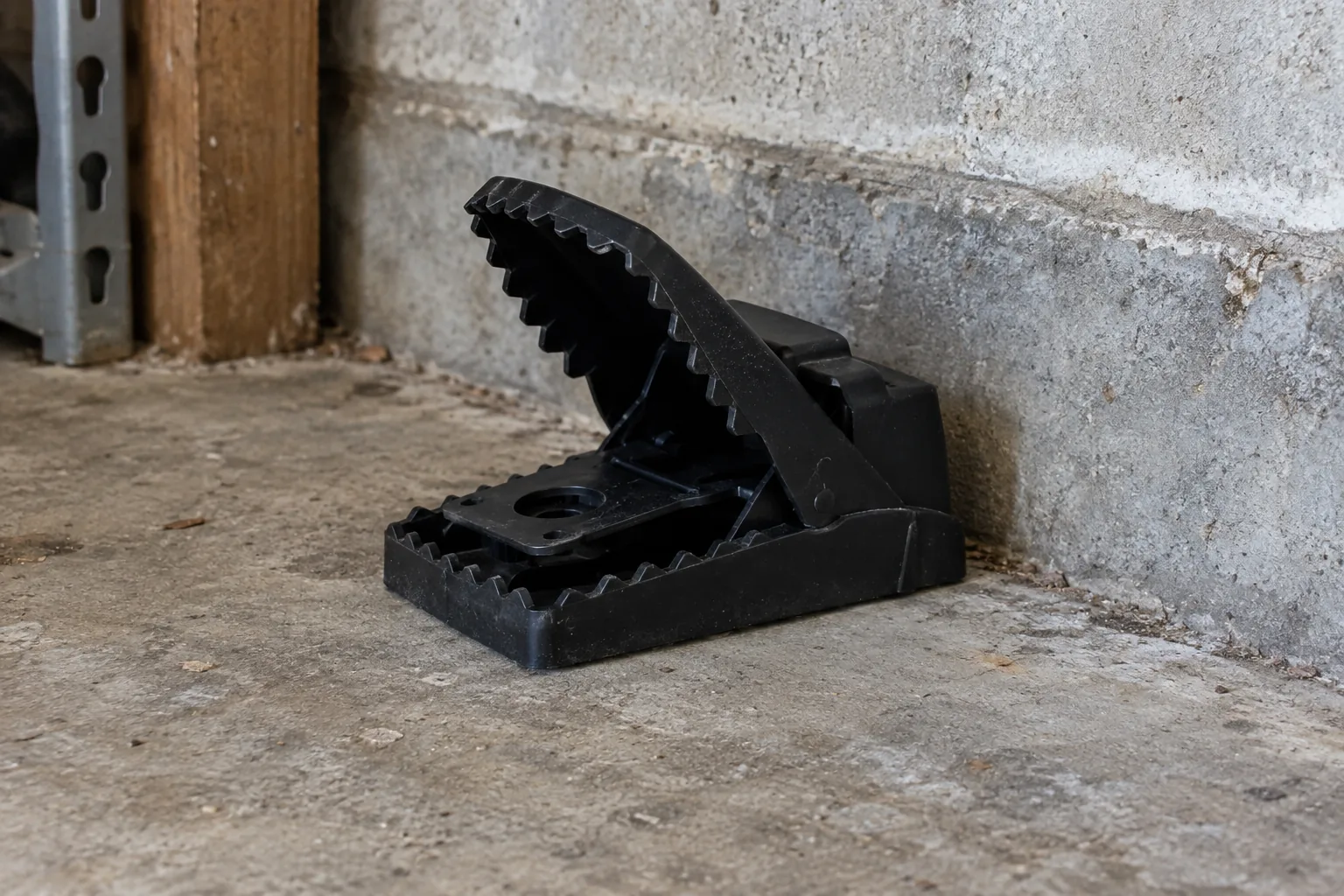
Mechanical traps are usually easier to interpret.
A trap can show:
- a confirmed catch
- a sprung mechanism
- bait interaction
- continued route activity
With rodenticide, bait consumption does not tell you:
- exactly how many rats are present
- whether the same rat fed repeatedly
- where a poisoned rat will die
That makes traps especially useful when monitoring is important.
What Happens to the Dead Rat?
This is a major difference.
With a trap
The rat is normally caught at the trap location.
The catch is:
- known
- accessible
- retrievable
With poison
A poisoned rat may leave the bait station before dying.
Possible locations include:
- walls
- ceilings
- crawl spaces
- attics
- cabinet voids
- under inaccessible structures
A large rat carcass can produce a stronger odor problem than a small mouse carcass.
Does Rat Poison Cause Dead-Rat Smell?
It can.
The poison does not determine where the rat dies.
If a poisoned rat dies in an inaccessible cavity, the carcass may be difficult or impossible to retrieve.
Mechanical traps reduce that uncertainty because the catch is normally at the treatment point.
Which Is Better in the Kitchen?
For many indoor kitchen rat problems, mechanical traps are easier to control and monitor.
Possible accessible routes include:
- lower cabinet edges
- under-sink routes
- wall edges
- behind accessible appliances
Keep traps:
- off food-preparation surfaces
- outside appliance machinery
- inaccessible to children and pets
Rodenticide use in kitchens requires especially careful label compliance and separation from food.
See Rats in the Kitchen: Why They’re There & What to Do.
Which Is Better Behind Appliances?
Large appliances may create protected rat routes.
Mechanical traps may be useful in accessible areas outside the machinery.
Do not place traps:
- inside compressor compartments
- next to moving fan parts
- where cords or water lines can contact them
Do not put rodenticide inside appliance machinery.
If a heavy appliance cannot be moved safely, do not drag it out alone.
Which Is Better in the Garage?
Garages can support both treatment methods when used safely.
Mechanical traps should be:
- along active wall routes
- protected from children and pets
- outside vehicle tire paths
- outside garage-door machinery
Rodenticide stations may only be used where the product label allows them.
Keep both methods away from:
- pet food
- bird seed
- drains
- children’s items
- vehicle traffic
See Rats in the Garage: Entry Points, Nests & Control.
Which Is Better in the Basement?
Basements often provide stable wall-edge routes.
Mechanical traps can work well when they remain:
- dry
- stable
- accessible
- retrievable
Keep them away from:
- standing water
- energized electrical equipment
- gas or utility components
Rodenticide may be considered only where allowed by the label and where a station can be used safely.
See Rats in the Basement: Why They’re There & What to Do.
Which Is Better in the Attic?
Attics can make both methods harder to service.
Do not place traps where they:
- disappear in insulation
- cannot be checked
- contact exposed wiring
- require unsafe access
Rodenticide has the added problem that a rat may die somewhere inaccessible.
For difficult attic routes, professional help may be appropriate.
See Rats in the Attic: Signs, Damage & Removal.
Which Is Better in the Crawl Space?
Crawl spaces can be:
- low
- wet
- contaminated
- unstable
- electrically hazardous
Do not enter an unsafe crawl space just to place treatment.
Any trap should remain retrievable.
Any rodenticide use must be permitted by the product label.
If treatment cannot be serviced safely, professional control is often more appropriate.
See Rats in the Crawl Space: Signs & Removal.
Which Is Better Around the Yard?
Outdoor rat activity changes the comparison.
Possible outdoor rat pressure comes from:
- garbage
- pet food
- bird seed
- fallen fruit
- dense cover
- decks
- sheds
Mechanical traps used outdoors need protection from:
- children
- pets
- wildlife
- weather
Rodenticide use outdoors must be allowed by the label and typically requires controlled station placement.
Do not scatter poison around the yard.
See Rats in the Yard: Why They’re There & What to Do.
What About Rats Under a Deck?
Deck areas can hide:
- travel routes
- burrows
- foundation openings
Do not crawl into an unsafe space to place traps or stations.
Do not install treatment where it cannot be retrieved.
Do not improvise pesticide treatment in suspected burrows.
See Rats Under a Deck: Signs, Burrows & What to Do.
What About Rats Under the House?
Under-house activity can involve:
- crawl spaces
- foundations
- utility routes
- structural gaps
Treatment should not interfere with:
- drainage
- ventilation
- electrical systems
- plumbing
- structural access
Unsafe under-house spaces are a strong reason to use professional help.
See Rats Under the House: Causes, Entry Points & Removal.
Which Is Better in an Apartment?
Mechanical traps are often easier for renters to monitor inside an accessible unit.
Apartment rat activity may also involve:
- shared walls
- utility chases
- neighboring units
- common spaces
- exterior building defects
Treatment inside one apartment may not solve the building route.
Document fresh signs and report structural problems through normal property-management channels.
See Rats in an Apartment: What Renters Should Do.
Rat Snap Traps vs Poison
Rat snap traps are one of the most direct mechanical options.
Advantages include:
- known result
- retrievable catch
- no pesticide
- clear monitoring
Limitations include:
- strong spring force
- need for protected placement
- rat caution around new traps
- route dependence
For broader trap choices, see Rat Traps: Types, Placement & How to Use Them.
Enclosed Rat Traps vs Poison
Some mechanical traps are used inside protective boxes or tunnels.
This can help:
- reduce accidental contact
- protect the trap
- guide the rat along a route
The setup still needs to be:
- stable
- retrievable
- inspected regularly
An enclosed mechanical trap is not the same as a rodenticide bait station.
Rat Bait Stations vs Traps
A rat bait station is a housing for rodenticide bait.
It may reduce direct access to bait.
But it does not eliminate pesticide risk.
Mechanical traps generally provide:
- clearer monitoring
- a retrievable catch
- no pesticide bait
Bait stations may fit some control programs when the label allows them.
See Rat Bait Stations: How They Work & Where to Place Them.
Which Is Cheaper?
Cost depends on:
- trap design
- station design
- number of active routes
- whether equipment is reusable
- treatment duration
- professional servicing
Reusable mechanical traps can have a relatively low ongoing material cost.
Rodenticide programs may involve:
- bait
- stations
- station servicing
- replacement
- disposal requirements
The cheapest purchase is not always the best control plan.
Which Requires More Maintenance?
Both require maintenance.
Rat traps require:
- regular inspection
- resetting
- rebaiting when needed
- catch removal
- placement adjustments
Rat bait stations require:
- label-directed inspection
- station security checks
- bait servicing
- damage checks
- safe handling
Neither should be installed and forgotten.
Which Is Better When You Need Proof Activity Is Declining?
Mechanical traps usually provide clearer evidence.
You can monitor:
- catches
- sprung traps
- bait interaction
- quiet periods with no trap activity
Rodenticide consumption is harder to interpret.
It does not tell you the exact population or where a rat went after feeding.
Which Is Better When You Cannot Reach the Active Route?
If rat activity is inside:
- walls
- ceilings
- inaccessible crawl spaces
- unsafe attics
- inaccessible under-house areas
do not blindly place treatment in voids that cannot be serviced.
Do not put loose poison into walls or ceilings.
Professional inspection may be safer.
Do Traps or Poison Solve the Entry Problem?
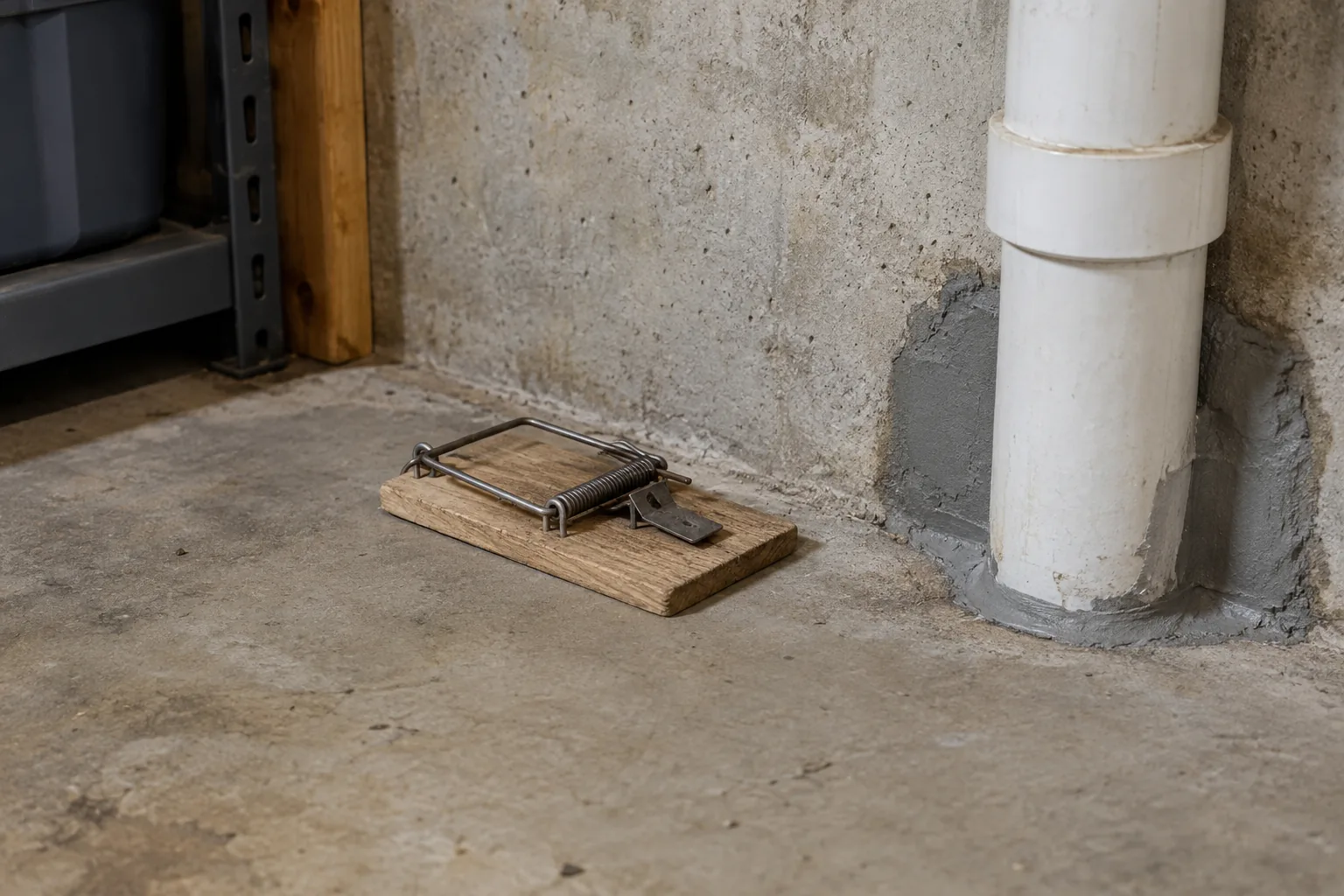
Neither one repairs the house.
A trap does not close:
- foundation openings
- garage-door gaps
- utility penetrations
- crawl-space vent defects
- roofline openings
Poison does not close them either.
If the entry route remains open, new rats can continue entering.
See Rat Entry Points: Where to Inspect Your Home and How to Keep Rats Out of Your House.
When Should Entry Points Be Sealed?
If rats are active indoors, do not blindly seal the only known route before you know whether rats remain inside.
A practical sequence is:
- identify active routes
- place and monitor treatment
- reduce food and shelter
- confirm activity is declining
- complete durable exclusion
- keep monitoring
This reduces the chance of trapping rats inside inaccessible parts of the structure.
Do You Need to Remove Competing Food?
Yes.
Both traps and rodenticide can perform poorly when easier food is available.
Secure:
- pet food
- bird seed
- animal feed
- pantry food
- garbage
Clean:
- grease
- food spills
- fallen fruit
- damaged packages
Sanitation makes treatment more focused.
What About Rat Droppings?
Fresh droppings can help identify active routes.
They can guide trap or station placement.
Do not estimate rat population from dropping count.
See Rat Droppings: What They Look Like & What They Mean.
What About Rat Tracks and Rub Marks?
Tracks and rub marks can help identify repeated travel routes.
Use those signs to decide where treatment should be concentrated.
See Rat Tracks: What They Look Like & Where to Find Them.
Clean Rat Waste Safely
For a small accessible contaminated area:
- keep children and pets away
- wear suitable gloves
- avoid dry sweeping or vacuuming
- wet droppings and nearby hard surfaces with an appropriate disinfecting solution
- allow the required contact time
- collect waste carefully
- bag it appropriately
- clean the nearby hard surface
- wash hands after removing gloves
Do not dry sweep or vacuum fresh rat droppings or nesting material before wet cleanup.
See the cleanup section and rodent safety section.
Can You Use Rat Traps and Poison Together?
Some professional programs may use more than one control method.
But adding treatment types does not automatically improve a household plan.
It can also create:
- more service points
- more safety management
- more opportunities for poor placement
For an accessible indoor rat problem, it is often simpler to begin with controlled mechanical trapping, sanitation, and exclusion.
If rodenticide is used, follow the product label exactly.
When Are Rat Traps Usually the Better First Choice?
Mechanical traps are often the better first choice when:
- rats are indoors
- active routes are accessible
- traps can be protected from children and pets
- catches can be retrieved
- monitoring matters
- you want to avoid pesticide bait
When Might Rodenticide Be Considered?
Rodenticide may be considered when:
- the product label allows the intended use
- a compatible bait station can be placed safely
- treatment can be serviced correctly
- children, pets, wildlife, and non-target animals can be protected
- the broader plan includes sanitation and exclusion
For complicated situations, professional pest control may be appropriate.
Common Rat-Traps-vs-Poison Mistakes
Choosing poison because it looks easier
It still requires label-compliant placement, security, and servicing.
Using powerful traps without protection
Keep rat traps inaccessible to children and pets.
Placing traps randomly
Use confirmed travel routes.
Leaving food competition
Secure feed, garbage, seed, and pet food.
Scattering loose poison
Do not do this.
Treating suspected burrows without confirmation
Do not improvise chemical or destructive burrow treatment.
Ignoring entry points
Treatment without exclusion can become an ongoing cycle.
Assuming bait consumption equals rat count
It does not.
When to Call a Professional
Professional help may make sense when:
- several parts of the home or property show rat activity
- the active route cannot be found
- powerful trap placement cannot be made child/pet-safe
- outdoor rodenticide use would be difficult to manage safely
- rats are active in inaccessible walls, ceilings, crawl spaces, or under-house areas
- burrows are close to foundations
- electrical wiring is damaged
- contamination is extensive
- rats keep returning after exclusion attempts
A pest-control professional can help combine:
- inspection
- trapping
- bait decisions
- exclusion
- monitoring
See Rat Exterminator: What to Expect & When to Call One.
Rat Traps vs Poison: The Bottom Line
For many ordinary indoor rat problems, mechanical traps are usually the more controlled first-line option.
They offer:
- known placement
- direct monitoring
- retrievable catches
- no pesticide bait
Rodenticide may have a role in some situations, but it adds:
- label restrictions
- pesticide handling
- child and pet concerns
- wildlife and non-target concerns
- uncertainty about where poisoned rats may die
Whichever method is used, long-term rat control still depends on:
- correct placement
- sanitation
- monitoring
- entry-point repair
- exclusion
Continue with our rat traps guide, best rat traps guide, rat bait guide, rat bait stations guide, rat entry points guide, or how to get rid of rats.
For the broader overview, return to [Rats & Mice in the Home](/).