How Small a Hole Can a Rat Fit Through?
Rats can squeeze through openings that look much smaller than their bodies. For practical home inspection and exclusion, a useful rule is to treat gaps around 1/2 inch — about 13 millimeters — and larger as potentially rat-accessible.
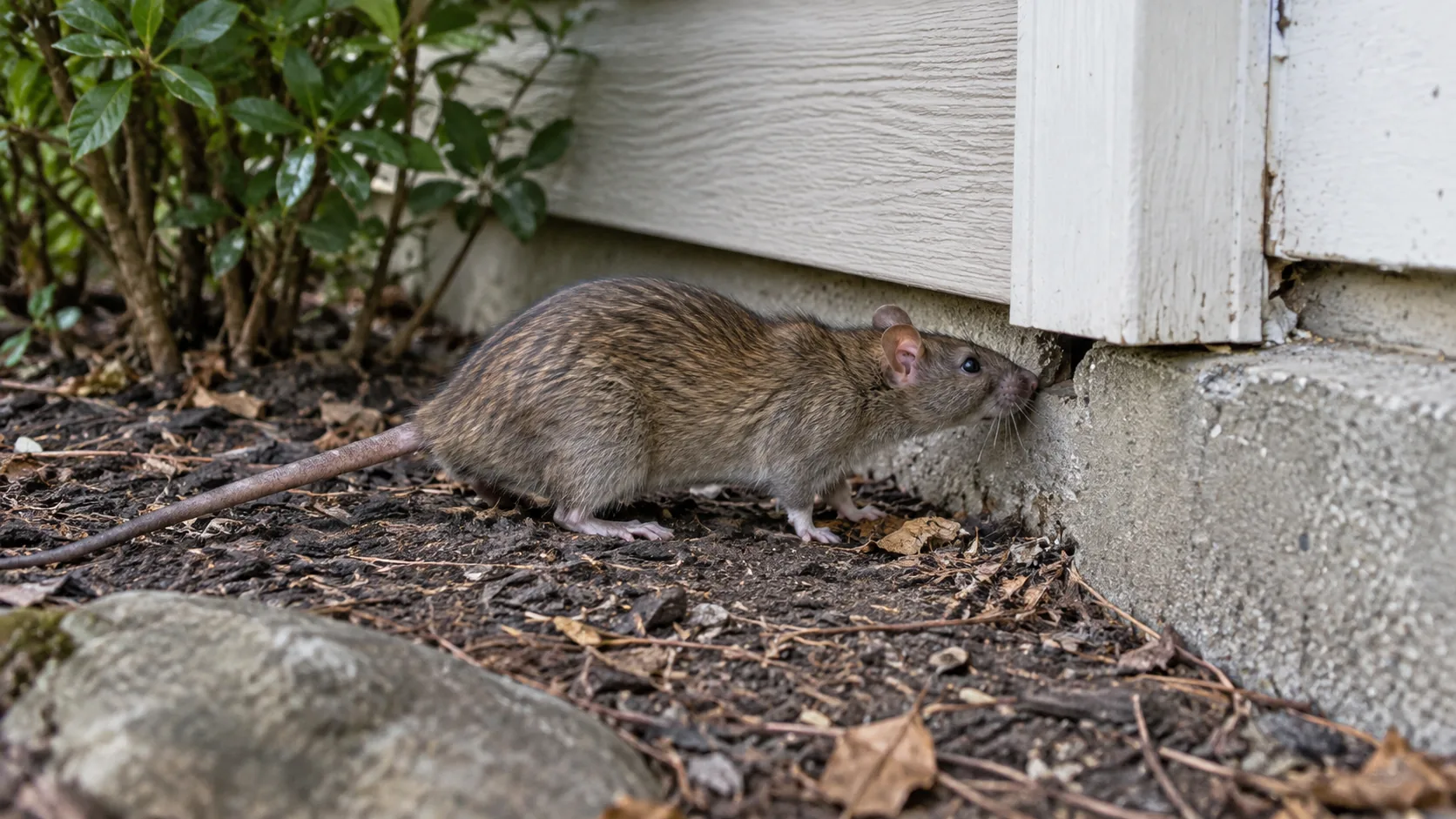
Rats can squeeze through openings that look much smaller than their bodies.
For practical home inspection and exclusion, a useful rule is to treat gaps around 1/2 inch — about 13 millimeters — and larger as potentially rat-accessible.
That does not mean every rat can pass through every 1/2-inch opening.
Whether a rat can use a gap depends on:
- the rat’s body size
- the shape of the opening
- the narrowest usable dimension
- whether the edge flexes
- whether the space widens behind the surface
- whether the rat can gnaw the opening larger
The homeowner takeaway is simple:
If a gap is around 1/2 inch or larger and connects to a usable structural cavity, it is worth inspecting — especially when rat droppings, tracks, rub marks, gnawing, or repeated sightings appear nearby.
Can a Rat Really Fit Through a 1/2-Inch Hole?
Openings around 1/2 inch are commonly used as a practical inspection threshold for rats.
Treat that measurement as an exclusion rule of thumb rather than an exact biological limit.
A gap around 1/2 inch may still be difficult for a particular rat if it is:
- rigid
- unusually narrow in one dimension
- shallow
- blocked behind the visible opening
- difficult to approach
Another opening of similar size may be easier to use if:
- one edge flexes
- it widens inside the wall
- the rat is smaller
- the material can be gnawed
That is why measurement should be combined with physical evidence.
How Big Is 1/2 Inch?
One-half inch is:
- 0.5 inch
- about 12.7 millimeters
That is roughly twice the practical mouse-entry threshold.
Use a ruler or tape measure when you need an actual dimension.
Do not insert measuring tools into:
- electrical equipment
- gas components
- HVAC equipment
- moving door mechanisms
just to check a gap.
Why Can Rats Fit Through Small Openings?
Rats have flexible bodies and can orient themselves through narrow spaces.
They also have:
- strong limbs
- flexible joints
- compact body structure
- good climbing ability
- strong motivation to reach food and shelter
But a rat cannot become infinitely flat.
The head, chest, shoulders, hips, and abdomen still need a usable path through the opening.
Gap geometry matters.
Is the Rat’s Head the Main Limiting Factor?
The head is important, but “if the head fits, the whole rat fits” is too simple.
The rat still needs:
- chest clearance
- hip clearance
- room to push through
- traction
- usable space on the other side
For homeowners, measuring the actual opening and checking for fresh rat evidence is more useful than trying to predict anatomy from the outside.
Do Smaller Rats Fit Through Smaller Gaps?
Yes, smaller individuals may use tighter openings more easily than larger adults.
That includes:
- juvenile rats
- smaller-bodied individuals
- smaller roof rats compared with some larger Norway rats
But there is too much variation to assign one exact minimum opening to every individual.
Use the practical 1/2-inch threshold for inspection rather than assuming an exact species-specific limit.
Are Roof Rats Able to Fit Through Smaller Openings Than Norway Rats?
Roof rats are generally slimmer and lighter-bodied than Norway rats.
That can make some narrow openings easier for them to use.
However, it is not reliable to say:
- every roof rat fits through one exact size
- every Norway rat requires a larger fixed opening
Individual size and gap geometry vary.
See Roof Rat vs Norway Rat: How to Tell Them Apart.
Does the Shape of the Opening Matter?
Yes.
A circular hole, horizontal gap, vertical crack, and irregular construction opening behave differently.
The most important measurement is usually the smallest usable dimension.
A long slot that is only 1/4 inch tall is different from a slot that is 1/2 inch tall.
An irregular opening may also be wider behind the visible surface.
Can a Rat Fit Through a Horizontal Gap?
Possibly, if the vertical clearance is large enough.
Common horizontal gaps include:
- garage-door bottoms
- door thresholds
- siding transitions
- deck or porch edges
- foundation-to-framing gaps
The total length of the opening matters less than the limiting clearance through it.
Can a Rat Fit Through a Vertical Crack?
Yes, if the usable width is large enough.
Possible examples include gaps:
- beside a door frame
- at siding corners
- around utility penetrations
- where trim separates from masonry
The opening also needs to connect to a route the rat can actually use.
Can Rats Fit Under Doors?
Yes, when the lower gap is large enough.
Pay attention to:
- damaged sweeps
- worn weatherstripping
- uneven thresholds
- lower door corners
A door may look tight across most of its width but still have a large usable corner gap.
Can Rats Get Under Garage Doors?
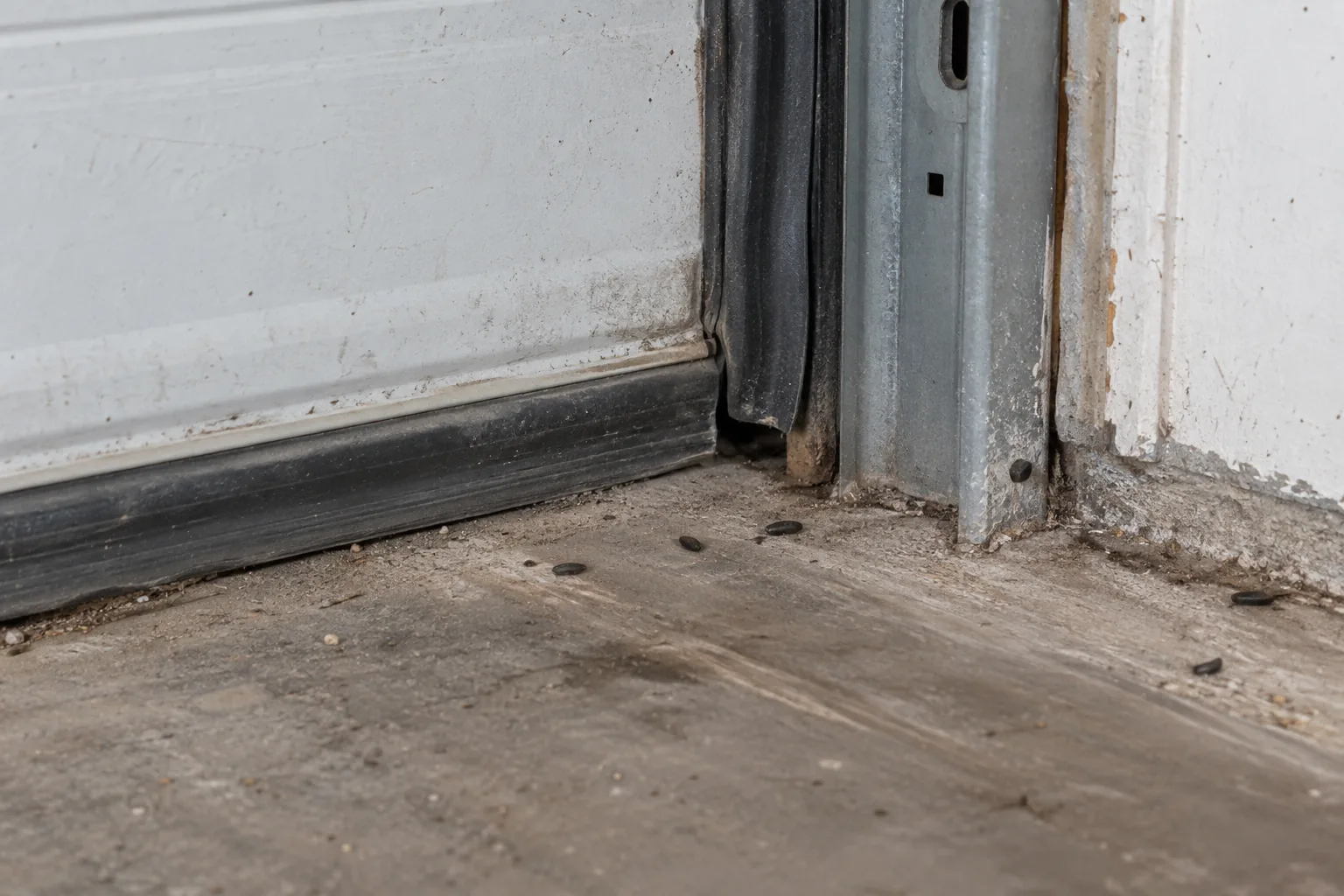
Yes.
Garage-door corners are common weak points because several materials meet there:
- bottom seal
- side seal
- jamb
- concrete slab
- track area
Rat droppings, tracks, or rub marks near one corner make that gap more important.
See Rats in the Garage: Entry Points, Nests & Control.
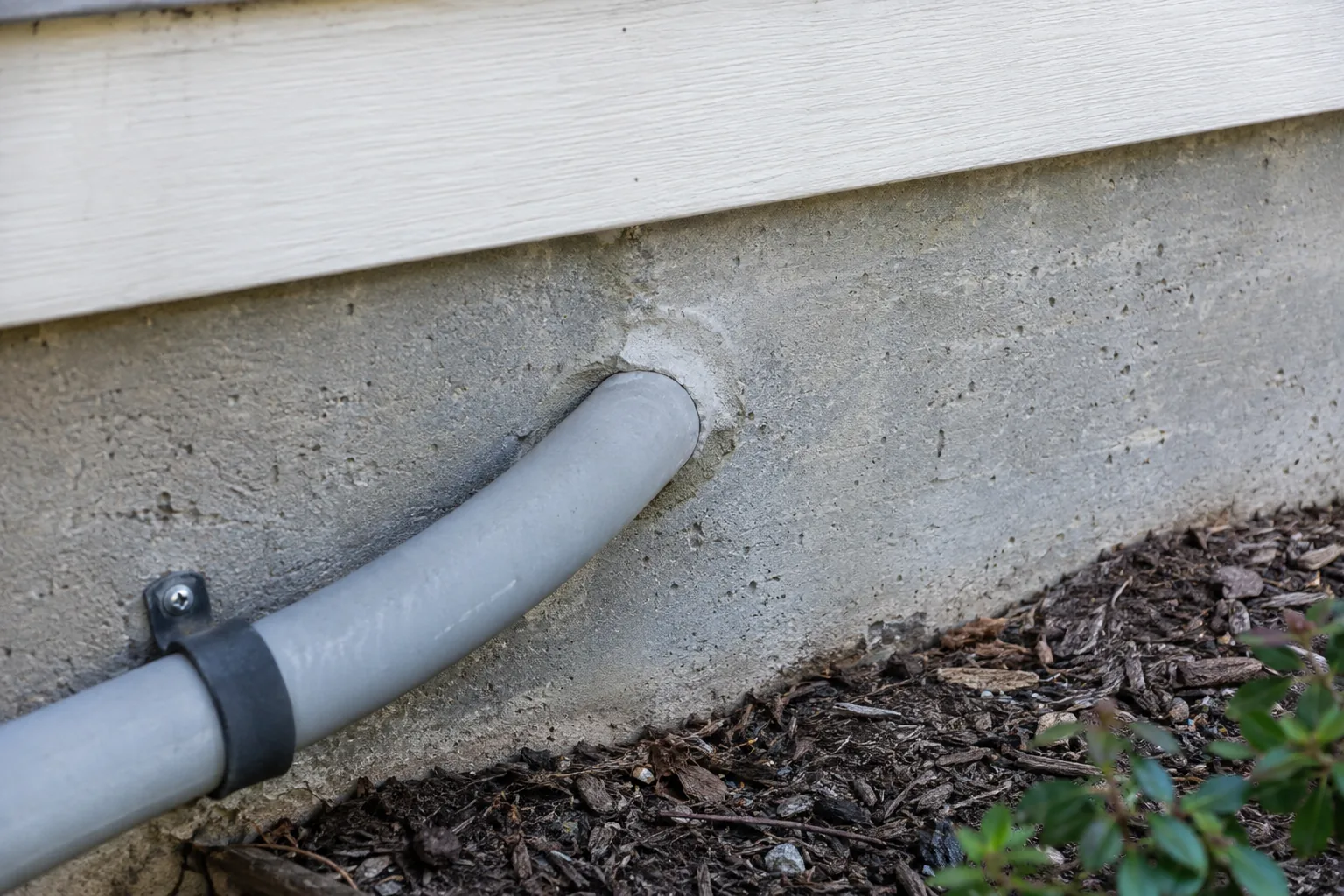
Can Rats Fit Around Pipes?
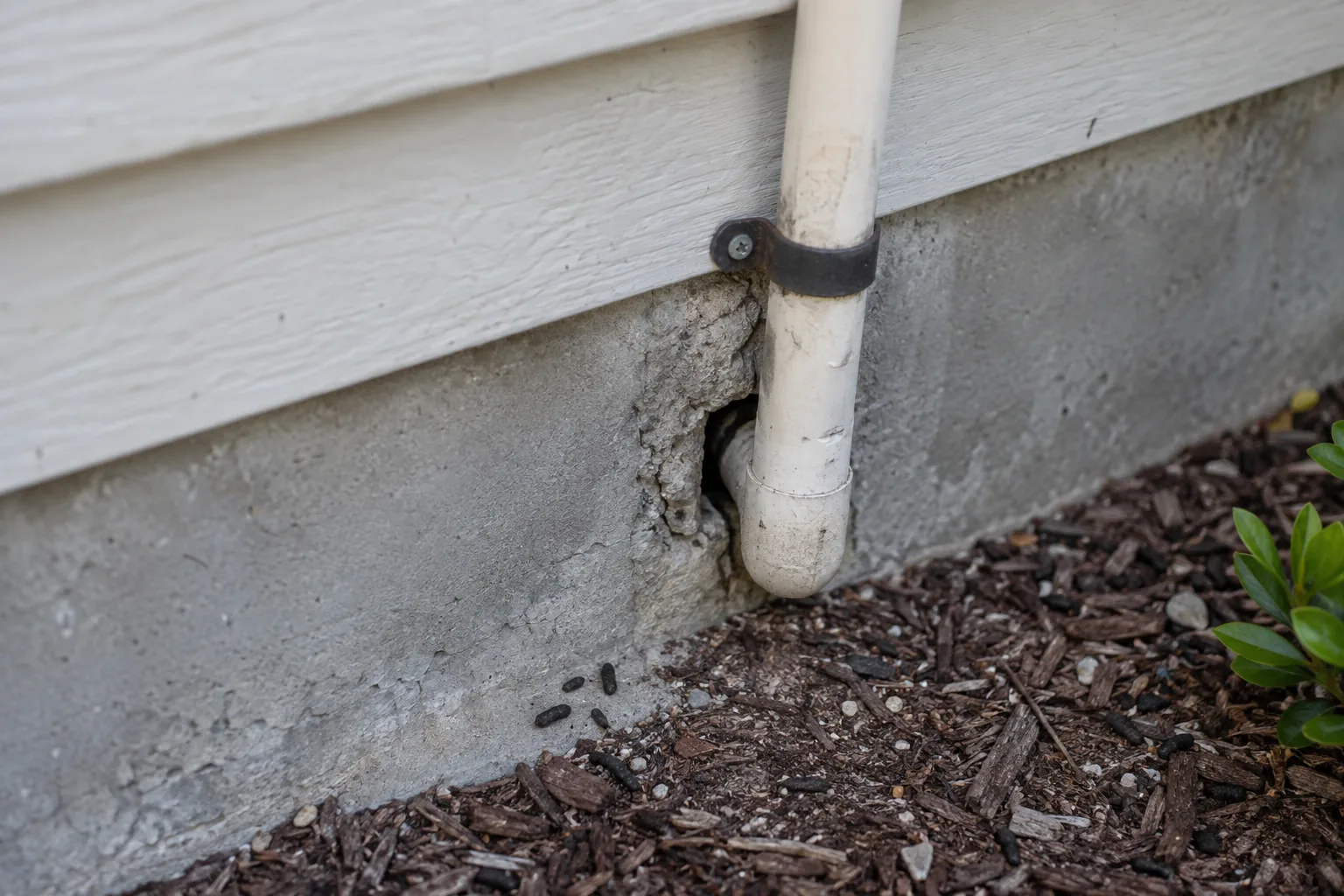
Yes, when the structural opening around the pipe is large enough.
Common utility penetrations include:
- water lines
- drain lines
- condensate lines
- gas or fuel piping
- utility sleeves
Do not alter a utility system just to close the surrounding gap.
The repair should address the building opening while preserving:
- pipe movement
- drainage
- shutoff access
- service access
Can Rats Fit Around Electrical Conduit or Cables?
Yes, if the surrounding construction gap is large enough.
Inspect around:
- conduit
- service lines
- cable
- communication wiring
Do not work inside electrical equipment or around exposed energized conductors unless qualified.
The structural perimeter of the penetration is usually the relevant entry route.
Can Rats Fit Through Crawl-Space Vent Gaps?
Yes.
A crawl-space vent may become rat-accessible when:
- mesh is missing
- the screen is torn
- the frame is loose
- the perimeter gap is large
Do not block the whole vent.
Repair the protective screen or structural perimeter while preserving required ventilation.
See Rats in the Crawl Space: Signs & Removal.
Can Rats Fit Through Basement Window Gaps?
Yes.
Lower-level windows may develop gaps around:
- trim
- frames
- window wells
- deteriorated sealant
Ground-level rat evidence nearby makes those openings more important.
See Rats in the Basement: Why They’re There & What to Do.
Can Rats Fit Through Siding or Trim Gaps?
Sometimes.
A visible exterior edge matters only if it connects to usable space.
Inspect whether the opening leads to:
- damaged sheathing
- wall framing
- a wall cavity
- an unsealed utility route
Many siding systems contain intentional geometry that looks open from certain angles.
Do not seal functional drainage paths blindly.
Can Rats Fit Through Roofline and Soffit Gaps?
Yes.
Roof rats are especially capable climbers.
They may reach upper openings by using:
- trees
- fences
- walls
- utility routes
- connected structures
Possible upper entry points include:
- loose soffit panels
- fascia gaps
- attic vent defects
- roof-to-wall transitions
See Rats in the Attic: Signs, Damage & Removal.
Can Rats Make an Opening Bigger?
Yes.
Rats can gnaw many softer materials.
They may enlarge gaps in:
- wood
- plastic
- soft sealant
- foam
- trim
- screening
That means an opening slightly below the practical threshold may become usable if the edge is easy to damage.
See Rat Gnaw Marks: How to Identify Rodent Damage.
Can Rats Chew Through Metal?
Durable intact metal barriers are much more resistant than:
- foam
- rubber
- wood
- soft plastic
- soft sealant
Thin or weak metal can sometimes be damaged.
Exclusion works best when the repair material matches:
- the opening
- the surrounding construction
- the forces the area receives
Can Rats Chew Through Concrete?
Rats do not normally create a new tunnel through sound structural concrete.
They are more likely to use:
- damaged edges
- cracks
- mortar defects
- utility penetrations
- construction joints
If a foundation or masonry opening is structurally significant, repair the building defect properly rather than filling it with a soft material.
Can Rats Fit Through an Opening Smaller Than 1/2 Inch?
A rigid opening clearly smaller than 1/2 inch is generally less concerning for an adult rat.
But do not rely on one rough measurement if:
- the edge flexes
- the gap is irregular
- the opening widens behind the surface
- the material can be gnawed
- the animal is smaller or juvenile
The practical approach is to inspect and repair openings around the threshold instead of trying to find one exact biological minimum.
Is a 1/2-Inch Gap Always an Active Rat Entry Point?
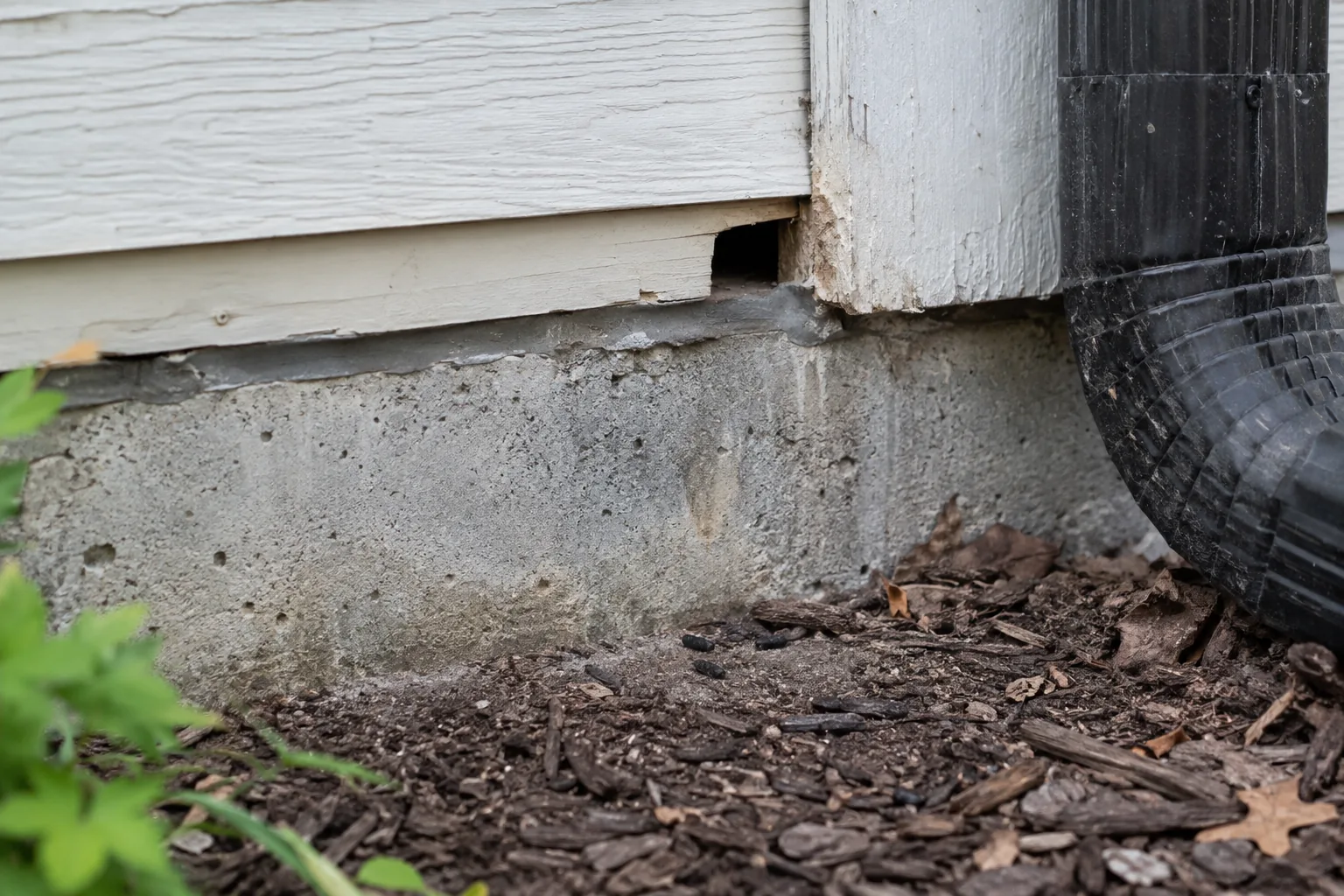
No.
A gap may be:
- unused
- blocked farther inside
- unrelated to current activity
- in an exposed location rats do not prefer
Fresh physical evidence is what makes a potential opening more convincing.
What Signs Show a Gap May Be an Active Rat Route?
Look for:
- rat-sized droppings
- larger tracks
- greasy rub marks
- heavier gnawing
- worn routes
- fresh soil
- repeated sightings
The strongest evidence is a combination of signs.
Rat Droppings Near a Gap
Rat droppings may appear near:
- foundation edges
- garage corners
- crawl-space openings
- utility penetrations
- wall-floor routes
Do not use dropping count to estimate population size.
See Rat Droppings: What They Look Like & What They Mean.
Rat Tracks Near a Gap
Tracks may appear in:
- dust
- soft soil
- garage debris
- crawl-space surfaces
- basement edges
A track pattern that leads toward a visible opening helps support the route.
See Rat Tracks: What They Look Like & Where to Find Them.
Rat Rub Marks Near a Gap
Repeated rat travel may leave dark greasy-looking marks along:
- walls
- pipes
- thresholds
- foundation openings
- utility routes
Do not identify rats from a dark stain alone.
Dirt, moisture, grease, or ordinary wear can look similar.
Rat Gnawing Around a Gap
Heavy gnawing around:
- wood
- plastic
- soft sealant
- screening
can indicate that rats are maintaining or enlarging the route.
Fresh gnawing is more useful than old damage.
How to Measure a Rat-Sized Gap
Use a ruler or tape measure if the opening is safely accessible.
Measure the narrowest usable dimension.
For a slot, measure the limiting height or width.
For an irregular gap, inspect whether the space becomes wider behind the visible edge.
Do not:
- remove electrical covers
- disconnect plumbing
- open HVAC equipment
- work around gas components
- climb onto an unsafe roof
- enter an unsafe crawl space
just to get a measurement.
Should You Use a Coin or Object as a Quick Size Reference?
An object can help with a rough visual comparison, but household objects vary.
Use a ruler when the actual dimension matters.
Avoid placing loose objects into:
- machinery
- electrical equipment
- vents
- drains
- service openings
simply to test whether they fit.
Where Are the Most Important Rat-Sized Gaps to Check?
High-value areas include:
- foundation-to-framing transitions
- utility penetrations
- exterior door corners
- garage-door corners
- crawl-space vents
- basement windows and doors
- deck or porch edges
- siding and trim defects
- soffits and attic vents
For the complete inspection sequence, see Rat Entry Points: Where to Inspect Your Home.
What About Rat Burrows Near a House?
A ground opening near a foundation may indicate rat activity, especially with:
- fresh soil
- worn runways
- droppings
- repeated sightings
But not every hole is a rat burrow.
Do not:
- flood it
- smoke it
- burn it
- gas it
- pour chemicals into it
- blindly collapse it
See Rats Under the House: Causes, Entry Points & Removal.
Should You Seal a 1/2-Inch Gap Immediately?
If there is no active indoor rat evidence, repairing an unnecessary building gap can be reasonable.
But if rats are currently active inside, do not automatically seal the only route they may be using.
A rat trapped inside may:
- move deeper into the building
- enter another room
- gnaw another opening
- die in an inaccessible void
Coordinate trapping, removal, monitoring, and exclusion.
See Rodent Exclusion: How to Keep Rats & Mice Out.
What Materials Work for Rat Entry Gaps?
The repair depends on the construction.
Durable approaches may involve:
- metal mesh
- flashing
- mortar
- rodent-resistant backing
- suitable exterior sealant
- repaired weatherstripping
- repaired vent screening
Do not assume soft foam alone is rat-proof.
The repair should be strong enough for the location and compatible with the building material.
What Should You Never Seal Shut?
Do not block:
- dryer exhaust
- HVAC supply or return airflow
- combustion air
- attic ventilation
- required crawl-space ventilation
- intentional drainage or weep openings
- plumbing drainage
- electrical service access
- moving door hardware
Exclusion should preserve the building system’s original function.
What About Weep Holes?
Some wall systems use intentional openings for drainage or ventilation.
Do not permanently fill a designed weep hole just because it appears rat-accessible.
If pest resistance is needed, the solution must preserve the wall’s intended drainage and ventilation.
What About Dryer Vents?
Do not place improvised material inside the dryer exhaust path.
Lint accumulation can create a fire hazard.
Inspect the structural perimeter around the vent housing instead.
What About HVAC Vents?
Do not put:
- mesh
- foam
- traps
- poison
- loose material
inside active supply or return airflow.
If rat activity appears around a vent, inspect:
- the duct boot
- the wall cavity
- nearby structural gaps
See Rats in Air Vents: How They Get There & What to Do.
Should You Use Rat Traps Before Final Sealing?
When fresh indoor rat activity is present, monitored rat trapping can help confirm whether animals remain inside.
Use rat-sized traps on safe accessible routes.
See Rat Traps: Types, Placement & How to Use Them.
Do not place traps:
- inside active HVAC airflow
- inside electrical equipment
- where they cannot be checked
- where children or pets can reach them
How to Know Whether Sealing Worked
After repairs, monitor for:
- no new droppings
- no fresh tracks
- no new rub marks
- no new gnawing
- no trap activity
- no repeated sightings
One quiet night is not proof that the route is closed.
Look for the absence of fresh evidence over time.
When to Call a Professional
Professional inspection or repair may make sense when:
- you cannot find the active opening
- rat activity continues after obvious gaps are repaired
- active burrows are close to foundations
- the opening involves roofing
- electrical wiring is damaged
- plumbing is leaking
- HVAC equipment is involved
- masonry or structural repair is needed
- crawl-space or under-house access is unsafe
- several possible routes exist
A pest-control professional may help identify the active rat route.
A qualified trade may be needed for the building repair.
See Rat Exterminator: What to Expect & When to Call One.
How Small a Hole Can a Rat Fit Through? The Bottom Line
For practical home inspection, treat openings around 1/2 inch — about 13 millimeters — and larger as potentially rat-accessible.
Remember:
- 1/2 inch is a practical rule of thumb, not an absolute biological limit
- rat size varies
- roof rats and Norway rats differ in body shape and size
- gap geometry matters
- the smallest usable dimension matters
- younger or smaller rats may use tighter openings
- soft edges can be enlarged by gnawing
- not every rat-sized opening is an active entry point
Prioritize gaps that also show:
- droppings
- tracks
- rub marks
- gnawing
- repeated rat activity
Then coordinate removal and trapping with durable exclusion.
Continue with our rat entry points guide, how rats get into a house guide, rodent exclusion guide, rat droppings guide, rat tracks guide, rat gnaw marks guide, or how to get rid of rats.
For the broader overview, return to [Rats & Mice in the Home](/).