Mice in Winter: Why They Enter Homes & What to Do
Mice do not hibernate in winter.
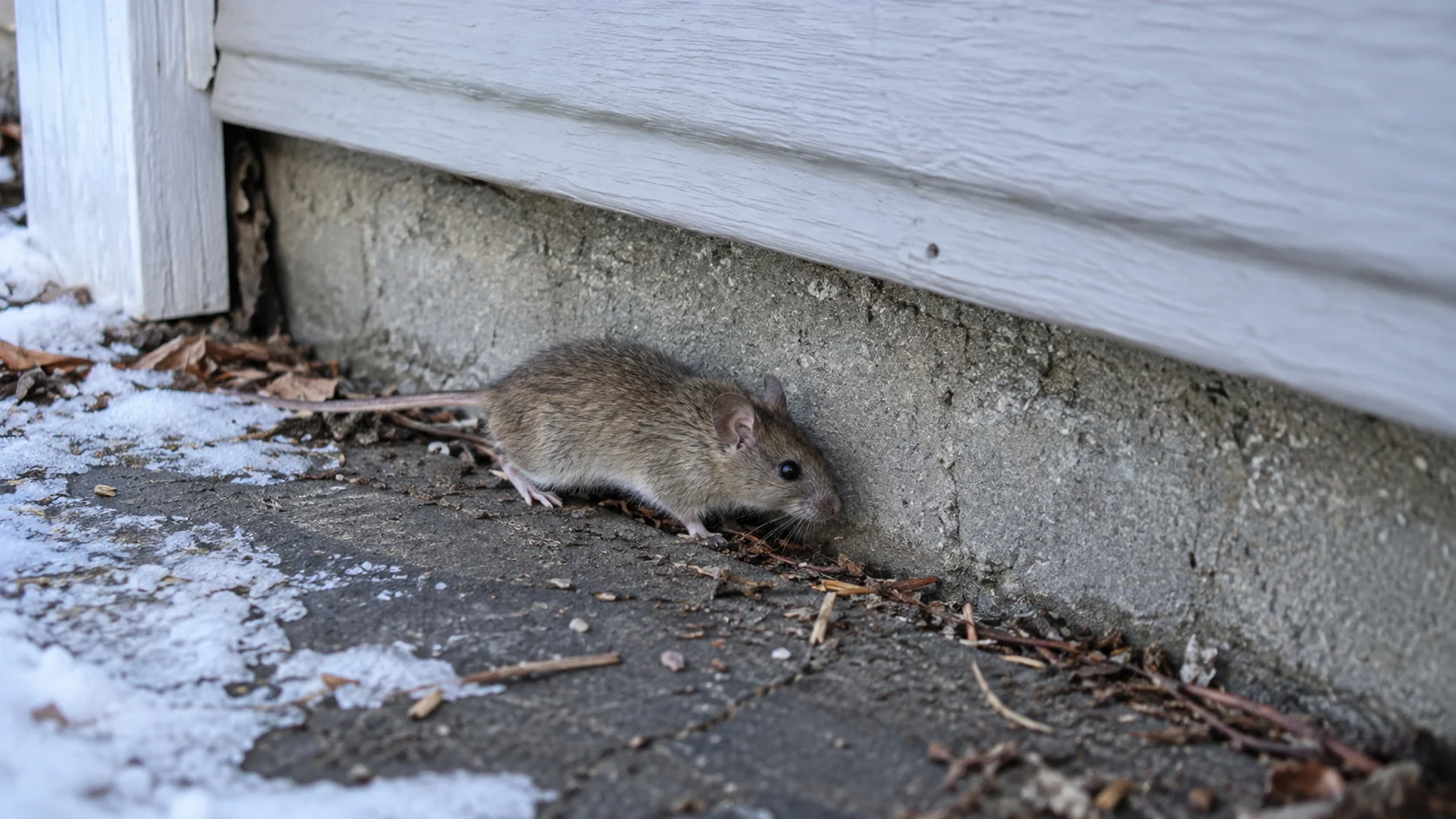
Mice do not hibernate in winter.
They remain active.
In many parts of the United States, homeowners notice more mouse activity during cold weather because homes provide:
- stable shelter
- food
- water
- nesting material
- protection from wind, rain, and freezing temperatures
Some mice move indoors as conditions cool.
Others were already living inside and simply become easier to notice in winter.
That distinction matters.
A mouse seen in January does not automatically mean it entered the house that day.
It may already have been using:
- walls
- cabinets
- a garage
- a basement
- an attic
- a crawl space
for weeks or months.
The right response is to look for fresh evidence, identify active routes, remove mice already inside, and close entry points at the right time.
Why Do Mice Enter Homes in Winter?
Winter changes the balance between outdoor and indoor shelter.
A house may provide:
More stable temperature
Buildings reduce exposure to:
- freezing nights
- wind
- storms
- rapid temperature changes
Reliable food
Mice may find:
- crumbs
- cereal
- grain
- pet food
- bird seed
- stored snacks
Protected nesting areas
Common shelter includes:
- wall voids
- cabinets
- insulation
- garages
- basements
- attics
- crawl spaces
Water
Mice may obtain moisture from:
- food
- condensation
- small leaks
- pet water
These conditions can support mice through the entire winter.
Do Mice Hibernate in Winter?
No.
House mice remain active year-round.
They continue:
- feeding
- moving
- nesting
- exploring
- reproducing
when conditions allow.
A heated building can support mouse activity even during very cold weather.
See Mouse Season: When Mice Enter Homes for the broader seasonal pattern.
Do Mice Breed During Winter?
Yes.
House mice living indoors can reproduce during winter.
A home may provide enough:
- warmth
- food
- water
- shelter
for breeding to continue.
See How Fast Do Mice Reproduce? for the reproductive timeline.
Winter does not automatically stop an established indoor population.
Do All Winter Mice Come From Outside?
No.
Some mice enter as weather changes.
Others may already be established indoors.
An indoor population can:
- be born inside
- mature inside
- reproduce inside
- remain inside year-round
See Mouse Life Cycle: Birth, Maturity & Lifespan.
That is why a winter sighting should be treated as evidence of current activity, not proof of recent entry.
Why Do Mouse Problems Become More Noticeable in Winter?
Several things can make activity easier to notice.
More indoor movement
Mice may spend more time near indoor food and shelter.
Quiet nights
Scratching in walls or ceilings may be easier to hear.
More time indoors
Homeowners may notice:
- droppings
- gnawing
- sounds
- sightings
more often.
Seasonal entry pressure
In colder regions, fall and early winter may bring more mice toward buildings.
A winter problem can therefore be:
- newly started
- newly noticed
- already established
Where Do Mice Hide During Winter?
Mice choose areas that provide:
- cover
- stable temperature
- food access
- nesting material
Common locations include:
- kitchens
- garages
- basements
- attics
- crawl spaces
- wall voids
- utility areas
- storage rooms
The strongest fresh evidence usually shows which areas are active.
Why Mice Use Garages in Winter
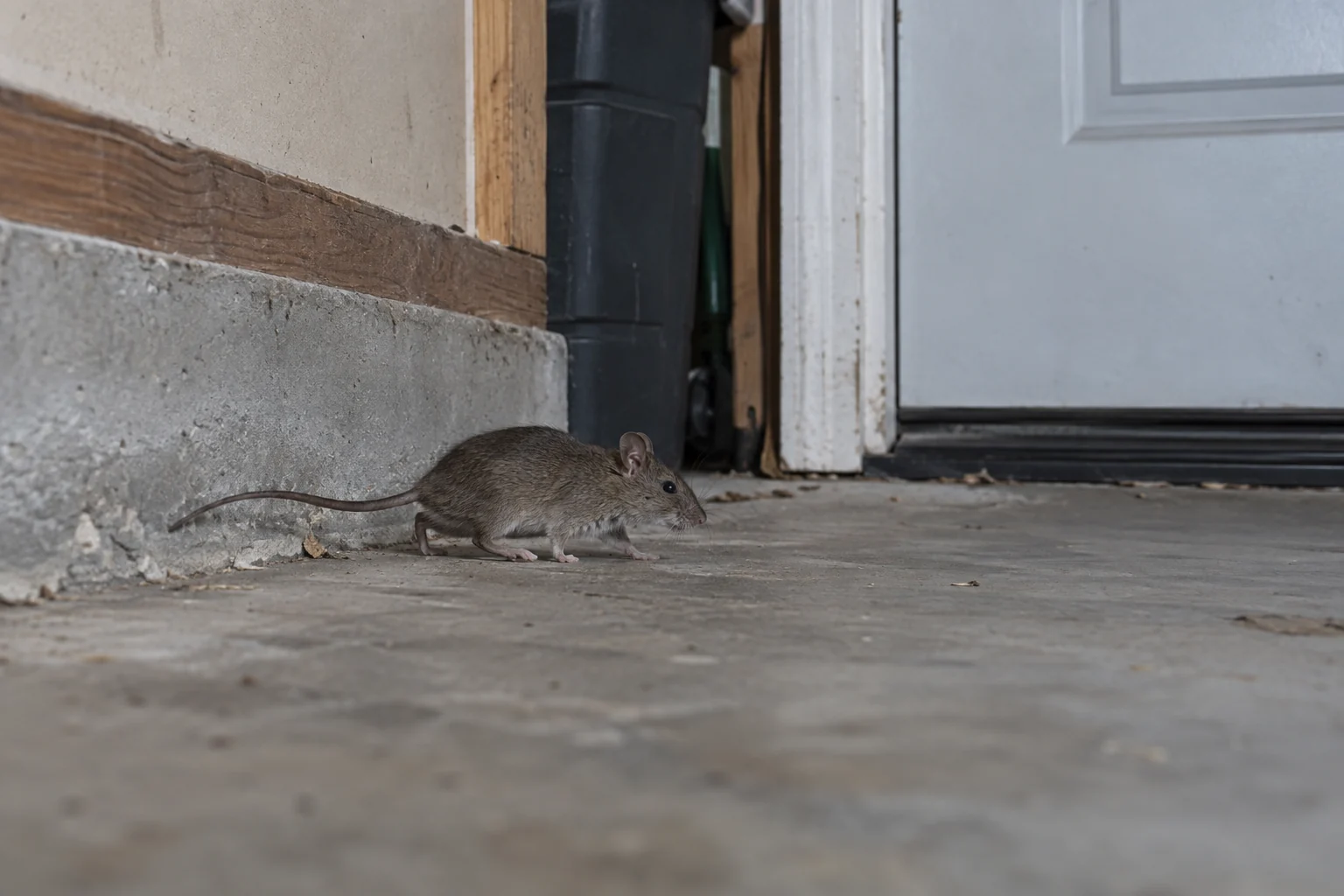
Garages are common entry and shelter areas.
They may contain:
- lower door gaps
- wall penetrations
- boxes
- pet food
- bird seed
- stored materials
Mice may enter the garage first and then travel into the house.
See Mice in the Garage.
Why Mice Use Basements in Winter
Basements offer:
- foundation-level access
- utility penetrations
- stable temperature
- wall-edge routes
Mice moving along the exterior foundation may find lower-level openings.
See Mice in the Basement.
Why Mice Use Attics in Winter
Attics provide:
- insulation
- nesting material
- shelter
- wall-to-roof connections
Mice may reach the attic through:
- wall cavities
- siding transitions
- utility routes
- soffit or roofline openings
See Mice in the Attic.
Do not walk on unsupported ceiling drywall or enter unsafe attic areas.
Why Mice Use Crawl Spaces in Winter
Crawl spaces may provide:
- insulation
- foundation access
- utility routes
- shelter from weather
Entry points may include:
- damaged vents
- access-door gaps
- utility penetrations
Do not enter a crawl space that is:
- wet
- electrically hazardous
- unstable
- heavily contaminated
- too tight for safe movement
Why Mice Move Into Kitchens
Kitchens provide food.
Mice may travel along:
- cabinet edges
- baseboards
- appliance routes
- plumbing penetrations
A kitchen sighting does not mean the mouse entered through the kitchen.
It may have traveled from a garage, basement, wall void, or crawl space.
See Mice in the Kitchen.
Why Mice Use Walls During Winter
Walls provide hidden travel routes.
Mice may move through:
- utility chases
- framing gaps
- cabinet openings
- attic connections
- crawl-space connections
You may hear scratching at night even when no mouse is visible.
See Mice in Walls and Scratching in Walls at Night.
What Are the Signs of Mice in Winter?
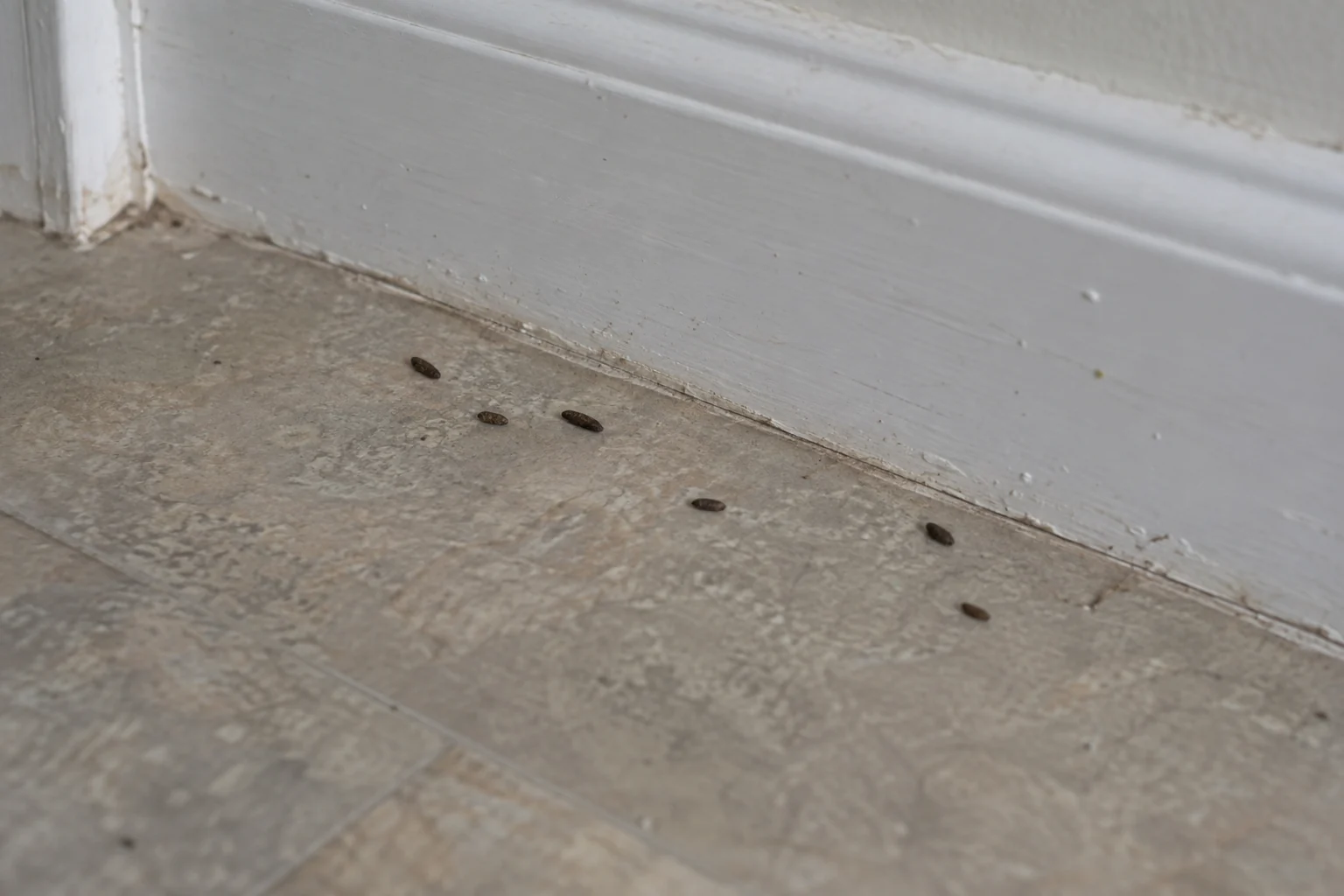
Fresh winter signs include:
- new droppings
- repeated sightings
- scratching
- fresh gnawing
- nesting material
- food damage
- trap activity
See Signs of Mice in the House.
The most useful question is not “Is there old evidence?”
It is:
Is fresh evidence continuing?
Do Old Droppings Mean Mice Are Still There?
Not necessarily.
Droppings can remain after mice leave.
Look for:
- fresh appearance
- new deposits after cleanup
- repeated activity in the same area
See Mouse Droppings.
Do not estimate exact mouse numbers from droppings.
Does One Mouse in Winter Mean an Infestation?
Not automatically.
One mouse could be:
- a recent entrant
- one of several
- a juvenile
- an adult from an indoor population
The sighting alone does not reveal population size.
See Does One Mouse Mean You Have an Infestation?.
Look for fresh evidence across connected areas.
Does a Daytime Mouse in Winter Mean the Problem Is Severe?
Not necessarily.
A mouse may be active during the day because of:
- disturbance
- food access
- competition
- nesting activity
- route changes
Daytime sightings can occur in established populations.
They do not provide an exact severity score.
See Seeing a Mouse During the Day.
What Should You Do After Seeing a Mouse in Winter?
Start with the area where the mouse was seen.
Look for:
- fresh droppings
- gnawing
- food damage
- nesting material
- wall-edge routes
- nearby openings
Then:
- protect food
- place appropriate mouse traps on active accessible routes
- monitor for fresh evidence
- inspect entry points
- repair confirmed openings when it is safe to do so
Do not start by sealing every visible gap.
You may trap active mice inside.
Should You Use Mouse Traps in Winter?
Yes, when traps are appropriate for the location.
Mechanical snap traps are commonly used indoors.
Place them:
- along active wall routes
- beside cabinet edges
- in garages
- in basements
- on safe attic service routes
They should be:
- mouse-sized
- stable
- retrievable
- protected from children and pets where needed
See Mouse Traps: Types, Placement & Safety.
Where Should Winter Mouse Traps Go?
Follow evidence.
Useful locations may include:
- fresh-dropping areas
- wall edges
- cabinet routes
- garage walls
- basement foundation edges
Avoid:
- inaccessible voids
- HVAC airflow
- moving machinery
- electrical hazards
A trap you cannot safely check is a poor placement.
Should You Put Traps in the Middle of a Room?
Usually, wall-edge routes are more useful.
Mice often prefer traveling near:
- walls
- cabinets
- stored objects
- structural edges
A trap placed far from the route may be less effective.
Placement matters more than simply increasing trap count.
Should You Use Poison for Winter Mice?
Rodenticides are pesticides.
They are not automatically necessary for every indoor mouse problem.
If a rodenticide is used, follow the product label.
Do not:
- scatter loose bait
- make homemade poison
- place exposed bait where children or pets can reach it
- put rodenticide inside active HVAC airflow
- put poison into inaccessible appliance cavities
Indoor trapping is often easier to monitor and retrieve.
Why Food Storage Matters More in Winter
A mouse may remain indoors when food is easy to access.
Protect:
- cereal
- grain
- pet food
- bird seed
- snacks
- baking ingredients
Use durable containers where practical.
Clean spills.
Do not leave pet food out unnecessarily.
Sanitation supports control.
It does not replace trapping or exclusion.
Do Mice Need Water in Winter?
Yes.
Mice obtain moisture from:
- food
- condensation
- small leaks
- pet water
Fix accessible leaks where practical.
Do not work around unsafe electrical or plumbing conditions.
Should You Seal Mouse Holes During Winter?
Yes—but timing matters.
If mice are active indoors, do not blindly seal every opening at once.
A practical sequence is:
- identify active routes
- control mice already inside
- close confirmed entry points
- continue monitoring
See Mouse Entry Points: Where Mice Get In.
What Entry Points Matter in Winter?
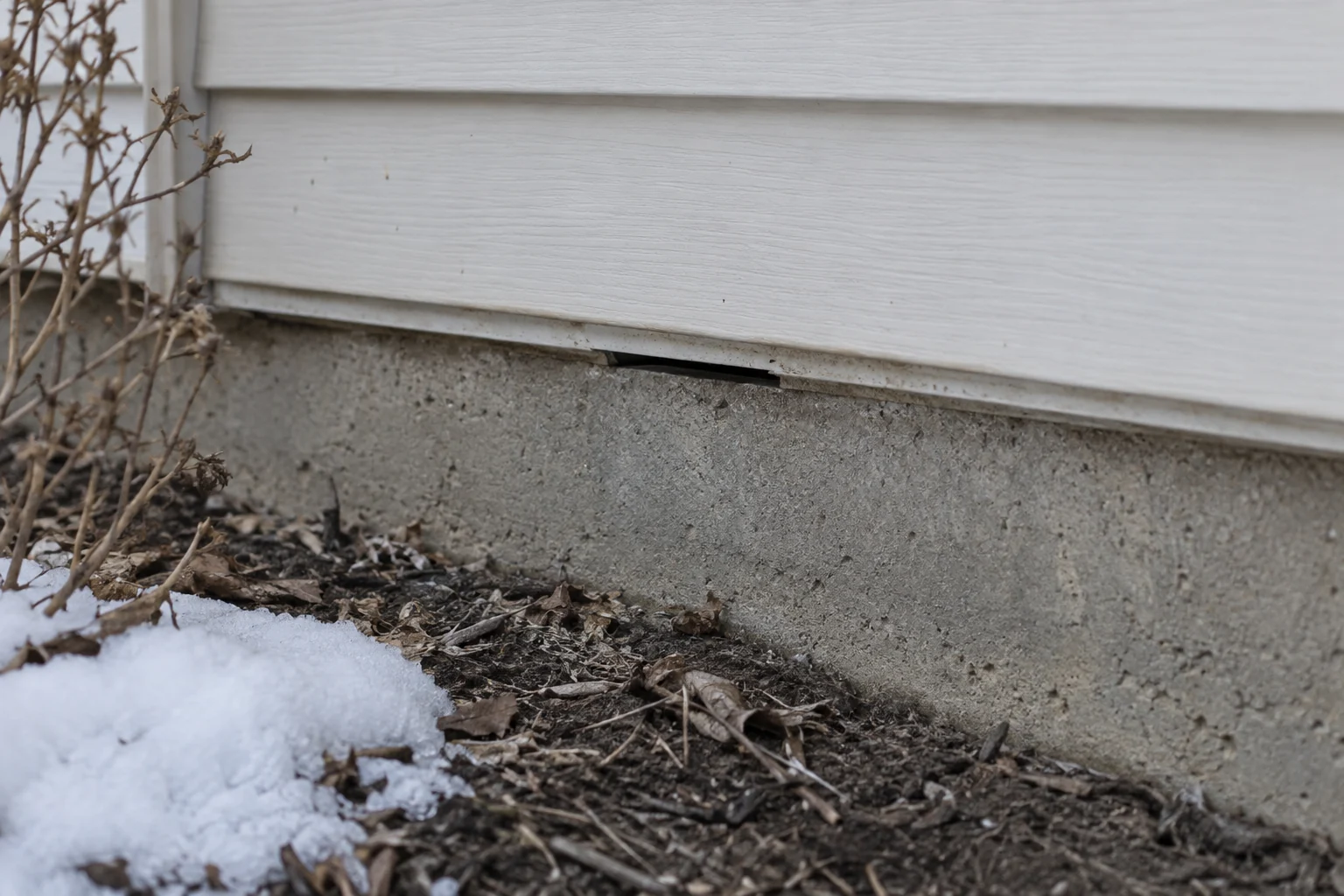
Common openings include:
- exterior door gaps
- garage-door corners
- foundation transitions
- utility penetrations
- siding gaps
- vents
- crawl-space access
- attic routes
See How Mice Get in the House.
Small openings can matter.
Repairs should preserve:
- drainage
- ventilation
- utility access
- door operation
Can You Mouse-Proof a House During Winter?
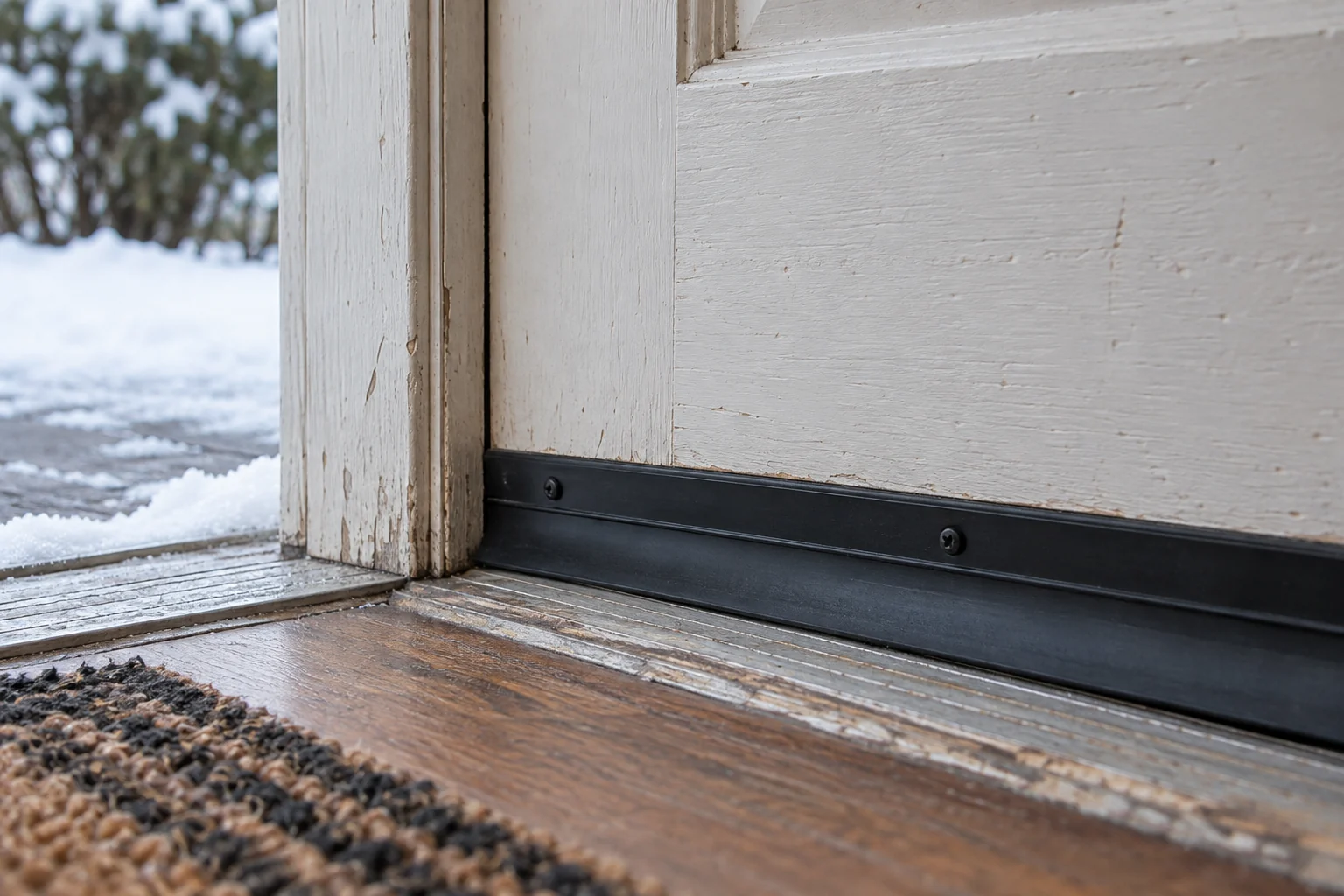
Often yes.
Accessible repairs may include:
- replacing a damaged door sweep
- repairing a vent screen
- closing a simple lower-wall gap
- correcting an accessible utility penetration
But winter conditions may limit:
- roof work
- exterior sealant performance
- ladder safety
- frozen-surface repairs
Do not attempt unsafe roof or ladder work in snow or ice.
What If Snow Covers the Exterior Entry Point?
Do not guess.
Snow can hide:
- lower foundation gaps
- tracks
- exterior routes
Focus first on:
- accessible indoor evidence
- safe exterior areas
- obvious doors and utility penetrations
A full exterior inspection may be easier when conditions improve.
Do not disturb hazardous icy areas just to search for a mouse opening.
Do Mouse Tracks in Snow Help?
Tracks can provide useful context.
They may show movement toward:
- a garage
- foundation
- shed
- deck
But tracks do not prove:
- exact population
- exact entry point
- how long mice have been present
Use them as one part of the inspection.
What If Mice Keep Appearing Every Winter?
Recurring winter activity often suggests a persistent vulnerability.
Common explanations include:
- the same entry opening remains
- the garage-door seal is poor
- utility gaps remain open
- food is accessible
- mice are already established indoors
Look for patterns.
If the same route activates every winter, prevention should focus on that route.
See How to Keep Mice Out of Your House.
Does a Quiet Summer Mean the Mice Were Gone?
Not necessarily.
Mouse activity can become less visible.
Mice may:
- shift routes
- spend more time outdoors
- use another part of the building
A quiet season does not prove the house is mouse-proof.
Monitor for fresh evidence.
Will Winter Mice Leave in Spring?
Do not assume they will.
Mice already living indoors may remain because the building provides:
- food
- shelter
- nesting
- stable conditions
Warmer weather alone does not remove an indoor population.
Waiting for spring can allow reproduction and spread.
How Long Can Mice Stay Inside During Winter?
Mice can remain indoors throughout winter.
Some may live in the structure year-round.
The important question is not how long one mouse can survive.
It is whether fresh activity continues.
What If You Find a Mouse Nest in Winter?
A winter nest can indicate active reproduction or recent nesting.
Possible locations include:
- insulation
- boxes
- wall voids
- garage storage
- cabinets
See Mouse Nests.
Do not disturb contaminated nesting material dry.
If mice are still active, control may need to come before full cleanup.
How Should You Clean Mouse Droppings in Winter?
Do not dry sweep or vacuum fresh rodent waste as the first step.
Use an appropriate wet-cleanup method for the surface.
Keep children and pets away from contaminated areas.
Follow disinfectant label instructions.
If contamination is extensive, professional cleanup may be appropriate.
Does Winter Make Mouse Control Harder?
It can.
Winter may complicate:
- exterior inspection
- roof access
- frozen repairs
- finding lower openings under snow
But indoor evidence can also be easier to monitor because activity may be concentrated around:
- shelter
- food
- stable routes
A winter control plan can still be effective.
When Should You Call a Professional?
Professional help may make sense when:
- mice appear repeatedly
- several rooms show fresh activity
- attic or crawl-space activity is involved
- entry points are unclear
- traps are not reducing activity
- children or pets complicate safe trap placement
- repairs require difficult access
- contamination is widespread
See Professional Mouse Control: Methods & What to Expect.
Mice in Winter: The Bottom Line
Mice do not hibernate.
They can remain active and reproduce inside homes throughout winter.
In many colder parts of the United States, fall and winter increase mouse pressure because buildings provide:
- shelter
- stable temperature
- food
- water
- nesting space
But a mouse seen in winter may have:
- just entered
- entered earlier in fall
- been born inside
- lived in the structure for months
Do not guess based on season alone.
Look for fresh evidence.
Then:
- protect food
- trap mice on active accessible routes
- inspect entry points
- close confirmed openings at the right time
- keep monitoring
Do not wait for spring and assume the mice will leave on their own.
Continue with our mouse season guide, signs of mice guide, mouse traps guide, mouse entry points guide, how to keep mice out guide, or professional mouse control guide.